
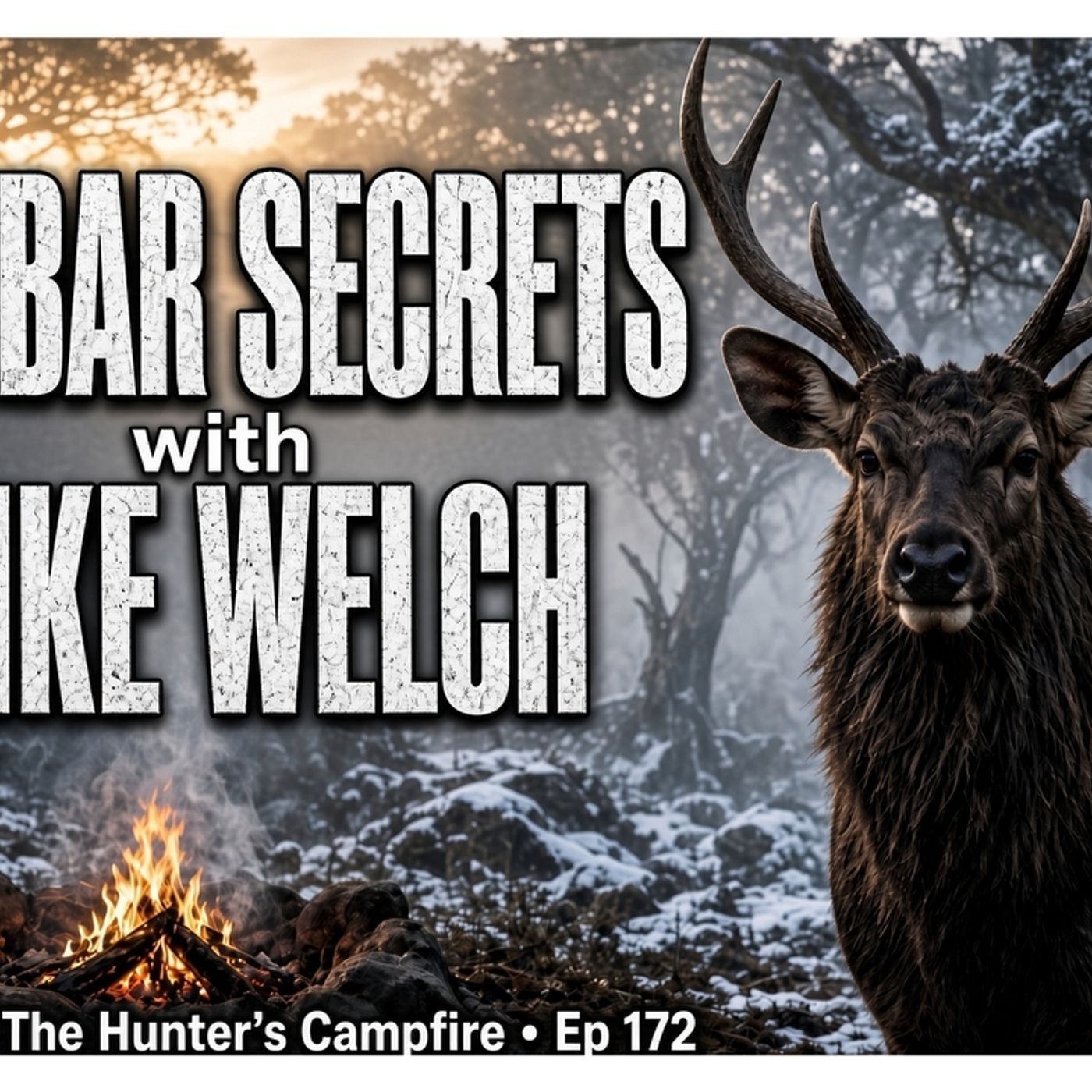
The Hunters Campfire - Australian Hunting · thehunterscampfire
The conversation begins with the introduction of the guest, Mike Welch. The hosts and the guest discuss their preparations for the hunting season, including range time and equipment setup. Mike Welch shares his hunting history, experiences, and strategies, emphasizing the importance of meat recovery and the law of the commons in public land hunting. The conversation also delves into hunting techniques, the impact of hunting on deer populations, and the focus on venison as a trophy. Overall, the discussion provides valuable insights into the world of hunting and the principles of public land hunting. The conversation covers the topics of public land hunting and the use of technology in hunting. It also delves into hunting strategies and terrain. The discussion provides insights into the challenges and opportunities of hunting in public land, as well as the impact of technology on hunting practices. The conversation delves into the behavior of deer and the techniques used in hunting them. It also explores the art of trophy hunting and the cultural significance of deer skulls. Takeaways Meat recovery is a key focus for public land hunters The law of the commons is working well for deer numbers and hind ratios Public Land Hunting Use of Technology in Hunting Understanding deer behavior The importance of hunting techniques Chapters 00:00 Introduction and Guest Introduction 00:30 Preparation for Hunting Season 03:46 Mike Welch's Hunting History 20:37 Hunting Strategies and Techniques 34:18 Meat Recovery and Public Land Hunting 40:21 Public Land Hunting 01:11:09 Hunting Strategies and Terrain 01:14:15 Insights into Deer Behavior 01:19:05 Hunting Techniques and Strategies 01:35:13 The Art of Trophy Hunting
The Hunters Campfire: Welcome to the Hunters Count Fire podcast. Pull up a chair and join hurls Jono and Mark as we share stories from the hunt, insights from the field and a few laughs along the way. Whether you're chasing game or just love the outdoors, this is your place by the fire. Hurls: Good evening, Mark. How are you seeing, mate? Mark the Gun Dude: very well, thank you, Ian. Has you good self? Hurls: not bad. It's episode one hundred and seventy two, I think, Mark the Gun Dude: Hmm. Hurls: and we're back at it again. John O, I believe is back from fishing. Or did he get eaten? We're not sure, but he's not with us tonight. So in his in his seat we've got Mike Welsh in the hot seat. Thanks for joining us, Mike. Mike Welch: Yeah, good evening, gentlemen. I've heard a bit about you, so can't wait to have a conversation. Hurls: Yeah, well I'm gonna say Ditto. for for those that don't know Mike and and we certainly don't, it's your yours is a name that pops up. Anytime I speak to someone down your way that says or if I'm asking about Samba content or talking to a Brian Boyle or a Paul Bogue or someone like that, say you should talk to Mike. You should talk to Mike. I said, Okay, we'll better Mike Welch: Mm-hmm. Hurls: get to know who this Mike fella is. So here we are and yeah, really appreciate you jumping on at short notice. Mike Welch: No, that's one. Hurls: Before we crack into it, Mark, anything crazy going on this week as we wind wind down the time to hunt camp? Mark the Gun Dude: trying to sound like I'm, you know, got something important to say, but I really don't. not much has happened over the last few days. Other than I've got range time on Wednesday to get those one eighty grains flying the way I want them to fly. For and then then I should 'cause the last week I I don't want to set the rifle up and the week before we go just in case something goes wrong and I need another day at the range. So I'm jumping the range this week. So I'm hopefully ready to go, pack the gear and do the sixteen hour drive next Saturday. Hurls: I'm looking forward to it. Yeah, really looking forward to it. I'm the same heading to the range on Sunday. We'll head down and just make sure the gremlins haven't crawled into the scope Mark the Gun Dude: Yeah. Hurls: since I last fired the rifle. get a bit nervous when you drive all that distance and you haven't put a test round through it, but it's only when did I use it last? Probably the the Rut Raw New Zealand. so there should be nothing wrong with it, but we'll see how it goes. The only other thing I've been playing with is setting up the hot tent for Mark the Gun Dude: okay. Hurls: For the snowy mountain conditions, so I I took one of the side walls from the Zempire tent setup to the canvas shop, got them to put a full canvas side on it to remove any sign of nylon. And and put one of those stove jack heat proof holes in the center of it. So I can now put the wood fire inside the tent setup and keep toasty warm at night while we're down there. So Set that up on the lawn, got it all cranking, heated it up, not one sign of melting, no smoke leakage. It's gonna be cozy as it can be. Mark the Gun Dude: Wood fire in a in a flightable tent. Hmm. Seems a bit seems a bit risky, but anyway. What happened? Hurls: What could what could go wrong? Well we might make sure it's extinguished before I go to sleep. Why can I see the stars? Mark the Gun Dude: The tent is gone. No, for me the Hurls: Yeah. Mark the Gun Dude: one I'm going to the one eighties because I I used the thirty six down in the pilger, but I was shooting the one fifty, so I wanted see the I know I know exactly how it's gonna perform, I just want to Check it. So I don't have to worry about it. That's it. Hurls: We might lean on Mike's advice as to weight selection for for projectiles as we get into it, but we'll keep that for a second. Let's let's have a chat, Mike. a little bit of history about yourself. It'd be great to hear how you got into hunting. We've heard already in the preamble that you're no stranger to Brisbane, you've honeymooned in Toowoomba, you know the Piliger, currently living in Aubrey. must must be cold down there. Mike Welch: Yeah. it's not too bad. It's about eight degrees, but I grew up just south of the Queensland, New South Wales border there, and a little little country town, forestry town actually. And I guess from the early days we had no game animals locally. We just heard about deer, but I I used to hunt wild dogs and dingoes there. And you know, we only had I only had a motorbike and but it was all really good grounding, you know, you did a lot of you know, it was a pretty nice place to grow up. But when I left there I went I went to university in Canberra and did a forestry degree. When I moved to Canberra I discovered other people that knew about deer. And you know, there were a few fallow out the road as everybody knows, but very difficult to get access and not very many deer around. But I struck up some friendships with some other guys at uni, and there was one guy in particular who from Kuma who put us onto a spot on the Dargo River and a mate of mine, our first sandba trip was in July 1980, and we walked into the Mayford Flats from the Victoria River, which, as everyone knows, is a pretty steep track down there, and we spent a week in there. as greenhorn samba hunters. snowed. you know we we had a bit of reasonable gear. We borrowed from the university, but we saw plenty of sign and we had a great time and it was a magical experience, but we never saw one deer. Sorry. Hurls: Didn't get honked by one or didn't get honked by one or anything? Mike Welch: not on that first trip. on the second trip we we did, we were we were hunting the flat and the clearings and and you know obviously they're gone from there at daylight, but we were on our second trip, which was the following year, we did the same thing and we started to make contact with deer but only seeing the rear ends, which is a common experience for all Greenhorns, you you're seeing deer, seeing tracks, you're seeing sign, and you're seeing glimpses of deer, which means they're all over you. They're just waiting for you to walk in. So we got a bit frustrated, and then the third year, we because we could only hunt once a year because we're going to uni, we walked in from the Dario High Plains side because we didn't have a four-wheel drive, we walked all the way down and We were getting better at it, and about midweek I spotted a hind, and I was I was like, Well, I'm gonna take the hind. So I shot the hind from about 80 metres in the bush, and this monstrous stag who was obviously close by just crashed past her, and I thought, my god, I'm gonna need a big gun. I didn't realise that's the first stag I'd ever seen. I didn't realise how big they were. Hurls: Yeah, right. Mike Welch: He just divorced the sign. So from that that time, which was nineteen eighty, eighty-one, you know, we were pretty I was pretty smitten with chasing samba. And but I was doing my degree and had a lot of commitments there. And I wasn't Victorian-based. So at that time, you had to go to Victoria to hunt Samber. And there were rumors of them in the New South Wales, but anyway. It just became just a once in a year, once a year trip a trip that we could do. So just to move on in time, I then when I finished my degree I got posted to Baradine, which is in the Pilga. And that's just a bit too far to go on a weekend samba hunt in Victoria. Hurls: Yeah, they haven't quite made it up there yet, from what I can tell. Mike Welch: So I didn't hadn't made it to there. So I spent a few years there and I did a trip to New Zealand with some schoolmates at that time and we went seeker hunting, which is very similar to samba hunting, I guess. We went on the North Island and you know, I still followed the samba writings and the magazine articles, so still really keen, but just too far away. So then in nineteen eighty seven I got a transfer to Tumot with forestry and plantation area. And I just couldn't believe how I I was finally going to be able to hunt samba regularly as part of my, you know, weekend sort of activities. And they weren't you still had to travel Vic to Victoria, but you you could go as far as Corion, which was only like two hours away. So, you know, I I had a great time during that period hunting out of tumor, but didn't really do that well in terms of animals, you know, I I was seeing them but just not you know, it was a long learning curve in those days because people wouldn't tell you how to go about it. So I just I was just using that technique is get in the bush with them, get in their faces and try and kick them out of their beds and and and shoot them on the opposite face. So after a while I did a lot of burn burned a lot of boots, upset my wife a few times when I used to go for too long. So when you're a Samber tragic, you know, you leave the bush on your way home and all you can think about is well maybe it's in that next gully. I've got to check that next gully out. So it was like that that obsession that just kept you coming back the next next week. Now eventually we we changed strategies and we'd go on We'd we'd put camps in and we'd spend a week in the bush, like a lot of people do now. But in those days you'd drive in, drop your drop your equipment in and then come back in when the gates closed. So obviously the one and gatta was a pretty favourite spot. And Hurls: You hear you hear this, yeah. Mark the Gun Dude: Mm-hmm. Mike Welch: we did really well there. Like we would see eighty deer in a week, which were big numbers in those days. And But again, we shot a few stags, but nothing nothing that you considered top trophies. They were you know, there was a bit of illegal activity going on, you know, the after dark boys would cream them off. But we were right in the in the backcountry, you know, pretty remote. We'd fly camp from our other camp, so it was twenty five Ks in. we had great adventures and we saw plenty of deer and we learnt a lot about deer because we were making a lot of contact. And seeing unalarmed deer, which has always been my goal, is to you want to observe the deer behavior and and work out well, why are they there? What are they doing? how come I've been able to find them in this spot? And so trying to piece together that jigsaw puzzle it is pretty daunting when you're starting out on your own. See other deer species seem to be f you know relatively easy to locate. Hard to get a trophy, but easy to locate. Whereas Sandber, you know they're there, but man, Mark the Gun Dude: Yeah. Mike Welch: they just you know they're pretty cryptic. They don't don't show themselves. Not in those days anyway. It's changed a bit now. Mark the Gun Dude: Yeah. Mike Welch: dear becoming much more visible, but because of numbers it changes in population. Anyway, following Couple of really good trips with a guy by the name of Kevin Giddings, who's a local Aubrey guy. He he's got English pointers now. we did a lot of hunting together and Kev went down the path of using his pointer. And one of my sons took a beautiful stag over Kev's first pointer, Annie, back in 90, I think it was eighty seven. sorry, nine two thousand and seven. And that's that's that is a great stag. So Kev's Kev's a very good hunter and I learned a lot from Kev. he's he's probably a little bit older than me, but he's still just as keen. He goes a lot and he's retired. But between the two of us, we decided that after spending a lot of time in the one and gatta and in the remote areas, we were seeing a lot of deer but not quality deer. And it might seem obvious now, but in those days we decided we'd give up that hunting and hunt the basalt cat country, like up high snow gun country, high rainfall, you know, good good forest. And as soon as we started doing that, we we started to locate some better quality trophy animals, I guess. Even though the hunting was still pretty hit and miss, you know, like a stick bush and and I wasn't in the glassing at that stage, like opposite face, sort of sitting and waiting. So you know, had a great time and we started becoming more successful. and then we decided to hunt more locally as as we discovered the local deer populations in these closer valleys as the Middle Valley, Dartmouth, Kewa Valley. All those valleys are just fantastic valleys and historically they've Hurls: Whi with it with a deer with were the deer moving into those valleys or you were just finding that Yeah, yeah. Mike Welch: Yeah, they definitely were. and and you basically were sort of very much fringe deer. you'd get a a dairy farm or somewhere where there's improved pasture and you'd walk those boundaries on public land and there was just a sign everywhere. but but you got a clear paddock and then a really thick bush up in the northeast. It's very heavy bush compared to say Ealden or or you know the Morocco. So they're very and they're nocturnal. So whilst we knew there were good animals there, it was still hard to get a good stag. you know, like then you're competing against farmers who lay out spotlighters on and but anyway, that aside, we discovered some really high quality animals in that in these local valleys. And I think in the last twenty years there's been some really good animals taken out of these local places. And I'm racing through a bit quick, but these are all, you know, I'm condensing probably twenty five, thirty years of hunting into a few minutes. But when you when you don't have a support network and knowledge like to read, other than a few guys who hear whispers, it's very you've just got to do the miles. You've just got to put the boots boots on the ground. So we did that. We we did it did it the hard way. When there weren't as many deer around now and it was it was more difficult to see unalarmed deer. but so but things have changed and you guys, you know, be aware of that, and probably the last 15 or 20 years that n which I never thought would happen in Australia, those samba numbers in particular have just blossomed due to fires and all sorts of factors, but they're they're migrating north into New South Wales. And that's well and truly underway. And yeah, they're popping up in places. You'll get the small stags that'll pop up first, but not far behind those, you get those older older stags that that people know about but don't see in those new areas because they're not hunters. So that's that's well and truly I I still think New South Wales is gonna produce the best trophies and probably has. over, you know, in the next ten years, no doubt about it. Hurls: Just bec just because you've got a a population of deer that are untroubled, less hunted. Mike Welch: A little bit of that, but I think it's th they're they're they're actually occupying higher quality habitat as well. no doubt about the nutritional levels because in that bush in Victoria, the one in Gatta looks nice, but the nutritional plane's quite low. And and we were shooting twenty-eights, twenty-nines down the bottoms and you know they they weren't that heavy, you know. Whereas you shoot one on a basalt cat, you know, I've got a stag out there and he's seven inch beams. That's just massive, right? They're just that's just nutritional plane. So his mother was a good hind and and he was a good calf and he didn't suffer any setbacks in his life and they just reached their potential. So in New South Wales, you know, I know I haven't seen those heads, but there's been a few thirty-six inch stag shot. Genuine thirty-sixers that and their samba, they're not hybrids. So, you know, that's that's they're good animals. So anyway, that's that's where New South Wales is heading. And I think you know, there's a few forests that people know about where there's been some crackers taken in the last five years. Hurls: That's good story. We want to hear all about great stags coming out of New South Wales given that's where we're heading. Mike Welch: Well they are. But Mark the Gun Dude: That's right. Mike Welch: and I and anyway, so I I've changed my hunting strategy though in the last little while. Like I hunted with my sons and that we had great time camping and we'd get a few but I'm I'm as I've gotten older I've just decided to walk less and look more, which seems easy enough to say, but I spent more time behind the glass and I'll I'll walk through country where I can do more glassing. And I did a lot of hunting with Mike Gibson. he he was a good mate until he passed away a few years ago. He was only a young guy. And we got some nice animals using that technique, which is pretty common now in Victoria. But back in the day, we didn't even carry binoculars. We just were all Hurls: was all. Mike Welch: shooting s deer at fifty, fifty, sixty metres. So now you you know, everybody carries a good set of binos and a tripod and and yeah, so it's people have learnt strategies. But I've got a bit of a bit of a theory about that. There's a couple of guys that were in the army that came back from Afghanistan and I think they they really got onto high quality fifteen power binoculars on tripods. And they started they knew how to pick apart an opposite face and find sandwich from you know a kilometre away, which was sort of unheard of in our area. So I've changed my I've changed my strategy to that sort of sitting off them, not getting in their face, glassing opposite faces. And to be honest, you know, I I I see a lot of deer and I that's what I enjoy now. Just seeing what's going on. seeing hinds with carbs and spiky sp sparring, you know, just an unalarmed samba behaviour which we couldn't never saw back in the early part of our hunting career. So that's sort of where I'm at at the moment. And yeah, so I've got a few spots, mainly forestry blocks that that Samber seem to like, you know, rough blocks with blackbury and Rough browse instead of see you'll have I I I've got a block where I see sand were on my block and next door is like pasture and that's where the red deer are. They're never in my those red deer are never in my block. So that that's sort of where I'm at at the moment. Hurls: Tell me, you said you've changed strategies. if I go back to the previous strategy, which was more walk and stalk and climb into those gullies and the thick stuff up close and personal. were you still hunting the same times a day or or could you deploy both strategies now? You could do the sit off and look over distance early on and, you know, push things out of their beds in the daytime. Is that sort of a what people are doing now? Mike Welch: ten yeah. Hurls: Do you still you've got to use the early morning, late afternoon for both? Concepts. Mike Welch: I I like I like mornings and but having said that, my two biggest stags I've shot I've shot late in the afternoon. Sitting and waiting. Sitting and waiting, Hurls: Hear that a lot. My favorite times over here, but the best there over here. Yeah. Mike Welch: not moving. And the first one, this young we went we door knocked a farm and I said, you see any big stags around? This kid answered the door. He said, yeah, and he looked down along the boundary and then he who He knew he'd said the wrong thing and he was looking at public land. So about three weeks later I was sitting on that fence and this absolute monster walked down right on dark. And I'd been f working away, like flying to Sydney every week and I was I was just I was out there for the afternoon. I had to sleep next to a log and I just sat up for a while and it was getting dark and I this big guy just appeared and I got lucky. And the second one was very similar, but I deployed talking to Errol Mason a little bit, because Errol's been a longtime friend, and he gave me a few ideas and he he introduced that idea about staging areas, which is which is you get back in the bush where the deer aren't going to hit the edge, but they're going to mill around and socialise in the afternoon on their way out. So I had a perfect spot for that and I was I was sitting there, just crept in and a hind spotted me and she barked and honked and then she she just walked up out of the gully and I'm watching and then then this stag walked up behind her to see what she was doing. And that that that's another just I knew he was around though, that deer, so I was in the right gully, but just sit and wait. is what I do in those tight gullies. I try and find that area where they're staging or near a wallow where they're going to socialise. so you know you have a lot of dry runs of course, but that's how I've shot my two big ones, both over 30. The last one was 31. And here's the one with seven inch beams. And yeah that they're really good good animals and I was pretty lucky to get those. Yeah, so yeah, so I I did back in the day, s there wasn't a lot of literature about sandba hunting, but Ken Pierce's book, Walking Them Up, was like the Bible at the time. And you know, Ken Ken was a great guy, I met him a few times and it's a great it's a great book. but that technique didn't work so great in the North East. Like we were finding the deer, but they were they were all over us by the time we were looking at the marks and we could only see forty meters, thirty meters, and they're they're all over us. So we had a lot of fun, but not great success with that technique. Hurls: So it was designed for more open country, was it? Mike Welch: I I well in hindsight, lack of experience on my part, I didn't realise how open the forests were down there in in in the Hurls: Yeah, yeah. Mike Welch: ropa and and some of that Ilden country, you know, around and round Lacola. You you can see two hundred metres. Hurls: Yeah, you see it in the videos, you know, they they they can really pick apart the ground below them and they're in the middle of the bush. Whereas some of the places even Mike Welch: That's right. So yeah, yeah, so that's you know, that's a learning curve. So yeah, Errol's I know, Erl it's back to Errol, I'm talking to him, he calls it the the dogwood shuffle. If you're in thick country and dogwood, the deer are definitely there, but if you're on the same side as them, they're they're just it's low percentage hunting. You're gonna bump them, but you're not gonna see them. So I gave that away, but I did a lot of dogwood crawling, you know, like through tunnels and getting to man, a lot of blackberry scratches. But it was all part of you know, the learning curve and I just think if you're if you want to be a samba hunter and the guys that hunt samba late into their lives, that's what they love hunting, most of all. you know, you've got to love the bush too. You've you've got to like being out there. And yeah, I that's that's what I like doing anyway, is being in bush. Back to that. If you don't like that and you're just focusing on d killing a stag, yeah, you're not even you're not even getting out of it what you're doing. And sure it can get frustrating, especially until you get that first one. It's it's it's tough going if your mates are getting them and you're not, and I've been through that. you think you're doing everything right, but But in the end, that's hunting. It's it's not a given. Yeah, so that that's where I'm up to. And but I guess the last little bit of sort of take of really what we're all trying to do is get video footage or photos of unalarmed samba, especially big ones. Hurls: Mm. Yeah. Mike Welch: And there wasn't a lot of that around back in the day. There was a few guys used to take, you know, get photos out of car doors. just just luckily but if you want to film them regularly, that's that's another I you know, I've really worked on that and I I'm pretty I'm pretty into the digiscoping. You know, it's with my spotter and and and cameras and I've got some great stuff I which I don't put on YouTube very much. I just share it with a few mates. So I'm not into sort of publishing too much, but Yeah, Hurls: There's a little bit of YouTube stuff out there, I see. Mike Welch: a little bit but you know, the gossip the the gossip mill and everyone wants to know where they try to pick where you are and yeah, that's right. But the best one the best one I got Hurls: I know that tree. Yeah, we've had that. That's my gully. Get out of it. It's a secret. Mark the Gun Dude: That's one yeah gone, yeah. That's right, yeah. That's my hey, that's my secret gully that you're in. Hurls: That's my secret guy on po on public name. Mike Welch: Yeah, I know. Especially down in the mountain in the in the in the Big High country, there's there's a guy on every high point these days. But Hurls: Yeah, okay. Mike Welch: you know, we filmed some good ones down there and we did get a good one. I saw him in I saw him in Velvet in the December and filmed him. And then we went back in May with Mike Gibson and his mate. And yeah, that was a great hunt. We we actually tagged that deer off the top of a cliff. I think that video's public actually. Yeah, no, it's it's a ripped thirty one, but real heavy, beautiful animal. Yeah. So that's very much like New Zealand hunting. you know, cliff top stuff, shooting down off there. There's plenty of guys do that now. But yeah, I I quite I do those trips a couple of times a year still, backpacking. But Yeah, it's the competition for those stags is so intense these days. You know, there's guys yeah, at all the time. Hurls: Yeah. Hey, what's your view on you you hear this conversation pop up quite a lot and that is that we need to reduce the hind numbers. What what's your view on on that? Should we you should we trying to knock some of them back at the same time as you're chasing the stags or are you of a different theory? Mike Welch: It's it's hard it's hard to like we used to see sixty hinds in the one and gatta and and two stags. And we used to think, there's too many hinds and no stags, but and we didn't shoot those hinds or unless we had a vehicle there where we could actually recover the meat. so that that's it's a it's definitely a problem, but I talked about New South Wales. It's bit different in Victoria, but in New South Wales, in state forests, public land hunting, I think there's a term and Brian often talks, Brian Boyle talks about is the law of the commons. And I think in the public land hunting, the law of the commons is working very well on deer numbers generally and hinds. Because I think there's a shift from when I started, which was very stag focused, to the the the venison is a real trophy too. And I Hurls: Yep, absolutely. Mark the Gun Dude: Most definitely. Most definitely. Mike Welch: think I think you're seeing a lot of New South Wales hunting is is ri meat recovery. Mark the Gun Dude: Mm-hmm. Mike Welch: And I know a couple of forests that I because I still talk to my old ex workmates who work in those places and they're quite impressed with the impact ha hunting is having on general deer populations. So they're not seeing Herds and herds of say fallow does and no bucks. They're seeing a general dire reduction because people are valuing the meat. So so I I I I don't I don't know about that. I think I think if you look at the stats that the game department Vic put out, I think it's I think there's more hinds get shot than stags. Mark the Gun Dude: There was last year in the GMA, it it it I think it's a lot to do with the conversation. You know, there is there's always a conversation about stags and there's always within the social media, you know, stags are more photogenic, I suppose, you know. They attract more attention. But the GMA stats did show that, you know, the hine ratio to stag ratio of what's reported, of course. was very similar. If not, I think it may have actually been a little bit higher. And we Mike Welch: Yeah, it was, yeah. Mark the Gun Dude: we certainly promote on, you know, 'cause ours is public land in New South Wales, you know, don't be yeah, a hinds or you know, a hind or a a doe, whatever species you're chasing, that's a trophy as well, you know. It's Mike Welch: yeah. Mark the Gun Dude: it and there is certainly a very strong I suppose trend in venison and actually as in I'm doing this for you know, I want I wanna know where my meat comes from, I wanna be part of my food source, I don't wanna be over reliant on, you know, on getting it from the butchers. There's that kind of trend coming through as well. Mike Welch: a hundred hundred percent. And I I'll I'll shout out to the hound hunters here. Like back in the day we were competing with hound hunters, or we thought we were competing with them in the same valleys. And I'm talking the buffalo, the Buckland, those big valleys, but since those fires in eighty three or thereabouts, it's a lot of it's unstalkable for grant. But they are they are taking out good numbers of deer across the ages and sex ratios. So they're They're a necessary part of keeping the deer at bay, getting too many of them, and not damaging the population in terms of age classes, which which in farm situations people do. They just pick the pick the stag. But they're they're doing a great job, the hound teams I know. Mark the Gun Dude: Hmm. Mike Welch: Yeah, so we don't have hound hunting as such in New South Wales. And Back in back in the day when we were getting public land hunting going with I was working for Forestry Corp and I was working with Brian Boyle and those guys and we we were sort of fairly keen to get hound hunting started in New South, but we invited them up, a couple of teams and give them a few forests to to look at to see if they could make a go of it. And they they said it just wasn't suited to hound hunting. Deer numbers weren't there and the landscape didn't lend itself to managing the actual hunt. They'd end up in the wrong place or you know they're not proper Hurls: Wasn't yeah, yeah. Mike Welch: property. So in the end we decided it just wasn't wasn't a goer. and but I think it the way it's panned out, it's there's plenty of guys that are doing a good job on deer numbers in public land. It's the law of the commons. I might as well get my meat and then look for a trophy, or vice versa. And that seems to be happening because a lot of the a lot of the anti hunters, if you like, put that case that, you guys are only going to shoot limited animals, you're only going to shoot one stag and then you're gonna leave the rest. But that's where a public land hunting system, where you don't know who's coming next week and what their goals are. so just let it play out them and promote the meat as healthy, organic, and you've harvested it yourself and I don't think we'll have any trouble. Hurls: Yeah, there's a there's always been a fear, we've spoken about it a bit up here in Queensland. One of the reasons why we're not getting a a fair go at public land hunting up here is the concern that hunters are going to, you know, spread the problem. you know, we're gonna be selective or we're gonna, you know, relocate animals in to, you know, get better quality animals up here and You there's a lot of animals up here already. There's plenty of red deer and fellow deer, Rusa, all sorts up this way. you know, bringing in more to repopulate doesn't seem to be necessary. But the gen like Mike Welch: I don't think that's been but you know Mark the Gun Dude: No. Hurls: you say, the general public land hunter is happy to spend his time walking through the bush and shooting whichever deer walks in his direction generally, because we're happy to pull the meat out. Yeah. Yeah. Mike Welch: yeah, and and if he secured his meat, that's right. Yeah. Hurls: And we and our systems like you say, our systems are different. you've got big wild country in in Victoria. We've got big country in New South Wales and some of the R license blocks, but it's still forestry managed generally, which means you don't have to go far. Don't matter how high you've got to climb or how deep you've got to go, you're going to hit a track because they've had to bulldoze them round to get, you know, forestry workers in there to do it telling you you worked in forestry. There's always a track, you know, that you can get to. So Mike Welch: Yeah. Hurls: recovering meats I think it seems to be a lot easier in forestry than it is in some of these, you know big mountainous areas in Victoria. So it's different type Mike Welch: Sure, yep. Hurls: of hunting, isn't it? Mark the Gun Dude: Well, we've seen that Mike Welch: Yeah. Mark the Gun Dude: in the even in the gear, you know one of the packs that we've promoted strongly, the reason we promote it is it's a meat hauler. You know, Mike Welch: Yeah. Mark the Gun Dude: in of in of itself, the bag is, you know, thirty liters, which is like, you know, first aid kit, a bit of food, a rain jacket and a few other bits and pieces. But the frame itself can carry, you know, a a goodly chunk of meat. So you can park up, you can you know, you can camp pretty comfortably on public land, go out for the day on foot, you know, drive somewhere then go out on day. Get something, haul it back with that pack, get it back on ice pretty quickly. and yeah, and so you have meat recovery. I mean what was last year's hunt camp, what fifteen deer and fifteen fallow? You Hurls: fifteen day. Yep. Mark the Gun Dude: know? Mike Welch: Yeah, good job. Mark the Gun Dude: Lot lots of meat bl lots of meat processing, you Hurls: Yeah, gr I mean for amazing. Mark the Gun Dude: know. Guys gone actually, you know, guys set up like a processing station. So if people didn't know, you know, were unsure what to do, they could get an get a hand about processing it. But you know, it's kinda like a Christmas party, everyone takes home a bit of the cake, you know. Mike Welch: Yeah, yeah, that's right. Mark the Gun Dude: so that's I think that's a and I and it's a and it's it's also a really positive message. It's a very hard message to complain about. You know. Mike Welch: Yeah. Mark the Gun Dude: Y yeah, you can if you I mean if you really want to, you can. But for most people, if you say, I'm going out there and we're you know, we're getting venison and things like that, you know, there isn't too many frowns about that. They might not Mike Welch: No, no. Mark the Gun Dude: like the process, but they certainly like the outcome. And I'm I mean, Mike Welch: That's right. Mark the Gun Dude: as you know, w we we're recently got really right into Biltong and you know I c I I was like the Pied Piper my boys at school with Biltong, you with venison bill pong so Mike Welch: Yeah, they'll eat that till the cows come home. That's right. Mark the Gun Dude: Well plus their mates and all that want to have a crack at it too, so Mike Welch: Yeah, yeah. Do you know back in the day when I was actually at Baradine I no I was at Tumit, but when I I I did a few red deer hunts near near Blackbutt and I had to buy a tag. Mark the Gun Dude: Yes. That was that old system there for Yeah. Mike Welch: Yeah, I had to buy a tag for it. my god. Now now that they want you, you know, it's things have changed, obviously. So I just can't believe you just gotta get public land hunting going in Queensland. It'd be absolutely fantastic. But Mark the Gun Dude: Well, speaking of baritine, I've seen three deer in that forest now. Mike Welch: Are they are the Chittel? Mark the Gun Dude: No fella. Mike Welch: okay. 'Cause there was some chittel to the west of Baradine on a deer farm and that was Mark the Gun Dude: Yeah, no, th the if Mike Welch: in the eighties. Mark the Gun Dude: right through the middle of the forest, you know, Pilgar Forest Way. Mike Welch: yeah. Yep. Mark the Gun Dude: to the to the west of the forest way, but still within the Pilagar East, that's where we've seen or Mike Welch: okay. Yep. Mark the Gun Dude: we've seen all so the top up the up towards the top end on that fringe come country there before you actually get to the farm country, that's where we've seen all the dead. Yeah, yeah. Yeah, haven't got one yet, but we've seen Mike Welch: yeah, okay, I know where you are. Yeah. that's good. good and bad. Yeah, there was a few goats out there, obviously. Yeah. Hurls: Yeah, there's one or two getting around. Yeah. Mark the Gun Dude: That's it. Hurls: Yeah. Mike Welch: Yeah. Hurls: before we we tackle a bit more Samba stuff, there's a story or two behind you on the wall. You've talked a lot about Samba, but I don't see one there. There's there's Mark the Gun Dude: Yeah, that's right. Hurls: obviously a Love of Fellow going on. Mike Welch: they're out in the other room. Yeah, these these are these are fallow. My son's taken one of these, but these are all local fallow. And basically once when the public Hurls: Local. Mike Welch: land hunting got started. that's a Muley though from Colorado. Yeah. Yeah. Mark the Gun Dude: Yeah. Like a mulley. Hurls: Local Muley too. Nice. Mike Welch: And that's a whitetail from New Zealand. Hurls: Yeah, it's a handy water. Mike Welch: yeah. And these fallow, these were these are tumberumber fallow. yeah, Hurls: She's the non specimens. Mike Welch: there's some there's some good ones there. I think those days there's a few few get taken now, but I think it just too much hunting pressure that they don't get old enough anymore. And they've been smashed a bit, so you know I've got one out in the other shed, I think it's two fifty. About the best one I've got there. Th they're pretty nice ones. These ones here are nice. Mark the Gun Dude: Yeah, they're yeah. That's a nice looking animal. Mike Welch: Yeah, they're good deal. Yeah. And so yeah, that so I used to fallow hunt quite a bit when that was going on. And that was their public land did. But I but you know, like that's just in the early days. I couldn't believe, you know, some of the 'cause you weren't allowed to hunt really in those forests, even though I I worked for these people, they would there were no permits issued. And this is the beauty of public land hunting. So that all all just happened when when public land opened up. Hurls: This is in New South Wales. You've you s you mentioned it yeah, you spent a bit Mike Welch: Yeah, New South, yeah. Hurls: of time with Boiley op helping open that up, didn't you? Mike Welch: Yeah, yeah, I I was on the I was on the forestry corp side and look I knew the potential of the forests and I'd seen you know, I've been to New Zealand, seen it was fine. and Victoria was fine, but there was a lot of pushback by forestry employees and managers and you know, not nothing against them, but they they just believed they were running a corporation. even though it was public land and and hunting was incompatible with what their management goals were. So it was straight out sort of corporate behaviour. But luckily or unluckily, luckily, we've got it we got a new had a new CEO by the name of Nick Roberts. He won't mind me naming him. And his background was in New Zealand, pine plantations, and he and he said to me, well what's the big fuss? Because he's he he'd had experience with it. So he was very instrumental in in basically not obstructing the process. And he was very good on the risk management side of it. So yeah, we had some hurdles to get over, and not all the forests that were declared are actually suitable for hunting. But back in the back when we were looking at it, I think Boyley and those guys thought every forest was full of deer and pigs and goats. Which they're not. And yeah anyway, so we ended up it's still a pretty very good programme, and I think there's a lot of knowledge out there now with hunters and people doing videos just how to go about it on on in state in New South Wales, whereas there wasn't much information about it at all. You could burn a lot of diesel, you know, coming out of Sydney, trying to sort of sort out a place to hunt in a forest. But I think those days, y you know, the deer numbers are much less and it's harder. But I think the guys do pretty well these days. Hurls: Yeah, yeah. Mark the Gun Dude: most definitely, most definitely. There's there's Mike Welch: Yeah, yeah. Mark the Gun Dude: there's enough success to ki you know, and that's a key key part of it. The success brings people back. Mike Welch: That's right. Mark the Gun Dude: there's enough success that keep people engaged and I also think people they've I I I describe it as people are becoming, especially in hunting and the shooting sports, becoming more enthusiasts. They're actually doing it It's not shooting, it's hunting. It is actually Mike Welch: Yeah. Mark the Gun Dude: hunting. They want to participate in hunting. So, you know, some of those I suppose old measures no really longer apply. You know, these guys are happy to spend the time, they're happy to spend the money, Mike Welch: Yeah. Mark the Gun Dude: they're they're they're committed to it. So that they have a very different approach, which is, I suppose, more attuned to what we might see overseas in regards to someone who de defines themselves as a hunter. They're actually interested Mike Welch: Well I Mark the Gun Dude: in this Interested in it, yeah. Mike Welch: Yeah, and I what I see is the is the the deer they have deer camps, some of them. You know, they might have five or eight guys and they all get together in a camp and they're on public land, state forest, and they're having a great time and they harvest their deer and one of them might shoot a stag, might not, but they there's enough feedback on YouTube to see that they're having a good time and and doing a good job. So yeah, so that that Public land program, I'm I'm just a big fan of it because it just it took that discretion away from the local manager whether he liked the look of you as you walked into the office to ask for a license. Because that was discretionary. And Hurls: Yeah. Yeah. Mike Welch: we it we used to hunt issue hunting license at Baradine when was there. Not a problem, but but in other other localities they just disagreed with it, so you couldn't get a license. Hurls: Time in it, yeah. Mark the Gun Dude: Yeah, well I I I suppose not too many people drove all the way to out the Baradine and you thought, Well, if you've made the effort, let's give this Hurls: It made the evidence. Mark the Gun Dude: let's give this guy a line to go so chase some pigs in the local forest. Yeah. Mike Welch: no. Well well they used to ring up and I think it was I think it was one of the double S Blable A clubs from Sydney used to come up there all the time and we'd issue the licenses and they had a great time I think. Mark the Gun Dude: Yeah. Mike Welch: Didn't cause any trouble. So that was it was one of the few places that issued a lot of licenses really when when I was there. but then when I left there it just you just couldn't get on. So yeah that program's I reckon it's just been so successful. yeah, it's sort of hopefully it goes from strength to strength, but I don't want to be too pessimistic, but yeah, when they keep creating new parks, like they have on the north coast, the new koala park, there's forestry Hurls: yeah. Mike Welch: jobs will be lost due to that. And these are professional forestry guys plus the contractors. And it's going into the parks estate and I'm assuming there won't be any hunting in those those forests. Mark the Gun Dude: That that that's certainly a a concern, especially down the south coast as well. Yeah, Mike Welch: Same down there. And that Mark the Gun Dude: that's certainly a concern. Mike Welch: don't want to get too political, but every time there's an election, there's a magical national park that gets declared. And Mark the Gun Dude: Yeah. Mike Welch: there's no doubt they want to end native forest logging. and this is the the the anties and and this is part of the way they'll do it. They'll create a new great southern park which will link up Sydney to the Victorian border. So I reckon that's more of a threat to hunting than anything. just getting shut out of public land. Hurls: You they'll just phase us out another way. Yep. Mark the Gun Dude: That's it. Mike Welch: Yeah. Hurls: Yeah. Mark the Gun Dude: Well, speaking of public land and hunt camps and all things like that, our hunt camp is well, you said you hunted around Kumah, we're a bit past Kuma, but not that far past it. So we we'll we'll be in the we'll be in the Bondi State Forest. Mike Welch: no, well I've I've been to Bombala a few times. Yeah, I've been to Bombala a few times. worked over there a fair bit. And Mark the Gun Dude: Mm. Yeah, well we'll be Yeah, we'll mean that. Mike Welch: it's I just could never really get a handle on Samba there though, because I didn't have enough time, but I know there were good animals in Bondi. and they're coming through from Victoria and look I Yeah, there's people hunting those forests that are doing very well, shooting very good stags and good numbers. And I think they're just they're just hunting those open tussocky clearings in those pine plantations, either sit and wait technique or slowly s crooking along. So I don't think there's any real sort of super duper strategy around hunting those areas. You just gotta be lucky that there's a stag circulating while you're all sort of there. so those pine forests though, I've I've talked to Errol about pine forests a lot. And I think the pine they like they seem to like pine samber. They they all go on bed in real dense pine forests in the middle of winter. You'd think they'd be looking for sun. But they'll go into that dense stuff where there's good canopy closure. and and and they'll stay in there all day. So it's got good thermal cover, the pines. So yeah, I I'm a bit of a fan of pine forests in terms of samba. They seem to sort of adapt to it really well and yeah, there's plenty of feed and you've got a real chance. Hurls: Do you think do you think they prefer the the the big old pine plantation over the the new saplings? Mike Welch: no. No. They love what I've seen. When the pines are planted, they're only like 30 centimeters high. And by the time they're 50 centimeters high, they'll they'll treat that like a paddock and they'll be there in daylight dark and gone. But by the time the trees are about a meter and a half high, they feel very secure in there. And if you can get high and look down on those cleared areas, they'll be they'll be in there in daylight. They seem to sort of settle right down and think they're in cover. That's been my experience anyway. I I I'm a real fan Hurls: that's a good tip. That's a good tip. Mike Welch: of so when you when I'm looking at a pine plantation, I'll look at see what they've clear fell and what they planted last year and or two years ago, and I'll just target I'll get that'll be the first place I look. Because they will go to those areas because it's got just enough rough feed, they'll have a bit of blackberry in it, it'll it'll regrown some of those plants they like after it's been sprayed because forestry, you know, they they might do a broad broad acre spray to kill everything before they plant. but they they that that's my advice, look for those areas that are one, two and three year old plantings. And if they're not in there, they'll be right next to them. Samba, you know, like that are there. Hurls: Yeah, and get above it so you can see and yeah. Yeah, we're we're we we were there a year ago. we know there's a population, there's quite a population of samba in there. Mark the Gun Dude: Okay. Mike Welch: Yeah, no, Bondo's not good numbers. Hurls: right right yeah, right through the par and the other great thing is you know, there's there's fallow, there's reds, there's reports of other species. but like the crew the crews going in there, a lot of them will be first time samba hunting. And Mike Welch: Yeah. Hurls: it it's not going to be a case of everyone chasing a stag. Certainly you know, we've we we promote the venison hunting like like we were talking about before. Mike Welch: Yeah, you get all his own, yeah. Hurls: yeah, we've we've got we got prizes for the first whole samba dragged back into camp to to cook over the coals. doesn't have to be a stag, you're better off with a yearly. Mike Welch: So yeah, I'm gonna you g well we don't shoot yearlings, they're too big. We shoot the little ones. As Lou serve, Hurls: Smaller again. Yeah. Mike Welch: he said, you need the milk coming out of his mouth, it's about right. Mark the Gun Dude: Well Hurls: that'll do fine. It'll do fine. It'll taste good too. Yeah. Mike Welch: And they're ready to carry. Hurls: Yeah, but I think I've been down I've been down twice before. I've bumped into stags, I've seen them run off. I had a face to face contact with one at about five meters. Mike Welch: Mm-hmm. Hurls: it had antlers each side of the tree trunk. I couldn't get a beat on it anywhere. but man omanded it. It w that was I'd I'd driven the sixteen down to the buckland. I'd I'd driven the sixteen, seventeen hours down. camped outside the Beachworth Bakery to wait for it to open so I could get a pie on Mike Welch: yeah. Hurls: the way through. cruised in, filled up a bright, round to the Buckland, found our camp spot, last bit of sort of light in a dreary day, decided just to go for a walk up the up a ridge behind where we were camping. Less than half an hour of my very first sample hunt, big stag. Poof. Big black Mike Welch: Yeah, I know. Hurls: big black face, big, you know, really dark bush, muddy, just Yeah, low light, everything was dark and man it just gave me goosebumps. It was huge. And I d I don't have Mike Welch: Did he blow did di did he blow you away? Did you sort of freeze a bit? Hurls: I did nothing I could do. I I I was just awestruck, absolutely awestruck by it. Mike Welch: Yeah. Yeah, that's what they when you're too close, that's what happens. Hurls: I had no we had no idea. It was me and my uncle was behind me and it just straight up in front of me, stood behind a tree, I could see it sort of peering and then it just on a dime Mike Welch: Yeah. Hurls: and down the off it off it went. that was Mike Welch: Yeah, yeah, yeah. Hurls: my very first encounter and over the the next four or five days I guess, I learned to try and hunt the gully like the heads of gullies. But there was just I mean I had an indicating dog with me, so She was able to take me into gullies where the deer were bedded down. But they're just they're very, very clever about where they bed, so no one can get in there without making a sound. I think the only way I was ever going to get onto one was to come over the top of that that that ridge behind it and try and get down on top of it. But it's near unappossible in that valley. Mike Welch: Yeah, yeah. Hurls: and then of course you'd bump into the to the to the females in the in the creek milling around with the the younger deer and the blackberry and it was it was pretty cool. But never ever did I get one long enough to stand still to get a shot away. I would have been more Mike Welch: Yeah, yeah. Hurls: than happy with with a female. But Mike Welch: Yeah. Hurls: wasn't a bee. Same thing happened the second trip. We saw them running, s heard them stampeding, got honked ten, fifteen times, just not lucky enough to put eyes on one. this is a h this is a wholly different Mike Welch: Yeah, they're all over you. It Hurls: experience in in Bondi though because of the pine plantation and What Mark and I saw when we went there a year ago was, you know, some of the big open spaces that you really could pull the whole system apart in front of you 'cause it had Mike Welch: Yeah. Hurls: been it'd have been logged and replanted. yeah, I I'm looking forward to getting back, but I'll be looking forward to getting one on the deck as well. Hopefully. Yeah. Mike Welch: Yeah, sure. Yeah, yeah. Well, I can tell you that at the moment the stags are with the hinds, and the dominants are too, but there's a lot of twenty inch models trailing hinds. I don't know what that means if if the dominants aren't, but I know there's two dominants and I've got video of them herding hinds, I'm trying to tend them, but couldn't get shots of them, they were too far away, like they were seven, eight hundred metres. and so you he yeah, it's about the right time. And and people say, there's a rut on or there's not a rut on, but I I I I just think it they're a bit like boar pigs, if if you've had experience hunting pigs, boars, they just do the miles, those boars, and they will go to find sow that's in oysters and I I think samba are the same. They will just go until they find that estrus hind and they'll be with her. And you might encounter them while they're traveling on that on that game trail that links all those hind territories up. but yeah that's why sitting off and saying okay well there's three hinds with calves there's another hind there's a stag with her like we we're vantage points where we can see that. So it becomes pretty obvious then what they do they just just mooch around with them. So yeah, just f try and find that extra signed. And you know, it's not the same time every year, obviously. It's it just depends when she's dropped the calf and when she's hit her weight after rearing the calf when it she's hit the weight where she will cycle again. If she's in good condition she'll cycle. But they'll come they'll come to them and they'll just hang around with them. I saw a great thing now that last week actually, after I was talking to you, this twenty-eight inch stag was just shadowing the hind and he was just feeding. No chance of the shot and watching. Then she came to him and this younger stag walked up underneath, and he was about twenty-two, and he started standing on his toes and he thrashed a bit of a bit of dog wood, and the big guy just turned his shoulder and showed the little deer his shoulder. And looked down the hill at him, walked over and just started pushing on this monstrous wattle tree. And just pushed this tree, pushed it, had it shaking, and and then he just went back to feeding. So the little fella didn't didn't didn't really challenge him, but that said to me that hind was probably cycling. And that little staggy walked Mark the Gun Dude: Yeah. Mike Welch: up from a gully, walked all the way up to the top of that hill. But she had him covered and I and and there's another s there's another hind on that face with a calf. And there's a big old stag with stumps. He I saw him last year too, but he he's just got stumps and he's a monster and he's trying to hold that hind too. so all Hurls: Gonna head gear. Mike Welch: I'm saying is you're going at the right time, you just gotta find that hind that's cycling. Or it's got a little calf. Hurls: Yeah. And are you? Mark the Gun Dude: Yeah, well gonna say we were down there on the seventh, the weekend of the seventh, eighth, ninth, and tenth August last year. So we're going almost the same time this year, basically a week later. And we were really only hunting, I suppose what, for a full day, and we bumped a a hind and a stag in like, you know, middle of the dayish type thing. And then in the afternoon Anne got into a place where there was a good population of hine well, we saw a hind at about two hundred who didn't know we were there and observed it, but it was a it was a crappy, Hurls: Was it about three in the afternoon, wasn't it? Mark the Gun Dude: crappy shot. So just to Anne stayed there and I I walked a creek line. And you know, th th there was hinds in there and there and you saw that good stag as well. So, you know, that that was Hurls: We had a good stag come in and another six another six females or and and yearlings. Mark the Gun Dude: That was, you know, this time of year, and in in two very different environments. Like the the first the stag and hine we saw towards the middle of the day, they're in more they're on up up high on a on a peak. and they're in a a a small gully in that in that peak area. Well I actually that surprised me for the f because I'm used to hunting reds. It surprised Mike Welch: Yeah. Mark the Gun Dude: me they're in that I wouldn't ever expect a red to be in that kind of country because it was heavily shadowed and it was quite muddy and wet and they were in there. So they came out of that. Mike Welch: Yeah. Mark the Gun Dude: which was, you know, so I when I suppose just on natural, you know, kind of deer mode, I thought this I wouldn't a I'd expect anything to come out of that and sure enough, th that's where they came out of. Mike Welch: The deal, yeah. Mark the Gun Dude: And where Ian was was quite you know, a a wet. soggy area and quite shadowy too. So they were in there. Mike Welch: Yep. It's sort of like well, I was out yesterday Friday morning and it was real frosty morning, which I like hunting frosty mornings, and there's quite big openings in this pine block. And I got out of the car and looked around and there's three deer but in the timber. That was cleared, they weren't in the frost. They just stayed in the timber, but it was on on a shady face, but they weren't in the frost, they were in the in the cover. I think Bondye would be pretty frosty. Yeah, yeah, don't know whether whether whether they like the frost or not. Hurls: Mm-hmm. Mark the Gun Dude: Hm. So in the end I in the afternoon I walked a s I walked a creek line in the afternoon and one of the guys put me on it. So the face I was on was a more established pine. It'd been planted a little bit earlier, so the it was still it wasn't heavy pine by any means, but it was like two, three two, three years old. There was quite a a heavily wooded creek that that obviously left alone full of n of native timber, but on the other face was almost like a a recently cleared face. And he said they'll they'll be on that face and they'll be coming into the creek. And as I was walking down, there was one stage. Unfortunately the the light left me there was a huge crash in the creek. And I said well there's something in there I just cannot see what it is. Mike Welch: Yeah, yeah. Mark the Gun Dude: So we had, you know, even in that short period of time we had some really you know Grading counters with the with the samba. Mike Welch: Yeah. And but I I'm still like I say, I like walking around but I'm a big fan of using binoculars and spotting scope. Mark the Gun Dude: Mm. Hurls: Yeah, yeah, so am I. Mike Welch: Yeah, you know, like you just if you can get high points you just you you know spot the stalk type of setup. But it's still hard to get like once you get down in there with them, Mark the Gun Dude: yeah. Mike Welch: you can't see. Hurls: in and spotting them spotting them with binos eight hundred to a kilometer away, y you've got a lot of work to do to get in there and not scare off. Yeah. I mean Mike Welch: Yeah. Yeah, it takes time. That's right. Yeah, yeah. Hurls: the thing that we did find though was they were they were if they were left undisturbed they were pretty habitual they were there the next day as well. So they'd Mike Welch: Yeah. Hurls: they'd run the habit, they weren't they weren't leaving. We we watched two different lots, you know, two different days. There was another lot on the other side. They they bedded in the same Mike Welch: Yeah. I'll Hurls: area. Mike Welch: you know, I'll I'll I'll I'll I'll invoke the sort of fifth here, but everybody's using thermals, right? Everybody I know has one. They're not shooting deer at night or with thermal scopes, but they've got viewers. And yeah, Mark the Gun Dude: Yeah, the monoculars, yeah. Mike Welch: and and I know like with digital binoculars, thermal binoculars, and it just I've seen it, like it just saves so much time. So you can have a big face and you even in in daylight you can do a quick scan and it's so it and it saves your glassing time. You can say, Well, there's something I'll put the spotting scope on it, I've used them, and it just it just gives you so much more contact with deer. Doesn't mean you shoot anymore, but it saves your glassing time. So it's still got your binoculars and your spotter, but and it's not illegal to use a thermal. it's quite legal. So whether it's ethical or not, well, you know, I st I I've had this discussion with people. the most unethical thing about hunting is a four wheel drive. Because it puts you in contact with animals as if you're on foot you wouldn't find. So just where you draw the line, as long as you don't you're not breaking the law or shooting at night, you know, I don't have a problem with it. Hurls: Yeah, well we we and we've shared this on the podcast plenty of times. You know, we drove down there. We we from camp were able to see deer in the thermal. that that put them a kilometer and a half away. We had a lot of work to do to get to where we needed to do. we Mike Welch: Right. Hurls: couldn't we still couldn't leave and enter that forest till half an hour before shooting light. So then we had Mike Welch: Yeah. Hurls: half an hour to close that, you know, kilometre and a half gap. if you like to get into some sort of area. Yep, and you could keep them in the thermal in that last bit of light, or the first bit of light, but they disappeared faster than we could get anywhere near Mike Welch: yeah, yeah. Hurls: but we knew they were there and that was the exciting thing I think. And for me, like if you're an experienced sample hunter and and you've shot a lot of animals and you're trying to get that next trophy size up. And if you feel like being able to get that using a thermal is gonna make you feel good and it's legal, like you say, go for it. All power to you. If if you've driven sixteen Mike Welch: Yeah, I I I don't think I have a problem with it. Hurls: if you've driven sixteen kilometers or sixteen hours and you got one chance on a sand behind and it's and you've used a thermal to find it, man, have at it. Mike Welch: O en Hurls: You've spent a lot of money to to be there and and do that, so Mike Welch: Well and if I put my forestry cap on, and you know, it's it's about the main thing about is shooting safely. So don't shoot and put in in identify your target, shooting in daylight. That's the ethical thing because at night Samber are just just hopeless, right? It's not they're not a game animal at night. and You know, what's happened around here is a lot of my mates that were in the ADA they decided to go professionally shooting for the chillers, you know, for the pet food industry. And you know, they've done a great job looking back because the farmers have too many deer, and the farmers have got some relief from the deer populations, but they When I show a set of antlers or a deer, I might have taken, they don't even look at the antlers, they just that's about two hundred kilos. They just see the weight. So they've lost their hunting, the magic of hunting, as far as I'm concerned. They've become they've used technology to disarm those deer, and they're just shooting livestock, as far as I'm concerned. so that's one end of that. Hurls: Yeah. Yeah. And and and it seems to be as far as they're concerned as well, based on what you're saying. Yeah. Mike Welch: Yeah, and that's one end of the spectrum. They've they've used the technology to completely disarm the deer and they say, we're providing a service, but you know, none of those guys go hunting. They just they're just harvesters now, they just harvest deer. So, you know, I I would never want to slip into that mode where you you just become, I'm just gonna shoot the deer 'cause I've got the technology to do it. That's Mark the Gun Dude: Yeah. Mike Welch: what we want to guard against. We want to keep the culture, the hunting culture. And the magic of some of these, you know, these animals. I know back when I started, I just could not believe that there was that sort of animal in the Australian bush, like a sandba. and growing up where I did, we didn't have any deer, as you know, but you know, to see those in the Australian bush and you could actually walk around with a firearm all legal, I still believe it's some of the best hunting in the world. Hurls: Yeah, I agree. Mark the Gun Dude: I I I can't Mike Welch: Yeah, you know, I've been I've been to the Yukon, Mark the Gun Dude: complain. Yeah. Mike Welch: I've been to the US, been to New Zealand's just as good, but our hunting is every bit as good as anywhere in the world. And especially that game animal. Sandra are just they're just next level. And they're hard to kill. They you know, they I know you blokes kill them with throughout eights, but I'm a big dumb man these days. Hurls: you know us bloke shooting with three eights, do we? Mark the Gun Dude: No Mike Welch: Errol was it anyway, so I like those heavy for caliber projectiles. Hurls: tell us about that. What what what are you Mike Welch: well I bought Mike Gibson's gun after he died off his wife and it's a three hundred PRC. So Mark the Gun Dude: yeah. Mike Welch: I'm shooting two twenty grainers in that and it's I've shot a lot of deer with that gun. And it's it's been really good on him. I've got a three hundred wind mag, a blazer that they're gonna take off me because it's a straight pull. Hurls: Rightful. Mike Welch: I've shot a truckload of deer with that. You know, that's my sporting gun. Hurls: Send it up here, mate. I'll send it all I'll look after it for ya. Mike Welch: And that's my stalking gun. I'll sell it if you want. And then I've got a and I've got a 338 edge. I've got built in Mark the Gun Dude: okay. Mike Welch: an old Seiko Action, which is my opposite face long range gun. And I've shot quite a few at that four, five hundred meter range with that. Hines too, but a couple of good stags. And that's a s shooting a three hundred grain burger. And Mark the Gun Dude: Yeah. That's a Mike Welch: that's pretty popular in Victoria. That with that and that cartridge is just Just dynamite on It really it it really is good. Yeah, good good cartridge. But the three hundred PRC is very good too. I I like that gun. Mark the Gun Dude: No, I'm thirty six myself, so th that that's a good that's a good calibre, Mike Welch: Yeah, it's just stalking, that's that's whole. Mark the Gun Dude: but you're you're kind of in a different league with those things. Mike Welch: I I went that other way because I was sh I'm shooting a bit further, but my mate Mark the Gun Dude: Mm. Mike Welch: Kevin, who shoots over his dog, Kev Giddings, he's shooting a two eighty Ackley. And yeah, I think he he's good shot and he doesn't, you know in his situation the dog's pointing the deer, the deer's looking at the dog, and he just basically double lungs him or shoots him in the butt of the ear. So he doesn't he's not shooting big stags at poor angles at range, you know, it's all pretty close stuff. So yeah Kev's Kev's very good hunter and does really well on the deer. He gets a lot of contact. But he's having the same trouble I'm having down here. There's just the harvesting guys have really killed a lot of young stags. So there's no animals recruiting through. You're not getting the old stags anymore. and just popularity hunting is just escalated here as well in Aubrey. When I first moved here, my wife wasn't gained to mention in in the school staff room that I hunted or we ate venison. and that's in thirty years that's changed to there's teachers go hunting, you know, like it's really become a normal part of community here. And Hurls: Fantastic. Mike Welch: anyway, that's just swings and roundabouts. Hurls: Yeah, yeah. So Mark the Gun Dude: Yeah. Hurls: tell me tell me when you're in some of these you know, thinking about the forestry blocks, thinking about Bondi, and I know you said you haven't hunted it but you understand it. if you're starting to look for sam for samba, is there a particular elevation that you start looking? Is there do you do you tend to find that they're in a particular line or a third or or they lower down? What what's your view on Mike Welch: Well well I got a bit of a view on that. When when we hunted Dargo High Plains, you know that's quite a high plane there and and in the summer they're on top, sure. But there's a theory that they bed on the nine hundred meter level, off just off the top. Now I'm not sure about that myself. I think it's more about well, there's a bit of cover and they like to look down the slope to be have an elevated position. Get in and they'll put screen in front of them, as you've seen. yeah, Hurls: This is this is stags. This is stags. Mike Welch: they just have a screen. I've found plenty of beds where they just lay there and they'll watch you walk past. and the other thing in Kosyosko, where we can't hunt, there's there's plains there where the deer never leave those high plains in the winter. They're there during the snow as well, because Hurls: No. Mike Welch: it's too far, it's too far from the walk. off to go down the sides. They'll stay in little clumps of bush on those open snow grass plains. And the reason I know is because the parkys shoot them out of the helicopter in those little clumps. And they're there all the winter. But if you've got like broken steep country, like in size with opposite faces, yeah, look, they just those stags just love walking just up under the bluff. you know, where they they haven't got a lot behind them but they can see or smell any that's underneath. So they like to go to that top third. And even if there's a road there, they'll bed n just off the damn road. so it just depends where the food is, but Hurls: Yeah, okay. Mike Welch: you know, aerolstery with the spokes and the hub and the wheel. Yeah, well that's that's the other one to employ. There's high game trails that link all the gully heads. It just depends on on how the topography's set up. But I really like steep stuff. The steeper country the the better for that I like. And I'll I'll backpack into those spots to get for viewing and switch sides. And generally there they're in that top third. But they'll feed in the bottom third, if you know what I mean. Hurls: And and they're usually away from the girls but they can see them, so that would make them halfway down, a two a third of the way down. Mike Welch: Yeah, the girl the girls will be at thereabouts and they'll just link through like a b boar's pigs do exactly the same thing. They'll just walk and walk and walk and they'll have their beat. And yeah, they might live directly with the girls, but you know, you'll see the girls come down the down the the spoke, if you like, to use Errol's term, and they'll trundle down and then fifteen minutes, twenty minutes later this dag will slowly come down. So he's near them but not right with them. it does you know, there's no exact science on it, but it's all about Hurls: Theories are good. Mike Welch: it's all about whether any of those are about to go into Estrus. Hurls: Yeah. Yeah. Mark the Gun Dude: And you see that across a whole lot of species that the male, you know, then they're never with them, but they're not that far away. So it's you know that you know, Mike Welch: Not far off on that's right. Yeah, yeah. Mark the Gun Dude: that's what they do. They and even you know, and when they if you if you if you bump them and they break, often the male will cut a different way, knowing that he can come pick up again sometime, yeah. So Yeah. Mike Welch: Yeah. They're independent beings of males. They're they're a different species, yeah. So, you know, just getting back to techniques and things, I you know, I can't speak highly enough of what Errol's tried to do with his with his publications. He's tried to sort of bring a bit of citizen science and science into just the things we're trying to sort out right now, like which how where are they betting, how high are they going, is it push pull factors? So I I'm a big fan of push pull factors, so i a deer being pushed somewhere or is there a draw? So it's usually feed or bedding or security. So Errol's Errol's tried to build his model around those sort of things, you know, like biol basic biology, of of of ungulates really. and so if you understand that, the basic science, that's gonna give you a head start on these these Deer as well. and they're you know they're ruminants, so essentially they have to feed every four hours. They have to get up and move. they have to change their bedding and they'll have a snack and then go and find another bed or turn around in it. And that's what you're looking for. just that Hurls: Movement. Yeah. Mike Welch: bit of movement. I'm not saying it's easier these days, but it's generally gee. You know, if I don't see half a dozen deer every time I go, yeah, it's not been a great morning. whereas back in the day, if I when we used to walk in, if we saw one a day, we'll we'll we're stoked. so it has changed or or our skill levels have changed. Hurls: Think it might be that Mike. Mike Welch: There's a bit of both, yeah, I defin definitely, but it's it's still it's still Even though I see a lot of deer I still enjoy seeing you know, there's always different things. give it Mark the Gun Dude: I I think there's a real joy in seeing them before they see you. I kind of think I actually think that's the kind Mike Welch: Yeah, un undisturbed, yeah. Mark the Gun Dude: of the threshold when you when you tend to go out and you see the animal before it sees you or and maybe you don't see it before it sees you, but you see it in such a way that you do not adversely affect it. Mike Welch: Yeah. Mark the Gun Dude: So it continues to do what it's doing, even i and Mike Welch: Yeah. Mark the Gun Dude: look, there's every chance I suppose It does know you're there, but for whatever reason it's not registering you as a threat. It's going about Mike Welch: Yeah. Mark the Gun Dude: its business. That's that's that's fantastic. Mike Welch: Well, last year, last winter, I saw my first sample fight with two stags. I've been letting around a long time, I've heard them, never seen them. And this is pretty amazing. Like they were parallel walking, eyeballing, and it was just bang, it was over over very quick. This guy just nailed the they're about the same size, but the one on the top side just nailed the other one. And I got it got it on video, but it's so early in the morning it's pretty blurry, but that's the stuff I love saying. You know, it's just just magic. Anyway. Hurls: Isn't it interesting that people have been hunting samba for so long, yet those activities are still so rare? Mike Welch: Yeah, they're rare to observe. That's the trouble, 'cause they're just so damn cryptic and they love the cover, you know, and you just can't I'm sure there's guys in Hurls: There's a there's a lot of video lot of video out there now of of of s of samba doing their thing. But it it's all much the same. A solitary stag or a little group of you know, of Mike Welch: Yeah. Yeah. Hurls: of females or yelling or mucking around in a river or doing something, but it's all very similar activity. you know, what you're talking about seeing them fight is yeah. Mike Welch: Yeah. And obviously they were out in a feeding area and there were a few hinds around and they were giving each other they were sizing each other up and it just it just all happened right in front of us. but the other guy I should mention is Reggie Gordon, who was a bit of a pioneer in high quality videoing of of deer. He he he had some good country in the Morocco where he was obviously in there very early on and saw a lot of deer and he he takes a good photo, Reg and does a good video. Yeah, I've I've watched him quite a bit. but yeah, he's one of the few guys that did carry good video gear and good cameras and made the effort. Whereas I'm not sure. There must be a lot of good video out there. People just don't share it that much. I I don't put that much out there. I probably will when I when I stop my knees going, I don't care when people know where I'm going. Hurls: When you're reminiscing from the from from from Mike Welch: Yeah, yeah, yeah, yeah. Hurls: the porch. Yeah. Yeah. Mike Welch: Well, we we had an experience in New Zealand, like where we you know, we were chasing Whitetail, there's not many of them around. And you know, it was w Mike Gibson's last trip before he died. Anyway, made bit of a video and it's good stuff. and you know, filming Whitetail and Reds and anyway, we kept it amongst ourselves, but this young Kiwi guy went in there And filmed all this stuff and then put it up on on bloody YouTube. And next minute the whole valley's flooded with Kiwi hunters. And Hurls: huh. Mike Welch: it just they just camped in the feed gully in the feed slot. They were actually camping in there. So it completely wrecked wrecked it. and the other time a mistake I made, I filmed a real big whoppy bull a couple of years ago. I didn't have I was in there with another guy and we were just Helping out, like he he he won the ballot. And we I'll tell you the creek was in Tahiki Creek, and we talked about it. We hiked in there and got right at the top, and I found this bloody monster bull is a Kraken bull, right up the top. Anyway, the other guy we we just never got him. He beat us over into the wild natives and then just just never got him and the weather came the upfield and it's like anyway I published that video as a tribute to Mike Gibson. Anyway, the the buddy Kiwi guys saw it and they shot that bull the next year. They got him Hurls: Mm. Mike Welch: period one and got him. Hurls: it's gonna happen, isn't it? It's gonna happen. Mike Welch: Anyway. yeah, it was too good a video to not share. It was it's a cracker. So it's as good Hurls: Yeah, let's Mike Welch: a video as I've ever made where I I wasn't didn't shoot anything, but no, it's a good it's a good ball. Yeah. Hurls: Let let me see if I can share this for you. where is it? Mike Welch: So I've got a couple of companion dogs that I hunt with too. and you Hurls: yeah? What what Mike Welch: might laugh, but they're they're standard poodles. Hurls: no, I I've s I've s good hunting dog. Mark the Gun Dude: No, no, no. We won't do that at all. We will not laugh laugh at that at all. Mike Welch: And I talked to Andy Mellon, you know Andy Mellon. Hurls: No, I don't. No. Mike Welch: Do you know Andy in Sydney? yeah, I talked he he used to have pig dogs. He's a he's a deer hunter as well. And he does all those game meat butchering courses. Hurls: yeah. Mike Welch: Anyway, he used to run the Silverdale Range anyway. I talked him into getting one. And he heard it's the best dog he's ever had. He shoots deer, finds the deer, and he's you know he he it's a great dog. So anyway, I had wire hairs for a while and Yeah, they're a fantastic hunting dog, but too much drive for me. Too much too too Hurls: Yeah, I've got a Mike Welch: push too hard. Hurls: I've got a wire hair bitch and she's very subtle. yeah. Mike Welch: Yeah, you got quite well, mine were pushy and bloody they're just yeah they were great dogs, mate, but I I just I 'cause I was working way a lot, I couldn't spend enough time with them. Whereas the poodles real easy. They they're pretty relaxed. Hurls: Yeah, I think my my my wire hair is is about as chill as they get, I think. I mean she went Mike Welch: Rhoda. Hurls: she went through the big dog big game indicating dog blueprint program. Mike Welch: okay. Hurls: so she went through sixteen months of training, you know. As as I did. I did the training with her, so we went through that together. Yeah, Mike Welch: right, that's the right it is the right thing, yeah, yeah. Hurls: we trained together every single day for a year and a half before she went out. Mike Welch: Very good. Okay. Hurls: And she's she's wonderful. She's she's an absolute asset when it comes to heading out to the bush and finding animals. I'd Mike Welch: Yeah. Hurls: see ten times more animals than I ever did. but very but very subtle. Yeah. She well that's as Mike Welch: Yeah, well I use these as indicator dog. Yeah, yeah. Hurls: is mine. She's an indicator. That's all she does. She's ten meters in front and she just points and indicates and if I walk on, she walks on. If I raise the rifle, she comes in Mike Welch: No, that's perfect. Hurls: the heel. yeah, quite quite subtle in her movements. She's definitely not prey driven to to to want to chase or do anything like that. Mike Welch: Yeah, you're in tune with her and she's y y she knows what you want to do. Hurls: Yeah, and that's what the training program's all about. and this Mike Welch: Yeah. Hurls: camp this camp that we're that we're running in a couple of weeks, one of the guys, Frank, h he trained his shorthead pointer at the same time. And she's since had pups and a lot of the listeners have bought the pups and have been through the same program. So they're now sixteen months old. So in camp as well as the fellas will be six or eight six or eight indicators. Mike Welch: that'll be interesting. Yeah, that's cool. Hurls: going out with their handlers as well. So yeah, it's going to be quite an interesting week week of time. Mike Welch: Yeah, yeah. Hurls: it's it's enough time for, as you say, to try and piece that puzzle together. You're not just there for two or three days, you're there for seven. Mike Welch: Yeah. Hurls: you're getting some advice. You you're you're able to come back and say, well I've seen deer here. They're at this sort of elevation or, you know, they would rip way down in the creek beds or you know you can start to compare notes amongst the group. And and the regulars that are there to help as well from the Hellenic Mike Welch: Yeah. Hurls: team. So yeah, it'll be it'll be quite an experience, I think. Mike Welch: So what's the elevation variation in Bondo? I think it was that much really. I thought it was pretty much on the plateau. Hurls: I'd have to go and check it. Mark the Gun Dude: Well where we were, we look to be honest, we didn't cover a lot of the ground, but we were basically dropping down into the river system. So we're Mike Welch: Okay. Mark the Gun Dude: we were I I can't think I can't think it there's I can't think of the name of that river there. where the the Mike Welch: I don't yeah, but so there was a there was a valley and and Mark the Gun Dude: Yeah, we were dropping down into that and I mean Hurls: lots plenty plenty of alleys. Plenty of valleys. Mark the Gun Dude: and one of the low one one of the the the Hellenic guys took me for a look around and of course we went further afield when we went into, you know, we rolling next valley, next valley, next valley, but where we were actually hunting we were actually hunting only a quite a small part of it 'cause we're only there for, you know, literally a day. It Mike Welch: Yeah. Mark the Gun Dude: dropped down into the the water line. So the the the highway headed down into towards the Mike Welch: I know, yeah, yeah, yeah. Yeah. Mark the Gun Dude: Towards the river and we were in that spot there. So yeah, so it wasn't so yeah, it was it was all falling down into that river system. Mike Welch: Okay. Yeah, no, well I don't know, I'd be looking for if I was over there, I'd be just looking for those grassy high nutrition sort of clearings up on top where they got thermal cover from the pine. And yeah, I'd like I said, I haven't hunted it that much, but anyway, yeah, you you've got good people that spent quite a bit of time there and they they know the local stuff, so that that's they'll be onto it. Yeah. Hurls: Yeah, yeah, yeah. They they know. I mean there's there's I'm just looking at the map now, there's there's some pretty significant river systems that run in and out of that. So yeah, lots of space Mike Welch: Yeah. Hurls: lots of space for everyone and we're we're quite careful about zoning off areas on a map. So, you know, you'll come back to camp if you've got a spot that you want to look at, we've got our big map on the wall that you'll mark it all out. That's my spot, so others aren't encroaching in the same weak ordinate Mike Welch: you're gonna yeah, so he can go back there that evening or Hurls: Yeah, that's right. And he may go with a buddy, Mark the Gun Dude: Yeah, so Mike Welch: Yeah. Hurls: but the idea there is, you know, we're all using the new hunting app, which is, you know, phone base, it's got geofencing capability, you can draw on it, you can mark out where everyone is around you. It Mike Welch: Yeah, yeah, yeah. Hurls: can tell you if you're crossing boundaries, that sort of stuff. but it a it keeps us relatively safe. I mean we're all in blaze anyway, and you would hope that, you know, Mike Welch: Yeah. Hurls: people are doing the right thing. we expect that that's the case. But to to physically separate everybody and give everyone Mike Welch: Yeah. Hurls: their own sort of kilometer at least grid squares. and Mike Welch: Yeah, yeah. Hurls: y that'll change over the week. You know, I know I've I've been Mark the Gun Dude: Yeah. Hurls: out, I've gone into my spot, it's for some reason it's not producing. I come back, I rub it off the board, I'll go find another vacant area and I'll go and check that out. So it it works out Mike Welch: Yeah. Hurls: pretty well. Yeah. Yep. So Mike Welch: Okay, it sounds like you're onto it. Mark the Gun Dude: Yeah, and we and there's Hurls: Well we'll Mark the Gun Dude: actually more than one forest here. There's Bondi, there's actually two other forests that are cl you know, w well well within a drive from our camp of Bondi. So there'll be people spread around. Craigie and it starts with N is it Nelbra? Nelbra. So I've Mike Welch: Yeah. Yeah, Craig Craig is another one. And there's Nelborough, I think Nelbra's over there. Yeah. Mark the Gun Dude: actually got Nelborough for a couple of days and I've got Bondi for Mike Welch: Yeah. Mark the Gun Dude: a few days. Mike Welch: Yeah, yeah, cool. Yeah, yeah. Hurls: Yeah. And I was looking at elevation. I don't know how high it gets, but it's at it's about it's at about six hundred and fifty meters, so it's not too high an altitude. Mike Welch: Not that high, yeah. Hurls: No. Gets Mark the Gun Dude: No, it does fall it does seem to fall through there. That when I was looking at it, you know, when you geographically when you're Kuma, you know, you're heading towards snow country. This is kind of seems to be heading dropping down a little bit. Yeah. Mike Welch: Dips down a bit. Yeah. Yeah. Hurls: Yeah, so there's high points in the park at seven Mark the Gun Dude: Mm. Hurls: fifty, eight hundred meters that I'm looking at at the moment. No. Mike Welch: Yeah, so nothing l not twelve hundred. Yeah. Hurls: eight hundred's about as high as I can find at the moment. Might go a little bit more than that. Mike Welch: Yeah. Are those anywhere on that in there then? Any at those levels? Yeah. Yeah. Hurls: Yeah. Yeah. That's what we think. And it again it's you know, it's it's cold 'cause it's winter but it's it's not that cold. You know. Mike Welch: Yeah. Mark the Gun Dude: No, because it again it's it's it's it's kinda below when well, when that that snow came through recently, you know, it was it was I think the snow line was like eight hundred, nine hundred meters. So technically it was it was below the snow line. Then that doesn't mean it's not gonna be you know, it's not gonna be balmy and you can walk around a shorts Mike Welch: Yeah. Mark the Gun Dude: and a T shirt, but it's not at least you're not you're not in the snow. Yeah. Hurls: It's still gonna be still gonna be minus minus Mike Welch: I don't Hurls: temperatures overnight. Yeah. Mike Welch: Monero's Monero's cold when the wind blows, not so much Mark the Gun Dude: Mm. Mike Welch: when you get frosts and snow. Yeah, it's the wind. Yeah. Hurls: Yeah. Yeah. From what I can see we'll be lucky to get normal winds over about ten kilometers an hour that week, so Mike Welch: Yeah, be fine, yeah, yeah. Mark the Gun Dude: Yeah w it seems that we've l so far anyway the weather prediction looks like we've we've pretty luck we've lucked a good week. It's not a Mike Welch: Yeah. Mark the Gun Dude: it's not it's not there is actually a a cold day coming up. I think one or two very soon there's a one one of those but you know minus five, minus six days again, but but Mike Welch: yeah, okay. Yep. Mark the Gun Dude: we don't we've seemed to have lucked it. Not much rain, a little bit of drizzle but not much. And this obviously long range longer range prediction. Predictions and yeah. Good cloud cover but not a lot of rain, so which Mike Welch: Yeah. Mark the Gun Dude: is good too. Mike Welch: So do you guys only come down once a year or Hurls: This'll be our first trip running running a Mark the Gun Dude: First proper troop down that way, yeah. Hurls: yeah, running a hunt Mike Welch: Yeah. Hurls: camp like this down on the in Mark the Gun Dude: Yeah. Hurls: the snowies. Most of our Mike Welch: Yeah. Hurls: most of these style trips where we invite everyone in is up around Tamworth, Nundal, hanging rock areas, yeah. Yeah, yeah. So Mark the Gun Dude: In the Nando region. Mike Welch: okay. Yeah, hanging rock. Yeah, okay. Yeah, it's easier for you to get to, but I was gonna say is there's nothing wrong with sort of spring hunting, you know, July is okay, but I love those longer longer days. I've done Mark the Gun Dude: Hmm. That is one Hurls: Yeah. Yeah. Mark the Gun Dude: of the problems we're we're running on that basically, you know, first light around six thirty, f Mike Welch: Yeah. Mark the Gun Dude: last light starts to f drop pretty quickly at five, so yeah. Yeah. No, that's it. It does. Boom, it falls off, yeah. Mike Welch: Yeah, it collapses on you. You don't get much twilight. It goes it crashes. Yeah. Whereas in the spring I've I've seen sta in the mornings, they they're just coming back for whatever the hell they're doing. And they're in the open they don't realise they're sort of vulnerable. They're just trunk they've been out looking at the girls somewhere. And I've seen that quite a bit. That they become day walkers. they seem to drop their guard a little bit. That's in this area anyway. I I Can't speak for Bondi, but I I like the spring when the waddle's out. from now on. Yeah, good. Hurls: Yeah. Yeah, we're trying to trying to manage a hunting calendar, for various different places around the country. This was a good time for us, so that's when Mike Welch: Yeah. Hurls: it happened. Mark the Gun Dude: Yeah, well the last what the last three years not where we're going in, you know, the s the sixteenth, so a couple of weeks. But the last three years we've been in the territory close to this time. Mike Welch: okay. In the winter time. yeah, okay. Yeah, yeah. Mark the Gun Dude: Yeah, well Sep early September, so a couple of weeks later, we've been in the territory Hurls: Yeah. Mark the Gun Dude: chasing, you know The real big ones. Mike Welch: Yeah, fair enough. But I like Hurls: Yeah, so Mike Welch: that I like the snow gum, you know, in December. 'cause it's something you get up there too early and it's just still frosted off. There's nothing germinating and but they can be good in December. But there's other guys that are better than me at that that alpine hunting. They just live a bit closer and go a bit more often. But yeah, we've done all right up there in December. and then obviously it closes in the on about the fourteenth. So you've got a small window there where you can get in and have a look. And even March can be good up there when they when it or you know, in February. So you can hunt really all year round, Sandra, you know, it just depends what's going on. Hurls: Whether you like the heat and the snakes or not. I do wanna live my own. Mike Welch: Yeah, I'll you know, just go high in the summer when it's hot and and bit lower lower in the winter, type now, down down the river. Hurls: Yeah. Yeah. Mike Welch: Yeah. Hurls: good. we might call out a wrap. Mark, have you got any other questions? Mark the Gun Dude: No, not that I can think of. other than that was you know, it's great we've had three different views here now of the same subject, so we're really we're really filling this out. So it's fan been fantastic. Mike Welch: Yeah, okay. Well thanks thanks for the invite. It's sort of you know it's just good like it's just good to see the culture improving. It's becoming more normalized hunting and people are Hurls: Yeah, yeah. Mike Welch: getting better at it. and you know it it it's a good thing. It's a good activity. Mark the Gun Dude: Yeah. normalize my my my wa my wife's got an art show coming up in a couple of w actually the week we come back. And I've been the request is that do I have any more skulls for sale? Mike Welch: Yeah, right. Hurls: In a in a city Brisbane art show. Nice. Mark the Gun Dude: That's right. No one that's right. So 'cause it it happened well about six months ago. Someone said you know, the word got around, you've got some deer skulls, have you? Yeah, I got a couple. I Do you got one to sell? I Yeah, I've got one I'd probably sell you and so so now there's Mike Welch: Yeah. Mark the Gun Dude: I've got the request is is you know, it's it's quite a general request. It's like, You got any more of those skulls? So yeah, Mike Welch: Yeah. Mark the Gun Dude: I a I've got a few. So there's one on the shed actually drying out at the moment. Mike Welch: I saw a few at Byron Bay in a shop a couple of years ago and they wanted like four hundred dollars for this manky little fallow there. It was unbelievable. Hurls: Yeah. Yeah. It's funny actually I walked past a retail outlet in Toowoomba during the week and on the wall I can't remember what it was, but on the wall was a red deer and people were standing there admiring this muncy little four by four. It's like, I guess that's what people think they are. Even my son pointed Mike Welch: Yeah, that's right. Yeah, yeah, yeah. Hurls: and said That's only a little light dad. It's like, Mark the Gun Dude: Right. Hurls: yeah, Mike Welch: Yeah. Hurls: you might that's only a small one. But Mark the Gun Dude: Mm. No, that why they do they're not buying trophies. actually they don't mind the smaller Mike Welch: No, that's wrong. Mark the Gun Dude: one. It fits, you know, fits in the modern decor. Hurls: Fits fit Mike Welch: Yeah, that's right, yeah, yeah. They're worth a lot of money though. Anyway. Hurls: in there. Yeah. Alright. We'll call it that. Mike, thank you very much for your time. The team will we Yeah, most grateful. Yeah, it's been a good chat. Alright. Mike Welch: Okay, thanks for the invite guys. I've enjoyed it. It's been good. Good luck to Bondi. Be keen to see how you go. Hurls: We'll let you know how how it goes. Good on you, mate. Cheers. Mark the Gun Dude: Thank you. Mike Welch: Okay.