
The Happiest Pod on Earth · Geek Therapy Network
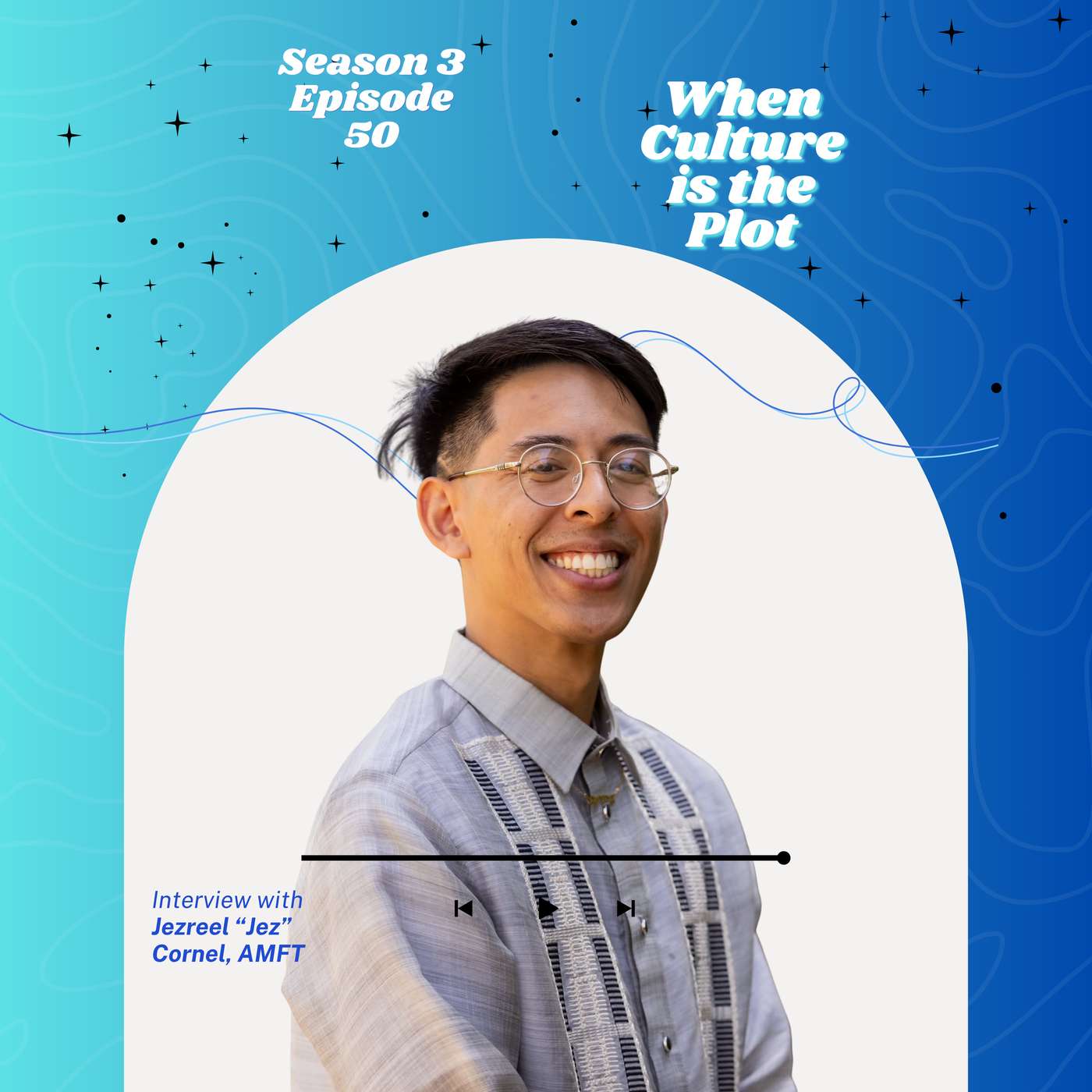
50: What happens when culture drives the story? Ariel and Stef welcome Filipino American therapist Jez Cornel to talk about why DreamWorks’ Forgotten Island hits so close to home. From karaoke to Lola’s advice to pressure to be the “good kid,” they unpack the details that actually make representation feel like it's repping and why it felt missing in Raya and the Last Dragon. Spoilers for Forgotten Island and Raya and the Last Dragon. Chapters 00:00 When culture is the plot 00:32 A Disney podcast celebrating DreamWorks 00:55 Meet Jez Cornel 01:51 Revisiting Raya through Forgotten Island 03:38 What changes when you watch a movie again? 04:58 Filipino community and the film’s rollout 07:43 What intentional representation looks like 09:16 Lola, elders, and connections across generations 12:22 What is kapwa? 13:30 Salbahe kids, good students, and family expectations 16:55 Loving your family and feeling the pressure 19:24 Community in a world of magical creatures 20:29 Growing up with Filipino folklore 23:44 Manananggal, mystery, and Jez’s theories 26:38 Retelling stories shaped by colonization 27:22 What makes a monster? 29:54 Culture as character, scenery, and background 30:38 Raya and the limits of a broad cultural lens 33:04 Making Jo and Raissa’s friendship matter 35:10 Diaspora, identity, and chosen family 37:59 Keeping traditions and changing the harmful ones 40:07 Memory, friendship, and growing together 41:05 “Tayo na,” “Tara na,” and queer readings 44:05 The language only your people understand 45:54 Team Mermahn or Team Raww? 48:49 Where to find Jez 50:08 Episode 50 and a more critical season three Media/Characters Mentioned Forgotten Island Raya and the Last Dragon Jo Raissa Lola Manang / Manananggal Batiba Prince Mermahn Raww Aswang Duwende Moana Te Fiti Te Kā Mulan Coco Black Panther Avatar: The Last Airbender WandaVision Zootopia Monstropolis / Monsters, Inc. The Hangover Demon Slayer Shrek Puss in Boots Squidward Salbahe Ako Filipino dramas and TFC Hallmark Christmas movies Topics/Themes Mentioned Filipino and Filipino American representation Culture as part of the story Sikolohiyang Pilipino / Filipino Psychology Kapwa and shared identity Cultural specificity in animation Filipino folklore and oral storytelling Colonial mentality, assimilation, and acculturation The model minority myth Family expectations and intergenerational messages Elders, ancestors, and cultural memory Diaspora, belonging, and chosen family Breaking generational patterns Keeping traditions while making room for change Friendship, grief, and shared memories Queer readings and audience interpretation Language, intimacy, and inside jokes Community conversations and repeat viewings Critiquing the media we love Links & Resources Guest Links: Jez Cornel, AMFT, at SolPath: https://www.solpathwellness.com/solpathteam SolPath Counseling & Holistic Wellness: https://www.solpathwellness.com Kasamahan: https://www.kasamahan.org Show Links: Website:...
Ariel Landrum (she/her) (00:00) I think this is highlighting the difference of when culture is key to the character versus scenery and background. Jezreel Cornel (he/him/siya ᜐᜒᜌ) (00:10) okay. Ariel Landrum (she/her) (00:12) When it's very key to the character, it almost explains itself. But when it's background, you have to re-bring it back up. Ariel Landrum (she/her) (00:32) Okay y'all, this is a Disney podcast. We're gonna talk about a Disney thing, but we're gonna celebrate a not Disney thing. Is that okay? Stefanie Bautista (she/her) (00:42) Always okay. We make the rules. Ariel Landrum (she/her) (00:48) Stef we got a guest on. Stefanie Bautista (she/her) (00:50) Sure do. Ariel Landrum (she/her) (00:51) Jez, you wanna introduce yourself? Who are you? Why are you here on our podcast? Jezreel Cornel (he/him/siya ᜐᜒᜌ) (00:54) Yeah. Yeah. Jezreel Cornel (he/him/siya ᜐᜒᜌ) (00:55) why am I here? My name is Jez. I'm a associate marriage and family therapist. I wear a lot of different hats in a lot of different communities. My specialty, my area of interest is in Filipino psychology, Filipino American psychology. So that is why I think I'm on this podcast. Stefanie Bautista (she/her) (01:10) You're right. That is exactly why you're on this podcast. If you need any validation, as per, you know, us Filipino Americans always need validation as we will talk about on this episode. we are so excited to talk about I feel like something that could be Disney adjacent, right, Ariel? Yeah. Ariel Landrum (she/her) (01:30) Yeah. Ariel Landrum (she/her) (01:30) We have DreamWorks, which has always been the other production company, right? The other animator. and they have been creating some bangers and really challenging Disney in a few different ways. And we had a Disney Ariel Landrum (she/her) (01:51) We had a Disney princess who allegedly was of Southeast Asian descent in a fairy tale land, Raya and the Last Dragon. And Stef and I did not touch this film at all because of a lot of critiques that we had. and now that we have DreamWorks Forgotten Island, I think it's time to touch this thing because the critiques, now we have something to compare it to. it wasn't just we were being critical. Ariel Landrum (she/her) (02:17) we were actually showing what happens when you dilute a narrative from its source. Stefanie Bautista (she/her) (02:25) Yeah. And I remember Ariel when you and I were talking about wanting to talk about Raya. And I think our feelings were so wanting to praise it, but there was just something deep down inside that kept us from it. And we couldn't really pinpoint it because when you're critiquing something that is reflective or Jezreel Cornel (he/him/siya ᜐᜒᜌ) (02:44) Okay. Stefanie Bautista (she/her) (02:45) supposed to be reflective of you, your heritage, what you find true, your lived experiences, and you don't necessarily Jezreel Cornel (he/him/siya ᜐᜒᜌ) (02:48) I think I'm just gonna make Stefanie Bautista (she/her) (02:51) see that. Stefanie Bautista (she/her) (02:52) You almost feel guilty or ashamed for not liking it. But I feel like that feeling in and of itself is so intrinsically Filipino to even be embarrassed to talk about and critique something that is supposed to be praising us. Jezreel Cornel (he/him/siya ᜐᜒᜌ) (03:03) I just like for something Jezreel Cornel (he/him/siya ᜐᜒᜌ) (03:08) about everything else. Ariel Landrum (she/her) (03:10) Yeah. I I'm curious, Jez, did Ariel Landrum (she/her) (03:12) you see Ryan The Last Dragon? Jezreel Cornel (he/him/siya ᜐᜒᜌ) (03:14) I did but a long time ago. So I'm Ariel Landrum (she/her) (03:17) Okay. Jezreel Cornel (he/him/siya ᜐᜒᜌ) (03:18) I'm reflecting, but it's it's far in my memory. Jezreel Cornel (he/him/siya ᜐᜒᜌ) (03:20) it was an enjoyable experience. Is it my favorite movie or do I see myself more represented in Forgotten Island? I would defer to Forgotten Island twelve out of ten times. Stefanie Bautista (she/her) (03:31) Twelve out of ten. Look at that above and beyond. Ariel Landrum (she/her) (03:31) Beautiful. Jezreel Cornel (he/him/siya ᜐᜒᜌ) (03:32) Yeah, I sa I saw it four times Jezreel Cornel (he/him/siya ᜐᜒᜌ) (03:34) and then it's coming out again, so I'm gonna see the fifth time and then the sixth time Stefanie Bautista (she/her) (03:37) Love it. Yeah. Ariel Landrum (she/her) (03:37) Okay, so you watched Ariel Landrum (she/her) (03:38) it more than once. I'm curious, in rewatchings did you see new things or new story or new perspective? Jezreel Cornel (he/him/siya ᜐᜒᜌ) (03:44) Y yeah. Jezreel Cornel (he/him/siya ᜐᜒᜌ) (03:46) Or I experienced it in different ways. so first time I saw it the day before the night before it came out, kind of like an opening watch party. And then I saw it the day of it came out, and then I saw it with a small group of friends, and I saw it with a larger group of friends. So each time I feel like I've been picking up on different things and then also the discussions that happen online and absorbing it all. And then the first time around, it's like you focus on the story, right? And then Jezreel Cornel (he/him/siya ᜐᜒᜌ) (04:09) the multiple times around you start focusing on the other things happening outside of the story. Stefanie Bautista (she/her) (04:12) Mm. Jezreel Cornel (he/him/siya ᜐᜒᜌ) (04:12) So that's where I feel like I enjoyed and learned in the movie more. Stefanie Bautista (she/her) (04:16) I guess the opposite way. Do you remember where you watched Raya when you did? Jezreel Cornel (he/him/siya ᜐᜒᜌ) (04:21) that's a good question. I don't think I saw Ryan in the movie theaters. I think I waited 'til it came out to streaming and I think I watched it the comfort of my home to home. Stefanie Bautista (she/her) (04:29) Mm-hmm. I remember and and this is me processing, right? It it happened around COVID or post-COVID or right Ariel Landrum (she/her) (04:35) Yeah. Stefanie Bautista (she/her) (04:36) at the tail end of it. Cause I don't even remember wanting to be like, ooh, let me get this ticket to watch it on a big screen. It was more so like, I'm just gonna watch it when it comes out, sort of situation. So now I'm like, Ariel Landrum (she/her) (04:47) Mm-hmm. Stefanie Bautista (she/her) (04:48) I don't know, Ariel, if you remember if you watched it online or Ariel Landrum (she/her) (04:53) I watched it at home. I watched it at home on streaming on Disney Plus. Stefanie Bautista (she/her) (04:58) Mm-hmm. Mm-hmm. I feel like Forgotten Island for me, driving around the city, it had a lot of promotion. and maybe it's because my algorithm is so Filipino tuned that I just saw all of my friends promoting it and, you know, people I know in the entertainment business, my like me, DJ friends, all that stuff. They were heavily, heavily promoting it because they were part of the promotions plus being at Stefanie Bautista (she/her) (05:21) Comic-Con, having the panel. Ariel Landrum (she/her) (05:23) Mm-hmm. Mm-hmm. Stefanie Bautista (she/her) (05:24) I don't remember that much hype around Raya, even in the COVID times, because we had other movies that came out. And, you know, if we're talking about even like WandaVision and other Disney Jezreel Cornel (he/him/siya ᜐᜒᜌ) (05:36) No. Stefanie Bautista (she/her) (05:36) things that came out, I feel like it was heavily promoted, but I don't I don't remember that with Raya. So I don't know. Do have do you guys remember anything from that time comparing that to how you found out about Forgotten Island this time? Jezreel Cornel (he/him/siya ᜐᜒᜌ) (05:51) That's a good question. How did I find out about Forgotten Island? I think I found out Stefanie Bautista (she/her) (05:54) Yeah. Jezreel Cornel (he/him/siya ᜐᜒᜌ) (05:54) about it months ago and I met Januel and I because they came to San Diego and I was like, I'm trying to go to the opening night premiere. Is there any way I can Stefanie Bautista (she/her) (06:03) Yeah. Jezreel Cornel (he/him/siya ᜐᜒᜌ) (06:04) go? And they're Are you from LA? I'm like, No, I'm from San Diego. so I Ariel Landrum (she/her) (06:07) Ha ha! Jezreel Cornel (he/him/siya ᜐᜒᜌ) (06:07) I learned about it months ago. when it was the trailer dropped, and I was like, my gosh, this is Filipino American coded. This is a movie for me. Stefanie Bautista (she/her) (06:14) Mm-hmm. Ariel Landrum (she/her) (06:16) Yeah. Stefanie Bautista (she/her) (06:16) Mm-hmm. Ariel Landrum (she/her) (06:17) Yeah, same, same. I heard about Forgotten Island, I will say a few months back. again, same thing with you, Stef. It was on my feed. it was on my algorithm. I didn't know anything about Raya the Last Dragon until the week it was released. And Stefanie Bautista (she/her) (06:35) Mm. Ariel Landrum (she/her) (06:37) only because of the character of the dragon being voiced by it's Ariel Landrum (she/her) (06:43) I don't know the actress, is it Aquafina? Yeah. Stefanie Bautista (she/her) (06:43) Mm-hmm. Ariel Landrum (she/her) (06:46) And there was a lot of controversy around that actress. And so it wasn't even the thing that I got promoting the film. It was the controversy. Stefanie Bautista (she/her) (06:57) Yeah. And I mean the reason why I thought about that is because I feel like when we hear about films, whether, you know, now that we're adults and we are we have adult money, we are we want to put our adult money to our fun things, but it depends on how much of it is put in front of us. and I Jezreel Cornel (he/him/siya ᜐᜒᜌ) (07:14) Mm-hmm. Stefanie Bautista (she/her) (07:15) think because Forgotten Island strategically went through SoCal Filipinos and a lot of these other accounts that Stefanie Bautista (she/her) (07:21) were in tune with what's going on, especially during Filipino-American history month. I think it was kind of intentional, definitely, but the rollout seemed, I mean, think the theme of all of this is intentionality. And I think we we Jezreel Cornel (he/him/siya ᜐᜒᜌ) (07:32) I think that's really technical. Ariel Landrum (she/her) (07:37) Mm-hmm. Stefanie Bautista (she/her) (07:38) think a lot about intentionality when it comes to critiquing, especially Ariel Landrum (she/her) (07:42) Yes. Stefanie Bautista (she/her) (07:43) movies that have a cultural background like Black Panther, Coco. Stefanie Bautista (she/her) (07:48) we want to feel that intentionality and I don't know about you guys, but when it came to intentionality, did you notice certain things about, you know, just just the way that they approached certain things without if you didn't see the Filipino sun, if you didn't see, you know, like the color of their skin, what other modes of intentionality did you feel in, you know, watching it Ariel Landrum (she/her) (08:09) No. Stefanie Bautista (she/her) (08:09) or or being excited for it really? Ariel Landrum (she/her) (08:13) Hmm. I know the thing that I clocked right away was the pointing with the lips. Ariel Landrum (she/her) (08:20) And how it was like Jezreel Cornel (he/him/siya ᜐᜒᜌ) (08:23) Huh. Stefanie Bautista (she/her) (08:24) I love that. Ariel Landrum (she/her) (08:26) I know for me what that is in culture, but I think if I were watching it and didn't know it from culture, I would still understand what I'm seeing. Does that make sense? Because we Stefanie Bautista (she/her) (08:37) Mm. Ariel Landrum (she/her) (08:38) could have just put someone pointing with their lips and then the camera, camera pan over, but it was Jezreel Cornel (he/him/siya ᜐᜒᜌ) (08:44) Mm-hmm. Ariel Landrum (she/her) (08:45) the Ariel Landrum (she/her) (08:45) The weaving around, the following the way that it goes, that energy, that felt like very intentional. How do I how do I explain this thing in the audience without having the character go, she's pointing with her lips? This is a common thing. You know what I mean? Jezreel Cornel (he/him/siya ᜐᜒᜌ) (08:56) huh, uh-huh, Jezreel Cornel (he/him/siya ᜐᜒᜌ) (09:01) they were subtle in the sense of seeing the karaoke, the food in the trailers, and even the score. maybe Stefanie Bautista (she/her) (09:07) Mm. Jezreel Cornel (he/him/siya ᜐᜒᜌ) (09:07) because my colleagues were part of the score and hearing the kulintang in the background, Jezreel Cornel (he/him/siya ᜐᜒᜌ) (09:12) it did have a theme of intentionality threaded throughout. Stefanie Bautista (she/her) (09:16) And I think that definitely resonated with me. even in the way that they were speaking to Lola. very much like they weren't talking to their parent, but they were talking to somebody who spoke their language. It was very reminiscent of Moana speaking to her grandma. It was like that specific, like, you're my you're my comfort person. You are the person that I'm gonna show my true self to. And I think Stefanie Bautista (she/her) (09:40) That in and of itself was so specific to me, but also subtle in a way. Because it wasn't they didn't go too much into the background. They did about why, you know, her parents weren't there. But I think it was really smart of them to kind of go the Moana route and have Ariel Landrum (she/her) (09:55) Uh-huh. Stefanie Bautista (she/her) (09:56) that strong connection to a grandparent. Cause I think that's something that we've all experienced in our lives. And I think that's what was missing with Raya. I don't remember there being an elder. Ariel Landrum (she/her) (10:07) No, everybody was Stefanie Bautista (she/her) (10:08) Correct me if I'm wrong. Ariel Landrum (she/her) (10:09) everyone was turned into stone and she had Stefanie Bautista (she/her) (10:12) Mm-hmm. Ariel Landrum (she/her) (10:12) to essentially rescue her dad. so if you were to say there was an elder, she would have been the elder because she was a child when the catastrophe happened and everybody, all the children I guess were the ones who were able to sort of grow up in this world without the unification of Jezreel Cornel (he/him/siya ᜐᜒᜌ) (10:31) Mm-hmm. Ariel Landrum (she/her) (10:32) Kumadra, without the lands or resources. Stefanie Bautista (she/her) (10:35) I definitely think that missing piece of the elders. even in Mulan, you had the ancestors. They were all giving her, advice, whether it was good or bad. there's always an element in Coco, there's an element of the ancestors. In Black Panther, Ariel Landrum (she/her) (10:47) Mm-hmm. Stefanie Bautista (she/her) (10:48) there's an element of, all the Black Panthers that came before. I think that was definitely a missing piece when I think about Raya, because there's, something very cultural about Stefanie Bautista (she/her) (10:56) multi-generations and not just you and your parent but you your parent grandparent and then what do we do for the generations to come so I feel like they were very Raya was very limited in that sense whereas Forgotten Island broke that wide open and you saw the whole dang family. Raissa saw his whole freaking family whether they were blood related or not was at that party. Ariel Landrum (she/her) (11:19) that's a really good point because if I'm remembering with Raya, the flashback memories of her father, they start to slow slowly unfold for the audience, but there isn't a narrative where she is holding on to the messaging. But we often heard Jo and Raissa saying, Lola used to say this, remember Lola used to say that, like the words stuck. Stefanie Bautista (she/her) (11:40) Yeah. And it not even being Raissa's actual grandmother, but a grandmother figure, she was able to connect to that. And then I think being set in the Philippines where you live in a neighborhood where basically everybody is your family, that gave that sense of community, that kapwa, you know, these are just like the people. They're your aunties and uncles, whether or not you're you're related. Whereas Stefanie Bautista (she/her) (12:03) I feel like they zoomed out too much in Komandra, where it was so far apart that it felt almost like Avatar the Last Airbender, but smooshed into one. they didn't even get whole seasons to explore every single tribe. They just talked about it and then you just had to experience it. It was it was very odd. Ariel Landrum (she/her) (12:22) Mm. So Stef, you just used a word that Jez I think that you could explain for our audience. Do you know what word I'm referring to? Jezreel Cornel (he/him/siya ᜐᜒᜌ) (12:30) Yeah, I must I'm assuming it's kapwa Ariel Landrum (she/her) (12:33) Yeah, yeah. Stefanie Bautista (she/her) (12:33) Mm-hmm. Jezreel Cornel (he/him/siya ᜐᜒᜌ) (12:36) Yeah, so the definition, Dr. Virgilio Enriquez is kind coined as a father of Filipino psychology and he didn't coin the phrase kapwa kapwa has existed long a time immemorial, but in terms of the academic sense, kapwa is shared identity regardless of social categories. It's this you and I, I and we concept. it goes above beyond collectivism. It's like we are spiritually one, if you will. Ariel Landrum (she/her) (13:03) does that connect with this idea that your words can affect me even though you're not my grandmother? we don't have to have shared blood to have shared moments and shared connections. Jezreel Cornel (he/him/siya ᜐᜒᜌ) (13:13) Yeah, I think Raissa I mean that's Raissa's grandma for all I know. they shared Ariel Landrum (she/her) (13:17) Mm-hmm, Jezreel Cornel (he/him/siya ᜐᜒᜌ) (13:18) the same similar experience, the same Stefanie Bautista (she/her) (13:19) Mm-hmm. Jezreel Cornel (he/him/siya ᜐᜒᜌ) (13:19) upbringing, they were in a sense, Jo was right from the get go, like you wanna be best friends and then Stefanie Bautista (she/her) (13:24) Mm-hmm. Jezreel Cornel (he/him/siya ᜐᜒᜌ) (13:25) you know, they they had the same experiences, life experiences together. Stefanie Bautista (she/her) (13:30) you mentioned she says, Do you want to be best friends? I don't know if it's a universal thing, but the way that they leaned on the Salbahe kids, the kids that were mischievous, the kids that were not like the A students, had it what kind of student were you? Were you the Salbahe? were you the mischievous one? Or were you the A plus student? Because I thought that was a really fun take. Jezreel Cornel (he/him/siya ᜐᜒᜌ) (13:52) Yeah, I think it depends when you ask me. If you ask me in elementary school, yeah, I was the A plus Stefanie Bautista (she/her) (13:55) Ha ha ha Jezreel Cornel (he/him/siya ᜐᜒᜌ) (13:58) kid. If you ask me in undergrad, I was the goofing off kid. If you ask me in grad Stefanie Bautista (she/her) (14:00) Ha ha Jezreel Cornel (he/him/siya ᜐᜒᜌ) (14:01) school, I was the kid who participated. Stefanie Bautista (she/her) (14:04) Ariel, how about you? Ariel Landrum (she/her) (14:04) Ooh, I I have often and always been the A plus kid, but I was also the kid that got pulled to sit somewhere else 'cause I was distracting and or talking to people when Stefanie Bautista (she/her) (14:17) Mm. Ariel Landrum (she/her) (14:17) I should be doing my work. And I always got the work done, so I don't know why I couldn't chat. Stefanie Bautista (she/her) (14:26) I mean, why not have it both, right? as Ariel Landrum (she/her) (14:29) Right. Stefanie Bautista (she/her) (14:29) a young child, I was definitely the more talkative one that always got in trouble only when I went to Catholic school because I wasn't supposed to speak, like I wasn't supposed to be rambunctious. And then because of that, when I got moved to public school, I became the quiet, the A plus student Jezreel Cornel (he/him/siya ᜐᜒᜌ) (14:47) Mm-hmm. Stefanie Bautista (she/her) (14:48) because I was inherently punished for it. And then Ariel Landrum (she/her) (14:51) Yeah. Stefanie Bautista (she/her) (14:52) Then I was like, okay, when I learned how to be mischievous in other Stefanie Bautista (she/her) (14:56) I found other ways to be Salbahe because I needed to get the A. So it was kind of like, I have to be mischievous in order to be the A plus student because I didn't want to show that I was lacking in Stefanie Bautista (she/her) (15:11) Anything. So I think Filipinos, because you there's that model minority myth, and we, you know, we talk about it quite often, that Filipinos fall under this middle ground where, you know, the a lot of us are very, smart, we dedicate ourselves, but we like to party Stefanie Bautista (she/her) (15:26) I feel like that's just like a Filipino thing to have that duality because Stefanie Bautista (she/her) (15:30) We can we can adapt to any situation. So I mean, when I listen to the soundtrack and my son likes to listen to it in the car, when I listen to the Salbahe Ako song, I'm like, wait, is this sending the wrong message? I don't want him to be Salbahe yet. But I mean, it's okay if he is. And then now I'm having this mental breakdown while I'm driving, listening to the Forgotten Island. And I'm like, okay, I need a I need to chill because this is I'm reading way too much into it. Ariel Landrum (she/her) (15:59) You're like, I want to break generational curses, but also I want my son to succeed. Stefanie Bautista (she/her) (16:04) No, truly, Stefanie Bautista (she/her) (16:04) truly, truly. my god. Ariel Landrum (she/her) (16:07) I love it. Stefanie Bautista (she/her) (16:08) You guys are both that please break that down for me because I'm like, you know what? Why am I having these feelings? And I think, you know, I feel like that's part of the breaking of generational curses is going through wild thoughts like that. I was taught to be one thing, but this movie is challenged from being me. Stefanie Bautista (she/her) (16:28) To to go against that. And Stefanie Bautista (she/her) (16:32) and it's just, you know, all in the name of being true to yourself and who you are as a Filipino American or you know, a Filipino born and raised in the Philippines, like what have you. And I think that's what what I love about the movie that it brings up emotions like that. And I'm sure, Jezreel Cornel (he/him/siya ᜐᜒᜌ) (16:48) yeah. Stefanie Bautista (she/her) (16:48) guys felt some type of push and pull when you were watching the movie. Ariel Landrum (she/her) (16:55) Yes, yes. certainly push and pull in watching the the Tita memory stealer be such a wonderful fluffy Stefanie Bautista (she/her) (17:06) Batiba. Ariel Landrum (she/her) (17:07) looking character, but also are you bad? And then thinking like, hey, I've had, I've definitely had family members who Ariel Landrum (she/her) (17:18) who were who were meddlesome in the most loving and caring way. And so there's that that tension, that push pull, I wanna give you a hug and you're feeding me. I don't wanna tell you anything 'cause it seems like it gets used against me. Jezreel Cornel (he/him/siya ᜐᜒᜌ) (17:31) Mm-hmm. Stefanie Bautista (she/her) (17:32) Yeah, yeah, yeah, yeah. Ariel Landrum (she/her) (17:36) I don't know, just Stefanie Bautista (she/her) (17:36) Yeah. Ariel Landrum (she/her) (17:36) what about for you? You're like the was there any push or pull in w in scenes? Jezreel Cornel (he/him/siya ᜐᜒᜌ) (17:42) Yeah, I mean, I've done a mini-series and it's been fun to do a mini-series on the Filipino ex American experience, Filipinos in the diaspora Stefanie Bautista (she/her) (17:49) Mm-hmm. Jezreel Cornel (he/him/siya ᜐᜒᜌ) (17:51) of just the messaging and the coding that happens. it's very minute, but you know, being a Filipino American marriage family therapist, it's like this comes from somewhere, or this this is this is from this, Stefanie Bautista (she/her) (18:00) Mm-hmm. Jezreel Cornel (he/him/siya ᜐᜒᜌ) (18:01) right? and just experiencing it, I think also with family and my parents and grandparents, it's like Jezreel Cornel (he/him/siya ᜐᜒᜌ) (18:07) we're all watching this movie and we're all talking about it and having a discussion about it. remember that moment when the Tito was like, Raissa is gonna go to the America and introduce us to Tom Cruise? It was like Stefanie Bautista (she/her) (18:15) Mm-hmm. Stefanie Bautista (she/her) (18:17) It's always that. Jezreel Cornel (he/him/siya ᜐᜒᜌ) (18:19) It's like that Jezreel Cornel (he/him/siya ᜐᜒᜌ) (18:20) it's funny, ha ha, but also it's like that comes from here, right? Or there that's Stefanie Bautista (she/her) (18:24) Mm-hmm. Jezreel Cornel (he/him/siya ᜐᜒᜌ) (18:25) where these messagings come from. Or even just Raissa going into STEM, going to America, and Jo pursuing arts or pursuing more literature or being an author, right? And do I stay in the Philippines? Do I immigrate? Do I acculturate? Do I not? Do I assimilate, right? And so Stefanie Bautista (she/her) (18:38) Mm-hmm. Jezreel Cornel (he/him/siya ᜐᜒᜌ) (18:39) a lot a lot of these messages are undertone, right? But it's being talked about in a fun, you know. Jezreel Cornel (he/him/siya ᜐᜒᜌ) (18:46) way where we can all relate and we can all laugh because we all had some form a shared similar experience of our Titas, our Lolas, our Titos telling us similar things. Stefanie Bautista (she/her) (18:57) Yeah, yeah. And the gusto in which they tell us and, you know, the the certainty of how they tell us how we should be and live is so very it hit me right in the heart. are you here to eat the lechon or you're here to tell me how to live my life? which one is it? Which one is it? And I mean even with, you know, when we were exploring the different Stefanie Bautista (she/her) (19:24) The different magical creatures and, mythological creatures that we see throughout the island. I think they also had their little pockets of community. And I think it was really good to see that it wasn't just, one of them, aside from, Manananggal. She's she's alone for her reasons. but seeing everybody else depicted with, you know, community with them no matter where they went. And then when they went to the market, that to me was like, Stefanie Bautista (she/her) (19:50) somebody Filipino wrote this. And I think you immediately see that because, you know, whether or not you visited the Philippines, you've seen, you know, videos on YouTube. And, you know, now Ariel Landrum (she/her) (20:00) Uh-huh, uh-huh. Stefanie Bautista (she/her) (20:01) that we have access to Filipino influencers, we see how life works back there as Filipino Americans. And we hear it from the stories of our aunts, our cousins, our parents. And seeing that in a magical way was Stefanie Bautista (she/her) (20:16) very cool. because then watching younger kids see that before them, to them it's like seeing Monstropolis or Zootopia. It was like that, but Filipino coded. Ariel Landrum (she/her) (20:29) I I'm glad that you brought up some of the the creatures, fairy tale, folklore beings of Forgotten Island. Did any of you know about some of these folklore and some of these sort of beings and creatures? were those stories that were told to you growing up Jezreel Cornel (he/him/siya ᜐᜒᜌ) (20:50) I don't know if they were told to me growing up, but I think because, like Stef was saying, the Filipino influencers, I'm thinking of Kuya Kirby, right? And all the YouTube Stefanie Bautista (she/her) (20:59) Mm-hmm. Jezreel Cornel (he/him/siya ᜐᜒᜌ) (20:59) videos that he puts out in connecting to Filipino mythology, or even for me as a Filipino American marriage and family therapist, I can't help but dip my toes into Filipino indigenous spirituality, Filipino mythology, and at least be aware or be in the know, right? Stefanie Bautista (she/her) (21:17) Yeah, yeah. for me, I grew up hearing the stories from my aunts, my Lolas. even you know, when I met my husband's family, his Lolas would talk about, Aswang and Manananggal and Duwende, especially when we would go visit or my husband would visit, he once accidentally stepped on a Duwende hill and they had to rub gasoline on his stomach so that he wouldn't Stefanie Bautista (she/her) (21:43) bring it home. or he wouldn't upset them, upset the spirits, because this all happens in the provinces. not a lot of this stuff happens in the city. And I usually travel back to the city, but it's always when you go to the provinces. And when I talk to my friends who are Cebuano or Ilocano, they have stronger stories and they have direct experiences with these things. And I would hear it from them. Stefanie Bautista (she/her) (22:07) but I always was fascinated that, we had our own version of what we know as Greek mythology, Roman mythology. And I think growing up I craved to hear more of that. Jezreel Cornel (he/him/siya ᜐᜒᜌ) (22:17) No yeah. Stefanie Bautista (she/her) (22:18) and the only accessible way that I could before, the internet was whenever I traveled back, I would try to just ask and find out about these things. And not a lot of people like to talk about them. Stefanie Bautista (she/her) (22:30) Because sometimes they have their own personal experience that they just do not want to talk about. but yeah, it was always just living in the back of my head as, you know, just a story. but seeing it embodied and you know, the Duwendes were really cute in this one. They were absolutely cute, but I knew them to be scary. And I'm they're like little anime characters, look like little dumplings or you know. Stefanie Bautista (she/her) (22:53) chibi versions of what I thought in my head. So I'm like, okay, this is a way more tame version. And then and then I look over at the toddlers, sitting next to me. I'm like, maybe that's that's a good thing because when I heard about them, they were absolutely scary. They eat babies, they looked absolutely terrible. if they ever made a Halloween Horror Nights version, if they really stayed true to it, I'm pretty sure it would be absolutely terrifying and I would not go. Stefanie Bautista (she/her) (23:18) I would definitely not go. Ariel Landrum (she/her) (23:21) well, Ariel Landrum (she/her) (23:23) so in the stories that you heard any aside from the different cute dumpling, was there anything that you saw in this film that reminded you of the things that you heard or anything that took the mythology, the narrative, the beings further past what you heard? Stefanie Bautista (she/her) (23:41) Hmm. Stefanie Bautista (she/her) (23:44) just focusing on Manananggal and her being, her character, where she came from, they really craftfully set it up to where she was shrouded in mystery for so long. Jezreel Cornel (he/him/siya ᜐᜒᜌ) (23:55) Mm. Stefanie Bautista (she/her) (23:55) And you only saw her because they're going backwards, right? It's like the hangover. You figure out where you are and you gotta work your way back to find out how you got there. And Stefanie Bautista (she/her) (24:05) Raissa has these wings, where the heck did they come from? And then as you unfold, then you see glimpses of Manananggal, and then at the end, then you find out she has healing that she needs to do as Jezreel Cornel (he/him/siya ᜐᜒᜌ) (24:15) Mm-hmm. Stefanie Bautista (she/her) (24:16) well to because she was something in the past. and I like how they shrouded that in mystery. They didn't give us her full story the way they did with the other characters or the other mythological creatures, because she was. Stefanie Bautista (she/her) (24:31) mysterious and scary to me, hearing about her in stories and and like things I would read Jezreel Cornel (he/him/siya ᜐᜒᜌ) (24:37) Yeah. Stefanie Bautista (she/her) (24:38) on a website that probably wasn't even legit back in the two thousands. Ariel Landrum (she/her) (24:47) how about for you, Jazz? Jezreel Cornel (he/him/siya ᜐᜒᜌ) (24:49) Yeah, I think with Manang, I imagine that was intentional or strategic, that maybe a sequel or a prequel or even Stefanie Bautista (she/her) (24:56) Mm-hmm. Jezreel Cornel (he/him/siya ᜐᜒᜌ) (24:57) a T V series of deep diving into each individual Ariel Landrum (she/her) (25:00) Mm. Jezreel Cornel (he/him/siya ᜐᜒᜌ) (25:00) character and exploring you know, I have my own thoughts or my own theories of why Manang was the way that she was. And she was very scary for for a Ariel Landrum (she/her) (25:08) Share, share. Jezreel Cornel (he/him/siya ᜐᜒᜌ) (25:09) a G PG movie. I could only imagine Stefanie Bautista (she/her) (25:10) Ja. Jezreel Cornel (he/him/siya ᜐᜒᜌ) (25:12) what a PG thirteen rated R Manananggal would have looked like. Stefanie Bautista (she/her) (25:17) Mm-hmm. Jezreel Cornel (he/him/siya ᜐᜒᜌ) (25:18) Yeah. Stefanie Bautista (she/her) (25:18) Yeah. What's your number one theory of how she got that way? Jezreel Cornel (he/him/siya ᜐᜒᜌ) (25:23) my number one theory. I have so many theories. I think Stefanie Bautista (she/her) (25:27) Ha ha Jezreel Cornel (he/him/siya ᜐᜒᜌ) (25:28) that she gave away her heart to Batiba in order to send Lola back. And I feel like and knowing Manananggal and what Kirby and I'm walking very carefully because even Kuya Kirby was like, Don't spoil anything. I was like, okay, but these are Stefanie Bautista (she/her) (25:43) Mm. Jezreel Cornel (he/him/siya ᜐᜒᜌ) (25:43) my theories. I have a feeling that Manang comes from somewhere or she's some deity, or she she's not the only Manang only Manananggal. Stefanie Bautista (she/her) (25:50) Mm. Ariel Landrum (she/her) (25:51) okay, okay. Jezreel Cornel (he/him/siya ᜐᜒᜌ) (25:52) and I think it can be in relation to Lola, maybe even Jo's mom, who knows? Or just just knowing the mythology of Manang or the Manananggal and how the separation and childbirth and the origins, I feel like there's more to discover and play with Manang and her character. Stefanie Bautista (she/her) (26:11) Yeah. I love Ariel Landrum (she/her) (26:12) Okay. Okay. Stefanie Bautista (she/her) (26:13) that. I was thinking for a marketing lens, I'm like, they're gonna drag this out so that we can get more Forgotten Island. I see you dream works, Puss in Boots. I see how Shrek had like 7,000 Ariel Landrum (she/her) (26:21) Yeah. Stefanie Bautista (she/her) (26:24) sequels. and I love that. And I went through there first, but I think what you said was really smart, like that she wasn't the only one, that she wasn't the only one of her kind. And I I Ariel Landrum (she/her) (26:34) Mm-hmm. Stefanie Bautista (she/her) (26:35) really that that's exciting to see and Stefanie Bautista (she/her) (26:38) I'm really wondering where and how, and this is an open-ended question, they are researching and what liberties they're taking to either stray away from the stories that we've heard that have been passed down because obviously because we were colonized, it they don't they're not in one place. they're they live through, you know, through word of mouth, you know, scripts that were probably lost or destroyed. So Stefanie Bautista (she/her) (27:05) I'm wondering how the the research process is going when it comes to exploring these stories and how much, you know, we're willing to take as entertainment but also stay true to our heritage. Ariel Landrum (she/her) (27:22) Well, and I think something interesting in the way that it's like that for a future hope, more films. I mean, we did start to see a change in how villains in general in children's film have evolved and changed from being one dimensional you are a bad guy to some complexity Jezreel Cornel (he/him/siya ᜐᜒᜌ) (27:42) so. Ariel Landrum (she/her) (27:44) of what happened to you or what created this experience. I know for me, it really sticks out in Moana. Ariel Landrum (she/her) (27:52) when we see, Tafiti and what happened when her heart was taken away and becoming Teka. So I'm seeing remnants of an opportunity. We saw it at the end of the film, but for more films, an opportunity of like, here is what happened that can create quote unquote a monster or can really Jezreel Cornel (he/him/siya ᜐᜒᜌ) (28:11) Mm-hmm. Stefanie Bautista (she/her) (28:11) Mm-hmm. Ariel Landrum (she/her) (28:12) how much pain can create more pain. Stefanie Bautista (she/her) (28:16) Yeah, yeah. I think they even did that in a small way with Batiba because she was doing things out of, a lack of community, Stefanie Bautista (she/her) (28:25) And we saw her be nice, then be like the villain as she's sucking the soul and memories out of Jo and Raissa. And then now we come to understand that, she's like this for a reason. And we they were able to wrap that up. Stefanie Bautista (she/her) (28:39) In the third act of the movie. So I definitely see them going in that way. I don't know if you guys are familiar with Demon Slayer, it's a very popular anime. I was thinking that they were gonna go the Demon Slayer route and be like, my gosh, every single one of them has a tragic story, and we're gonna go through all of them. I'm ready to cry. And then I'm like, I don't know if this is that type of movie. But again, I think. Stefanie Bautista (she/her) (29:08) Those are really strong stories that have been successful in many ways that I was just so proud to see packaged in in this movie because it was about time that we had representation with really good storytelling, really good voice acting, a really Jezreel Cornel (he/him/siya ᜐᜒᜌ) (29:24) Mm. Stefanie Bautista (she/her) (29:25) good soundtrack, Ariel Landrum (she/her) (29:26) Mm. Stefanie Bautista (she/her) (29:27) just everything that we look for in entertainment now. why not why not make a version of that for ourselves? And, you know, when when I think about all the Stefanie Bautista (she/her) (29:36) all the things about the movie that remind me of other things that I like. I'm like, this is this is why I resonate with it, because these are things that I'm familiar with and and resonate in a very emotional way when it comes to, these themes of family, belonging, identity. Ariel Landrum (she/her) (29:54) Hmm. Hmm. Well, and I think this is highlighting the difference of when culture is key to the character versus scenery and background. Jezreel Cornel (he/him/siya ᜐᜒᜌ) (30:08) okay. Ariel Landrum (she/her) (30:09) When it's very key to the character, it almost explains itself. But when it's background, you have to re-bring it back up. Stefanie Bautista (she/her) (30:18) Mm. Yeah, yeah, yeah, yeah. Can you explain a little bit more about visually, where you saw that in either Raya or Forgotten Island? did you feel like anything was forced in Raya? I mean, I do a little bit, but we could start. We could start. Ariel Landrum (she/her) (30:37) Yeah, I well, Ariel Landrum (she/her) (30:38) for you, what was forced, because I know that a lot of the criticism about Raya is that the if you remember Raya the Last Dragon is meant to depict all of Southeast Asia, which is like over 30 different countries and even more communities. instead of picking one culture, they tried to put us all in a bucket. Jezreel Cornel (he/him/siya ᜐᜒᜌ) (31:03) No. Ariel Landrum (she/her) (31:03) Then Ariel Landrum (she/her) (31:03) shook it and then dumped it out, which is probably really cruel to say, but that's that was the feeling. and it's so Stefanie Bautista (she/her) (31:09) Mm-hmm. Ariel Landrum (she/her) (31:10) wild because it's like Ride the Last Dragon, Forgotten Island, two women who are best friends, to Stefanie Bautista (she/her) (31:16) Yeah. Ariel Landrum (she/her) (31:18) an adventure that involves visiting a market, creating a team together to sort of save ourselves. Both had babies. Jezreel Cornel (he/him/siya ᜐᜒᜌ) (31:25) Mm-hmm. Ariel Landrum (she/her) (31:26) Like one was a demon baby, but like, right. Stefanie Bautista (she/her) (31:28) Right. Ariel Landrum (she/her) (31:29) So here are all these bones that sound the same. And yet with Raya, it was like, well, we want this to represent all of Southeast Asia. So we're gonna use a fake land. and what we want to do is we wanna unify them, right? So very much a lens from a Western culture where unification Jezreel Cornel (he/him/siya ᜐᜒᜌ) (31:52) Hmm. Ariel Landrum (she/her) (31:52) means not individual. Stefanie Bautista (she/her) (31:54) Mm-hmm, mm-hmm. Ariel Landrum (she/her) (31:55) Unification Ariel Landrum (she/her) (31:56) means all of you are Southeast Asian versus here's different countries. Stefanie Bautista (she/her) (32:02) Yeah, yeah. I think that's a very astute observation. Only because I didn't really think of it that way, but I knew in my head that everything felt disjointed in a way because they it felt almost political that they were trying to unify everybody as opposed to feeling like unifying a community, because unifying community feels different than hey. Stefanie Bautista (she/her) (32:29) all of these states and tribes, like, let's get along, cause that's what we're trying to do. And they're the all of these royals and, you know, it just it couldn't really pinpoint what it was trying to unify. And I think Jezreel Cornel (he/him/siya ᜐᜒᜌ) (32:43) Mm. Stefanie Bautista (she/her) (32:43) that's what bothered me because in the journey, I never really understood what the clear end game was, aside from her patching her relationship with my God, I forgot her best friend's name. Ariel Landrum (she/her) (32:56) Namara with the good hair. Namara namari. Yeah. Yeah. Stefanie Bautista (she/her) (32:58) Yes, her. Yes, yes, Namara. Yes, yes, yes. yeah, Stefanie Bautista (she/her) (33:04) Namara Yeah, I think you're right. and we didn't see we saw them as kids getting along, but it wasn't like Jo and Raissa where we saw them go through good times. We saw them go through loss, we saw them go through Jezreel Cornel (he/him/siya ᜐᜒᜌ) (33:15) Mm-hmm. Stefanie Bautista (she/her) (33:16) heartbreak, we saw them go through, you know, just being together, collecting all of their memories on their friendship bracelets, which Stefanie Bautista (she/her) (33:25) was so cute. I'm like, my God. look at your friendship bracelet. Yes. I remember all the friendship bracelets I made with, you know, my best friends. they they weren't that cool because we weren't, you know, tying like explosives to them, but I was like, that is so Filipino. Stefanie Bautista (she/her) (33:47) Freaking loved it. But yeah, we saw them and it was like a montage that we saw, as they grew up. It didn't even they didn't spend a lot of time on it, but it was it was shown to us in an impactful way because it was intentional in the way they want us to know that they had a bond like this. I know Raya Jezreel Cornel (he/him/siya ᜐᜒᜌ) (34:04) Mm. Stefanie Bautista (she/her) (34:05) and Namari had a friendship, but it didn't seem strong enough to be the driving force in going on this grand journey. Stefanie Bautista (she/her) (34:12) I know Jez, do you do you remember anything about Raya, if you go back in your mind about things that you were just like? Jezreel Cornel (he/him/siya ᜐᜒᜌ) (34:19) Yeah. Well I'm Jezreel Cornel (he/him/siya ᜐᜒᜌ) (34:21) I'm hearing what y'all are saying and I'm reflecting on when I watch Raya and it's almost like like you said, Ariel, they painted with a broad brush stroke and this is Southeast Asia. And for us as Filipino, Filipino Americans, it was more so in the background of like, that's Filipino. Jezreel Cornel (he/him/siya ᜐᜒᜌ) (34:39) and the focus on the adventure and the unification of these different tribes, entities, if you will. Whereas I feel like for Forgotten Island, it was just throughout intentional of even if you were Filipino, there were these Easter eggs of like, that's like Filipino. I did that in my household, right? And I feel like that was more intentional of focusing on one experience and going through that rather than trying to Jezreel Cornel (he/him/siya ᜐᜒᜌ) (35:04) Take on this whole conglomerate. Stefanie Bautista (she/her) (35:07) Mm-hmm. Ariel Landrum (she/her) (35:10) Well, I'm curious when it comes to maybe the diaspora experience and this idea of an adventure with found family, because both narratives had Jezreel Cornel (he/him/siya ᜐᜒᜌ) (35:21) Mm-hmm. Ariel Landrum (she/her) (35:21) that. Does that feel like it resonates with the story, with the culture, or with a diaspora lens? Cause I I'm thinking of the fact that Ariel Landrum (she/her) (35:38) Found family can be very important for diaspora. Stef and I Jezreel Cornel (he/him/siya ᜐᜒᜌ) (35:42) Mm. Mm-hmm. Ariel Landrum (she/her) (35:43) have talked about this on a few different panels and a few times in Ariel Landrum (she/her) (35:46) episodes. I know my Filipina heritage more now because I found her, and I was raised by a single military dad who was a white dad, so I know very much my British Scottish side. Stefanie Bautista (she/her) (36:01) Mm-hmm. Ariel Landrum (she/her) (36:02) And Ariel Landrum (she/her) (36:02) I have very strong memories from six years old of having family visit and having a giant pig for my birthday and I have a memory of my brother pulling the pig's teeth out because he was gonna give it to the tooth fairy to get money. He thought he was gonna pull one over on her, right? And then that that's what I and then and then that's Stefanie Bautista (she/her) (36:20) Salbahe, that's what I'm talking about. Ariel Landrum (she/her) (36:24) it. Ariel Landrum (she/her) (36:25) And so now in my adulthood, found family has been very crucial and very important. And Stefanie Bautista (she/her) (36:30) Mm-hmm. Ariel Landrum (she/her) (36:30) I'm wondering if that connects with my generation or my diaspora experience. Jezreel Cornel (he/him/siya ᜐᜒᜌ) (36:36) Yeah, I think it can be a level of both. The story, the diaspora, the experience, the culture, because a lot, even just thinking about Jo's experience, right? Her dad was in America, her Lola was in the Philippines, she was in the Philippines, and her Lola had passed. Spoilers for those who didn't watch. And it was just navigating what does it mean to be a Filipino American? Maybe that's to be explored for Raissa's case, right? Stefanie Bautista (she/her) (37:01) Mm-hmm. Jezreel Cornel (he/him/siya ᜐᜒᜌ) (37:01) Or what does Jezreel Cornel (he/him/siya ᜐᜒᜌ) (37:02) it mean to be a Filipino who decided to stay in the Philippines or chose not to immigrate, chose not to acculturate, chose not to assimilate, right? And I think in all cases, and I and maybe I'm generalizing for all Filipino Americans, the chosen family, it goes beyond the friends and the family Stefanie Bautista (she/her) (37:20) Mm-hmm. Jezreel Cornel (he/him/siya ᜐᜒᜌ) (37:21) and the extended family. you got aunties, Titos, Lolos, you don't even know Stefanie Bautista (she/her) (37:25) Mm-hmm. Jezreel Cornel (he/him/siya ᜐᜒᜌ) (37:26) where these people came from and they're just your Tita. Stefanie Bautista (she/her) (37:29) No literally. Jezreel Cornel (he/him/siya ᜐᜒᜌ) (37:30) go say hi to your Ninong. It's like okay. It's like I don't even know who you are. yeah, I grew up with you. Like, I saw you when you were your baby. It's like okay. but yeah, Stefanie Bautista (she/her) (37:32) Mm-hmm. Jezreel Cornel (he/him/siya ᜐᜒᜌ) (37:37) it's just like that level of, you know, when you're disconnected or not as connected to your Jezreel Cornel (he/him/siya ᜐᜒᜌ) (37:44) nuclear and or extended family, you find your chosen family in your friends, in your community members who show you this is what it means to be a Filipino, Filipino American, Filipino in the diaspora and keeps you connected to that culture. Stefanie Bautista (she/her) (37:59) Yeah, yeah. I love that you said that because I be doing that to my kids now. My coworkers are Tita, auntie. I'm like, I'm so sorry and I'm gonna explain it to you. I swear, I'm not gonna be like my parents who are like, they're just you know, you're Tita. I'm actually gonna explain to you. We used to work together. Me and your Ariel Landrum (she/her) (38:16) Yeah. Stefanie Bautista (she/her) (38:17) auntie Ariel, we used to work together. That's how we met, okay? But she's your auntie because she can watch you and I will be Ariel Landrum (she/her) (38:23) Mm-hmm. Stefanie Bautista (she/her) (38:24) okay. She's your legal guardian if anything happened to me. Stefanie Bautista (she/her) (38:27) she's on the emergency contact list. Ariel Landrum (she/her) (38:32) Very true, very true. Stefanie Bautista (she/her) (38:33) Ha Stefanie Bautista (she/her) (38:33) ha Ariel Landrum (she/her) (38:36) no, I remember, my gosh, your son when Rosalyn is one of your best friends and like someone Stefanie Bautista (she/her) (38:41) Mm. Ariel Landrum (she/her) (38:42) call someone called her like that, you know, this is this is my teacher, Rose, and she's like, that's my Tita. I don't care that she's your teacher, she's my auntie. Stefanie Bautista (she/her) (38:47) Yeah. Yeah. That's her that's that's his Tita. That's his auntie. Yeah, Stefanie Bautista (she/her) (38:55) she's my auntie. And that just confused everybody involved. So, you know, there's just certain things I feel. And now that we're going to the third, fourth generation, we are having this collective experience as second, you know, for second generation Filipino Americans. But now when it comes to the third and fourth, I feel like this resurgence in Stefanie Bautista (she/her) (39:15) coming back and continuing the traditions that make us feel like we belong, but also doing away with the ones that don't make us feel like we belong. we all know now to not, say, you're gaining weight or why haven't you gotten a job? Where's your girlfriend, boyfriend? What have you? We know not to do that now. but we are continuing the, hey, let's all get together, order a lechon for a birthday. Stefanie Bautista (she/her) (39:42) And just sing karaoke until we have no more voices. we are going back to these things. And we see that in, our friends doing DJ pop-ups, you know, our friends doing, you know, Filipino dance parties, our friends doing, you know, dance parties in the middle of a seafood city. these are things that we're making our own, but pulling from tradition that Jezreel Cornel (he/him/siya ᜐᜒᜌ) (40:02) Mm. Stefanie Bautista (she/her) (40:03) we're now remolding into something more accessible. Stefanie Bautista (she/her) (40:07) And I think with Forgotten Island, this idea of memories and what Jezreel Cornel (he/him/siya ᜐᜒᜌ) (40:12) Mm. Stefanie Bautista (she/her) (40:12) we want to keep in our hearts, but also the things that we want to improve on is another theme of the movie that I think makes it very strong because memories are what they are for what they are. you Raissa saying that she she wants to leave, go to America and never be your friend again. these are the things that are crucial. what is it? Stefanie Bautista (she/her) (40:35) core memory is like an inside Ariel Landrum (she/her) (40:36) Yeah. Stefanie Bautista (she/her) (40:37) out that, helped develop and made their friendship even stronger because, they had such big feelings about who they wanted to be, but they also had big feelings about who they wanted to be for each other and not just individually. So I think, in seeing and dissecting the feelings and the experiences, looking back and looking forward, I think Forgotten Island being centered around memory makes you look at both. Ariel Landrum (she/her) (41:05) And looking at their relationship, this was a a follower asked if we could talk about one, the phrase that they kept using to each other, and two, do we think that hints to being queer-coded? Stefanie Bautista (she/her) (41:22) The phrase is Ariel? Tayo na. Ariel Landrum (she/her) (41:24) Tayo na Stefanie Bautista (she/her) (41:28) Yes, yes. Ariel Landrum (she/her) (41:30) so Ariel Landrum (she/her) (41:30) I'm not a native speaker. So some people said that it sounded clunky for reasons and other people defended it, saying that it actually might be a way to hint that these two are essentially really in love with each other like soulmates. Stefanie Bautista (she/her) (41:48) haven't heard of that I didn't know that I think I saw BFF coded story a BFF to share all your secrets with and do a lot of stuff with but I mean for myself Stefanie Bautista (she/her) (41:59) I've heard Tara na, which is like let's go. when we're all, vegging out, trying to get up to do the next thing, Tara na, like let's go. Or if my mom is telling me I'm late or, you know, I'm supposed to be in the car where I'm still putting on my shoes, Tara na, like hurry up kind of thing. But the use of Tayo na was like let's go, it's the two of us doing this together, like a pairing. Stefanie Bautista (she/her) (42:23) I the more and more I heard it and the more I saw it used, I'm like, okay, I get it, but I'm like, it scratches like a weird thing in my brain where it's like, I don't hear this often and if we're centering it on native speakers in the Philippines, can only speak being able to speak Tagalog here in America and not being, raised there, but Stefanie Bautista (she/her) (42:41) I don't recall my cousin saying things like that or it being used in conversation. So I'm curious to see, Jez, if you've heard any discourse around Tayo na. Jezreel Cornel (he/him/siya ᜐᜒᜌ) (42:49) Yeah. Jezreel Cornel (he/him/siya ᜐᜒᜌ) (42:50) Kuya Kirby put out a good video on the Tayo na Tara na debate, if you will. so I Stefanie Bautista (she/her) (42:55) Mm-hmm. Jezreel Cornel (he/him/siya ᜐᜒᜌ) (42:55) recommend watching that video. but I actually like Stefanie Bautista (she/her) (42:58) Yeah. Jezreel Cornel (he/him/siya ᜐᜒᜌ) (42:58) Tayo na just because Tayo na has multiple meanings and it for me it was like yes, Tara na, but also where are we now? And there was actually somebody Stefanie Bautista (she/her) (43:07) Mm. Jezreel Cornel (he/him/siya ᜐᜒᜌ) (43:08) who left a comment on one of my first Instagram Reel videos that went viral because I was talking about Manang. Jezreel Cornel (he/him/siya ᜐᜒᜌ) (43:13) But they talked about in-depth of Tayo na being a closed circuit, of that's a relationship that only Jo and Raissa understand and nobody else, like Sila, the Labas of that relationship. Stefanie Bautista (she/her) (43:22) Right. Mm-hmm. Jezreel Cornel (he/him/siya ᜐᜒᜌ) (43:25) So I understand the discourse and Tayo na doesn't make any sense. It should be Tara na. But I do like the more, I don't know if it's ambiguity or multiple meeting of Tayo na, that it gives a sense of depth. Jezreel Cornel (he/him/siya ᜐᜒᜌ) (43:37) of Jo and Raissa and Ariel Landrum (she/her) (43:38) Mm. Jezreel Cornel (he/him/siya ᜐᜒᜌ) (43:39) their relationship. And whether that's queer coded or not, I think if you see yourself and your experience in Jo and Raissa, I'm not gonna debate that. I think that's a very validating experience to Stefanie Bautista (she/her) (43:50) Right. Jezreel Cornel (he/him/siya ᜐᜒᜌ) (43:50) to have. Right. So if you interpret it that way, then so be it. yeah, whether they're best friends or they're lovers, I'm all for it. Stefanie Bautista (she/her) (43:57) Either way they're gonna have a bang and playlist, whether it's Ariel Landrum (she/her) (43:57) I think yes. Stefanie Bautista (she/her) (44:00) a friendship party or a wedding. I'm here for it. Ariel Landrum (she/her) (44:05) No, and I think for me hearing some of the discourse and seeing some of the breakdown of the meaning of each word, what it makes me think of is, the people I'm close to, we have language and words that we only use. Ariel Landrum (she/her) (44:18) Right. it don't need to make sense to anybody else. It makes sense to us. And that's that's the part of the closeness. I when I have to do mental health webinars where we talk about perspective taking and we talk about group norms. My my husband's a teamster, and that means he drives trucks. that's his that's his job. He drives trucks on set. And Ariel Landrum (she/her) (44:40) So in the household, when he's telling me that he's listening to me or that he agrees with me, he says, copy. Copy, copy you, copy that, copy, copy. And nowhere else does that make sense to anybody. like copy, copy paper? what are we making a photo copy? But it's like we have created this language and it's based off of really norms in this other group. Stefanie Bautista (she/her) (45:03) Mm-hmm. Mm-hmm. Ariel Landrum (she/her) (45:04) So it's like, yeah, I'll be like, hey, can you do this and this? Yeah, copy you. Stefanie Bautista (she/her) (45:10) Ha ha. Jezreel Cornel (he/him/siya ᜐᜒᜌ) (45:11) That's so funny 'cause my friends and I have something similar, but I feel like it's so I don't know, Gen Z millennial the after generations Stefanie Bautista (she/her) (45:17) Ha ha. Jezreel Cornel (he/him/siya ᜐᜒᜌ) (45:18) of like we say type, type, type, type, type, type, type. Basically means like type shi, but we even get it shorter Jezreel Cornel (he/him/siya ᜐᜒᜌ) (45:25) to just we'll just be typing, like typing, typing, typing Stefanie Bautista (she/her) (45:27) Mm. Jezreel Cornel (he/him/siya ᜐᜒᜌ) (45:28) of like, you know, I I can't you I'm picking up what you're saying. Ariel Landrum (she/her) (45:31) Hmm. Stefanie Bautista (she/her) (45:31) I feel like that's Stefanie Bautista (she/her) (45:32) also really Filipino, taking a word and shortening it all the way down to like two syllables. even it's hearing Tara na, you just say tará, o ta and you know what that means. And it's almost unrecognizable, but if you know, you know. Stefanie Bautista (she/her) (45:48) that's the beauty of it because you could say it's a feeling, Stefanie Bautista (she/her) (45:52) the words are an action to that thought. Ariel Landrum (she/her) (45:54) So before we close out, I am curious, in the fantasy novel that's being written in the movie, do you think that she goes with the merman or the dog, Stefanie Bautista (she/her) (46:08) Ha ha ha. Ariel Landrum (she/her) (46:09) the were the wereman, the werewolf? Stefanie Bautista (she/her) (46:12) Ha ha ha ha. Jezreel Cornel (he/him/siya ᜐᜒᜌ) (46:13) That is a good question. Stefanie Bautista (she/her) (46:15) Huh no Ariel Landrum (she/her) (46:16) going with Mermahn. Ariel Landrum (she/her) (46:18) Mer Jezreel Cornel (he/him/siya ᜐᜒᜌ) (46:19) Really? Ariel Landrum (she/her) (46:20) Yeah, yeah, the what what is it? Somebody said that he looked like was it sexy Squidward? Jezreel Cornel (he/him/siya ᜐᜒᜌ) (46:26) yeah, yeah. Yeah. Mm-hmm. Hands on scored. Stefanie Bautista (she/her) (46:26) my gosh, yeah, handsome yeah, not even handsome, sexy Ariel Landrum (she/her) (46:29) And some Stefanie Bautista (she/her) (46:29) Squidward. No, he's Ariel Landrum (she/her) (46:30) sexy skiddorf. So I'm I'm ch I'm team Mermahn. Stefanie Bautista (she/her) (46:38) I don't know. Jezreel Cornel (he/him/siya ᜐᜒᜌ) (46:40) Yeah. I feel like if I base it off of the characters, I wanna go Mermahn, but then I like Raww. is is is Stefanie Bautista (she/her) (46:47) Yeah. Jezreel Cornel (he/him/siya ᜐᜒᜌ) (46:48) is Mermahn in Jo's story based on Mermon in real life? Jezreel Cornel (he/him/siya ᜐᜒᜌ) (46:54) Or is it her own interpretation of what Mermahn is, right? Because they talk about that of like Stefanie Bautista (she/her) (46:57) Interesting. Jezreel Cornel (he/him/siya ᜐᜒᜌ) (46:58) the bad boy being Raww and then Mermahn in terms of the love interest, right? Stefanie Bautista (she/her) (47:03) Yeah. If I'm thinking this about every Filipino romance drama I've ever watched on TFC, I'm definitely thinking she's picking Raww only because she's gonna pick Mermahn first. She's gonna realize he's a little bit of a jerk. He's a little bit entitled, he's self-centered, she's what she did not think he was gonna be. And then Stefanie Bautista (she/her) (47:28) By chance, she's gonna go back to her province. She's gonna see Raww and she's gonna be like, my gosh, all these things. And then, meet-cute happens, all that stuff, and then Q the song, and then eventually Raww redeems himself, and he's just like, No, I loved you. my yeah. So that's where mind's going. Jezreel Cornel (he/him/siya ᜐᜒᜌ) (47:44) Hmm. Well yeah. I like that one because it Jezreel Cornel (he/him/siya ᜐᜒᜌ) (47:48) fits because Raww was based on an Aswang, kind of like your typical dog that you see in the Philippines. Stefanie Bautista (she/her) (47:52) Mm-hmm. Yeah. Jezreel Cornel (he/him/siya ᜐᜒᜌ) (47:54) And also he embodies tambay, like tambay, like just kind of hanging out and it it gives that like, yeah. Stefanie Bautista (she/her) (47:57) All beer belly, just Stefanie Bautista (she/her) (48:01) hanging out with the, with the barkada, the tropa, Jezreel Cornel (he/him/siya ᜐᜒᜌ) (48:04) Yeah. Stefanie Bautista (she/her) (48:05) not really having a direction in life, but then he finds his love of his life and he gets it together. Jezreel Cornel (he/him/siya ᜐᜒᜌ) (48:11) Yeah. I like that. I like that. Ariel Landrum (she/her) (48:14) Not not not the Hallmark Christmas movie, she goes back home to her first love. Jezreel Cornel (he/him/siya ᜐᜒᜌ) (48:21) they're in the supermarket, the sari-sari she dropped something, he's there. Stefanie Bautista (she/her) (48:22) yeah, yeah. Ariel Landrum (she/her) (48:26) You're still here after all this time. Stefanie Bautista (she/her) (48:26) Every Stefanie Bautista (she/her) (48:28) listen, Asian dramas, Filipino dramas, they've been doing it for years and years before Hallmark. So you know what? If I if Jo is really in tune, don't fix Ariel Landrum (she/her) (48:38) If if it if it ain't broke, don't fix it. Stefanie Bautista (she/her) (48:41) it, don't fix it. And you know what? It's gonna be remade. And now you have Netflix Philippines, so it's gonna be a series that we're all gonna watch. Ariel Landrum (she/her) (48:49) I love it. So thank you so much for chatting with us. Where can people find you and watch your videos and continue to allow you to go viral, Jezreel Cornel (he/him/siya ᜐᜒᜌ) (48:57) Yeah, I think for well, my their Instagram reels, so it's @jez.cornell_solpath S O L P A T H. you'll find all of the videos on there. I did two on Kapwa one on acculturation, one on colonial mentality. And I'm gonna close out Philippine American History Month with the Where Do We Go From Here? you can find me in Kasamahan, you can find me in Therapinay, you can find me on Facebook, Jezreel Cornel (he/him/siya ᜐᜒᜌ) (49:21) Yeah, and if you have questions, comments, discussions, I'm all for them. It just continues the conversation for Filipino Americans in the diaspora. It's been fun. It's been a fun journey. Stefanie Bautista (she/her) (49:31) Yeah, amazing. And it's been so amazing to have your lens. And, I think collectively I love that we're still talking about it and we, you know, continue to dissect it. And I have yet to watch it again. I told Ariel I wanted to watch it again, but by myself, without my family and my kids, I wanted to just soak it in and just cry. So I mean, I'm gonna take your advice and you know, do Stefanie Bautista (she/her) (49:58) Do the multiple watchings to see because, I think there's just so much more that this movie is giving and I think with our discussions and the discussions that follow, it's just only gonna get deeper and richer. Ariel Landrum (she/her) (50:08) And everyone, this concludes our 50th episode and our season three opener. we have more in store for you. We really want to branch this out and not just only talk about Disney, but expand how Disney could do better. We mentioned in previous episodes how we want to analyze this with a critical lens. I think we're ready to get critical. Stefanie Bautista (she/her) (50:33) Mm-hmm. Ariel Landrum (she/her) (50:33) so see you all on the next episode. Stefanie Bautista (she/her) (50:36) Yes, thank you.