
The Good Day · Candace Cofer
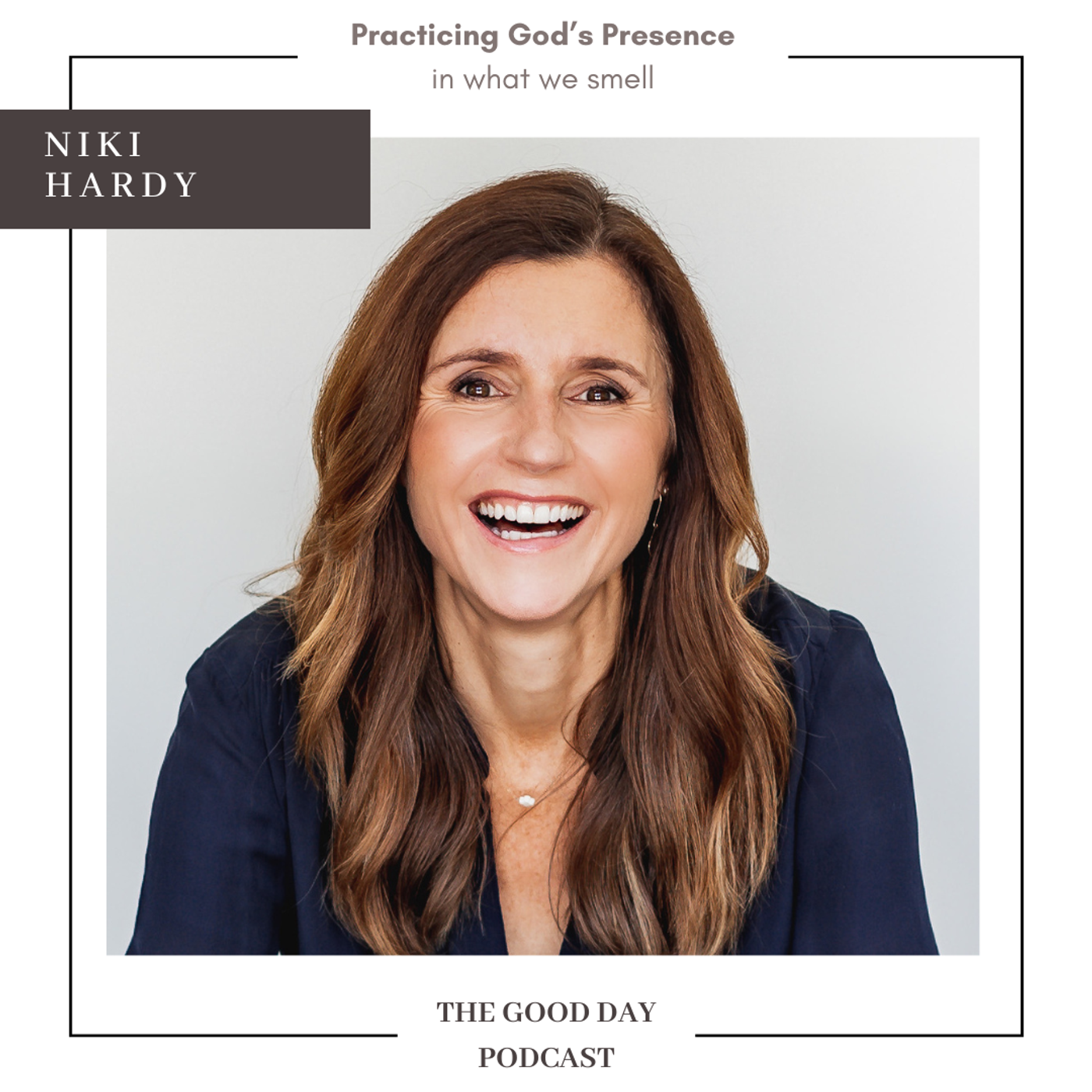
“Doubt doesn’t have to be our faith’s kryptonite. It can be its superpower.” That’s coming from someone who from the outside looks like she’s got her faith altogether... She’s moved her family from England to the U.S. to plant a church, written books about God’s faithfulness when life falls apart, speaks across the country and has thousands in her community who look to her for encouragement. Today, we’re talking about these doubts and questions - whether for ourselves or voiced by someone we care about - and the inner anxiety that often comes with it. We may fear God can’t handle our questions or feel the pressure to “fix” the leak in our spiritual journey, not wanting faith to unravel. Instead, how can we approach this space with gentleness? Niki Hardy is a proud Brit (now living in the US) and the author of the Audi Award–nominated Breathe Again and One-Minute Prayers for Women with Cancer. Niki has been featured on the Hallmark Channel, Life Today, and Premier Radio. Having left corporate life, been to seminary, moved continents, planted churches, started businesses and nonprofits, and navigated loss, cancer, church hurt, and painful uncertainty, she firmly believes God loves a cheerful doubter. Niki lives in North Carolina with her husband and ridiculous Doodle, Charlie, who is the main reason their three grown kids come home. Learn more at NikiHardy.com. Today, we're talking about: What scent does your life offer to others? The crossroads of faith and doubt The fruit of gentleness - how to approach a doubting friend with gentleness and hope C A N D A C E C O F E R author + speaker website | instagram | youtube | facebook
Candace Cofer: Hey guys, Candace here. So glad to get to spend a little bit of time with you today on The Good Day. Here we'll focus on finding grace in our ordinary days. We'll learn good days don't just happen. And even more, a good life doesn't just happen. There's a choice involved. Join me as we learn how to develop the discipline and cultivate a heart that seeks strength, joy, and peace and finds rest in the good day. One day at a time. Today, the invitation is us to become present with the presence of God in our midst, to engage our sense of smell, to smell the fragrance of heaven through the fruit of the Holy Spirit, specifically gentleness. My friend and author of God Can We Chat, a daringly honest guide to growing closer to God one doubt at a time. Nikki Hardy is joining to talk about exuding gentleness in times when we or Others doubt God and question our faith. Nikki, I'm so glad you're here. ⁓ thank you for having me. It's great to be here. So just tell us about yourself, you know, what your days look like in North Carolina, who you spend them with, and since you're from the UK, tell us what have you learned to love about the states and what do you miss most about Britain? Gosh, well, yes, people, it doesn't take long for people to realize that I'm not from the deep south of the USA. But the deep south of England. I'm from London originally, and we came over about 19 years ago to plant a church, believe it or not. ⁓ felt very strong call from God to come over. And there was a group of people in Charlotte, North Carolina, who wanted a church with the same DNA as the church we have in London. So we came over to do that. Our kids were eight, six, and four. And ⁓ yeah, it's been a wild ride. Church planting isn't for the Faint of heart, but God's been faithful ⁓ through it all, which has been fantastic. So, yes, I'm an author and a speaker and ⁓ a a lover of all things nature, science, fresh air, and ⁓ I spend my days well writing and speaking and with friends, and if not, then I'm probably out on the trails with my rather lovely but rather ridiculous. Golden Doodle Charlie, who's actually at my feet right now, which is quite fun. And ⁓ yeah, so what do I miss about the UK, about London? It's interesting. I often say that I miss London more, I miss England more when I'm there than when I'm here. So when I go back, I go, ⁓ this place is so great. I miss everything from the dry English humour, the English countryside. Despite living in such an expansive country here with so much great scenery and you've got rainforests and beaches and deserts and all the things, I can feel at times quite contained, unless you're in somewhere like Yosemite or out in Utah. But here in North Carolina, you know, you you really have to stick to the trails and things. And in the UK there's this thing called right to roam and there are footpaths around a farmer's field and ⁓ so there's a great sense of freedom and being able to roam, which I do enjoy. And of course, the English pubs, there's just nothing like a good English pub and a plate of fish and chips. It's so stereo it's so stereotypical, but it's it's great. Yes, I love that. I love hearing too about the right to roam. That's really neat. Mm-hmm. I didn't know that. Well, when we hear ourselves or someone we care about voice a doubt, and we're gonna dive right in because there's so you can talk about. This inner anxiety can build. And we fear, we may fear that God can't handle our questions. Yeah. In your book, God can we chat, you share your experience with this. You've said that doubt doesn't have to be our faith's kryptonite. It can be a superpower. And that's coming from someone, like you just said, who kind of seems like you've got your faith all together. I mean, you just moved across the pond to plant a church. You've written books. ⁓ about God's faithfulness when life falls apart. You've speak across the country. You have so many that are looking to you for encouragement. And so take us back. How has this been true for you? And can you explain the difference between the two doubters that you point out? The believing doubter and the doubting believer? Well, for me, Candace, what what happened is it was a journey of I would say A journey towards what I feared was a slow death of my faith. It was like my faith felt like it was dying from a thousand paper cuts. We had ⁓ been through some really hard things and my first couple of books were about that, about losing my mum to cancer and then my sister to cancer and then being me being diagnosed. And although they're not books about cancer, they're more books about finding God's abundant life and finding that fullness in the midst of those really hard times and Thriving and not just surviving and what that looks like. So being through some hard times, and yes, I'd questioned God and got angry with him, you know, over the years, but we then went through some very hard things as a church, and you know, as church leaders, that was incredibly painful. Then we kind of launched into the pandemic, ⁓ which was difficult again as church leaders. ⁓ it was difficult. Globally, it was difficult in so many different ways, so much pain, so much suffering, so much, what are you doing, Lord? This is this is crazy. And then, you know, we would see the people of God not loving, not being Christ-like. In the name of Jesus, they were doing awful things, and I was questioning his church. I was questioning his goodness and his provision, and I was questioning his word. I was these stories that I had read for years and sat so well with me, and I could glean more about who God is and his will for my life through them. Now I was reading them and I was looking at them and saying, well, hold on a minute, that looks like genocide. And it, if we had put that in today's context and it was in a headline in today's newspapers, we'd all be horrified. And yet for years I've taken that as well. God said it was okay. So, you know, the death of thousands of men, women, and children is okay. You know, and and I it didn't sit so well anymore. So I created this kind of ⁓ collective noun, God Faith Church. And it was this as if everything God Faith Church started to not sit so well, started to just give me a sense of disillusionment, disappointment, and I felt myself. Sliding away from God slowly. Now, a lot of people tell me that they get to that place with one big side swipe, one big event. Maybe it's the loss of a loved one, or something like that happens, and they get to this place of deep questioning. And I felt like I was at the crossroads of doubt and faith, and I looked down. The road to faith. And I was like, I just don't have what it takes to walk down that path. And even if I did, I don't know whether I can A sign up for what I think I need to sign up for, or B, want to be with the people who seem to be down there, which was very scary. Those were my people. And then I looked down the path that seemed to lead down. The doubt path. And I was like, well, I don't want to go down there. Am I deconstructing? Does that mean it'll lead to deconversion? I don't feel like I want to go down there. My faith is too precious. And so that's when I got to the point of feeling like where once the words of amazing grace were so true for me, you know, I once was lost, but now I'm found, was blind, but now I see. It was like, no, the the opposite is now truer. I once was found, but now I'm lost. And so it was that in that moment I kind of sat down at the crossroads of doubt and faith and just like, God, can we chat? Because my faith was precious. I didn't want to lose it, but I didn't know what to do with all these questions and this ⁓ these concerns about ⁓ all these different parts of my faith and the wider church and his word. And what I realized was that actually. When we come to God, when we reply to his invitation to the tired and the weary and the spiritually burnt out, and he says, Come to me, walk with me, talk with me, as it says in the paraphrase, the message, and learn the unforced rhythms of grace. What he's saying is, let's talk about this. And as we talk about this, we will grow closer. And you might not find the answers that you think you want, but you'll actually find the connection and the intimacy with me. That will really bring you the peace that you are craving. And so that's when I realized: ⁓ my questions do hold a lot of power, but it's not the power to destroy my faith, which is what I assumed they were, but to strengthen it, to draw me closer to God. This isn't the beginning of the end of my faith. This is the end of the beginning. And so that's how this kind of walking in mystery. has become a lot more comfortable for me. The unforged rhythms of grace, just to to sit in that and with our doubts and just see that God's grace is big enough to hold us here. And like you said, just becoming comfortable in the mystery that there's so much that we don't understand and we won't. And the headlines and everything that you've talked about, it is interesting to hear you explain it that you're Faith was dying from a thousand paper cuts, that it wasn't just one big event. Sometimes it is for people. But sometimes it's just a slow, like you said, a slide down, and you're now I once was found and now I'm lost. That's so interesting. You've added that over the years you've grown more unsure of your faith than you've ever been, but more sure of God than you could hope for. So walk us through that. I know a lot of people are like, wait. What that doesn't make sense. How can you be more sure of God and less sure of your faith? And really, what I'm saying there is my relationship with God is stronger than it's ever been, it's closer than it's ever been, it's more intimate and friendly and ⁓ trusting than it's ever been. But at the same time, everything else around that, all the trappings, if you like, that We humans are very good at putting on ⁓ whether it's church and doctrine and all sorts of things around it. I'm like, yeah, I just don't have that certainty about so much of the rest of the stuff that I used to have. And I'm more happy to live in that uncertainty. hold things more loosely than I did before, be more generous with my theology if you like. Not in a kind of throw it all out because I think theology and the word are so deeply important. But it's just like actually I don't know. What I do know is God. And so that's my anchor. Whereas I think before I can say that I relied on A lot of the other things as much as I relied on God. And so now my faith is part of my relationship with God. In order to have a relationship with God, I need faith. But I think in that phrase that I'm less sure about my faith, but more sure about God, I'm saying that actually I'm now got my eyes fixed on Jesus and God a lot more. Well, it sounds like the There may be questions, maybe reading the word, there's like I don't understand this, but it doesn't have to be an obstacle to believing God and believing his character and who he is anymore. That there's things that like you said, I can hold loosely. I don't completely understand this. But one day I will. One day he'll show me. But yeah, for now it that doesn't have to And I think so many of us assume that we can't question God. And that we we are the only ones. And in God Can We Chat, the book, the I deal with some of these lies that we believe. Because even though in our brains we know that we can question God, it's like, yeah, I know that I can question God, because David did in the Psalms, and you know, Mary did, and all these things, we still have this kind of belief that we've picked up by osmosis through church and so many other things that faith is good. Questions and doubts are bad, that we're the only ones, and it's it's a rare church where the the church leader or the church community wrestle with doubts in community together, or the the church leader says, you know, we just don't know. You know, we in an effort to build faith and to build people's relationship with God, we we feel we need to give them certainty. But occasionally it's really helpful to say. This is what we know, but there's a lot we don't know about this, because God is wonderfully knowable, and this is what is so fantastic about him. He comes by his spirit to dwell in us and we can know him and we can hear his voice. But if we think we can know him, you know, a box him and have all the answers, no no no no. So ⁓ we have to get over that, those lies and find the truth of what God is really saying. When we think those things. And that we wouldn't want a God that we could completely understand. We need a God bigger, so much bigger than us. Or it just He wouldn't be a higher power. Yeah. Yeah. Well, you've talked about this crossroads of faith and doubt, and we all likely know someone in that space. And so how can we approach doubters? with the spirit who is always gentle, never anxious, never reactive. Because I think sometimes we get reactive when we see a friend or a family member struggling or voicing a doubt. ⁓ we feel like we gotta fix it. Like fix it quick. Don't let this continue. don't unravel. ⁓ you know, and so what insight from your journey can you offer? For navigating this and curious if there was an interaction that Jesus shared that really encouraged you that you could share with us today. Yeah. I think the thing to do when somebody else, or even when we ourselves come up with, you know, questions and doubts is to offer grace and understanding and never shame and judgment. You know, when we have questions, especially. When somebody is a believer who is doubting. You asked me earlier, and I didn't answer the question about what's the difference between a believing doubter and a doubting believer. And I would say that a doubting believer is a believer who has questions that comes up come up and doubts that will surface and might begin to erode that faith and that relationship with God, and that's their fear. Whereas a ⁓ A believing doubter is someone who's not really ⁓ a believer, but they have interesting questions and they have questions that are drawing them towards the faith. But they also have questions like, yeah, but I can't become a believer because of suffering in the world, because of what happened to ⁓ my sister when she died in a car accident, or whatever it was. So those are the two differences, and I think the key thing when somebody Voices a question or a concern or a doubt, A is to acknowledge that that's actually quite brave. And I mean it might be any quite antagonistic. It might be like, yeah, but you believers, you know, you're all off with the fairies because you know, look at the suffering in the world. But it's also for so many people, it's quite a brave step to say, yeah, but I just don't get this. And so to acknowledge that. to to give it space and and even to say yeah that is really hard i find that really confusing i don't know why god allows that i'm not god you know saying all these things ⁓ can be really affirming and countercultural to what people are expecting because they're expecting that but yes if you look at this bible verse and this bible verse then you know xyz They're expecting a little bit more a judgment or you know, 14 reasons why they're wrong about something. So I think a lot of grace and a lot of ⁓ empathy can go a hugely long way. And a lot of ⁓ saying, Yes, I struggle with that too. This is what I'll never know, but this is what I found in my experience. And I think when we say, you know, like I can say, when I was diagnosed with cancer. Six weeks after losing my sister to cancer, these are the things I just didn't know. But these are the things that I knew to be true in my life, in my experience, because I'd seen God do them before. And so that can be really, really helpful for people and that gentleness that we were talking about earlier, and that being that fragrance of God in their lives and leading them to Jesus through that. Yeah. And just being human with them is what I'm hearing. You know, that we don't have to be God. He doesn't need and I don't know. I'm just sitting here and I was thinking about when Jesus was with the disciples and he was talking about what are all the people, who do they say that I am? And he asked Peter and, you know, Peter was voice that you are the Messiah. And Jesus told him, you know, that God has revealed that to you. And just the I think that that takes the pressure off of us that believing is a gift of grace from God. That we are not going to be the ones to do this for other people, that we can enter into their the humanness with them and pray for them. Really like once they do voice that and You know, just creating a safe space that you've talked about, sharing your experience and that vulnerability. I think when we lead with vulnerability, it helps more. I've been through this really hard time and it was shaking my faith. And God I had to trust what I did know about God when not when everything didn't make sense. Exactly. And you asked about, you know, Bible stories and ⁓ where people doubted and there are there are so many which is why I'm like it's okay it's okay to voice your concerns to Jesus. I mean you've got everyone knows about Thomas and he's like you know ⁓ unless I poke my fingers in his in his wounds and and Jesus goes towards him and says you know here you go and he we don't get that benefit to kind of poke around in Jesus's in wounds but we do get the same invitation to go to him. with our questions and he didn't reject Thomas. And in the same way I always think about when ⁓ Peter gets out of the boat to walk on water with Jesus. And I know everyone talks about you know how he took his eyes off Jesus and that. But I have this image of when Peter gets back in the boat and it says and all the disciples worship Jesus. And I just imagine Peter sitting there soaking wet, because he'd sunk a bit, you know And they pulled him into the boat, and he's sitting there in his wet tunic, and Jesus is on the boat, and the disciples the rest of the disciples, they're all worshiping their heart out. And I just imagine him sitting there with this sinking heart, thinking, ⁓ I blew it. I blew it. But Jesus doesn't reject him. Jesus doesn't turn around and go, Well, that was pathetic. What kind of you know, he does say, Well, you know, you have little little faith, but what he's saying. I don't hear it as an admonishment of like, ugh, Peter. It's like, come on, you don't need to doubt. All these times when people say, Well, I mustn't doubt, because Jesus says, Don't doubt, you know, ⁓ ye of little faith, you know, your faith has healed you. But I think what what we need to do is hear it with the loving heart of God, not with an angry heart of God. He's not saying, come on, don't doubt. Shape up. You know, just believe. What he's saying is don't, you don't need to. I'm right here. Come on. It's all right. Let's walk. Let's talk. Let's do this together. Just like you know the psalmist did. There is the is the gentleness and the reassurance. It's not a scolding. Yeah. How has God been gentle towards you and in your doubts of his nearness or his love for you? And then what's the impact of that? How can when we're rooted in his love and reminded of his gentleness towards us, how can that lead us forward in gentleness towards others? Yeah, that's such a great question because you know, when I was in this season of this feeling lost and disillusioned and disappointed and this I was very tempted after I tried kind of forcing it and just holding on for dear life and then faking it, you know. ⁓ I'm everything's happy skippy, everything's absolutely fine when it wasn't. My next temptation was to fade out and to just slide out the side door of church. And when we'd stepped down from leadership, there was no drama. It was just God called us out of church leadership into something else. ⁓ And we hadn't yet landed in a church. And it was very easy to think, well, we just we're just too busy right now. And you know, to not reconnect with church community, not to reconnect back with God and to just start fading away. ⁓ and in God's gentleness, you know, I think he just wooed me back. And I, you know. People have said, well, you went through that season of doubt and now everything's fine. I'm like, ⁓ no, no, no, no, no. I am still doubt walking, questioning in that conversation with God, more ⁓ excited about living in the mystery and in this not knowing and in this desire to walk and talk with Him and learn more ⁓ about Him than learn more about the answers that I'm looking for. And so I feel that. That wooing, that gentleness, that come on, let's walk and talk about this. You know, learn these unforced rhythms of grace, learn to live lightly and freely. And that's where I'm feeling God's gentleness. And I think in turn, what that has meant is that I'm able to offer it to others in a way I couldn't before. I think I was I was a little over-enthusiastic, you know, in my faith at times. And on the one hand, that's great, but on the other hand, I might not have been the gentlest person at all times. So I think there has been a work of gentleness. And what I do in the book is I help us reimagine our questions and our doubts as our a strength, not a weakness, to our faith and our relationship with God. Then we reframe the lies that we believe, and then we actually get To talk with Jesus. We actually get to talk with God and chat with him. And I have a chat conversation guide. And that's where we see this gentleness of God when we're in conversation with him. It's so great. And maybe it's we didn't want to be in this space of doubt. It's not comfortable, but maybe it's through this doubt that we're going to grow closer to God and He's going to become very real to us that our faith. then becomes something we can actually stand on. It's solid. It's not just, you know, pretending that it's there. It's real. Exactly. Exactly. Everyone, let's choose to do more than just agree with Nikki. Let's put this seed of faith that we've gained today into action. Jesus wasn't just looking for his disciples to merely agree with him. He was inviting them to come and participate with him. And it's the same for us. And they didn't have it all together. They had questions, they had doubts, and we will too. And if we don't now, well, we probably will. So and but I think it's really, really important to think about what Nikki said that in her doubts, she just came to God and said, God, can we chat? And so I would encourage you. To take three minutes, because the next three might be better than the last twenty-five. If you take a moment to just pause and reflect on what your personal takeaway is today, do you need to just turn down the music and just say, God, can we chat for just a minute and just be very real with what you're seeing and what you're feeling? Maybe it's for someone else. And that your heart's been heavy for someone that is doubting and you don't know how to approach them. Maybe you've approached them and now you're realizing I was not gentle and I kind of messed that up. maybe spending some time in prayer and knowing how can I approach them, how can I enter into this space with some humanness and some vulnerability and trusting that God's the one who will reveal Himself to them. And that all of our faith journeys just look different, and that's okay. Well the book is called God Can We Chat and Nikki, thank you so much for being here today. We are just so encouraged by you. ⁓ you're welcome. It's great to be here. Thank you. Let's find strength in the midst of our doubts and questions as we come and talk with God. May our joy grow as we spend time with him. And though we may not find the answers we're seeking, may we find peace in his presence and his unchanging character. May we learn to rest here in relationship with the one who created us. The good life, well, it starts with a good day, then another, then another. Let's choose to live the good day, one day at a time.