
The Future of Education · Michael B. Horn
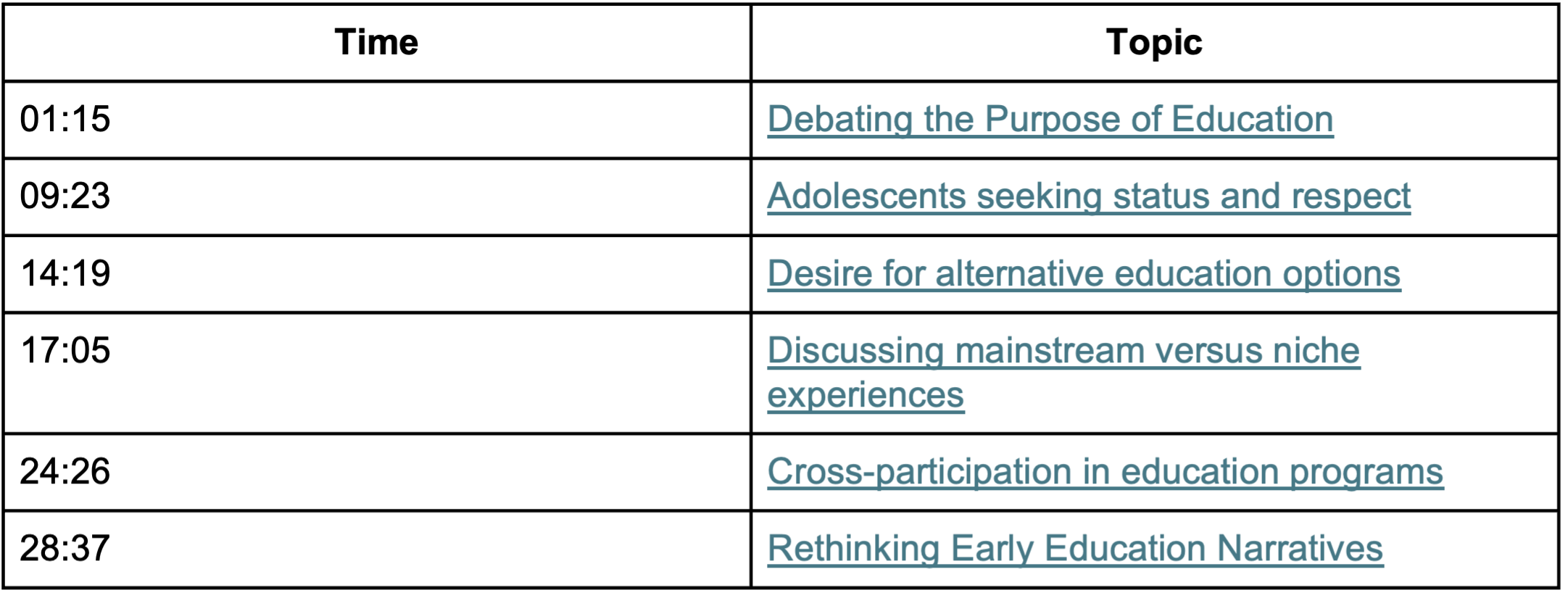
Thomas Arnett from the Clayton Christensen Institute joined me to once again explore why families and students seem to be quite willing to try innovative microschools in the K–8 grades, but considerably more resistant when it comes to high school. Traditional high school experiences, particularly social and extracurricular elements like sports and common rites of passage, continue to hold such strong appeal for most families, even as innovative, personalized, and lower-cost education models expand. Drawing from personal anecdotes and research, we talked about the social and developmental needs of adolescents, the trade-offs families make when considering alternative schooling, and what it might take for disruptive education models to achieve mainstream adoption without reproducing the conventional system’s limitations. I continue to think that thinking through these questions is among the most important facing the emerging sector of innovative, low-cost schools with disruptive potential. Michael Horn Welcome, everyone, to The Future of Education. I’m Michael Horn. You’re joining the show where we’re dedicated to creating a world in which all individuals can build their passions, fulfill their potential, and live lives of purpose. We have a repeat guest. I don’t know if guest is the right word anymore, but Thomas Arnett from the Christensen Institute, friend, and someone I love to geek out on various topics about the future of education. Tom, welcome. Good to see you. Thomas Arnett Good to see you too, Michael. It’s always fun to be here. Always love these conversations. Debating the Purpose of Education Michael Horn Yeah, we’ve got a meaty one today. And I’ll just say, like, we’ve been exploring a couple times on this podcast already and in a lot of our one-on-one conversations as well. Something that I think has stood out to both of us, and I’ll set the table this way and then you can amend it, which is I think we’re both intrigued in a world of education savings accounts that as low-cost private schools, often micro schools but not always, come into the world, that there’s actually a real potential disruptive innovation of schooling as we’ve known it, the creation of new value networks and so forth. And then some of the things we’ve been sort of wrestling over is, okay, they come in at the low end, if you will, people who are overserved by all the offerings of comprehensive district schools. They want a more tailored, customized experience. And now that, you know, they’re sort of government funding, if they don’t choose it, it’s sort of an opportunity cost, if you will, of not taking it. And so these low-cost, at least private schools where you can afford them and then have more money for some other, you know, tutoring, piano lessons, whatever it might be around the sides. Feels like it could be a real disruptive innovation. And certainly the enrollment numbers in a lot of these states that have ESAs have been growing pretty rapidly,...
0:00SPEAKER_01What did you think of your high school experience?
0:02SPEAKER_01And the other dads that were on this trip,
0:04SPEAKER_01one of them said, well, it depends on which piece you're talking about.
0:08SPEAKER_01And he was like, if you're talking about the academics, it was meh.
0:10SPEAKER_01And they all kind of nodded their heads like, yeah, the academics was meh.
0:13SPEAKER_01But they're like,
0:13SPEAKER_01if you're talking about my experience on the baseball team or on the football team,
0:17SPEAKER_01like that was awesome.
0:18SPEAKER_01And I wouldn't give that up for anything.
0:19SPEAKER_01So I don't want to,
0:20SPEAKER_01I would never pick a different schooling experience if it involved giving that up.
0:24SPEAKER_01And I think that's,
0:25SPEAKER_01this is the reality is as much as we kind of talk to people that are in the fringes
0:29SPEAKER_01that are,
0:29SPEAKER_01you know,