
The Future of Education · Michael B. Horn
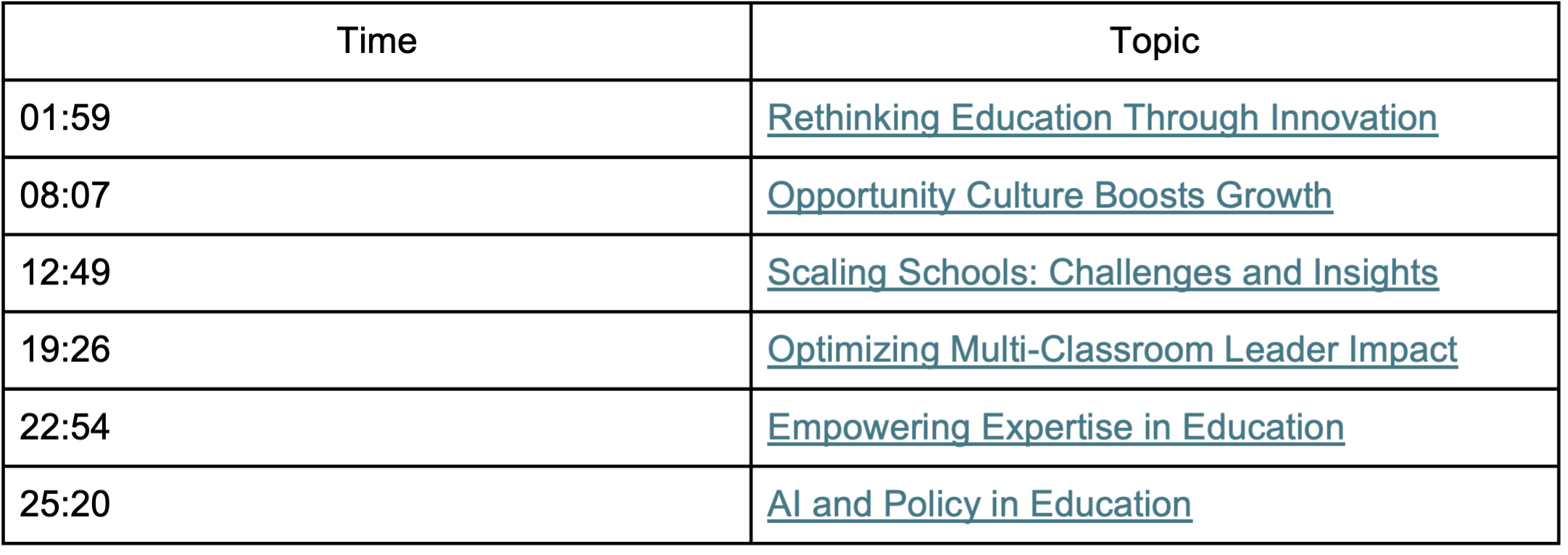
Bryan Hassel and Ashley Williams from Public Impact joined me to discuss the Opportunity Culture model, which is transforming the traditional “one teacher, one classroom” approach. We explored how this model extends the reach of excellent teachers through leadership roles, shared practical lessons from scaling the model, discussed challenges like overcoming ingrained mindsets and transition costs, and looked ahead at how technology, policy changes, and innovative staffing can make these transformations more accessible and sustainable for schools everywhere. I featured Opportunity Culture in my most recent book on K–12 education titled “From Reopen to Reinvent: (Re)creating School for Every Child,” as a major argument I make is that asking teachers to be superheroes and be all things to all students is an insane job description. The work Bryan and Ashley are doing speaks to a great solution—that also makes the job of teaching more motivating and viable. Michael Horn Welcome to The Future of Education. I’m Michael Horn. You’re joining the show where we’re dedicated to creating a world in which all individuals can build their passions, fulfill their potential, and live lives of purpose. And to help us think through that today, we’ve got two incredible guests that is tackling one of my favorite topics, which is rethinking the role of educators in school. We’ll get more into that in a moment. But first, let me introduce them. We have Bryan Hassell, the co-president of Public Impact. Bryan, good to see you. Bryan Hassel Good to see you, Michael. Michael Horn And we’ve got Ashley Williams, who serves as the vice president of innovation and specialty services at Public Impact. Ashley, good to see you as well. Ashley Williams Yeah, you as well. Michael Horn I’m excited for this conversation, Bryan. I think I’m going to get the chronology slightly wrong, but I think pretty close. You and I were working on a bunch of blended learning projects together probably 13, 14 years ago or something like that. And then my recollection is out of that, you sort of said like, wow, there are other things we could do with innovation as well. And we could start rethinking the role of the teacher and sort of how they interact with other teachers in the building. And one of my favorite things is like there was the movie Waiting for Superman, and I was like, the biggest problem with that movie is the title that we’re expecting every teacher to be a superhero and do like an unfathomable list of things for kids. And then of course, out of that, I think you and your colleagues created this notion of the opportunity culture staffing design model, and you had a range of models for how to really distribute responsibilities and create teams and management structures and all sorts of things for the adults in the building to better serve kids. And it was, you know, I’ve written about it several times now. Rethinking Education Through Innovation Michael Horn It’s in my most recent...
0:01SPEAKER_02Welcome to the Future of Education.
0:03SPEAKER_02And now, here's your host, Michael Horne.
0:12SPEAKER_01Welcome to The Future of Education.
0:14SPEAKER_01I'm Michael Horne.
0:15You're joining the show where we're dedicated to creating a
0:17world in which all
0:17SPEAKER_01individuals can build their passions,
0:19SPEAKER_01fulfill their potential,
0:20SPEAKER_01and live lives of purpose.
0:22SPEAKER_01And to help us think through that today,
0:24we've got two incredible guests that is tackling one of my
0:28favorite topics,
0:29SPEAKER_01which is rethinking the role of educators in school.
0:33SPEAKER_01We'll get more into that in a moment, but first let me introduce them.
0:37SPEAKER_01We have Brian Hassel, the co-president of Public Impact.