
The Future of Education · Michael B. Horn
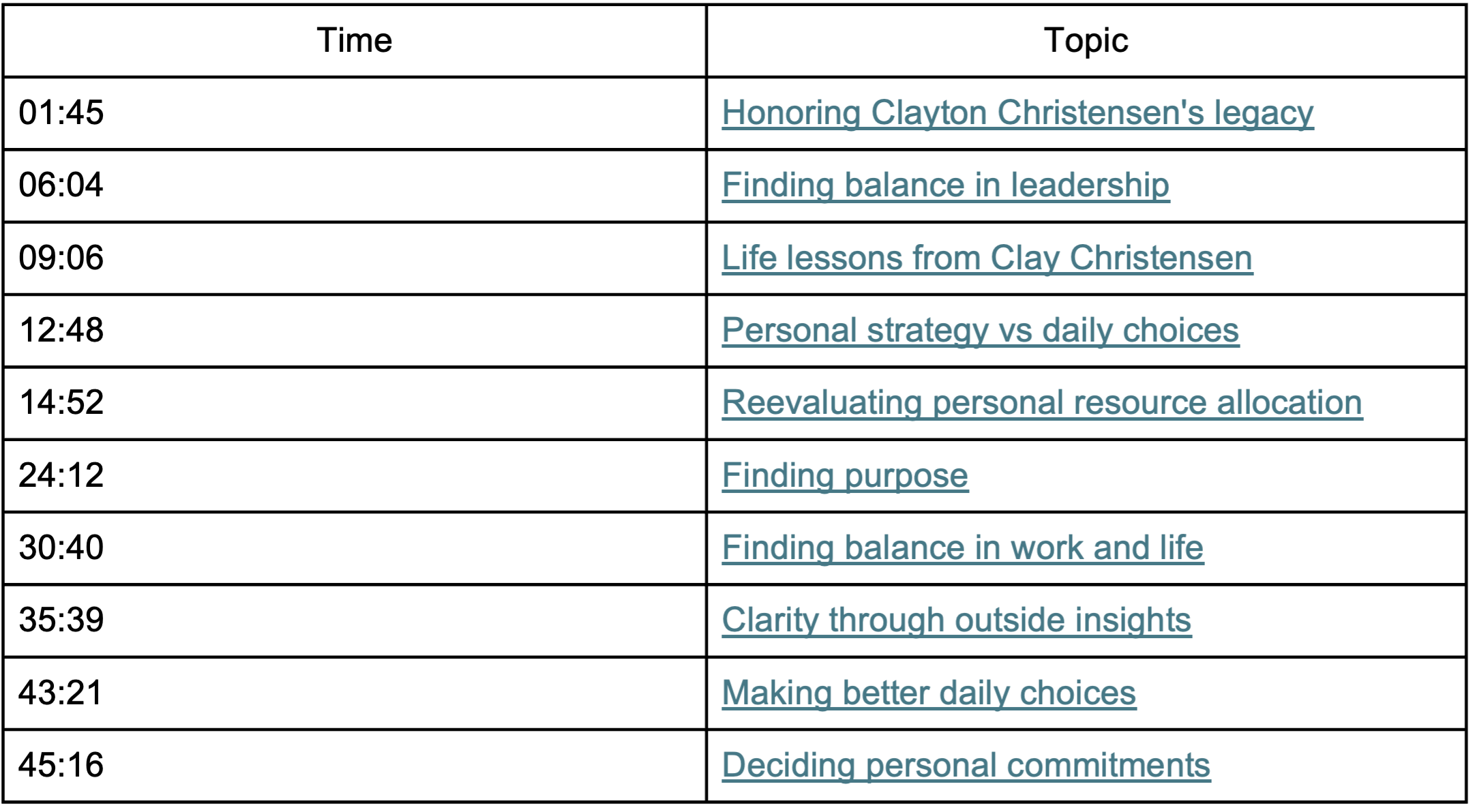
In 2012, Clay Christensen joined with James Alworth and Karen Dillon to write what I think of as one of the most important books out there called How Will You Measure Your Life. It was based on a the last class that he did at the Harvard Business School every single year. And in this conversation that you’re about to hear, Karen Dillon, Scott Anthony, another of Clay’s acolytes, and me got together and were interviewed by Victor Zhao and Martin Ekiti, co-presidents of the Parents@Harvard Chan School of Public Health to think about how we measure our lives and things that we take from that—to really make sure that we’re living in concert with purpose and the progress we seek to make and not drifting off course. I hope you enjoy the conversation that I’m bringing to you here that was recorded live on April 3rd. The Future of Education is a reader-supported publication. To receive new posts and support my work, consider becoming a free or paid subscriber. Paid subscribers receive unlimited access to My Delphi as well—helpful when I’m choosing family over “one more call”! Victor First, I’d like to quickly introduce ourselves and then just set up the backdrop for today’s conversation. Thank you everyone. My name is Victor. I’m one of the co leads of the Parents at Harvard Chan community which is the Parents club of the Harvard T.H. Chan School of Public Health Along with my co moderator Martin we are really grateful to bring this conversation together. And this conversation is a part of the whole life Leadership speaker series, a Harvard affiliated series exploring one central question. What are the pivotal mindsets, habits and tools needed to succeed both at work and at home? At its core, the series is built on a simple belief that leadership is not compartmentalized. Honoring Clayton Christensen’s legacy Victor How we show at work and how we set up at home are deeply connected. And today leaders we have a very special session. We are gathering to honor the legacy of Professor Clayton Christensen, whose work reshaped how the work understands innovation, but who also challenged us to think more deeply about something even more important, which is how we measure our lives. In his well known framework, Clay encouraged us to think about three key questions. How do we find meaning in our careers? How do we build enduring relationships? And how we live lives of integrity. And today we’re honored to be joined by three remarkable individuals, thinkers and leaders who have engaged deeply with Clay’s work and ideas and they will help us explore how these principles apply in real life. First, we have Scott Anthony. Scott is a Clinical professor of Strategy at the Tuck School of Business at Dartmouth and previously spent over two decades at Innosight, the forum co-founded by Clay Christensen, where he served as a global managing partner. He’s a leading thinker on innovation and disruption, a Thinkers50 award winner and author of several influential books...
0:01SPEAKER_00Welcome to the future of education.
0:05SPEAKER_00And now here's your host, Michael Horn.
0:12SPEAKER_03In 2012,
0:12Clay Christensen joined with James Allworth and Karen Dillon to
0:16write what I think
0:17of as one of the most important books out there called How You
0:20Measure Your Life.
0:22SPEAKER_03It was based on the last class that he did at his
0:26SPEAKER_03class at Harvard Business School every single year.
0:28SPEAKER_03And in this conversation that you're about to hear,
0:32SPEAKER_03Karen Dillon,
0:33SPEAKER_03Scott Anthony,
0:33SPEAKER_03another of Clay's acolytes and me,
0:36got together and were interviewed by some students at the
0:38Harvard School of Public