
The Fremantle Press Podcast · Fremantle Press
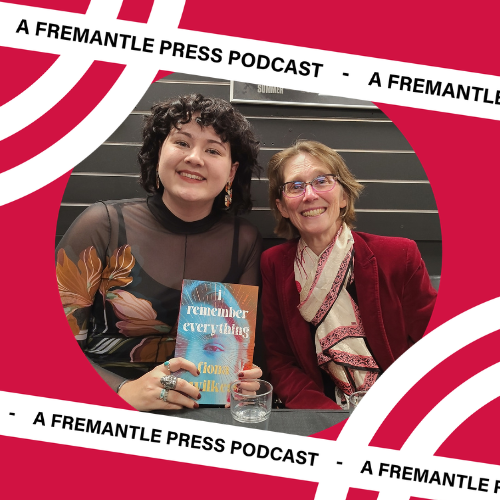
Fiona Wilkes’s debut novel I Remember Everything was shortlisted for the 2024 Hungerford Award. Beginning in Bristol and moving to 1980s London, the novel follows Billie, a young queer woman, as she navigates the highs and lows of life, coming out, and finding her chosen family, only to lose them again during the AIDS epidemic. In the first episode of our author’s live series, publisher Georgia Richter interviews Fiona about the love story at the heart of her novel – not a romance but a story about the love between friends. Recorded live at Planet Books Mount Lawley. About Fiona Fiona […]
0:14Speaker APlease give another warm welcome to Fiona and Georgia.
0:22Speaker BThanks, Bianca, for warming up the crowd. I'm sure that without that, you know, Fiona wouldn't have felt the love so much, but yeah. Fi, before we begin, I'd just like to ask you. You're a teacher, you talk about other people's books all the time. Here you are, this is your book. You're talking to people about your book. What's the difference?
0:41Speaker AIt's a lot scarier, I think. Yeah, it's getting easier as I teach to walk out and say, well, if you don't like the book, it's fine. Just try and think of something interesting to say about it. And I think the same applies with this one. But, yeah, definitely kind of a bit more nerve wracking to sit in front of everyone I know and talk about something that I made. It's exciting, but it's scary.
1:08Speaker BYeah, that's really. It's quite a vulnerable moment, isn't it? To have been by yourself and writing it and then suddenly it's out in the world and it's not in your hands anymore. But that's also a marvellous thing and you are going to love this book. There were a couple of paras that I just wanted to read you first up to take you into the book. Can you hear okay there, everyone? Yep. Good. When I was a teenager, I thought that love was grand gestures and heartfelt speeches. Then when I was growing old too fast with my friends, I thought it was holding hands in hospital beds and reading aloud. Now I think it is familiarity and comfort. It's throwing them your coat when you walk into their home without waiting for them to offer to take it. It's taking a sip of their drink, a drag of their cigarette, the spare change for a bus ticket from their jeans pocket, knowing there'll be no demand for repayment. In those early days of adulthood, we all set in stone the foundation for a love like that. In fact, I do not think it's overstating things to say that in those first weeks of university, my friends and I fell head over heels in love with one another. Sophie, it's an extraordinarily ambitious thing to write and to have us come to care about a whole group of people. What were your intentions in writing the book that you did?
2:33Speaker AI kind of set out wanting to write, I suppose, an ode to queer friendship which has been so important in my life and kind of feeds my soul in a really specific way. And I think I did that to a certain extent. I think the love Story at the heart of this book, unlike in a lot of kind of coming of age books, is not necessarily a romantic love. It's a love between Billie and her friends, which is, you know, how I experience friendship. And I feel very lucky to experience friendship that way. But then as I was writing, it kind of grew from there and it was more so. I wanted to not only write this kind of ode to queer friendship, I wanted to write an ode to the generation of queer people before me who did not get to kind of live their lives to the fullest. And so my intention with all the characters was to try and make them feel alive and to make them live before there is sort of. Of those inevitable hardships that come up. And having queer joy exist alongside queer tragedy was really important to me when writing this book.
3:47Speaker BWould you like to take us directly into an early university scene? Because I think here Billie is 18, isn't she? Yeah. Yeah. So this is the very beginning.
4:05Speaker AI have never in my life spent so much time intoxicated as I did in that first semester of university. And that was almost entirely thanks to Robert. Although we all egged one another on from a desire to always be on the same wavelength and to always be having fun. On weekends, but especially Friday nights, we would go out in town. The girls, Laura, me, Elle Valentine, in that first year at least. And Hen Dave and later Aggie and Clarice would gather in one of our rooms and spend an age getting ready. We cooled our wine on the windowsill, frigid air blasting inside and raising goosebumps on our bare legs because the shared accommodation fridges were glorified petri dishes rife with germs and theft. When we were suitably tipsy and our hair was bigger than should have been gravitationally possible, we staggered giggling out of our building to hurry to the bus stop. We would climb aboard the 923 bus and find the boys, Robert Tolstoy, Cherry, and later Ted and Arthur, waiting for us in the backseat. We'd tumble about as the bus moved before we made it to our seats, falling into the boys laps. Our nights were spent in toxic clouds of perfume, hairspray, body glitter and cigarette smoke. We danced for hours, screamed along to songs we barely knew the words to, but soon came to adore. The bands that sang them Adam and the Ants, Susie and the Banshees, the Police, Blondie. They soundtracked our first year of university. Thank you.
5:33Speaker BI was in the 80s. I know you weren't there. Believe it or not, when I read this book as the Hungerford, you don't know who the author is, and all you've got is a manuscript. And I thought, this person, you know, they've lived through what I've lived through. How did you. What sort of research did you do? How did you immerse yourself in the 80s?
5:55Speaker AI think there is sort of something really enticing about the era in which your parents were teenagers. You know, you kind of. You seek out little insights into who they might have been before they were parents. And the 80s, I mean, it's a kind of magic time in a lot of ways. It was a period of real vibrancy and fun. But also, in the UK at least, it was a time of extremes, economically, politically. We're talking about the Thatcher years, which weren't easy for a lot of people. And I think that kind of mix is really interesting. And the ways it kind of would have impacted people like me. In terms of research. I mean, I approached it the way I approach a lot of my research, which is just. I just read as much as I possibly could, and I went for memoirs a lot of the time to try and get a sense of what it felt like rather than just the facts. So I approached it as a historical novel. But then at a certain point, I kind of recognized that there would be things that I got wrong no matter how hard I tried. And I had to kind of put the research to one side and just write and write these characters as sort of authentically as I could, and write them, you know, in the way that I know queer people to be. And, you know, there are. There are echoes of people that I know in these characters, although, you know, they're not based on anyone. I know it's all of you.
7:24Speaker BBuy the book.
7:27Speaker ASo, yeah, just trying to approach it sort of carefully and respectfully, but also kind of acknowledging that I can't get it perfectly right, I think.
7:39Speaker BDid you. Did you listen to it? Did you have a soundtrack while you were writing?
7:45Speaker AYeah, I mean, I listened to a lot of 80s music anyway, so my usual kind of playlists were on. And then the playlist that I was playing just before, when everyone was cycling in, a lot of the songs on that playlist were going through my mind as I was trying to write, and especially for kind of scenes where they're all out dancing at the clubs or. Or whatever.
8:06Speaker BYeah. I think when I was in the 80s, one of the things that was apparent was that gender could go either way visually, but there was no language around it. Like, there literally wasn't anything to Say, so what do you think the importance of finding words for that kind of time is?
8:37Speaker AYeah, I think that was. That was one of the benefits of writing it from the perspective of someone who had kind of grown up and was looking back on the time, is that I was able to use the language that feels right to me and feels authentic to me, whilst acknowledging that it kind of didn't exist at the time. I think the fact that we now have sort of words that we can use, and it's incredibly important, it's really validating. It allows people to kind of get sort of comfortable in identity, but also kind of when one label doesn't work for you, you know, you can switch them in and out. And it's very freeing. So there is kind of. It's really. I think it's a special thing. And, you know, sometimes people get, you know, why does everyone have to have a label? Why do we have to be stuck in a box? And I think, well, actually, you know, sometimes the box is safe. It's protective, and it allows you actually to sort of explore with a little bit of. Sort of a, you know, a little bit of safety around you.