
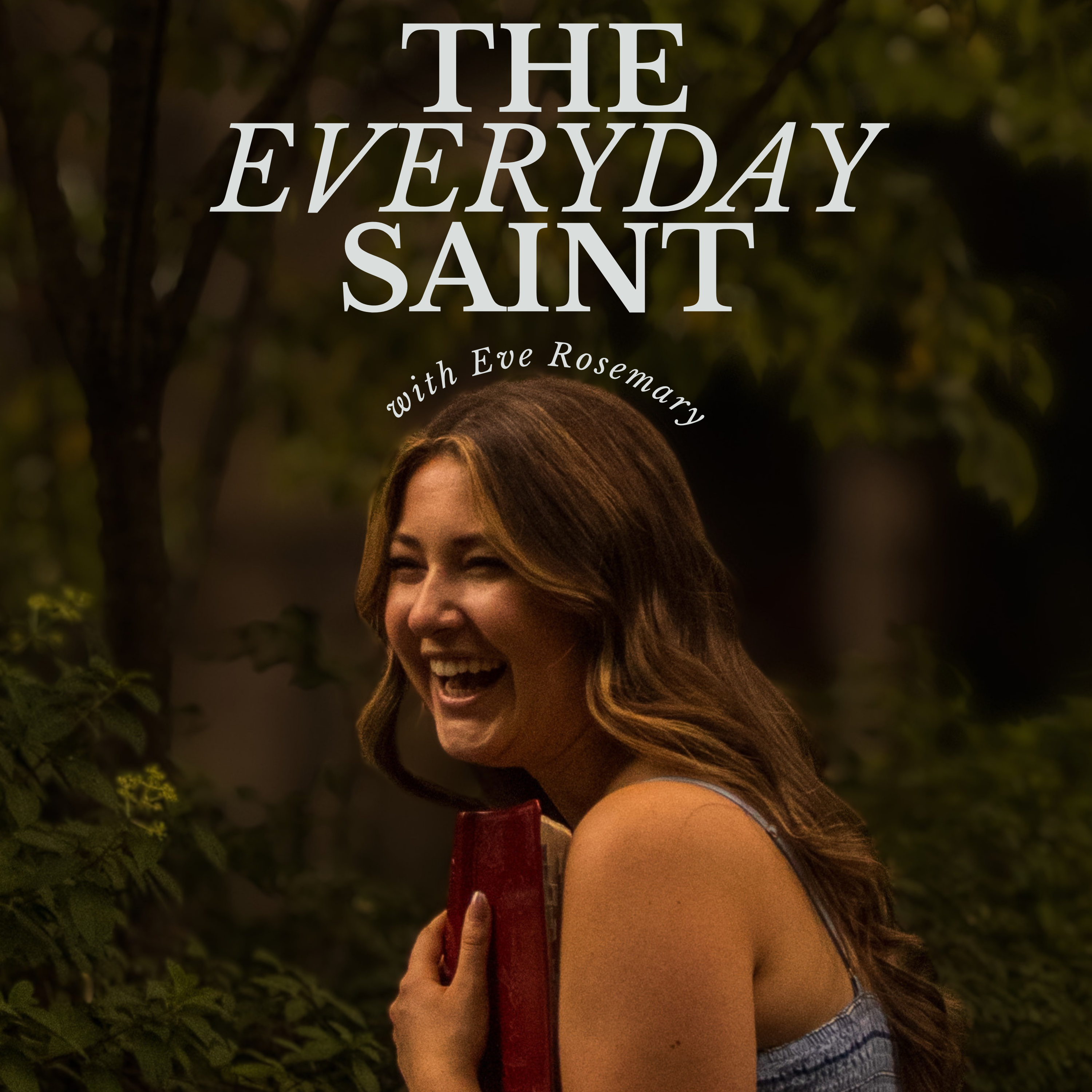
The Everyday Saint · Eve Rosemary
What made Venerable Fulton Sheen one of the greatest evangelists in history, and why are so many young Catholics rediscovering him today? In this episode, I'm joined by Monsignor Jason Gray, who is helping lead the cause for Fulton Sheen's canonization. Together, we dive into the life of the bishop who captivated millions through radio and television long before social media existed. If you've ever wondered how to become a saint in the middle of ordinary life, or why Fulton Sheen continues to inspire so many people, this conversation is for you. Follow on Instagram: @theeverosemary Eve Rosemary is currently booking Catholic speaking engagements for the 2026–2027 school year. Learn more or inquire at: theeverydaysaint.com/speaking The Everyday Saint Catholic goods designed to support everyday holiness: theeverydaysaint.com/shop If this podcast has blessed you, please consider supporting the mission. Your generosity helps bring faithful, honest formation to teens and young adults across the country: theeverydaysaint.com/donate Subscribe, leave a review, and share this episode so we can pursue Something Greater together.
Eve Rosemary: Welcome back to the Everyday Saint Podcast with Eve Rosemary. Today we have a very, very special guest. We have Monsignor Jason Gray here, who is the executive director for the Fault and Sheen Foundation. So he's been instrumental in putting together the cause of canonization for Venerable Fault and Sheen, who will soon be beatified this coming September. And I know that you, ⁓ Monsignor, have really been been foundational in this cause. You've kind of been with it since the beginning and have even been in part of the processes of looking into the miracles that have happened and ⁓ really being there. So thank you so much for coming on and sharing about that experience. Msgr. Jason Gray: Great. Yeah, thanks for having me. Eve Rosemary: Yes, well Monsignor Jason, would you just be able to give us an overview of who is Fulton Sheen and why is the church kind of paying attention to him right now? Msgr. Jason Gray: Sure. I I think the most important thing to know about Fulton Sheen is that he was the most powerful evangelist ⁓ who made use of radio and television. I think in our modern era, ⁓ we see lots of people using the internet, ⁓ radio and television. But ⁓ Sheen was really a a pioneer in that regard. And so he was someone who reached out to millions of people ⁓ through radio and television, and ⁓ communicated the the gospel message and the truth about Jesus Christ. ⁓ he was also someone who is a great supporter of the missions. ⁓ so he worked in the propagation of the faith. ⁓ so directing the the Pontifical Mission Society. So in that sense, he really promoted the church around the entire world, ⁓ raising money to support the church in those distant areas where the church is still developing. And so that real missionary spirit was something that really ⁓ captivated Sheen. ⁓ he was someone who grew up in the Midwest, ⁓ so he came from Illinois, but ⁓ kind of became really most well known out in Washington, DC, and then later in New York. ⁓ someone who was just a great scholar, ⁓ someone who's very educated. ⁓ but who could also communicate very effectively. ⁓ an apostle for the Eucharist. ⁓ he loved to promote the the holy hour and devotion to the Blessed Mother. ⁓ so many many things that would ⁓ give us reason to commend Fulton Sheen. Eve Rosemary: Yes, absolutely. And I w I think I was reading a statistic recently that he had what something like thirty million people watching his Sunday homilies or his Sunday Sunday messages every single week. Which is pretty incredible when you think about that. I think when I was ⁓ Googling it, the Super Bowl has one hundred and twenty million people watching, ⁓ and that's once a year. And that's the Super Bowl and somehow ⁓ Archbishop Fulton Sheen was getting thirty million every single week. I mean, that's pretty remarkable. Msgr. Jason Gray: He was when he was on ⁓ radio, he reached out to an audience of four million and it was when he went on television. That was when he really got to that thirty million audience. ⁓ it was that was one of the reasons he won an Emmy. So I I mean how many how many people ⁓ received that to that type of a of a reward there for their ⁓ for their work. But ⁓ yeah, he received an Emmy. Not that the Emmy is the most important thing to him as long as he's bringing souls to Christ. Eve Rosemary: ⁓ Right, definitely. But it's it's neat when you think about it. Like here's a Midwest midwesterner who's on his way to canonization and also received an Emmy. Like, I mean that those things i in my mind don't really usually go together. And I think that is part of what probably made him so captivating is ⁓ here's this this Catholic, this bishop who's really doing a lot of good work. And I'd love to know Msgr. Jason Gray: Mm. Eve Rosemary: What really made him so memorable and made him made people want to keep tuning in to what he was saying? Msgr. Jason Gray: So at the at the time he was on television, one of the kind of famous stories about Sheen is that he was up against Milton Burrell. So there was a the ⁓ and y you probably have no idea who who Milton Burrow is, but there was the Milton Burrell show. It was so he was a a very famous actor. And ⁓ and so he was v very well known and he had kind of a variety show. And ⁓ at the time ⁓ there were really only like three major networks. So you kinda you know, which which of the channels do you really want to watch? And ⁓ so Milton Burrow's very well known and on one channel you could Eve Rosemary: Ha ha ha Msgr. Jason Gray: Tune in and see him, but on another channel you could tune in and see Fulton Sheen. And one of the things that really distinguished Sheen is that ⁓ he did not have the high production value that Milton Burrow had. Milton Burrow had sets and guests and dance numbers and ⁓ scene ⁓ scene design and costumes and lighting and all of the and whereas ⁓ Fulton Sheen would just come out and he would just be there on a simple set with ⁓ you know books in the background and a chalkboard, ⁓ statue of the Blessed Mother. And he would come out just wearing his bishops bishop's regalia and he would talk just talk to the camera. He would talk to the camera for a half hour. And Sheen would communicate things that ⁓ he he he wasn't there just to entertain. No, you could turn tune the channel and ⁓ turn the channel to Milton Borough if you want to be emer entertained and you be entertained for sure. But when you watch Sheen, Sheen would talk about things that were valuable. ⁓ he would prepare you for not just to entertain you in this life, but to prepare you for the life that is to come. ⁓ he had an authenticity that I think comes out from his direct relationship with our Lord Jesus Christ that you could really sense through the camera. ⁓ he he was someone who had ⁓ got commanding voice. People would talk about the voice and also his eyes. His when he would look into the camera, those piercing eyes, ⁓ would kind of look right back to you. And so he was someone who was naturally very charismatic, but it wasn't just the raw charisma that drew people in, it was the fact that there was something behind that charisma. There's a a kind of integrity that I think people could sense because when he's speaking about the gospels or when he's talking about ⁓ Jesus Christ, you could tell this is someone who really knew ⁓ what he was talking about and someone who lived according to the words that he that he used. Eve Rosemary: Right, definitely. And also really neat that he was able to use media in such a way like that. ⁓ it really speaks to probably the messages that he was giving, that he didn't even need the high production value to communicate what he was saying and for people to want to listen. ⁓ especially knowing, you know, that using that modern media. I think we see that a lot too nowadays with people using Instagram and digital media and things like that. But There's always some like gripe of like, ⁓ do we do we enter into this new media? So he really I mean, used it for good and it sounds like didn't get caught up ⁓ too much in maybe the the production aspect of it and it was really just focused on the message and making sure that people knew the love of God. Msgr. Jason Gray: Yeah, well and I I like to say that he grew up in Illinois. So ⁓ so I'm I'm from the Diocese of Pyria, so and Puria's kind of right in the center of Illinois. And and maybe there are people who don't really know that that's where Sheen was. He really became famous in DC and New York. But I think there's something about maybe I'll just call it con kind of common Midwest values. ⁓ he was a valedictorian of his high school, so he's certainly very intelligent. But ⁓ there wasn't really he didn't get a lot of attention. It wasn't like people are praising him constantly or whatnot when he was growing up. So I think it's ⁓ in that sense he kind of learned a kind of a humble ⁓ a value of humility. later on he went and became famous, but I don't think he ever kind of lost that kind of, you know, grassroots kind of you know, earthy and ⁓ awareness of of just that that humility that he had. ⁓ when he would talk to people, ⁓ he certainly knew some ⁓ celebrities, he certainly knew different politicians. ⁓ he was famous, recognizable, you know, well known, but ⁓ he also never lost the common touch, the ability to speak to the common man. So he was speaking to the mechanic or the taxi cab driver or the housewife, ⁓ he could he could spend just as much time and and really enjoy himself just as much talking to them as talking to to famous people. So he never got that sense of having a big head or having you know looking down his nose at at ⁓ at the little people, I guess we might say. Eve Rosemary: Right. ⁓ that's really beautiful. What was his path kind of towards I guess one the priesthood and then how did that end up in this like media world? Msgr. Jason Gray: Yeah. Yeah. He was well, the thing is he was raised by very good parents, who just good Catholic parents who gave him ⁓ taught him a lot about just living a life of virtue, being a person of integrity. ⁓ he would talk about different ways and he was even disciplined by his parents. So his parents were really just a very ⁓ good influence on him. ⁓ as he ⁓ went on to high school, ⁓ which he and they there he graduated from the Spaulding Institute in Peoria, Illinois. ⁓ so he was a valedictorian. He was, you know, very intelligent. He would talk about some of the different things that he did. He he participated in a debating club and maybe that was ⁓ an important part of preparing him for the what was to come, so when he would ⁓ later be on television. ⁓ but at the same time, ⁓ the thing he really wanted to do more than anything else is he loved learning, he loved studying. And ⁓ so that was kind of one of his passions. ⁓ he went to St. Vyder's College in Bourbonet, Illinois, and it was there that he was kind of put to the test about really, you know, is he going to be serious about his vocation? ⁓ he had a he had a choice. He had received a great scholarship to do whatever doctoral studies he wanted that would be completely paid for, free of charge. And he said, ⁓ that was what he that was what he wanted. It was the it was the thing he was dreaming of. But one of the priests there at St. Viadar's College said to him, He says, Now, Fulton, you know what you're supposed to be doing. You know where you're supposed to be. So tear up that scholarship and go to seminary. And that so that was one of the first really tough sacrifices that that Sheen had to make. Eve Rosemary: Yeah. Msgr. Jason Gray: ⁓ to give up something that was really dear to him to go to St. Paul's seminary in St. Paul, Minnesota. That was that was where he ⁓ he went. ⁓ that's where he did his his studies before he was ordained a priest in 1919. ⁓ now later on after his priesthood, he actually got the opportunity to study in Washington, DC, and to study in Louvain in Belgium. And so he actually ended up getting the opportunities to do all the studying he wanted to do ⁓ to earn those degrees. ⁓ but there was a little sacrifice along the way. You might say the Lord was testing him to see if he would really do what the Lord wanted. ⁓ and then the Lord allowed him to to do all that ⁓ the academic work that he wanted to do. Eve Rosemary: Right. That's so neat to hear too. And honestly, really encouraging, especially for young people to know like the the desires that we have now. Maybe it's it's a not yet, right? Like the there's an imp importance to r even hearing his stories about how he was on the debate team. He loved to study, ⁓ was very intelligent, like a well-rounded individual. But all those little things, even like the debate team, like he ended up using that way later down the line. And I just think that God is off to Msgr. Jason Gray: Mm. Eve Rosemary: Preparing us for that plan far before we have any semblance of an idea of what that's going to look like. And so that's really just me to hear in his story that even things that he was doing in high school then were being used as strengths for him as he was pursuing his path eventually to sainthood, now ⁓ as we know him. So from him, you know, entering into the the seminary and making that tough decision, how did he end up on people's television screens? Like ⁓ How did that happen that he was given that microphone? Msgr. Jason Gray: Yeah. Sure. So we he was ⁓ so one of the things that happened early in his priesthood ⁓ is he h he did that additional study, so he had ⁓ d various doctorates and advanced degrees. ⁓ he came back, his his bishop wanted him to serve one year in a parish in Peoria, which he did. So it was kind of a test to see if he would be obedient. ⁓ and then after that, then he was ⁓ released to go teach at Catholic University in Washington DC. And it was while he was there That then he was invited by the US by well at the Bishop's Conference at the time, the USCCB, to to ⁓ speak and to to ⁓ represent the ⁓ the bishop's conference ⁓ on radio. And so there was an opportunity there. So it was really when he was ⁓ given ⁓ an opportunity to speak on radio that he really became recognized. He had a program called the Catholic Hour, ⁓ and there he was really just speaking to Catholics. It was really more of a an opportunity to catechise. So was speaking about the faith and and teaching Catholics so they might better understand their faith. ⁓ and so it was when that opportunity came along that ⁓ the his talent and his ability ⁓ to speak effectively really became known. He did that for about 20 years, ⁓ from nineteen thirty to about nineteen fifty. ⁓ and then as as time was progressing, television became really all the rage. ⁓ and then a television program opened up. So he was able to go, and that's what he's really most known for the the program Life is Worth Living. ⁓ that ran from nineteen fifty one until nineteen fifty seven. Eve Rosemary: That's so cool. Was that ⁓ maybe you don't know the answer to this, but ⁓ just in what you've learned about him, do you think that was something that he wanted to do or something that just kind of naturally came about for him? Msgr. Jason Gray: It was well, that's an interesting question. It was he certainly had a natural talent for it. And ⁓ he used he used the skills that he he had. So they say grace builds on nature. So he had certain natural gifts for communicating. ⁓ and I think it was something that w whether he necessarily had that in mind from the beginning, I guess you know, it's that's hard to say. But once the opportunity came up, it was certainly something he'd he dedicated himself to. ⁓ so the ⁓ he would pour a lot of time into the preparation of those programs. So the television programs You know, for every hour that he would be on television, he would practice for hours and hours preparing and and ⁓ rehearsing the timing, ⁓ really thinking carefully through the the ⁓ the things he wanted to talk about. It's ⁓ I'm encouraged because one of the things he mentioned early on in his life is that one of his passions was to know what the world was thinking, and then also to know how to respond to the world by using the teachings of St. Thomas Aquinas. And it's it strikes me that both of those are really important. I I think sometimes we we might run into very educated people who are all theory. So all they want to do is talk about the the theories and the ideas they have in their head. ⁓ and then but Sheen also kept a ⁓ his hand on in the world as well, so he would also know what what was going on in the world. So he was ⁓ rooted in in the current ⁓ the current climate. I think he knew the the human heart very well. And but at the same time he was also rooted in the gospel. So he was you know, he would could could appeal to scripture and use his knowledge of the world and his knowledge of our Lord Jesus Christ and bring those together to offer a message of hope that I think people desperately need. Eve Rosemary: Yes, absolutely. ⁓ and as you've been working on this cause for ⁓ Venerable Fulton Sheen, have there been any stories that have popped up that you've really enjoyed or s any of your favorite stories about Fulton Sheen? Msgr. Jason Gray: The well I have to say that ⁓ I when I was ordained in nineteen ninety seven, I didn't really know that much about Sheen. So it's a it's kinda he was he was a priest of Peoria and I'm ⁓ from Peoria. So we we were ordained in the same cathedral, ⁓ separated by about ⁓ eighty years. ⁓ but at the same time I I came to know him as time went on. and so some of the things that would ⁓ the more I've had the opportunity to follow his cause and and be involved in promoting the cause. Eve Rosemary: Ha ha ha. Yeah. Msgr. Jason Gray: ⁓ so there's so many different aspects of his life. But his biography, ⁓ Treasure and Clay, is really just a wealth of so many different stories. ⁓ and the thing that ⁓ that really amazes me is the insight that he had into the gospel. ⁓ there there are times he would make just a reference to something about our Lord, something about the the way something was said in the gospel. And I'm like, where did he get that from? He was just he had such incredible insight. And ⁓ I I think a lot of that came from just time that he spent ⁓ on his knees praying in front of the Blessed Sacrament. ⁓ that was something that he did every day. He made a a a continuous Eucharistic holy hour each day. and ⁓ rather than thinking that, well, he got this from some fancy professor in Belgium or from some library or from some book, he says, No, I think his insights really came just from time spent with our Lord Jesus. Eve Rosemary: Wow. Which is, I mean, so true, right? Like if you're going to be speaking on this person, you better know who they are. And and he was speaking on on Christ. So he probably, you know, really had to spend that dedicated time and knowing how busy someone is as a bishop and especially ⁓ in what he was doing with media. I mean, I'm sure he was incredibly busy and still making that time for the Lord, which I think is really important. Msgr. Jason Gray: Yeah. Eve Rosemary: Do you have any insight as to what he did during that holy hour? Was it like was he very contemplative? Did he usually come with scripture to read? ⁓ was he just like an avid rosary prayer during the the that holy hour? Did it look different? Msgr. Jason Gray: Yeah. He he described the holy hour as the hour that makes his day. ⁓ and so that was really where he drew the source of his strength. ⁓ he d he didn't really go into a lot of detail about exactly what he did during that hour. certainly have the scriptures with him because that was that was something he was just so well versed in the scriptures and that comes from just reading them and knowing them very well. ⁓ he also ⁓ when ⁓ when he would talk about the times that w he prayed. ⁓ he also said that we should spend more time listening than talking. So sometimes I think we go into prayer, people want to then tell God what they what they need or what they want. And ⁓ he says, Remember that the the ⁓ expression from Samuel when Samuel was first called as a prophet, ⁓ he says, Speak, Lord, for your servant is listening. And he did not come and say, Listen, Lord, for your servant is speaking. So that's the do more do more listening than than speaking. So and ⁓ that that was one that that's Eve Rosemary: Okay. Msgr. Jason Gray: He had he had such a f ⁓ a talent really for for crafting phrases and such a just a natural sense of humor. That was just one of the ways in which he brought out, I think, just some common sense wisdom from the scriptures. Eve Rosemary: Which is so fun. I mean, I just love when you get to see both the serious sides of faith, right? Like he did have a lot of serious messages and there's a good lesson learned there, but just to show the faith in a way that's i like it's fun too, right? Like there there's ⁓ there's even humor in in the Christian life it's not all like suffering and all of like the things that we give up and fasting and ⁓ there is a lot of joy to it as well. So I love that that's that's a story. ⁓ that we can hold on to in just an aspect of his life. ⁓ I'd love to know if there's something about Venerable Fulton Sheen that most people don't know but that you would hope more people would know about. Msgr. Jason Gray: Hmm, that's interesting. The ⁓ so one of one of the things that I think ⁓ influenced Sheen toward the end of his life ⁓ is his last his last ten years basically, from the time he retired as Bishop of Rochester ⁓ until the time when he when he passed. So he died in this chapel in his apartment in New York, ⁓ in New York City, ⁓ so before the Blessed Sacrament there. and ⁓ during those last ten years, I think there was maybe a little bit of a purification ⁓ for him. ⁓ now people know his story. He was, you know, on radio in the 30s and the 40s, he was on television in the fifties, he was at the Second Vatican Council in the sixties, he became Bishop of Rochester in the late 60s, and then he retired, and he still continued to speak and he still continued to give retreats, but not but he he he never really regained the type of fame that he had at one time. I mean he was he was certainly totally well known and ⁓ you know commanded huge audiences. I I think really toward the end of his life there might have been a little ⁓ time of purification for him, ⁓ a time at which he wasn't really the the object of as much attention. And ⁓ Sheen himself even said there was an interview he gave late in life in which he prayed that he would die when he was around the the age of eighty and he wanted to die on a feast day of Our Lady. And ⁓ well the Lord kept him until he was eighty four. So he didn't he didn't get his wish. He had the so he was around until the age of eighty four. And really those last several years, I I think it's just a a moment ⁓ so why is it the Lord kept him around? Why why stay the he he he thought his productive time would be finished and he wouldn't be able to do anything more for the church. But I think ⁓ maybe just in that ⁓ time of purification when really he didn't have any other, you know, th where there wasn't as much attention given to him and it was just him and the Lord. ⁓ that's I I I kind of play around with this as kind of like a personal theory of mine that this was a critical time for him and I I ⁓ so I and I think that's well founded. I think it's a a good opportunity for his humility, I think perhaps to grow ⁓ even a little deeper ⁓ toward the end. Eve Rosemary: Right. Why was it that he made that prayer to pass away at eighty? I mean I think that's like kind of specific. Was it just because his mission was so rooted with ⁓ media and then not being able to do that anymore? What did that look like for him? Msgr. Jason Gray: Yeah. Well, he he was so as Bishop of Rochester, bishops have to offer their resignation when they turn seventy-five. And so as he was approaching seventy-five years of age, ⁓ that was about the time when he submitted his resignation. So then at that point he was no longer a diocesan bishop. ⁓ so he went into retirement. And ⁓ I th he said that by the age of eight he didn't think he would have anything further to offer the church ⁓ after he was eighty years old. And so because his whole life really had been offering himself to the church. Everything that he did was about, you know, what could he do to serve the church. ⁓ and so if he wasn't really useful in serving the church, then I think he thought, well then it'd be time to go home to the Lord. ⁓ that so I I think that's why he said that in an interview. But ⁓ you know, as I as I think the I mean the Lord, you know, what the what the Lord considers to be valuable service to the church, you know, even even offering up our sufferings, offering up our prayer, I mean, all those holy hours for those remaining years. I mean that that Does tremendous good. So it's no no time is wasted. ⁓ his television program was called Life is Worth Living. ⁓ and so the value of human life itself is really quite significant. and so for Sheen's life, yeah, he's his life never ceased to have value, even even in those older years. Eve Rosemary: ⁓ definitely. Yeah, I was just curious. I was like, ⁓ why would I it's an interesting thing to pray, to think about praying. ⁓ and we've kind of talked about his message for the modern man. So can you go in did he have like just some key concepts that he was really known for speaking on? Msgr. Jason Gray: Yeah. The the so there are many things that he would talk about, the Eucharist, you know, in particular, but but also really the passionate love of our Lord Jesus Christ. I mean, part of the reason why life is worth living is because we're loved by our Lord. ⁓ but there are different times at which he would really reflect on the way in which the Lord ⁓ shows that passion to us. ⁓ the the love of the sacred heart for us is just burning a burning furnace of charity toward us. ⁓ so for example, one of the things that he would point to as a sign of that. is ⁓ he would talk about the resurrection and Jesus' appearance there. So Asheen loved to talk really about ⁓ the all the mysteries of the true to him. So the incarnation and also the passion, the death and resurrection. And I think he found it interesting that when when Jesus ⁓ appeared in his resurrected body, so everything was healed. So all of the ⁓ you know the the s the scourging, all of the the crown of thorns, all the all the marks of the passion were healed and restored except for the five wounds. And it was interesting that he kept the wounds. So the wo the wounds still remained there such that Thomas could then touch the wounds and the nail marks and the and the and the place in his side where his where his heart had been pierced. ⁓ And ⁓ he he kept those because those scars testify to the depth of the Lord's love for us. ⁓ so not horrific, not not looking like you know something that's you know from from horror, ⁓ but you know, this time, but but appearing to us in a in a in a really glorified way. ⁓ they witness to the Lord's merciful love. And so I think that the passion that that ⁓ our Lord with which our Lord loves us, ⁓ Sheen really testified to that. It was something he very, very much knew personally and I think very deeply believed in. Eve Rosemary: Which is really beautiful. I think there's a couple of saints who have often reflected on those wounds and even like the divine mercy image that in that Jesus still appears with his wounds. And that's something I've also really ⁓ found beautiful about the Lord is that he doesn't hide those wounds from us and that he ⁓ continues to bear bear his wounds, even though that was a moment of such suffering for him. It's also now Msgr. Jason Gray: Yeah. Yeah. Sheen Sheen said that ⁓ Jesus is a superstar. Actually he sa he's he would use the phrase a super scar. So it was the scar it was the scars that he that he had that that were really most important. Eve Rosemary: Mm-hmm. Yeah, that's funny, a super scar. Yeah, I mean it is it is really true, ⁓ especially as a savior, right? Like that's all superheroes are meant to be a version of a savior and ⁓ we just happen to have the the legitimate one, right? Like the the one that really matters the most. ⁓ and I know kind of yeah, given as you were saying, kind of that common man was really who he was speaking to. And as someone who talks to I talk to a lot of teens about chastity and relationships Msgr. Jason Gray: Yeah. Eve Rosemary: I'd love to know what were some of Venerable Fultonsheen's viewpoints on dating and marriage. Msgr. Jason Gray: So ⁓ so one of the things that ⁓ he wrote about marriage ⁓ is found it's ⁓ found in a book called Three to Get Married. And that's ⁓ that's really a great book. We can refer to you know any anyone who's ⁓ you know int approaching marriage or who is married, ⁓ the notion that it's not just the the husband and the wife, but that the Lord is also a part of that relationship as well. So the the so the Lord enters into ⁓ in a in a sacrament, he enters into that marriage and sanctifies both the the husband and the wife. So That's that's actually a great ⁓ you know a great a great ⁓ source of information about Sheen. ⁓ but he also would would speak about celibacy as something that it's not a lack of love, it's actually a very intense way of loving. ⁓ so there's a chapter he has in his autobiography ⁓ in which he talks about that. And so it's it's not that we're denying the passions. ⁓ so it's in fact the it's the Lord loves us more intensely than anyone. ⁓ and so it's it's a the intensity of love is ⁓ is he is he would say is purified and refined. ⁓ especially by practicing chastity. So it was it was something that he always thought of as a gift. ⁓ so the gift of celibacy as part of his priestly vocation, ⁓ gave him really it really freed him to love more deeply, ⁓ not to love less. Eve Rosemary: That's really beautiful because, you know, even people listening, maybe they ⁓ some of them might feel called to religious life, some of them might feel feel called to married life, and yet you all ⁓ each person kind of practices that purification of passion and ⁓ learning what it means to even love in the first place. ⁓ what do you think Venerable Fulton Sheen would say to ⁓ kind of the the modern dating culture today or or people who are kind of in that boat now? Msgr. Jason Gray: The well one of things about love, the the ⁓ the deepest love is that it always is sacrificial. And so there's there's always a sense in which love is not about ⁓ a selfish desire, but about be be being and becoming selfless. And I one of the things I now he he he knew that there was, you know, evolving technology and he kind of talked about in the future they're gonna be we went from radio to television and you know, no I mean no one could have predicted the internet and how that would operate. But he knew that there were ⁓ technological advances, and he kind of talked about the future and kind of said at a certain time in the future there'll be there'll be kind of like another approach that will have to be taken. ⁓ he when he was on radio, he was talking to Catholics, he called that the direct approach. He was talking directly to Catholics, so just talking about the faith. On television, he actually had a much wider audience of Catholics, Protestants, Jews. ⁓ he he took what he called an indirect approach. where he was talking about some other topic, so something from history or literature or science, and then he would bring that into a discussion about the faith. But ⁓ in this third iteration, in this ⁓ kind of in the modern way, he kinda predicted that we would have to take what he called an anthropological approach, meaning we have to start from man. And we start from the woundedness of the human heart. We have to start from the anxieties of the human heart. And then ⁓ approach people in that way to so as to relate to what their their desires, their anxieties, their worries, their fears, what they are, and then lead them from that to discover our savior, to to find a solution to that. ⁓ and I th I think that actually in our modern time, this is really something that ⁓ has been borne out. ⁓ we have technology and resources and you know, all sorts of things that are available to us, and yet in many ways I think people are perhaps more lonely than ever. ⁓ that we were surrounded, inundated by, you know, by sex in different ways. ⁓ and yet I think there's a a kind of ⁓ you know, people might feel more isolated, ⁓ and so and even more hopeless ⁓ than ever. And Sheen would say that the the the message that life is worth living, because God's love for God has a plan for us, ⁓ that's as timeless as a message as as an I think anyone could think of. And and I maybe our generation today needs to know that, ⁓ even even more than the Time in the nineteen fifties when he first delivered those messages. I I think that's part of the reason why we've discovered at the Sheen Foundation, ⁓ and here in Peoria where people come to visit, that his message has not lost any impact, ⁓ any of its force. ⁓ but young people, even you know, people who you know came along long after Sheen was dead, he's he, you know, is it's about forty-seven years since his ⁓ passing. And yet people who never knew him in life are discovering his message and actually finding a tremendous ⁓ sense of inspiration. And a source of truth in the in the message he's communicated. Eve Rosemary: Right. Yeah, and that's really beautiful to see how that's continued. And it makes sense if he ⁓ really is speaking to the human heart. Like the human heart is often like the same. Like the things that that's why scripture even today still resonates with us because it speaks to our humanity and that humanity has remained the same and ⁓ is really wise to like continue that we can we can go back and we can watch, right? Like we can go go on YouTube and watch what ⁓ Venerable Fulton Sheen was saying and hear his message and still resonate with it. And I think it's really interesting that he did ⁓ kind of start with the human person and I think that maybe can speak a lot just to the the culture as we see it today. ⁓ it's just easy to point fingers I think at like this is the issue, this is the issue. But if we forget about the human heart, like is any of it really worth worth it, right? Like we have to be focused on the human person. ⁓ and maybe that's something that we can often miss and ⁓ kind of Msgr. Jason Gray: Mm-hmm. Eve Rosemary: brush past because we think it's almost so obvious. Like of course we're considering the human, but really to just think about the way that we work and how God is continuing to work in our life. Msgr. Jason Gray: Sheen Sheen now also would ⁓ go back to the story of Peter and it was there was kind of a I think a very ⁓ passionate ⁓ way in which I think he related to Peter. ⁓ when when Sheen was ⁓ first baptized, so he was baptized as Peter John Sheen. ⁓ so his actual his baptismal name is Peter, his his mother's maiden name was Fulton, and so he he kind of got to be known as ⁓ as Fulton ⁓ in connection with his ⁓ mother's family. But ⁓ but his baptismal name was Peter, and so there was there was a sense in which he always I think kind of held Peter in a ⁓ kind of admired him and also really related to him. Peter could be really heroic. ⁓ so there were moments at which he was he was just a star, he was, you know, on fire, when he recognized that you know Jesus was truly the Son of God. ⁓ times at which he would just be inspired to f I'll follow you to the end. I'll I'll you know, I'll even you know go go forth even to lay down my life with you. ⁓ but then there were times when Peter could really ⁓ screw up. He he he could become very, very fallible. ⁓ times in which he would deny the cross and Jesus had to say, get behind me, Satan. ⁓ times when Peter would be brash enough to to get out and walk on the water, but then you know lose his faith enough that ⁓ he then ⁓ that he began to sink. And then the of course the the pivotal time when he denied our Lord. So that so so those were times where some of his weakness was on display. What what's ⁓ what I think was so inspiring to Sheen about ⁓ Simon Peter Is that the Lord never gave up on him throughout all of that. And so, ⁓ he was a hero, he could sometimes fail, but the Lord was s was still with him and was still watching him. And and ⁓ Sheen even describes a moment when at the at his trial, ⁓ when Jesus was being led into trial before his his passion, ⁓ he would look back at Peter Peter denied him, and then Jesus would look back and he would would gaze at him. And so in Luke's gospel there's a point when Jesus looks at Peter and it's a it's a look that is ⁓ Piercing, it's it causes Peter to then go out and weep bitterly because he knows that he's he's turned on our Lord, but at the same time, he knows that in spite of the failure, that the Lord loves him and that the Lord is that what the Lord is enduring would he would endure for Peter if it was just for Peter alone, if it was only for one person ⁓ that he was he was being saved, that that Jesus would go through that. ⁓ so there's there's ⁓ really a great sense, I think, I think through Peter's eyes, ⁓ Sheen has a great appreciation. ⁓ for the depth of the Lord's passion, his suffering, ⁓ his his abiding love. Eve Rosemary: Right. And his mercy, right? Like that that I can't imagine being Peter in that moment and after denying him seeing just that like gaze of Christ. That you know like you know that that gaze loves you. Like we we get to experience that when we go and sit before the Eucharist, as you can sit there and you can literally see this loving gaze of the Lord. And it's like that's the same gaze that Peter would have seen in that moment after just denying Jesus and to know that there is mercy and that there's love still offered there. Yes. And ⁓ just a a last touch point on this ⁓ kind of message to young people. I talked to a lot of young people who are really struggling with discernment and figuring out what God's will is. And ⁓ you kind of mentioned earlier that Venerable Fontensine had to make some of these big sacrifices early on of turning down the scholarship and doing something different. What kind of messages did he give when it came to discernment and figuring out what God wanted you to do? Msgr. Jason Gray: Well, I think the most important thing that Sheen would always say is that we want to listen to the Lord and we can only do that when we pray. ⁓ so we need to spend time with our Lord praying. But I think also we need to not be afraid ⁓ to do difficult things. ⁓ you know, life is ⁓ the life is about ⁓ it's not really so much about what we what we get or what we receive, ⁓ as much as how we spend our lives. It's not it's not that we get accumulate things to ourselves, but we give of ourselves so we so we spend our life doing whatever, you know, is is most important. ⁓ and so this this notion that ⁓ you know Sheen and he grew he grew in this appreciation of the cross of sacrifice of suffering. ⁓ but the question is how how could he best serve our Lord? How could he best serve the church? ⁓ and that's and that's what he wanted to do. That was that whatever way that would be, that was that was how he wanted to spend his life. ⁓ and so giving of himself was constantly he he gave he gave away so much. He when he was on television he didn't take a salary. ⁓ that shows that he's not, you know, money wasn't the thing driving him. So money's not going to bring you happiness. ⁓ instead he gave all that away to the missions and but the his service was the thing that was most important to him. So I think I think when young people are asking themselves that question, ⁓ then they should ask, ⁓ saying the Our Father saying, ⁓ thy will be done. ⁓ what is it that the Lord the Lord wants more than what I want? So what is it, how can I be selfless ⁓ rather than selfish? What is it that I can, you know, what is the Lord given to me that I can now? spend my life doing giving away, in order to to really, you know, s to serve him in the best way that we can. Eve Rosemary: Mm-hmm. Right. Yeah, very service oriented approach. It's kind of like one of those things you pray 'cause you love God, right? And if you love God then you're going to figure out where where he needs you to love others better. ⁓ so I think that's a really important message. And just in this last couple minutes too that we have, I really would love to hear about your experience working on his cause for canonization. ⁓ maybe if you could just share how you got involved and what it's meant to you to be able to work on this cause. Msgr. Jason Gray: Sure. Yeah. So I I was ⁓ working for the our bishop at the time, Bishop Jankee in Peoria, ⁓ at the time when he opened the cause, ⁓ that was in two thousand two. So I had a little a small role to play in ⁓ studying Sheen's life. But then there was an opportunity to ⁓ study the miracle that was presented. There was a miracle that occurred in twenty ten ⁓ a child that was ⁓ resuscitated after being without any heartbeat or respiration for a total of sixty-one minutes, which is It's long time, very inexplicable. ⁓ and at that time I I studied canon law and I had the privilege of actually doing that investigation. So I was very intimately involved in researching that and ⁓ sending that off to Rome. ⁓ I also had the opportunity to work in Rome ⁓ in the in the Dicastery for the causes of saints. ⁓ so I spent some time there and I had a chance there, not not to work on Sheen's cause, but really to study all sorts of different causes. ⁓ so it's a part of my life. I I never would have predicted this when I when I was ordained that this was what was coming. Eve Rosemary: Yeah. Msgr. Jason Gray: ⁓ but you know, canon law working in causes of saints is something I've had ⁓ a great opportunity to do. And then coming back to the Diocese Superia, ⁓ then I've been appointed by the by our current bishop, Bishop Tilka, as executive director. ⁓ that means that I am in a lot of meetings to plan a certain event that's gonna happen on September twenty fourth in Saint Louis, Missouri. ⁓ so we look forward to that that ⁓ beatification and we want that to be the best that it can be. So I've kinda kinda have my hands in the Sheen cause in one way or another, ⁓ through the majority of my priesthood. Eve Rosemary: Yes, that's so neat. I I mean to be able to work so closely with the cause for canonization of an American saint and again, someone that we can even like still watch ⁓ on our on our ⁓ computers and on YouTube and things. ⁓ what have been some of your favorite parts of being able to work on the cause for ⁓ Venerable Fulton Sheen? Msgr. Jason Gray: It's I think the ⁓ so it's the opportunity to be immersed in the cause and to really through that to get to know Sheen better. So ⁓ even you know, interviews like this, I mean the opportunities that I've had to to travel or to speak or to ⁓ talk about or give talks about Sheen. ⁓ I've really enjoyed the ⁓ the way in which I've come to know more and more details about Sheen. ⁓ it's it's something that has caused me to admire him a lot a lot more. ⁓ I've discovered ⁓ through spending more time with Sheen's material and learning more about him. ⁓ the degree of humility that's there. And I I think maybe that's most surprising to people because usually we think of, you know, famous people as not being humble. So normally we think of them as you know, perhaps being, you know, very proud or puffed up. But ⁓ is ⁓ the more and more that I get to know Sheen, the the more I come to know of his deep and abiding love for our Lord, ⁓ and especially the humility in which all he wanted to do was to to serve the Lord, whatever the Lord wanted, ⁓ however he could best serve was what he wanted to do. Eve Rosemary: Yeah, that's amazing. And ⁓ you mentioned the miracle with ⁓ the baby a little bit earlier. Was that the miracle that ⁓ secured his beatification or where did that fall in the process? Msgr. Jason Gray: Yeah. That's that's correct, yeah. So it was ⁓ it studied, it was it took place in twenty ten. We investigated it in twenty eleven, submitted it to Rome. It it passed through the doctors, you know, in by twenty fourteen, and by twenty nineteen is when is when it finally re received the approval of Pope Francis. So that's the miracle for the beatification. Eve Rosemary: That's so cool. What was it like being able to be part of the team investigating that miracle? What does practically what does that look like? But also what did it mean for you? Msgr. Jason Gray: It's well ⁓ i i in the from the big picture it's really an impressive thing. So you think about someone, you know, Hugh you'd expect there's no way that you can survive, you know, without oxygen for sixty one minutes. So that's so from the the big picture you say, Well, this is incredible. When doing the investigation though, the we have to delve into all of the details. So I I have to admit it's actually a very meticulous study. So when we're talking to the doctors, the nurses, the family, we're looking at the medical records. I mean, the medical records in the United States when you have a a you know different event, you can have hundreds and hundreds of pages of medical records. And so from the standpoint of doing the investigation, it had to be very technical and we had to go through all of the detail there. ⁓ but then when it's all done, sort of in retrospect, you look back and realize that this was really just an an an inexplicable and just amazing event. ⁓ so the the idea that miracles can happen, ⁓ that's you know sometimes ⁓ we we think well, you know, does does the Lord answer prayers? Well he does. So it's and this is one concrete example. Eve Rosemary: Yeah. ⁓ I love that. I mean we're just about at about time here. So I'd love to know is there anything that you'd like to mention ⁓ about Faltensteen and then ⁓ sharing a little bit more about his beatification coming up soon? Msgr. Jason Gray: So I mean people should visit celebrate Sheen dot com. ⁓ that's in there was information there about Sheen, about the cause, about the Beatification. So we certainly want people to come to St. Louis. ⁓ you know, he was the ⁓ one of the the important things about Sheen's life is at the very end, he was greeted by Pope St. John Paul the Second. ⁓ and Pope John Paul was coming to ⁓ the United States on ⁓ one of his early visits, and he wanted to see Sheen because John Paul had known Sheen from the Second Vatican Council. And it was really a touching moment at the end of his life. ⁓ Sheen was just a couple months before before he had passed. And John Paul singled him out and then said of him, he says, You have written and spoken well of our Lord, and you were a loyal son of the church. ⁓ so if there was any question about whether Sheen had had had had served the church well, I think the Holy Father settled that question there. So to receive high praise from John Paul II is pretty is a pretty impressive thing. Eve Rosemary: That is. I can't imagine someday like, you know, the Pope saying something like, ⁓ you you've done a great job with your work and you're like, ⁓ my gosh, like they know who I am. ⁓ That's pretty remarkable. Wow, I love that story. So yes, I I ⁓ definitely check out the the website. I'll link it in the description below as well and they can learn more about the beatification. Our tickets still available. Msgr. Jason Gray: Right. Yeah. They are. Yeah. So there's there's information through celebrate sheen dot com. ⁓ because of the way that the ⁓ the dome works in St. Louis, ⁓ Ticketmaster is the ⁓ that's who they partner with. ⁓ so it's actually through Ticketmaster the tickets are available. Eve Rosemary: Okay, wonderful. All right. That's awesome. I mean, to be able to be part of that, ⁓ i just even that thought is amazing. ⁓ so thank you so much for coming on and sharing about Venerable Fault and Sheen. I'm really excited about this cause and excited that we got to talk today. Msgr. Jason Gray: Excellent.