
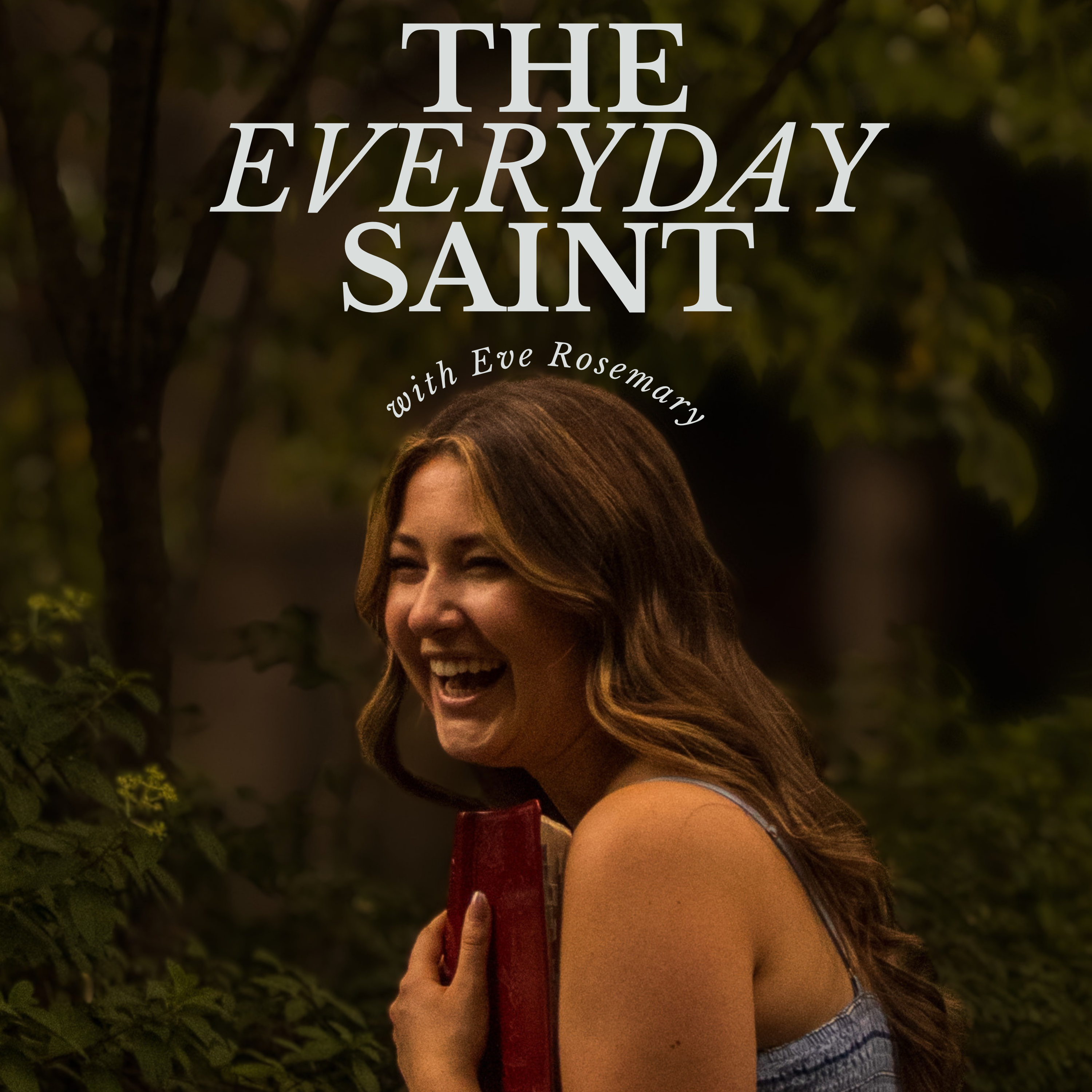
The Everyday Saint · Eve Rosemary
Sr. Julia is a sister who moves with determination. At just 13 years old, she asked her anti-Catholic parents if she could become Catholic. They told her she could, once she turned 18. Her response? "I don't want to waste five years of my life!" Fast forward: she joined the convent at 17. Her story takes us through the ups and downs of a vocation journey, what it takes to persevere, and how the lives of the saints teach us to live like a saint! Shop Pax-Rosa, code "EVE10" for 10% off: www.pax-rosa.com Get "Alto", Ascensions Prayer Companion, code "EVE10" for 10% off: https://ascension-press.linkjolt.io/redirect?tc=WfiAGx9e&aff=x8dnjSqPfubCBpO-B4XX2 Follow on Instagram: @theeverosemary Eve Rosemary is currently booking Catholic speaking engagements for the 2026–2027 school year. Learn more or inquire at: theeverydaysaint.com/speaking The Everyday Saint Catholic goods designed to support everyday holiness: theeverydaysaint.com/shop If this podcast has blessed you, please consider supporting the mission. Your generosity helps bring faithful, honest formation to teens and young adults across the country: theeverydaysaint.com/donate Subscribe, leave a review, and share this episode so we can pursue Something Greater together.
speaker-0: Welcome to the Everyday Saint Podcast. Today we are here with Sister Julia Mary of the Daughters of Saint Paul to learn all about your faith journey, your vocation journey. These are some of my favorite episodes to record. And I've been able to hear little bits and pieces about your faith journey because you sisters do a a dinner with the sisters. I've heard a little bit about your journey and I'm really excited to delve into what God has done in your life that's led you to be here today. So welcome, Sister Julia. speaker-1: Thank you. Thanks very much. speaker-0: Yes, why don't you start off? I'd love to just take us back to the beginning of your faith journey and how that started. What what is your background like with your faith? speaker-1: my background is I was not raised Catholic. I was raised every variety of Protestant. It really depended where we lived at the time. my grandmother was raised Lutheran, my grandfather Presbyterian, and then they became evangelical when they were married and so that was kind of passed down to my family. But my father liked the Methodist church because they had a good choir. So we went there and then in our neighborhood they had a Mennonite church and I went to Sunday school there. So it was really like it was a lot of different versions of of, you know, Protestant faith. the thing is, you know, I was always kind of attracted to the Catholic faith, even from a a very, very young age. I remember being going to the shore one time with my family in Delaware. And they had a boardwalk, a very small boardwalk, and they had gifts in the back and I I loved this one golden crucifix and I wanted it and my dad said, No, that's not your religion and I said, Why is it not our religion? I think that's Jesus, right? I didn't understand. I was maybe about six or seven at the time. But when I was really introduced to the the Catholic faith was inadvertently, because I was a real bookworm, so I read a lot and Me and my best girlfriend Chris spent hours at the public library, just hours. There was nothing else to do in our city, honestly. It was Lancaster County, so it was in Pennsylvania. There was really not a whole lot to do back in the early seventies. So we hung out at the library and we found these two books and both of us were Protestant, by the way. One was Song of Bernadette and the other one was The Penitent, which is the life of Maria Garetti, seen through the eyes of Alessandra Serenelli, who was the one who murdered her, and it was his conversion story. So we each read these books, and then when we finished, we swapped them and we said, w we need to go back to the library and find more of these books, right? There has to be more. There has to be more. So we went back and we we scrounged up like Saint Joan of Arc, Saint Francis of Assisi, you know, a few, but but we exhausted it after maybe half a dozen titles. So at that ripe bold age of thirteen, we said we have finished all the good books in the world. We were a little discouraged. And but i in the meantime, you know, we were also like visiting churches off hours, you know, and back then in those days nobody locked the church doors. All the churches were open. really? All the churches were open. so we would go in and out of different churches. And the one that we liked the most was Sacred Heart Church, which was right across the street from us. And so we wandered into Sacred Heart Church and all these people that we had been reading about, there were stained glass windows of of these saints. So in our head we said, Well, all these people go to Sacred Heart Church, therefore we need to find out more about this church. speaker-0: you thought that the saints went to Sacred Heart? Sure. speaker-1: Exactly. Yeah, we figured we were part of Sacred Heart Church, so we wanted to be part of that, whatever it was, right? But we were looking for more of these books. So so Chris said she had come across this ad and it was a tiny little ad, for a Catholic bookstore in Philadelphia. So her mother said that she, you know, she'd drive us up to Philly and we could, you know, get more of these books that we were interested in. Well, I said, So how much how much money do you think I should bring? I can ask, my mom for five dollars or something like that. Back then that got you a lot, right? And she said, I don't think you have to bring anything. These are nuns. I don't think they charge you for that stuff, right? So we get there, sure enough. We get there and there's prices on the books and I could have killed her. I said, You know, th this is like the Disneyland of of good books and y you're telling me I didn't need to bring money and now I have no money. So her mother said, Julie, whatever it is you want, go ahead, just Pile up the books and I'll get it for you. So we piled up the books. It was like the lives of the saints for every day, a prayer book, a missile, you know, books on the blessed mother, that kind of thing. So we take it up to the counter and there's a nun at the counter. Okay. And she looks at us and, you know, two young girls, and she said, Well, this is a wonderful selection. She said, Have you ever thought of becoming a sister? And I said, I haven't given it much thought really. I said, I think you have to be Catholic for that. And she said, Why, yes, you do. So she went, she went behind the counter and came out with a catechism for for each one of us. So on the way back, and they she promised to write to us. So I mean, long story short, these were the the this is the community I entered, was the daughters of St. Paul. It was it was the bookstore of the daughters of St. Paul in Philadelphia. And so on the way back. We're reading this catechism that the nun gave us because it must be something special, right? If the sister decided to give it to you, right? So we're looking at it and in the back of the book it had a whole list of all these names from Saint Peter to Paul VI. We didn't know how to read Roman numerals. So we said, you know, I I don't who this is, but evidently it's like it had all the dates of all the names from Peter all the way up to the present. Time, which was at that time was 1971. So I said, look at this. I said, you know, they're claiming that, you know, their church was started all the way back, all the way back. And then after that, the next page had all the different Protestant denominations, who, where they were founded, what year they were founded, who founded them. And then it had Catholic Church founded by Jesus Christ in the year thirty-three AD, the whole thing. And I said, Well, who would want to belong to any other church? I said, I don't want to belong to a church started by Martin Luther or or you know, or or or yeah, it was like there's all these different I said, this is like this makes so much sense. This makes so much sense. I'm just gonna go home and tell my parents that I want to become Catholic because Jesus Christ founded their church. speaker-0: Right. And this is what you're thinking at thirteen, you said? Thirteen. you're putting all these pieces together. Wow, that's remarkable. speaker-1: Well, I it wasn't like I was reading Thomas Aquinas or Saint Jerome or something like that. It was really simple. It was the the lives of the saints and the saints belonged to this church and Jesus was the one that started this church. So I said, Well, this is great. So it makes sense, right? It makes sense. All I have to do is explain that to my parents. So that's what I did. I went home and I said I wanted to to become Catholic and they asked why, what what brought this up? And I told them. And they said, Well, who do you think started our church? So I got the book and I said, So and so at this year and this place and this country, and and they were shocked. And I said, even then I said, you know, I think people must remain Protestant. They just don't read. They don't read. Because if you if you read you'd see that I said, i it's historical, you can't really argue with it. I mean, didn't know enough to really enough background to really like argue the point. But to me it's like if Jesus started the church, if the saints belonged to this church, you know. I don't I there's no room for argument there. It's like I'll whatever they tell me, I am going to believe because of this foundation. I said, but at thirteen that didn't fly too well. Right. So they told me that I couldn't do it, right? So Chris, on the other hand, said well, you know, she had a different backstory. So she went to her mother and said that she wanted to become Catholic and her mother got all embarrassed because she said, Well, you know, I had you baptized Catholic, but I never took you to church. And because she was Catholic and she had married a non-churchgoer. So I mean, it just kind of fell by the way. So her mother was agreeable to have her take instructions and that kind of stuff. But my family was a really good practicing Protestant family. We were my grandfather was the janitor at the church. I mean, you know, we were at church at least two, three times a week. I we were very involved in it. So when I said I wanted to become Catholic, my grandmother went upstairs crying, thinking like I it was like I was telling her I wanted to become Buddhist or something. she it it was like just so foreign to she was so just shocked that I wanted to become Catholic. And I said, Well, you know, can do what you want when you're eighteen. And, you know, from From this perspective, it's like I can't imagine what my parents were thinking. But I I said to them, So you so you you you're telling me you want you want me to waste five years of my life. I said to them speaker-0: that's what you said. speaker-1: I said, I can't waste five years of my life waiting to to to do something I know is right now. And and they say, But but where are you coming from? You're you're thirteen. You can't possibly know what you want at thirteen. I said, No, I am pretty sure, you know, that this is what I want. Their their answer was, Well, why don't you go to the Anglican church? This way you have all the ceremony you want, but you can still remain Protestant. I said, That is the point, right? That is the point. I want to be Catholic. Unfortunately, you know, the Catholic Church in nineteen seventy one, seventy two, it's like that was the time of of you know, right after Vatican two where things were changing. The music was terrible by the way. I come from a very musical background, and it it was pretty pretty awful. It was like experimental type music. It was it w stars speaker-0: With a guitar. speaker-1: and everything. I said, This is I said, Well, you know what, I'm it's the true church, but I'm giving up good music, that's for sure, because it was just really speaker-0: It was even more telling that you're like speaker-1: It was That's okay. I said, That's okay, it's the true church, you know, so you know, it'll make up for it. But but anyhow the the the deadlock was broken because, you know, th they really insisted I can't I could not become Catholic. So every Sunday they w they would ask if I wanted to go to church. I Yes, but I want to go to Sacred Heart. It would say no, so I'd boycott. So I boycotted going to church for months. And so w one day my mother went to to visit her mom. we lived with my dad's parents. And she was complaining to my mom about, what I was doing. She said, Julia wants to become Catholic and, the whole family is Protestant. She's calling causing all kinds of ruckus about this. And my grand now you have to understand, my my mom's mom did was a non churchgoer. She raised six or seven children without any kind of religious background at all. Okay. And when my mother said this about me wanting insisting on becoming Catholic, my grandmother said, Well, I don't understand what the problem is, Joyce. She says, I'm Catholic. And she said, Well, well, when did this happen? She goes, Well, in the past six months, she she had taken a a job as a cleaning lady at St. Mary's, Old St. Mary's in Lancaster. And she was cleaning the rectory and she was cleaning the, you know, the church and things like that. She was so impressed with the lives of the of the the parishioners there and with the priests that she asked to take instructions. So in the in the that interim where she hadn't seen my mom, she had taken instructions. Well, this is in nineteen seventies, so back then they didn't have OCIA or anything el else like that. They gave you a little, catechism and you talk with the priest. So within six months, she was like Catholic and, you know, practicing and everything. And my mother was like, you could knock me over with a feather. My mother was never anything at all. And now I, you know, bring this up about you wanting to become Catholic. And she said she's Catholic. So when she said she came home and she said this, natural I mean, I would have kept this to myself if I was my mom, but she came home and said this at the dinner table. And I said, So does that mean I can go to church with with with Nana? And they what could she say? What could she say? No, you can't go to church with my mother. Right. Right. So that that's what stopped it. So I ended up getting instructions from the same priest that gave my grandmother instructions. This is like in the summer, late summer. So anyhow, I was all ready to to make my first communion like in January first. And in December twelfth, that grandmother who had just been Catholic dropped over dead. She just she just she was coming out of the church after she w had finished her work. She was walking up the street and she just she fell over. They called the priest, they gave her the last rites. But she was not even Catholic a year. But I'm thinking to myself, there was a reason that that this all of this happened. It was just enough for me to like get started. You know, like I was already, yeah, I had finished my instructions and I was gonna make my first communion and she was two weeks shy of it. Yeah. But that's that's how it all started. That's how it all started. speaker-0: If Catholicism is known for anything, it's that we know that we love to touch, we love to spell, and we love to feel our faith. Pax Rosette is able to exemplify that through their 100% soy toxin-free candles. We want our homes to be reminders of the domestic church. These candles actually bring the liturgy into our homes. Through their sense, you're able to be reminded of the sacraments. For example, their bestseller is a chrism candle, which is infused with the chrism used in the sacraments of baptism, confirmation, and holy orders. In their reviews, they even had a bishop tell them that it reminded them of their ordination. It's so sweet when we can be reminded of God in the day-to-day moments. You can use code EVE10 for 10% off your order at PAX Rosa Candles. The link is in the show notes below. Wow, that's remarkable too to see like the parallel between your grandma and you both coming to the Catholic. speaker-1: I speaker-0: Because surely God would have wanted her heart and her soul too. But it also benefited you that like that opened the door that you didn't have to wait those five years to become Catholic. Like you could start working on that when you were younger. When you started taking those classes and those instructions and growing more in your faith, was it pretty like like n did your did you feel like your heart was changing as you were taking those classes? were you pretty set on it or what did that? speaker-1: Definitely. it wasn't as though I needed to be convinced. You know, another a a lot of people if they take OCIA, they're still in the they're searching. They're still searching. I had already found it. I I knew what I wanted, but I had to go through, you know, the instructions to get there. But I said I la as I said before, you know, those two things, the fact that Jesus founded the church, Saint Peter is the first Pope and Paul the sixth was like the last one in the line. I mean, when I was reading the book. i the fact that Mary was such a big part of of the Catholic Church. All of that was like I didn't need any more convincing. I mean, needed more instruction. I definitely needed to know more about the faith that I I wanted to belong to. But as far as being convinced, I said I don't think I was more convinced about anything in my entire life than that I needed to become Catholic and right away. That that's that's it. Yeah. Even my religious vocation came as a i it ca it came out of that. But the clarity that I had is that, I needed to be Catholic and no, I was not gonna wait till I was eighteen. I didn't know how it was gonna happen, but I knew I would I couldn't wait five years. but I think the Lord took care of that because it's like, Well, okay, your grandmother's Catholic. That was the open door. That's the door that I needed to go through to take the next step. So speaker-0: Right, absolutely. So then when you go after your grandma had passed away, when you go to mass by yourself I went then you have to get there speaker-1: Yeah. I w I went to Mass with with Chris. Actually, when when this first started, and you I mentioned Sacred Heart Church, which was right across the street from us, on the corner across from the church was the Immaculate Heart of Mary, the IHM sisters had their convent. We didn't know what that is either, but we found them fascinating, right? So but that was like I was I lived in the middle of the block. Chris lived just around the corner from me. So when this whole thing started with, you know, I wanted to become Catholic, my family moved out of the neighborhood. To get me away from Chris. To get me away Yeah. To get me away from this whole, you know, they they did not want me, you know, going down that path. So they just we'd moved. That yeah, we moved. So yeah, but when I became Catholic, yeah, I'd I would go to Mass with Chris. Yeah, we'd go to Mass together. Before I had the permission, we would like just we weren't allowed. So we would get on our bikes and we would bike across the city to go to mass. So we wouldn't be caught. And we felt like the early Christians, so speaker-0: Felt like little rebels forgot. Yeah, exactly, exactly speaker-1: Exactly. It's like, no, no, we're gonna do it anyhow. Yeah. But the thing is, thirteen is like a really to me it's like a magical age. It's it's you know, anything is possible. If if you told me at 13 that I was gonna be a Russian ballerine, I would have believed you. You know, because anything is possible. But for us at that point, it was like we were reading Lives of the Saints. It's like we had no doubt whatsoever that that's what we were supposed to be doing, that that's what we were meant to do. Yeah. And I think the Blessed Mother had a a big hand in it because, the the very first book I read was The Song of Bernadette. I and this is before I had any background at all. So I said, So who is this person? First of all, she's my age, right? I was the same age as Bernadette when I was reading the book. And then who is this lady that is showing up in that grotto? I said, so found out that it's Mar I said, What is that the same Mary? From the New Testament? Is that the same one? Right. How come the Catholics have her and we don't? I don't understand that. but she did show up absolutely every Christmas in the crush. She was there in the nativity scene. And then she was put back in the closet on the first of the year. speaker-0: Mm-hmm. speaker-1: So sh w you can't have Christmas without Mary, all right. So they had to bring her up, but they put her back as soon as they could. And I said, But the Catholics on the other hand, it's like sh she was all over. She was all over the place. So I said, I don't wanna belong to a church that doesn't have her in it. I mean, so that was that was a big draw as well, you know, so speaker-0: Yeah, which is so sweet. I I love that the saints were so so important in your faith journey because that's a large part of why they're there is that inspiration and that knowledge, I can do this too. Right. And especially in an age like that where it's like the whole world is open up to you and I hope we never lose that. That like awe of the lives of the saints and and awe for what God can do for us, like what he can do in our lives. So it's not necessarily the saints that did any of these remarkable things, but really what God was doing in their heart. And that's similar to your journey too, where it was you were taking the steps, but that courage and that bravery had to come from like the strength of God to like, you know, to to not talk back to your parents, but really stand up for what you believe. That's a tough thing to do at that age. speaker-1: Yeah, yeah, exactly. Exactly. Yeah, but it was reading Lives of the Saints that that was an inspiration for us. Absolutely, absolutely. We're and to see that the saints also struggled, you know, with and I think that was another that was just one more way that that Jesus was illustrating for us what he wanted us to do, what he had in store for us, because all the saints we were reading about were our age. Mm-hmm. They were all our age. It it was Saint Bernadette, Saint Maria Garetti, Saint Agnes, Saint Joan of Arc, th these were all teenagers that we were reading about. And what that tells you is like, well, these are these are kids our age. If they could do this heroic stuff, w w what what does that say to us? I mean, we can do the same. Why can't we do the same? It's pretty much what Saint Ignatius was was going through, you know, when he was recovering from his injury in battle and the only books available to him at his sister his sister in law's house was The Lives of the Saints and The Life of Christ. And so he's reading that saying, but if they did it, why can't I? You know, the same the same idea. I said the the saints aren't really like just you know, the plaster statues or the the marble statues we see in church. These were real people. that had the same struggles that that we go through. And that's why there's the garden variety of saints. It's not just, you know, there's not just martyrs. There's not just, you know, religious. It's like the the whole spectrum. It's like there's a saint for absolutely every walk of life and every age. And that's because we need inspiration in all of those stages. You know, I still am very attached to Bernadette, Claire, Maria Gretti, you know, all th these are These are my first Saint friends I call them. So but as as you grow, it's like then you you end up meeting more friends. So I the the one that I struggled with the most was Saint Therese. Believe it or not, everybody loves Saint Therese. She is like she is like everybody's favorite girl, right? And I and I've been working like fi fifty odd years in the in our ministry, right? And I can tell you, of all the different saints, Saint Therese has the widest range. Of devotees. You can have little Irish grandmas and you can have hardcore bikers. Okay. And they all love they all love Saint Therese, okay? Because she's everybody's little sister. But when I first when I first was introduced to Saint Therese, it was the only Catholic girl we knew was Mary Theresa Sickler. She was right lived right next door to us, to Chris. And she when she found out that we wanted to become Catholic, she showed us her room and she had statues, right? She of course, she had all Catholic Catholic paraphernalia in her room. And there was this one little statue of a nun holding a bouquet of roses. So I said, like what's with the beauty queen here? I said, what what you I I couldn't exactly speaker-0: Erica holding a great cat like speaker-1: and I said, you know, I w I was into like the Roman martyrs and you know that kind of stuff. But I said, but who's she? this is Saint Teresa the Little Flower. The Little Flower? wow. You know, 'cause I it just was not mm, it wasn't like a real like connection automatically. But let me tell you, after I entered the convent, And I was trying to get adjusted to convent life at 17 years old as I needed help. I I needed somebody who had been through this, who had who knew the ropes, who who could sympathize with the struggles that I was having. And I came across her biography. And that's when we became friends because I needed somebody that could advise me, you know, like through their example, through what they lived through that said, okay, okay, so you know. the rattling rosary, she, offered it up to Jesus, maybe I could do the same. so it's there's certain things at that moment of my life I needed somebody like Therese. And we've been friends ever since. But I mean, I have you know, but as like I said, as you grow, you you learn about more saints. And when people ask me how do you how do you discover who your saint friend is, I said, You read. You read. I said, I read lots of lives of saints. not all of them appeal on the same level. And I said, and that's usually if somebody really appeals to you, I said, that's kind of the invitation from the saint to get to know them better. Because saints are are kind of like your family. And in my family I have like my parents, my my immediate family siblings. I also have Best girlfriends, I have kindred souls, I have people, let's say they were like annoying teachers, but I learned from them, you know, or their acquaintances that, you know, we're we're polite, but we don't really hit it off. So I said, You think the saints are any different? No, no. I said, I have a healthy respect for Saint Jerome. Is he like a kindred soul, a buddy? No. No, but I mean, he might be for some people. I mean, like Thomas Aquinas, for instance. I have a real healthy respect for him. I he he has contributed a lot to the church, right? But he's not one of my my best saint friends. On the other hand, I have a sister in Boston that my gosh, she reads this Summa for light reading. Okay. For light reading? Yeah. She loves Thomas Aquinas. Loves Thomas Aquinas, okay. So everybody you know, the saints appeal to to different people for different reasons. And it's it's hard to hard to understand, but the only thing I can ra relate it to is like our the relationships we have in our own life. It it's not everybody is our mom and dad. there's all different levels and and w you know, we we love everybody, we like people. There's some people that we find annoying, but you know, they're they're still they're you know, they're solid, just not with us. So but the saints are the same way, I think. That's why there's so many of them with so many different personalities and so many life experiences that, you know, it might not be my life experience. So maybe this might really appeal to somebody else, you know, so speaker-0: Totally. I think that's one of the things I love about devotions in general is that the reason that they're so special is because they're very particular to each person. Exactly. Like and that's why like each person, you know, like has a maybe someone has a devotion to the sacred heart. Some people it's like, I don't know, the precious blood or then it's particular saints. And there's like really, really it's specific to your soul. And I think that's what part of the reason it makes it so special is like, God made me with the idea in mind that I would be drawn to this particular part of him. Like for some reason I've always been like if I were to like rest in any part of Jesus, like just you know, like if if I thought about this in prayer, if I were to like rest in any part of Jesus, I feel like I'd be like at his feet. You know, like that's just where I'd find myself. And I don't know why, but like I've always just like loved that idea of being at his feet. I don't know if it's the the precious blood there. I don't know. But that's particular to my heart and my soul. It's just like a strange little little emotion. speaker-1: Then then you would be friends with Mary Magdalene big time then. Yeah. speaker-0: My mom has a big deal. speaker-1: Yeah. Actually she was one of she was another one of my early, early saint friends. Was yeah, was junior high. This is right after I became Catholic. I was in junior high and it was a public school and I came across this one book called The Scarlet Lily. It it had a white cover with a red lily on it, and I said, What's this about? And I flipped it open. It was a novel about Saint Mary Magdalene. So I read it. Now let me tell you, I will not promote the reading of this novel on not because there was anything wrong with it. It's just because it was kinda quiche. It was kinda poorly written. But at 13 I really wasn't that you know judicious. And I said, it's about a saint, I'm gonna read it. So only thing I needed to know it's about a saint. So so I read it and and I said, no, this this saint is like she is definitely my a kindred. Ch this th as as a matter of fact I have her on my my can't really see it. See? These are speaker-0: All of your friends on your necklace? Yes. speaker-1: And the biggest one is Mary Magdalene. But but, you know, since then they've come out with a beautiful book called Saint Mary Magdalene and the Prophetess of Eucharistic Love, which is written by the priest who was in charge of her shrine in Marseille in where her bones are, you know, where her yeah th that's like her main shrine. But and that's a beautiful book. But the thing is, you know, i each saint has something particular, but when you said I mean, 'cause she really is like always at the feet of Jesus. n so that that's a particular charism. You know, that that's what you know why that's why there's so many different spiritualities in the church. There's not just one Catholic spirituality, right? You've you've got Carmelite, Dominican, Franciscan, Jesuit, Augustinian, y like the new Pope. I there's so many different ones. Why? Because not everybody prays the same way. You know, the truths of the faith are one. Okay. The dogmas are one. But how you pray is like o it's according to your own personality and and and how the Lord is attracting you. Some are more intellectual, some are more like heartfelt, you know, some are more active like like the Franciscans. It's it's so so it really depends, you know, and and that's why the saints appeal to us in the same way for the same reasons. It's like those are people that if you met them on the street you would automatically become friends. You know? Right. It it just works that way. speaker-0: Yes, yes. and some people some it's automatic and some it like takes a couple of times of you interacting with them too. That's such a good I love that analogy. speaker-1: Saint some people you don't hit it off right away or you got started on the wrong foot, but once you get to know them it's like, yeah, these are gems, So but that's the way it works with the Saints too. speaker-0: This book has genuinely been my go-to this entire month. Also is Ascension's Printed Prayer Periodical, which features daily mass readings, morning and evening prayer, daily reflections, and even a daily advent reflection written by Father Mike Schmitz. It literally has every single thing that I need in it. It's mailed to me every single month. So that when I'm busy traveling, going through the holidays, trying to navigate life in general, I have all of my structured prayer in one spot. One of my favorite things from this past month is that we celebrated Saint John Paul II's feast day, which we all know is one of my favorites. And this book even included a reflection about Saint John Paul II, background on his life, and shared a Polish recipe so that we could celebrate his feast day well. You can learn more and subscribe to Alto through the link in the show notes below. Okay, so I want I do want to get back to your you Mentioned some things about Novish and how you liked Saint Therese as he started joining the convent and you mentioned that was at seventeen, is that correct? speaker-1: I entered at 17, yeah. And and my girlfriend actually entered the same year that I did. She entered two weeks before me. Yeah. Two weeks. So yeah. So she entered two weeks before me. She she met me at the airport when I entered with with with a postulate formator. So yeah, it it we were young, but back then, as I said, I was thirteen and I felt I was old enough to become Catholic. At seventeen I was already an adult as far as I was concerned. You know, I I was ready for whatever. But the thing is, the convent is is like totally different experience, totally different culture. You know, like you're stepping in into a different world, which is which is why I felt I needed the help of certain saints, you know, to to walk me through through that. And that's why, you know, even after I made profession, I ended up like being really really being attracted more to St. Teresa of Avala. Because she she could explain she was down to earth, very down to earth, but she could also explain w what the next steps were in prayer, like be beyond simple meditation or beyond this, what is what does it mean to have a relationship with Jesus and and a very deep kind of prayer? And and she exemplified it. It's like she she lived it out. So the saints lives they they live it out. It's like watching a movie. You see it and then it's like, Okay, I got it. Then then I I can you know. at least you can take the next steps because they they're they're there as an inspiration. And beyond that it was like Elizabeth of the Trinity. Then I really that I said they're both they're both contemporaries, Trez and and Elizabeth of the Trinity, but I gravitated more to Elizabeth of the Trinity because of her writing and and, you know, the presence of God with you all the time. It's just so so the Saints were were still part of that. Mm-hmm. A as I was progressing in my in my religious in my journey in with the religious life. speaker-0: like that. Yes, so what did I mean to enter at seventeen is quite remarkable. What did the discernment process look like for you? was there a moment where you felt really called to be a religious sister? Was that something that you thought about ever since that sister said something to you and you were at the bookstore? What did that look like? speaker-1: Well, it was like the the the example of the saints that I was attracted to because for instance Saint Bernadette became a religious. A lot of the saints we read about became religious. So it seemed like a natural it seemed very natural to me. And and in fact I think I wanted to become a religious before I was Catholic. So and when I asked my parents if I could become Catholic, it was my dad who said no, because Knowing you that's not gonna be enough. And you're gonna want to become a nun or something. So and I didn't want to tell him, Well, I was already considering it because I didn't want him to nix the idea of becoming Catholic because of that. So so yeah, it was kind of simultaneous. It's like this is what I want, but I want the whole package. I want everything. And and and I think after after reading Saint Therese when I entered the convent, I said, See, we were kind of on the same page. It's like, Do you want some of it? No, I want all of it. I I want I want Whatever it is. I want whatever you have to give me, all of it. So but but naturally it's like y you you grow into it at the same time. You you enter with with a lot of idealism. And that and and I think the same thing happens, you know, in in marriage too. you you date, you court, you get married, you have the honeymoon, and then real life starts. And and real life requires effort, struggle. compromise, negotiation it i it requires you to participate and to make sacrifices and to to commit to commit in spite of of difficulties, in spite of you know, the breaking of your illusions. But the thing is, the illusions break, but the reality is becomes more beautiful. It's like then you and you reach a point where you say, I want what's real. I I want the reality of of you. and and not my my image or my what I'm I'm fabricating. So but that's it takes a while. It like like like in the married state, you know, you you're boyfriend, girlfriend, you're dating somebody. How you know that person when you first meet and how you know them when you're like fifty, sixty years old and you've lived through like forty years of marriage. It's the same person, but it's different. You know, a a lot of the the honeymoon era might be gone, but the but the the depth of, living with that person and being with that person and being identified with that person and sacrificing everything for that person is becomes so much stronger. Does that does that make any sense? It's it's like, you know, and I think in the religious state it's pretty much the same. You enter with a lot of idealism. As a as a matter of fact, and this was another thing besides the books, which w we're doing enough to create something in my head, right? It was the year that Franco Sefferelli came out with Brother Son Sister Moon and I had gone to see the movie right after I became Catholic with another friend of mine. And I came out of the movie theater, I remember this, and I said to her, Don't you just feel like going home and giving away everything you have and being like Saint Clair? And I swear her voice went up three octaves. She goes, No, no, no, I really don't. I really don't feel that at all. You know, and I said, But to and and it was because of and but that was a moment of idealism okay it's it's like I wanted to be Claire I wanted to be Saint Clair fact is I'm not a Saint Claire I I'm really not I'm I'm I I'm I'm a Saint Julia I'm my own version of whatever but but the thing is she inspired me so much that I wanted to to do that so I also wrote to the poor Claire's I I I had read a right to be married. Mother Frances was still alive. I was I was pen pals with her for years, for years. But I never went to New Mexico to visit. But every time I asked to go to Boston to visit the the daughters of St. Paul, my parents said yes. If I asked to go to New Mexico they said no. speaker-0: we seem so far away. speaker-1: Yeah, and and it's almost so but but but in hindsight I'm see I'm seeing that as God's direction. If he wanted me to be a poor Claire, I would have been on that plane to New Mexico. Really and truly. But I think anytime I wanted to be a daughter of St. Paul, you know, our meet sisters, go to the sisters or whatever, okay, we'll let you take an airplane. Really, an airplane ride at 13 years old, they're letting me fly up to Boston with with Chris to meet nuns, you know, it's it's weird. Just the thought that my parents were so against me becoming Catholic and then they're they let me go on a plane ride by myself with with another teenager. So but that that was kind of I I really believe in in hindsight, that's God's direction. It's like and it does make sense that the way I was converted through reading books, through reading lives of the saints, through contact with the sisters, is exactly what I'm doing now. That's the ministry he called me to, was to share that. Share share the gift that I received, through through the books and and through the lives of the saints and through the Blessed Mother and whatever and share that with the people that walk through the the book center door every day. So speaker-0: that's so amazing. I I love those stories where you just see God's hands so clearly in it and like it so often is the things that we went through that becomes our mission. And that's exactly it sounds like what your story was. It was like the things that you went through are now your mission and you know so much about the saints and were drawn so much to them and now you work at a bookstore. Like speaker-1: Exactly. With those very yeah, with the books that speaker-0: Exactly. But it should really introduce you to Catholicism in general because think about if that sister had not made that comment about have you ever thought about being a religious sister? Exactly. Never would have come out that you weren't Catholic. You wouldn't have received that catechism. And maybe you would have received one, but for some reason it like, this sister gave it to us, so clearly we have to read it. Right. And then you, you know, ended up joining. So was there something about the daughters of Saint Paul that really drew you to them other than this these interactions with them? speaker-1: Well, I honestly, I wasn't initially attracted to the mission. or, you know, it it they were like the first sisters I knew, apart from the poor Clara sir but and the IHM sisters. So I I did know other sisters. It wasn't so much that, but when we went to visit them at at the mother house in Boston, they had a a number of of young postulates in formation. And what we noticed what both Chris and I noticed before anything else was their family spirit, how joyful they were, how happy they were. And it's like you look at that and you say, Whatever it is they have, I wanna be part of that. So and you're not really sure like exactly what it is, but but you know that we'll you'll learn as you go. But it's it's that that sense of of yeah, that familial type of of you know, it wasn't so much like institutional type of of of living it was more a family. it was like a family spirit and everybody was so joyful, you know. I think even now, you know, if you meet the sisters, that's pretty much what sticks out the most is they're pretty happy. They're pretty happy people. So and it's you know, a simple equation. I wanted what they had. And, you know, and I also want to be able to like you know, as as I said, you grow in your relationship with with the Lord, with the community, with the ministry, with your with your calling. And and it it develops. It you don't get the full blown oak tree, so to speak, when you fr you you get the acorn and then it grows from that. But so at this point, I mean, I've been in I've I've been in the community fifty two years. So it's like it what it started out with is not what I have now. It's it's I what I have now is something different because it's grown. year by year it the the tree gets beaker. it your understanding of your mission, of why God called you here and not someplace else. It it grows as you live it. speaker-0: Mm. Totally. What advice do you have for someone who is discerning a vocation with a either a priesthood or with the religious life in general? speaker-1: I would say, take the first step, accept the invitation. Don't be afraid of making a mistake. You're not gonna get a personal letter from God saying this is the community, this is what I want you to do, this is the path you should walk down. When you have an attraction to something, like I said, my friend who saw the same movie I saw, but didn't want to become Saint Clair, that's because that was an invitation to me. You know, so then my my next step was to I'm gonna write to the poor Claire's. I'm gonna, go visit the sisters. So it's like if you feel that draw, if you feel that attraction, don't assume that everybody else has it. This is something that you, only you, might be feeling. This is like an invitation from the Lord. but but you're the one that has to take the next step, right? that it's not that hard. It's not that hard. It's not like you have not signed your life away by visiting somebody, by visiting the sisters, or to make a retreat or to to to do a discernment with someone. you know, it it's like you know, it's like when you're when you're dating, for instance, you don't marry the first guy you you're you're dating. You you kinda look around and you kind of, you know, discern and you're judging, you know, No, that's not exactly what I'm looking for. That's that we're not on the same page there. So same thing with religious life. It's like, you know, accept an invitation to make a retreat or make a n an appointment to talk with one of the sisters. Tell them what questions you have. you don't have to, you know, join up with the first group that you meet, you know, but it is a way to start the conversation. and it's to me it's it's a way not to live with regrets too. it's like if you have that inclination or or you you feel that pull, investigate it, you know, pray over it. I I know when I first met the sisters they said, if you want to know what God has in mind for your life, you know, what what he wants you to do, why don't you start by praying three Hail Marys every day? That that He will show you what path He wants you to take. I Well that sounds simple enough, so I started with that. You know, so it it you know, just small steps in in that direction, I would say. speaker-0: Right. I love that too, that that three Hail Marys is so simple because I I think it's a common joke in Catholic circles of the fifty four day novena and it's like you pray that and you wait for the response or the Saint Terse novena and you pray that and you wait for the response. But for you it was like a simple three Hail Marys a day for however long, just with the idea of like, Okay, God, you let me know and you wanna let me know. I'm not not putting this feeling of control over it. It's like I'll I'm I'm offering it up in prayer and genuinely that's what I'm doing. Nothing wrong with the fifty four day novenas and the Saint Teresa Novenas, right? But the intent of any of those types of prayers needs to end in God itself. And Exactly. Not just for the sake of an answer, but just for saying, God, I want to do what you you want me to do. So speaker-1: Exactly. Exactly. And it's not as though, well I'm gonna say this novena and I should have the answer by the end of the novena. But God has his own timing. So it's more, your openness and your willingness to be to be led. In other words, your disposition is I wanna know what do you want me to do with my life. So I'm asking the Blessed Mother to give a little push to it, you know, like say the three Hail Marys, but it's that openness to to like hearing from him. and and not putting a time limit on it. It's just but then but then you're more aware of the things that happen in your life that are the invitations, sometimes we have our own expectations of what it should look like, you know, how it's supposed to happen. And it happens sideways. It happens like completely unexpected from what we had had, you know, wanted it to do. But that's an answer. That's the answer. That's whatever it is that we were praying for, he will answer. It's it's just sometimes it's not exactly how we anticipated it. But that just means we have to be waiting like like Mary would wait and be open to whatever surprises God has in mind. but also not to to wait indefinitely, you know, like well, in the meantime, you know, I'm sure Mary wanted to know what happens after, you know, Gabriel gave his message and went back to heaven, right? But she didn't wait around. She got up and went to see if Elizabeth was okay. So sometimes, you know, in in the actual doing of something, the answer comes as well. So, you know, when you're when you're deciding, you know, what is it you want me to do with my life, in the meantime, I'm gonna be busy about doing something, God. So, you know, a and then in that, you will actually get the answer from from doing the thing. speaker-0: Right, definitely. And I think too if we put our expectation on it, like what you're saying, we'll actually miss out on that invitation because we're expecting it to come in this very specific way and telling God I'm open to whatever you have for me as long as it looks like this. Without even sometimes meaning to do it, right? And if we just come with an open mind and an open heart and practice that even in little invitations throughout our day. Maybe we'll we'll be able to practice that trust. Whether that's even something as simple as Okay God, what do you want me to wear today? And I guess you don't have that speaker-1: That is one benefit. speaker-0: The same thing. But like little things like that. Or you know, do you want me to go to this coffee shop or that coffee shop? Like little things like that and just ask God to be with you during that specific day. Like make it that simple. Then when you do have these big decisions to make, you've already put into practice what it looks like to be open to God throughout the day to day that you'll actually be able to figure out what He wants you to do larger picture when it comes to big decisions. Because that's the biggest decision you'll ever make. Is what your vocation is really, right, Real Mary? What your life is going to look like because it determines how you love. speaker-1: That's precisely it. Exactly. It's like, well what why why a religious life and and and not married state or not being single? And I said, Well, because for some reason I said this is who I genuinely am. It's like I can be mostly myself here. I it's not as though I couldn't do the others. No, because, I'm talented enough. I could I could probably wing it, but it's who I am and and it's It's where you feel I am my most genuine self being where I am. And even if you know, like if I said to a spiritual director, Well, I don't know, maybe I maybe I should have been a poor clear and he said, Where are you, sister? I said, Right here. He said, Wherever you are, that's where God intended you to be. So don't be second guessing. You know, it's like it it's it's we always go into that that realm of what ifs. but if we if we live, you know, like Mary and just with that openness to be directed by God, by his Holy Spirit or whatever, we will be where he intends us to be. You know what I'm saying? It j it's just yeah. And and sometimes we see we see delays, we see interruptions, we see, you know, annoyances as, you know something outside of his plan when actually it's all part of the story. It is part of the story. You know, like even Mary making that long trip to see Elizabeth, I'm sure that wasn't the easiest thing. Or her trip to Bethlehem or having to to run to Egypt. It's like all of these today we would see as major, major inconveniences, annoyances. This is something that God surely wouldn't want. Actually no. It's it's part of part of the story. It's part of your story. And everything that you that we think we would have avoided if we if if we had the choice, it made us who we are today. so it's not just the good things that happen to us that make us who we are. It's the whole package. It's everything that happens to us, makes us who we are today, and that's who we need to be for the people that we encounter. You know. if only had really wonderful things happening to you and somebody comes to you with a story of woe, they wouldn't really feel comfortable or th they really couldn't identify with you if all you had was happy things. if you also could identify with their disappointments, with their disillusionments, with, you know, their their I don't know, their grief, then then then you are able to minister to them. Then you're actually able to to be Jesus for them. But if if God protected you from every you know inconvenience, y y you'd be, yeah, sanitized and protected, but you wouldn't be very useful to him. You know, so I that's a little off topic, but anyhow speaker-0: But very, very wise and a good reminder too. I think I was actually just talking to a friend about this yesterday and she was just ex like sharing some things that were on her heart and some things that she's been struggling with and she's asking my advice on it and I I kind of said that I was like, you know, it is difficult to go through different things but it's made me be able to relate to people so much more. Mm-hmm. And so I really can't be that disappointed that X, Y, and Z has happened because Now I feel like when I talk to someone I actually know how to relate to them better and have moments that I get to like give advice or encourage them in a specific way. And it's because I've been through maybe something similar to what they've been through that I can do that. And without that, like you know, it also requires a vulnerability though, I think, too, that when you do go through those things to not just push them away for the sake of like, it happened and I'm grateful for it and that's that but To be vulnerable with someone and share it, this was something really difficult that I went through and I'm sharing it with you because it makes us closer, but it also and it makes you more human to that person. Absolutely. And then you can explain the glory of God. Like here's the humanity of it and here's the glory of it because I know who give gave me the strength to get through. speaker-1: Exactly, exactly. And it it's like when you read the gospel the same thing happened with with Jesus, right? I said I don't I don't identify as much with the transfiguration as I do with the agony in the garden. You know what I'm saying? It's like i when when he's at his lowest, that that's when I feel like well, I I I'll keep you company, but it's like it so you know what I'm saying, it's like when people know that you're vulnerable, that you've suffered, that you've gone through very similar things, they feel They feel more at home with you. They they feel as though they can share. They feel as though they can be themselves. They can, And and I think that's why, you know, Jesus himself went through he didn't have to, but you know, he went through everything that that we would possibly go through so that we could we could identify. He could identify with us and vice versa. It's like there's nothing that we go through now that he hasn't experienced and and that that we should we should feel like, well Adam, you know, he hasn't done this so what he won't understand. He understands because he went through it. And we understand because we've gone through it. We can understand other people and their suffering because we've gone through it ourselves. So speaker-0: Absolutely. Sister, I n I know you mentioned earlier that you turned to Saint Therese as you were entering the religious vocation and especially with entering at such a young age, I'd be curious to know was there ever a point that you doubted your vocation? yeah, all the time. Okay. speaker-1: But the thing is, you know, the doubts come because you're human, but it's like what what do you do with them? What do you do with them, right? A a lot of the doubts came w you know, if if you have personality clashes or s or you know, difficult situations and things like that. And I often thought to myself, you know, I I didn't enter for this particular person, so I'm not gonna leave for them either. Or I didn't enter in order to be able to do what I wanted to do. In other words I'm an artist, I'm a singer, I'm a writer, I'm I'm good at many different things and I'm never for instance, not that it hasn't happened, but if you're not allowed to do what you feel that you have your gifts at, are you gonna stay? I said, Well I didn't enter to be an artist. I didn't enter to be a singer, I entered to belong to you. So so it's like it's like a constant readjustment, or or take or being and also I think Jesus allows those moments so that we're not self-sufficient. He and and we know that we can't do this on our own. When you think about it, to to to live this long in a group of women that you're not related to is an act of God. This is something that is like a mystery. This is something that is grace. And so there are moments when you feel it, that you feel like the that that tension, that struggle. But it's also a moment when you you return to him and you return to the reasons, the foundational reasons why you said yes in the first place. Why you wanted this, why you agreed to this, why you answered the call. It was to become a saint, number one, to belong to him, to spend time with him. The rest of it is dressing. It really is. And sometimes we get lost in the dressing. Sometimes we get lost in because they're good things, you know, we get lost in the good things we want to do for him when what really matters is who we are for him, you know, who he is for us. It's like being with Jesus more than doing for Jesus and and we have to be constantly reminded of that. So yeah, I've I've dotted plenty along I mean after fifty years, yeah, I've had my yeah, I've had my moments. But I I keep coming back to that, the original desire was to yes, definitely to do something for him, but more to be close enough to him that that I could become a saint. speaker-0: Right, definitely because sometimes and and I'd love to know your thoughts on that too, and if that's what you kind of let be your guiding factor as you were discerning and figuring out what the doubts meant. But sometimes we have those doubts and they're very legitimate. Like maybe it is a sign that I'm not doing what God wants me to do. So how do you figure out the difference between something that's like this is a sign that I'm not doing God's will and something that This is something I need to persevere in because it's making me get closer to God. Right, right. speaker-1: Well, I'd be really popular if I had the answer to that question. that's a million dollar question. you know, it all comes down to, you know, as I think we covered that before, you know, when you're vulnerable, it the answers come. So if you have doubts and you say you have doubts, for instance, I I this is to that maybe this will illustrate it pretty well. I said I had one of those moments when I said I really should have been a poor Claire. By now I could have hit sanctity. it's one of those things. I had passed the year the age of Saint Tres at twenty-four. Well, I missed that one. Past the age of thirty-three with sis with Saint Catherine of Sienna. Past the age of like whatever it was for for Saint Teresa of Avell, I said, At this rate I'm gonna be Saint Jerome and nothing has happened, right? You know, like ninety five or whatever. So I said, I n I think I needed to be a poor Claire. So instead of keeping that to myself. Which because, you can write your own narrative in your head, I could definitely do this, right? So I said it to my co novices. I said it to the the people that I felt comfortable with and they said, What? You wanna be a poor c no. What are you gonna do with all your books, Julia? What are you gonna do with another you know, it's like they they they they kind of like Bring me back to reality. It's like that's a nice dream, but that's not where you are and that's not where God called you to be. Have you really thought about this? So they so it's like I guess a healthy dose of reality, being vulnerable with people that can help you, whether it's your your formaters, your fellow sisters, or what people who know you, not not people who just see you on the external and say, yeah, you'd make a good poor Claire. No, th this is somebody who really knows you and says, that's not you. You're a communicator. You're an evangelizer. They don't talk. they you need to be doing something. This is exactly this is tailor-made for you. God wants you here. Why are you thinking of being a poor clear? So it's like being vulnerable enough to have that conversation with somebody and then praying. so it's it's prayer, it's discernment, it's being vulnerable, it's it's sharing with people that know you and that really have your best interests at heart too. You know, that and I think at at this point, you know, we do have sisters that you know, you know. vocations that enter and they discern out. it's like after they go through formation or they they they might even be in junior rate, make first vows, but they said, no, it's like you sometimes you don't know the answer until you've lived it. So you have to live the experience and then it's like, I really wanted to, but you know what? In discernment, in prayer, in conversation with others, it's like it really seems God is calling me someplace else. But the thing is that clarity doesn't come just by sitting at home and wondering which direction to take. You actually have to do something. speaker-0: Right. Right. Right. Yeah. You actually have to make the the moves towards it. speaker-1: Exactly. And the clarity comes from actually maybe at times living it out. Sometimes the clarity is going through the difficulty and finding that even though it's difficult, I still wanna do it. Mhm. I have made the commitment, I still wanna do this. So I mean it's not always easy just 'cause you've made a commitment. Ask anybody who's married. You know, make a commitment it is work. It is work. But not every struggle means you were in the wrong place. Sometimes it just means You have to struggle through it. You have to walk through it, that's all. So speaker-0: Right. Yeah, and and persevering it. And that's too why you never discern alone. any religious vocation, you're discerning with the community. even consecrated single life, you're discerning with the diocese, marriage, you're discerning with that other person and hopefully people who are around you who know you and can listen to the things that you're going through in that relationship. Like you never discern alone. Yeah. And that's a mistake if you start trying to discern things alone. Absolutely, I think it keeps going back to that. idea of vulnerability and sharing what you're going through and being open to what people are going to say in return because if you just keep it all inside like that, th you get so in your head. You do. And you're gonna get lost in it. speaker-1: And a lot of people do I I I somehow it relates to me to like private interpretation with Protestants. It's like, you know It's like yeah you can make your own interpretation for whatever, but is it right? Is it true? Is it according to you know what the truth is? And and so you know, we have the church to to guide us in that, you know, in scripture. And when it comes to things like our vocation, yeah, we need a little help. Because we don't have a direct line to the Holy Spirit. we do and we don't. It's like i the the Holy Spirit works in the church. The Holy Spirit works in the individual. But it's sometimes we need clarity and it comes from actually, you know, hearing it from somebody else. How many times does it happen that I'm, you know, struggling with something and one sentence from one sister in an offhanded remark or whatever is exactly what I needed. Exactly what I needed. But if I had isolated myself, if I had to try to figure it out on my own, if I didn't share with anybody, it's like h how would I know? How would they know? How would I be able to hear whatever God wants me to hear through their mouth? It's not always in my head. Sometimes it's from outside. Yeah. So speaker-0: Absolutely that's really helpful. of one the the prayer that's required to discern those things, the commitment and saying, Okay, I've done this, and they and then asking people and talking to them about it too. I saw something from it also just reminds me of like the the struggle and turmoil of it that I think her name I think it was Anne Hathaway. She's in the Princess Diaries. Have you ever watched that movie? I mean she's like like a celebrity. But one of she did this interview and her advice was like, Do you love what you're tired for? Like sure you're gonna be tired. Yeah. But do you love what you're tired for? Exactly. And that actually I was like, you know what? That's actually pretty good advice. Like that's yeah, what you you know, on your mission you're going to be tired You're going to face difficulty, but do you love what you're facing difficulty for? And especially with a good person like this. Like it's you love the Lord. You love the aspects that you get to experience in this specific vocation for you that you are some like you're in an order that gets to read and gets to write and gets to evangelize and communicate. Exactly. so it's like do you love what you're you're excited like what you're tired for, what you're exhausted for? speaker-1: Exactly, exactly. And it is exhausting. It's not as though because you've made the commitment, because you want it wholeheartedly, that it's gonna be easy peasy from then on. There are moments when it's easy, when you feel the support of your sisters and and you know, there's a lot of satisfaction in th the ministry. And there's other times where it's like, Huh, I am ri just really tired. But I I I often think of you know, new mothers or something. They love their baby. Are they exhausted? Yeah, they're exhausted. Uh-huh. Do they love what they're tired for? Yeah, they do. They do, but they're still tired. So you you don't like wash your hands of it and give up just because there's a struggle or there's exhaustion or there's you know, something that needs to be worked through. Like you said, do you love what what is causing that? Yes. Well then you stay, then you figure it out, then you struggle through it, then you work, then you wait. It's it's like You you do what you need to do, And and and that that Jesus is there helping you through it. The saints are there helping you through it. Blessed Mother's always there too. So it's like, you know, you've got the support you need. I often think of that, you know, like Carlo Acutis, he's like the new guy on the block and he's everybody's favorite, right? Fifteen years old. He became a saint in fifteen years, with the very same things that are available to us. With the Eucharist, with prayer, with the rosary, with devo adoration, with mass. Everything that we have at our fingertips, that's what he made use of. So we have no excuse. It's like, what is our excuse for not getting it done, for not arriving there? Because he made he said, This is how it's done, and this is how I did it. You know, with the help of God, with the grace of God. It's is, you know, so God gives that per those particular gifts to everybody. It is not just to a select few. It's not just to the canonized saints. It's to everyone. It's because we're all part of his body. So it's like i he gives it to everybody. It's up to us to use it. If we find that we're a little slack, we we need a little help in that area. Why do you think we have older brothers and sisters in heaven? Why do you think we have saints that are there to like, come on, you can do it, you can do it because I've been here and I know that that, you know, it'll pass. This you just need to get over this. You know, I can help through this. So that's why we read lives of the saints. speaker-0: Mm-hmm. Right. And with Carlo too, he didn't have the answers to his vocation, he didn't have the answers to his career, and yet he still became a saint. And I think that's a really important message to young people too, that he didn't have all the answers to his life and yet he still pursued God's will for him wholeheartedly. speaker-1: Exactly. for instance we have the the North American martyrs today. It's say Jean de Brebeuf and Saint Isaac jokes and companions. I always feel bad for the guys who are and the companions. speaker-0: Yeah. speaker-1: But I mean there was one I think it was Rene Goupil and it it's like he didn't have one convert. He was killed as soon as he landed practically. It's like so you have people that are according to human standards are failures. Okay. They did not reach their goal. They did not do even what the the you know, what they they had set out to do. And yet they're canonized because the goal is not the job. You know, that is not what we're called. The the the goal is Jesus. So if if, you know, it we have to kind of reorient our our, you know, what we understand as success or failure. And because we come from this culture, it's like, you know, the more the more you accomplish and the more you do and the more you have on your, you know, your curriculum vitae or whatever, it's like these are all the things I accomplish. You know When you die you die, And i i God's gonna ask you, Did you love me? speaker-0: Mm-hmm. speaker-1: Pretty much. That's all he's interested in. The rest of it, like I said before, is stressing. speaker-0: Well, sister, this just brings up just about brings us to our time today. But I'd love to know if there's any last pieces of advice you could leave us. And then obviously we did a interview with Sister Phoebe who shared a little bit about the daughters of Saint Paul, but then if you could just remind us of any ways that we could find you all and and keep up to date with your religious sisters. speaker-1: well. I mean you c you can certainly I mean we have our book centers across the States and everything and and a lot of the sisters have have you know presence on social media or whatever. And I I have I have an Instagram account which I try not to be too like over involved. It's like it's like too much sugar, right? So but yeah, I I do use an Instagram account for like you know Talking about being Catholic, being a sister, the saint of the day, the Blessed Mother Feast Day of the Day. and sometimes, you know, like our founders used to say, you know, what we do, it feels like d a drop of water in the ocean. And she said, But still there's still that drop of water. You know, so the same thing, our presence on social media or whatever, it's small by comparison to what's out there and there's so much out there that's not really worthy. But but at least it's like, you know, our contribution is like Something beautiful. We would like to give you something that's true. We try to reach people where they are. And right now a lot of people are on social media. but you can certainly reach us, in in the book center as well. speaker-0: Yeah, talk to you in person. speaker-1: Exactly. We're very happy to talk to whoever but speaker-0: Yeah. Yeah, I get personal book recommendations then probably too. Yes you could. speaker-1: Yeah, i if you can't come in, send me a DM and just tell me what you what it is you're interested in, what you what you've been reading and you know, what you'd like to read. If you need a really good book for Advent, by the way. The my go to book every single Advent is the same. And believe me, I live in a bookstore so I know there's other things available. But this book is by Carol Halslander, The Read of God. It is the best book by far to start Advent with. speaker-0: Yeah, I've read that book. It's a really, really good book. I need to reread it even. It's incredible. It it it's phenomenal. Yeah, it's great. speaker-1: It's great. But that's the nice thing about, when I was thirteen and I said I have finished all the good books in the world. I said once you become Catholic you realize that will never happen. That will never happen because, you know, we have two thousand years worth of, you know, history and and writers and I mean fathers of the church and the writings of the saints and the church writings and things like that. I said, You will never exhaust what the church has to offer you as far as as spiritual reading or ha helping you to grow in your spiritual life. so it's something to a lot of people don't make use of it, but I would highly recommend 'cause you never know where it's gonna take you, right? Right. speaker-0: Yeah, taking a little bit extra time to read this week maybe would be a good challenge. Exactly, exactly. Where you're spending your time and see if you could do something else instead. That's something I've been challenging myself with too, because I love to crochet and I'll watch a show while I crochet or or something. And crocheting itself is not bad, but I was just like, I need to set a time limit for myself of how long this can how long I sh should be doing this for 'cause there's other things that I can be filling my time with too and once I did that I like, Well, there there are so many other things and projects that I've been wanting to do. So maybe there is something like that in someone else's life if they feel overwhelmed like I'm speaker-1: It's like read a good book. You the the thing is the a a lot of the saints will even tell you that, that do read a book read a read a good spiritual book because this will help you in your spiritual life. And there's so many saints that have read books about other saints and become saints themselves. Really. Like Edith Stein read the life of Saint Teresa of Aval one sitting. You know, it's they they just yeah. Or Ignatius Loyola or Francis de Sales or Saint Therese. I mean her thing was the imitation of Christ, but I mean Th there's saints that that really got into, certain religious books and and it really affected their their their life, their spiritual life. So if if we f feel that we're dry or that, you know, we're not getting anything out of it, it's like I have no sympathy. There's way too much available to you to, you know, that can really be tailored to your personality, to what your needs are and everything that can really en enrich your spiritual life. But you have to have that interest. You have to like make the first step. speaker-0: Yes, yeah. Absolutely. Well, Sister Julia, thank you so much for coming on the podcast today and sharing. It was really wonderful. speaker-1: Thank you.