
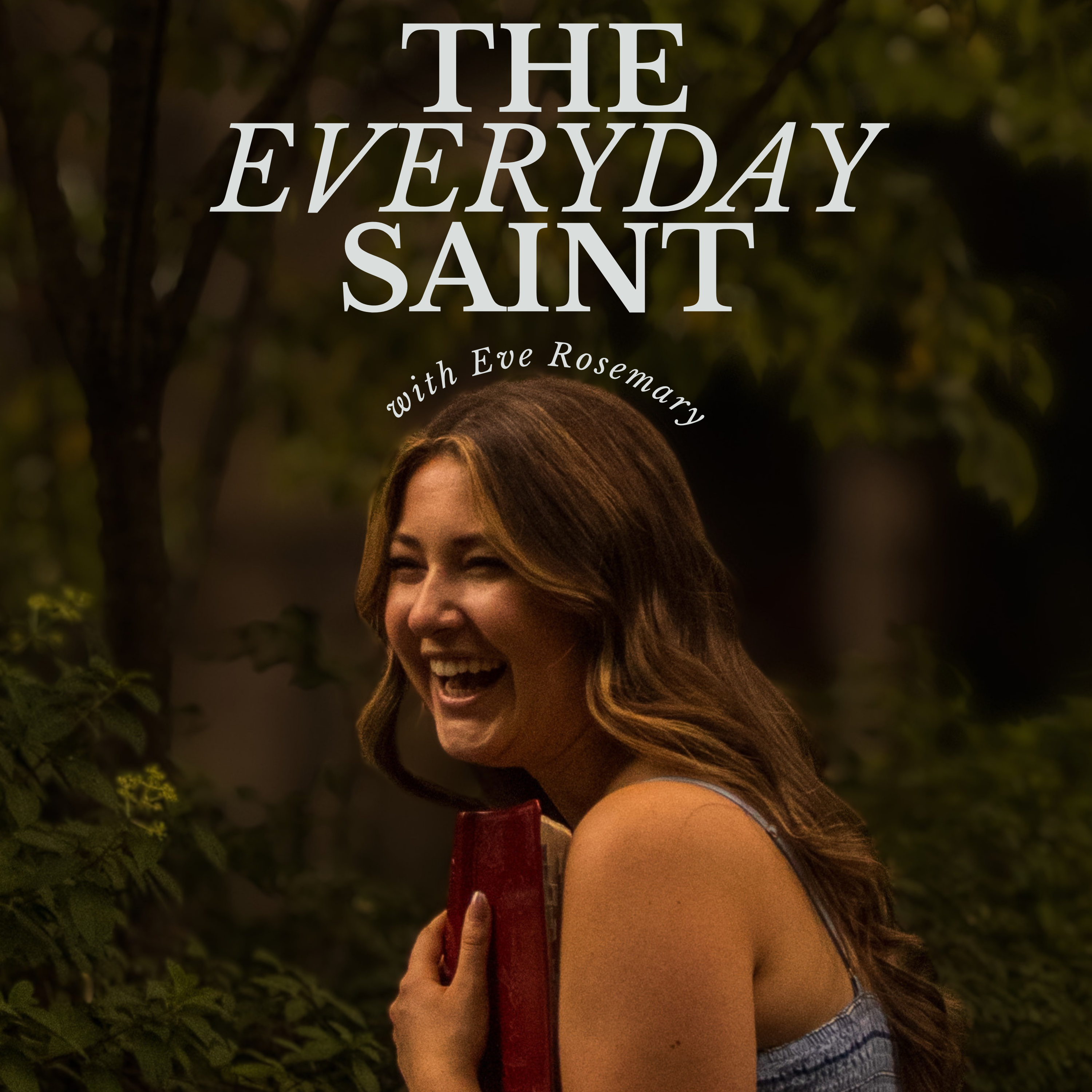
The Everyday Saint · Eve Rosemary
I met Elias in high school. At the time, he was avidly anti-Catholic. Now, five years later, he's on fire for his CATHOLIC faith. What changed? In this episode, Elias shares his journey from Protestantism, to agnostic, to becoming Catholic. All things are on the table with this conversation: learning how to forgive yourself, navigating when you feel mad at God, and what it looks like to let God love you. Learn about Seton Teaching Fellows: https://fellows.setonpartners.org/saint Clean fiction books: https://jacqueline-brown.com/ Follow on Instagram: @theeverosemary Eve Rosemary is currently booking Catholic speaking engagements for the 2026–2027 school year. Learn more or inquire at: theeverydaysaint.com/speaking The Everyday Saint Catholic goods designed to support everyday holiness: theeverydaysaint.com/shop If this podcast has blessed you, please consider supporting the mission. Your generosity helps bring faithful, honest formation to teens and young adults across the country: theeverydaysaint.com/donate Subscribe, leave a review, and share this episode so we can pursue Something Greater together.
speaker-0: Welcome to the Everyday Saint Podcast. Today we're here with Elias, which this is actually really wild. We're here right now. So Elias and I actually know each other from high school. And back in those days, you were not Catholic. Yeah. You were pretty like anti-Catholic, I would even say. and now here we are all these years later, you're Catholic, spoiler alert. But you're here and even having this conversation today is kind of Wild to think about. I think if you would have told us that like back in high school, it would have been like, What do you mean? Well yeah, I agree. speaker-1: Literally I just I just said like I never so you know, we prayed before. I never thought I would be saying, Hail Mary like seriously. It was kind of you know, I would have thought you gotta be you gotta be kidding me, I would never pray to Mary like here we are. So speaker-0: Yeah, yeah, I know, this is wild. ⁓ and I mean with that inner introduction, I I really just wanna like start diving into this faith journey that you've ⁓ come to. So can you kind of just take us back to the beginning of your faith life? Like what has that looked like for you to start getting to know who God was? speaker-1: So growing up we we as in my mom, my dad, my sister, we attended I I would definitely now say it's a mega church. Like at the time pro it was a lot smaller, but an evangelical Protestant church. ⁓ not really i it's kind of I guess ⁓ your audience is probably mostly Catholic, but if you're familiar with Protestant denominations, it's it wasn't like the traditional denominations. It obviously like I said, evangelical didn't really hold to creeds necessarily or ⁓ any kind of confession of faith. Just kind of we love Jesus and, you know, everyone here loves Jesus. Just kind of, you know, vaguely out there. And I would actually say that was a very strong time for my faith, just in Christ in general. ⁓ I would say that was like my childlike faith phase, where I was like, you know, I just believe in Jesus, I believe He is, you know, real, born of the Virgin Mary, you know, lived a sinless life, died on the cross to save us from our sins, you know, basic tenets of the faith, right? And it that's just how things were, right? Like didn't question it, just kinda rolled with it. I got baptized when I was ten or twelve, somewhere in there. ⁓ so kinda like we had been talking about a little bit before, the kind of idea behind some Protestant baptism is you they want you to fully understand the faith before you get baptized, because to them it's or a lot of them it's more of a decl like public dec declaration of faith. Faith. Baptism isn't necessarily selvific. So, you know, they didn't do like infant baptism and that kind of thing. So I got the full immersion, got totally dunked. ⁓ I remember that. That was definitely interesting. speaker-0: Yeah. Was that your decision to get baptized at that age or was that just kinda speaker-1: Yeah, so that was my decision. Well, because the kind of idea is you can't force someone to get baptized, right? If you think about it from that perspective on baptism, me saying that I believe in Christ and that I love God, you know, you can't force someone to do that. Do that in good faith, obviously. So I would say a lot of Protestants are like that. ⁓ there's speaker-0: I have to choose to get baptized. speaker-1: I think Lutherans still do infant baptism and s a couple of the other denominations still, you know, have a more salvific understanding of baptism. But certainly a lot of the evangelical churches, it's more of a you choose to be baptized type thing because it it's a profession, not a celvific well it's it's not a sacrament. So that's kind of how it started. And maybe around like speaker-0: Right. speaker-1: fifteen, like fourteen, fifteen years old. ⁓ we started going to a different church. This one was a lot smaller, I think. Well actually last time I was there was so I go to Easter now. Like I'll go to Mass and then I'll go to my ⁓ church with my my mom. Because, you know, I like going to church with her and it's not the same but I have found that there can be very useful pieces of information I can ⁓ extract from those sermons. So I think it's still good for me, but they were a lot more I don't wanna say traditional necessarily because if you look at like the Mass and the way a Lutheran service is similar to the Mass, it definitely wasn't like that. It was still, you know, you sing like three or four songs, you have like a forty minute to an hour sermon, and then you might sing some songs and it's done, right? So the main focus is still on preaching the word, which is good, but you know, there's other things that can be bet very beneficial other than just that. Well, hey Eve, but the communion isn't actually Christ's body and blood, you know, so you only have to no, I'm not I don't want to clown on them actually because that church is very they understand what they believe a lot and it's very much so they adhere to the London Baptist Confession, Nicene Creed, Chalcedonian Creed. ⁓ so you know, there's a specific faith that is it's not just a pie in the sky type of thing. Whereas I feel like a lot of evangelical churches kind of tend to be it was like ⁓ it they they say they're Reformed Baptists so there's an actual like prescription of okay this is what our faith is, this is what we believe, those kind of things. And it was I was telling you about them before, Pastor Patrick Ryan and Tim Ryan, very intelligent men, very well versed in the Bible. They kinda helped me get into the Bible and start thinking about it and I wouldn't say question the faith, but actually like understand the faith instead of just being like, hey, ⁓ whatever, type of thing. Like, okay, this is what this means instead of yeah, just, ⁓ it's whatever. ⁓ and so that is also kind of when I started to go, well, what is the difference between like us and at the time I'm like, yeah, Reformed Baptists, like these are my guys, like no one else, like we're right. And So I was like, why how are we different, right? And a lot of times the c obvious comparison is how do we stack up with Catholicism, right? Because I feel I was gonna I was actually gonna say exactly that is I think a lot of Protestant denominations that do have like a well thought out and articulated like statement of faith, a lot of times do end up getting compared to Catholics, like this is where we differ, this is where we agree, that kind of thing. speaker-0: ⁓ really? Is that like the meter? Huh. It's almost as if when there's the one speaker-1: Well ⁓ and here's the funny thing, not to like completely derail which I feel like I have a tendency to do with things, but I've I've talked about this with my ma before and you know she's still speaker-0: Because she's so proud of Yeah. speaker-1: Who she was raised Catholic and is now Protestant. And I'm not exactly sure what happened in there. We don't really talk about it that much, but you know, it is what it is. But it's like if you look at like Luther and Calvin and some of the things they believed, I'm just saying, like, if you ask John Calvin if Mary had other children, he would say, probably not. Like certainly Luther would say no. Like A lot of things that Protestants say, you know, this is for sure. It's like but your your boys don't even agree with you on that. So ⁓ yeah. It's it's kind of it is, it's interesting to look at like the what what did the original reformers bel yeah, now I'll get completely derailing into Protestantism. speaker-0: But it's important to where your faith life was and we were even talking about that earlier, like you're very logical and kinda how you think about it. So it makes sense that this was like th this is part of your faith journey is figuring that speaker-1: And it was very beneficial for me to be in kind of that environment of like like logically thinking 'cause the you know, we got guys like Thomas Aquinas. I mean, the faith is not th it's a very logical thing, it actually is. It's not just we believe it's there's belief, but you know, there's actual understanding that there's something concrete behind it, right? ⁓ so that was kind of the environment I was in until like Probably through all of high school and then maybe like a couple like maybe half a year after, 'cause then I kinda started to fall away from the faith. But in high school I had you know, we were talking about this, Miss Wasslick. speaker-0: Shout out Miss Westlake. She's been on the podcast too. People can go back and listen to her episode. I think in my title I was like my spiritual, I don't know what I call their role model, I don't know, inspiration. Anything and everything can go back to Miss Westlick. speaker-1: She's kinda peak now. I I remember telling it is either I told her or my aunt, but I like, You guys are like two keys in the same pod. My Aunt Rebecca, who is awesome and probably one of the biggest like Catholic role models I've had in my life. She's always been very religious and out at least to me, very on fire for her faith and been very outward about it. And I think kind of being always exposed to that was very good for me. ⁓ but I I had mentioned to one of the two that they are very similar and f coming from me at least that would be a compliment. And I was like, This is it's very cool that you guys are both so like locked in for lack of a better word, on the faith and so committed, you know. And so that kinda stuck with me. I actually have a prayer card, I think it was I think I got a divine mercy from Miss W Wesseleck and they were and ⁓ Mrs. McKnight gave me a Mary and pray card with a Hail Mary on the back. And I had just kinda done like whatever with them. I think they're in my prayer book right now. Like so yeah, but it's like a lot of the stuff I learned it just kinda got filed away, you know what I mean? It was like a a later thing. I and like you were saying with Miss Wessilick, I remember debating her after school and being like, ⁓ so what about this? What about that? And one of the things that she had brought up that was stuck with me was about like free will. And the Protestant view on that kind of contradicts itself because you know when you think about loving God or loving another person, you have to choose that. You can't force someone to love you. And if there's any like coercion, it's not genuine, right? And then Kind of coupled with that is the whole concept of like predestination. So that everyone is essentially damned, but God chooses the they call him the elect, and those are the people who go to heaven with him. Well, if God is choosing who's going to heaven, then as a like inverse of that, he's also choosing who who goes to hell. And we know that while God is a just God, he's also a loving and merciful God. And so he doesn't want people to go to hell, so he wouldn't choose for people to go to hell. He leaves it up to us to decide. You choose Christ, but you can also later in life choose not to be with him. Right? And that's what I actually see in my life is, you know, leading up to and it kinda started to wane towards the end of middle school, or not middle school, high school. Kind of my on fireness for the faith, if that makes sense. It kinda started to burn out and Not only that, I just really started getting wrapped up in myself and just worldly things and it just didn't get really that important to me. And I remember like very vividly, I remember where I was. I remember like the time of day when a c a talk about faith had come up. And I remember saying, Yeah, I don't really know who God is, but I believe there's a God. And that is like that is like haunting me. I'm not gonna lie, 'cause To just essentially deny Christ like that is speaker-0: Right. Especially when it's like it seems like you'd grown up Yeah knowing more about it and wanting to do something with it. speaker-1: Yeah, and it was just There I think part of it was while I had good role models outside and my mom by the way, great role model of the faith, but there wasn't the same commitment necessarily and now I would say there is, but as necessar a at that time as maybe would have been good for me. I I felt like at some point church had kind of become an obligation. And so, you know, s insert comment about rebellious teenagers here, I kinda wanted to do my own thing, right? And so yeah, after high school I most I like I said, I would say I was kind of agnostic in the sense that like I thought there was a God. The kind of the the you know, the foundation for Christianity was there. I just let's be so real, I just didn't want to adhere to what Christianity told me to do. And so I wanna do my own thing. speaker-0: Yeah. speaker-1: And so I was living that life and it was really not good for me. I mean I was just kinda coasting just in general in life and I this happened, this happened, whatever, you know. speaker-0: Yeah. Do you feel like that was like a conscious decision to not take the faith seriously or was it ⁓ more of just like it just kinda happened? speaker-1: I think it was it just kinda happened. I don't think you know, I remember that one time saying that, but I don't remember consciously going, Yeah, I don't I don't believe in in God or I don't believe in Jesus or anything. I feel I I never like really thought that like as a specific you know what I mean? It kinda just gradually happened over time, you know, going to church less, being involved with you know, reading my Bible, praying last just it's just like the faith now, if you don't keep it up, you're gonna lose it. Use it or lose it, right? So I yeah, and ⁓ living a worldly life is not fun, I'm not gonna lie. ⁓ because there's no there's no point. It's just like okay, I'm living. Like why, basically. And yeah, that's how I was for a while. ⁓ in that time, you know, I you know, I had a couple of relationships that were really damaging to me. I know obviously with what you speak about with like morality and like sexual ethics and things like that, you know, some of those relationships obviously did not follow those rules and I think that it was very I mean, it was bad for me. It it hurt me because I i it it became dis like almost disposable. I d I don't want to s yeah, I don't want to say disposable, but like it it was im important but not it you know, you're not sharing the in a s in the sense of a sacrament, right? Like you're basically just kinda taking the other person for granted, to be honest. And th so That was just kinda how I was living until about ⁓ like two and a half, three years ago, I got into a really good relationship. This person was really good. I was still not like so, but she wasn't Catholic. ⁓ baptized, but not Cat like practicing Catholic. but she kinda helped me to maybe write the ship a little bit, ⁓ in the sense that just the way I had looked at the world was getting very negative and showed me kind of see things in like a better light and give people more of a chance. And I think that kinda also later on helped me give ⁓ my faith a chance again. Because like I had like com almost completely given up on my relationship with my uncle. Entirely given up on my relationship with my father. And Both of those I attribute to encourage she had encouraged me to, you know, work at those and try and make them better. And I know we're kind of straying away from the faith, but so I, you know, things were improving, but not necessarily in the faith life, right? The the other aspects of my life were kind of quote unquote improving. and You know, I was honestly fine to just kinda keep going that way. ⁓ that was, yeah, we'll say about three years ago. So then about two and a half, I had started taking my grandma and grandpa to mass because and I honestly don't even remember how this happened. This might have been honestly just like a Holy Spirit thing, because I was like it must have been like my grandfather had asked me, Can you take us or something like my No, I couldn't take them or s you know, something happened and you know my grandpa, he can't s he can't see, he can't drive. So he I would assume asked me to take them to mass and I started taking him to mass and then that became a regular thing. And kind of going to mass, I started kind of getting interested again in the faith. You know what I mean? But it was more of like ⁓ it was a curio just a curiosity in it, like this is cool, like what is there here? And I was go you know, going to mass. And eventually I kinda came to the conclusion like the way this is different, other than, you know, the order of the mass is the Eucharist, right? Is like you actually have Jesus there. And so I was I within that year I had decided that I wanted to at least do the O say program and learn more and at least kind of see if this is something I I want like I really want to jump back in again. And kind of halfway through, so that would have been about two years ago. Complete like shift, but that girl I was dating, we you know, we were on a trip and some unfortunate circumstances happened and she ended up passing away. And I was, you know. There was a time when I would have said that I wasn't like angry with God or I just trusted God or whatever. But I I was I was very upset. Like not consciously upset, but just kinda like, dude, like like if I was talking to God, like, man, I'm like interested in your church, like I'm thinking about coming back and then you kinda like hit me with this. Like Like what the heck, man? Like why are you you know, not consciously thinking that, but kinda passively. And so You know, I kinda slipped into some of my it's not that I stopped going to mask, I still went to mass. But, you know, ⁓ so this was like in August. Like by that dis like December I w had already kind of distracted myself from even like thinking about the faith. I was in a relationship with another person. That one was terrible for both of us, but there's more to it than just me. But and at some point it was it kinda came back to the same conclusion I had had with relationships before that this is just like empty and kind of a waste of time. And so she ended up actually deciding to call off our relationship. She had been, I guess, feeling the same thing. And we were both, you know, if you wanna say using each other in a certain sense, that would probably be ⁓ accurate description to kind of distract from things in our life. And coincidentally, that was like the week before Deacon Jeff calls me up and he goes, Hey, so we're joining the OCIA program in a month, so just wanna make sure you're still there. And I'm sitting here like, dude, I'm still kinda like mad at God. I've been living like completely opposed to him again. Like wh like just what am I supposed to do? And so I was kind of questioning whether I should go through with it. And in my indecision, enough time passed that it was like, okay, this is the day of the first class. Okay. So I went and The care that the people had, the O say instructors had for me and for the other people, that while the class itself wasn't super in depth on like theology, theology, it was very like welcoming and I felt like I was with people I could trust. And that was kind of the biggest thing for me, is that, okay, God, like You know, I'm kinda like mad at you right now. But you're still putting like he sent like looking back on it, God was reaching out to me, even though I was kinda, you know, like this, basically. And that's kind of how I feel like he's been kinda through most of my life is, you know, what at various times where I may be turning away or intentionally looking away from him. He's going, Hey, like he's reaching out. You know what I mean? He's putting and that's what God does, right? Like he's always offering himself to us, even if we at times couldn't care less about him. Which is actually really sad. But very true. And so over the course of speaker-0: Mm. speaker-1: Confirm or not confirmation, but the OCIA classes. I just that kind of sense of like trust not only with the people but in what I was hearing and our our priest at the time, Father Robert, he would he was ⁓ a part of it and him and I talked a little bit and I just I really felt that I could trust him and that combined with continuing to go to mass and it's it's odd because I remember going to mass as like a kid with my grandma-grandpa if we went camping or with my aunt if we had like stayed the weekend with her. And me and my sister, we would sit in the pew when she went off for communion. We would always sit in the pew. We were like speaker-0: Not even going up to get a blessing. Like you're right. We're like We're a Protestant. Like we are not a Protestant. I'm taking my stand by sitting in the chair. But speaker-1: kind of around that time with like the OCIA, I started going up and receiving a blessing and that just kind of felt like second nature. And then I don't want to say it's jealousy, but I was like, I want what these people have. Like, I want Jesus, you know, in the Eucharist. And I think that's what really like their whole reason why, you know, logically you could say Protestant denominations would have been out of the equation. as becoming Christian again. You can point to all of these logical reasons. But I think the reason for me is because of the Eucharist. Is that that being like exposed to Jesus in a time when even though I was upset with him, him essentially still being like, hey, come back, come back. That that is what kind of won me over and so later that year then I was confirmed at e at Easter. And as I you know, right after that, and actually during the OSA, I got in a big into like watching apologetic stuff online, just really learning what it is to be Catholic, right? And a lot of this stuff from like high school started kinda coming up, you know, dig up the old files kind of thing. And It was good to have kind of that base understanding and then building upon it with actually learning the theology of the church and how things kind of actually ⁓ meld together to make a coherent faith. And yeah, like like I was saying before, I never thought I would be saying like, Hail Mary or asking legitimately asking a saint for their intercession because If you would have asked me, yeah, back when I was in high school or before, I would have been like, Yeah, you're out of your mind. Like you're a heretic. And now I'm like, what a blessing it is to have people not just on the earth, but also in heaven who actually like care about us. Mhm. And then of course Christ, who gave everything for us, is It's crazy, man. Like the the faith is logical, but it's also crazy at the same time. Like it really is. speaker-0: Yeah, wow, there's so much here that I want to talk about. No, and it's such a beautiful story. So thank you for sharing all of that ⁓ too. But like particularly with like this Eucharist component to it. Something I was thinking about a lot recently is like it's Jesus is like Jesus is most vulnerable in the Eucharist and it's that vulnerability that He allows us to receive him, but it's also speaker-1: Sorry, I just kinda rambled. speaker-0: us putting ourselves in a place to receive him and like between his vulnerability and our availability, that's what leads truly to like the greatest union. And you hear that like in your story, it's both, I think, God being so vulnerable with you, like knowing that he might be rejected by what you're going to say, but he's like still putting himself out on the line just to seek after you. ⁓ and then also in the end you putting yourself in a place where you'd be ready to receive him. And now you're like, actually do you like your Catholic. Interrupting myself for a minute because boldness begins with a daily yes, just like the saints. Think of what would happen after pursuing a year of generosity on mission. Each Satan teaching fellow serves students, grows in their faith, and becomes the man or woman who makes an eternal impact wherever they go next. As a fellow, you'll live and serve in one of three unique regions. The Bronx, New York, Cincinnati, Ohio, or South Texas, through coaching, classroom practice, professional formation, retreats, and one-on-one support, you'll be challenged to pursue excellence, grow in confidence, and become a bold teacher and leader. All of this is rooted in something bigger: imitating the love of Christ the teacher. Are you ready to make your next year a bold one? Visit fellows.satanpartners.org slash saint or follow at Satan Teaching Fellows on Instagram and see what a year with Satan Teaching Fellows could look like. The link is also in the description below. Y'all know. The I love a good book. In fact, I had a whole series dedicated to not boring Catholic books from a theology major who had to read a lot of boring Catholic books. But I have quite the summer read for you. Jaclyn Brown is an author who focuses on faith-filled, value-driven fiction. So we all know when you pick up that fiction book and you spend the whole time questioning if something's gonna pop up that you really don't want to read. With Jaclyn Brown's books, you never have to worry about compromising your values and virtue. These books are clean, exciting, rooted in hope, perfect for the person who really wants to delve into meaningful characters and life's deeper questions through the lens of fiction. You can choose from three different series of this book, including the light series, which goes into a post-apocalyptic world, answering the deeper question of who do you become when all else falls away? You can delve into the Awakening trilogy, which focuses on the difference of light and darkness and who do you become when you're rooted in prayer and courage. Or the altered series which explores the consequences of your choices through a mystery, thought provoking series. So if you're looking for that perfect summer read, look no further than the link in the description below to read Jaclyn Brown's series now. speaker-1: Well and even like it's funny because I wouldn't say I really kinda understood where I had been at at the time until recently, like maybe a couple of months ago was when I really realized like, yeah, I was mad at God. Like either 'cause I didn't really one, I didn't really want to think about that period of time in my life. And second of all, it was like when I would think about it, it's like I'm not even thinking about like God necessarily or you know the way I would perceive it is that I was just kind of coasting my faith. I think I was actively like upset with him. And you know, to kind of I don't to kind of go before God then and say, like, I was mad at you. Like I really was hacked off. There's some other choice words I could use, but you know. is kind of hard, not gonna lie. Like it's very difficult because to me it's like, well, I don't want God then to like reject me. But that's the that's the crazy thing about him is that he doesn't. Like there's this song I listen to now pretty real I've changed a lot of my music round, which that helps a lot. Changing a lot a lot of the secular music i to like some kind of Christian music or at least not like heinous secular music, you know. but there's one of ⁓ that in part of it says, ⁓ no matter how unfaithful you are, you always kept the w the wedding ring. And that is what Christ does for us. Is that what you know that kinda hit me the first time I I I'd heard that song and I was like, you know, that's we're just like the comparison with the Israelites in the old testament is no matter how many times you know, we walk away, as long as we're truly repentant and ask for the Lord's forgiveness, he comes back to us. And oftentimes he reaches out before we even do. speaker-0: Right. And it's crazy too because we hear those things of like being mad at God and like we're embarrassed by it. But it is so honest. Like there have been times in everyone's life that we've just been mad at God. And I think that a relationship it requires you to be that honest, right? Like to be like, God, yeah, I'm actually really mad at you right now. And the only way that you can actually overcome those things with God is by being honest with him about what you're feeling and not just like Sugarcoating what you're feeling with gratitude because that's no that's what you know you should do. I think you do reach a point where that's like the answer. Like at some point it's like, okay, you've had your feelings, you've been mad, now it's time to move on. But when you're in the very moment of it, to like really let yourself feel something to the point where it's like just being honest with God so that you can deal with that together. Because if you're never bringing it to light, you're never actually going to reach a point with God where that situation has been reconciled. ⁓ so I'd love to know from your perspective, what does that look like for you to go from a place of being angry with God to like do you feel like you can look back on those situations and not still be upset? Those are like big things that you went. speaker-1: I think I can look back on it and be it's not so much that I would be upset with God. It's just it's it's like frustrating, but it's not like a directed frustration. It's like I'm upset about the situation, but who knows how my life would have continued, who knows what would have happened, you know. He'll may he'll find a way, you know what I mean? And I think Like this past Easter was huge for me learning about like the divine mercy and stuff like that. And really actually being able to trust God and trust Jesus that He is actually like trying to do what's best for us and we're the ones who go, Yeah, no, actually it's this and we're wrong. So you know, I think it's it's difficult, but at some point you kinda go. He kinda made everything and me, so he kinda knows what's best. And it's like you were saying with the relationship, you can't you know, God will always be honest with you, but you can't expect him to necessarily be like one side of the relationship. You gotta be honest and that's what prayer is, like communicate with him, you know. So That is what fosters the trust in in God, is knowing not only who he is, but building a relationship, trust, to by speaking with him, reading the Bible, learning more about him, participating in the sacraments especially. ⁓ this is what like builds our faith. speaker-0: Mm-hmm. Yeah. Can you share a little bit more about what it was like the first time you received the Eucharist? 'Cause it seems to be at least part of your speaker-1: Crazy dude. It was crazy. No, I've had a couple of times where I'm like receiving communion has been just like peak. Like it's been just I'm just like you know. that was one of the times where and part of it too is like receiving both elements, the you the host and the precious blood. Or not the host, but the Jesus body, you know. speaker-0: Bread and wine. Yeah. speaker-1: but yeah I remember I I walked up. I this was the one time I so I I kinda lied earlier. I said I always kneel for communion. One time I just stood, but received on the tongue because that's what you do. And and I rem I remember just feeling just everything like like it felt like everything fell. Like I I don't know, I just didn't f like I felt like nothing. Not not that I didn't feel nothing, but it felt like there was nothing on me. Like I was just just like at peace, you know? And I remember just walking back into my pew, kneeling down, and I didn't even pray anything. My brain was just kind of like there was like nothing in my head. And at some point, like, you know, everything's kinda happening around me. I'm not really I wasn't really like aware. Of what was going on around me. And I was just like, Jesus, I like I trust you, like I love you because you have come to me, like you said, in the most vulnerable way. Me who just literally in no way deserves this at all. And you've just given yourself to me. That's I mean I it was like overwhelming isn't the right word, but it is also the right word, if that makes sense. Like it doesn't encapsulate like the experience, but Yeah. If if it was amazing. It was incredible. speaker-0: Yeah. It sounds like you literally felt like heaven and earth. Yeah. speaker-1: Yeah, if possible, yeah. Yeah. That's and th yeah, and that was the probably the best time ever that I've received communion. But there's been one or two other times, like Easter this past year was really like I I really felt Jesus in receiving the Eucharist is just felt very impactful and very like freeing. That's what I feel most of the time when when it's a powerful like emotion associated with Eucharist is is I feel free. Like I'm not being like weighed down by my life, you know. speaker-0: Mm-hmm. Yeah, which is such a contrast to what you're saying you felt before you really were taking your faith seriously. Like it it seemed like your life was just very heavy a lot of the time. Mm-hmm. speaker-1: Yeah. Mm. Yeah, I was feeling the burdens of life, yeah. I was so like tied up in it that I didn't even wasn't even looking for I wasn't even looking at Jesus or even thinking about him, so speaker-0: Yeah. Has that been difficult now that you've taken your faith more seriously to like think about that time in your life? You know, and to like heal 'cause obviously like sin darkens the intellect and it and it makes us not see the world how we're supposed to see it, right? And like sometimes when we sin and fall short, we look back with a sense of guilt and knowing that we need to like make amends for the things that we've done or Just being like, ⁓ man, I'm really disappointed that I did this, that or the other thing. So when you look back on a time in your life where you didn't really know who God was, has it been difficult for you to kind of heal from some of those moments? speaker-1: I would say so, yeah. I mean like like you were saying, there's a lot I feel like there's a lot of guilt in my life, yeah. And things that you know, it's easy to say that God forgives you, but maybe even to for like forgive yourself can be very I think it's is difficult at times. And you know, but It's not really up to me whether God forgives me or not. Well, I mean, you have to ask for it, but you know what I mean. Right. ⁓ Yeah, yeah. And that I think if to me is just evident in the fact that I'm like here now, you know. if yeah, if it w hadn't been for God's grace, which you know, he just gives speaker-0: The grace is always given. speaker-1: you know, I would not be Catholic, I probably wouldn't even be Christian. And those times in my life that I didn't respond to him is to me I I think now is a good example of obviously like what not to do, but also of just how much God cares about us to always continually put himself out there and continually try and to seek ⁓ r like reunion, reconciliation with with his people that even if we couldn't couldn't be less interested at times. So yeah, to kinda answer your question actually is yeah, it it can be difficult and it's hard. But like I was saying with kind of realizing that I was mad at God, it's it's just like any other like conflict. You gotta realize there's something wrong before you can go back and actually like heal that that wound or that that pain. speaker-0: Yeah, this reminds me a lot of something I read ⁓ from Saint John Paul II recently and his ⁓ I think I was telling you about this actually, now that I think of it, I would have sent you this encyclical. speaker-1: Yeah, you do. speaker-0: So you know exactly where I'm going with it, which is funny that that's what's being brought up in my mind again. ⁓ because I haven't thought about this in a long time. But St. John Paul II has a whole ⁓ it's called lives in misericordia. Something I don't know if I said that right. Okay, it's it's tough. ⁓ a tough world when you're Catholic and everything's in Latin. ⁓ but what what John Paul II does is a whole encyclical essentially on God's mercy and what that means and he points to the story of the prodigal son in particular and how this prodigal son like well you know the story he turns away he takes the inheritance runs away with it and realizes that his life like the sin in his life everything that he's done has led him to this point of just like slavery essentially like he is not worth anything more than what the pigs can eat and as he's sitting there he's like even my dad's slaves are treated much better than I'm being treated right now. And so the only thing I can do is to return to my father, but not even as his son, but return to him just simply asking for work, because that's like I'm not even worthy of that, but that's all all I got. And so the son returns to the father and the father drops everything behind. And Sun St. John Paul II explains that just the way that this scripture is written, it's as if the father just completely forgets about anything that the sun has done simply because the sun has come back and asked to be there with him. and I just find that imagery so beautiful when we think about it because that's that's us, right? Like we come to God understanding that we are not worthy. Like we are given the inheritance of heaven. That's literally given to us. Like we are it says in scripture, we are citizens of heaven. We are citizens of the kingdom. And yet we sin, we fall short. Sin takes away our human dignity and we return to God, not worthy of being anything other than someone who's there to serve him, and yet he restores us to the point that we are like given back this inheritance of the kingdom. That's insane. speaker-1: Well and that he like kinda sees us as his son like his son and daughters. Mind blowing. It's like yeah, it's like I'm ki I feel like I'm kinda maybe h too I don't say too hard on myself sometimes, but it's like, yeah, g God I'm like nothing, dude. And but like you were saying, even though we may see ourselves even we may see ourselves a certain way, God still loves us and speaker-0: Mm-hmm. speaker-1: Like with the prodigal son, he wants us to come back, always wants us to come back to him. And he's always there waiting for us. speaker-0: Right. So and and waiting for this and so much so that he knows what we've done wrong. Right, right. And like is almost forgetful of those things. Just because he's so overjoyed at the fact that we're there in the first place. So I think that gives us such confidence too that like when our life doesn't go how we were hoping to, or we're disappointed in ourselves and we know that God will be disappointed in us. Like we don't have to hide our face from him. speaker-1: And he knows everything we're still gonna do too. speaker-0: ⁓ because it's such an easy tendency that like when we know that we should feel shame or we're ashamed of ourselves. ⁓ or maybe haven't like kept up the prayer life that we promised God that we would, or you know, we said for Lent we were going to pray a rosary every day and we forget three days in a row and so then it's just like to hike with it, I'm not gonna do it at all. You know, like there's things like that where it's almost like we Satan can so easily convince us that we have gone so far from it that it's not even worth coming back to. or that when we do come back, God will be disappointed in us and that is so far from the truth because I think the joy of heaven overtakes anything else. speaker-1: And that's kind of what you were saying reminded me of I've been watching some Orthodox priests lately, which no, I'm not gonna become Orthodox, that's a whole separate thing. But their priests are really good about like hammering out like that kind of stuff and really delving in. I think it was Fat like Father Josiah I was watching and he was saying that like that even that kind of thinking like, ⁓ I'm so ashamed, I'm not gonna you know, who who might even come to like confession or something like that. That's from the devil. Like that's not even like our own a lot of times that's not even our own like like reason coming through. You know, that is an that entire concept is from Satan and it's very actually prideful to be like, ⁓ I'm whatever, God can't or won't. No, God is always there, you know. And it's w that's what the devil wants us to do though, is to Not only to sin, but then to feel the feel an overwhelming guilt and shame. Because some guilt and some shame is good for you to really, you know, understand, you know, what you may have done, but when it becomes like paralyzing, that's another thing that the devil uses to keep then keep you away from from Christ, you know, and that's why reconciliation is so important, ⁓ to restore us, that when we do fall, there is a way back. speaker-0: Mm-hmm. Yeah, that's so beautiful. ⁓ what is something that if you could go back, you would want to tell yourself, ⁓ especially in like the midst of feeling so upset with God? speaker-1: To just like c calm down. Like really, like you know not to say like it's not about you, but kinda that it it isn't really like it isn't necessarily about me and I need to You know, you it's not inherently wrong to be upset with somebody, but it's what you like do with that frustration, right? Like the The sinfulness is when like you turn start turning away from God and you start blaming him. Like t I I would have liked to have t told myself, Hey, you're mad, but tell God you're mad. Just be honest with him right away. Like, hey God, I am like I don't even want to like be a ma at mass right now. S and just be honest with him right away because you're you making that that move is like saying, you know, I'm mad, I'm upset, but I still trust. 'Cause those two things are not mutually exclusive. So yeah. Just kind of if I would have gotten kind of the the dose of like divine mercy and everything kind of associated with that then would have been really good for me to just really trust speaker-0: Mm-hmm. speaker-1: Like and it's funny because I think we had talked about this before at some point. But I was like, if people would have asked me I would have like, Yeah, I didn't I didn't really like get upset with God. Like I I didn't even like realize it at the time. I was just like, ⁓ this is the way it is but like internally, you know, I was yeah, very upset with him. I mean And yeah, it's kind of been ⁓ Honestly along the road. I mean I've been Catholic for two years now. I only just recently like really realized Yeah, realized that like hey, I was actually like really mad at God. Like you know. And it can be good to kinda examine our lives like that and ask God to heal the hurt that sometimes either other people or we have inflicted upon ourselves. speaker-0: Ha ha ha. speaker-1: And yeah. Like like you were saying, just be like brutally honest with God even if we think it'll make us look bad. speaker-0: Yeah, he already knows it all anyways. Like what are we what are we holding back for? speaker-1: And if you wanna like if you want another thing, whatever you've done, someone else has probably done it. So it's not like there's not what is it, scripture says there's nothing new under the sun. Like you know, God knows everything and you can't hide from him, so speaker-0: Mm, definitely not. Well, Elias, this has just about brought us to time. I would love to know is there any last tidbits of advice or certain devotions or anything you wanna point people to? speaker-1: So you know I gotta rep the divine mercy speaker-0: This is your ⁓ this is your softball. speaker-1: ⁓ And just really coming to to trust the Lord is ⁓ so important and especially times when you feel weak. Like it's easy to trust God, like this is gonna actually hot take right here. It's it's even easier sometimes to trust God when things are hard but you feel strong. than it is to trust him when you just feel weak. Like whether that's a temptation or if you're just completely like drained or whatever, just con consciously being like, Jesus, I trust in you. Lord Jesus have mercy on me a sinner. Like that kind of the Jesus prayer and then like Jesus and trust I trust in you are like my go to things because that's kind of that that's like the essentials of the faith basically boil down, right? So yeah, Divine Mercy and obviously Saint Michael. He's as I previously stated, he's a Chad. He's pretty awesome. He will come come in clutch, he'll defend you if you ask him to, so I ask him to. And Saint Joseph, man. speaker-0: Round it out there, yeah. Right. It rounds it out there. speaker-1: Yeah, yeah. Saint Joseph, especially for the fellas. I mean stick by him because he he is the role model after Christ to look at. So especially as you know, a man, ⁓ you know, and I guess for women, you know, find you a guy who's like Saint Joseph because again, he's the example for the for the fellas, so and it's a kind of a high it's a very high standard, so speaker-0: Yeah, it is. When you really start thinking about it for a man who we don't really know a whole lot about, but you think about the life he would have had to live, yeah, it's pretty awesome. speaker-1: Yeah. It's very impressive. Very, very impressive. Yeah. speaker-0: Absolutely. Well Alice, this has been so incredible to hear about your journey and I don't know, I was just so excited for this conversation today 'cause I I was just thinking about this, like how different our lives were back then. ⁓ or just like how different, yeah, I I thought our lives would be. ⁓ and so to see that you've come to become Catholic and so passionate about it, it's just really, really neat to see. So speaker-1: Yeah, literally never thought I would be, you know. And like you said, actually at one point I would say actively opposed. Like in in high school I was like well, in high school too, it was it at some point it kind of became more logical in as as opposed to being like an actual like faith and belief. So that is kinda was kind of the start of maybe this slip a the slide away from the faith is ⁓ like speaker-0: Yeah. speaker-1: It's a debate kind of thing. Yeah, but there's more to it. speaker-0: Yeah. Just so fun because then one of your main devotions is divine mercy, which is very much like not that it's not logical, but it's very like just healing and ⁓ God Yeah, yeah. Absolutely. Well thank you for sharing all of this and for just coming on and talking with me today. speaker-1: Because I need it many. You welcome, you welcome, yeah.