
The End of the Road in Michigan · Thumbwind Publications
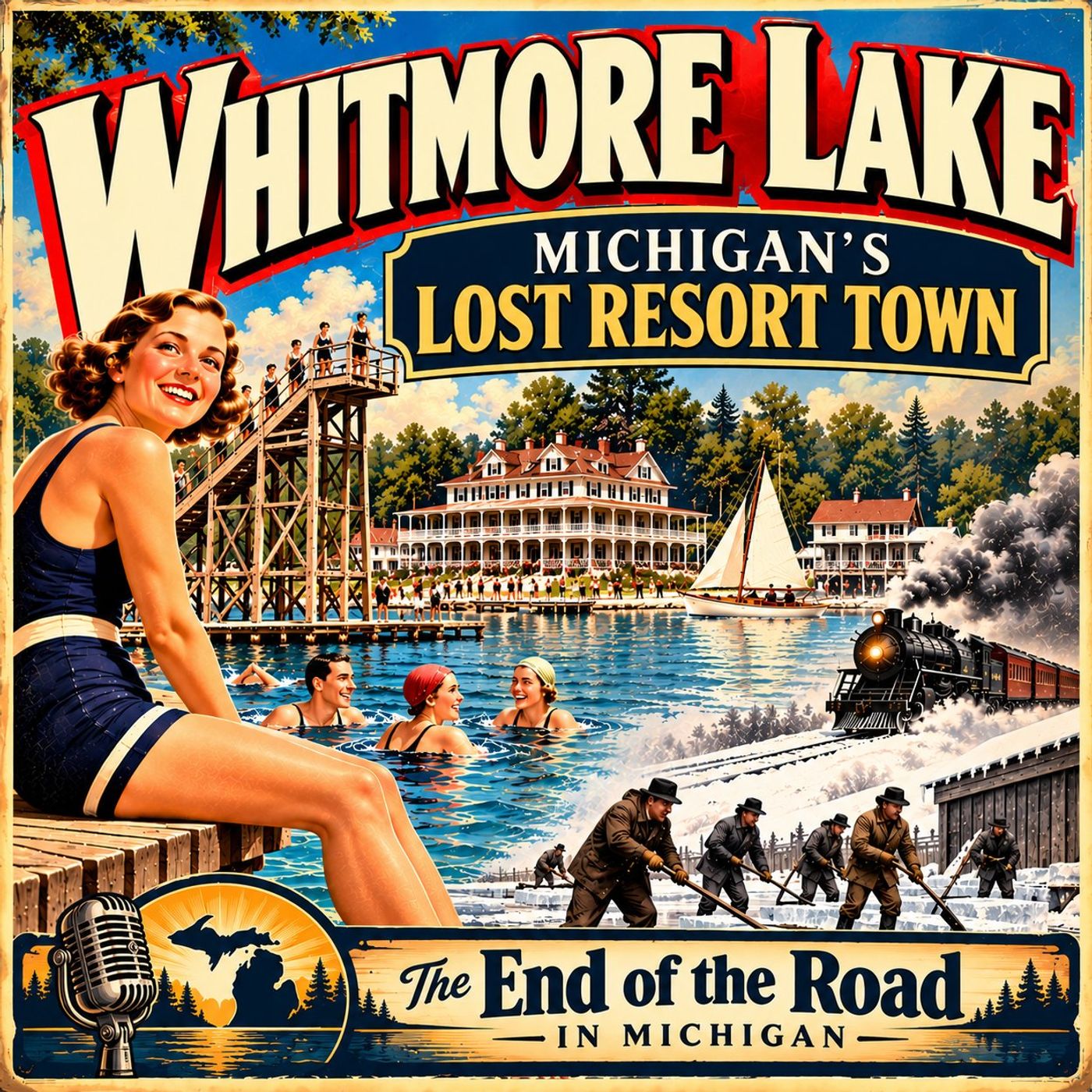
Whitmore Lake: The Resort Town That Harvested Ice In the early 1900s, Whitmore Lake, Michigan, was a thriving summer destination where passenger trains delivered vacationers to grand hotels, wooden swimming towers and lively dance halls. Visitors came from Detroit, Ann Arbor and other cities to escape the summer heat. But when winter arrived, the lake became a very different place.Workers ventured onto the frozen surface to cut enormous blocks of natural ice, which were stored in massive icehouses and shipped by railroad. The same lake that attracted swimmers and sailboats during summer also supported a demanding winter industry.In this episode of The End of the Road in Michigan, we revisit Whitmore Lake's remarkable resort era. We'll examine the grand Clifton House and Lake House hotels, the railroad connections that brought thousands of visitors, and the community's surprising ties to legendary University of Michigan football coach Fielding H. Yost. We'll also explore the Roaring Twenties, when a popular dance pavilion drew college students, and trace the devastating fires that destroyed several of Whitmore Lake's most important historic buildings. By the 1940s, changing travel habits, wartime employment and the automobile were reshaping the community. The grand hotels disappeared, but Whitmore Lake continued its transformation into a year-round hometown. Join us for a journey through Michigan history, when the railroad brought summer vacationers, hotels filled the shoreline and a frozen lake provided a winter paycheck. The End of the Road in Michigan shares the remarkable people, places and events that shaped the Great Lakes State.Do you remember old Whitmore Lake? Share your family's stories and memories. #MichiganHistory #WhitmoreLake #MichiganPodcasts The End of the Road in Michigan is a production of Thumbwind Publications
0:00In the winter of 1903, Whitmore Lake Michigan was attracting attention for something other than swimming and fishing.
0:07Local businessmen were turning its frozen surface into an industry, cutting enormous blocks of ice for shipment by railroad.
0:15For a town that earned much of its reputation as a summer resort, winter had become surprisingly profitable.
0:23Frank Lemmon and Henry Dodge built a large ice house at the northwest end of Whitmore Lake.
0:29It measured roughly 200 feet wide and 300 feet long.
0:33During cold weather, workers could harvest ice from the lake, store it in the ice house and ship it to customers who needed refrigeration.
0:42The ice business was physically demanding.
0:45Crews had to cut, move, and store the heavy blocks before warmer weather arrived.
0:51The same water that drew summer vacationers could provide work during the coldest part of the year.
0:57And that tells us something important about Whitmore Lake.
1:02It had become a place where recreation and commerce depended on the same natural resource.
1:08But the story started decades earlier.
1:12How Whitmore Lake got its name?
1:16Long before the first resort guests arrived, the surrounding country was part of the homeland of Native Americans, particularly the Potawatomi.
1:25The lake and neighboring wetlands offered fish, wildlife, and roots through the region.