
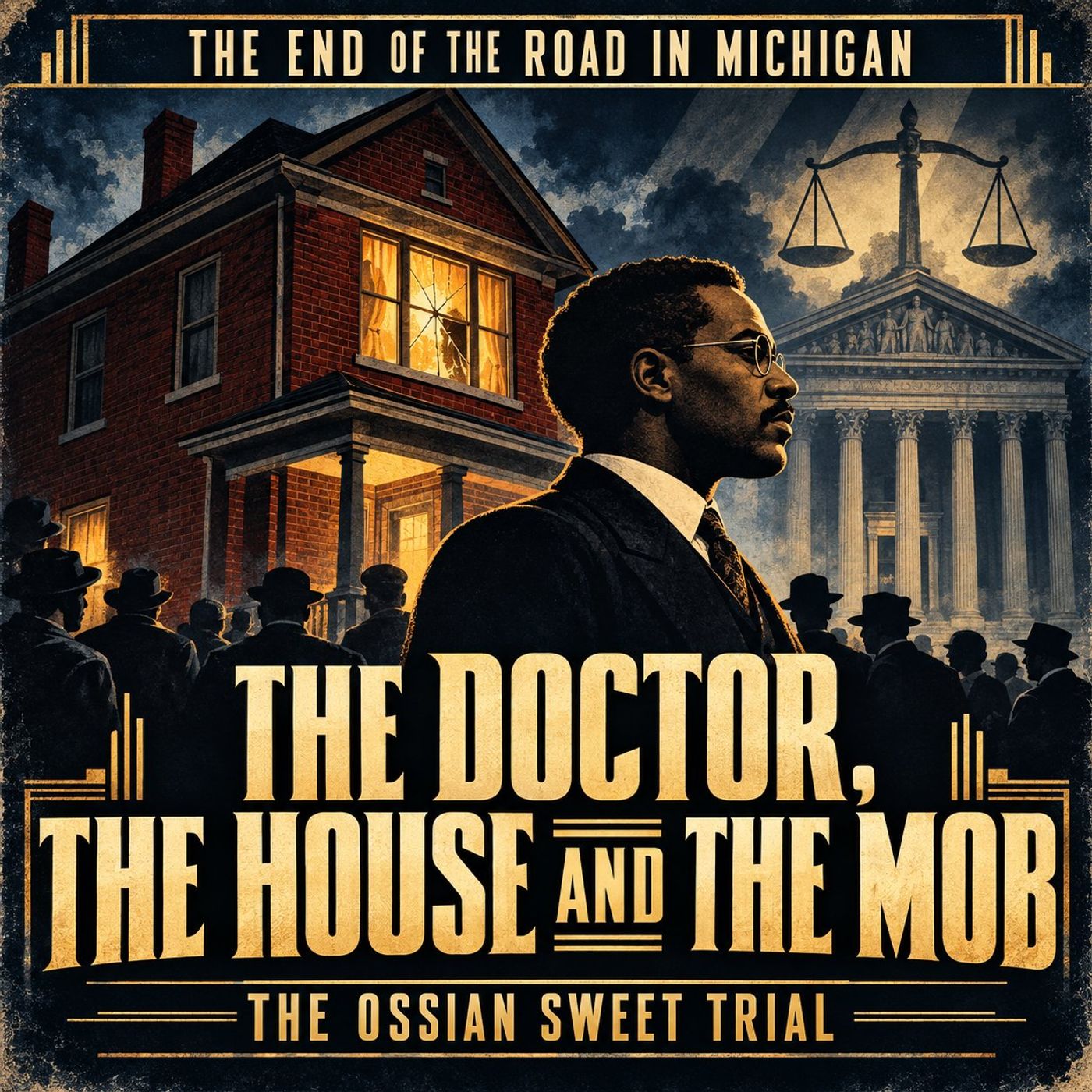
The End of the Road in Michigan · Thumbwind Publications
In September 1925, Dr. Ossian Sweet moved his family into a brick house at 2905 Garland in a white Detroit neighborhood. The next evening, a crowd gathered, rocks struck the house and gunfire erupted from an upstairs window. One man was killed, another was wounded and all 11 people inside were arrested. The resulting trials became a national test of race, self-defense and equal treatment under Michigan law. Backed by the NAACP, a legal team that included Detroit’s Black attorneys and famed courtroom lawyer Clarence Darrow argued that the Sweets had the same right to defend their home as any white family. This episode follows the disputed events outside the house, the competing courtroom accounts and Judge Frank Murphy’s historic instructions to an all-white jury. It also addresses a fact the prosecution could never settle: Who fired the fatal shot? The End of the Road in Michigan is a production of Thumbwind Publications
0:00On the evening of September 9, 1925, a taxi turned onto Garland near Charlevoix on Detroit's east side.
0:08Two black men stepped out and hurried toward a brick house while white residents crowded the street and nearby porches.
0:15Inside the house, Dr. Acy and Sweet, his wife Gladys and several relatives and friends waited in rooms with little furniture and loaded guns.
0:26Something struck the house. Glass broke and the people inside heard shout as the men from the taxi reached the door.
0:34Witnesses would never agree on how many people stood outside, but several hundred was one contemporary estimate and no one disputed that rocks have been thrown.
0:44Bullets fired from inside the house struck two men outside, seriously wounding Eric Huffberg and killing Leon Breiner.
0:52In seconds a family second night in a new home had become a homicide case and an address in Detroit had become a national question.
1:00This is the end of the road in Michigan and this is the doctor, the house and the mob, the story of the Acy and Sweet trials.
1:11It is a story about one night, but it begins with a city growing faster than its promises.
1:17In 1910 Detroit had about 250,000 residents, including roughly 6,000 black residents.
1:25The auto industry, World War I labor demand and a farm depression helped draw tens of thousands more black Americans north.
1:33By 1925 Detroit's population had passed 1.5 million and its black population stood near 80,000.
1:43The newcomers found work, but housing was another matter. Restricted real estate practices, discriminatory lending and open hostility kept many black families concentrated in black bottom and paradise valley where overcrowding and poor conditions worsened as the city grew.
2:01A job in the motor city did not guarantee the freedom to live, Acy and Sweet understood both ambition and limits.
2:10Born in Orlando, Florida in 1895 to tenant farmers, he attended Wilbur Force University and earned a medical degree from Howard University.