
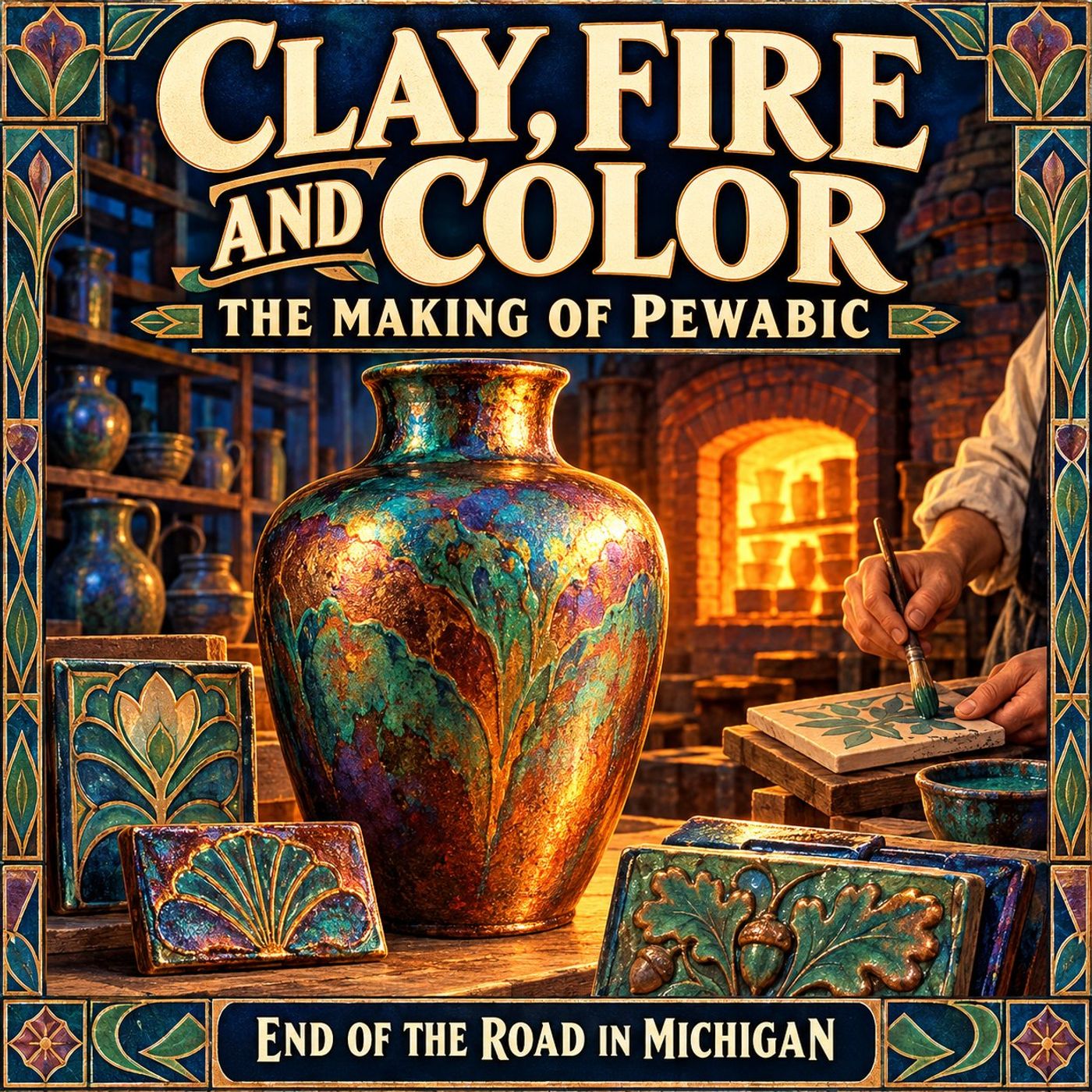
The End of the Road in Michigan · Thumbwind Publications
A kiln designed for dental porcelain helped launch one of Detroit’s most distinctive artistic businesses. Behind Pewabic Pottery’s shimmering glazes stood Mary Chase Perry Stratton, kiln maker Horace Caulkins, and years of experiments with uncertain results. In this episode of The End of the Road in Michigan, follow Pewabic’s beginnings in a Detroit carriage house and its rise to national recognition. Learn how its iridescent ceramics became part of buildings ranging from Detroit’s Guardian Building to the National Shrine of the Immaculate Conception in Washington, D.C. The story also follows the financial pressure of the Great Depression, when Mary and her husband sold their home to help keep the pottery operating. It’s a chapter of Michigan history shaped by skilled craftsmanship, scientific experimentation, and difficult personal choices. Listen to “Clay, Fire and Color: The Making of Pewabic” and follow the podcast for more Michigan history. The End of the Road in Michigan is a production of Thumbwind Publications
0:00In 1937, Mary Chase Perry Stratton and her husband sold their home, by then her pottery had earned a national reputation.
0:09Its work had reached important buildings far from Detroit.
0:13Recognition, however, could not pay every bill.
0:17The Depression had weakened the market for architectural tile and decorative pottery.
0:22According to Puewabick's own history, selling the house helped keep the business open.
0:29Before we admire the colors, consider what it cost to keep making them.
0:34Welcome to the end of the road in Michigan.
0:36This is Clay, Fire and Color, the making of Puewabick.
0:40Our story begins with a woman from Michigan's Copra Country, a man in the dental supply business,
0:47and a problem that fire could either solve or make worse.
0:51Mary Chase Perry was born in Hancock in 1867.
0:55Her father was a physician who treated copper miners.
0:58After her family moved to Detroit, she studied art and later spent two years at the Cincinnati Art Academy.
1:05She became a respected teacher of China painting.
1:08This was skilled decorative work, but it generally meant working on a ceramic object someone else had already made.