
The Effective Lawyer · Jack Zinda
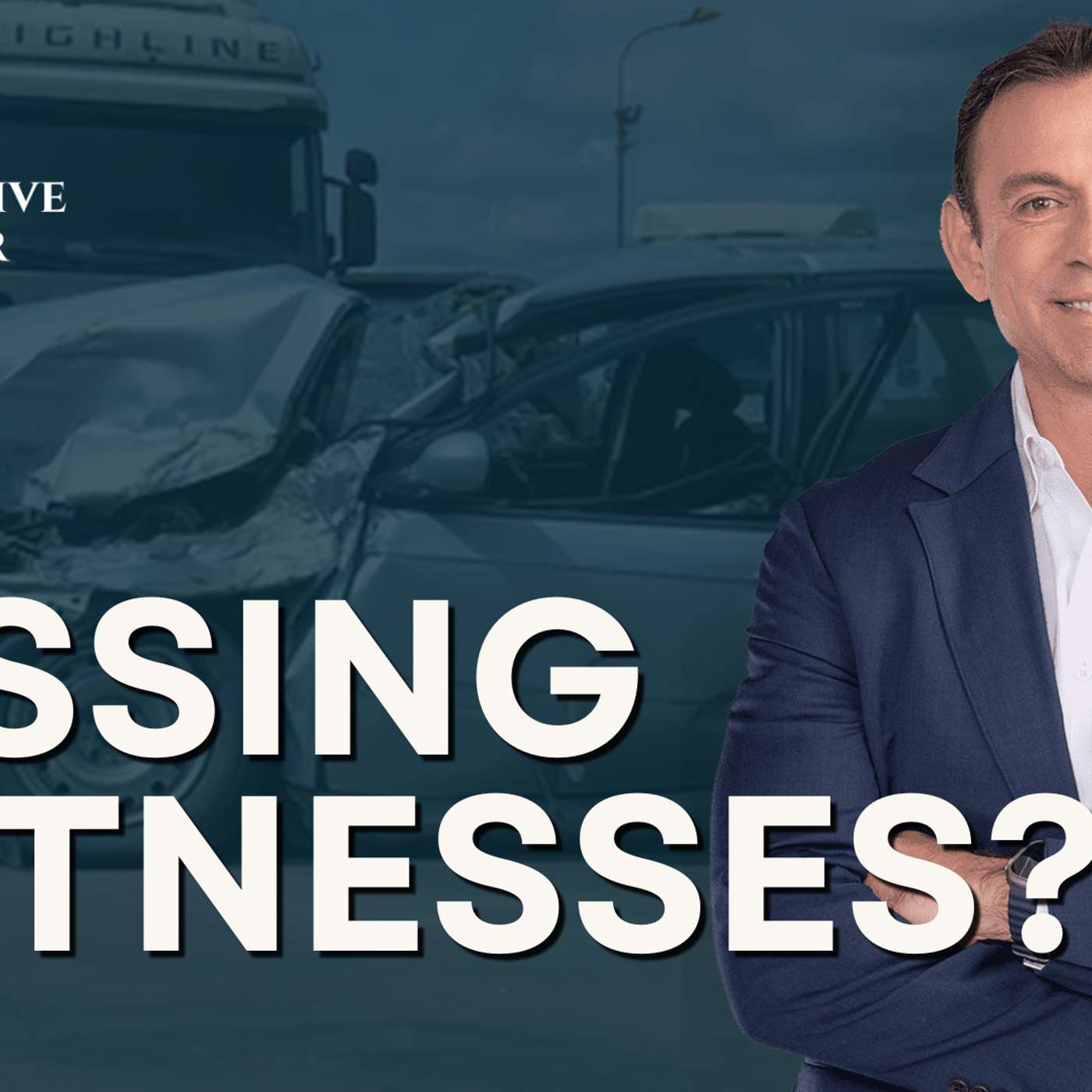
In this episode of The Effective Lawyer Podcast, Jack Zinda breaks down one of the most overlooked drivers of case value in trucking litigation: finding independent witnesses. Many attorneys assume the police report captured everyone who saw the crash, but the most valuable eyewitnesses are often the ones who left the scene before officers arrived. This episode walks through why you can’t rely on the report alone, how to track down witnesses no one else has located, and how to evaluate their credibility once you find them. What You’ll Learn in This Episode: Why shouldn’t you assume the police report identified every witness? How do you find witnesses who left the scene before police arrived? What are some unconventional ways to locate witnesses after a truck wreck? How valuable can an independent eyewitness be in a trucking case? What do you do when the witnesses’ stories conflict? How do you know whether a witness is actually credible? What’s an example of a witness changing the entire direction of a case? 🎧 For more episodes and insights on improving your legal practice, visit https://www.zdfirm.com/the-effective-lawyer/
(00:00.064) A case where one driver had a terrible driving record, switched with the other person, and the other person left. And we would have never figured that out if we hadn't asked someone, hey, was there another person? Like, yeah, there was another person there at the scene. Welcome to another episode of the Effective Lawyer Podcast. Today we're gonna talk about finding witnesses. How do you find that people are gonna tell the story of the case? Both what happened, the before, the after, the hidden evidence, and everything in between. (00:30.04) First thing you want to do is you don't want to assume that the police report identified all the witnesses. We have some amazing police officers out there that are doing their very best to investigate really difficult situations with very limited resources. One person killed on the roadway, although it's a tragedy, they may have to deal with that two, three times in a month. So they don't they have a limited amount of time for how much they can put into an investigation in every case. So the first thing to know a lot of times the investigation itself. Is limited to the people that are close and nearby, and not necessarily every witness in the case. There could be people that called in via 911. There could be people that they saw on the dash cam. There could be people that drove by and saw it. There could be a passenger in a vehicle that you're not aware of. There could be another driver in the truck. So the next question: how do you find witnesses who left before the police arrived? Well, first, there's a few really great places to look, some great tactics and tips that have just paid spades to me and my firm over the years. First, number one, get the 911 calls. You can file an open records request to get all 911 calls from vehicles that called in what happened. And a lot of those times they'll state, hey, I'm on I-35. I saw this vehicle do X, Y to Z. You can also get the dash cam of the police vehicle itself that'll have video footage of the police car as it drove up to the scene and you can see people that they've talked to. That'll also be a great jumping off point to Talk to the police officer themselves and ask them, is there anyone you spoke to that wasn't in this crash report? Sometimes they're busy. Sometimes it takes a little trick maneuvering to get a hold of them, get them on the phone. But once you do, you get some great information. Another place to look is if an ambulance showed up, a lot of times the EMS records will lay out people that were there and that they spoke to at the scene. Also, ask your client who was there. I have been blown away how many times in the truck driver's vehicle there was actually another person that's not listed on the police report. Sometimes it's even the driver. We had a case where One driver had a terrible driving record, switched with the other person, and the other person left. And we would have never figured that out if we hadn't asked someone, hey, was there another person? Like, yeah, there was another person there at the scene. All those things can lead to great pieces of evidence that can help you your case. So, some unconventional ways to locate witnesses after a truck wreck is you can get the news footage if anyone's out there at the scene. we've done that, and you can get actually video footage. It's the unedited video usually, usually for like two or three hundred dollars from a news station. (02:53.79) And they will give you like the total video, not just what they recorded when they were doing the news production. You can also check social media. We've gotten a lot of witnesses by posting on social media that were looking for witnesses that saw this incident. we've also gotten witnesses from doing press releases that do the same thing. And trying to get our name out there and ask as many people as possible have you seen what occurred in this time and place? An independent eyewitness is a game changer. That's why you want to put so much time and energy into getting that in the beginning of the case. You hear me say this over and over and over again. Time is important, evidence goes away, memories fade. So if you get someone that says, this actually happened, and if it contradicts what the defendant said, we've had cases where the defendant said, Hey, I had a green light, the plaintiff had a red, and then we had witnesses that clearly contradict them. Now not only we have a good case, but now we've shown that the defendant is actually lying, which is a huge harm and risk to everyone in the community. So what do you do if the witnesses' stories conflict? Well, the first is, you know, what sort of conflict are we talking about? Are we talking about a conflict where There might be a little bit of different factual, you know, they said he was wearing a collared shirt versus a button-up or something like that. Or is it substantial and important to the case? If it's substantial and important to the case, I'm going to try to establish what is the reason the person has a contradictory memory or information and how valid is it? So I might say, how do you know this information? Where were you sitting? Where were you standing? A lot of times people were repeating something they heard and not actually something they saw. So I want to make sure, hey, did you actually see this? See this happen. Another question is how are you gonna establish that this witness was credible, not only in this situation, but in this case and to the jury, of course. So the first is you wanna make sure that you put on the record everything you talk to the witness about before, during, and after if you take a witness statement or take their deposition. We always tell the witnesses we want them to tell the truth. and we make sure we ask them in their deposition. What did we talk about prior to your statement? To make sure they don't think that the jury doesn't think we tried to trick them or maneuver them or things like that. The other thing I'm gonna do is try to go through things to establish specific pieces of evidence about where they were, what they saw, what they heard. Then I'm also gonna find out information about their background that shows are they a credible person, someone that people would believe. If I have someone who's, hey, they, you know, a former Boy Scout, you know, has a great job, great family. (05:12.33) Lay that out as a prerequisite when I'm describing them as a witness that builds on the credibility. They don't have to have those things, but that's helpful. And then I want to show that they have no reason to lie. You know, they have no skin in the game. That's why sometimes family members can be bad witnesses in your case versus independent witnesses who aren't. I have so many examples where one witness changed the entire outcome of a case. We had a case a long time ago. it was one of the first cases I handled, it was a trucking death case. this guy was at work with some his buddies, he had three. guys that worked together on a construction site. They were leaving the construction site to go to lunch in a big truck. we're going through like an F two fifty at an intersection in a large, large, large commercial vehicle goes to the intersection, hits, kills three of them, and the fourth has catastrophic brain damage and can't remember anything. We represented this beautiful little girl who had lost her father, wonderful family. and the first thing we saw, we pull up the crash report and it says That our people ran the red light. No equivocation. We talked to the investigating officer, says, Yep, your person ran the red light. How sure of you are of it? I'm very sure. Anything that changed your mind? Nope, nothing. Your person definitely ran the red light. Okay, so that's not looking good. so next we get the 911 tapes. and sure enough, there's a witness on there that says that they saw the large truck run the red light and hit our client. We also get the light sequencing report that shows how the lights change, which you can get through represent open records request that backups our witness's statement. And we also get the driving patterns, the ECM box of the large truck that and it showed it was speeding up at the time of impact that show it was trying to beat a red or a yellow. And we tracked down one more witness through the through doing some posts online about trying to get people to speak up about the case. And we found two people that actually said. That they ran the red light. We got witness statements, and that turned the case from a really difficult one we thought we were going to lose to a slam dunk, and we're able to get the entire policy limits for our very deserving client. Thanks for listening to another episode of the Effective Lawyer Podcast. I hope you found this valuable, got some insights, tips, and advice. If you have any questions about anything, please don't hesitate to reach out, whether it's a form, a template, a document, a question, whatever you need, we're here for you. We love working together on cases and always happy to help. Till next time, thanks.