
The Dylan Kohlstadt Show · Dylan Kohlstadt
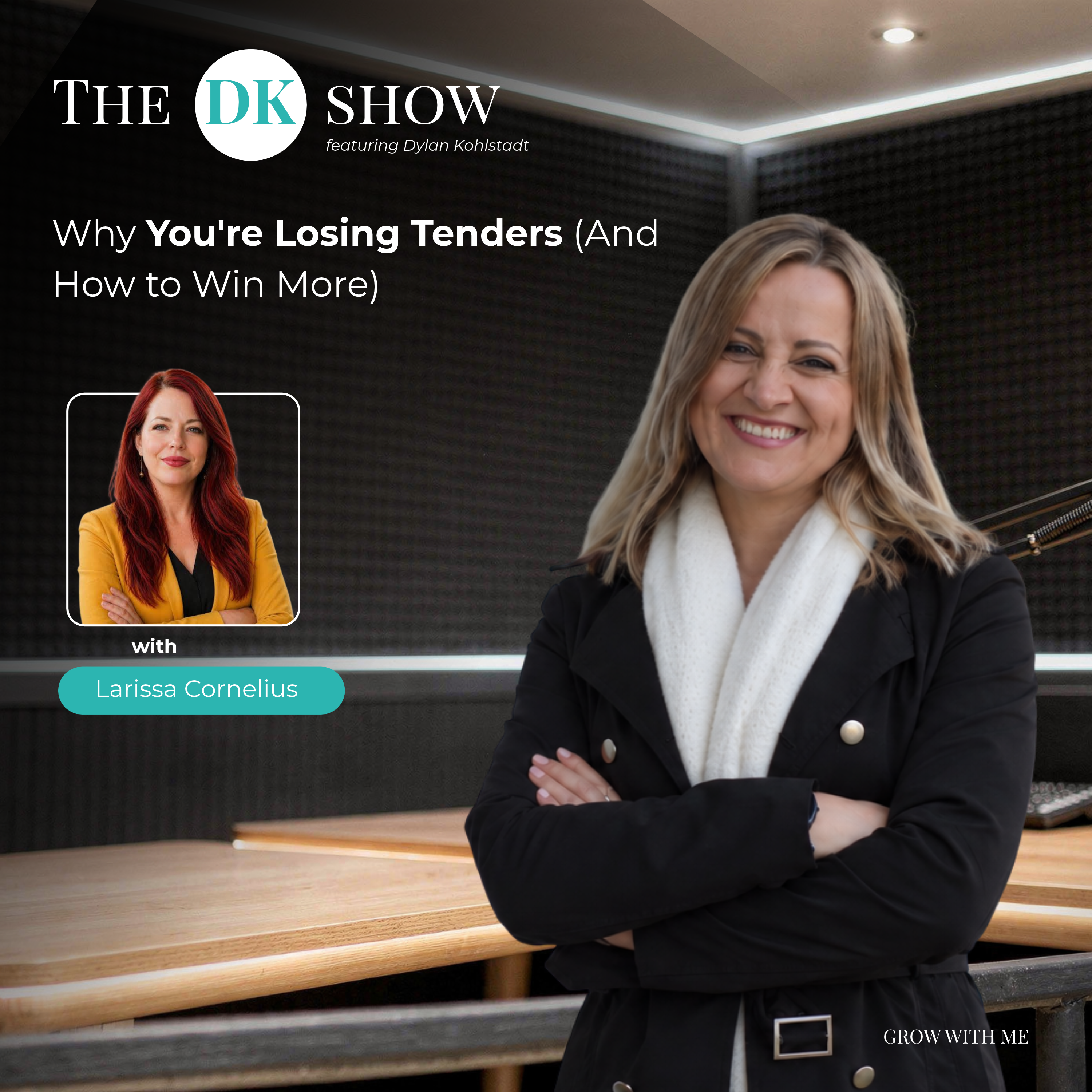
Over November and December we submitted six tenders and didn't land a single one. I blamed price, so I asked Larissa Cornelius, CEO and Chief Win Strategist, where we really went wrong. Her answer changed how I'll approach every bid from here. Larissa Cornelius, the CEO of Nfold and her team help companies win more proposals, tenders and pitches, and she has sat across the table from enough procurement teams to know exactly what gets a bid binned. It was the most practical half hour I've spent on business development this year. In this episode: Why compliance still knocks out more bidders than price ever does The mistake of treating your proposal like a company profile The difference between pricing to compete and pricing to win Price-sensitive, functionality and quality buyers, and how each one decides Why win rates are falling even as AI-written proposals multiply The quickest way to lift your win rate by bidding on fewer opportunities Chapters: 0:00 Intro 0:45 Winning Proposals and Tenders 4:11 Common Tendering Mistakes 9:09 Pricing and Value Strategy 14:31 Read and Filter Tender Requirements 17:14 Planning and Proposal Presentation 22:40 Services and Training Packages If your business chases RFPs, RFQs or tenders, this conversation will save you weeks of wasted effort. Get in touch with Larissa Cornelius: https://www.linkedin.com/in/larissa-cornelius-winbusiness-proposals-salescollateral/n Nfold: https://www.nfold.com/ Get in touch with Dylan Kohlstadt: https://www.linkedin.com/in/dylankohlstadt/ Shift ONE B2B: https://shiftone.co.za/ #TheDKShow #Tenders #ProposalManagement #B2BSales #BusinessDevelopment
speaker-1: Hi, everybody. Thank you so much for joining me for another episode of the DK show. Today I'm joined by Larissa Cornelius, the chief wind strategist or CEO of Enfold. Larissa, welcome. Thank you so much for joining us. speaker-0: Thanks for having me, Dylan. speaker-1: So I'm very excited to have you here today. And as usual I ask by I ask all my guests to start with an elevator pitch. So if I met you in an elevator and we had a couple of seconds and I said, What do you do? What would you say? speaker-0: Say that we essentially help companies win more proposals, tenders, and pitchers by helping them improve their win put win performance through ⁓ pursuits, proposals, the proposal stage and the post-bid stage to optimize their chances of winning. speaker-1: Very nice. And and and what's your success rate with that elevator pitch? Do people usually say, ⁓ that sounds fascinating, tell me more? speaker-0: Yeah, I think it's a I think it's a good end because who doesn't want to win more? and I think ⁓ a lot of people I think in the business development process a a big gap that's often left out is, you know, the tender proposal process. And so I think and it's a part that a lot of companies struggle with or do not pay enough attention to. And ultimately can often impact the overall business development efforts or marketing efforts they've done before. And if they're not integrated correctly, then ultimately companies face the risk of low win rates. And none of us want that. speaker-1: Exactly. And I think the RFPs and the RFQs and the tender space, that's where the big money lies, right? So you're not just selling a couple of nuts and bolts, you're selling hundreds of millions of nuts and bolts. So that's really where the big margins are. speaker-0: Yeah, I well I would say yes and no, but I think the reality is we're getting less FaceTime with customers ultimately. And Also, more procurement processes coming in place. We're also no longer competing just locally, we're completing globally. And so the importance of having to go to a proposal or a tender document has become extremely important. But also, it's still best practice that there's a lot of things you should be doing and preparing before there to win effectively, but often your proposal ends up being a really big part of your gatekeeper to win that work. And yes, there is very large deals that typically Right. speaker-1: I mean, we specialize in B2B businesses, mostly manufacturing. We've got a few B D C clients, but B2B manufacturing, industrial, those kinds of brands, there's there's big money on the table. And we work very closely with the sales teams because a lot of what we do is lead generation, growth, ROI, demand gen. And we work it's very important that we so our main clients usually the marketer, but the sales team is the one who's delivering on You know, the marketing qualified leads that we're sending through, they do all the sales qualifications and so there's a always a close correlation. And it's very rare that we actually discuss tenders with them. We're usually discussing the small piecemeal one off or events and how do we monetize events and all the leads from events. But I think a really, really neglected, you know, piece of the pie is optimizing tenders. So, and I'm just using the word tenders because we could use, you know, RFPs, RFQs, whichever term people prefer, but we're just gonna use tenders for the sake of brevity. So what what are the maybe give me one or two or three of the biggest mistakes, common mistakes that you see companies have in the tendering, their tendering process when they are submitting? speaker-0: There's so many to choose from. I like to think to look from a buyer's perspective. So, you know, ⁓ having spoken to quite a few procurement teams, I think first and foremost, I think one of the biggest challenges still compliance. You know, it sounds like such an obvious one, but the reality is that people don't understand compliance or people go, we don't actually need to have that contactable reference or give our financial documents right. I'm sure it won't impact us, but that actually kicks you out the game and it doesn't matter how much effort and how much. Beautiful your story or your design is done, your thing ends up in in in in the dustbin. Think the other aspect is you know, because if you're only choosing three, is really linking value to the story. I think too many people treat proposals like it's their company profile, so you know it's all about us versus actually actually customers don't care about you, not until you tell them how you are going to solve their problem, their need, and meet their objectives. Then and only then are they going to, you know, then they're going to want to. know okay great can you actually do it you know and where have you done it before and I think lastly if because I'm only choosing three is I think price But not price in the way that a lot of people think about price. I think most companies think that it's just a a pricing game and they just do like a you know a plus margin kind of effort. But actually the best companies should not just be pricing, they should be pricing to compete, which means under doing some benchmarking. And the really best companies do price to win, which is, you know, really thinking very smartly about, you know, where is that actual target that that is likely to help us to win. And if we don't understand enough about that, which we often don't because companies leave it right to the end, then they're not really setting any value, return on investment or context to the pricing. Then they're just playing a pricing game. speaker-1: Well, that's my problem as somebody who recently filled out a whole bunch of tenders. So we we as a as a rule didn't really tender because it's it's a hugely laborious process, takes a massive amount of manpower and you have to be very organized to tender because you like you said, you need all the compliance, you need all of the insurances, you need all of the policies in place, and just you need someone full time on for a week just preparing all of that if you don't already have it in place, or the specific nuances that they're looking for and checking with your insurance, does it cover this strange thing? And then we've got the marketing team working on the proposal and any other people that we and so yeah, you're looking at like two, three weeks of solid head down work. So in November, December we got about six tenders land and we learnt a lot through the process. ⁓ didn't get any of them but we did learn a lot and I think that the biggest reason why we were not successful is price. And I think it's not it's not that we I think we we we over scoped, we created we basically you see the problem that I've seen is that companies are chat GPTing their specification requirements. So they are giving you like I want this passenger liner, but they have a, you know, speed boat budget. So now as an agency I have to quote for the passenger liner that they've asked me to scope on, but it's too much. It's too it's blowing the budget out of the water. So easiest and But very rare is when a company gives you the budget and says, I want this for this budget. And you can say, Okay, if I make it a one page brochure and I make it, you know, one social post with no animation once a week, I can make the budget, you know? But it's very rare that you get that. And so what I've realized actually is the difference between the RFP and an RFQ, which I very stupidly didn't know the difference. And most people are not really looking for the cue, which we were giving them the cue. We were giving them the full quotation. Like, you know, two year budgets and things like that in there. We're just looking for our hourly rates you know. So but okay, so I do have a question though on on the on the whole budgeting thing. So yeah. When it comes to an agency that charges, you know, six hundred and fifty Rand an hour, you know, or fifty dollars an hour versus an agency that charges two thousand dollars an hour, depending on or two thousand rand an hour, whatever the case might be. Procurement managers are making the decision based on price to a large extent and they're never gonna get the same quality that they're gonna get with a lower rate. So what does a services business like myself do where, you know, you know there are small agencies out there pitching at, you know, five hundred Rand an hour or twenty five dollars, and and how are you going to how are you gonna win a tender when you know that you're not gonna be able to compete on price? speaker-0: So I I purposely listed price as my third issue. Because actually primarily when we go into to clients and we go and benchmark where they're sitting. And also it's the convenience excuse for procurement because if they say, ⁓ you lost on price, then that's cool. But actually we should be going back and understanding what about price. There's many, many instances where organizations and companies that are charging more are winning tenders over others. So I think the biggest problem is linking effective context to your price. Obviously, you need to do some level of benchmarking ⁓ and you need to understand your competitive landscape. You need to understand the customer, the industry, of how they're awarding in these types of industries, because a lot of that will dictate how you're going to strategize in terms of your pricing, how you're going to strategize in terms of your solutioning. And so when we talk about price to win, it's about sort of weighing up your Weighing up the intelligence you have around your customer, your competition, and yourself and your capabilities into putting it together, but most times it's not actually effectively connecting the value correctly. Also, you know, we think okay, procurement is just trying to get best on price. Actually, you have different types of buyers. You've got your your your ⁓ price sensitive buyers, they're very restricted in terms of budget. ⁓ you've got which then are going to be quite. Price sensitive, but then they may give up, they may allow longer timelines, or you know, there's different synergies that you can do or trade-offs that you can do to make those costs. Then you've got your functionality buyers, which public sector by the way fits in. They're actually not in the price region, which most people don't realize. Where is that you first and foremost have to get compliant. Then you've got to have a functionally acceptable proposal. That means that you've got to be able to meet the scope of workers they're asking, and you can't be too low or too high. ⁓ sorry, we you're not even looking at price, you've got to meet minimum criteria in terms of delivering quality, and then you've got quality buyers, which of course are all of probably all of our ideal buyers, but not all buyers of that, where they are willing to pay more for value. And I think it all comes down to, and I'm sure you know this, Dylan, in terms of market. Marketing, it all comes down to understanding your audience. Now it's just when we talk tenders and bids, it's really about. The audience is no longer just the general customer, let's just use a name as an example. I don't know, ⁓ PWC. And it's now which department, who in PWC, what opportunity. So it becomes very, very specific ⁓ in terms of targeting your audience and your messaging and then understanding again who the players are. So Yeah, I think that's that's that's really, really important because and that's why I say price tends to be this excuse very simply, but you'll actually be very surprised when you go and dig further for for for clarifications what that is. So there could be multiple things there that could be sort of preventing you. Also a lot of companies get ⁓ you've been ⁓ thanks you haven't been successful for the tender and they don't tell you you've been disqualified. And people actually get disqualified for very small silly things. Then it doesn't matter what your your your your price was or how great your story was. So it's still very much under the hierarchy of needs of proposals, you know, that compliance really has to sit at the bottom and then your store your value story. You've got to prove to them. So I you know, what I'm in in summary Procurement people and buyers are looking to maximize the difference between price and value, right? Because there's obviously a limit in terms of what they budget. And you need to get that, if you can get that balance right, because not only do they need to reduce costs, they need to reduce risk and they need to make sure that there's delivery. And some procurement teams are also, if we're looking in the the South African context or even in the the African context, need to meet certain ⁓ preferential procurement goals as well. So it's about understanding that well. speaker-1: Hmm. Well, I think I think that's a an important criteria. So luckily I I had spoken to you previously and sat in on one of your talks on the Civitas group and because we got another tender that came in last week and r you know, trawling through it with like a a ⁓ lice comb, you know, trying to like understand the requirements and getting through page to page fifteen, me and three other people are like reading this thing in detail, like, okay, okay, okay. There's a small line there, must have previous experience in this industry proven, blah dah da. And I'm like, okay, we're out. You know, because I realized there's that's one of those little hidden caveats that they probably require that we have evidence of having worked in the exactly that space. And I've worked in that space previously, but not as shift one. And so I was just like, Okay, I don't even think we Larissa would probably tell us to walk away. speaker-0: So I really laugh with that because you know actually too few people actually read the tender documents and the first thing we do when we train proposal professionals we say read the tender document the second thing is read the tender document the third is read the tender document ⁓ because they even hide sometimes requirements in ⁓ you know in the terms and conditions in the weirdest spaces or you know you you know if sometimes companies break it up and get a technical person to read that section, get a person to read that section, then you're likely to miss Miss silly stuff, but also that's why qualification is so important to qualify the right opportunities as early as possible. In fact, it's the quickest way to improve your win rate is to stop bidding on opportunities where you have a low probability of winning. In fact, the statistics are quite interesting around this. So there's a RFP report, trends report that APMP, the Association of Proposal Management Professionals, and Lupio bring out. And what's very interesting is they showed it starts from 2020. Now, in 2020, on average, the survey participants were winning 52%, which means they were winning more than they were losing. This year is the lowest win rate that has ever been experienced. Industry rides on that report, obviously, 39%, more usage of AI. So lots more AI happening, lots more proposal automation tools happening, and we're losing more. So again, it shows you that the problem is that AI isn't quite working. ⁓ it's great to create efficiencies, but it's also creating a lot of SAMSY type proposals that, you know, pose, I think, a lot of risk. That's why a lot of buyers are now asking for presentations and pictures because they want to make sure AI just didn't create something for you. But those statistics are really interesting. But it's because companies are desperate, economies are tight, and companies think it sounds counterproductive, but actually the more you say no to opportunities and the better, you more you're spending time on opportunities where you really have a probability of winning, then you're going to put your best leg forward and you're going to actually win more. And if you're losing more than you are winning, what's the point? I want to be winning more than I'm losing. And if you if that's the case, you can improve. speaker-1: I can't eat clean. So step one, read the proposal and filter, filter, filter, filter. Step two, read the proposal again. And then make sure you are there's not some hidden term that you or term or condition that you're not gonna get. And then step three, if it's gotten through to that point, what is step three then? So obviously you get your compliance and your documentation in place, you've got your team doing that, you've got your marketing team. So how important is the pretty presentation? Is that always a requirement, or can you sometimes just fill out the form and send it? speaker-0: So look, my view is long gone are proposals looking like school projects, right? But I did speak about a hierarchy of needs, right? At the bottom is compliance. So, you know, if you're going to focus somewhere first, you've got to focus on compliance. And by the way, the th the next step is to plan, right? I r you know, I strictly believe in putting a checklist, otherwise you'll skip stuff, you know. We actually treat each bid as a project. You know, we do a checklist because If you plan before you write, you don't waste time. Then we build our strategy because now you want content. So before the pretty, right? We want to be not only do we want pro good proposals to be compliant, we want them to be compelling and hopefully persuasive. And so we plan what we call a win strategy: is you know, how are we actually gonna approach to win this and why should the customer award this to us versus anybody else? And if we don't know that story. How are you even going to put a compelling answer together? Because that's actually where most companies I believe are losing, way before it even gets to price. Then it's about your obviously your planning and your content is obviously includes your pricing. And then the top layer is yes, you know, it's got to look consistent, it's got to look professional. ⁓ and we've got to make it easy for evaluators to read, right? ⁓ so you know, thinking about layout, if you think about like a newspaper article, okay, that's maybe a that example but or when you're designing a website right you want headings if you think of how people read they read the heading they go and look at a call out they'll look at the image they'll look at the caption so make sure like key points stand out you know not every And you can do this quite easily if you've got really good effective templates. So it doesn't mean ⁓ you were saying, Dylan, that you know you've got to do this and there's all this work. ⁓ we actually help a lot of companies build their content libraries. So we actually help build, you know, these templates, really good, customer-centric, reusable content. So we even work with some proposal automation providers where let's get you your first draft quickly and then you spend the time on what really matters is the strategy, is what Going to differentiate you is on how you're effectively going to price to stand out from the competition. Of course, we do sometimes do really fancy, like you know, nice bid packaging and those kinds of things, but I really treat that as that's a last step because otherwise it's just lipstick on a pick. speaker-1: Yeah. I completely agree. Lipstick on a pig is my favorite saying. ⁓ yeah, yeah. I completely agree. I think we've spent a lot of time making beautiful presentations and they were so convoluted that it was really hard for the story to be distilled because we did so much work. We did research, we did market research, we did interviews, we did competitor analysis, we did ⁓ social media audits and we so we wanted to show them all this work that we had done. But I think that in trying to present all of this information, we actually overwhelmed them and they weren't able to see the wood for the trees. And I think there's a fine balance between showing them, look, we did a a huge amount of work off offline, but this is the distilled essence of what we've done and this is what we will do that makes us different. Yeah. So I think we've learnt a lot as well in that whole project. speaker-0: element right evidence is really important I think the difference between you know we say you know we typically want to avoid ⁓ I this is from Dr. Tom Sand who wrote the language of success you know fluff guff geek and weasel language in in in our proposals but the the point is ⁓ and you what we're talking about is you know we can say lots of really great things but proposal language you know is about creating trust right because people do business with people they know like and trust and it's about connecting Evidence, evidence makes it credible, but we also need to give relevant evidence and also don't give clients procurement people hate this by the way. Don't give clients more than that they're asking. So a lot of companies want to go, okay, we've got an RFP out or a tender out for websites, but now we want to also show them what we've done in terms of brand, corporate identity, storytelling. No, you know, unless they've asked you to list value-added service. services or you know if they're asking for specific types of references, don't we don't go and throw five thousand other kinds of references. So I think that's also a a big area where people either score down or sometimes that will will will kick them out of the procurement process. speaker-1: Larissa, you are an absolute font of knowledge. It's always wonderful speaking to you. But before we close, I want you to talk through I think you have five packages and I and I love your packages that you have and your options of the way you help companies. Maybe just off the top of your head, I know I don't know if you ⁓ prepared with them, but ⁓ you've just got so many different ways that you work with companies and I don't want people to be on this call and not ⁓ hear about them. So quickly give us your five packages or four five packages that you have available. speaker-0: So I'll summarize the, you know, ⁓ I suppose we can say it's five, but we've got three key areas. The first area is our WinWorks area, which is tender management, and that's the core of our business, where we can help clients some of our clients just use us for consulting, whether we're doing benchmarking or we're doing a portion of the document. Or we can actually run the proposal function or we can augment and give extra capacity. So in other words, Dylan, you said you guys are running around and doing lots of efforts. basically come and take that sales stress and turn it into proposal success for you. We've got a lovely package in there called BOSS which is BidOffice as a strategic service. So we become your sort of co-sourced bid office function and some customers just use us for ad hoc bids. So you know needs are different per client. Our second area is our creative edge leg of our business where clients like what we were doing so much with proposals, tenders, and pitches. So that's where we do, you know, content libraries. We can help build, you know, ⁓ lots of sales collateral type content. ⁓ we're very good with business plans, by the way. We work with a lot of funding proposals as well. And then the third leg is our training leg of our business, which is basically, you know, we know We're we, you know, there's only so much our team can do. We want to empower companies so we can come in and train, you know, whether it's your your your sales teams, your bid teams, your solution architects. ⁓ we're actually the only authorized training organization for the Association of Proposal Management Professionals. So we've also got some global certifications that we offer in our training, as well as some just practical masterclasses and micro-certifications around everything around the art and science. Of winning. speaker-1: I love it. I love it so much. ⁓ yeah, guys, please reach reach out to Larissa in case you think it's just her sitting there doing all the work. It isn't. She's got a big team. She's backed by a set of pros, people all as competent as her and ⁓ A-type personalities, making sure that every I is dotted and T is crossed. And yeah, so definitely reach out if you wanna improve your bid ratios. Larissa, it's been amazing ⁓ seeing you again. Thank you so much for your time. And guys, we're gonna share Larissa's contact details below. Do reach out and please don't forget to like, comment, subscribe and share, and do all the necessary things. Thanks for joining us. Thanks, Larissa. Thanks, bye bye. speaker-0: Thanks, Dylan.