
The DownLink Podcast · Laura Winter
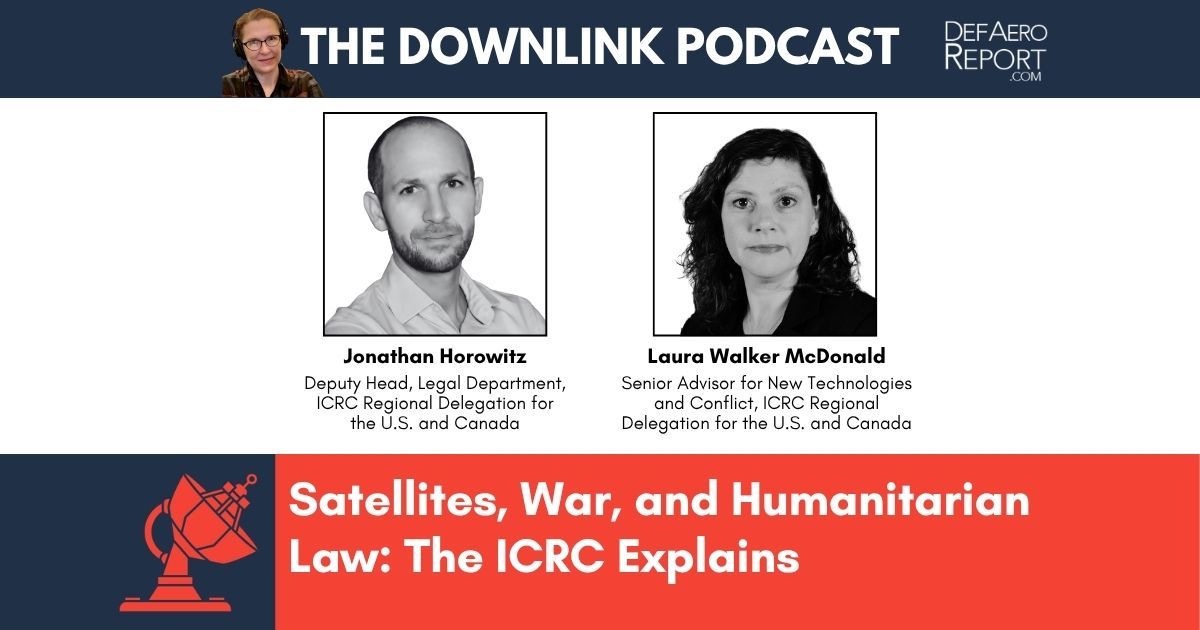
Companies rarely know how a military is using their satellites — and that blind spot could quietly turn commercial infrastructure into a legitimate target, putting the civilians and humanitarian workers who depend on that same infrastructure at risk. The International Committee of the Red Cross calls it a "knowledge gap." Laura Winter speaks with two representatives from the ICRC Regional Delegation for the U.S. and Canada — Jonathan Horowitz, Deputy Head of the Legal Department; and Laura Walker McDonald, Senior Advisor for New Technologies and Conflict. This is a public episode. If you would like to discuss this with other subscribers or get access to bonus episodes, visit thedownlink.substack.com
0:02SPEAKER_00One is what you said is what we're finding.
0:05SPEAKER_00Companies do not necessarily and often maybe rarely have fidelity
0:11SPEAKER_00over how militaries are using their products and services in situations
0:15SPEAKER_00of armed conflict,
0:15SPEAKER_00which means they can't do a complete risk assessment to find out whether
0:19SPEAKER_00or not their infrastructure would qualify as a military objective.
0:27SPEAKER_02From the Defense and Aerospace Report,
0:29SPEAKER_02this is The DownLink,
0:31SPEAKER_02a podcast about the intersection of space, the space business, and defense.
0:36SPEAKER_02Not just what's over the horizon, but what's happening above it.
0:40SPEAKER_02I'm your host, Laura Winter.
0:44SPEAKER_02Hi, everyone.
0:45SPEAKER_02This week,
0:46SPEAKER_02we're talking about space war and the laws that are supposed to govern both
0:51SPEAKER_02as militaries,