
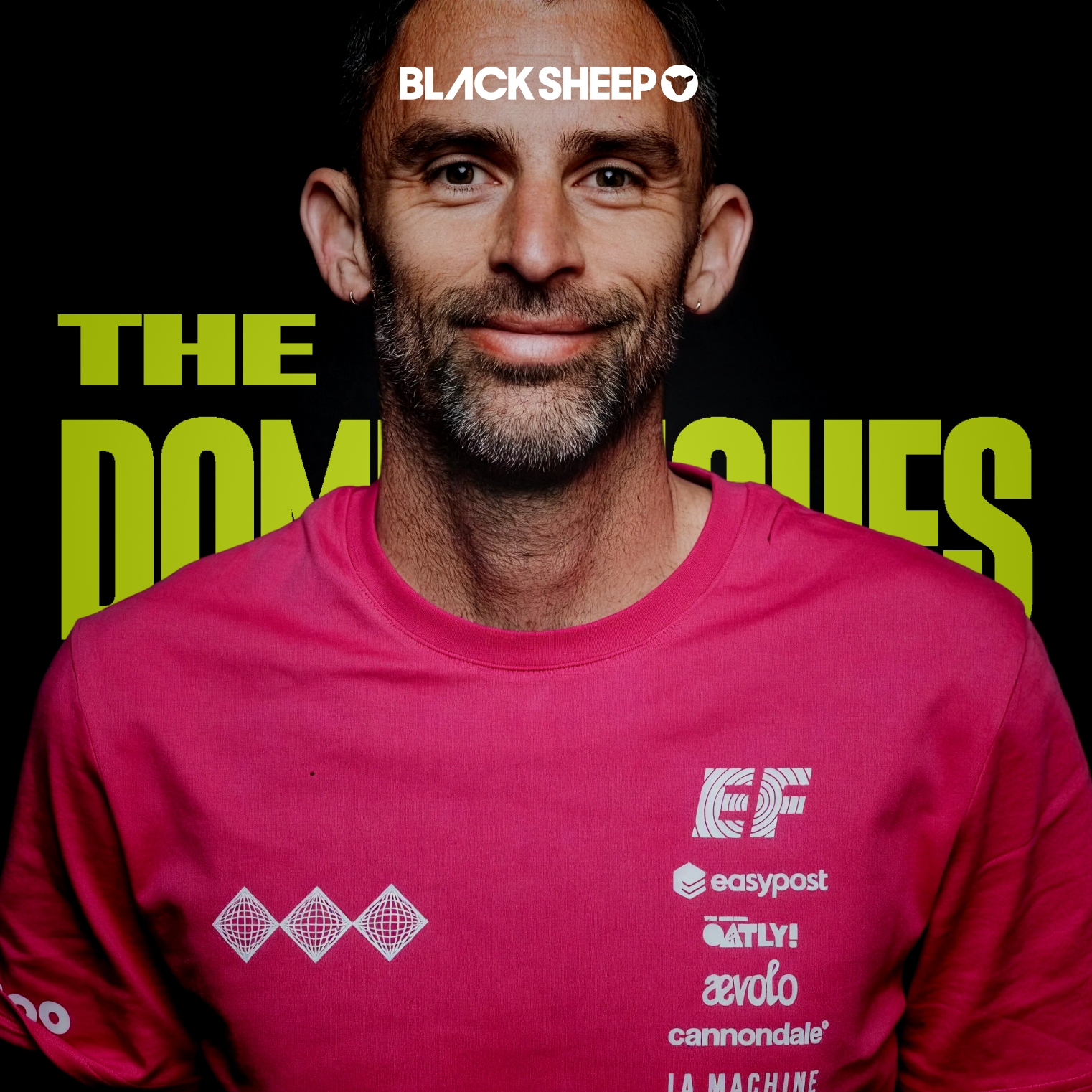
The Domestiques · Black Sheep
The episode opens with a difficult but important conversation about rider safety and the loss of Finlay Tarling at the Volta a Portugal. EF Education-EasyPost sports director Tom Southam then joins Matilda Reynolds and Mark O’Brien for a look inside the Tour de France team car: how breakaways are planned, tactics change on the road, riders manage extreme heat and fueling, and the enormous staff effort behind a Grand Tour. Tom also reflects on his journey from racing in Australia to directing at WorldTour level, before looking ahead to EF’s Vuelta ambitions. Backed by Black Sheep Cycling.
Black Sheep Cycling: Well, we are back to our regular domestics podcast, backed by Black Sheep, where we cover the best of local and global cycling. Matilda Reynolds here. In saying that, I feel like I should definitely take a week off next week from the pod. I'm sure everyone would love a break from my voice, but we couldn't pass up this week having this special guest on, and I'm not talking about you, Mark O'Brien. Speaking of regular programming, I imagine it was Hellride and King Lake, let me guess, on the weekend. Marko: I'd I'd love to pull you up on that, but actually you no you actually no Yeah yeah. That was that was my weekend. I had two five year old parties. and then Black Sheep Cycling: Woo. Marko: yeah, just went out for a couple of jogs with Sebastian on his bike. That was that was my weekend. And then we did some housework till so it was a real domesticated weekend. Black Sheep Cycling: Wow. Dad Bud. Marko: Yeah, I know, I know. Mowed the mowed the grass. I felt so masculine. Tom: There's no way you didn't go cycling Marco. There's no way on earth you didn't go cycling. Right, okay. Marko: no, no, no. Th there was Hellrod and King like. Now the Hellrod and King like part. Yeah. Yeah. Black Sheep Cycling: those dulcet tones. It's amazing. Losing that losing that Aussie Aussie twang. I was thinking of you, Marko: Yeah. Black Sheep Cycling: Marco, though, but I I was rocking the inform TMX Make while I was absolutely hustling home from the office for this pod, so excuse me everyone, I'm on my phone at the moment. But Marco, do you wanna introduce our special guest? Marko: Yeah, he's actually a a special guest on another podcast, not a host. he's the DS of Black Sheep Cycling: Sorry about that, Mitch. Marko: yes, E F, a former professional cyclist and current still journalist as well, Mr Tommy Tom Southern. Welcome Tommy. Tom: Thanks mate, thank you Marco, thank you Matilda, nice to be here, thanks for having me. Marko: Yeah, yeah, yeah. Yeah. Black Sheep Cycling: Yeah. Marko: Yeah. Yeah. I like listening to you alongside Mr Docker and Derbridge, on the communique for Life in the Peloton. fresh off tour and heading towards Volta, is that the plan currently, Tom? Tom: Yes, I mean, you're never fresh off the tour, no matter how well or badly it Black Sheep Cycling: Yeah. Marko: Mm. Tom: goes. Always takes a little bit of time to recover from that. then, yeah, next one for me, I'm off to the Welter in a couple of days. So just the big ones for me, Marco. No, none of this. Marko: Yeah, yeah, fair enough, Black Sheep Cycling: Okay. Marko: mate. Yeah, not gonna book the round the world trip and go via Montreal and then back around to Australia to get ready for TDU. Tom: I'll be at TDU but absolutely not in a rush to get there. Little bit of time first. always turns up Marko: Well, Tom: at the tour and basically starts announcing what's gonna happen with the TDU and you're already thinking, man, come on. Let us get through this. Black Sheep Cycling: dear. well team, I wanna interject because I'm s and I'm sorry to start us off on a a very somber mood, but I do just really want to acknowledge it. obviously horrific news over the weekend. Finlay Tarling, nineteen year old Britton writing for NSN development team tragically died after a collision with a car that entered the race course during stage eight of Volta Portugal. I find that like I just yeah, it's s so shocking. I I I didn't know Finn and I only know of the Tarling family, but I just feel like we can become a bit desensitized to these incidents and you know, he was obviously a son, a brother, a friend, who lost his life during a professional race and it feels like it was completely out of his control and that yeah, rider safety just can no longer be like a retrospective discussion. It has to be the number one priority of our governing body and and number one for these race organizations, races that we have all been to and seen all of the hoo ha and the ceremony around it. But Tom, I know you're based in the UK and yeah, I'm really sorry for obviously this loss to the community. Tom: Yeah, mean, it's somebody broke the news to me. I was out with some friends in the evening and like when I heard the news, was like one of those things that stops you in your tracks. It's it's is, you know, heartbreaking stuff. I was discussing it with my wife and she's like, how can something like Black Sheep Cycling: Mm. Tom: this happen? I think for anyone who's who's there involved, you know, it's like these are predominantly young kids. you know that we work with, are athletes, do seem, you know, when you look through one prism, they do look kind of, you know, invincible on the TV and this, that and the other, but you have to remember, they're extremely vulnerable doing what they do on their bikes at the speeds they do. It only takes, you know, if, I don't know the circumstance, but it only takes one marshal to have kind of abandoned his post or looked the wrong way and a car pulls into, you know, a race can be spread out. The risks are enormous, especially when you get towards the back end of a race. I can't judge or comment really on what's happened in this situation, but the risks are there. And of course, like the rider should be protected and safe and shouldn't have to think about whether or not that they're in an open road situation. yeah, and of course, know, thoughts go out to family, friends, everyone. think it's just a very sad, tragic and unnecessary loss. Black Sheep Cycling: Marco, anything else to add? I know you're having internet issues. Marko: jeez, the internet. no, not not an anything more you can really say than what you guys have already addressed there. It's one of those ones with cycling that I mean, especially if you've gone and raced you know, through the Asian Pelotons and Black Sheep Cycling: Mm-hmm. Marko: things like that where you've got vehicles pulling on and every time you go through a blind corner on the wrong side of the road and you've just got to assume that it's closed. Everyone's assuming it's closed and all it takes is even at the top level we've seen before with cars pulling out in Jura Lombardia, for example. in in these heavily populated areas, it's next to impossible to completely block absolutely everyone. And yeah, unfortunately cyclists are incredibly vulnerable with no real protection and just going in with blind faith through alpine corners and I mean there's enough risk as well, even without putting vehicles on course, between all the descents they go down. So it's an absolute tragedy, from what I understand, their family are actually a big part of the the British community as well in the grassroots side as well. Black Sheep Cycling: Mm. Marko: So it's it reminds me of the horrible incident we had with Damian Drachbach here as well for the Drachbach family, being such a huge support of the local community and it's Yeah, completely devastating. I can't imagine being now being a dad as well. Having a child taken away, teammates, everything, it's just yeah, it'll make a lot of people second guess getting back out on the back out on the road and racing again will be really hard for people that were there. So it's a horrible accident tills and I wish we I hope we never have to see it again, but it's an unfortunate thing that pops up every few years. Black Sheep Cycling: Mm. Well, I just want to finish with this message from Josh's Josh's father, Michael Tarling. and I quote that whilst he was only nineteen, his short life was packed full of wonderful experiences and achievements and we couldn't be prouder of him. If you're heading out on the bike, make sure you give him a thought as you clip in. with that, we'll be back shortly. Marko: Tommy, the first time we crossed paths was in Bendigo. where we ended up being teammates there. I was like a a happy little puppy dog showing up at your doorstep trying to get you out after you'd had a few too many wines. Tom: a very enthusiastic, you're a very Black Sheep Cycling: Ha ha ha. Tom: enthusiastic Mark and I thought that would have worn off by the time you were whatever age you are now and it turns out that it hasn't so, yeah. Black Sheep Cycling: Ha ha ha ha. Marko: No, no, no. Just keep wearing down, find new people to wear down bit by bit. But yes, I was lucky enough to be your teammate there at Drapak and take on a lot of incredibly important life messages from you as well. One would be to relax and stop being so highly strong when it comes to my training, which which I do now. I have a beer and then I do the same amount of training. So but to get to that point in Bendigo Tom, Can you give us the listeners? I'm I'm aware of the I guess your history, but how did you come to be in Bendigo and I guess a little look into your professional racing career as well? Tom: Yeah, so I I think I first went there. I first very first went to Bendigo back in 2000. I think it was 2002 with the Great Britain national team. had we had I was on what was then the world class performance program, which is basically the Academy or whatever, whatever it's called now. And they sent us out there like joint road squad and track squad to train through the Australian summer Which was and they they thought that putting a bunch of young blokes in Melbourne would have too many distractions. So they Thought let's let's go Black Sheep Cycling: Ha ha Marko: Hm, fair. Tom: to Bendigo instead turns out that Yeah Black Sheep Cycling: That's where the real riffraff is. Tom: When you're a young man, you can find the distractions anyhow you want, no matter the size of the population. yeah, I had a good time there, met some people, ended up coming back, I think, 2004, 2004, no, 2005, when I was racing for Barlow World and doing another off season over there. And then I just kept... coming back, I started to get to know a lot of people in the cycling community at the time. I don't know if it's still the same, but at the time it was like it was a massive, like it was a massive cycling community there. Saturday morning rides were huge. It was like 70 to a hundred people. had, it was good bunches consistently. And then obviously I met a girl who was my partner then at the time, who I, when I sort of got... sick of racing in Europe. came back to Australia and then I was staying in Bendigo a bit more permanently, which is when I came to dropout, which was when I met you Marco. And I was a little bit at the end of like, think, I don't think, I mean, I see it now in athletes all the time, like when they get a bit older and they're getting towards the end of their career, they are a bit grumpy, which is probably Black Sheep Cycling: Mm. Tom: how I was. At that point wasn't super highly motivated. And then I had Marco on my doorstep who was 19 and full of beans. And... Black Sheep Cycling: huh. Tom: Did a year at Drapac which kind of gave me bit of time, which was great. I mean, Michael took me on and I had a bit of time to kind of reflect as to what I was doing, whether I wanted to keep racing. And ultimately I ended up going back to the UK to race a few more years for Raffa Condor and so forth. But I also studied then when I went back and did a masters in professional writing. So then from that, like I was always going backwards and forwards to Australia. and basically avoiding winter and racing at continental level then, which like I wouldn't say that I was the most committed cyclist at that point. And I could do just about enough to get by. then it did give me time. John Herity, who was our boss, of moved me into helping out with the team's press officer and then ultimately sent me off as a team manager to the tour of which we won. Marko: Go Mike. Big Marky Mike, or is that Hugh Carthy? Yeah. Mm. Tom: That was Mike the first year. We won that and we finished with only two riders. So I was burning through the riders pretty quickly. I had quite an aggressive strategy towards Black Sheep Cycling: Wow. Marko: Hmm. Tom: the race. was actually hoping that we had two riders left, Mike and Rich Handley, and I was hoping that Rich would not finish the last day and Mike would be one finisher, but the winner. Marko: Hm. Tom: That didn't work out. But obviously, you know, I started getting into that a bit more and then I won it again the next year with Hugh Carthy. We won it again the next year with Hugh Carthy. We did a tour of Japan. Hugh was good there. And then from there, I think we went to the States and I ran into the Drapac guys again, where Darren Lapthorn said they were probably looking for a DS and then they ended up coming back to Drapac. you know, was by then it had got, it was a... Pro Continental team when I was there, but by the time I came back to the DS, it was actually like in a much healthier place as a much more established Jonathan Breitfeld and Agustina Girmando had done a lot of work and Keith Florey to like make a real structure and organization. And it was a two years there and it was, it was, it was good. We had to travel a lot because we were based in Australia and I think we were always up against how remote we were, know. Black Sheep Cycling: Mm. Tom: We did races in the States, but even then, you know, it's 16 hour flight to LA and then you fly across country to Philadelphia or whatever. And it was good that we could do it. Michael had business interests in America. You know, we did tour of California and these things, but we were always sort of limited by having to travel. I think you can, as an Australian team, can do the Asian circuit. It's close enough, but to do America or Europe, was a lot. That then, bit by bit, that then merged with what was then Cannondale, formerly Garmin, and then became EF. So, been there ever since. Myself, think myself, Jonathan Breakfield, Will Clark, Brendan Canty, Tom Scully and Keith Florey went there in different. Brendan Canty now works for EF in the finance Marko: Yeah. Tom: department. He stayed over there, Barcelona. John is still here, Keith's back in Oz, Tom Scully retired and Will Clark retired. So yeah, that's kind of it. That's how we got there. Marko: Yeah. I've got a couple of questions before we jump into the current days, Tom. Well one, I just have Drapak, you're saying you're not the most disciplined cyclist there. I have a a real key memory there. I think of you having a one cigar the night before Sun Tour and then popping out and think you do you run second in the pre Sun Tour Crit Around Benigo? Yeah. Was it Kempsey that Yeah, yeah. Tom: Second, yeah. Yeah, Marko: So yeah, off about th four hours sleep just jumping in and yeah, just still showing you had the legs. But Going back early days, I guess back around the Barlow World time when you're racing, 'cause I will get in to I guess the current days and how it is now, that just to for the listeners as to I guess the extremes of back in those times of the things you'd be doing to get lean and I especially when you're on an Italian pro Conti team as well, was it Moravita that you were with before Barlow World? Yeah. Tom: Yep. Yep. Marko: Yeah. So Is I've seen enough in the amateurs there to know, you know, you finish a a race and then you can have an apple and buy a protein shake if you're lucky. what were the more extreme side on the the dieting things that they were trying to or training side they were trying to instill in you back then? Tom: Do you know what, like, I think the biggest difference, and I look at it now and it's like, the biggest difference was just how unregulated things were. So it's not as if there's any one particular thing that you had to do, you know, it's like, eat this or don't eat that, was like, there was no real framework or guidelines to stop you. going into really extreme measures. So I think what works now is this kind of, know, idea that there is a good way to do things and you can kind of see it and you can regulate yourself because all cyclists are extreme in their mentality. It's like if I just push a little bit more, if I train a bit more, if I do one more effort, you have to be like that. So when it comes Black Sheep Cycling: Mm. Tom: to At the time, and I still see it with athletes now who come from particular countries, it's like they just won't eat carbs. Like zero Black Sheep Cycling: Yeah. Tom: carbs on a rest day. like, it's just, you know, I never ever, ever trained with any food or any, like any mix in my bins Marko: Yeah. Tom: because I thought like I could get skinnier by like not eating in training and then I'll just eat just to do the race. Marko: Mm-hmm. Tom: So you basically look at it now and say, well, I was completely knackered from. training when I couldn't back up the day's training because I just drank water like two biddens of water in five hours and ate no food and thought I'd done a good job you know Marko: Yeah. Tom: or you know so but there was no there was no one to tap you on the shoulder and say this thinking is ridiculous so of course everyone was making mistakes Black Sheep Cycling: Mm. Tom: left right and center and you know you hear stories from velotex in particular which was a very famous Italian team where you know the guy was coming into the dormitory where all the riders were staying and finding crumbs and finding out that someone had some biscuits hidden in their locker. And at the end of the next training ride, he'd basically say, go and get some wheels from the back of the garage, lock him in the garage and not let him out until after dinner time. Like, what would be like, constitute proper abuse these days? Black Sheep Cycling: Mm. Tom: But there was just no, like, there was no, there was no way to have anyone or help you with what you're doing. So now you have, you can see what's going out through what you're putting through your training peaks, what you're putting through your hexes. You do Black Sheep Cycling: Mm. Tom: have, and at any level you can do this now. You can say, I'm burning this many calories. I need to put this many in. I can have a safe deficit of X. Whereas we were just basically like, it was like full deficit or eating, you know? Marko: Beat, yeah. Yeah. Tom: You know, the goal was basically to train and be completely ruined basically and then Marko: Yeah. Tom: fix it all the day before a race. Marko: It's hard to undo as well. Like I think I've Even for myself, like obviously I wasn't racing at that level, but I still have horrible habits when it comes to training. I'm like, well, like it doesn't matter, I've just had the you know, one bar over four hours and you're whoops, like just Black Sheep Cycling: Yeah. Marko: it's just old habits, die hard. So I think you'll find that I guess as the generation that went through that are completely out of the Peloton, so everyone coming in now, they've only started with they're fueling from under fifteens, under seventeen. So I think you're just gonna find that it's gonna become the Maybe not pog pog a chart level, but I think the higher level is just going to continue going up and up and up as these guys have never known that full starvation mode that you used to do to your body. where you'd still have some of the older guys in your team would still have some back of the mind thinking that that's still an okay thing to do. whereas I think you'd now I'd be interested to see where it ends up leading. But we'll get in that later on the pod. The only other one I had from those earlier days, Tom, is the Drapak heading to California. Yeah, and I guess the loss of a race like that from the calendar or America in general, they're they're struggling with any sort of higher level event, but how did that actually stand up as an event versus anything you're doing now? Like I did hear you some stories of the goodie bags you'd get before the start and I guess do you see it coming back at all? Tom: I mean, it was a great race. With Drapac, was, I think they had the... The problem for that race was like in America, they had the model for it kind of wrong in that it basically cost, it cost teams like ours money to go there, you know? And Black Sheep Cycling: Mm-hmm. Tom: so it was like, it's, you know, it was the same for Dimension Day, MTN at the time or whoever. and then, so there was like sponsors who was sponsoring the race to get the team into the race. But then obviously the race became a world tour event and you can't do that anymore. So it stopped it. and I think that the, the model for it wasn't quite right. I think it was, it was a good race, but also if you look at the timing, it's difficult to get big riders out. that far across the other side of the world. Obviously there was a drop off post Lance Armstrong confession as to sponsors just leaving the sport as well. You see it in Germany, you see it in a lot of those countries that had a huge boom. I we've seen it in Britain as well, not because of doping cases, but because we had the Tour of Yorkshire, the Tour of Britain used to be a much, much bigger race than it is now. But now we're sort of struggling in the wake of post Bradley's 2012 summer. There's a lot of interest, there's a lot of stuff happening and then it just kind of, there's just a decline. And the Tour of California suffered from that. I mean, it looked after us fantastically. It was a safe race, it was a good race. The last time we did it, I think, was Pog won it, I think, ahead of, he, Marko: Yeah, he did. Twenty nine. Tom: Yeah, we totally underestimated him and Higita attacked him halfway up the climb and then he came back and think Sergio would have won the stage but he followed the motorbike and went the wrong way around the bend and Marko: Mm. Tom: Pog beat Black Sheep Cycling: Mm. Tom: him and he's probably never looked back. Black Sheep Cycling: Tom on Marko: So you're saying Hagita could have had this. He could have been Pog. Tom: Yep. Yep. Black Sheep Cycling: Tom on that note, because you've had such a strong history as well with Tour Down Under, do you think there's any type of threat to that with TDU? And like how do the teams feel like coming feel having to come down to the Tour Down Under in Adelaide when we're seeing more and more out the need for altitude camps and yeah, I sense Tain camps. Tom: I know that that's why like Cadells has struggled because basically if you're going to do the classics now the classics riders go to altitude so they already want that week to not Black Sheep Cycling: Mm. Tom: be spent away so that's one of the like if you look so it's changed now but last year at Cadells there was maybe 90 riders or something Black Sheep Cycling: Mm. Tom: and because a lot of the teams had just opted to not do it now they've changed the structure of the world tour so if you skip Cadells this year you can't skip it in the next years of the cycle which is good for the race. I think it's fair, I don't think there's any other way to bring Cadells much closer. What Down Under has going for it is it's the first world tour race so people are prepared to come and do it to sort of set up their season. It does come at a cost of let's say three weeks of taking a group of riders out of circulation. it would, so California was in the middle of the year and you're just not gonna do that. But I think because of the timing of Down Under, as long as it stays where it is, it should, like it's early enough that people will go. Also, I think that there is like gonna be a trend towards heat away from altitude or there already is. Black Sheep Cycling: Mm. Tom: the adaptions that they're proven adaptions of heat that we're getting around to understanding now which Down Under has actually in its favor so maybe the lead into Down Under is not the problem it's the time after and it's why I spoke about Cadets because Black Sheep Cycling: Mm. Tom: I think I think that race has a harder time existing than Down Under ever will because that like that's like the additional seven days and I've seen it I remember like how this really interesting moment I think 16 or something like that where Peter Stettner was sat opposite one of his Italian teammates at BMC and like this teammate had just come like a lot of European guys just lose their head in that week and they want to go home because down under there's a big build-up and it's exciting you're in the middle of Adelaide and then there's like this natural sort of come down when you change and you go down and the race, Cadels is just before you fly home so everyone's like they've checked in online before they've even you know Marko: Mm-hmm. Tom: they've even done the race which is always a danger and Black Sheep Cycling: Yeah. Tom: this guy was like sat there at breakfast with Stettner and he's like you know like and he was obviously like lamenting a bit about not being at home and Stettner stopped him and he's like you know this feeling you have now that's how we have the whole season it's like it's the Black Sheep Cycling: Mm. Marko: Yeah. Tom: same for an Australian rider it's the same for an American rider or British riders back in the day where it's like you're away from home that's what the sport is for us and like for a European I was like it's interesting to see that because At that race, when I talk to the riders, it's like 60 % of the races heads have fallen off. Like they just want to go home. They're just thinking about like Black Sheep Cycling: Mm. Tom: who's picking them up, whether their suitcase is packed and they can't help it. So you're always going to suffer from that. And I think that's why, you know, we used to do it, sun tour after it. So we used to do an even bigger block, but now that just wouldn't happen with Black Sheep Cycling: Mm. Tom: like teams just wouldn't do it. Especially for a 2.1 because there aren't enough points in the race to do it, but I would love to see a sum tour There was talk about it in between the two races whether that could ever happen Black Sheep Cycling: Mm. Tom: or not, but Not sure it can Marko: they did try and it nearly off the ground is basically doing down under star where you're based from Ballarat and then you're coming back to the same hub to reduce the overall travel, but it didn't end up catching Eddies. Tom: Cold and ballerato, Mark. Marko: Yeah, in that time of year, mate, it's you know, it's gonna be quite quite hot at that Black Sheep Cycling: Yeah. Marko: time of year. But what about do you think there's any rope to have cadells if you had that the w like, you know, three days before T D U start or something like that to I don't know, get a hit out before the big world tour race a tour, but once again that's more time, more travel, still a lot of admin for for teams to organise. Tom: I mean, the only way you could do that is move Cadells to South Australia. Marko: Yeah. Yeah. Yeah, exactly right. Yeah, Black Sheep Cycling: Yeah. Mm. Tom: Like it, like it, it just doesn't work. Marko: yeah, it is tricky. But the Tom: It's hard to get on the coast road around Torquay in South Australia. I mean, you would do it. You would do it, Marco. It's just a Saturday afternoon for you. Marko: Mate, you you commit you commit long enough. Get on the Great Ocean Road and you know, make your way road. Yeah Yeah. Black Sheep Cycling: Yeah. Mm-hmm. Marko: Yeah, that's it. That's it. You know, I'd I'd love that Tom. Lovely day out. b most all our listeners would have followed through the Tour de France, where of course you end up coming away with two stage wins, KOM and eighth I think it was in with Carapaz in the end. Tom: Mm-hmm. Marko: take us Take us behind the scenes, Tom. The preparation, I guess one leading into the tour and then having had a not I guess the most success for the first two weeks of the tour, then how you come about planning planning for that, knowing that you've got I guess you don't have the best sprinter in the race, and you don't necessarily have the or you don't have the best climb when there's pogachar in the race. So how's that changed up your planning coming into the tour for EF? Tom: I mean, we look at the race like we're in a position where we look at the race very much through the prism of being a team that wants to win stages from the breakaway. And then obviously the mountains jersey is less of a full target, but it's there. So we, I mean, like we start planning pretty early. We have meetings throughout the year, putting together the first one. What was the first one? I can't remember. might have even been at the back end of last year. Black Sheep Cycling: Mm. Tom: So we basically have regular meetings with our sort sports science department and our directors who do the tour, focused around, I mean there's two parts to it. There's like all of the sort of structural thing that we do around the race as to how many swan years are we gonna have, what are the structures in the day that we need to make sure we can maximize recovery, looking at, you know, what sort of things do we want to implement to change to around specifically around recovery and performance and all those things. There's a massive, there's a whole load of work around that that goes in towards the Tour de France and then kind of filters into the other races after that. Because if you look at how cycling is structured, is our factually our most important race each year. And then if you go into the details of the race, we get the stages when we get the stages. We don't do any driven recon in our team. Haven't done for a few years. each individually, myself, Charlie and Andreas, who are the three directors at the tour, go through all of the stages and then we kind of get together and we have a system where we basically make the stage a priority, an opportunity or a day of rest effectively or a day where we think that there's zero chance of us having any influence on the race. And those days are quite important because it allows us to focus even more on the ones that are important. Black Sheep Cycling: Mm. Tom: We have an outline before the race as to how that's going to go but then things change in the race that can be out of your control. So we had a pretty frustrating first 10 days not based on our riders performance because our riders turned up. mean they did you know pre-race to give a bit of background those guys obviously go to an altitude camp before they get ready together. We have a long list of 12 which becomes 10 and one one week before the race that becomes eight. And I mean, it's the worst moment of the year for Charlie because he has to ring up, it's like drowning cats. You have to call people and say, it's not happening. Black Sheep Cycling: Mm. Tom: And we take our best eight based on the discussions we have around the stages and what we think is gonna happen. And then when you get to the race, someone like Alex Bodan does everything right. gets into a break on stage three where he's the best on GC and Visma who have the yellow jersey say Okay, yeah that can go out. We don't want to keep yellow and then pog says on the radio I want to win start riding and then it's over, know and that happened Marko: Mm-hmm. Tom: there with with with with pog and UAE and then it happens on other days with There's a couple of days where Visma Did their thing to you know, basically? speed the race up when they wanted to speed it up and it meant that POG won, you know, I can't remember where even it was, were two stages where that happened. And then you start to, you know, it took two weeks and we were still knocking at the door, but then ultimately the race changed dramatically when Vingagard fell off and was out of the race. Combined with that, had, were obviously on the back foot with illness and then all of a sudden it's like it's open, open slather for breakaways. Which, so as much as it hadn't gone our way in the first part, once we knew that was gonna happen, we had the best climber and rider who was off GC. So it's like, on mountain stages, you're just gonna win. Because Black Sheep Cycling: Mm. Tom: all you have to do, once you get Richie into the break, we were like pretty sure he was gonna win. I was a little bit nervous about Maro Schmidt, honestly, because that climb was not so steep that Richie went on to start with, but when he gets a bit between his teeth, he's kind of hard to beat. So it's like you do all this work and all this process and all this thing and the race can like out completely out of your control, it can go against you or for you. And it doesn't make you any smarter or any more stupid. but that's just cycling, right? And have to keep, and Charlie does a very good job of it, you know, if you watch the films that they make with the YouTube during the tour, it's like he keeps the ship going in the right direction with what he says every morning, keeps people on track. You never get too despondent when things don't go your way. You never get too over the top elated when things are going well. Don't get too euphoric and... keep pushing for more because the a weird thing is the day after you win a stage at the tour, you have this kind of feeling as to like, you suddenly twig in the evening, it's like, shit, no, we still need to go to work tomorrow. Black Sheep Cycling: Yeah. Tom: And then like, you need to keep pushing again to do more. It's like, Black Sheep Cycling: Mm. Tom: how do you get something else? Because frankly, like, you know. We'd won a stage and had the yellow jersey last year. We'd won a stage, had the yellow jersey, won the mountains the year before. This year we won two stages and we won the mountains, but it's always like, okay, what's next? Black Sheep Cycling: y I've gotta commend you though, Tom, and the team. Like you guys aren't a big budget team. but God, you've ridden like you are. And you and and I know that you're saying, you know, at the start there, these are the stages we want to win from a breakaway. Well, no shit. It there was about nine other Tom: Yeah. Black Sheep Cycling: teams that had the exact same plan and the way that EF has ridden, you know, the last three years of the tour when everyone else has been clutching at straws. Majority of the teams don't win a stage. it's probably a bit of recency bias bias, but like I couldn't tell you who came fifth and above on G C but I can tell you that Carapaz won two stages and won the KO jersey. and, you know, the year that you guys had last year. it's just incredible. Like you guys are just done so well. Is there it seems to be sometimes like quite a distinctive racing identity with EF. I don't know if that's deliberate or it you're just working with the riders that you have but it's yeah, it's quite present, particularly when you see it at the tour, and whether that's incidental. And then the other query I have is just the impact of t Tate on your tactics. yeah, do you either go back at the car and actually find out from E the UAE are you actually riding today or you're trying to sense what's going on? But Yeah, I guess just to talk to like the racing identity of EF and then yeah, how how a rider like Pagatra really affects you know, your tactics at day to day. Tom: I it's quite telling that for a lot of teams, winning from a break is their second idea at the race. Which is what, it's not our, it's not the other thing we're doing after we've failed at something else. Black Sheep Cycling: Mm, mm. Tom: which is why you see a lot of teams unable to recreate what we do is because we don't start with that. So you could take a guy like Richie who wants to ride GC because he's a GC rider, he's won the Giro, and we have to convince him that it's better for him to lose time than it is just to stay Black Sheep Cycling: Mm. Tom: there. And that is something that we do. It's like we don't wanna do half an idea and have Richie taking up three or four teammates to stay sort of close and then not be allowed into the groups. But that's because he rides for us. And if he rode from Ovistar, he wouldn't have the same success because he would stay in the race until he gets dropped. Marko: Yeah. Black Sheep Cycling: Mm. Tom: Or somebody else. we sometimes have to go, we have to push it. Like Ben Healy's the opposite, right? So. Black Sheep Cycling: Mm. Tom: Ben wants to go into breaks and by accident he's actually come ninth in the tour last year. Black Sheep Cycling: Mm. Tom: So some people are drawn to us because they see that that's the sort of team that we are. Some people come to us and we then convince them to race in our way. But how that fits in with POG is more and more it's so fixed at the top that it gets almost easier to convince someone like Richie, hey, do you wanna stand on? third spot on the podium potentially or do you want to stand in Paris in the mountains Black Sheep Cycling: Yeah. Tom: jersey and then it's like it's kind of like an asymmetric way of going about having some success what Movistar did do well in the past was stand on the podium as the winning team every year at the Tour de France which Marko: Yeah. Tom: nobody else gave a shit about for many many years and and they did do that well I mean now Marko: Yep. Tom: they can't do it anymore but Marko: It was good for Netflix though. The internal fighting they had going. Tom: yeah. But I mean you saw it a little bit this year where Trek were going for it, UAE were going for the team's class and then ultimately UAE all got sick and couldn't do it. Black Sheep Cycling: Mm. Tom: there was times this year where Trek had, so the stage that Bodan was fourth in, I can't remember, stage six where Van der Poel won, they had riders in the front pulling who then got dropped, who then went back to the bunch and started pulling in the bunch. and it's like stop doing too many things just to have a clear idea. Black Sheep Cycling: Yeah, we said the same thing. It was crazy. Yeah. Tom: mean Trek were very successful and they absolutely smashed us on the stage, the Pederson one. it's easy to get confused in there and at the tour everybody shows up, the boss shows up, all the sports directors are there, all the sponsors are there and there's all these ideas getting thrown at you. Black Sheep Cycling: Mm. Tom: Why don't we just do this? Why don't we just do that? And it's like, if you just stick to what you're trying to do, then you're going to do much better. Marko: Hm. on what you're saying, Tom, about actually going in the tour with that as your plan, like you look at someone like Ayuso who goes, I've fallen out of G C I'll go chase a stage win and you look at how much how many biscuits they've burnt throughout the tour and then they're going up against guys like Cus and Carapaz that have gone, Well, this is our focus and genuinely resting on other days and it's chalk and cheese. Like they you just can't even go with these guys and you think, they're not even on G C but it shows the Like they both want a grand tour themselves as well, and then they've actually targeted these days. But when you're looking at something like that, are you literally going through Carap hasn't gone, all right, you need to be at X watts per kilo to do this, here, here, here, or is it more just feel it out, get in the move, and then like 'cause I mean you see him at sixty K to go doing a twelve hundred watts attack on a twenty K climb. So I'm just interested to see how much is actually planned and how much is more just dictated by his legs. Tom: I mean, with Richie, it's dictated. the day that the second stage that Richie won, our goal was a mountainous jersey that day. And we basically thought, right, if he wins the first two mountains, he should have enough that Pog can't come past him if he wins at the finish. So that's what we set out for. And we knew also that he could crack Paripantra just by racing hard because his engine's bigger. So it's like, that was the goal. In the end, he took 50 points and won the stage. Black Sheep Cycling: Mm. Tom: At no point did we say, like, he just, he got going and he's got so much talent and he's just like, you just gotta let him run. Like, and at a certain point, we would have taken, like halfway through the stage, it's like, right, we've got enough now. Like, we've won the Mountain's jersey in Paris. So you would have taken that, but then this guy's just on an absolute mission. And then you just go, okay, just let him run with it. Black Sheep Cycling: Mm. Tom: And if that's the way he wants to attack, he's going to do it. So that day I spoke to Guidi, he was the DS at UAE, he's like, Today he started saying on the radio, right, start pulling with Groschartner now. And the DSes thought it was too early because they said we're going to run out of riders and pod goes, yeah, but I can ride. And then he rode however far he rode. think especially with that like top group of like real champions you can't you can't put them into a thing as to like okay do this many what's here and that many what's there because Richie far out far exceeded our expectations of him because the other bit between his teeth with him with Pog with those guys that are like up here with those massive engines yeah Black Sheep Cycling: Mm. Tom: like there is a difference between there is a difference between a Richie and and someone else. It is there. You don't have to micromanage the like, you can just do this over this climb, then you can do this over here. or if you've got a Black Sheep Cycling: That's all right. Marko: That's so so I might Black Sheep Cycling: Tom, what's like you know, I guess we do get to see so much of the writers on TV but we rarely see the DSs. what is like some stuff that we we just you guys do so much of that we just we wouldn't know about, we don't see on TV and the other thing that I thought it so much about during the tour for was in the heat, like we saw so much about how the riders were coping in the heat and all the support the riders were getting to get through the heat. How the hell does the staff get through the heat and how do you manage that as well? I imagine you they all lose a shit ton of weight daily. Tom: Yeah. mean, it's like, so it's what we do a lot of stress. There's a lot of that. Black Sheep Cycling: Hm. Like 'cause how much sleep do you get on a to on the tour? How much sleep each night would you be getting? Tom: Not enough. it's the most, the hardest thing is the fact that you always eat so late because you Black Sheep Cycling: Yeah. Tom: don't get to the hotel until late. Everybody needs to finish their work and get quite a lot of stuff done in the evenings. And we spent a lot of time in vehicles just going to and from the race. So Black Sheep Cycling: Mm. Tom: I had one stage of the tour where we had four DS's that year and I stayed at the hotel so I could basically remotely watch the race and tell the DS what was happening. And between the Black Sheep Cycling: Wow. Tom: time they left the hotel and came back was like 12, 14 hours and the race was four hours. So there's so much time where Black Sheep Cycling: Mm. Tom: you're just moving. And I always say that if someone came to the tour and they had no job to do, if they just got in the vehicles and drove to the race and sat there for the length of time and you'd still be tired at the end of every day. Because it's Black Sheep Cycling: Mm. Mm. Tom: just a long, long day of driving, eating from a sandwich box on your lap or whatever, and standing in a car park and standing in the sun. And those people that do feed, some of the people, we drop them off with one vehicle and pick them up with another. So they can be stood there with a cool box for an hour and a half by the side of the road, sometimes in some shade, sometimes not. Getting pretty hot. we've got, so I do the extra feed, I do the feeds and the extra feeds at the race. And we had, I worked out on average every 36 minutes there was someone by the side of the road in the tour. Black Sheep Cycling: Wow. Tom: You need that frequency of people, but you need a lot of people to do that. Black Sheep Cycling: Mm. Tom: We have a lot of people that Black Sheep Cycling: Yeah. Tom: come and work at the race. Can I pause for one minute and just close my windows because this truck's doing my head in. Black Sheep Cycling: Mm. Yeah, you're right. No no, you're good. Marko: Yeah. Go for it, man. Yeah. Black Sheep Cycling: You're good. We're used to that, Michael. Bit of background noise. Makes it authentic. Yeah, yeah. Marko: Yeah. That's it, that's it. Yeah, that's it. Well usually got Yogi chirping into he's I've put him at a distance at the moment and haven't even had Sebastian come through yet. We're on a real treat. Black Sheep Cycling: You're right, Tom. Keep Tom: Yeah, sorry, I could, So Black Sheep Cycling: going. Tom: I think we have, I'm just trying to think, it was like, we must be 30 odd staff or something like that. have extra teams that come, Black Sheep Cycling: Well, it's a lot to manage. Tom: yeah, we have extra teams that come and basically just do, we never see them, they just come and do biddings here and there and they pop up every day and they like. That's the level of support it takes, particularly racing in the heat. So obviously we have coolers that keep things frozen, and we give up ice, and we give up ice gels. Because trying to keep people cool is a massive, massive challenge. And yeah, this year, so they did change the rules around feeding so you could feed anywhere in the first two weeks of the tour, which is not normally allowed by the UCI. But that in itself, I mean for me, was a massive headache. when you spent three weeks planning every single feed out for them just to say the night before, like, yeah, do whatever you want. It's like, okay, like, Marko: Yeah. Tom: that's not ideal. But no, we got there, more or less. Marko: And d do you think that, with this the heat so it's only most likely gonna get worse, global warming over the next teen years, however long it takes, but I guess what are you looking at for that? Do you think that's sustainable? Just the fact that you've now got cooling down like I know Pogachar came out and said, I was far cooler this year than any other, even though the the heat was there. What are your thoughts on it? Is the teams now doing so much and enough that You can keep just starting in the middle of the day, or do you think they should move stages forward or shorten stages ti different time of year? what are your thoughts? Tom: I mean, my personal thoughts are, it's like, I think it's absurd that athletes are actually like, our way to fix the issue isn't to fix the issue at all, it's just to make the people slightly more resilient to how hot it is. We're talking about like tiny temporary measures here. It's like, it's incredibly hot, let's have all the athletes get used to riding in the heat. It's like, well, shouldn't we address the problem that it's getting too hot? Black Sheep Cycling: Yeah. Tom: You know, it's ridiculous what we're if Marko: Like shooting at a bulletproof vest. Tom: you go, if you look at something simple like, you know, can we start the race at 10 o'clock in the morning? I mean, why not? Because they want the race to Black Sheep Cycling: Mm. Tom: finish at 5.30 on TV. Yeah, but audience of the race is now global. So in Australia, you watch it at 11 p.m. in... Black Sheep Cycling: Mm. Tom: Ecuador, they were getting up at 8 a.m. to watch it. So it's like, okay, so it's not ideal for someone to walk in from home, but by the way, who the hell's home from work at 5.30? Just Black Sheep Cycling: Mm. Tom: putting it out there. So if it finished, watch the highlights or respect the fact that you've got a truly global audience now. It's dead simple to start Black Sheep Cycling: Mm. Tom: at 10, and then I can go to bed earlier, which would just... Black Sheep Cycling: Mm. Marko: Geez would be good, wouldn't it? The yeah. Yeah. Black Sheep Cycling: We dream about it mu Tom, particularly how much it would positively impact here. But Tom, with the with the race tactics, I think during COVID we saw just ridiculousness. Like we every every race it was like let's burn the race book, burn the tactics. This is just a whole new sport. Do you feel like it's still changing year on year or had things settled a little bit, you as a DS on on your tactics that you're able to apply and you sort of know potentially what might happen. Tom: It's it's it's every year is getting is changing Black Sheep Cycling: Mm. Tom: The speeds are so high now and what people like how many times people can go and like what can happen? You basically have to have a completely You go into the tour every year. You have to have a completely open mind as to what is gonna it's gonna change and you saw this year, it's like Medium mountain stages became GC days because of the intensity of the racing which meant that what should have been a sprint stage became like a break stage and Everybody Black Sheep Cycling: Mm. Tom: twigged it at the same time and so all of a sudden the sprint teams who should have had it under control Realized they were in big trouble and they then had to address that and then Phillipson like stage 17 just went in the break himself You know and Black Sheep Cycling: Mm. Tom: it's like I laughed so hard about that stage because they raced so hard And for the same money, they could have let Baptiste Viestroffe go down the road, ridden, 42k an hour, and Philipsen still wins. You know, it's like... But it's, so that's this year, maybe next year it's different. You know, it's, you can never close, close your mind to that and how things are gonna go. And it's hard to predict. Like again, the biggest factor in the race this year, the biggest change of it was the roundabout that they crashed out with Visma. It's like. It's strange to say it but up until then it was a different race to after it. You also can't predict for that and you can't plan for that. I think you just have to... Marko: Yeah, well that certainly opened it up. Tom: Yep, Black Sheep Cycling: Mm. Tom: but you just have to have an open mind and you have to accept that people are going to go pretty quick until... I don't know what they're going to do to slow it down but... Marko: Yeah. I think the modeling that Dan Bigham was doing as well on it is pretty much showing that most of the measures they're talking about aren't the issue. And I even think this year's tour seem to have a lot less mass mass pile ups than previously. like I mean you can go back and watch the footage from the nineties and you'd often just have horrendous pile ups in the final sprint of the line. Yeah. Tom: That's route design. That's route design. So they've kind of tweaked it. If you don't have flat stages in the first days and you put it over some climbs and you take away X amount of people at the finish and the GC is a bit more settled and then it calms down. I Black Sheep Cycling: Mm. Tom: think like honestly the biggest, like a big thing that I've seen for the positive is just like this kind of whole GC teams just going back and chilling in the final. Black Sheep Cycling: Yeah. Yeah. Tom: That's changed things and it's come about and it's... It's really great because it's made things safer. And we do often get stuck in this like, you can't give an inch, let's just be there to be safe and let's just do it. And it's like, yeah, but how often is it actually important? You know, I've said this to people for a while. It's like, if you just sit at the back like Rigoberto Uran used to do and just be like, I'm gonna roll and one day it's gonna split and I'm gonna miss it, but like 99 % out of. It's just nothing's gonna happen. And then in the tour where he just stayed fresh in 2017, just rolling around at the back for a week and nothing happened, he was second, because he was as fresh as a daisy, you know? So. Black Sheep Cycling: Mm. Mm, mmm. I'm Marko: Yep, there's been some great stories. Nah, no, well well you had the when you had Hendo Black Sheep Cycling: not sure that that can work for Luke Plappyet, Marco, him just rolling around the back and then Marko: on the other week, Tills, he was saying that in the twenty eleven tour when Cadell won, he was Black Sheep Cycling: Mm. Marko: basically bumping heads with Cadell and going, Cadell, like, I don't wanna knock you off. Like back back out Black Sheep Cycling: Yeah. Marko: pretty much. Like it's a thing of like, I don't wanna do this, but yeah, Black Sheep Cycling: Down the Chancelis. Yeah. Marko: yeah, if you're here boxing on with the sprint teams, you've got to expect a few bumps and thumps along the way. where if you've got far less riders pushing for that same position, then you've got more road and you're less likely to have pile ups. And even if you do have pile ups, if all G C guys are then impacted equally, then you're still in the status quo and you've saved a lot of energy, especially mental energy. So yeah, I think if if they keep this going, Tom would be very good for the sport. And like it means you get more G C guys making it to the G C days. So you're not necessarily Tom: Exactly. Marko: losing guys from the race before it even kicks off. But speaking of losing guys, I did see a rumour of Carapaz Black Sheep Cycling: Mm-hmm. Marko: potentially jump in ship. I don't know if there's any merit to it if you already re-signed him. But in terms of hypothetically if you were, I know that EF are known for a bit of a money ball sort of setup. How do you go about then looking for riders? Are you looking to have them I guess fit into your attacking model, are you more gonna change them when they get in? what are you looking at and then how do you go about identifying guys to build your team and I guess look to still be competitive year on year? Tom: depends on who's available in the market, how we think they'd But then Black Sheep Cycling: Rockleach. Marko: Yeah, Primo season. Tom: it's like, like you said, will they fit into the way that we want to do things, you know? We've had GC guys like Danny Martinez was a guy as well who was like, he was happy but he really wanted to have a train in front of him, you know, at all times. Black Sheep Cycling: Mm. Tom: And that's like, we're just never gonna do that. That's not what we do. Black Sheep Cycling: Old school old school sky. Mm. Tom: And then he to INEOS and like he did his thing. What sort of leader do we need? Or, you know, it's, yeah. It's honestly that's that's JV's department mostly and he Black Sheep Cycling: Mm. Tom: you know looks at these things. There's a lot that goes on in the background. I've got you know no idea about this current rumor but I would you know. Black Sheep Cycling: Wait to hear. Tom: yeah yeah yeah yeah and then you know I'm just trying to think who we would look for if you had to have a GC guy I mean we don't really need a GC guy we need people who can be aggressive and and win and we've got Ben I think Ben's had like a hard year this year for whatever reason you know like you Black Sheep Cycling: Mm. Tom: also like the crash at Bass Country had a few problems early in the year, like it's easy to forget that this time last year Ben was the like standout star of the Tour de France and he still Black Sheep Cycling: Mm. Tom: rides for us by the way. it's like he'll be back next year's Tour I'm sure doing some great stuff. Black Sheep Cycling: Hm. Hopefully, hopefully Harry Sweeney will be up there with him, Tom. I ran into Marko: Yeah. Tom: Exactly, I mean we've had like Black Sheep Cycling: him the other day in Monaco. So yeah, he doesn't yeah, hopefully he gets back soon. Tom: Harry's had a great start to the year, but then he's had like a whole heap of problems. Same for Neil St. Paulus. Black Sheep Cycling: Mm. Tom: Like it's easy to forget, you know, there's guys like that who've been on the bench and we've been incredibly fortunate with the guys we've had benched this year to be able to do the tour that we did, to be honest with you. Because the first part of the year was tough, yeah. Black Sheep Cycling: Mm. Yeah. Marko: On Nielsen, that's you go. Yeah, I was gonna say with Nielsen, it's that's another one on the interesting side from the training that he was out injured for quite some time off the bike and it just shows the level of how good the talented guys are, that he's stepped back in, I think, in his first race or thereabouts and got a win. and then of course Tom: Yeah, to a roster, yeah, yeah. Marko: you've yeah, you've got a young sprinter and Noah Hobbs stepping up as well, so you've filling the shoes there. So I guess there's still that Tom: I mean, if you look at what Noah did yesterday where Milan and Koi couldn't make the front group, Noah could. Unfortunately, he lost Moran and Luke just going into a right-hander with like 1.7 Ks to go. But like to be there. Black Sheep Cycling: Mm. Tom: as a Neo pro sprint into seventh. I don't think he really got to open up and show his sprint. He's made a step forward this year. Earlier in the year, he was here and there, but in races where you would have thought against competition, he was beating last year. was there or thereabouts, but now he's way up. So yeah, that's another one that we're super excited Black Sheep Cycling: Yeah. Tom: to have in the team and work forwards with. Black Sheep Cycling: Tom, we've sort of touched on the tour quite a bit, but just to touch on the classics, is Power Rebe the most stressful, dumbest race for you to DS? Okay. Is that a good thing? Tom: I've never done it as DS. I've never done it. I've only, the one, I think so. The one time I went there was just to watch Zack Dempster when he rode it for NetApp Endura Black Sheep Cycling: yeah. Tom: as a spectator and we we zone hopped around there. But I've never done it. think, I mean, if, unless, even if you're car one, you can't get to the riders. Black Sheep Cycling: Mm. Tom: you're de-essing, you're basically just driving for the sake of it. And they have two team cars there. So if you're car 22, that means you're actually car 50, more or less, with the commissaires and stuff. I mean, it's like you've got nothing to do with the actual bike race. it's a, yeah, it would be ridiculous. I mean, you saw this year, POG had to get a bike from the neutral service. You know. and then it was quite a while and his car is team car number one. And how long was it before he got a spare Black Sheep Cycling: Mm. Tom: bike? So there's not a lot you can really do. So I think it would be a strange race because you don't win races by driving your car fast behind the race. Black Sheep Cycling: Yeah. Tom: But there's so many people in that mentality that they'll just be like, I feel like it would just be this. ridiculous car race, trying to overtake riders then have them come back past you as soon as it bunches up. Black Sheep Cycling: god. Mm. Tom: I'm quite happy not to have done it. Marko: So how are you feeling for the Volta then? That's next on the agenda. What's the what Black Sheep Cycling: Mm. Marko: would be a successful outcome for EF, the end of the Volta? Tom: I think Richie's got a chance for podium. I think if he could back up, know, if he's done an aggressive tour during the race, how we want him to do the race, he wants to ride GC here. I know that people have misappropriated a quote from earlier in the season of him basically saying that he doesn't have a team for this race, but he does have a team for this race and he knows it. And I think... He's got good chance of getting on the podium here, would be, you know, if you couple that up with the tour, gives us a very nice sort of couple of grand tours. Also, we've won a stage at Giro. It'd be nice for us to have another year where we win a stage in all three grand tours. I think we generally tend to step up in these races. So stage, podium, it'd be all right. Marko: Yeah. Well it should be highly achievable, I think, f if he shows up in the tour form. I mean, Pogachar's gonna probably do his thing and put his a foot down early on and then hopefully then everyone scraps for a second behind him so he can save legs for Montreal on paper. but then other than Felix Gull, who's been climbing incredibly well this year, I think it's relatively open. I don't think Primo's is quite fifty fifty whether he goes and then Oscar only's in decent shape. You're still gonna put Carapaz up ahead of those guys if he's in that sort of form. So I did hear someone say there's about eleven uphill finishes or punchy finishes and Black Sheep Cycling: Mm. Marko: Carapaz knows his way around a punchy finish as well. So hopefully Tom you can get another win and then cruise your way through to the another lovely Australian summer and back to do the Belgium with me for Christmas. Yeah, yeah, yeah. Tom: Absolutely. Absolutely mate, absolutely. Start working on my outfit. Black Sheep Cycling: It looks pretty horrific. the last week at the Vuelta, Tom. Have you you obviously go through every stage. Yeah, it's just give us a quick synopsis before you go on what to expect from the Vuelta. Was it coming up? Tom: Well, I'm actually only doing the first 10 days so I'm swapping with Maddie Breshell because Black Sheep Cycling: nice. Tom: I'm the third DS so we swap over the third one during a grand tour so we keep some fresh people coming in so I'm just doing the flat part and I'm out of there. Black Sheep Cycling: The flat part. No sprinters are going, it can't be that flat. Tom: Man, I don't know what the sprinters did to offend the organizers of the Vuelta, but even the stages that they've called flat, I was looking at in the first Black Sheep Cycling: Mm. Tom: week, just like, it could easily go to Pog. Into Manosque, that finish there is like, it's super hard finish. Black Sheep Cycling: Mm Tom: Nothing's easy. Black Sheep Cycling: Mm. Marko: Yeah. Tom: should be good, Marko: I thought big big Johnny going but Milan, but if he's not going it'll Tom: No way. Marko: be nah, nah that hard. That I didn't actually see they started. I I went and checked out Bola del Mondo when I was in Madrid the other week and yeah I pretty much had hand cramps and wore my brake pads out trying to get down it. It was insane. So the s Black Sheep Cycling: Yeah. Marko: Tour to Spain just loves just throwing up these things of yeah, you're not actually meant to have anyone going up there whatsoever and they're like, this seems like a good place to finish a race with all the logistics around it. yeah it's wild but but yes mate, we very much appreciate you taking time out of your morning and I guess the school routine. is it? Tom: Mate, it's some holidays. Come on, Marco. Black Sheep Cycling: Ha ha ha. Marko: Is it holidays? well. Yeah. Tom: Of course it is. Of course it is. Yeah, till September. Black Sheep Cycling: Still God, it's been a while. nice. Marko: Jeez, but Georgie gets the girls out of the house then for ya. What a what a treat to the morning. but Tom: That's it mate, that's some quiet. Black Sheep Cycling: Yeah. Marko: yes, very much appreciate your time, Tom, and I hope all goes smoothly for Volta to close out the season for ya. Tom: No worries, thanks for having me. Black Sheep Cycling: Thanks so much, Tom. Thanks so much for listening, team. We will be back shortly. and have a good week. Thanks. Bye for now.