
The Dark Studio · Brandon Richey
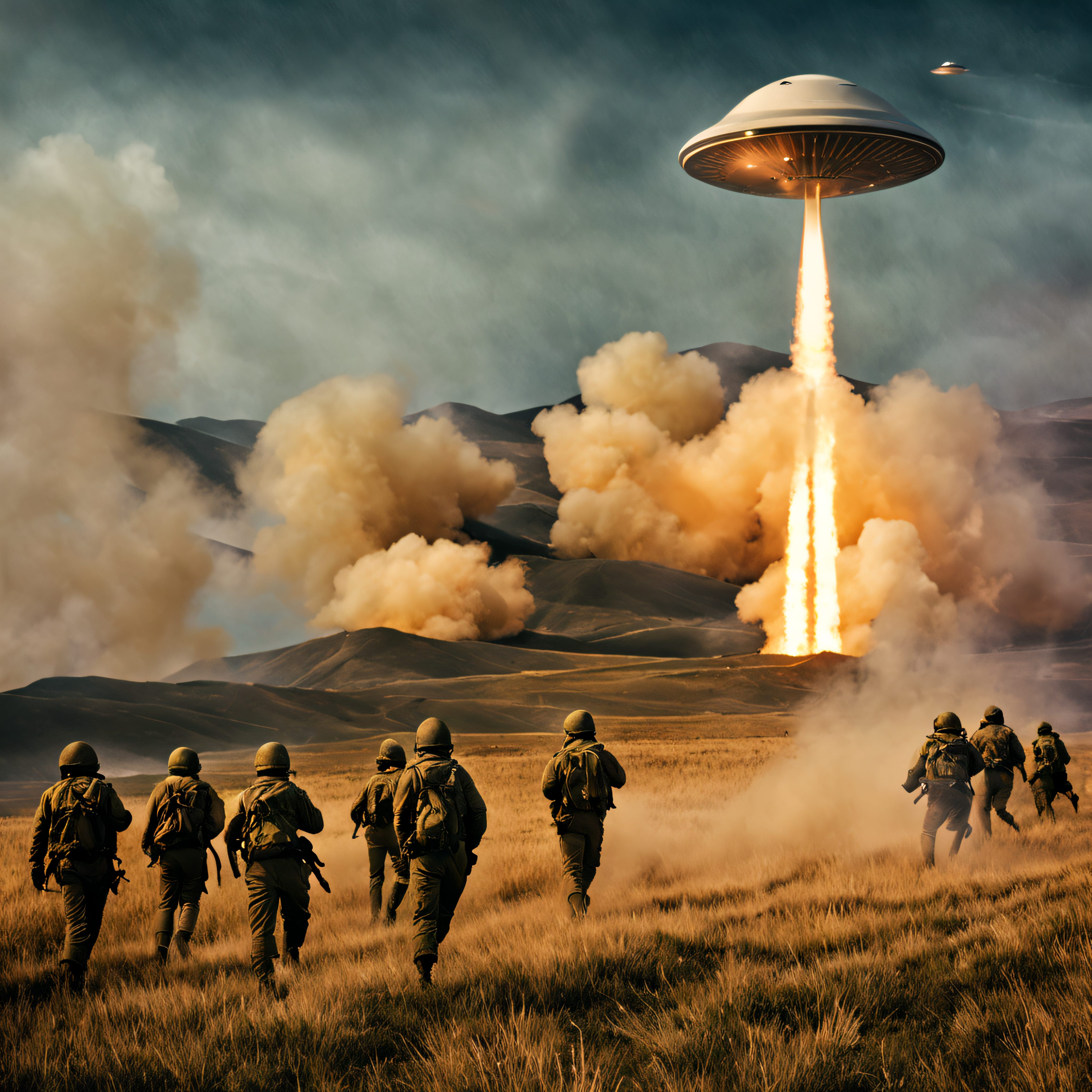
“Over himself, over his own body and mind, the individual is sovereign.” ― John Stuart Mill, On Liberty It was October 30, 1938 when Orson Welles took to the airways to broadcast a radio program that would cause widespread local panic. The broadcast involved a radio drama based off of the book by H.G. Wells’ The War of the Worlds. The show sent a harrowing signal across the airways that alien monsters from Mars had landed in Grover’s Mill, New Jersey and had commenced an invasion of the countryside. According to the broadcast the Martians had deployed their gigantic tripods in order to wage an otherworldly form of military attack on innocent civilians. The episode reportedly caused a panic among a significant portion of the population. One account involved some listeners a long way from New Jersey at the opposite end of the country in Concrete, Washington, who felt the need to literally run for the hills on horseback in order to hide in the nearby mountains due to the frightening program. Granted, there are some questions as to just how much hysteria the radio drama caused as some say the 1938 panic was a bit over exaggerated by the newspaper headlines. Now, keep in mind that radio was a new and rising phenomenon itself back during that time. Therefore, some suggest that the newspaper companies had deliberately played up the irresponsibility of the radio broadcasters in an attempt to discredit this new medium, which was already threatening the longstanding monopoly of the printed newspaper. Regardless of the amount of panic that took place as a result of the drama, Welles managed to successfully leverage a significant enough amount of power with his story that the response captured enough attention for the newspapers to fill their headlines—whether that was due to significant panic or for the purpose of attempting to slander Orson Welles. The point here is that the message that was flowing across the airways was obviously effective in terms of producing the intended emotional response. You see, I want you to think about this in terms of the differences in the delivery of the broadcast from that time compared to today. In other words, during that time in 1938 there were fewer broadcasts that were blasted out over the airways, but there was a more focused listening audience concerning the public. Conversely, today the circumstances are reversed; whereas nowadays there are tons of broadcasts blasted out over the airways while there is a much less focused listening and viewing audience concerning the public. Additionally, during The War of the Worlds radio event many of the listeners tuned in right as the main part of the show was starting, but the 1938 panic occurred because many of those people tuned in too late to hear the opening disclaimer. To make matters even worse, because many of those people were late to the show, they allowed the fear of the message to strip away their ability to discern what was really happening, placing them into a...
0:00Welcome to the official Substack of Brandon Richey Podcast
0:03episode.
0:04SPEAKER_00Today's date is Friday, May 1st, 2026.
0:09SPEAKER_00And if you're tuning in today for the first time, welcome aboard.
0:13SPEAKER_00If you're a returning listener, even better.
0:16SPEAKER_00The title of today's episode is The Destruction of Human Agency.
0:23SPEAKER_00Okay,
0:24SPEAKER_00and in today's episode,
0:25there are going to be three areas of discussion or three
0:28highlights that I want to
0:29SPEAKER_00touch on.
0:29SPEAKER_00The first is, what was the 1938 Panic?
0:34SPEAKER_00That's the first highlight.
0:35SPEAKER_00The second is, who or what are the current alien invaders?
0:41SPEAKER_00Very intriguing, alright.