
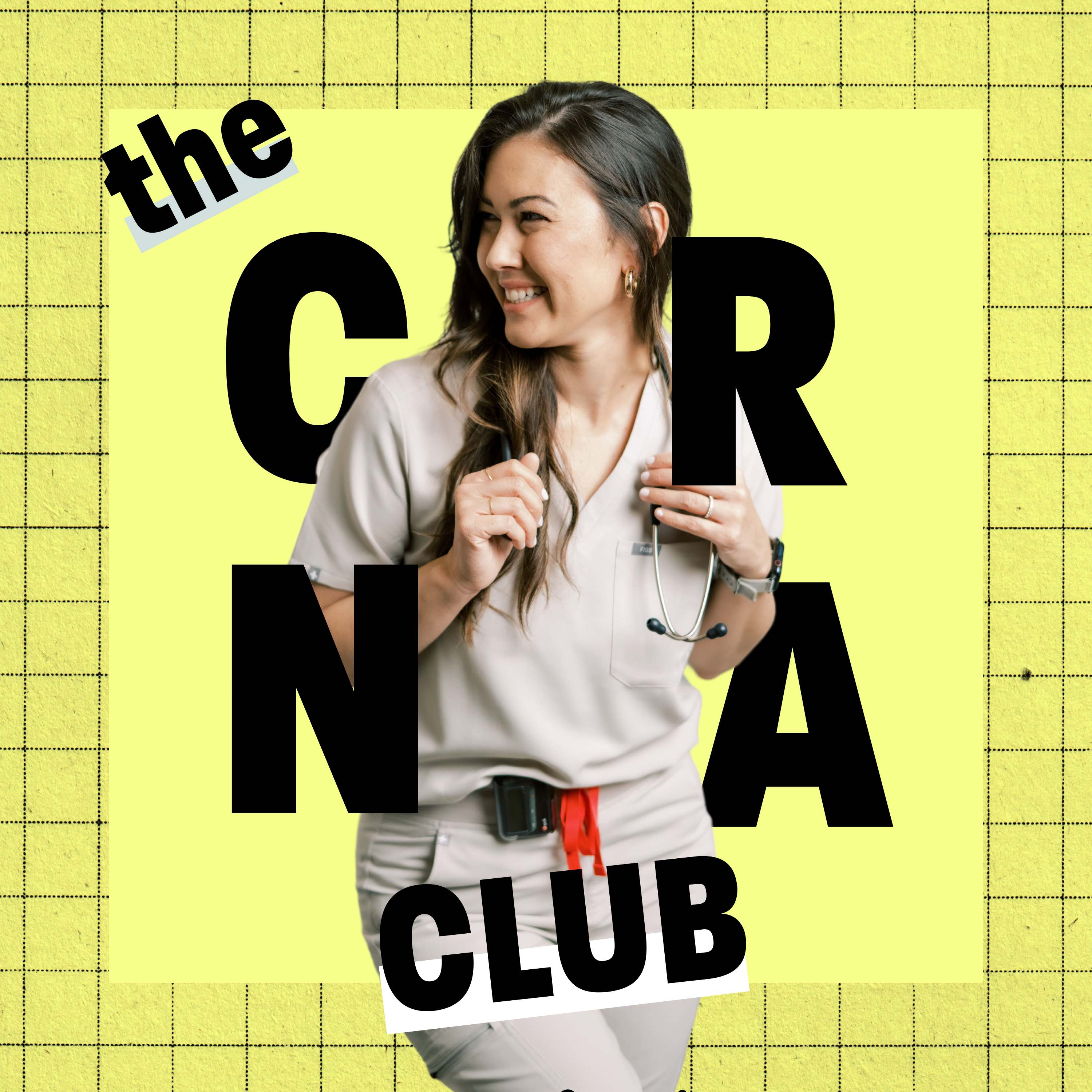
Wish you knew exactly what you needed to do to get into CRNA school? Need help coming up with a strategy to be a competitive applicant? You're in the right place! You'll get all of that and more when you tune into The CRNA Club Podcast with your host (and practicing CRNA) Sachi Lord. Her specialty? Breaking things down and turning them into bite-sized actionable steps and dishing the strategy you need to be a competitive applicant. Tune in, get inspired, and learn exactly what you need to do to check all the right boxes so you can get into CRNA school and join #thecrnaclub. Here are a few...
The oxygen hemoglobin dissociation curve shows how full hemoglobin is with oxygen at each oxygen pressure. We read the normal S-shaped curve, then see how...
Sepsis and septic shock start with an infection and the body's dysregulated response to it. Sepsis is life-threatening organ dysfunction, a SOFA rise of 2...
The autonomic nervous system controls heart rate, blood pressure, airway size and secretions. It has two branches. The sympathetic branch is fight or flight...
How to read an EKG comes down to five steps in the same order on every strip: rate, rhythm, intervals, axis, then ST segments and T waves. The first three...
The coagulation cascade is the chain of clotting factor steps which ends in thrombin. Thrombin cuts fibrinogen into fibrin, the mesh holding a clot together....
Grab the FREE Types of Shock Comparison Cheat Sheet: https://thecrnaclub.com/free/types-of-shock-comparison-cheat-sheet Try The CRNA Club FREE for 7 days:...
CRNA personal statement examples help when you understand the question each essay needs to answer. Sachi walks through five essay questions and explains how...
Best CRNA programs depend on your application, budget, and clinical goals. Sachi explains how to compare costs, pass rates, clinical sites, and program fit...
CRNA requirements vary by program. Sachi walks through GPA, ICU experience, CCRN, GRE policies, and prerequisites so you can compare your background with...
ICU experience for CRNA school raises practical questions about unit type, patient acuity, and how long to work before applying. Sachi explains how to assess...
Phenylephrine tightens blood vessels, albuterol opens the airway, and Precedex turns down the sympathetic nervous system. All three drugs send their message...
Your transcript tells a bigger story than one GPA. Sachi explains how to read your cumulative, science, and last 60 credits GPAs, why individual science...
Ventilator mode names vary, but the reasoning starts with the targeted variable, breath sequence, and the patient's work of breathing. This episode breaks...
Hemodynamics makes more sense when pressure, flow, resistance, and oxygen delivery are interpreted together. Sachi connects preload, afterload,...
Precedex versus propofol is not a one-drug-wins comparison. The safer choice depends on the sedation target, airway and ventilation risk, hemodynamics,...
Vasopressor pharmacology is easier to remember when you start with the hemodynamic problem: does the patient need more vascular tone, more contractility, or...
A strong CRNA application timeline starts about 18 months before your earliest deadline. This episode walks backward from submission so you can plan...
CRNA prerequisites involve two different questions: what each target program requires for eligibility and what your transcript needs to prove for...
CRRT becomes easier to reason through when you start with diffusion, convection, and ultrafiltration. This episode connects those transport mechanisms to...
Your CRNA school resume should make your ICU acuity, critical-care skills, leadership, certifications, and preparation for anesthesia easy to find. In this...
Showing the latest 20 of 98. Every episode is in the API: GET /v1/podcasts/pod_4c7nkmpe4naj7vbqzwrwnmv2gv/episodes