
The Collective Table · The Collective Table
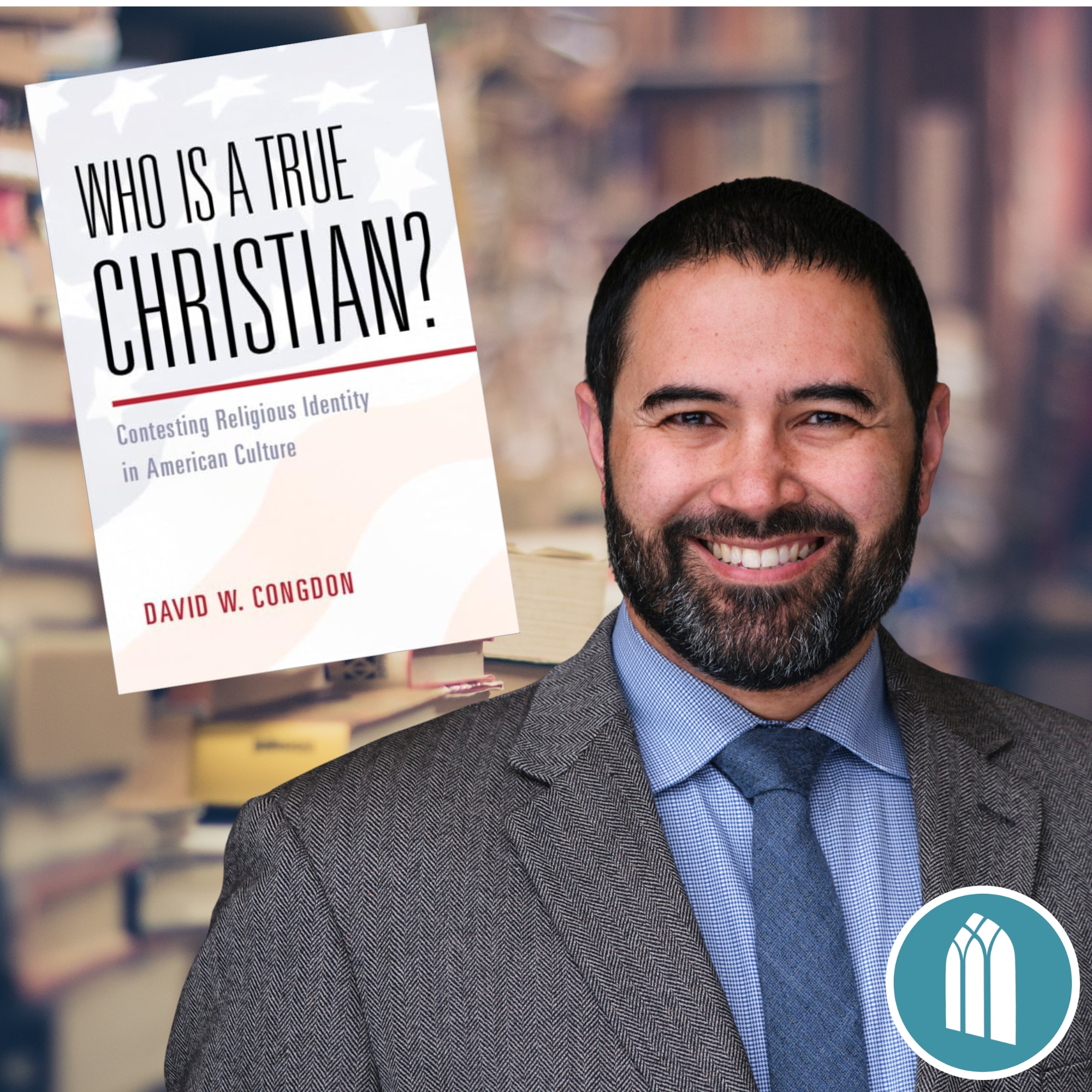
Welcome! You’re listening to The Collective Table, where we celebrate the intersections of Jesus, justice, and joy. Presented by The Oceanside Sanctuary Church, this monthly episode brings you inside our live book club conversations with today’s most thought-provoking authors of progressive Christian theology—diving deeper into their work and exploring the questions that move us forward. This month, we’re joined by David W. Congdon to discuss his book "Who is a True Christian?". Together we explore how polarized claims about “real” Christianity reveal deep anxiety over religious identity, the ways conservative movements have sought security through doctrine, culture, and politics, and how we might reimagine a more inclusive understanding of Christian faith today. This book club gathering was recorded on September 4th, 2025. To learn more about our community—or to support the work we do—visit us at oceansidesanctuary.org. Learn more about David W. Congdon and Support his work: • Order "Who is a True Christian?" • Check out his Website
0:01Speaker AWelcome. You're listening to the Collective Table, where we celebrate the intersections of Jesus, justice and joy. Presented by the Oceanside Sanctuary Church, this monthly episode brings you inside our live book club conversations with today's most thought provoking authors of progressive Christian theology diving deeper into their work and asking the questions that move us forward. So we're grateful you're here. Let's get started.
0:27Speaker BAll right, well, let's go ahead and jump in. Welcome to David W. Congdon to our book club for the Oceanside Sanctuary and the Collective Table podcast. We are very excited to have this opportunity to have a live conversation with David. I'm particularly excited to have David Congdon join us. One of my favorite things about having a book club in this sort of format is is I get to reach out to the authors that I appreciate the most. And David is certainly one of those. So maybe just by way of a bit of introduction, I'll just share that. David W. Congdon is a senior editor at the University of Kansas Press and a lecturer in religious studies at the University of Kansas. His work explores the intersection of critical historical research, systematic theology, cultural studies, and political theory. And you got a decent dose of all of that in this book. It's a bit unique in that respect, I think. In addition to this publication, who is a true Christian, David is also the author of the Mission of Demythologizing, Rudolph Bultman's Dialectical Theology, Rudolph Bultman A Companion to His Theology, the God who Saves A Dogmatic Sketch, and the editor of Varieties of Christian Exploring Three Views. And of course, I know there are more, but this is the bio that you put on your own web page. David, so welcome. Thank you for joining us.
1:57Speaker CYeah, thank you so much for having me and welcoming to be part of this. Appreciate it.
2:02Speaker BWell, so on a personal note, I will also share that David's book the Mission of Demythologizing was a catalyst for me when I read it a few years ago. And it is probably partially responsible for me pursuing PhD research on women's religious disaffiliation as an expression of decolonial praxis. And so I have David to thank for my student loan debt. So thanks for that, David. I appreciate that.
2:31Speaker CBut you must be one of the few who've actually read the book. I really appreciate that. Thank you.
2:36Speaker BThat's certainly not true because. Because when I said hello to Dr. Kim, Christine Kim, for you at Fuller, she said, oh yeah, he's the one that wrote that book about Boltman. And so very good. She said to say hello back. She seemed to, she seemed to appreciate your work as well. I'd like to start with an excerpt actually from this book. Who is a true Christian? And this is from the introduction, which is great because, you know, really great introductions give you a kind of a roadmap to everything that's in the book. And I really love that that's true for this book in particular. But I kind of keyed in on this passage and so if you don't mind, I just want to share this excerpts with you guys. This is from page 15 in the introduction. David writes this. The biggest problem with theological definitions of evangelicalism, as well as Christianity more generally, or any other religious community, is the way they render the religion or movement under consideration essentially benign or inherently good. No Christian claims to believe a doctrine that is intrinsically and self evidently harmful. And therefore any reference to toxic Christian behavior must be, quote, fake Christianity, a departure from the goodness that characterizes quote, real religion. The reflexive association of the Christian with good only serves to reinforce what Chrissy Stroop calls Christian supremacism, which views Christianity as morally superior and perpetuates Christian privilege the way white supremacism views white people as superior and perpetuates white privilege. Given the way all text based religions involve competing interpretations and often contradictory claims, Stroop rightly argues that, quote, there is no such thing as a singular, timeless, pure form of any religion. And thus we must accept that there are a wide variety of Christian communities with the competing theological claims. There is no Christianity, there are only Christianities. And David, I pulled that quote because I think this distinction between, you know, Christianity and Christianity is in the plural, is a very effective way of introducing people to something that's sort of at the essence of your book, which is this notion that there is a singular expression of really any given faith, but in our case, Christianity, as opposed to a tradition that is constantly duplicating itself, branching off from itself, responding to culture, transgressing itself, mutating and changing forms, right? Becoming whatever it is in any given local context. And I think it's such a, such a great phrase, right? To move from Christianity to Christianity is to illustrate that in a very succinct way. So my question for you is how make that shift from understanding like Christianity versus Christianity is better help a group of people, like at our church, the Oceanside Sanctuary, which takes some of these things seriously, how might that shift help us better live into the faith that we proclaim? If that makes sense or seems a little paradoxical.
6:05Speaker CYeah, well, thank you so much for that question. And I mean, it is at the heart of what I wanted to explore in this book. I mean, I, I, I began this project by reflecting on the situation around 2016 through 2020, when, you know, in that first Trump presidency, there was a lot of debates on social media at that time regarding, you know, who is, or a real Christian. And you had these claims being lobbed back and forth on, on all sides along the partisan divide. And, and so, I mean, that, that prompted me to explore a question that had already been wrestling with for quite some time. And if you read my first book, in some ways this is at the heart of that book too, and in its own way. And I suppose there's a few different things I want people to take away from with that idea. I mean, one is simply just to just grapple with the fact that Christianity has always been plural. That's not a new phenomenon. That's, it's always been that way from the very beginning. I mean, as the old saying goes, the, the winners get to tell the story. And that is what happened with Christianity. A certain group of Christians got the ear of the emperor and convinced him to side with them over against their opponents. And the rest of human history in that sense has been written from that, from their perspective. And so, so you have a lot of different groups who were sort of written out of the story. They were written out as they were heretics or, or quite literally killed for being part of the opposing, opposing views on Christianity. So there's one sense in which I just want people to just realize that our story, we have a very complex and complicated family tree, religious family tree. And so there's a certain ethical concern I have about this, that we need to take stock of some of the figures in our past that we've ignored and tried to write out of our story. But there's a, but there's an ethical side to the present too. It's not just the people in the past who were sort of written out, but it's also the people in the present who are currently being written out of our story, who are being ostracized or being pushed out of the storyline, out of our communities. And that's also personal for me. The other reason for writing this book was that I was fired from a Christian organization in 2016 for one of my previous books, which they deemed to be heretical. Specifically, it was viewed as being in conflict with their statement of faith. And, and that that launched me on that process of thinking through just what Is the purpose of a statement of faith or a creed or a confession? In that sense, what. What work does it do? What power, interest does it serve? Who gets to decide how that statement of faith is used and applied in a particular case? When is it ignored, and for what purposes, and when is it activated and. And then deployed and against whom? So there are questions of power that I think are crucial, I think, for us to. To wrestle with. And, and that's. And I. And so I'm writing this book in the context, and certainly now we're reading this book and thinking about it in the context of a situation in which questions of diversity and complexity are currently being pushed out of the view. Right? We have DEI being suppressed at universities or museums, being forced to only portray a certain narrative about who we are, who the people is, what the nation is, what our communities are. And so I think there's a lot of reasons for that complexity. And diversity is scary. It's threatening to certain structures of power and belonging. And, and so I think one simple thing, thing to take away from this, I hope, is that Christians can become more comfortable with those unsettling dimensions of diversity and complexity that maybe as humans, we're often want to sort of suppress those and get. And silence those different storylines. I'm hoping that maybe churches like your own and other churches can cultivate a healthy embracing of that unsettling nature of our diversity and complexity in our stories and. And maybe wrestle with that together.
11:02Speaker BSo, yeah, I imagine lots of people would consider unsettling to be a pretty useful way of describing our church at times. But so. So maybe that does work. I appreciate you touching on two things in your response, and you covered a lot of ground and anticipated one of my other questions, which is, you know, what's your own story? You know, how do you intersect with this? And I know that there's more that you could tell there, but it's helpful to know that your own foray into is that diverged from what was considered normative in a, you know, completely unironically Protestant organization got you fired. Right. And so it's understandable that you would bring to this an examination of how it is that we can make space for people to have divergent perspectives, divergent opinions, divergent conclusions, even. So thank you for that. But you did touch on two things that I think are helpful. One was you talked about this as being a story about power, right? And how power is exercised, how those who are viewed as a threat are erased or sidelined or. Or violence is committed against Them. And I was reminded of several years ago, there's a popular Christian author. I mean, he's not super popular, but he writes popular books. Richard Beck, I'm sure you're familiar with him, and his tradition is Churches of Christ. Right? And what's really interesting about that, of course, is Richard Beck represents a relatively, you know, open and progressive viewpoint relative to the Churches of Christ tradition. But I remember one time I was reading his blog and there were a bunch of comments on his blog. I can't remember what the subject of the blog was, but in the blog, this was probably about 15 years ago, somebody jumped in and talked about how the solution to whatever problem Richard Beck was writing about was to return to the creeds, which was, of course, a notion that in the past 20 to 25 years has really gained a lot of popularity. And I just loved Richard's response. He wrote back and said, hey, listen, I'm Churches of Christ. That's not where we're coming from. He said, people were killed over the creeds. We'd rather not romanticize them. And I thought that was such a very powerful way of exposing that this is about power, that when people are choosing who gets to be a part of the orthodox or normative or really what it boils down to is sort of human category, the category that deserves dignity and respect, then you're excluding a whole nother group of people that you can justify violence against. And you've illustrated how we see that already in our political circumstances today. The second thing you touched on that, I think, leading to my next question, was that the tradition has always been diverse, right? The tradition has always had a kind of multiplicity of not just ethnicities, but theological perspectives until, you know, into the third and fourth centuries, when it sort of gained a position of power. And on that note, it occurs to me that we see that same multiplicity in Scripture, but we've erased that, too, right? That we have tried to sort of flatten out or iron out the divergences and differences that exist in the text itself. And so I wonder if you might just speak to that a little bit. Right. So the Bible is very typically presented as a sort of singular, authoritative text that reinforces who's in and who's out, what's right, what's wrong, who's orthodox, who's a heretic. But what role, if any, do you see Scripture playing in a polydox community where differences of opinion are not just tolerated, but welcomed as a strength in the community? What role does Scripture play in those communities? In your view?
14:56Speaker CI mean, yeah, that's a, it's a question that I wrestle with a lot. I grew up in evangelical home where the Bible was incredibly important. I mean, I grew up where we had to recite Bible verses from memory before we could eat dinner. You know, that was the home context within which I was raised. So, and you know, it's not just even that, but just the Bible has been central to a lot of the battles and wars over identity and, and religious affiliation. So it's, it's an important question. I mean, I, growing up just to share another personal story from my own life. I, you know, I was taught that if we gave an inch on things like a literal seven day creation, pretty soon you must eventually abandoned all faith in Christ. You must. The whole thing will fall to pieces if you, if you give an inch, you'll, you'll lose a mile, you know, and that Slipp slope argument was a fear tactic designed to insulate us from any critical thinking about anything. But there's a sense in which, you know, in retrospect, now I want to say that that slippery slope was correct in the, in that we can't pick and choose what to think critically about. It's easy to say that a passage like Genesis 1 is best read metaphorically as a work of poetry, but it's much harder to realize that some of our most treasured passages in the New Testament meant something quite different to the communities in the first and second centuries than we might want them to mean today for us. So how we treat the Bible is in some ways a window into how we treat everything else. The Bible is an incredibly diverse collection of texts that was not written for us. And you know, and, and I, I would, I want to say, and I, I'm, I do say this in some of my other work, but you know, there, there Christianity until after the Bible as we have, it was written already written. And so the, you know, the authors of those texts about Christ saw themselves as bringing Gentiles into the Jewish faith as they understood it. And so in a really, in a very real sense, like we are reading ancient texts that belong to a different religious community and we've claimed them as our own when they in some ways really aren't. And what do we do with that? And I think the first thing I want to say is that we need to hold the Bible with a much looser grip. And you know, every single one of us is negotiating with a text and making decisions about what to prioritize, what to ignore, making choices about how to interpret certain passages and phrases in a way that makes sense to us today. We don't have access to a pure Bible in any sense. So just acknowledging that reality and being open about it, I think can help lower the temperature when it comes to who is biblical, who is not biblical in that sense, and rethinking that, the role that kind of text plays in that sense. So I want to disentangle the text from questions of who is right, who.
18:06Speaker BIs wrong.
18:08Speaker CWho is in, who is out, that. That kind of use of the text to serve as a. As a sort of an arbiter, a judge of our boundaries. But. But I do want to say that the Bible can certainly be a liberating resource for us today, and that's absolutely the case. But I want to say that that liberating power doesn't come from the Bible in itself, but rather comes from the dialogue that we are having with the Bible. And it's not just the Bible, but that dialogue is happening with other texts, is happening with other things around us in our culture and society. It's that dialogue between us and the text that can be liberating and, and realizing that can acknowledge that we have agency in this. You know, you can, we can, we can turn the Bible into a terrifying text and. But we can also turn it into a text that liberates and speaks something meaningful and life giving.
19:10Speaker BYeah. Thank you for that. I appreciate you touching on the Bible as something that we can have a dialogue with. And maybe I would sort of also point out that one of the ways that scripture in the text can facilitate that, if we have eyes to see it, is that it itself is a dialogue. Right. It models exactly what you're describing. It's a dialogue between its authors, its interlocutors, its editors. And also by virtue of being that kind of discourse, it's also a discourse with its own culture, its own time, its own place, its own political circumstances and so forth. And I think if we see it that way, we read it as a dialogue and a discourse that oftentimes includes disagreement and tension and, you know, thesis and antithesis and all of that, then it liberates us to engage in that same dialogue with it. At least that's. Maybe that's what I tell all these people.
20:08Speaker CSo you.
20:09Speaker BSo it'd be great if you said that's true.
20:11Speaker CI think that's exactly right. You nailed it.