
The Collective Table · The Collective Table
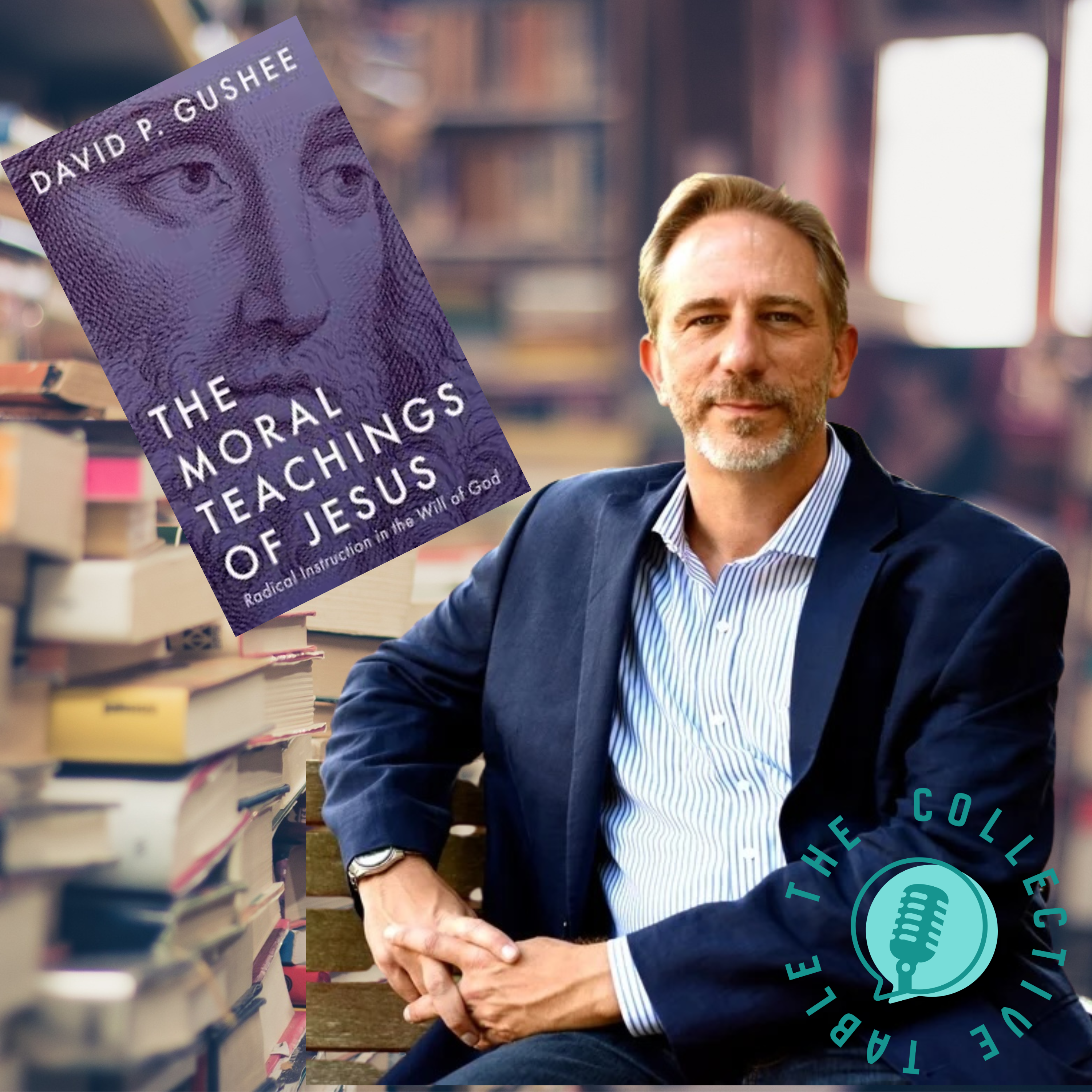
In this episode of the TCT Book Club, Jason Coker welcomes Dr. David Gushee, one of the leading Christian ethicists of our time, to discuss his newest work, The Moral Teachings of Jesus: Radical Instruction in the Will of God. Together, they explore what it means to move beyond abstract doctrine and political identity to embrace the concrete moral transformation Jesus invites us into. The conversation takes a deep dive into the practice of prayer for those reconstructing their faith, the reclaiming of Kingdom of God language from Christian Nationalism, and how to approach Biblical interpretation not as a search for certainty, but as a pilgrimage of trust. Dr. Gushee shares insights on loving enemies, the Sermon on the Mount, and the importance of viewing the church as a community of journeyers. Dr. David Gushee is the Distinguished University Professor of Christian Ethics at Mercer University and Chair of Christian Social Ethics at Vrije Universiteit Amsterdam. He is the author or editor of more than 25 books, including Changing Our Mind and After Evangelicalism. As a scholar and activist, he has spent decades helping the church think with greater clarity, courage, and compassion about following Jesus in the modern world. Learn More: For more on Dr. Gushee’s work, visit davidpgushee.com. Get the book: The Moral Teachings of Jesus on Amazon Here The Collective Table is a production of The Oceanside Sanctuary Church in Oceanside California. To learn more about us, or to support the work we do, visit us online at www.oceansidesanctuary.org
0:00Speaker AHey friends. Nico here. I'm so glad you're joining us for another edition of the Collective Table podcast in our TCT Book Club series. If you've been following along, you know this is where we gather every month to read and discuss books that help us imagine a more inclusive, inspiring and grounded expression of Christian spirituality. Each conversation takes place live on zoom with the author, and you're always invited to join in. If you'd like to be part of future book club sessions, connect with us on our online [email protected] There you can join the book club group, connect with other members, and hop into the live sessions right from our digital space. This month, our host, Jason Coker, along with other book club members, sat down with Dr. David Gushey, distinguished Professor of Christian Ethics and author of the Moral Teachings of Radical Inclusion in the Will of God. They discuss how Jesus teachings invite us into concrete moral transformation rather than just abstract doctrine or political identity. The conversation explores the transforming initiative found in the Sermon on the Mount, the challenges of reclaiming the Kingdom of God, language in the face of Christian nationalism, and the vital, evolving role of prayer for those navigating post evangelical spaces. Dr. Gushy also shares personal insights on his own spiritual rhythms and offers wisdom on how to approach the Bible not as a rule book, but as a treasury of faith for a community on a journey. So settle in and enjoy this thoughtful conversation between the TCT Book Club and Dr. David Gushey right here on the collective table.
1:31Speaker BAll right, well welcome everybody to the Oceanside Sanctuary Collective Table Book Club Podcast. We are really privileged Tonight to welcome Dr. David Ghashi this evening. One of the more influential Christian ethicists of our time, Dr. Ghashi spent more than three decades helping the church think with greater clarity and courage and compassion about what it means to follow Jesus in the modern world. He's a distinguished professor of Christian Ethics at Vrija University in Amsterdam and an author or editor of more than 25 books shaping contemporary conversations about faith and justice and discipleship. He is perhaps best known among progressive Christian pastors like myself for being an evangelical scholar who very publicly came out for full LGBTQ inclusion about Was it about 10 years ago?
2:25Speaker C11.
2:25Speaker BDr. Gushy 11 years ago and published a book at that time about it called appropriately Changing Our Mind. Caused a lot of waves at that time and I'm sure made Dr. Gushy's life much, much easier in many ways. His newest work is the Moral Teachings of Jesus Radical Inclusion in the Will of God in it calls us Back to the heart of the Christian faith, not just abstract doctrine or political identity, but to the concrete moral transformation into which Jesus invites his followers. Would you please join me in welcoming Dr. David Gushee. Thank you for joining us.
3:07Speaker CYes, hello, everybody. Good to meet you this evening. And I only wish I was looking at the ocean. I picture you all looking at the ocean.
3:17Speaker DOkay, we can fix that.
3:19Speaker BWell, it is dark here right now, so unfortunately we're not gazing at the ocean at the moment. But it is a miserable existence here.
3:27Speaker EThere we go.
3:29Speaker CThank you. Thank you, Lucy. I needed that.
3:31Speaker DI just fixed it for you.
3:33Speaker CThat totally gets me in the mood and ready to roll this evening.
3:37Speaker DThat's right, we're ready.
3:38Speaker BPerfect. Perfect. Thanks, Lucy. So if it's okay, I would like to start by just reading an excerpt from this book. Dr. Geshe. This is from chapter 15, Loving Our Enemies, which I don't know, for some reason feels really timely right now. And this is found on page 71, right before this excerpt. You are writing about the. One of your main arguments in this book is that Jesus's teachings, especially the Sermon on the Mount, are not teachings that call us into perfection, but rather they call us into a way of transformation which shifts our perspective on how we hear and interpret those teachings and apply them to our lives. And then you're talking about these three teachings of Jesus that are very well known, very famous. There's turning the other cheek, there's going the extra mile, and so on. And so I want to pick it up right after you share those three examples and you say this. All three of these examples add up to the following. You wanted to make me feel weak, embarrassed and angry by dominating me. Instead, I will surprise you by my creative response in which I take moral control of the situation by refusing to retaliate. Stossen. This is a reference, of course, to Glenn Stossen. Stossen saw this as the transforming initiative and he did not get there first. This was how both Mohandas Gandhi and Martin Luther King read this text as well. It became the moral engine of their non violent civil disobedience strategies. As both Gandhi and King said, we will respond to your physical force with our soul force. Now, I want to skip ahead past the next paragraph because it's this next bit that I thought was really interesting and appropriate for a church like ours. In the next paragraph after that, you say, this transforming initiative is found in Matthew 5:44, with the rest serving as an explanation. The imperatives in Matthew 5:44 are to love your enemies and pray for those who persecute you. The exhortation to pray helps more than it might seem. To love an enemy seems both inexhaustible and impossible. But to pray for an enemy, while difficult, is within reach. Even if what we pray is to ask God that the enemy might stop doing harmful things to us, we are still bringing them before God. And I really appreciated that particular unpacking of Matthew 5:44, because as a former evangelical pastor, sort of, you know.
6:36Speaker BMove moved into the mainline sort of progressive space. One of the things that I've noticed is that one of the first things that people let go of, one of the first things people lose when they move from evangelicalism to say, a progressive expression of Christianity is prayer. In fact, one of the common things I hear is, what do I do with prayer? I don't know how to pray anymore. I don't know to whom I'm praying anymore. There's this sort of disconnection from the transcendent. And this sort of hints at a question I may ask a little bit later. But my question for you now is how has your thinking about prayer and your practice of prayer changed in, say, the last 10 to 15 years?
7:26Speaker CI think you name an important.