
The Collective Table · The Collective Table
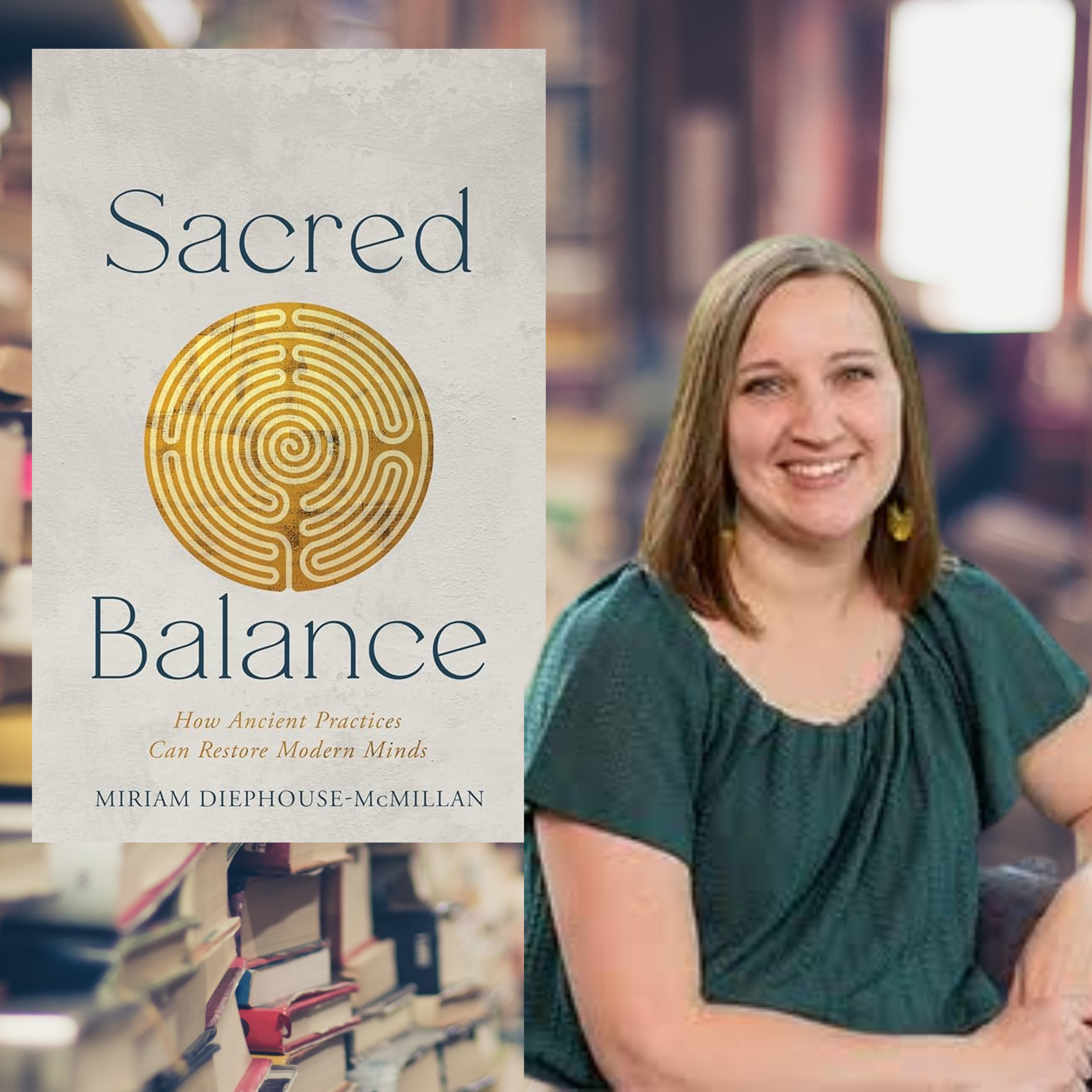
This episode marks the final gathering in our TCT Book Club series. Jason, co-pastor at Oceanside Sanctuary, welcomes author, ordained Presbyterian minister, and mental-health chaplain Miriam McMillan to discuss her book, Sacred Balance: How Ancient Practices Can Restore Modern Minds. Together, they explore how ancient Christian practices can help us cultivate intentionality, connection with God, and self-compassion. Their conversation considers spiritual growth without shame; the relationship between acceptance and change; embodied practices such as breath prayer and pilgrimage; and making room for gratitude, wonder, and healing in everyday life. While this concludes the Book Club format, The Collective Table will continue with thoughtful conversations between our host and featured authors coming soon. Learn more about us and the work we do at oceansidesanctuary.org
0:01Speaker AHey, friends. Nico here. And I'm so glad you're joining us for another edition of the Collective Table podcast. This episode marks the final gathering in our TCT Book Club series. It has been a gift to read, reflect, and connect with authors and one another around books that invite us into a more inclusive, inspiring and grounded expression of Christian spirituality. Moving forward, the Collective Table will continue to add these book oriented bonus episodes as conversations between our host and featured authors, bringing thoughtful voices, meaningful stories, and fresh perspectives on faith and life. To close out the book club, we're delighted to welcome author, ordained Presbyterian minister, and mental health chaplain, Miriam Deephouse McMillan for a conversation about her book, Sacred How Ancient Practices Can Restore Modern Minds. In this thoughtful conversation, Miriam and the TCT Book Club explore ancient Christian practices that cultivate intentionality, connection with God and self, compassion, making room for gratitude, wonder, healing and spiritual growth without shame. So settle in and enjoy this rich final TCT book club conversation with Miriam Deephouse McMillan right here on the Collective Table.
1:15Speaker BAll right, well, welcome to the September Book club, everybody. As I think you know, I'm Jason, I'm one of the co pastors here at the Oceanside Sanctuary, and we are excited to welcome Maran Deephouse McMillan. Am I pronouncing that correctly?
1:28Speaker CVery impressive. Yes.
1:31Speaker BWell, you know, those Anglo names, they're so difficult. Like, you never know, like, if you're gonna get them right, get a lot
1:37Speaker Cof Die Faust or Dieppe House.
1:41Speaker BOkay. All right. All right, great. I needed something to feel better about this week, so. Good. So, Miriam, thank you so much for joining us. By the way, for those of you who don't know, we originally had Miriam scheduled for last spring, and then just through a series of absolute failures on my part, we totally spaced that. And then Miriam was like, hey, what's going on? And I said, I'm so, so sorry, can you please reschedule with us? And she was generous enough to do that. So thank you for giving us a second bite at the apple. We appreciate it. This might actually be better timing for us though, it turns out, because it feels like this upcoming year and we tend to think about our year at the Oceanside Sanctuary as like, kind of like the, you know, the school year, you know, like, it's almost like the official liturgical season begins when kids go back to school, you know, and then we ramp up for like, you know, Advent and the holidays, and then we culminate, you know, with Easter and Pentecost, and then we all, like, drop out all summer long. So it feels like this new Fiscal year or new school year or whatever, is kind of starting out with a bit of a theme of us deepening our spiritual lives at the Oceanside Sanctuary. And that's saying something, right? Because we are a progressive Christian church, which means we're really shallow, right? Like, all we care about is love, you know, like, we are not willing to, like, get mean for Jesus. And so, you know, it seems like maybe a little bit spiritual depth would be good for us. And. And so this actually, I think, is really well timed for us. Miriam's book, as you guys know, I think, is Sacred Balance How Ancient Practices Can Restore Modern Minds. And. And I love this. This is the labyrinth from the French Cathedral. Am I right about that? Am I getting that correct? So my wife Janelle, who's our. Who's my co pastor here at the Oceanside Sanctuary, she has pottery. She, you know, throws pottery as a hobby. And she's been making finger labyrinths, and she's used this same design. So it's kind of been fun to see this book laying around because she also. There's like, you know, half a dozen of these finger labyrinths, they're about this big, laying around our house that she's been making for people that she loves. And so it was kind of fun for us to see that. But I wanted to read an excerpt from this. This is just from the introduction. And so early on in the introduction, you are talking about the themes that are woven throughout this book, which I thought was helpful. You talk about the theme of intentionality, being intentional about our spiritual practices, which is super helpful. You talk about how these practices revolve around connection, sense of connection to God, however it is that we imagine God to be in our lives, which I thought was helpful. And then you surprised me with the third theme, which is self compassion. And so I wanted to read that excerpt and maybe just start our conversation there, if possible. It says a final theme came across. These practices is self compassion. Spiritual practices can help us build an attitude of acceptance towards ourselves. And our daily experiences. Connecting with God enables us to see ourselves without the filter of criticism we often habitually apply. We gradually learn to let go of our expectations and accept our experiences just as they are. And I think the reason this surprised me is because, you know, we're one of those churches where an awful lot of the people around here have left maybe a higher control expression of religion. And I think one of the. Including, you know, Jenno and I, who are like sort of ex evangelicals who wound up in a mainline space. And I Think reading that, it just really occurred to me that, that, how did you phrase it, that filter of criticism we often habitually apply, we usually call that the voice of God. Right. Like the voice of God in our heads is this mantra of habitual criticism or even maybe stronger than that, like a mantra of habitual self condemnation or a mantra of shame. And I thought, oh, how liberating to imagine that spiritual practices might be liberating from that self condemnation, that self judgment. And then I was like, oh, now here we are being like, you know, shallow progressives again who all we talk about is like love. And now we're talking about self condemnation, compassion and self love. So I wonder if you could maybe share a bit about like your own experiences around self compassion and how that informed, like this part of, of sacred balance.
7:04Speaker CAbsolutely. And I think this is probably where my, you know, my mental health experience really shows up because working as chaplain in a psychiatric facility, I would be talking with people a lot about that voice of self criticism and their sort of sense that God is judging them all the time. And I was like, that's, that's not the God that I've experienced in my life. In, in my life. Yes. I was raised in a, in a sort of Calvinist tradition where there was a lot of sort of guilt and, and expectation of improving yourself all the time, which often manifests as self criticism, and was able to find a voice of compassion amidst that. So for me, it wasn't as much the sort of turning away from what I was raised in towards a different view of God as sort of experiencing God even in the midst of a more, I'll say a more rigid structure, but that my own experiences didn't always line up with the rigidity that I was originally taught. And then, you know, going to seminary and studying more and saying, you know, a lot of the themes in the Bible are not as clear cut as maybe we like to think they are. And you know, one theme that's pretty clear if you read the Bible all the way through is like God's love, like that doesn't change. And it's, it's interesting to hear you saying that. That feels like sort of an easy, an easy out for us as Christians because I think I maybe see it the opposite. I think that's actually, in a lot
8:40Speaker Bof ways and I thank you for that. Yeah, that's very helpful reframing. Yeah, that's good.
8:46Speaker CYeah. I wonder if it's less that, you know, religion has shaped our self criticism and more that we have shaped our faith to fit the self criticism that we naturally apply to ourselves and that learning. And for me and I can get into this in one of the practices in the book is about loving kindness and this structure that it starts with God's love for us, right? Like we love because he first loved us. But the goal is to love others, right? Love the Lord your God and love your neighbor as yourself. And then Jesus even says, love your enemies. And that's kind of radical. Like that's not something that a lot of other faith traditions teach. And so the, the structure where it starts with God's love and then that allows us to then love ourselves. And it's only after we've experienced that love that we find the strength and the reserve to share that love to other people. And that's something, you know, I've also seen reflected on the mental health side of things, right? This, you know, you can't, you can't offer much to others until you heal yourself. And so it's that same kind of pattern that like we need to be healed, we need to be loved in order to then love other people. And that includes loving ourselves, right? Love your neighbor as yourself only works if you're also loving yourself.
10:13Speaker BYeah, you said that that was maybe a radical thing that Jesus said. And I tend to think of it as annoying, not radical, because I really don't want to love the people who I don't feel love me. And so I love that you pointed that out, no pun intended, because that is rigorous. I mean, the idea of like learning to love other people when you really try it is very hard. It takes a tremendous amount of work and self work to come to the place where you can actually love another person in the way that they need it. Right? As opposed to the way that you want to give it or as opposed to the way that you want to receive it. I mean, there's so much there that can be very challenging. The other thing that you said, by the way, I'll just mention this before the follow up, usually we have a few more people. And so at this point I might normally say, hey, if you have a question, feel free to pop it in the chat. But so far there are few enough of us that if you guys have like a question that you want to pipe in with, please, you know, wave your arms or something, or, you know, and, and I'll, I would love to, to yield the floor to you. But as a follow up, you said in that same snippet, we gradually learn to let go of our expectations and accept our experiences just as they are. And then, you know, before that, you know, accepting ourselves just the way that we are, essentially. And that's. That's an interesting challenge, too, because I'm like, aren't we in this to make ourselves better? Aren't we in this to improve ourselves? Like, you alluded to that in your experience as a mental health care chaplain. Like, what is the tension between a spirituality that teaches us to come to terms with who we are as good as loved on the one hand, versus, like, I actually want to be different. Like, I. I want to stop hurting myself and others, so I do want to change on the others. So could you speak to that tension a little bit, both as a health care, mental health care chaplain and spiritual practices? I mean, I don't know if you consider yourself a clergy person. I know you went to seminary.
12:35Speaker CI'm ordained in the Presbyterian Church.
12:37Speaker BOkay, so you wear both those hats. Like, what's that? What's that tension?
12:41Speaker CYeah, I love that tension. I think that tension is really at the heart of my personal theology. And that became really clear to me, actually, in my experience in the mental health world. I was privileged to be a part of a program at the hospital that offered what's called dialectical behavioral therapy. And I'm not going to get into the details of what that is, but at the heart of that is what they call a dialectic. These two things that seem opposite but are true, and the way the therapy works is you have to accept the client, the patient, exactly as they are and also help them change. And that you actually need the acceptance in order to get to the change that we. We can't actually get better if we're spending all our time beating ourselves up for not being better. Yet that takes energy away from our ability to move forward. And so I think, you know, at the heart of my understanding of God is like, God loves us unconditionally.
13:36Speaker DRight.
13:37Speaker CRead that over and over again in Scripture. And God is very forgiving, and God is, you know, accepting of us at our worst. And also God calls us to be more. And those things are not necessarily as much of a contradiction as it might sound that it is. It is through that acceptance and that love that we find the strength to grow. And I've, I think, even become more convinced of this as I've become a parent and sort of watching my children and. And the way that they don't grow very well when I yell at them and criticize them. Right. That doesn't actually help them get better. It Usually just makes us miserable. But when I love them, when I accept them, when I understand where they're coming from and provide information and opportunities for growth, that's when the growth happens. And so it's in that unconditional love and in letting go of judgment that we actually find the ability to grow and to change.