
The Collective Table · The Collective Table
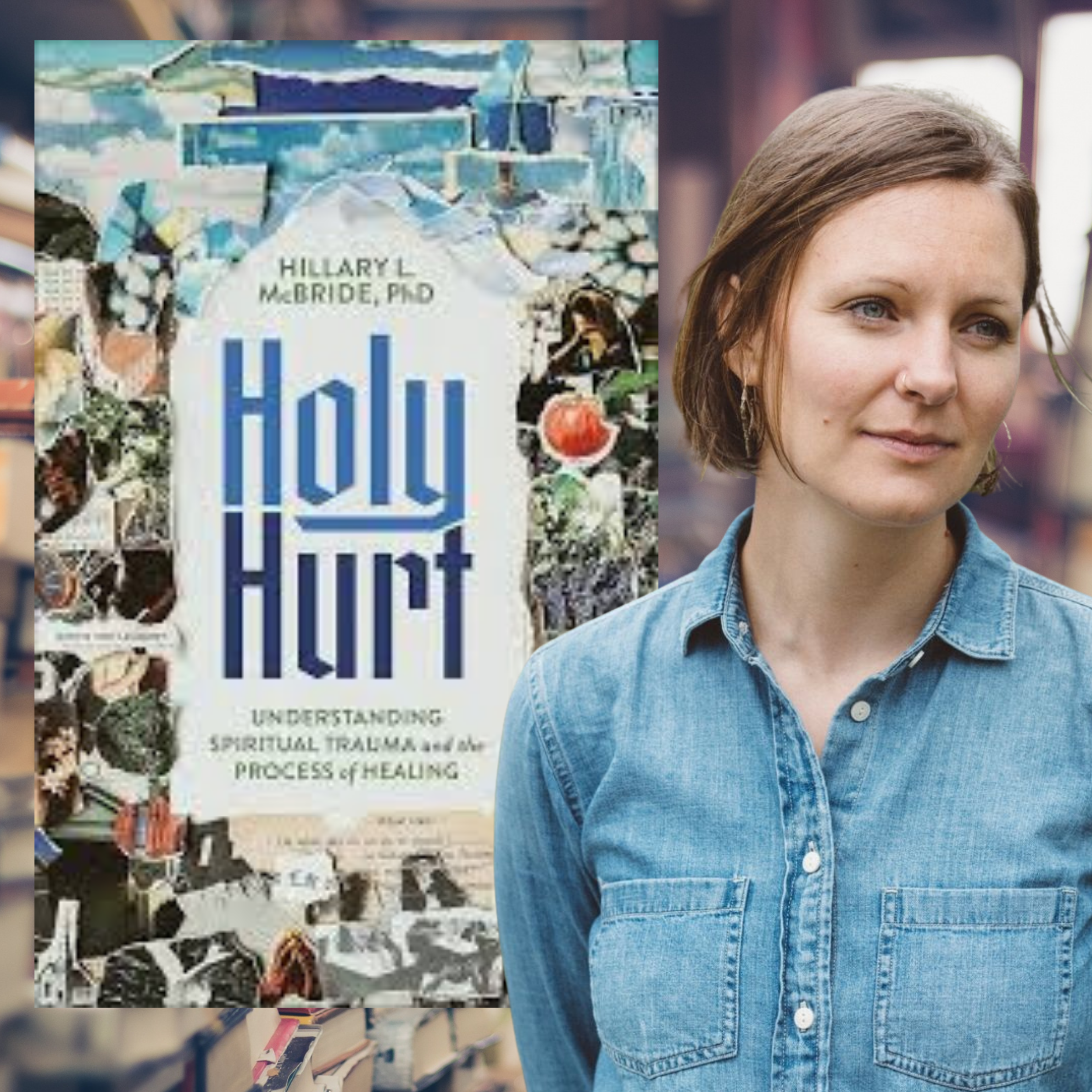
Welcome to The Collective Table Welcome to The Collective Table, a progressive and affirming Christian podcast produced by The Oceanside Sanctuary in Oceanside, California. We are a community dedicated to following Jesus, working for justice, and celebrating joy! Whether you are actively reconstructing your faith, seeking a spiritually safe and inclusive space, or simply exploring, there is a seat for you at our table. Healing from High Control Religious Systems: Insights with Dr. Hilary McBride In this episode, Dr. Hilary McBride shares her expertise on how high control religious environments impact psychological and spiritual development. She offers practical ways for communities and individuals to foster healing, embodiment, and genuine connection. Key topics The developmental harm caused by high control religious systems and how they stunt growth The importance of embodying spirituality through movement and physical connection How communities can create trauma-informed, body-honoring worship practices Strategies for churches to implement accountability and repair processes to prevent harm Navigating deconstruction: distinguishing between healthy growth and trauma responses Reconstructing a compassionate, non-coercive image of God beyond violent or guilt-based imagery How community spaces can foster belonging without coercion or pressure The role of spiritual remixing and cherry-picking beliefs in faith recovery Practical support for survivors of spiritual trauma and creating safe, supportive environments Timestamps 00:00 - Introduction and overview of Dr. McBride's background 02:03 - Why the church community chose to explore Holy Hurt 05:26 - Impact of high control religious backgrounds on development 09:00 - The developmental purpose of lying and boundary testing in youth 13:24 - Reconceptualizing the biblical language of violence and coercion 15:53 - How cultural context influences perceptions of divine violence 17:43 - The importance of hermeneutics and interpretive flexibility in spirituality 20:13 - Differentiating healthy deconstruction from traumatic disengagement 23:01 - Movement and embodiment as pathways to spiritual connection 27:43 - Trauma-informed body-based worship practices 33:29 - Accountability structures in progressive faith communities 39:53 - Supporting survivors and avoiding re-traumatization 42:57 - Navigating trust and community re-entry after trauma 45:21 - The importance of agency, choice, and space to heal in faith communities 48:05 - Cherry-picking beliefs and creating remixing faith spaces 53:27 - Distinguishing empowerment from avoidance in spiritual choices 55:11 - Understanding and navigating spiritual bypassing 57:55 - Wrap-up and final thoughts from Dr. McBride Resources & Links Learn more/connect with Hillary Mcbride Buy "Holy Hurt" Book The Wisdom of Your Body: Practices for Embodied Living Holy...
0:03Speaker AHey friends. Nico here. I'm so glad you're joining us for another edition of the Collective Table Podcast and our TCT Book Club series. If you've been following along, you know this is where we gather every month to read and discuss books that help us imagine a more inclusive, inspiring and grounded expression of Christian spirituality. Each conversation takes place live on zoom with the author and you're always invited to join in. If you'd like to be a part of future book club sessions, find the next session on our website calendar [email protected] calendar to sign up this month we sat down with Dr. Hilary McBride, an award winning clinical psychologist, researcher and the author of Holy Hurt. We discuss the realities of spiritual trauma and religious abuse and explore practical evidence based ways to rebuild trust, connection and hope on the healing journey. So settle in and enjoy this thoughtful and healing conversation between the TCT Book Club and Dr. Hilary McBride right here on the Collective table.
1:05Speaker BSo it's really my pleasure to welcome Dr. Hilary McBride to our book club tonight. Dr. McBride's registered psychologist and award winning researcher who's hosted the Other People's Problems and Holy Hurt podcasts. She has a private practice in Victoria, British Columbia. I did not realize that you were in British Columbia before this, so I'm jealous. Congratulations. And she's a sought after speaker and retreat leader. McBride is the author of the Wisdom of youf Body Practices for Embodied Living and Mothers, Daughters and Body Image. Her work has been recognized by the American Psychological association and the Canadian Psychological Association. We invited her here tonight to talk to us about Holy Hurt because this is our book club selection for this month at the Oceanside Sanctuary. And before you jumped in, Dr. McBride, one of our guests tonight said, hey, I'm new. I just jumped in on this as an opportunity to sort of check things out and I'm curious why you guys chose this book and I haven't had a chance to answer that question, so feels like now might be a good time to answer that.
2:16Speaker CWhy did you choose this book?
2:18Speaker BWhy did we choose this book? So Janelle and I are the co lead pastors here at the Oceanside Sanctuary and Holy Hurt really struck me as kind of a no brainer when we were talking about what books to do this year year because a very large portion of the people who have ended up here at the Oceanside Sanctuary, I think directly intersect with the content of Holy Hurt have been down this road, have come from high control religious backgrounds and deconstructed, maybe reconstructed, maybe didn't still really wrestling with what it means for them to be people who consider themselves spiritual or religious. And oftentimes folks end up here at our church because they're trying to decide if they can still be Christian in good conscience. And so this book really felt like it would resonate with a lot of
3:12Speaker Cfolks here at the church.
3:13Speaker BSo, Connie, to answer your question, that's why we chose it. And we're really excited to have Dr. McBride join us for a bit of Q and a. So welcome, Dr. McBride. Thank you for joining us tonight.
3:25Speaker CThank you. Thank you so much for having me. I'll just share full disclosure. We were just eating dinner as a family and we got really spicy food. And I don't know if any of you have had the experience where you're like, we, we finished eating a while ago and it's like the. My body is still telling the story of how spicy it was. So if I'm panting, I'm not having a medical event. Just so you know. I'm just catching my breath.
3:53Speaker AMexican food is the primary cuisine around here. So I think this is true.
3:57Speaker BThis is true.
3:58Speaker CWell, feel free to go grab water or anything. Thank you. Yes, thank you. I've got some here. And that may not be that. That. It may just be. It takes it time. It takes its time.
4:10Speaker BHow many?
4:11Speaker CYogurt? Yeah, yeah. Milk and yogurt. Yeah.
4:14Speaker BSo also, I'll just jump in here. The others know this already, but Janelle and I unfortunately have another thing to get to before we'll be finished tonight. So we're going to get started and then Nico, who you met, raise your hand. Nico, who's our youth and production coordinator, is going to be our co host and take it from there. But if it's okay, I'd really like to read an excerpt from Holy Herd just a brief bit and then ask you for just your response to that. And then we'll jump in with some questions that we already sent you in advance. So that's mostly what we're going to talk about. But we also like for this to be a bit organic. So as questions come up, Nico's going to maybe field those questions, if they do in the chat, and interject those as well.
5:02Speaker CGreat.
5:03Speaker BSo I really, really appreciated by the way that you pulled in ecological systems theory. I was telling everybody earlier that I don't think I've ever read a Christian book or Christian adjacent book that sort of acknowledged the broader systems that really shape and form us. And so I was tempted to read a bit from that. But this part actually really Struck me. It's from page 107, and it's where you're talking about people who come from high control sort of religious backgrounds. And you wr in religious families with high control, certain developmentally appropriate tasks and experiences are punished, forbidden, shamed, or called sinful or disobedient. They include developing and expressing one's feelings and opinions, sexual exploration, experimenting with romantic relationships, and dating, even lying, boundary pushing, and rule breaking. Each of these is appropriate, even healthy, at certain stages of development. And each is meant to happen at a certain time when we have people who love and care for us around us to help us navigate the complexity, consequences, pain, and joy of how this shapes who we are becoming. Without them, we cannot grow into full maturity, have a sense of self, or face the demands and challenges of the world. And that jumped out at me because one of the things that we often talk about in one of our classes here is how for people who are raised in fundamentalist or high control expressions of religion, we're often given a way of being and thinking about the world, a way of thinking about God or spirituality or religion or justice or ethics or relationships and commitments, all of these things in ways that are fixed at a very early developmental stage. Ways that we can think about those abstract ideas in really simplistic terms, and then we're told we can never change our minds about them.