
The Collective Table · The Collective Table
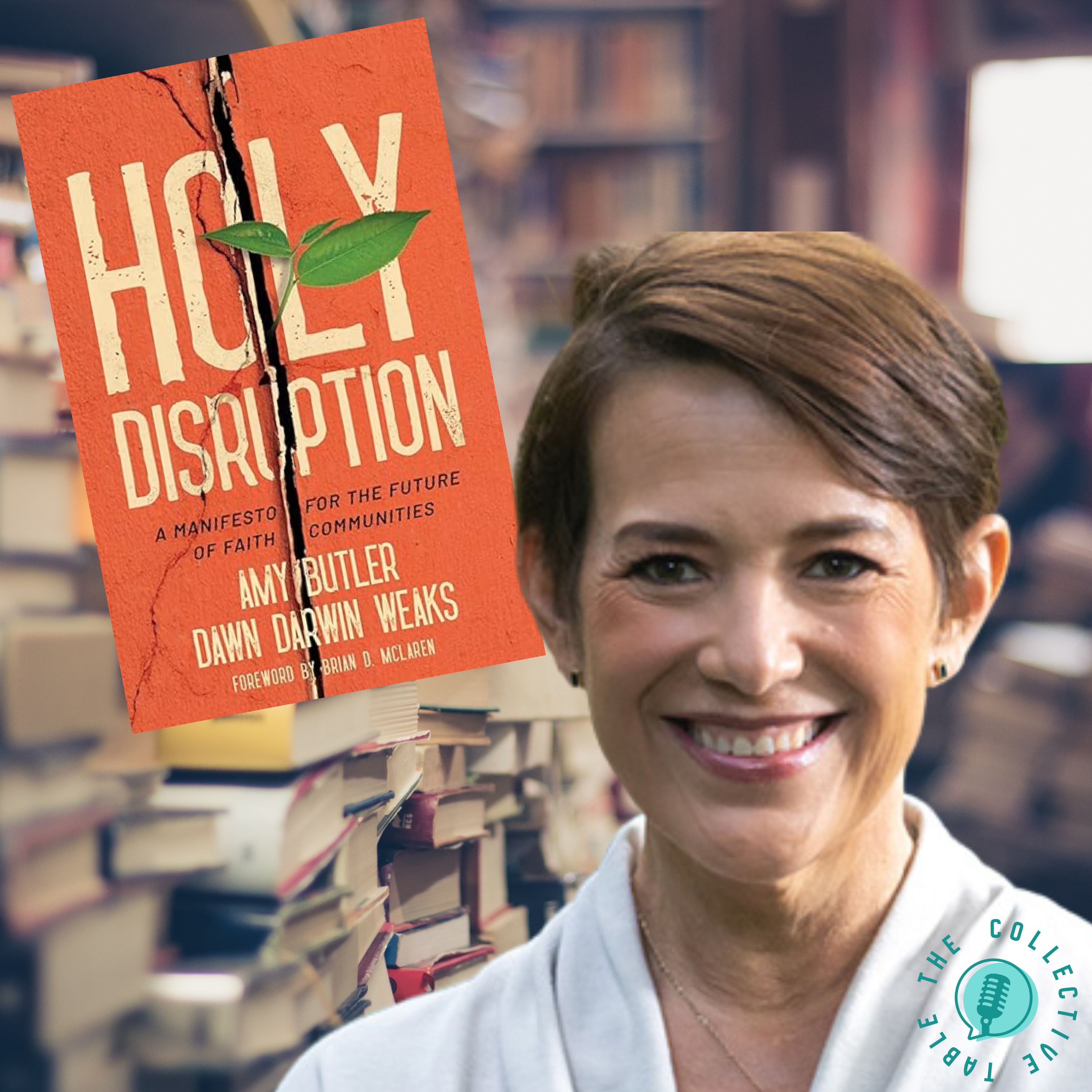
Holy Disruption: Reimagining Church with Rev. Amy Butler Episode Description: What happens when the traditional model of church no longer fits the world we live in? In this thought-provoking conversation, Rev. Amy Butler, author of Holy Disruption, joins us to talk about what it means to courageously reimagine faith communities for our time. Drawing from her experiences as a pastor and leader, Rev. Butler explores how declining attendance and shifting cultural landscapes—while challenging—can actually open doors for creativity, innovation, and renewed mission. We talk about: Why “holy disruption” is essential for spiritual growth and institutional renewal Stories of communities breaking free from convention to embody God’s love in new ways How social enterprise can fuel sustainable ministry and healing in the world The personal courage it takes to lead change in faith spaces Whether you’re a pastor, lay leader, or someone yearning for a faith that feels alive and relevant, this episode will leave you inspired to imagine what’s possible when we stop clinging to the past and start embracing the Spirit of disruption. Guest Bio: Rev. Amy Butler is the founder of Community Church of Honolulu and the former Senior Minister of The Riverside Church in New York City—the first woman to hold that position. Through her writing and leadership, she advocates for courageous faith, inclusive community, and creative expressions of God’s love in a rapidly changing world. Her latest book, Holy Disruption: Discovering Your Place in God’s Movement of Change, invites readers to see the decline of traditional structures not as loss, but as sacred opportunity. Learn More About Author: Book: Holy Disruption by Rev. Amy Butler Follow Rev. Amy Butler: Website, Instagram Learn More About Us: The Collective Table is a Ministry of The Oceanside Sanctuary Church in Oceanside, CA Follow us on Instagram
0:00Speaker AHey, friends. Nico here. And I'm so glad you're joining us for another edition of the Collective Table podcast and our TCT Book Club series. If you've been following along, you know this is where we gather every month to read and discuss books that help us imagine a more inclusive, inspiring and grounded expression of Christian spirituality. Each conversation takes place live on zoom with the author, and you're always invited to join in. If you'd like to be part of a future book club session, just head over to oceansidesanctuary.org bookclub to RSVP or connect with us in our online community at community.oceansidesanctuary.org there you can join the book club, connect with other members and hop into the live sessions right from our digital space. This month, our host, Jason Coker, along with other book club members, sit down with Reverend Amy Butler to talk about her new book, Holy Disruption. It's a powerful conversation about what happens when traditional models of church no longer fit the world we live in and how that disruption can actually become a sacred invitation to reimagine faith, community and mission. They explore how courage, creativity and love can help us build spiritual communities that feel alive and relevant again. So settle in and enjoy this thoughtful and inspiring conversation between the TCT Book Club and Reverend Amy Butler right here on the collective table.
1:22Speaker BAll right, well, welcome to the Oceanside Sanctuary Collective Table Book Club. We're really excited to have all of you here. Our book club selection for this month, as you all know, was Holy Disruption, co authored by Amy Butler and Dawn Darwin Weeks. And we are really excited that we have the opportunity to welcome Amy Butler, one of the co authors of this book, to our book club session. Welcome, Amy Butler. Glad to have you here.
1:50Speaker CThanks. Thanks for having me.
1:53Speaker BSo I just by way of a bit of an introduction, it says right here on the back of your book that Amy Butler is a pastor, an author and a founder of Invested Faith. I suspect that we might hear a little bit about Invested Faith tonight, which funds Faith Rooted Social Enterprises. She's formerly the senior minister at Riverside Church in New York City. Quite a high profile position which she wrote about a bit in this book. And she now pastors Community Church of Honolulu and teaches across the country. And am I right, Amy, that you were just officially installed as the permanent pastor at.
2:30Speaker CIn two weeks. In two weeks. Unless I. Unless I.
2:36Speaker BUnless you say something terrible.
2:38Speaker CUnless I get in trouble before then, which could happen.
2:43Speaker BWell, congratulations in advance and welcome again. We appreciate you joining us here. I'd like to read, if I could, just this excerpt from page five right near the beginning of the book. So if you'd all just bear with me. This is, I think, not only sets up the book really well, but is also really relevant for our congregation at the Oceanside Sanctuary as we're sort of dreaming about the next five years beginning in January. And together they write this. As people of faith, we have a story of good news about the new life that is possible after death. Once upon a time, God became a human being named Jesus, who taught us that a seed that falls to the ground and dies will bear much fruit. Then he showed us that truth in his life teachings, death and resurrection. A seed falls to the ground and dies. Perhaps in the heyday of our institutions, we weren't paying enough attention to these parts of the biblical witness. A story about falling to the ground and dying, after all, doesn't sound so appealing. But what if our inability or unwillingness to embrace this truth, alongside the bustling activity of the church nursery, caused us to miss a very critical part of the teachings of Jesus? Ignoring the necessary death that precedes resurrection has been a sin of the modern church. And this feels a lot like the premise of your book. And so I want to start by asking a question that I think will help us with the rest of the conversation, and that is, why is this so important to you? Like, why did you and Dawn Darwin Weeks decide that this was an important book to write at this time? Like, why do you care about this subject?
4:38Speaker CWell, as you may or may not know, I am a troublemaker by nature, so I am always sort of out there on the edges looking for what's new and what's coming. But because I'm an American Baptist, I. I had the opportunity to pastor churches that were always in decline because I'm a. And so when you're in that kind of desperation, you get to try new things. And so started asking a lot of questions about why we cling so hard to the institution. I think the word institution is so fundamental to this conversation. Institutions are meant to be immovable. Institutions are meant to stay exactly how they are. And so this is the conflict between Paul and Jesus. Jesus didn't come to found an institution. Jesus didn't spend his time in committee meetings. It was Paul who came and gave us all those rules about how women need to be quiet and all of that stuff, you know, So I. I just looked around and I'm like, all of our churches are dying. And, Jason, I think maybe you and I are probably about the same age, but the generation above us inherited churches that looked like they still pretty much had it together. And the people who are coming after us are like, what the heck are you giving us? Like, these things are falling apart. Like. Like nobody is telling the truth about what is happening to our institutions. So what I wanted to do was I wanted to give people like you and me, people who are theologians in place in pulpits every Sunday, words and theology to talk about the decline and the change of our institutions and how that is so different from the message of Jesus. What I have to say is, like, is this has been a hard, hard concept for churches to get their mind around.
7:16Speaker BWell, and for that reason, I know, or I really appreciate this image of the seed that falls to the ground and dies because it delivers difficult news in. In such an appealing form. Right? Like, yes, you have to die, but it's a seed. Something is going to come from it. Right? New life is going to come from it. And I wonder. This is related to the first question that I sent you. I wonder how we can keep from re. Institutionalizing ourselves. Right? So I've shared a little bit about the story of this church and the process that we've been through. And so there has been a fair amount of that sort of dying and then birthing something new and seeing something grow. And that's great, but I think it's so easy to, like, institutionalize the new forms. And I love, like, how you. You both wrote about being taught that certain features of our institutions are considered holy and that they need to be protected. And so I wonder, like, how you would encourage a church like ours to avoid the trap of making those mistakes again, of, like, grow, like raising up new sacred cows. Right. That. That we just won't let go of.
8:39Speaker CI love the story of your congregation. And when I ran two test groups with this book at my church, we started with the question, like, what is church to you? And not one person said the. The pews, the stained glass windows, the. The organ. Not. Not one person. We get to the end of the book and people are like, we can't get rid of the pews. What are you talking about? Jesus believe. If Hughes lead, you know, and I think what it comes down to, and I'd love to hear what all of you have to. To. To say about this, is for the leaders of our communities to cultivate a culture of heightened discomfort. We need to be in communities where we're willing to be uncomfortable a lot more than we've been taught. Churches. Church is meant to Be right? So I used to. When I was at Riverside, I had this lady who came through, and she said, man, I always leave church depressed. Then I go home and watch Joel Osteen, and I feel way better. And. And I just always think to myself, like, if you don't leave church on Sunday morning feeling disquieted by the radical nature and change of the gospel, then. Then we're getting too comfortable here. So I wonder if there are ways to think about how discomfort is tolerated or even cultivated in your community.
10:30Speaker BYeah. Such a good question. I wonder, like, when you asked, and I'm tempted to ask everybody who's in the room right now that question, like, what's church to you? But that could get us, like, way off topic, maybe, but. But I wonder, like, if you ask that question as you did, like, how many people shared that church for them was something that discomforted or disquieted them? Like. Like, the pastor in me would certainly hope so. Right. Like, I would hope that people would say, oh, you know, we come to church on Sunday morning, and Jason or Janelle or CJ or Joey or whoever, like, challenges me in a way that kind of makes me mad. And I'm not sure I want to come back. You know, like, I would like to hear that answer. But the truth is, is I think we do tend to gravitate towards more comfort. And it feels a little like, especially in. In historical moments like this where, you know, when we open up our news feed or, you know, Facebook or Instagram or whatever, that we're experiencing so much discomfort and disquiet there in a completely different way, you know? Right. Like rising authoritarianism and fascism in the US Government, the loss of rights for trans people, for LGBTQ people increasingly, the sort of turning the Justice Department sort of taking notions of reverse racism and, you know, beginning to prosecute institutions for running DEI programs. Right. Like, all of this makes us very, very uncomfortable at best and maybe even fearful at worst. And so sometimes I have wondered. This is not in my notes, by the way. You just asked. You just said something that made me really think, and now I'm gonna, like, confess in front of members of my congregation. But, like, sometimes. Sometimes I honestly wonder, like, should I be offering more comfort? Like, should I be offering. Hope is the better word. But, you know, should I be paying more attention to that side of the equation in such painful times?
12:53Speaker CI think. I think the answer is yes and no. So that's obviously really, really helpful and insightful. But, you know, as our institutions age, like, I have a whole group of older adults who are like, could I just have one hour a week? That doesn't change. Just give me one hour. You know, and. And so I. I hear that a lot. The. The other thing is, you know, the world tells us we're. Are we allowed to swear on this?
13:36Speaker BYeah, I mean, it's your. It's your job.
13:39Speaker CSo, I mean, the world. The world tells us in every possible way that we're pieces of. So, like, you know, I mean, so I try to balance it. Every single week. You know, every service, I say, you are loved, you are forgiven, be at peace. You know, just a reminder that before we start any of these conversations, be reminded that you are loved and you are forgiven and that God wishes peace for your life. And now, all right, let's get going. We got a job to do because we're not here wasting our time. There's work to do in the world.