
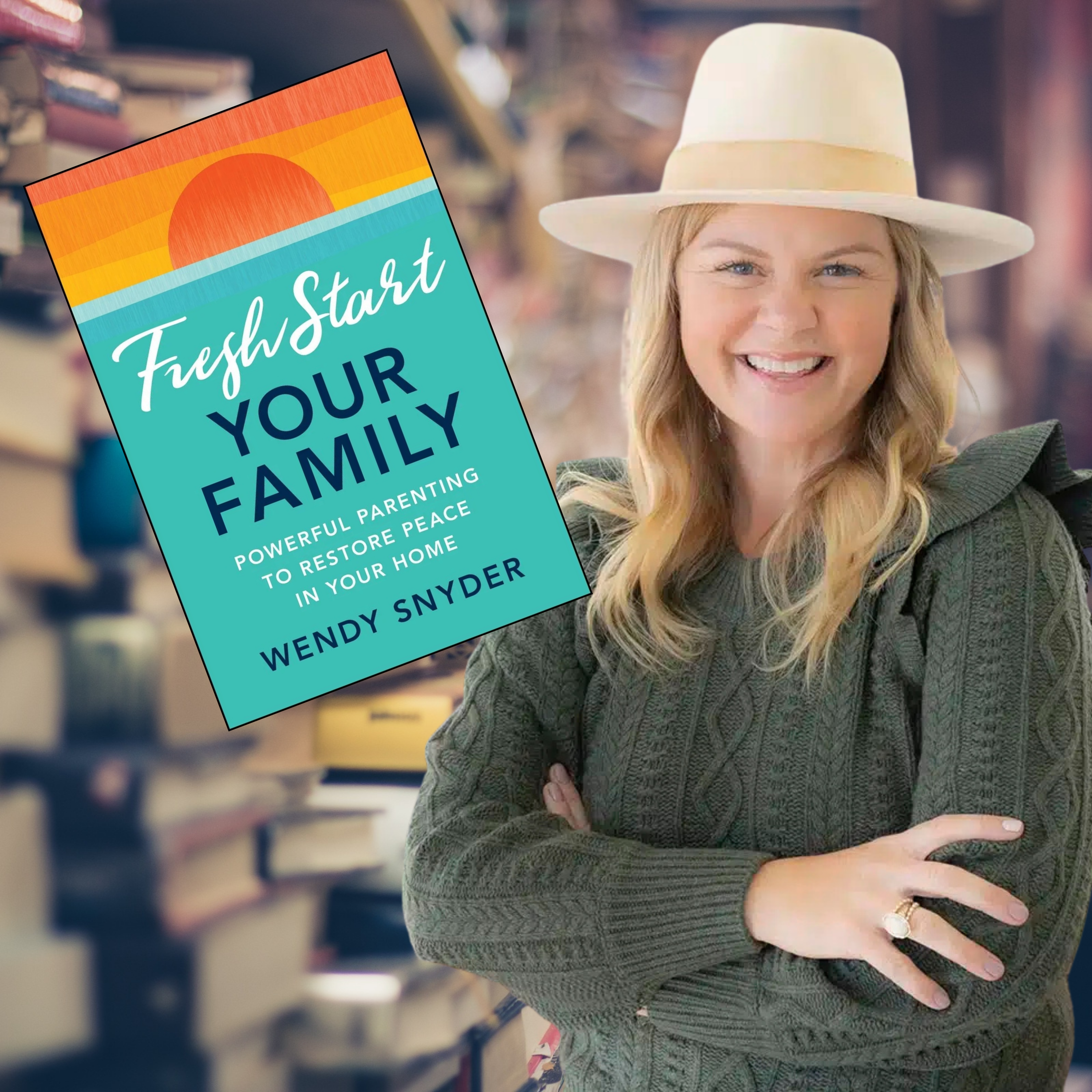
The Collective Table · The Collective Table
Most parents don’t realize that the way they’ve been taught to parent—based on shame, punishment, and control—is actually deeply harmful. Wendy Snyder, a family coach and author of Fresh Start Your Family, reveals how shifting from power struggles to powerful connection transforms not just your child's behavior, but your entire family dynamic.This episode pulls back the curtain on why apologizing to your kids feels so uncomfortable and how even the most well-intentioned parents often avoid humility out of fear or pride. Wendy shares concrete, actionable strategies—like the four-step framework for respectful discipline—that help parents build trust, foster emotional safety, and cultivate neural pathways of compassion in children. You’ll discover the profound impact of owning your part, offering genuine apologies, and modeling humility—because regret and repair are acts of strength, not weakness.We break down: Why society’s punishment-based parenting models disrupt connection and how to rewrite that script The power of apology and the right timing to rebuild trust after a mistake How empathy and understanding create safer, more resilient children who are willing to grow and learn from missteps The significance of connection, even during difficult moments, and how it shapes lifelong self-worth and emotional intelligence How to shift your perspective from control to creating a foundation of unconditional love and relationship Skipping these lessons risks passing down cycles of shame, disconnection, and rebellion. But mastering these principles unlocks a new level of influence—not through force but through authentic love and respect. If you’re tired of power struggles and want your family to thrive in dignity and grace, this episode is your guide.Whether you’re a parent, grandparent, or anyone invested in meaningful human connection, these insights will reshape your approach to family—not just for today, but for generations to come.Wendy Snyder is a certified family life coach, author, and host of The Fresh Start Family Show. Her work is rooted in faith, real-world science, and an unwavering commitment to restoring peace through connection.This is essential listening for anyone ready to give up control and embrace powerful parenting that heals, not harms. Learn More about the work we do at oceansidesanctuary.org Learn more about Wendy at freshstartfamilyonline.com dont forget to leave a review!
0:03Speaker AHey, friends. Nico here. I'm so glad you're joining us for another edition of the Collective Table podcast and our TCT Book Club series. If you've been following along, you know this is where we gather every month to read and discuss books that help us imagine a more inclusive, inspiring and grounded expression of Christian spirituality. Each conversation takes place live on zoom with the author and you're always invited to join in. If you'd like to be a part of future book club sessions, find the next session on our website calendar [email protected] calendar to sign up. This month we are thrilled to feature author, certified positive parenting educator and beloved OSC congregant Wendy Snyder in her newly released book, Fresh Start yout Powerful Parenting to restore peace in your Home. She draws from her own raw parenting journey to offer a supportive, practical guide for breaking painful generational cycles and leading a home with true compassion. So settle in and enjoy this thoughtful and healing conversation between the TCT Book Club and author Wendy Snyder right here on the Collective Table.
1:12Speaker BLet me welcome our guest for tonight. Joining us is Wendy Snyder, who is, in addition to being a member at the Oceanside Sanctuary, also a certified powerful parenting educator and a family life coach, founder of Fresh Start Family and host of the top rated Fresh Start Family show podcast. Through her transformational programs, coaching and courses, Wendy has helped thousands of families break generational cycles of fear, punishment and disconnection, replacing them with firm and kind leadership and compassionate discipline rooted in dignity, grace and rock solid relationships. We are here tonight because she recently published her book Fresh Start yout Family. And one thing that's super fun for us is for a time when she was writing this book, Wende actually used an office right here at the church. And so we got to see her in there working away or got to say hello at the water cooler or the coffee pot and hear how things were coming along. And so we're super excited to be able to host her and talk about her book. Congratulations, Wendy, and welcome.
2:20Speaker CThank you guys so much for having me. It really was so special to write this book at the Oceanside Sanctuary. It really was completely written there. And yeah, it's just so special to be here with you all tonight and. And I can't wait for this conversation.
2:38Speaker BWe're so excited to be able to have you. And I remember when you first told me that you were publishing your book, I was like, oh, we would love to have you on. When is that going to be? And so we planned this like last summer. Yeah, I feel like, we booked this, so it's really exciting to finally be here at this point. And one of the things I like to do when we have authors on is just start by reading an excerpt from their book. So if it's okay with you, I'd love to read a portion and then just ask you to respond to a question I have around that. And it's on page 50 if anybody has the book. Sorry, I had it marked, but I've lost it. Here we go, page 50. Here's what I really love about this one. You just the setup. This is after you have told a really vulnerable story about when you lost it with Taryn. And when I read that, I was like, oh, my gosh, this is so brave as a parenting coach to put that story in the book, but also so relatable because everybody has lost their temper with their kids. And so I was really grateful that you put that in there. And at first, I thought that might be the quote that I read was that, like, really difficult story. But then it got better, and so I wanted to read this part of it if I could. So Starting on page 50, it says this. The morning after the bruising incident with Taryn, I knew I had to do more than apologize. I needed to show him and our nervous systems that there was a different way. I sat down with my son and said, yesterday, when you wanted to go to Nolan's house, I didn't handle that well. I grabbed you too hard and yelled, and I'm sorry. That's not who I want to be as your mom, and it's not what you deserve as my child. Will you forgive me? Can we try that situation again? Can you practice cooperating, and I'll practice self control? And then we literally practiced it. I had him pretend to walk toward Nolan's house again. And this time, I took a deep breath and knelt down and practiced my stop sign. I looked at him in his eyes with a soft smile, and I said, I know you really want to play with Nolan. You're feeling disappointed. I understand that feeling. And you still need to stay home to rest because your body is healing, and I don't want Nolan sick. This is neuroplasticity in action, actively pruning new pathways by practicing different responses. In the end, I was able to fully clean up that mistake by doing a makeup for my little guy. This is something you talk about a little bit later in the book. I took extra time out of my day that weekend to build an elaborate dirt track for his monster trucks in the backyard. My way of repairing our relationship, making amends and solidifying new neural pathways, and the fact that he never deserves to be hurt to learn. A few months later. Okay, so this is kind of a long portion, so stick with me because this is actually where I really was. Like, I have to read this part. A few months later when I lost my cool again after he poured a whole bottle of organic bubble bath into the tub, this time just yelling, but it was enough to make him cry. I came in to apologize and instead received a gift I didn't realize I needed. He looked me square in the eyes. Your four year old son looked me square in the eyes with the sweetest four year old smile and said, it's okay, mama, everyone makes mistakes, and went on about his happy, playful self. So I had to read that because, you know, I have to say that as a parent, I think maybe the most important thing I ever did as a dad was recognize when I needed to apologize to my kids. And I remember like later, you know, because as your kids, for those of you who have older kids, you'll know what this is like when your kids go out and they hang out with other kids and their parents and they come home and they tell you you're a pretty good parent, which is great when that happens.
6:52Speaker DWait till your kids are in their 20s.
6:53Speaker BYeah, later. one time, like later, our kids were telling us, oh man, so and so, so and so's parents are bad, they never even apologize to them. And so. And that to me, like, was such a nice little affirmation, you know, to receive from my kids. But I think in Janelle, I think, would agree. It seems very rare to me that parents are willing to apologize to their own children. I think this kind of comes back to your observation that the dominant ways that we tend to be taught to parent is either autocratic or permissive. And there's really no need to apologize if you're an autocratic parent or permissive parent. I wanted to start with that
7:42Speaker Dlittle
7:43Speaker Bbit from your book and ask, you know, why do you think it is that so many parents have a hard time apologizing to their own kids when they've made a mistake?
7:55Speaker CYeah, well, first off, it was so special to have that. This is the first time I've ever had the book reread back to me at all. I've done a huge PR tour, we did almost 40 podcast interviews, and no one has read the book yet. And so that was very emotional to hear. Hear that section of the book, especially on the day about My little Guy, who's now 15 and 6 2, just landed in New York City with his dad and is seeing New York City for the first time. And that's just so cool. So I will say, yeah, about the apologizing, I think, you know the subtitle of this book is Powerful Parenting to restore peace in your home. And the way I see it is humility really is, to me, the story, the greatest superpower that we have as parents. It's relationship too, but the humility I find. And at this point, I've been. I've had the honor of helping thousands and thousands of parents and also, of course, parenting my own now for 18 years. But I'm telling you, the humility just shapes souls in the most beautiful way. And. But society sets us up to think that it's weak and that is just heartbreaking because it causes people. And really, I could riff on this even deeper and say the reason why society sets us up like that is, in my opinion, is because of the way most people are raised in the autocratic way from day one. And again, like I talk about in chapter one, I think I put right in the book that we are not here to judge. There's no judgment for past generations. And we just have had so much knowledge and education around human development and psychology and the way the brain works and all the things, right? And so we just have access to so much information now. And the way most of us were raised is when you made a mistake, you were going to have something bad happen, right? Whether it was like just on the emotional side of shame or disappointment or name calling or humiliation, or many families grew up with the physical side, right? Like you were, you were physically going to get hurt and harmed. And then for our families that we help that had the high control religious circles too, then they had on top of that that it was because of God wanting their parents to do that, right? So there was that spiritual, very traumatic side of it. Whereas as they were getting hurt and harmed for their mistake, they were being told it's because God wants that and because that is love, right? So there was all these elements that so many people grew up with on that spectrum that just shaped our nervous systems to believe that mistakes are bad. And so when you make a mistake, it's way safer to hide it, to deny, to justify, to defend, to blame than it is to be like, dang it, I made a mistake, right? And so so much of this book and my work is about teaching parents that the real truth is that mistakes are opportunities to Learn. That is how we learn as humans. That's why when you are working with a little working if. When you have the honor of being together with a little baby. I got to watch my five month old little cousin this last weekend up in Mendocino. I had him the whole weekend. It was so wild to be in charge of new life after just this last year. My eight, my little girl turned 18 that so much of this book is about. But when he starts walking, his name's Shepherd. When he starts walking at a year ish, you know, he's going to take some steps, he's going to fall. And we don't say to him, you idiot, like, what are you thinking? Like I've told you a million times, put one step in the front of the other.
11:50Speaker DRight.
11:51Speaker CLike you would be crazy people. No, we're like, it's okay, get up, I'll hold your hands. Try again. You can do this. Let me teach you how to steady your feet, how to bend your knees, right? Or I have tons of little people in my neighborhood and if they're on a hill, they fall backwards on their butt, like stand on the flat. You know, we just teach. But somewhere along the line it changes. Usually about three or four years old. And then all of a sudden mistakes are shameful. So that's a long answer, Jason, of I really don't think it's our fault of why we, why we have a tendency to think that apologizing will make you weak or think that make you, you know, your kids not respect you. It really is. It's just, in my opinion, it's a result of a system. And I think we're so good at Oceanside Sanctuary of having the courage to the audacity to think that we can change systems of harm. And to me, the way we raise children is the biggest atrocity of all because it's a system that most, most like the predominant system is really based in overpowering force, shame, punishment. And so that's. That's the why.
13:03Speaker EYeah.
13:05Speaker BSo thank you so much for unpacking that. It makes so much sense, I think, and I think a lot of us can really identify with that. Janelle and I have a couple of questions, as you know, that we've prepared for tonight. But before we jump into the next one, I want to just tell everybody who's on here that your questions really are welcome to. So if you have a question for Wende, whether you've like dug into the book or you're just curious about the book and you haven't had a chance to read it yet? That's okay. Pop your questions into the chat, and we'll be watching the chat, and then we can call on you. And this can be as much of a dialogue as you all want it to be or not. Nobody has to ask questions, but I just want to make sure you guys know that that is available. Do you want to.
13:50Speaker DYeah. I didn't know if anyone before I moved on to our next question. Like, on apology and the difficulty of being a parent, I feel like, especially with your teenagers, because I feel like then they really get you. Does anybody have any questions specifically about kind of apologizing? I know we have, you know, maybe chat questions, but anybody?
14:18Speaker CI will add a question, too, of, like, has anyone ever noticed how quick someone else is to apologize when you apologize?