
The Collective Table · The Collective Table
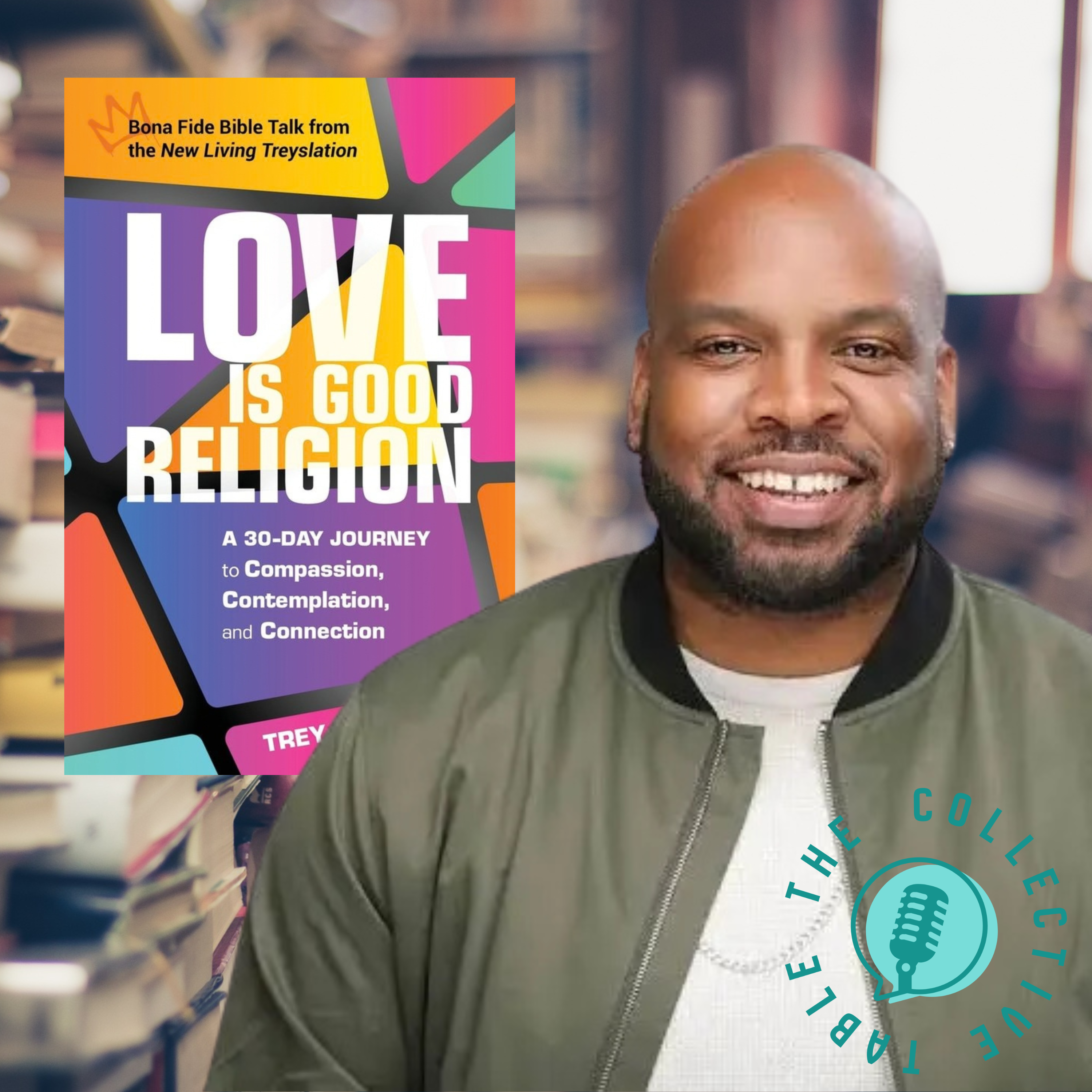
What does it mean to make love the lens through which we understand God, scripture, justice, and the way of Jesus? In this episode of The Collective Table, Jason Coker sits down with pastor, activist, and author Trey Ferguson to discuss his new book, Love Is Good Religion. Trey shares how his own journey into ministry shaped his understanding of faith and explores what it might look like to reimagine familiar Christian stories through a theology rooted in love. The conversation dives into competing understandings of the gospel, penal substitutionary atonement, the human fingerprints found throughout scripture, the role of imagination in faith, and the difference between retributive and restorative justice. Jason and Trey also explore how love might challenge our assumptions about violence, power, and what it means to follow Jesus in a world that often treats cruelty as necessary. Along the way, Trey offers a compelling definition of love as a commitment to the wholeness and flourishing of another—and invites us to consider what changes when we take that definition seriously. Love Is Good Religion is more than a devotional; it is an invitation to read scripture differently, ask better questions, and imagine a more loving way of being in the world. The Collective Table Podcast is a production of the Oceanside Sanctuary, a progressive Christian community in Oceanside, California. Learn more about the Oceanside Sanctuary and our work at oceansidesanctuary.org.
0:00Speaker AWelcome back to the Collective Table podcast, friends. This is your co host, Jason Coker. And I'm excited about today's episode. I have the opportunity to interview Trey Ferguson, who is the author of a brand new book called Love is Good Religion. Now, Trey is a fantastic guy. He's a pastor and an activist, recently became the new pastor of Raleigh Mennonite Church in Raleigh, North Carolina. And he has written a book before called Theologizing Bigger. And what I love about Trey is he takes a very unique perspective on how to unpack scripture and the stories that really form and shape our faith. So I'm excited to share this conversation with you, but I also want you to know this conversation represents a bit of a shift in how we're going to be doing these author interviews. In the past, we've had live conversations with our Zoom Book Club, but moving forward, we're going to record these in advance so that we can have a little bit more intimate conversation with the authors themselves. And so this episode with Trey is our first episode that takes that approach. So I'm excited to share this with you and look forward to your feedback and your input. And also, if you can send us your recommendations for the books that you would love for us to cover and the authors that you would love to hear us talk to, we'd love to bring that to you as well, if we possibly can. So without further ado, here is my conversation with Trey Ferguson.
1:38Speaker BAll right. Well, good morning, Trey Ferguson. How are you today?
1:44Speaker CYou know, I can't complain at all. I'm doing all right. The temperature just dropped over here in North Carolina. It's like low 60s, and I'm appreciating that. So that fall, autumn isn't just a slogan, but an actual experience. And, you know, I'm grateful for the day that the Lord has made today, whatever that is. How you doing today, Jason?
2:04Speaker BYeah, I'm good. I'm good. The temperature has dropped here in Southern California recently. And so in San Diego, we're in San Diego county. And, you know, if it gets above 70 degrees or below 65, people here complain bitterly as though they're suffering, you know, in a real way. And so it's been in the, like, low 90s for, you know, a good stretch this summer. And so lately, fall is here. And so, you know, we're back in our comfort zone, so to speak. But you, you. I just learned that you recently moved to Raleigh, North Carolina, from Miami. So you traded, like, you traded climates
2:42Speaker Aa little bit, right?
2:43Speaker BLike, it must have been hotter where you came from?
2:46Speaker CYes. Yes. Well, I don't know. It's been pretty hot over the summer here in Raleigh as well. The humidity, I've experienced it a little bit differently and I was actually, I was actually excited to get away from some of that. And especially like most of the year around, like it's hot and then hot and wet in Miami, but it's like hot and rainy wet as opposed to just hot and moist, which is the humidity. You walk outside and you're wondering why you even bother taking a shower because you're just sitting and you don't sweat all day. So I've been fine with getting away from that around the calendar, you know.
3:19Speaker AYeah.
3:20Speaker BYeah. Well, we lived in Columbus, Ohio for a couple years, my wife Janelle and I, and we're from Southern California, so I thought I knew what humidity was like until we lived in Columbus. And then I thought we were going to die. And I don't even think that's as bad as South Carolina. So I, I can appreciate where you're coming from. Well, thanks for joining us on the podcast today for the Collective Table. This is kind of our church's like in house podcast. So just to give you a sense of like, what's going on, our church folks will listen to this podcast as a way for us to like engage with authors or tell stories. And so we kind of go back and forth between like long form stories and interviews with folks like you. And I was excited to talk to you because your new book, Love is Good Religion just came out. This is actually your second book, a follow up to Theologizing Bigger. And so like, you are cranking out books. Trey Ferguson, I. So I want to say congratulations because I think even writing one book is an impressive feat. So here you are turning around another one. And all of this is a part of, unless I'm mistaken, correct me if I'm wrong, all this is part of kind of a bigger project for you called the New Living Translation. Right?
4:40Speaker DYeah.
4:41Speaker CYeah. Well, this book came out of the New Living Translation and maybe one day translation turns into something else. But right now it was just a contributing factor to this book right here.
4:52Speaker BOkay. Okay. Well, maybe we'll get a chance to talk a little bit about that because I'd love to hear kind of where that's coming from. But maybe, maybe before we do, I wonder if you maybe could just tell us your story. Like, what's your story? How did you end up as a pastor? I don't know if you've heard, but religion as an industry is not doing so well. So at what point were you like, hey, that seems like something I'd really like to do.
5:16Speaker CYes. It's funny. A few years ago, my wife and I were looking at the results, like these rankings of the most worthless degrees, and the top three were communication, psychology, and religion. And between the two of us, we have two psychology degrees, communications degree and a master of divinity. Right. In theology. So we. We have committed to a life of voluntary poverty, I suppose, according to that chart. No, that's a great question. I didn't really imagine myself doing this. Well, when I was young, growing up at church, at one point I said that I wanted to be a preacher and the pastor of the church. When I told him that, and I was like 8 or 9 when I said this, he said, okay, yeah, first step, read the Bible. And I said, you know what? Being a fireman sounds really great. And so. So I, like I said, grew up in the church. And the very moment that there was an option for me to do something on a Sunday morning other than go to church, I took advantage of that. And I never stopped calling myself a Christian. But there was definitely a time of exploration and reevaluating exact where I stood or not exactly, because I don't know if I can ever pinpoint exactly where I stand in relation to the divine, in relation to God. But at some point later in life, in college, I met this young lady who I found very attractive, and I wanted to be where she was. And she didn't grow up in church, but she was curious, and she asked if I would explore charges with her. And so I agreed to do that because I wanted to be where she was. And that drew me back into life of faith. And God has a funny way of working, because that. That lady is not my wife. And in that process, you know, I stepped into this vacuum where the guy who was running the youth ministry had moved away, and I saw all these young people needed, like, somebody to do something. So I stepped in there, and that was kind of my doorway into ministry and wherein I realized that I actually liked telling stories, right? Not making up stories, but I found I was captivated by the story of Jesus and the story of God and that narrative, seeing how that comes to bear in the life that we have now. And I quickly realized that, you know, a lot of people use youth ministry as a stepping stone into, you know, big ministry, right? And I didn't want to be another one of those guys. I realized that that wasn't really where my passion or Even necessarily my gifting was that I just tried to step in and fill a void. And so I was like, you know what, let's, let's see what this leads to. And you know, couple of stops of seminary later, I found myself really in this life and I left the corporate world, you know, human resources and it, and made the very poor financial decision to do this, this ministry journey. And I haven't regretted it a day in my life because some of the best advice that I ever got when I first started ministry, they said if you can do something else, do that. And if you can't, then you have like a pretty good idea that this is what you're supposed to be doing. And I rarely feel like I, like I'm going to work. Like this isn't something I have to do, it's something that I get to do, which is fortunate because like I said, it's fortunate that I feel this way because it doesn't necessarily pay that well.
8:51Speaker BBut no, and then all my non Christian friends dread. All my non Christian friends tell me like, hey, all the preachers I see on TV are rich. You must be doing this wrong.
9:01Speaker CRight, right, right. And I hear that and you know, I, I, I might have misplaced the keys to the private jet or something, but it's been, it's been a long while since I was able to take advantage of those perks. And so now most of the perks that I get now involve things like. Yeah, I guess, I guess I'm well acquainted with some of the local hospitals. You know, sometimes, sometimes I could find like the convenient spots in the hospital parking garages when I'm visiting people. And, and yeah, you know, it's a cool life that we get.