
The Cogitating Ceviché Podcast · Conrad T Hannon
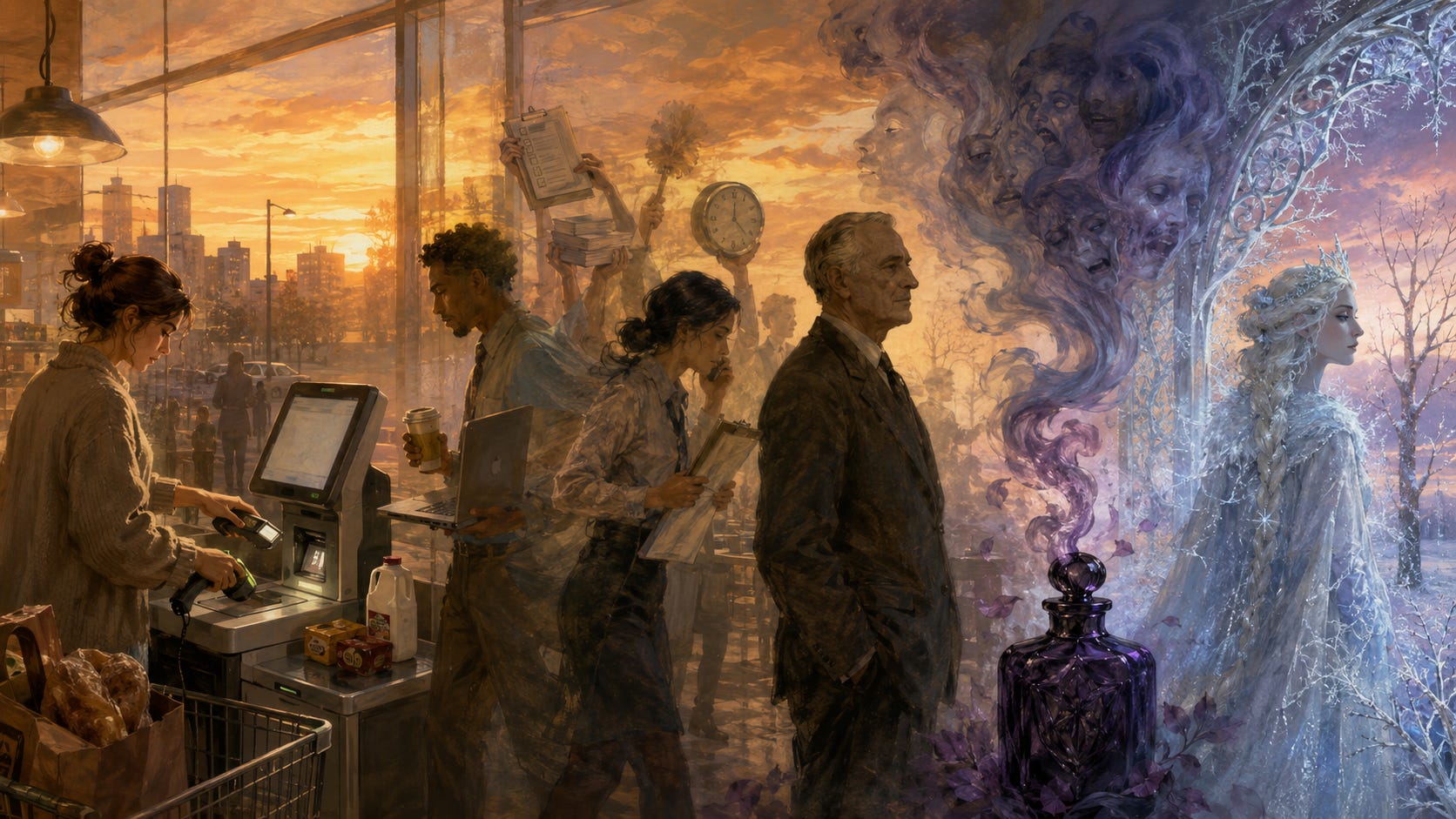
The Cogitating Ceviché (26-28) Discussion via NotebookLM Editorial Summary This week’s writing examines the quiet exchanges by which power changes hands. Mauve Sanger finds the customer standing behind the register, performing work that vanished from the payroll but not from the world. Conrad T Hannon follows authority through three very different settings: software that performs remorse, George Marshall’s refusal to perform greatness, and workplaces that turn commands into supposedly optional requests. Gio Marron carries the week into darker country, presenting MysticPriestess’s tale of obsession and death before returning to Jane G. Austin’s enchanted winter, where beauty, danger, and longing gather on a pane of glass. Across essays, history, technology, and fiction, the same question waits beneath the surface: who is acting freely, and who has merely been taught to call obedience a choice? Articles and Stories The Unpaid Shift July 13, 2026 | Mauve Sanger The grocery store did not eliminate the cashier’s work. It handed the scanner to the shopper. Mauve Sanger examines self-checkout, online forms, airport kiosks, furniture assembly, and other systems that present transferred labor as personal convenience. The essay also asks who pays the highest price when supposedly frictionless systems are designed around the young, able-bodied, digitally comfortable customer. The Machines That Apologize July 14, 2026 | Conrad T Hannon Software now says “sorry” with remarkable fluency. It apologizes for deleted work, failed logins, unexplained charges, outages, bad answers, and cancellation screens that refuse to let the customer leave. Conrad Hannon argues that these phrases preserve the social form of remorse while removing responsibility, cost, and any promise of changed behavior. The machine performs contrition; the user supplies the forgiveness. George Marshall: Authority Without Mythology July 15, 2026 | Conrad T Hannon The second entry in The Second-Best Man series considers George C. Marshall, a man whose influence was immense but difficult to turn into legend. Marshall built armies, selected commanders, advised presidents, and helped shape Europe’s recovery, yet he rarely made himself the center of the story. The essay presents administration, judgment, and restraint as forms of authority that history often overlooks precisely because they work. The Final Scent July 15, 2026 | Gio Marron, presenting a horror story by MysticPriestess Death, obsession, and psychological distress gather around one of the most intimate senses. The Final Scent uses fragrance as a path toward memory, fixation, and dread, asking what happens when something beautiful refuses to remain harmless. This is a story for readers who prefer their horror close, personal, and difficult to wash away. The Tyranny of the Optional July 17, 2026 | Conrad T Hannon The modern workplace has learned that a request can extract more than an order, particularly when everyone understands that...
0:00SPEAKER_01Next time you use a grocery store self-checkout, I want you to really look at the screen.
0:04SPEAKER_01Just take a second and look at it, because you haven't actually been saved any time.
0:07SPEAKER_00No, not at all.
0:08SPEAKER_00You've basically...
0:10SPEAKER_00Been secretly hired by a massive corporation.
0:13SPEAKER_01Right.
0:13SPEAKER_01And your salary is absolutely zero?
0:15SPEAKER_00Exactly.
0:15SPEAKER_00Zero dollars and zero cents.
0:17SPEAKER_01It's crazy.
0:18SPEAKER_01We navigate these invisible structures every single day.
0:20SPEAKER_01You know, we just assume they're this natural evolution of convenience.
0:24SPEAKER_01Like, oh, this is just the future.
0:26SPEAKER_00Yeah.
0:26SPEAKER_00But there's this whole hidden architecture governing our daily lives.