
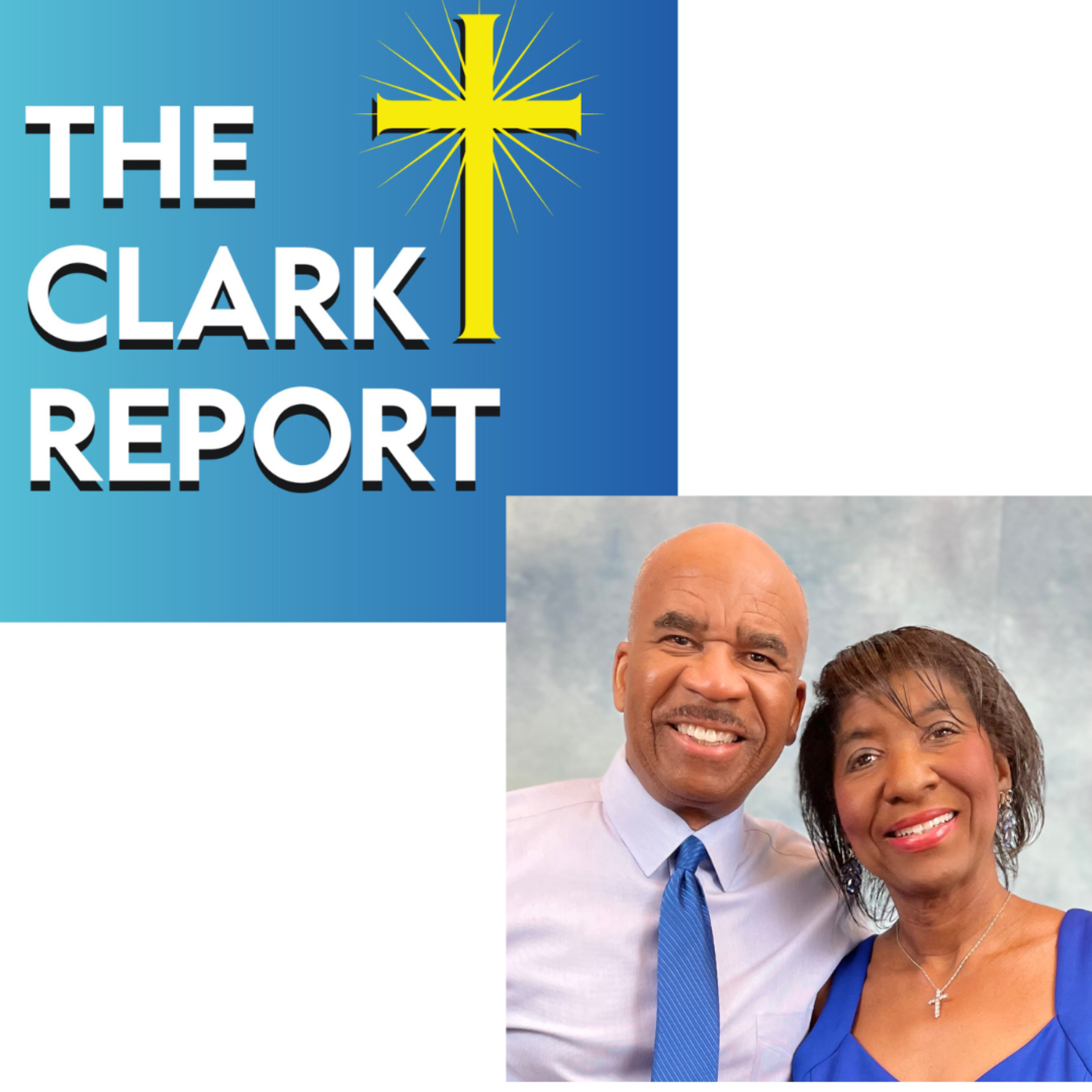
The Clark Report...with John and Val Clark · John Clark
What happens when two women believe God has called them to do something—and take a step of faith without knowing what it will become? In this episode of The Clark Report, John and Val sit down with Rebecca Martin of NarroWay Productions, the Christian dinner theater near Charlotte, North Carolina, celebrating its 30th anniversary! Rebecca shares the story of how NarroWay began as an act of faith and grew into a unique theatrical experience that brings audiences into the story through elaborate period costumes, original songs, live animals, and much more. And there's a special twist: the cast members also serve the meal! But NarroWay is about more than great entertainment. Its mission is to honor the Lord and communicate the gospel through the power of storytelling. In this episode: How a bold step of faith launched NarroWay Productions What makes Christian dinner theater such a unique experience How original productions come to life Why storytelling can be a powerful way to share the gospel What's next for NarroWay, including plans for expanded facilities It's an inspiring story you won't want to miss! CHAPTERS: 00:00 The Birth of NarroWay Productions 03:43 Faith and the Journey of Creation 12:42 The Unique Experience of Dinner Theater 15:50 The Creative Process Behind Productions 18:22 Honoring the Lord Through Theater 19:55 Future Aspirations for NarroWay Productions 22:24 ‘The Word in 7’ | Luke 15:1-24 29:18 Final Remarks and Prayer Learn more about NarroWay Productions here: https://narroway.net/ Subscribe to The Clark Report for our weekly look at the world through biblical lenses! [Note: The opinions expressed on this podcast by John and Val Clark are our own, and not necessarily those of our guests.] Music licensed through Soundstripe.Code: VV5YNB2YQQRVF9BU, ACDY3E0P8O7PNWFJ, NY36RZ4CX3PN8N2W Scripture quotations are from the ESV® Bible (The Holy Bible, English Standard Version®), © 2001 by Crossway, a publishing ministry of Good News Publishers. Used by permission. All rights reserved. The ESV text may not be quoted in any publication made available to the public by a Creative Commons license. The ESV may not be translated in whole or in part into any other language. #TheClarkReport #NarroWay #ChristianTheater #FaithInAction #ChristianMinistry
speaker-0: I wish I could say that we really had a good plan. But what we were doing, as we believed God told us to do it, we set out to do it. We had no idea if it was going to be successful. In fact, we were scared to death. speaker-1: That's Rebecca Martin, co founder of the Christian Dinner Theater that's been called the Broadway of Christian Entertainment. speaker-2: When it all started three decades ago, that would have seemed far-fetched until God began opening doors. speaker-1: Hello everyone, I'm John Clark. speaker-2: And I'm Val Blanding Clark. Welcome to the Clark Report, our weekly look at the world through biblical lenses. And today the story of NarroWay Productions, a Christian dinner theater celebrating its 30th anniversary this year. speaker-1: And after thousands of performances and thousands of delicious meals served, we're talking with one of the founders about how it all began and what it takes to put on these spectacular shows. speaker-2: Thus the word in seven as we continue in the Gospel of Luke. Jesus' parable of the prodigal son and what he says happens in heaven when even one sinner repents. speaker-1: First, a quick reminder to give us a thumbs up and subscribe if you're a fan of the Clark Report. It's free and it helps us get the podcast out to more people. speaker-2: Now to our focus story. What do you get when you combine acting, singing, drama, comedy, spectacular costumes, and the gospel? speaker-1: plus a meal. What you get is NarroWay Productions, a Christian dinner theater that's been putting on Broadway style original musicals for thirty years. speaker-2: NarroWay is in Fort Mill, South Carolina, just south of Charlotte, but it brings in crowds from all over the country, and as we'll hear from today's guests, starting it all up was an act of faith. speaker-1: And joining us now from Fort Mill, South Carolina, is NarroWay co-founder Rebecca Martin. Rebecca, thanks so much for being with us today. speaker-0: Thank you. Thank you for the opportunity, John and Vale. I really appreciate it. We all do. speaker-2: Well first congratulations on the thirtieth anniversary of NarroWay. speaker-0: thank you so much. God has been so good to us. speaker-2: Well, in the early days, did you all ever think that Naraway was going to become so successful? speaker-0: Well, Val, I tell ya, in the early days, I I wish I could say that we really had a good plan. But what we were doing is we believed God told us to do it. We set out to do it. We had no idea if it was going to be successful. In fact, we were scared to death. We just stepped out, stepped out with nothing. And believed that God had called us to do it. And I remember saying, I'm gonna call Yvonne Clark is the is our composer and conductor. She's the other founder of NarroWay alongside of me. She is the musician and I am the theatrical, I'm the executive director. her nickname is Bertie. So when you hear me say Bertie, that is Yvonne Clark. She introduces herself at every show as Bertie. So any of the audience members that have been here to see us, they'll recognize Bertie instead of Yvonne Clark. But when we first started out I remember saying to Bertie, Well, you know what, girl? If it doesn't work, we know how to work at McDonald's, I guess. We just set out to do what the Lord wanted us to do, had no idea what it would become or what it wouldn't become. speaker-1: So so take us back to those early days. So how did you come up with this idea of Christian musical productions and and how did you end up in Fort Mill, South Carolina? speaker-0: Well, this was just a a something that God did, honestly. I I know sometimes that when folks talk it can sound super spiritual. I'm not meaning to sound super spiritual. I'm just gonna be honest with you. I graduated with a degree in theater and journalism and double major in those two, and Bertie graduated with a degree in music. We met at college, became best friends and And and then felt like the Lord wanted to do something with us. Bertie wasn't a Christian when we first met and I was able to tell her about the Lord and and and so not only did we grow in friendship, but we grew in faith and I I know it was just the Lord's plan, but we we went on, we felt like the Lord wanted to do something. We went on to seminary after we graduated college. So went to Southern Baptist Theological Seminary in Louisville, Kentucky. and there we started we joined the two professions together with music and theater and we started working at a church. At that church we we decided we would write a musical drama and start building a youth team with it. When we did it, it was tremendously successful. we found that not only did it communicate to people that were listening, but it gave purpose and heart to everybody that was performing to be able to communicate the gospel message in that way. That's really how it started. That's not w how narrowway started. It wasn't we graduated seminary, were called to another church to do basically the same thing. We built ministries around air music and theater degrees. And We did all the things that the church needed as professional staff members, but that's that was the heart of our how we built our ministries. And in our first church that we were called to, we were on our way to make a professional soundtrack because if you're writing an original show, you gotta do it all from the ground up. We were on our way to Paducah, Kentucky, which is about two hours out of outside of Nashville. And we were going to a recording studio. On the way, we were discussing something, have no idea what we were discussing. and in the midst of it, it was as if our conversation was interrupted. it was as if I c clearly heard a voice say to me, not an audible voice, but interrupted the conversation and said, You'll call the company NarroWay Productions. And I said to Bertie, Bertie, I believe the Lord just spoke to me. Well, she's driving. And it was a long trip. She's driving. We were just talking and she said, What company? 'Cause she thought I was kidding. And I said, I don't know what company. But from that we began to call what we wrote a narrow way production. We didn't even have a computer, we would handwrite it out. A narrowway production, just like what you see it today. But we would handwrite that out and we didn't try to make something happen after that. All we knew is God said you'll call the company NarroWay Productions. We went right on doing what we did. We did we wrote more shows. We performed them. We toured them with our youth teams. We did them with our adults. About five years at that church, we were called to a different church, another church. I went to that church, started the whole process again, really building up and building up the ministries like that. It was not until ten years into that church, about twelve or thirteen years after we'd ever heard you'll call the company in Airway Productions, that my sister, who was in Charlotte, North Carolina, she she was with Bertie and me, she was like the third part. She was our mentor, our soulmate, our heart. She was, even though she wasn't related to Bertie, Bertie, I'm not sure she didn't love Bertie more than she loved me. That may have been a sister thing. But she called us and she said, I was studying my Bible this morning and praying and the God has brought to my mind an old amphitheater that's here in Charlotte. And course she shared our dreams and our visions. She knew that the Lord had said one day there'd be a company called NarroWay Productions. None of us were trying to make the company, none of us were trying to make something happen. But I think we always had it in our heart. The Lord said that. What does it mean? We don't know. but she said, There's an old amphitheater here. Would you like to come see it? And we came down and saw that old, beautiful biblical amphitheater. Walked out into it, there was no doubt in our minds. The Lord means this is it. This is Naraway Productions. We stepped out. We resigned probably a few months after that. Started negotiating a lease. Stepped out with nothing. Didn't have a sponsor. Didn't have a dime. Didn't have a cast. I I now that I think about it, people say, you had such great faith. And I say, you know what? The Lord just made us ignorance what he did, but we didn't have sense enough to say, What if? We just did it. And sometimes you just you overthink things. You don't just do what the Lord said to do. We stepped out with nothing, and that's how narrowway got started. God blessed us and we got our name out in nine years, but it was difficult in an outdoor situation. The property sold, we had nothing. We had a Wonderful family, a wonderful, wonderful family that loved narrowway. And they said we will give you the money to buy a piece of property if you can find a piece of property. Well we knew that we had a limited amount of money and we just started looking. Well, I don't know if you know very much about Fort Mill, but twenty years ago Fort Mill was known as Fort Vegas pretty much because it was gambling. You start came right across North Carolina line into South Carolina and it was gambling places everywhere. Well there was an old gambling warehouse used for gambling poker and then some shops in front of it that were used for s slot machines, all those kind of things. It was known for its gambling on this side. On the other side of the bridge, there's caravans and some nice family things on this side of the bridge or the interstate is was all that. And anyway, we were going down the road and we saw this old gambling warehouse we passed a thousand times and said, that's the nastiest old man's. That's an awful thing. That and buddy out was a sign on it that said for lease. I told Bertie, I said, turn this car around. There there's a place. What it's right here, right at the interstate. Fabulous location. And she said, That's an old gambling hall. I said, That's it for lease. And so we pulled around, we called the lady and we said, We want to buy this place. Can you let us in to see if it would work for a theater? And of course it's a warehouse. It's an old warehouse. And it's run down and everything else. And she said, Well, I'm not gonna sell that. That's a prime piece of property. And we said, Well, we want to buy it. And she said, Well, you can lease it, but you can't buy it. And we said, Well, no, we've got to buy it, because we knew that this gentleman had said, We'll give you the money to buy a piece of property. We knew now we had to have a home if we were going to survive. Blessed be the name of the Lord, she agreed. Eventually, it wasn't easy, but she agreed to sell it. And here we sit down what was going to be a Christian theater right in the middle of this gambling establishment and right beside of a whole gambling bunch of shops and everything. Well, it didn't take but about a year for all that to change. They all left, they all got run out, and it left us standing. And now, bless God. We've even been able to buy those shops, renovate them, and now they're our welcome center and our dance studios, and so they're renovated as well. So that is the old that's the nice theater that you'll come and see. It's fabulous, it's unique, you'll love it. It's very, very intimate. we seat three hundred and forty-six, serve dinner, delicious. We make the dinner, it's not catered in. speaker-2: Well, if someone's ever been to narrowway production, what might they expect? speaker-0: Well they're not going to expect just a show, because with all of our heart, we want it to be an experience for you. We want it to be a full experience. That's why we do dinner theater. It what we want it to be is when you come in, it's something that not that you just see, not that you just hear, but something you feel. You're going to feel it. You're going to not just relate by watching people perform. And saying, that was entertaining. That was pretty. You're going to be immersed into the story. The cast is trained, professionally trained, to draw you into the story so that you feel apart. Not like it's an intentional thing, but because of their relationship with you. When you come into NarroWay, we serve the meal. And you're served the meal by the performing cast. So the lead character in the show may be the one who's serving you your meal. But they do that to be able to relate to you, to relate to the audience. We want this audience to know first of all, we appreciate you being here. We're grateful that you're here. We know that we're here because you're here. And we know that if you're here, God wants to do something in your life. Now it is a large stage, a beautiful stage. We have animals, we have two camels, we have two Arabian horses, we have Two standard donkeys and a little miniature donkey. She's our oldest. She's, I think, about twenty-five years old, twenty-six, twenty-seven years old right now. She's the only one who's made it from the amphitheater all the way to here. We've got some goats and donkeys and we have two honorary pigs that that are in our show, Jesus the teacher, because it's got the story of the prodigal son in it. speaker-1: And tell us about the creative process, how the ideas come about and how that all works together. speaker-0: The creative process that we that we go through is not it's not like that that Bertie and I look at each other and say, let's write a show about this or that. I wish it were that simple. We don't even go searching for an idea to write a show about. We wait for inspiration. We wait for God to speak to our spirit in some way. Sometimes he'll give us a title, and it'll be two years before that we know. what what that's got to do with when that's going to be. There have been times that I went to write the show knowing it was time that we were going to have to write it, that I had nothing but a title and sit down in front of a blank screen or a blank piece of paper and had no idea what the first words were going to be or what the show was going to be about. And so even a story, even the story of Jesus, how do you come at that story that two folks like you that are well grounded in the Lord that you've been in s the church all your life, that when you see it, you feel like you've been at that cross. You feel like you saw it and heard it for the first time. Well that's the difference between trying to force writing a story and trying to be inspired by God to come at it with a fresh perspective. speaker-1: Well, Rebecca, speaking of your productions, your annual Christmas show is almost upon us. That's your most sought after show. sells out every year, understand? This year runs from November sixth through December twenty sixth. So what makes this a fan favorite? speaker-0: You know what it is. It's Christmas. And if you're a Christian, you gotta do Christmas and you gotta do Easter, right? Those are our two big audiences because they're easy sales. All you gotta do is say Christmas and Easter. But let me tell you our Christmas is not like anything else. We start out with the traditional Christmas. The songs that I don't know if you grew up hearing the same music idea, but my daddy, he put on that Christmas music in Thanksgiving when we started decorating for Christmas. And we have listened to those traditional Christmas songs. So it's got a fun, a fun storyline, a drama that goes with it, but it is mixed with all the traditional Christmas songs that are about home, that are about children, that are that are just the traditional things that you love when you hear them, you know it's Christmas. It's beginning to look a lot like Christmas. And we because we feel like that we as people, our hearts are rooted in the the things that we love and the families and the warmth that tradition causes us to feel, don't you? So we start out there, but what our point is is yes, this is Christmas to you, but if there weren't these songs, if there wasn't Rudolph, if it wasn't Santa, if it wasn't all this beautiful stuff that we know of as Christmas, there would still be Christmas. Because that's not the real Christmas story. And then we go from there into Act Two and we just bring to life the real Christmas story. Live theater has the power to touch and bring a story to life unlike anything because everything you see is happening real in front of you. If there's a mistake, it's real in front of you. It can't be edited out or fixed. You're watching real people, live people, present that story right in front of you. And you can't help. But relate to them. Sounds amazing. I I think you'll love it when you come. Well speaker-2: your productions are more than just dinner theater. You wanna honor the Lord in everything that you do. So why is that so important to you? speaker-0: It is our whole hearts understanding that we are here and when we leave, the only thing you or I are going to leave, no matter what our profession is, is what we've done for the Lord. It's all that we're going to leave. It it may not just be that we won somebody to the Lord. It may be that we encouraged somebody to continue their walk with the Lord. It may be that we gave somebody the strength. To make it through a sorrow or the joy that they can find that they had lost, a song that they had lost in their heart. Whenever that we before we when we pray, before that we ever open the doors for audiences like you to come in, we say, God, whatever you gotta do tonight, whatever you gotta do today, here we are. speaker-2: Well, are there any future plans for Naraway Productions that you can share with us? speaker-0: friends, there are. I wish I could share more with you, not because it's a secret, but because just I wish we knew more or were farther along. We are in a building right now, we have a fabulous education program because we believe that how are we going to send out how we're going to change entertainment without changing the understanding of entertainment? the secular entertainment so often causes kids, people to compromise their morals, to compromise their beliefs. And we've sent many a a teenager out into college that unfortunately they had to they had to do things that they shouldn't have done. They had to compromise and it's as much as we'd instilled into them it wouldn't matter because to make it they had to do it. And we believe that in education that we can we can teach people how to use the arts, children, and we can teach them how that that applies to the Bible. And how that they apply the biblical truths to that. Now we have 15 classes. This year we have three hundred and nineteen students involved in Christian art. So they're just homeschoolers. Now I want to tell you what the secret is with that. We don't have one classroom in this old warehouse that we renovated. Not one. We don't have a classroom. We only have our stage. 19 students that we have grown to. We don't have a building that can handle what we need. We don't we don't have space and we have got to have the funds and the building and the facility that we need to be able to move on to grow. And so right now we're trying to establish that future. And one of the ways we've got to establish that future, John and Val is by getting the facility that we've got to have. So our dream and our vision is to is to perhaps have another piece of property. I don't know that we'll afford that. I don't know what God's plan. I don't know what God will provide. We don't believe God wants us to just do what's necessary, just add a room on here. We believe God deserves the glory to say, if you're gonna say you're the premier Christian dinner theater in the United States, by golly, when you drive up to it it ought to look like it, shouldn't it, Jonavelle? So that's what we believe in for and we're we're we're asking the Lord for. So any anybody out there, any anybody out there that knows somebody or can help us or spread the word, anything we'll appreciate it. But that's our vision and our goal. speaker-1: And we have seen how the Lord has opened up doors for a narrow way down through the years, so don't be surprised when they hit that goal. speaker-2: Our thanks again to Rebecca Martin and all the wonderful folks at NarroWay. We've put the contact information in the description for this episode. speaker-1: The Word in Seven, our weekly seven-minute look at God's Word. We move to Luke chapter 15 today, and we come to what is probably the best known and best loved of Jesus' parables, the parable of the prodigal son, even though he doesn't call it that. That's what other people have called it. Prodigal meaning wastefully extravagant. It's the story of a young man who wastes his inheritance on immoral living and who hits absolute rock bottom. And then everything turns around. Now this story is so rich and touches so many emotional notes and has so much to say to us that I'm going to split it up into more than one lesson. But before we get to it, we first have to build up to it, and that's exactly what Jesus does. Luke 15, verse 1, ESV translation. Now the tax collectors and sinners were all drawing near to hear him, hear Jesus. And the Pharisees and the scribes grumbled, saying, This man receives sinners and eats with them. Stop right there. Because those two verses are the key to understanding everything that follows. Don't miss that. The tax collectors, who were notoriously crooked in Jesus' day and other sinners, people who wouldn't be welcomed in polite society, were drawing near to hear Jesus, listening to him. They had ears to hear, as he liked to say. Jesus, instead of shunning these people, avoiding them, was interacting with them. And they were attracted to Jesus because he spoke words of restoration and not condemnation. Now they knew they were sinners. And Jesus offered them hope. On the other hand, you have the Pharisees and the scribes, the religious rulers, and they are outraged by all this. I can't believe he's associating with those people. And so you have the hearers, the sinners, who are coming to Jesus to listen to him, and you have the grumblers who are scandalized by what Jesus is doing. Verse 3. So, because of that, he told them this parable. Now, Jesus is going to launch into three stories here. Two short ones, which set up the third story, which is the main story. Story one, verse four. What man of you, having a hundred sheep, if he has lost one of them, does not leave the ninety-nine in the open country and go after the one that is lost, until he finds it? And when he has found it, he lays it on his shoulders, rejoicing. And when he comes home, he calls together his friends and his neighbors, saying to them, Rejoice with me, for I have found my sheep that was lost. Just so I tell you, there will be more joy in heaven over one sinner who repents. Than over 99 righteous persons who need no repentance. Story 2, verse 8. Or what woman, having ten silver coins, if she loses one coin, does not light a lamp and sweep the house and seek diligently until she finds it? Now, the type of coin mentioned here would represent a day's wages. So we're not talking about pocket change. This would have been valuable to this woman. Verse 9. And when she has found it, she calls together her friends and neighbors, saying, Rejoice with me, for I have found the coin that I have lost. Just so I tell you, there is joy before the angels of God over one sinner who repents. So in these first two stories, we have a formula: something valuable is lost, a diligent search is launched, the lost thing is found, and there's a great celebration. And Jesus says, just so, in the same way, I tell you, there will be more joy in heaven over one sinner who repents than over 99 righteous persons who need no repentance, or who think they are righteous and need no repentance. Because the scriptures tell us: Old Testament, New Testament, that there is none righteous. No one can boast of righteousness before a holy God. We all fall short. So Who do you think Jesus is referring to in these two stories? Well, the lost sheep and the lost coin represent those sinners we talked about in verse 1, and those who think they need no repentance? Well, those self-righteous, grumbling scribes and Pharisees who look down on everyone else. But the amazing thing to me is the celebrating Jesus talks about. There is great joy in heaven when a sinner like you or like me repents. Our triune God. God the Father, God the Son, God the Holy Spirit, celebrate when we repent and come to Jesus by faith. Don't you love that? Now, story three. And he said, There was a man who had two sons. And the younger of them said to his father, Father, give me the share of property that is coming to me. And he divided his property between them. Not many days later the younger son gathered all he had and took a journey into a far country, and there he squandered his property in reckless living. And when he had spent everything, a severe famine arose in that country, and he began to be in need. So he went and hired himself out to one of the citizens of that country who sent him into his fields to feed pigs. And he was longing to be fed with the pods that the pigs ate, had no one. gave him anything. But when he came to himself, he said, How many of my father's hired servants have more than enough bread? But I perish here with hunger. I will arise and go to my father, and I will say to him, Father, I have sinned against heaven and before you. I am no longer worthy to be called your son. Treat me as one of your hired servants. And he arose and came to his father. But while he was still a long way off, His father saw him, and felt compassion, and ran, and embraced him, and kissed him. And the son said to him, Father, I have sinned against heaven and before you. I am no longer worthy to be called your son. But the father said to his servants, Bring quickly the best robe, and put it on him, and put a ring on his hand, and shoes on his feet, and bring the fattened calf, and kill it, and let us eat and celebrate. For this my son was dead, and is alive again. He was lost and is found. And they began to celebrate. There's that celebration again. So much to unpack in this story, but it'll have to wait until next time. And we'll also talk about the older brother in the story, who it turns out ain't happy about all that's going on here. He doesn't feel like celebrating. And does he have a point? We'll talk about that next time. speaker-2: It's interesting that Jesus would tell the two stories leading up to the prodigal son's story instead of just that one story. speaker-1: Yeah, for one thing, the three stories show us three different ways of being lost. The sheep wandered away, the coin slipped away, and the sun turned away. So you have the careless, the helpless, and the rebellious. But the Lord cares for the lost no matter who they are, and he rejoices when they're found. In fact, let's go to him now. Our Father and our God, we thank you that you sent your Son Jesus to seek and save that which was lost. We have no righteousness of our own. But he gives us his perfect righteousness when we put our faith in him. speaker-2: And Father, please continue to heal and to guide those of us who are believers. And for those who are not yet believers, we pray that they accept Jesus Christ as their Lord and Savior, and that they do so today. And we pray all these things in Jesus' name. Amen. speaker-1: Amen. Amen. And that's it for the Clark Report this week. Don't forget to give us a thumbs up and subscribe so you won't miss an episode. speaker-2: And be sure to check out my latest blog. Are you living the thankful life? Find out. Just go to the ClarkReport dot com and look for the link that says VA's speaker-1: blog. In the meantime, don't forget to pray, read your Bible, and go to church this weekend. speaker-2: And do something good for somebody today.