
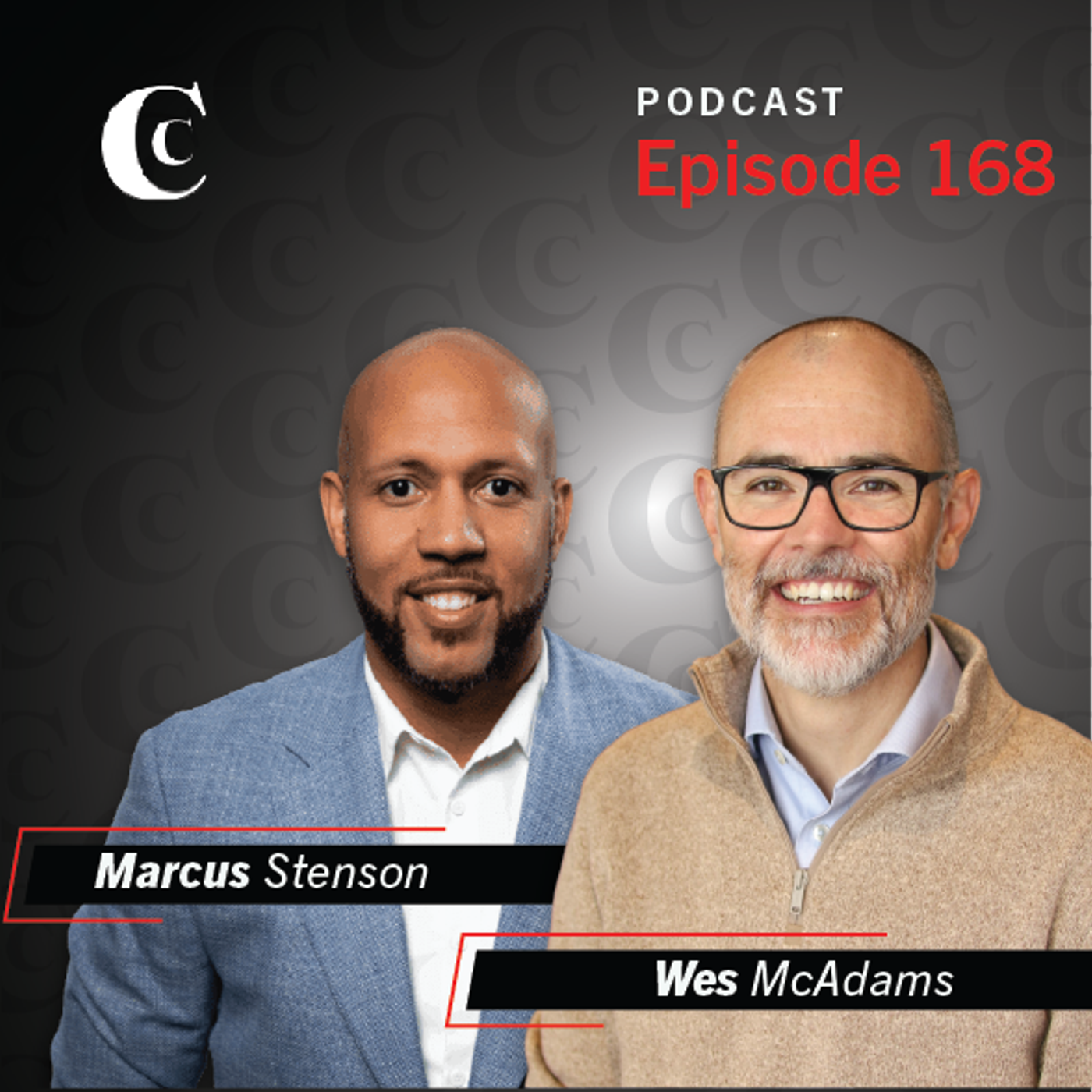
The Christian Chronicle Podcast · The Christian Chronicle Podcast
Anthony and Saun Galang have been full-time ministers for over 40 years. In that time, they realized that many congregations do not have a plan for when their ministers retire, and the transition does not always go well. The Galangs created Beyond the Pulpit, a framework to help full-time ministers plan for and successfully transition into their next stage of life. Anthony joins Marcus on the podcast to discuss how he and Saun started Beyond the Pulpit, observations from watching other ministers retire, and what church members and leaders can do to support their ministers in that transition. Discover Beyond the Pulpit’s resources at https://btpministry.org/. Please consider donating to this nonprofit ministry at christianchronicle.org/donate. If you have additional comments, ideas or suggestions, email us at [email protected]
Anthony: For the past fourteen years, God has sent us to Hawaii and we're part of an incredible church family out here. Yes, I know. Someone's gotta do it. Marcus Stenson: Yeah. Anthony: Come come visit us, Marcus, you and your wife. Come on come visit us. Marcus Stenson: Yeah, you don't have to ask me twice. It sounds like we're gonna need to follow up this conversation, but on the ground to Anthony: Yeah. Marcus Stenson: see what it's really like out there, Yeah. Anthony: That's right. Marcus Stenson: Welcome to the Christian Chronicle Podcast, where we explore what's happening in Churches of Christ. I'm Marcus Stenson and I'm here with Wes McAdams to bring you the latest news and honest commentary. If you want to hear stories about Churches of Christ, where we've been, where we're headed, and how God is working, then you're in the right place. Hey everybody, welcome back to the Christian Chronicle Podcast. If you are interested in what is going on in the world of the churches of Christ, this is your show. Today we have the distinct honor and pleasure of being joined by the managing editor of the Chronicle, Calvin Cockrels, joining us for the first time. Calvin, how are you doing today? Calvin Cockrell: Hey, I'm I'm doing well. It's great to be here. The Christian Chronicle Podcast: Awesome. Calvin, we are so happy to have you. We're excited for this conversation for all the news that you're going to be bringing us. And our standard disclaimer is that the opinions that Marcus and I may or may not share do not necessarily reflect those of the Christian Chronicle. Those belong to us alone and we take full responsibility for them. But with that in mind, Calvin, tell us give us some announcements, give us some news items. What's going on? Calvin Cockrell: Yeah, I got a a few recent stories to share. one is a story that I reported on from Moulton, Alabama, which is in North Alabama close to the the Shoals area. And the Moulton Church of Christ there celebrated its 200th anniversary bicentennial. and really has, you know, kind of a rich history. a lot of restoration movement giants have kind of touched that congregation. people like B. F. Hall, who's there's a little bit of question about how exactly the church was started, but they've credited him, B. F. Hall, as as as as the one who planted that church. but also Tolbert Fanning, who you may know is famously the the co-founder of the Gospel Advocate, and T. B. Larimore, who at least is definitely big in kind of the the the North Alabama restoration movement. founded the the Mars Hill Academy, which doesn't have a a direct line but was kind of re reopened later as as Marshill Bible School, which is still going now, still associated with with churches of Christ. and you know a lot of a lot of heritage in that church. the wife of of the president of of Faulkner University, his name is McTinary's wife is is Cindy she grew up in that congregation. her dad, Clinton, was a longtime elder and is still there. and her her son, is Mitchell is a is a deacon there now. and and he and his family have taken on the the family farm. his Cindy's grandfather, Clinton's father, was was baptized into that church, kind of kind of started that now five generations with with Mitchell's son there. and kind of, you know, with two hundred years of history, you wonder how how how church is doing is kind of been a little bit reinvigorated. I was told, you know, they've got a lot of young people that have have recently kind of come come to that church. So kind of looking forward there as well as as backward. The Christian Chronicle Podcast: Wow, that's awesome. Calvin Cockrell: yeah. Marcus Stenson: Yeah. Calvin Cockrell: And a couple, it's you you usually can't fit everything into the story. I just wanted to share a couple extras that that didn't make it. One is there was this distinguished lawyer, his name was David Ligen, and was baptized there at a nineteen forty-three gospel meeting with Talbert Fanning, and he became an associate justice of the Alabama Supreme Court and a preacher. He actually died from the pulpit preaching at Moulton. and his Marcus Stenson: Wow, what a way to go out. Calvin Cockrell: yeah, and The Christian Chronicle Podcast: Right. Calvin Cockrell: his portrait is in the Alabama Department of Archives and History. kind of the the earliest not not photograph obviously, but but portrait of a member of of that church there. And the other thing is just kind of an amusing story. in in 1943 there was this preacher at Moulton, his name was Herschel Patton, and he also chaired this infantile paralysis drive. and the Decatur Daily, the the newspaper nearby, published an announcement about that organization's birthday ball. And Patton wrote into that paper and said, I'm the minister for the Molten Church of Christ, and I preach each Wednesday morning at 815 over WMSL, the Decatur radio station. and he said, I would not want any of my listeners to think I am sponsoring a dance of any kind. The entertainment we sponsor will be wholesome and unquestionable. So I didn't want to be associated with any kind of dancing there. Marcus Stenson: Just set the record straight on that one. The Christian Chronicle Podcast: Much like the disclaimer that I gave earlier, his disclaimer was like, We're not dancing, okay? Just don't don't even don't even start talking about that. Marcus Stenson: Any dances that happen on this podcast are the property of Marcus Scott Charles Stenson and are not to be misinterpreted. but I just like 200 years is a significant milestone. I I don't know if everyone is is is tracking with this, but most churches have a life cycle of about a hundred years. A church reaches about a hundred years and it is either on the downward swing and it's on its way out. And it knows it or it's just not aware of what's happening yet because population centers rise and fall, jobs come and go, and it's just a natural thing. But to be established for two hundred years and to be experiencing a revival is significant. What a what a cool story and a testament to the work God has done there over the years. That's incredible. The Christian Chronicle Podcast: Yeah, thanks for s thanks for sharing that with us, Calvin. Marcus Stenson: That's great. Calvin Cockrell: Yeah. the next story I had is is one that that Bobby wrote from Dallas. it's about this Bell Truss and pretty interesting. This man named Robert Bell was was a partner in this major Dallas food grocery chain, Wyatt Food Stores. and also kind of a a restaurant chain that he he was over there. And so, you know, he he was pretty successful. and so he and his wife, Catherine, Founded this trust, this Bell Trust, to support the work of Churches of Christ, and especially including a lot of mission work. and so in in the past 70 years since it was founded, it has awarded $40 million to churches for for ministers, and missionary salaries, and building maintenance vehicles for mission work and things like that. Robert and Catherine's daughter, Barbara Bell Packer, was was a founding trustee, and she actually is still serving on the board of that trust seven years later, at the age of 98. So that's pretty pretty impressive tenure there. The Christian Chronicle Podcast: It's amazing. Calvin Cockrell: Yeah. and then the last thing I had for you is Fred Gray. he is a kind of a renowned civil rights attorney, you know. represented some major cases, represented people like Rosa Parks and Martin Luther King Jr. and just has been key in in advancing a lot of civil rights, especially in Alabama. And he's received a lot of recognition for that. He even received the Presidential Medal of Freedom several years ago from from President Joe Biden. But he he was recently honored at at Fulton University at the Bible lectureship there. and they kind of honored him not just for that, but but also more for the ministry and the church side of things. So he it was kind of his mission he that he said to destroy everything segregated that he could find. So he was just he was born in in Montgomery, Alabama, which is where those Montgomery bus boycotts took place. was was educated at the Nashville Christian Institute, which was the the president of that was was Marshall Kebel, who was, you know, another famous black evangelist. and and Gray was one of his boy preachers. so kind of learned at the feet of him, went on to go to law school in Ohio because at the time there was no law school in Alabama that would accept black students. and so he came back to to kind of destroy the segregation in Alabama and he just did so much work. on that and including in Tuskegee, Alabama, he was instrumental in merging a black and white church there and and preached there for a long time, as still an elder there. and he he was not able to be at the the the Faulkner dinner unfortunately. he is I believe ninety-five now but his sons and and some of his other family were there to to accept that award and tell some some of his stories. and so just, you know, a a really great man, and well deserved recognition. The Christian Chronicle Podcast: Yeah, what a what an amazing life and legacy. What what an amazing testimony to the way that Christians are supposed to be making the world a better place, are supposed to be doing justice. And what a great example of exactly that. Marcus Stenson: Yeah, I think we need more. more Freddie Grays. a a gentleman who his ministry extended beyond the pulpit. the the most impactful things that he did touched every single area of his life and continue to do so. And at ninety-five, still with the same battle cry is pretty impressive. I have so much respect and love for him. This one's kind of close to me. And I love how your story pointed out, Calvin, that you know, he's He's had this secular approach to destroy everything segregated. But when it comes to the kingdom, it's less about destruction and more about the unification that we see. That nothing has to be destroyed, but we're we're better together. And I think that's a message that we need to hear all the more. if you want to hear more from Calvin and the rest of the writers over at the Chronicle, you can always go to Christian Chronicle dot org or you can find us all over social media too on YouTube, Facebook, and Instagram. Please subscribe, like this podcast too, and refer it to someone so that more news about what's going on in the world of the churches of Christ can get out and about among our brethren. The Christian Chronicle Podcast: Amen. Absolutely. Well, now that we are done with the announcements, let's get into the potluck. But all of these stories, Calvin, that you've brought us are all about legacy. They're all about lives that that have been lived and perseverance, really persevering into the golden years, the golden years of a congregation that's been been around for 200 years. And then those those that have been serving and whose whose life and legacy continue to live on even after they're gone or into their their later years. And I I really want to to share some of those stories. So, Marcus, what do you have for our potluck today? Marcus Stenson: Man, there are so many. And I feel like I have just overindulged and brought too many dishes to recent potlucks. So I'm gonna restrain myself. And I just want to share one that's a bit of a bit of a personal anecdote here. there are so many great men and women of faith and and people in ministry at various levels that I could mention here, but I wanna I wanna throw this one out to to a friend who has passed on. and his wife, Wayne and Jane Sherbish. I don't know if anyone who's listening will know Wayne and Jane, but you may if you're from the Mid Ohio Valley or anywhere in the Midwest, because I met them at a very small congregation while I was at the West Virginia School of Preaching. And they would send those of us out who they were sure wouldn't give too bad of an impression of the school to do some preaching on the weekends. And there's a little church out in a place called Jerusalem, Ohio. Yes, Jerusalem, Ohio, the holy city. And the joke was that what it lacked in divine appointment, it made up for in potholes. And so it was still just as holy as the Jerusalem over in Israel. but there's a gentleman there by the name of Wayne Sherbish. And Wayne, when I met him, was already sort of in pretty compromised health state, but always had an incredible disposition about him. was always A person that just emanated gratitude and joy, no matter how he was feeling that day, no matter how much he had to crank the knob on the oxygen. And as I went back month after month after month, I got to know his story and his wife's beautiful story too. And so Wayne had experienced a pretty traumatic car accident that changed his life when he was middle-aged. And life was just never easy for him after that. There was just a cascade of health issues that continued to compound. on top of one another and continued procedures and surgeries that would happen. And he carried this with him for the rest of his life. But one thing that I'll never remember never forget about Wayne is he helped form and change my perspective in that he handed me an old cassette tape one day. And that might date me and date some other people who are listening to this podcast if you ever possessed one of those or the means to even play it. And the question that was written on the label was just why me? And this was clearly something that he had struggled with as a man of faith who had really done his best for, you know, as long as he could remember to follow the Lord. And it seemed like life had just handed him struggle after struggle after struggle. And I listened to that tape and the whole sermon was Wayne preaching, who was not a preacher by trade, just a regular guy and a leader there in that church, doing ministry with his life and his impact and his relationships and how he inhabited those with one with people around him. And the sermon was not asking why me. The sermon actually flipped that question on its head. And he was asking, why not me? And the perspective that he came to gain was that if God allows you to go through it, he is going to use it. And if God intends to use me through what I've been through, there could be no greater honor than to be in the situation that I'm in now. And I listened to that tape. And of course, as a man, I did not cry, but I had sweaty eyes. And then when I saw Wayne again, I I hugged him and I had sweaty eyes again. And I think he knew what it meant. And I wish more people got to hear that sermon. I shared it with as many people as I could, especially folks that knew him. I think he's a testament to what Eugene Peterson, who wrote a recent book called A Long Obedience in the Same Direction, really means when he talks about faith and discipleship. And his impact all over that region is incalculable. And I know that it left an indelible impact on me. And so I just wanna send some love to Wayne and Jane if she hears this. that God did use you and he continues to use you and you continue to live on in me and I think that's a that's a legacy worth celebrating. The Christian Chronicle Podcast: I love that. I love all of these stories about a long obedience in the same direction. That's that's such a great story. Thank you, Marcus, for sharing that. Calvin, how about you? What'd you bring for potluck? Calvin Cockrell: yeah, I actually had two if that's all right. The Christian Chronicle Podcast: Yeah. Calvin Cockrell: I also wanted to say, you know, when I was growing up, we didn't call it a potluck. It was just called the fellowship meal. But The Christian Chronicle Podcast: Yes. Marcus Stenson: The fellowship meal, yeah. Calvin Cockrell: but the first one I I was gonna mention is is my grandfather. his name was Donald Cockrel. from what I understand he he didn't really grow up in a church going family. As a matter of fact, they they told him you can go to church anywhere except Don't go to the Church of Christ. but then he he he grew up in Tennessee. and he met my grandmother in in Muntford, Alabama. And she kind of converted him and he just became so strong in the faith. he he became an elder at at the Montford Church of Christ, which is the church that I grew up in and and and was an elder until the day he died at at 81. and he he kind of grew up poor, didn't like to spend a lot of money. some some people would might call him cheap, but he he would help anybody, he he he was a servant who would, you know, give anybody you know, what he had to to to help them out. he and my grandmother, even, you know, as they were older, cleaned the church building every week. he helped you know, work on the food pantry with the church, and it was just a huge role model and and a godly influence on me. and just you know I I miss him a lot but but I'm I'm thankful for the time that I got to spend with him and and and that kind of role model role that that he played for me. and the other one I was gonna mention is a preacher named Michael Shepherd and he is a longtime preacher at a church in Pensacola, Florida. And he is just an an incredible preacher, very dynamic. He can be forceful when he needs to, but also kind of soft to really make you pay attention and and listen. and just has I I don't know if he has a photographic memory, but he just has an amazing recall of scripture. I mean, he can quote book, chapter, and verse anywhere in the Bible. he and he preached several gospel meetings at at Muntford when I was growing up. And I remember this one time. you know, back when we had actual songbooks, and you know, you people get the sense that the preacher's wrapping up, they start to pull out the songbook and open up to the the invitation song. And Brother Shepherd, he could be a little long winded. I'm I mean I I'm talking he could preach for a couple hours. And so one of those nights at the gospel meeting, people were getting, a little restless. it's it's good preaching, but but that's a long time. and so they started taking out those song books and he said, friend, you don't scare me with those songbooks. Marcus Stenson: What a legend. Calvin Cockrell: But yeah, he's he's great and I hadn't I hadn't seen him in a long time, but I actually got to hear him preach again at the Spiritual Sword Lectureship. I was there recently. and I've just always enjoyed listening to him and and being challenged by him. I don't know exactly how old he is, but but he's getting older, but still just very sharp. Still can quote those scriptures, still dedicated to to the word and and to the gospel. And it was great to see him. Marcus Stenson: Cool. Man, I'm not built The Christian Chronicle Podcast: That's fantastic. Marcus Stenson: like you, Brother Shepard, but kudos to you. And I'm gonna send some of your tapes to our congregation so they feel better about the length of my sermons. That'll be a fair trade. Calvin, thank you for sharing that about your grandfather as well. The Christian Chronicle Podcast: Yeah. Marcus Stenson: it's kind of a tale as old as time, fulfillment of that New Testament passage where grandmothers went over grandfathers and minister to them. And the downstream effects are the lives of faith that we get to walk out to this day. It's beautiful. The Christian Chronicle Podcast: Yeah. I I'm I'm certainly glad your your grandfather was something of a rebel and ended up at the very church that they told him not to to be in. Yeah, thanks for sharing those, Calvin. Yeah, Marcus Stenson: Right. It's the power of a badly woman. The Christian Chronicle Podcast: no doubt. No doubt. Well, I've got some dishes that were shared to me, and so I'm bringing them on behalf of others. And and some of these are just really encouraging, inspiring stories that that I asked on Facebook if anybody had anything for the potluck. And I'm bringing these on their behalf. So this first one is from Facebook friend Rex Butz, and he said, Wes, let me tell you about Margaret Franzen, a member of the Southside Church of Christ where Rex preaches. He said, Margaret is a former missionary to Romania and retired bio microbiology professor in her early 70s. Two years ago, she met two young women from Nicaragua who were trying to etch out a life. But were shackled by the debt that they owed to their coyotes who trafficked them to the US. One of the girls had an infant son who had suffered a severe traumatic brain injury. Margaret took both girls under her wings, helping them learn how to navigate life in the US as migrants who only speak Spanish. Margaret paid off the debts that they owed to their the coyotes and has helped the one mother care for her infant son who has ongoing health problems and will always be intellectually disabled. Because of the TBI that he suffered. Margaret has also opened her home to the other young woman who is a Christian and has helped teach her now husband to become a Christian. There are more details to this beautiful story, but it all boils down to Margaret loving two young Nicaraguan women and becoming surrogate mothers to each of them. When I think of Jesus, the teacher of law, a story about a good Samaritan, when I think of Jesus, the teacher, He's teaching the lawyer, the story about the Good Samaritan to illustrate what a loving neighbor is. I think of Margaret, Rex said. Love that story. Marcus Stenson: Well. The Christian Chronicle Podcast: this is from my friend Debbie Moreland, who said, My dad, Jackie Schock, was always looking for someone to teach the gospel to. He had a list of people that he knew, but he would teach strangers just as well. My dad, brother, sister, and I went to Minsk, Belarus, five times from 1992 to 1999. And he always and he also went to Guyana. He was in his late 60s on his last trip. He also went on door knocking campaigns in the States. He had a big heart for saving the lost. He was 85 and in the hospital in the hospital, pulmonary fibrosis. The doctor told him that he had about six months. He took the doctor's hand and told him that he regretted not teaching him, the doctor, the gospel. He asked the doctor to please get with my with his with my brother and study with him. The doctor told him how he had been struggling because of divorce and he'd been thinking about church. Dad told him that he needed God. A few hours later he passed away. Did he Marcus Stenson: Mm. The Christian Chronicle Podcast: have a premonition that he would be joining my mom so soon? He sure missed her and was ready to go. And I think about how he, even on his deathbed, he was still reaching out to the lost. Man, incredibly inspiring. and then this is from Scott Shanahan, who said there was a couple, Bill and Vita Binton, at the Fayetteville congregation in Georgia. They were into their 80s when I met them on a mission trip to Fiji. They made multiple mission trips every year, both in the US and abroad. They came to see us several times in Micronesia when we were when we served there. After she died, he continued to make trips into his mid-90s. By the end of her life, She was mostly in mostly wheelchair bound, but she would go on trips, sit in her hotel room with the door open, and invite invite anyone who walked by in for a Bible study. I love that. And the last one is is from my wife, as as all good potlucks are, I'm bringing my wife's dish to to share. And she said, My grandmother, who I knew very well, Betty, my grandmother, who she was in the nursing home. herself and was unable to speak due to her dementia and Alzheimer's, would visit other people in the nursing home. She would simply roll her wheelchair into their rooms and sit by their bed, no one speaking a word probably, but her presence was felt by them and it probably made her feel better too. This, of course, was after a lifetime of her serving in the bigger ways as well. And this that was a story that I think was passed on to us from the nurses at the nursing home who would say that when another patient in another room was was moaning in their room and and crying out, she would wheel herself down in the wheelchair and just sit with them in their room. And and that, as my wife said, it was a follow-up on all the visitation that she had done into her later years. And as long as she lived, she was encouraging other people. And I love all of these stories, the stories that you guys shared and and I'm sure the the stories that that those listeners shared on my Facebook and that they have in their hearts and in their minds about people Who continued to serve as long as there was breath in their lungs, they continued to serve and will continue to serve in the resurrection because of what Jesus has done for us. Their service is not in vain and their service will continue forever. So thank you for sharing those stories. And and I'm and if anybody wants to read the rest of them, I think there were probably forty stories by the time I picked a few of them. You're welcome to go to my Facebook page. But I appreciate everybody sharing those today. Marcus Stenson: yeah, man. Thanks for that, Wes. And thanks, Calvin, for sharing as well. This has been a a good one, guys. I'm in my in my feelings over here with these stories. nothing but good stuff still in store for you guys. I think the interview today will be a great addendum to this conversation. I had the chance to sit with Anthony Galang and talk about what ministry looks like and what your story looks like after you exit vocational ministry. And it's just a topic that isn't usually considered until it's too late by many churches or many folks that are in ministry. So there's a lot of value here in this conversation. I think you guys will enjoy it. But The Christian Chronicle Podcast: Awesome. Thanks, Marcus. And and thanks, Calvin. This was great having you with us, brother. Calvin Cockrell: Yeah, and enjoyed being here. Marcus Stenson: Actually, man. Join us again soon. Wes McAdams: If you'd like to hear more from me and Marcus, tune in to the Radically Christian podcast. It's available on YouTube or wherever you find your podcast. Marcus Stenson: One of our episodes in June was a conversation about minister burnout and how current ministers can recognize the signs ⁓ and build habits to prevent experiencing that burnout. Today's conversation focuses on what happens when full-time ministers are ready to step back and retire. How do we navigate that transition and discover how we'll continue participating and serving in the church? Our guest today, Anthony Galang, recently launched a program for ministers to find answers to those questions. He and his wife, Saun Have served together in ministry since 1986 and created Beyond the Pulpit together. Beyond the Pulpit is a coaching and curriculum program built specifically for full-time ministers, navigating vocational transition, and provides resources for ministers to plan for the future and connect with a community of other ministers transitioning out of vocational ministry. Anthony, thanks so much for your ministry. I'm excited to talk more about it, but thank you first and foremost for being here today. Anthony: Yeah, great to be with you, Marcus. My pleasure. Marcus Stenson: Now you and your wife are full time ministers. Tell us a little bit about yourself and your background history in ministry together. Anthony: grateful for my wife Saun ⁓ and we've been able to serve together in the full-time ministry for the past 40 years. And I know that not all ⁓ couples get a chance to have that arrangement in life, but I'm very grateful. ⁓ she sacrificed her nursing career to go in the full-time ministry, and I gave up a medical career to serve God and his church in that way. Marcus Stenson: Amen. Anthony: Marcus, I try to get sick every week just to keep Son's nursing skills sharp as much as possible. Marcus Stenson: I love it. Anthony: That's that's my contribution. ⁓ Marcus Stenson: It's the least you can do. Anthony: Yeah, it's the least I can do. but God has sent us ⁓ all over the world, and ⁓ we started off in the Saun Francisco Bay Area, became disciples independently in a congregation there called the Berkeley Church of Christ. And we were both college students, on went to the University of Saun Francisco and I finished up at UC Berkeley. but God has sent us all over the world. ⁓ one ⁓ comes to mission work. We helped to plant and lead a church in the Philippines and that was incredible going from first world to living in third world conditions and the challenges there. Then God moved us to Bangkok, Thailand, where we led congregation there trying to learn a new language, Thai. Still don't know how to speak it, but I love Thai food. That's my favorite okay. Marcus Stenson: Me too. I'll meet you there. Anthony: But while we were out there we worked with different Southeast Asian countries like Cambodia and Vietnam and got exposed to lots of different cultures and even religious practices. God moved us to Los Angeles where we led several multicultural congregations and also planted. six churches in the Middle East and that was that was quite an adventure right there. primarily in the Gulf nations of the Middle East. For the past fourteen years, God has sent us to Hawaii and we're part of an incredible church family out here. Yes, I know. Someone's gotta do it. Marcus Stenson: Yeah. Anthony: Come come visit us, Marcus, you and your wife. Come on come visit us. Marcus Stenson: Yeah, you don't have to ask me twice. It sounds like we're gonna need to follow up this conversation, but on the ground to Anthony: Yeah. Marcus Stenson: see what it's really like out there, Yeah. Anthony: That's right. Marcus Stenson: God has had you all over this world. how did you discover the need in your travels, especially moving from place to place, for a resource like the one that you're working on now and have created? something like Beyond the Pulpit. How'd you discover that need and and and where did that strike you to help ministers transition out of their full time roles? Anthony: first of all, our denomination of churches, we don't have an organized resource to help ministers plan for their next season. when we first started the ministry, it's all it's all right and ideal and visionary, and we're certainly not thinking about retirement or what that time of life is gonna look like. we just want to conquer the world with the gospel. And our denomination of churches, there have been attempts to try to formulate something. I appreciate the the noble attempts, whether it be 403B plans, whether it be classes or discussions on what retirement could look like. But there's nothing that's been structured or even intentional. In many ways, ministers have to figure things out on their own. And I think that is one of the biggest gaps that we have in the Christian world today, particularly for ministers. But this discovery has taken time. Over the last several years. And it's been a combination of our own personal needs that my wife and I have in trying to figure out our plan and figure out where is God leading us. But it's also been a combination of seeing many of our colleagues that have been in the ministry experience their own transition from their leadership role. And honestly, most of the transitions haven't gone well. as churches, I don't think we're we're good at this. And it's it hasn't been smooth, it hasn't been healthy. And I remember one minister a few years ago, I was visiting his congregation and before church even started, and he wasn't preaching that day, but I soon realized why he wasn't preaching that day. But he pulled me aside in a back room and He continued to share with me that he and his wife just got fired from the ministry. This is after serving 35 plus years in the ministry. And I sat there listening and seeing his tears, feeling the pain of him giving the best years of his life, and all of a sudden now it's just radically changed. And I was shocked. I certainly felt for him and But I also saw and sensed from him, one, they were forced out with little to no preparation. there was very little financial runway or any kind of plan. There was certainly no support system around them whatsoever. And there's just no clear path. And I sat there feeling bad for them, but also thinking, this could be me. This could be my wife and myself, And I certainly didn't want to be another ministry casualty whatsoever, but I I sat there thinking, Marcus, something is wrong. This is not right, this is not healthy. Why do many ministers who dedicate decades of their life end up in a position like this? In the way that they're treated, in the way they transition. It's almost like landing a plane with very short runway or even being thrown out of a plane with no parachute. And at that point it became more clear to me that something's gotta change. Something is not right in the church. And We need to figure out how to shepherd the shepherds. We need to figure out how to provide pastoral care for those who have provided pastoral care for decades. And, as you and I know, the church has systems and resources for nearly everything, right? how to plant a church, how to grow a healthy church. How to develop leaders, how to make church budgets. But there's almost nothing or very little when it comes to resources for helping ministers plan on the back end of their vocational, faithful career. So God honestly, Marcus, it and you know how that is when God puts a vision on one's heart. You've got to you gotta listen to the spirit's prompting and figure out what can we do, what can I do to make a difference. Marcus Stenson: the truth is, at least in my experience, it's not something that we think about very often. I think your analogy of, landing the plane without runway or being tossed out of the plane is really apt because in so many instances it's just not in the forefront of anyone's mind. And I I I hope that people understand that what you experienced and led you to create this ministry is something that's far more common than you may realize. history is is replete with guys that have given twenty, thirty, forty, sometimes fifty years to a congregation when they're done, they don't know where to go or what to do. They maybe got really bad financial advice early on and were assured that things were gonna be okay and they just assumed, Hey, I'm gonna preach until I punch out and It's not good for anybody when that happens. so you started beyond the pulpit and it started as what sounds like a a resource or a guide, maybe for ministers that they could use, but now it's become something much bigger. You you just said the word framework and that gets me excited. So it's now a six-part program fully featured. Can you tell us about? how it has grown to that and and what it's doing now in its current incarnation. Anthony: Well it certainly didn't start off as a framework. It really it really started off in human research. For the past year, I've just been doing human research and I've had over fifty conversations with active ministers as well as retired ministers. And I've gone into these conversations honestly just wanting to learn from their experience. And I've asked them just basic questions when it comes to their transition, what are you doing to prepare? Where are you going to get help? who is helping you? If you had a magic wand to wave and create a program that helps you prepare and plan for your next season of life, what would you include in it? From all those conversations, I I aggregated all this information and started identifying patterns and trends and themes. And this is how the Beyond the Pulpit Framework has developed. And this is how that roadmap initially has developed. And I honestly, Marcus, I anticipate this curriculum being refined as we have initial cohorts and more ministers go through these principles. it's grounded in scriptures, but it's also practical. We gotta help ministers move the ball down the field. And when they're at the two yard line, we gotta help punch it in. the goal out of all of this is that ministers will have greater clarity and confidence going into their next season. everything won't be answered because it will take time as God unfolds their plan. But everyone's on a unique journey. And so Marcus Stenson: Absolutely. Anthony: Yeah, so this this roadmap started off that way and It's interesting here in Hawaii we have all major branches of the military. we have several disciples who are in the military here in the congregation. the military even has what's called a transition assistance program, TAP for short. But every active service member is required to go through this program to help them transition into an active duty, civilian life, and so forth. And I'm looking, why can't the church have anything like that? Where we have a transition assistance program Marcus Stenson: Yeah. Anthony: to to help ministers successfully transition. And so the Beyond the Pulpit ministry is an attempt to help fill in that gap. but where I think most transition programs perhaps miss a mark, most transition programs start with, what are you gonna do next? Whereas the patterns I've identified, I wanted to create it a little bit differently. Instead of asking ministers what do you want to do next, it's more who does God want you to become? Marcus Stenson: Mm-hmm, mm-hmm. Anthony: And really start with the internal work first rather than thinking about okay, what are you gonna do next? And because it's it's ironic as ministers, and I include myself, we could preach about God, we could preach about the gospel, we could preach about walking with God, but when it comes down to it, our own identity can be certainly unclear. who who am I? Marcus Stenson: Yeah. Man. Anthony: when the mic turns off. Who am I when the when I'm beyond the pulpit? Marcus Stenson: I love that that the way this began for you was going and listening. You certainly had a moment where you realized there was a problem there and you didn't just jump out and say, Okay, well I'm gonna fix it. You actually hey, let me go talk to people that are in this situation along with me and make sure that I'm seeing this as well and as clearly as I can. And then let's make a game plan. I I love that approach. And the football metaphor is not lost on me with, that golden bear hat behind you and punching it in from the two yard line. I only Anthony: No bears. Marcus Stenson: Yeah. I can feel it. Football season is in the air. I'm starting to itch. But it's it's actually a really apt comparison because one of the things that we see so often with high level athletes is when their plan career is over, they don't know who they are. And they really struggle. And I think you're speaking to some of that and maybe what is an unexpected place for us who are in ministry where your entire life is defined by getting up and bringing something valuable and beneficial to people every single week. And that can cover up a lot of other glaring deficiencies in our life. But who are we when the microphone is off? I think it's a really powerful and and important question to ask. So some of our audience, if we look at this from a different direction, will probably be familiar with phrases that they've heard similar to you retire from your profession, but you never retire from your mission. And so someone who's in full-time ministry, is someone who has a profession that is intertwined with their mission. So it's interesting that you started to to talk about who am I really? What's my identity in? How how can a minister really balance stepping back from a full time role in ministry, while still being an active member, maybe in their congregation, but just in a different capacity and role in a way that's healthy for both? Anthony: Yeah, that's a really good question and really important for us as ministers to be able to name clearly and identify and somewhat separate but also blend. I think for example, for lots of professionals, retirement can be a little bit cleaner. for example, a doctor just stops seeing patients. Maybe a teacher just stops maybe grading papers. for us as ministers, everything is so intertwined because Like for for for some ministers when they do transition, they they leave that local body. They go somewhere else, they move away. And they prayerfully stay in fellowship somewhere else. others may transition out of their local body in that role and also stay in that local fellowship. My wife and I actually plan to do that here in Hawaii when we passed the baton off. we plan to stay in our local fellowship here. it's tough, Marcus, because the mission is in our DNA. It's just who we are. We don't we don't have time clocks where we check out of Christianity and check back in, or Marcus Stenson: Mm-hmm. Anthony: we just don't do that. And I think the questions that I've had to ask and Myself, but also ask different ministers too, is not so much how do I step back, but how do I step differently? Because that's going to be a really important major transition in all of our lives. It really is closing of one chapter and going into another. Marcus Stenson: Yeah. Anthony: But I've also seen a pattern is that some ministers actually may stay too long in the ministry in their role. And the shelf life may have expired already. and and part of it too is yeah, it could be the attitude, I'm gonna die, preaching, which I think is a noble principle and and dream to live by. but it's not realistic because it can be a bottleneck for future generations. but I I do think ministers may stay too long in their role because they may not know what else to do. This is all they know. And this is where Beyond the Pulpit helps to do some hard work for the ministers to identify themselves in God from function, to separate identity from function before Marcus Stenson: Mm-hmm. Anthony: the transition even actually happens. So a picture of of health could be where ministers go into a mentoring mode. They they they obviously they they show up consistently they bring their wisdom and experience to maybe smaller groups know, more intimate interactions with individuals or families, maybe raising up leaders. The platform may initially get smaller, but the impact can actually grow, in this next season of life. for my wife and myself, Marcus We we actually initiated our own transition. We're in the midst of our own transition ourselves. We're we're sixty-three years old, again, serving in the ministry for forty years. And lots of blessings behind that, and lots of pain too. lots of different times. I prayed to God, God, I didn't birth these people and maybe I I just need to go to my hometown and just sell cookies, I And white chocolate macadamia, that's my favorite. But my wife and I, again, we didn't want to be an elephant in the room. and and so we decided we need to initiate, we need to communicate to the church. guys, we're gonna be transitioning, we need to prepare for this. And So because I knew ⁓ one, first of all, my wife and I, we wanted to make sure we were the ones planning our own transition and that no one else was because we've seen it that way, where others, plan the transition for the ministers and it doesn't go well. And so I I I say all that because I think it's important that ministers are on the front end of things, because when you have a a leader or board member asks you, Hey, Anthony, have you ever thought about retiring? Then you already know. Behind the eight ball. I'm a little behind the eight ball. I need I need to get on the game here. Marcus Stenson: You might be you might be too late if you start getting those questions. And Anthony: Yeah, yeah. Marcus Stenson: I think there is a a a discipline and a discernment to to knowing when you're a little bit long in the tooth and when it's about time. And of course it should always be the goal that you leave a place better than you came to it. and that includes getting out before it's been a little bit too long. I've seen this happen a couple of times really, really well. I've got a good friend named Woody. He he discipled his replacement. And now he's still at that congregation and it's going fantastically, growing fast. and now he just takes his bread and butter and he mentors other disciples on how to start gospel conversations, which is the thing that scares a lot of people. And now he's just sharing that gift with so many people. And it's a good example, I think, of what you were getting around and getting at in that it's not a change in mission, but it's a change in mode. And being able to not just accept but to embrace that your value isn't diminished when that mode changes because the mission remains the same. So are there ways that you think that church members or even elderships can be a better support to ministers in terms of preparing them for a transition and then during their transition? Anthony: In my experience, most churches as a whole have not put a lot of thought into this. the topic is definitely out there, but when it comes to actually, the rubber meeting the road and and getting some traction, there's just nothing out there of great substance. I think it's important that churches absolutely plan this and their life cycle if the church is going to continue to be successful and as a member if you're close to the minister ask them ask them honest questions how how are you doing it? Actually mean those questions, be genuine about it. whether it be just having a private conversation, out of friendship, but having conversation like how have you thought about your next chapter, about your future? Do you have a support system in place? how are you doing in your planning? What can I do to support this? What can I do to help? But reassure them, I'm not I'm not trying to force you to be in retirement, but I'm thinking about you. I'm thinking about your future, your family, and so forth. I've been advocating for church leadership to make sure they bake a resource like this or any other resource that may come around. Bake this into your your church budget. Bake this into your your leadership development. this needs to be part of long-term care for ministers. It can't be some, panic button resource. no, well, okay, now it's really serious and we gotta help them. But and not every minister transitions at retirement age. we all probably know stories of ministers who transition at age 30, 35, 40, God calls them in a different direction. but it's like okay who's gonna take care of them when they transition? And if we if we really look under the hood, many times we're gonna find no one is really intentionally walking with these individuals or couples to help them successfully transition. have conversations with your ministers, your staff, but then advocate having a transition plan in place and a fund to be able to financially support ministers to get the the coaching, the resources to help set them up for the future. Marcus Stenson: from the other side of that angle, church leaders that are ministering and listening today, what advice would you give them about preparing to transition or retire? Being in the active process of doing it yourself, what would you guide them in if you could? Anthony: I've definitely come across ministers who almost have an allergic reaction to the word retirement because they it's like, I'm never gonna retire which a amen. True. True. and certainly for me I I reframe it to be transition. It's it is a transition. I look at it, Marcus, as almost like a a long grad program that I'm gonna graduate from and then I gotta go to my Marcus Stenson: Yeah. Anthony: next assignment. it and it's been a long one. I think one piece of advice I would give is start planning earlier than you think you need to. Marcus Stenson: Mm-hmm. Anthony: 'Cause we all know, right? Tomorrow's not guaranteed. Nothing is. we all Think plan and anticipate living a quote unquote long life here on earth, but that always changes. But start planning earlier than you think you need to be, even if you're in your 40s, 50s, you might think I'm gonna put it off, when I'm 60, then I'll start really being more intentional. But again, you just never know. The Beyond the Pulpit framework really helps individuals, couples within the twelve, twenty-four month period before they transition because it's gonna be more natural for people to be thinking about this intentionally. but I've got one minister who's fifty-five, so he's he's thinking already a little bit earlier, he needs to be prepared. I think is the most important part of all the framework, is do the identity work before anything else, meaning, who are you really before a title? Because as ministers, again, I include myself in all this, I'm preaching to my own self, that what I do can be so intertwined with my worth Marcus Stenson: Mm-hmm. Anthony: and who I am can be cloudy. But we know and we have to be reminded consistently in our lives that. God saved us when we got baptized. We weren't baptized, into a small group program. We weren't baptized into a theological school. We're baptized into Christ. And that that to me is my compass, my North Star. the last thing I can think of, Marcus, when it comes to advice for ministers in this position, is don't do this alone. And don't do it in secret. Don't don't feel like you've got to figure it out by yourself. There are others that are coming together to figure it out together. And We we might all be in the same boat rowing in a circle, but we're all we're all trying to row in a direction Marcus Stenson: Yeah. Anthony: that's gonna lead to God God's glory. But I think that is one of the that's one of the patterns I've identified too, Marcus, is a real temptation for transitioning ministers is isolation. They don't want to get help or they don't know where to get help, but even after they transition, they just want to pull back. They don't want to have they don't want to have anything to do with church anymore because they've been hurt, they've been they're grieving, they've been there's pain, there's trauma. There's a number of things that as ministers we carry emotionally that God is trying to release us from carrying. Marcus Stenson: Mm. Anthony: So those are those are Marcus Stenson: Great advice. Anthony: some things I would say to ministers. Marcus Stenson: Great advice. Great advice, Anthony. We're gonna link all your information in the show notes for sure. but before we jump off of here, Anthony, thank you so much for being here. It's been a true joy and a pleasure to learn about your ministry and the conviction that you brought to this space, under addressed area in the kingdom. And I wish you all the best. And I think it's gonna bless a lot of people. Anthony: it's been a joy being in fellowship with you today, Marcus. Thank you. Marcus Stenson: Thank you so much for joining us today. Please take a moment to like, subscribe, and review today's episode. If you have any additional comments, ideas, or suggestions, email us at podcast at Christian Chronicle.org. The Christian Chronicle Podcast is a production of the Christian Chronicle Incorporated. Please consider donating to this nonprofit ministry at Christian Chronicle.org slash donate and supporting our mission of informing, inspiring, and connecting churches of Christ around the world.