
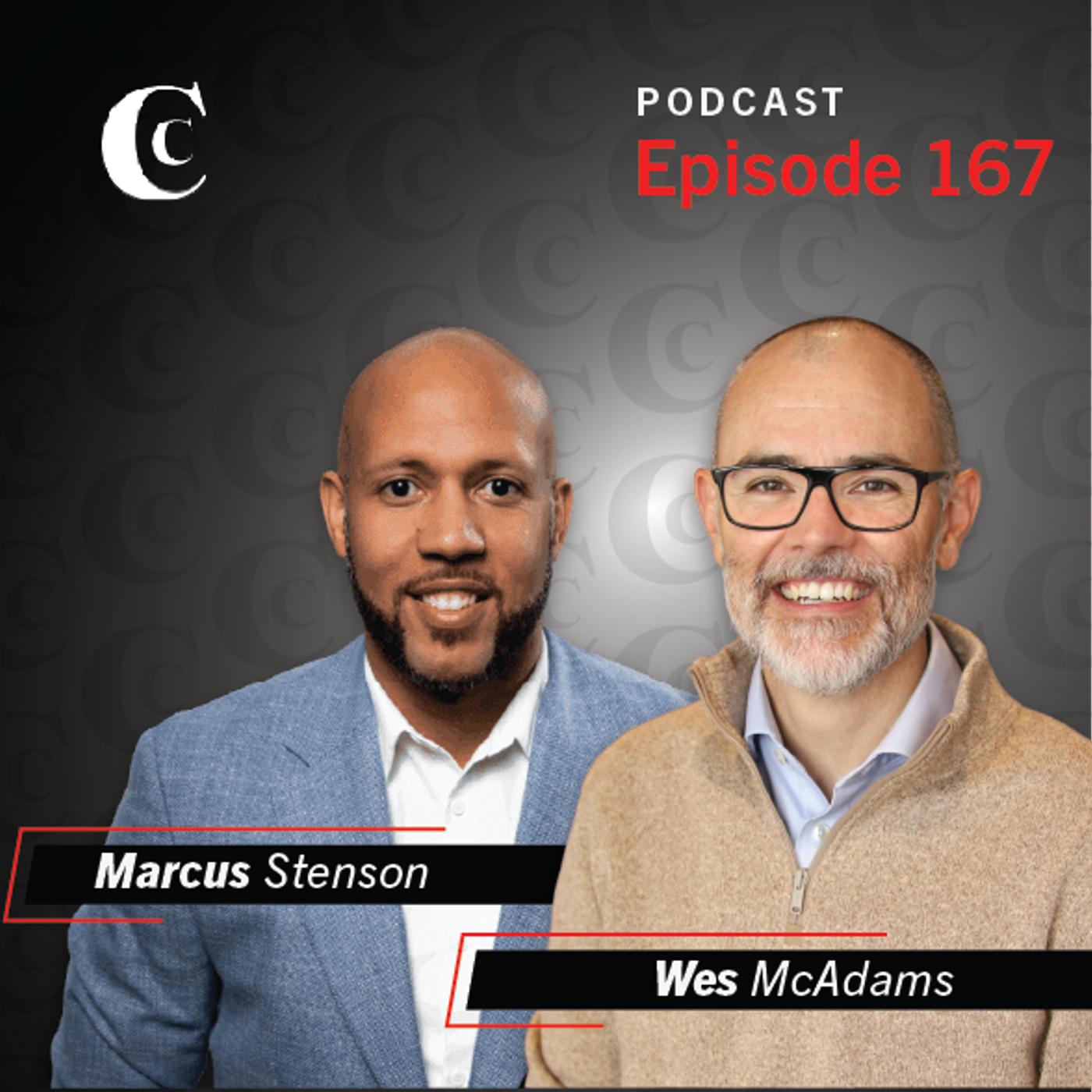
The Christian Chronicle Podcast · The Christian Chronicle Podcast
Erik and Wes recently traveled to Romania for the 2026 European Vision Workshop. While there, they spoke with Christians from around the world, learning about they minister to their communities in different countries. Please consider donating to this nonprofit ministry at christianchronicle.org/donate. If you have additional comments, ideas or suggestions, email us at [email protected]
Marcus Stenson: It's just created a really interesting way for the churches to make a positive impact on the community around them that gets attention. And because the the wells are free, which is uncommon there, creates incredible opportunities for evangelism. Like, why would you guys give us water for free? Nobody does that. And so On top of saving lives, it's been an incredible witness. So all glory to God for that. And I just feel lucky to have been a part of it. I'm a little bit jealous that you guys got to hang out together on this other, you know, mission trip and some of the work you guys get to do over there in Europe. So I'm excited to hear what that was like. Wes McAdams: Hey everyone, welcome to the Christian Chronicle Podcast, where we explore what's happening in Churches of Christ. I'm Wes McEdams and I'm here with Marcus Stinson to bring you the latest news and honest commentary. If you want to hear stories about Churches of Christ, where we've been, where we're headed, and how God is working, this is your podcast. The Christian Chronicle Podcast: Welcome back to the Christian Chronicle Podcast. We're excited for another conversation and we're so glad that you're with us. today we are blessed to be joined once again by our president and CEO of the Christian Chronicle, Eric Trigostad. Welcome back to the podcast, brother. Erik Tryggestad: Always a pleasure to be with you, gentlemen. Marcus Stenson: Always good to have you back. And just as a matter of tradition, a disclaimer, the opinions expressed by Wes and myself do not necessarily reflect those of the Christian Chronicle. Wanna make sure we keep you out of that hot water, Eric. But I know you've got some great announcements for us today, which is where you gotta start every good service, every good podcast. What are we talking about today? Erik Tryggestad: Well, we just went to press with the latest issue of the Christian Chronicle, and here I have a little preview. If you want to see what they look like before we take them to press, this is the latest front page of the Chronicle. It will be in color. But this is Bobby Ross's story about a retreat they did at Great Wolf Lodge down in the Dallas area for Hispanic ministry. these guys really needed a retreat. And this is something that Herald of Truth, one of the ministries that's been around for a long time, they've recently switched their focus to say, hey, we're all about the Spanish speaking world, Latino ministry. And they provided a much needed break for these guys. And we got some really cute pictures from it, things like that too. lots of other good stories. Bobby's also doing another part of his series on churches that have come back together after a divide. And he went up to my grandma's hometown of Sioux, South Dakota, to talk to a Church of Christ there that was meeting in two separate places. And it was one of those splits where it was like after a while, people didn't even realize why it was going on, and now they've reunited. So they're talking about coming back together up there in South Dakota. And of course, we'll have some coverage of my travels of late. That we're going to talk about in a minute, which is includes the European Vision Workshop in Romania. plus I share a little bit of visiting my ancestral homeland of Norway. So that's all coming out in the print edition. What I really want to promo though for you guys is some things that you won't see in print because they're videos. we have a wonderful videographer named Scott Cassidy, who has volunteered to help out the Christian Chronicle with some of our video efforts. And he's done two stories for us at this point where he just took a camera, went on site, and and got the story and reported it much as a TV reporter would, because that's his background. Works for the local public broadcasting station. I think he's worked for Channel Four here in Oklahoma City, and some other entities as well. I hope I'm getting that right, Scott. But Scott went down to Lone Wolf, Oklahoma, in southwest Oklahoma to cover a fire that broke out on the campus of Quartz Mountain Christian Camp. The camp that my wife grew up going to from Altus, Oklahoma, and a lot of kids in Oklahoma went there. And the main building caught on fire in an accident. And so we've got interviews and footage that you can find on our website about this fire at Quartz Mountain Christian Camp. Also, how you can help in the recovery efforts because they want to rebuild and and keep going, obviously. And a much happier story that's got reported is from Stillwater, Oklahoma, the home of Oklahoma State University. And the home of one of the bigger campus ministries that we have in Churches of Christ countrywide, I would say. It's called the University Center, and they just did a $1.1 million renovation of their facility. And it's absolutely beautiful. Scott went around with the camera. He talked to leaders of that ministry. He talked to some of the elders of the Stillwater Church of Christ and about their commitment to. To campus ministry. It's really an interesting phenomenon. I was just talking yesterday to the president of the school where both of my girls went, and Maggie now is in in college here at Oklahoma Christian. Lucy is still at Oklahoma Christian Academy here in Edmund, Oklahoma. And I talked to the president, Will Blanchard of that school, and he said, you know, the biggest feeders or or the the biggest schools that their kids end up going to. It's gonna be a Christian university like Harding or OC in particular. But they also have a a lot of them that go to OSU. And OSU here in Oklahoma does not mean Ohio State. It means the Oklahoma State University. They don't use the in front of it. But anyway. Marcus Stenson: they're very mad now, Eric. You just upset an entire state. Erik Tryggestad: I do well, yeah, but it's Ohio State. So I mean, I think I can live with that. I don't know. Anyway, kids that go to Oklahoma State University, that's that's actually a lot of kids from our Christian K through twelve schools end up going there. So it's a big draw, and it's great that they have a wonderful campus ministry there. We've known about this for a long time. it's a very wonderful, vibrant campus ministry right here in the Sooner State. So those are the main things I wanted to tell you guys about today. The Christian Chronicle Podcast: Fantastic. I I loved all of those stories. I I got to watch that video about the university center and it was fantastic, very well done and and so many great stories to share about the work there. I wanted to to go back to the story on Sioux Falls because I know that Marcus and I both have been there and Marcus Stenson: Yeah. The Christian Chronicle Podcast: have been incredibly encouraged and inspired by that church and what they're doing and the unity that they are displaying by by coming back together, these two congregations re remerging together. Marcus Stenson: Yeah, had the privilege to be with them just this past year and what an incredible environment. I mean, they are on fire. Incredibly diverse, tons of young folks and families. And it's really cool because I think, unfortunately, the only stories that we hear are of the splits. And so I'm really thankful for this series and just really feel blessed to have been able to witness it firsthand. I also really like to hear about your trip back to your ancestral homelands, Eric, because You might not know this, but Stenson is actually a Norse name. So if there's a village named after you, I wonder if you saw any traces of my ancestors there as well. And then of course, campus ministry has got a special place in my heart. I think, you know, we're called to go into the world and make disciples, but our current system of higher academia gives us this wonderful, unique place where the world comes to us on the college campus. And so making investments in that are always worthwhile. Erik Tryggestad: I went to Lipscomb for undergrad and University of Georgia for graduate school. I often think that I may have grown more as a Christian as part of the campus ministry in Athens, Georgia, than I did at Lipscomb. part of that is because I was with a group of people and we all kind of felt like we had to go to church on Sunday, that it was just something we grew up doing and we kept doing it. When I went to UGA, it changed to I have to go to church. I need that recharge after the week. And now I'm thankful for both because for I wouldn't be here at the Christian Chronicle if it weren't for Lipscomb University. And I've come to appreciate that part of my education and spiritual growth more as I've gotten older. But campus ministries on state school campuses. We we don't cover enough, I I think. we we tend to push over to the side. But yeah, they can play a vital role in spiritual development for sure. Marcus Stenson: It's a microcosm The Christian Chronicle Podcast: That's awesome. Marcus Stenson: of an environment where you're in the campus but not of the campus, or at least Erik Tryggestad: Mm. Marcus Stenson: attempting not to be. It's a it's a cool picture of being in the world and and not of the world. Valuable skills gained there. The Christian Chronicle Podcast: Very cool. Well, thanks for sharing those stories with us, Erica. Just a reminder to everybody that you can find all of these stories on the Christian Chronicle website, on their social media, and in the print edition. So make sure that you're following them in all of those places to stay up to date on the latest news in Churches of Christ. And now our favorite segment, the potluck. And in this potluck episode, we're going to talk about mission trips. And I love talking about all the things that God is doing and just Getting to go to different parts of the world and see what God is up to and and be a small part of that, or even just be a fly on the wall and see all of the wonderful things that God is doing through his people all around the world. Eric and I have some stuff that we want to share for the potluck, but Marcus, let's start with you. What did you bring for our potluck today? Marcus Stenson: I brought the only thing that I've got, man. And that is the one place that I've I've really been blessed to go is to do some mission work in Kenya. have a great friend named Brandon who sat down beside me in the church pew after having been over there on business, actually, who came back and just said, Hey, we're going to Africa. I think we can help. And I laughed at him. but later that August we were there, and I think what struck me the most on that initial journey was how benevolent and how loving. all of our brothers and sisters were there. And it was the first time that my eyes were opened to the reality that you really do have family in the kingdom all over the world, even in the r most remote villages, And so the reality becomes my experience in missions, I didn't have any training and I didn't have any experience. So I can take zero credit for what God has done over the last 12 to 13 years. But it has been so cool to be able to go back multiple times and see what God has done. little things that we take for granted, like there was no kids' curriculum or program there now. And when we go back, there are churches filled with ladies leading and tons of kids just excited and sometimes using even Swahili eyed version. I don't think that's a real word, but we'll have to let it ride. Please don't kill me, Eric. But versions of even curriculum you may have seen when you were growing up. And speaking of the ladies, there was no such thing as like a ladies' day in Kenya to our knowledge before we were able to go there and begin working. And some of the women who have come over with us on those trips, now it's not uncommon for us to see gatherings of four, five, six hundred ladies there at the hub congregation. So it's just really cool to see what God can do over a couple of years, but the kind of zeal that exists in some of these places that are abroad. And think maybe the the thing that I'm the most proud of is the the partnership that we've had with with Healing Hands. And starting to drill wells on church property all over Kenya, outside of the Lake Victoria region. It's just created a really interesting way for the churches to make a positive impact on the community around them that gets attention. And because the the wells are free, which is uncommon there, creates incredible opportunities for evangelism. Like, why would you guys give us water for free? Nobody does that. And so On top of saving lives, it's been an incredible witness. So all glory to God for that. And I just feel lucky to have been a part of it. I'm a little bit jealous that you guys got to hang out together on this other, you know, mission trip and some of the work you guys get to do over there in Europe. So I'm excited to hear what that was like. The Christian Chronicle Podcast: Yeah. Well, thank you for sharing that, Marcus, and thank you for the work that you've done in Kenya. I I'm hoping that one of these days I get to join you on one of those trips because I've never I've never visited anywhere on the the African continent and I would love to go and and see what our brothers and sisters are doing on on that part of the world and to see what God is doing in them and through them. I I've have visited Europe a few times and this time I got to go to Bucharest, Romania for the European vision workshop and I was really excited when I found out that Eric Trigostad would also be there. And so we did. We got to hang out. I never get to see Eric on this side of the pond, but I got to spend some time with him in in Romania. Eric, what was your overall impression of I know you wrote a story that's gonna be coming out soon, but what was your overall impression of the workshop? Erik Tryggestad: Well, I've been to it a few times and it kind of bounces around different parts of Europe, kind of trends toward Eastern Europe. Although it's been in Italy, it's been in Albania. I've been to it when it was in Bratislava, which is Slovakia, right over by Vienna. so it developed it was really the vision of some guys, including a longtime missionary named Bill McDonough, who wasn't able to be there for health reasons this year, but he kind of got this going. In response to the refugee crisis from around 2016, 2017, when we had so many folks from the Middle East coming over, going from Turkey to Greece, and then spreading across the European continent. A lot of them are from Iran, they're having visions of the cross. They're dreaming about Jesus, they're coming to Christ. And it was like, how do we respond to that? but it was so well received by the brothers and sisters in Europe. That they said, let's continue doing this. so it's become an annual event. it was really great to just reconnect with a lot of guys that I've known for a long time over in Europe. especially I'd been in Romania 2022 en route to Ukraine, right after the war started in earnest there, and got to reconnect with a lot of the folks that we met on that trip. And it was nice to be with them and not in a context of we're rushing to get to the Ukrainian border. But of course the big thrill for me was you know, being being able to tell one of the most beloved preachers within our fellowship to, you know, run the camera for me. And I'd be like, excuse me, camera boy, I I have an interview here. Would you mind hooking these guys up and filming them for me? Yes, thank you, camera boy. You know, that that that was really probably the highlight of the trip. The Christian Chronicle Podcast: Well, it was a highlight for me as well. I don't know about beloved preacher, but I did get to to stand behind the camera and and watch Eric at work and ask some really great questions to some really great people and and hear some really great stories. And I'm excited to share these stories with everyone else. So this is this is the potluck dish that Eric and I both are bringing. And these are some conversations that we had with various people there, not not just from Romania specifically, but from all over. We're gonna start with a story from a lady named Laverne, and Laverne now lives in the UK, I believe, but is originally from Bermuda. You wanna say anything about Laverne before we share that that interview with about her? Erik Tryggestad: Sure. Laverne is the result of me picking different tables to sit at every morning when we were at the breakfast bar there. And that always seems to pay dividends. I'll just kind of plop down in the middle. And there was a group of folks there from various places in the UK. I think Laverne is from Leicester, which is I think that's how they pronounce it. It looks like Leicester, but it's pronounced like Leicester, I think. Anyway, she's originally from Bermuda, and that was what I found out is this whole table there. All of them had ties to the Caribbean, but they all live in the UK now. Most of them were from Bermuda because that I think is like a territory of the UK. So immigrating between the two is is pretty easy. But Laverne got to talking about the struggles that she had been through in her own life and how she'd written a book about all of her her Christian walk and how it had become an inspiration to a lot of other women. And the more that she shared, I said, my goodness, I I need to start, I'm I I need to start writing this down, but we need to do something a little more in depth. as eager as she was to talk about it in front of me at breakfast, then Wes and I try and pull her aside and she's tries to get real shy on us. So thankfully her brothers and sisters in Christ almost like push her on camera there. And so she does she does talk to us. and and share some of her story. And then at the end of it, she was like, Can you be done with me now? Or something like that. Can can you be rid of me now? Or so I I forgot exactly how she phrased it, but I think what she meant was, Can I be rid of you now? but it was a lot of fun talking to her and getting her perspective because that really was it it was almost kind of a non sequitur with with the theme that that you were talking about. You know, the whole The whole workshop was focused on the role of the Holy Spirit in our lives. But then I think that really inspired her to talk about her own spiritual journey and how now she's an aid to other young women from, you know, around the world. So that's a little bit about the first interview that you're gonna hear. The Christian Chronicle Podcast: Yeah. Yeah. So without any further ado, here's here's Eric's conversation with Laverne. The Christian Chronicle: This is Eric Trigostad in Bucharest, Romania. I had to think for a minute about where I am because I'm talking to a sister in Christ who lives in the United Kingdom but is originally from Bermuda, but has something to say about the nation of Trinidad as well. So we are doing a lot of globe hopping here. So Laverne, you were telling me a little bit of your story yesterday about how you became a Christian and how you got to the Trinidad School of Preaching and and the role that Brother Dominic played in that. So recap a little of that story for me, if you will. Well, I became a Christian at a young age. I was a Christian at twenty six. Some people would say that's not a young age. Well It w I was young for me. Did you grow up in the church? No, I did not. Okay. I knew my grandmother is a is a member of the church and that was it. And so, you know, through those years of of trials and tribulations and becoming a Christian, I left the church for many years and I returned. Once I returned, it was not an easy journey returning, very much of struggle. And there would came a time after a year or two, I was still in a dark place, still didn't know if I wanted to be here, if I didn't want to be here. And I met a brother that came to speak at the congregation I was, and we had a talk. This is in Bermuda. In Bermuda. Okay. And we had a conversation. And he talked about what I would like to do, what do I like doing? And I like to minister, I like encouragement, I like encouraging people, I like to give people my time to listen to their stories, to listen to what they're going through. And so he made a suggestion that why don't I come to the Trinidad School of Preaching and teaching? of course that's not what I want to do. This brother happened to be Dominic DeSantos, the director of the Trinidad School of Preaching, in case you're wondering. And what made me, and most people ask why was I insecure about going? But one of the reasons is that I wasn't a person that had much schooling. So I wasn't able to read or write very properly. And so I was very intimidated to go to school and most of all to be around younger people. I was encouraged to go about a about a year later and I called him and I went. challenging, yes. A journey, yes, much crying, yes. But the young people became the parent. So the young people was able to help me through the journey of going to school and the most wonderful and rewarding thing I've ever done. So I did graduate. I went to school at 58. I graduated at 60. Wow. So doing that, and we talk about the Holy Spirit, doing that, by the grace of God, I was able to be able to write a bit now. I still not would not be able to tell you about a a wall or ease. And I'm not actually pronounced no words for you, but I can write. I've written a book called Do You Know Who You're Sitting Next To? I chose to write that book because we sit down next to people and we really don't know who they are. We don't take the time to know who they are. We if you ask somebody how they're doing, always be prepared to to listen if they got a story to tell you. Because we're so interested in saying, well fine, but not all the time but fine. And if you sit next to someone, you should take the time to find out who they are. you know, where they come from. But we race to try to meet everybody. Not always you can meet everybody. It's that one person that you need to take time to. And Dominic did that for me. He he listened to what I wanted to be. He took an interest in me. And that gave me a lot of encouragement to become who I am today. So I give God all the glory, but also opportunity to to listen to the spirit, not in me. I am thankful every day that I made that decision. Was it easy? No. But the reward is out of this world for me today. And I'm thankful. I am now 73 and I am doing another book and I am writing my story because most people want to know how did I get through? So that's what I'm doing now. That's great. Now, when did you move to the UK? 2014. and tell me about the church that you're a member of right now. I'm member of the Lester Church of Christ. In Leicester, okay. Paul Hill had started that congregation and I'm still there. Several folks from the Caribbean in that congregation, is that right? No. A lot of people from the African communities. Okay, some African immigrants. So so I choose to my ministry I do basically on my own because One of the things I've learned in this journey is that people don't live to give up their time. Mm-hmm. And I like to give time. I like to spend time with each individual. I don't like to have these, I'm not the lady class person. I'm the person that will come to my home or wiggle you or meet you to listen to people's stories because people do not open up if they're not comfortable. So I try to be very transparent. So I talk about Me living on the street, I talk about my bad behavior, I talk about leaving the church and returning, I talk about the things that that I went through to help these young people to see. And so that's who gravitates mostly. 90% is young people. So I still talk to those that are in Trinidad and those that are around the world. And so I put myself out there. I get you could call me one o'clock in the morning, two o'clock in the morning, I will get up and be able to assist you. And I believe that we lack that in your church. Okay. We like giving up our time. Well, last question. Tell me what have been your biggest takeaways from this conference? What you've liked about it? What this is not your first European vision workshop. You've been here before? Well, this year for me, even when you're talking about the Holy Spirit, but also those classes are practical. We need practical teaching, not complicated. And so when you're teaching these classes now, people's gonna check themselves. What is kindness? You know, you just we just take their word for granted. What is forgiveness or what is self control? what is these things that they're talking about? What is love? What is that? Those things mean something. And they and see it's the small things that people are missing. And those little small things mean a lot. So for me it's very powerful. And especially the one on peace, because I had to get to that point in my life for some for things that happen within the church. And I had to get to that point. So you have to pursue your own peace. So this conference was very Encouraging for me. The Christian Chronicle Podcast: I'm positive that there is so much more to her story, and I really would love to get to listen to all the things that she's been through and all the ways that God has worked in her life. But this next interview is with Stas, and I won't even try to pronounce his last name. He goes by Stas T online, but Stas preaches in Ukraine. And I in fact I asked him where he was from and he said Ukraine and then I asked him where he was living now and he was like Ukraine, that's where I Erik Tryggestad: Mm-hmm. The Christian Chronicle Podcast: I live and he's in the middle of a war zone. But but his stories of what he is doing, but more specifically what the Lord is doing through him and through those brothers and sisters in Ukraine inspired me, encouraged me, convicted me. Eric, anything you want to say about this conversation with Stas before we play that? Erik Tryggestad: I think it's Kuro Pyatnikov. That's that that's The Christian Chronicle Podcast: Hm, that sounded good to me. Erik Tryggestad: as best as I can pronounce Stas's last name. I met him in 2024 when I went to Ukraine for the second time since the war had started in earnest in in 2022, at a preacher retreat in Irpine, a northern suburb of Kyiv. And you'll remember early in the war, the Russians had made it all the way through Irpine and Bucha. the these places north of Kiev and they actually blew up a bridge. The Ukrainians blew up a bridge to keep them from getting any farther. So I mean it was really dangerous and you could see the evidence. They pushed them back into north to the north back into Belarus shortly after that. But you can still see all the battle damage there. And Stas is originally from eastern Ukraine, had to move westward after the first invasion began. in 2014. I think that may be when he ended up in Lviv, which is the biggest city in western Ukraine. they don't get as much of the fighting as what's going on on the front lines, certainly, or even in Kiv. But nowhere in Ukraine is really safe right now. Stas was drafted into military service and served. Thankfully he was able to stay in the Lviv area. but some of the stuff that he told me about, watching his fellow sol soldiers take vans they'd been using to transport bodies and and they'd take them to the to like one of those power washing stations, like a car wash, and just wash the blood out of them and stuff. I mean, just crazy stuff like that. How do you endure something like that and then go on? But he has stayed in ministry, he's out of the military now. And he's preaching for this Church of Christ in Lviv. You know, he took a bus to get to Romania. And he was taking a bus to get back. We actually went around, it was we went there was a group of us. Some some were these brother Emmanuel from London, who's a Ghanaian, and his wife, Tamika Rabinsky, my good friend, from Vienna, Austria, and Stas from Ukraine. And we're looking around downtown Romania, and Stas is our tour guide. And which is hilarious because none of us know anything about what we're looking at. So, but for some reason Stas has just got that leader vision type thing. So we're kind of following him around. But he was catching a bus at ten o'clock that night on Friday to go back all day Saturday so he could get preach in Lviv on Sunday. So I mean, God bless him. great guy. I'm always so inspired when I talk to him and the way that he's maintained his composure and even his sense of humor. You know, the the topic that he had to talk on was gentleness, the fruit of the spirit, gentleness. And and in a war zone like that, how do you practice gentleness? And he even threw up a picture of of anger from inside out, the Pixar film, to say, you know, how do you keep from from becoming this guy? But I I just can't say enough good stuff about So I was glad we got a few minutes to talk with Stas. The Christian Chronicle: this is Eric Trigistead with the Christian Chronicle at the European Vision Workshop here in Bucharest, Romania, with my good friend Stas Kuropinikov. Kuropyatnikov. There we go. Thank you. That's why we just that's why you just go by Stas T on on Facebook, right? Yeah, exactly. Exactly. So you were one of the last minute editions to the schedule. You're from preacher in Lviv, Ukraine. Yes, sir. Former military served during the conflict that is continuing in your homeland. Unfortunately. Yeah. And so you've you've seen some terrible things over there. We've talked about this before. they asked you to come and be on this program as a substitution. Said we're talking about the Holy Spirit and kind of the fruits of the spirit, and the one they gave you. It's gentleness. Gentleness. Gentleness. So you had to kind of crash course in gentleness. Yeah, it's a little what has that been like for you to try and seeing all the things that you've seen and with Ukraine being in the the situation that it's in right now, what's that like for you to get that assignment to talk about gentlemen? It's look like a god providence to teach that kind of lesson because it's not easy to stay gentle in the circumstances where we are. So and I I learn for myself a lot when I discover again and learn again this topic in a context where we are. And yeah, I want to remember remind everyone through that podcast too that the war is not finished and people Christian, our brothers and sisters still met meet the that war circumstances, that difficult circumstances. So Gentleness is something what we really need and I believe that gentleness is not just good character, attitude, it's a fruit of Holy Spirit because it's if it's not fruit of Holy Spirit, I just won't adjust us. Yeah. But yeah we need to learn from Jesus how He said that learn from me that I'm gentle. So yeah, we have to learn that and produce the fruit of Holy Spirit, gentleness, even his heart. Yeah. Was there anything as you were getting ready for this lesson that you that you learned about gentleness, about this being a fruit of the spirit that maybe s jumped out at you, something you hadn't considered before, anything like that as you were preparing? Most of the ideas I remind to myself, but you always still think about new situations, new stories. So you have to like put your ins inside of the situation again when you learn this, discover this topic again and again, but through other stories, through other situations in your life, in our life. So not a lot of new, but mo mo more struggling. Struggling because it's not easy. It's not easy to produce this fruit, but if you are if you want to be a spiritual person You have to produce, you have to searching for Holy Spirit, you have to searching for fruit of Holy Spirit. Have you learned anything else from this conference? It's kind of all focused on the Holy Spirit. What have been your takeaways from what some of the other speakers have said? I'm loved to be in Romania and I'm so thankful for Romanian brothers and sisters who sta stand up with us when the war started. And we had a very good teachers here in seminar. So and I very loved that brother Vasil said about joy. and he said do not don't give to anyone to take the joy. So if you need to turn off the news, you have to turn off the news. And I I sitting and think, I can turn off the news. I am a news. I mean Ukraine is a news. So like y yeah, it's a good point, but I can turn off that because I am a part of that. Right. So it's what I it's what's stuck in my mind. It's what it's what maybe you can feel if you are if you will come to Ukraine and and leave some time and and feel that struggling and challenging so you just can't to turn off. Yeah. You're in Lviv, which is in the western part of Ukraine. You're originally from Kramatorsk, is that what I remember, which is been under siege for a long time. It's still under Ukrainian control at the moment, I think, but it's it's been bad there. It's been getting bad in Lviv as well, if I understand correctly. Can you tell me just what daily life has been like there in Lvviv for the last few months? Yeah, the Lvviv i it's one of the safer safest place, one off like in the western part of Ukraine, but it's still air air alarms and it's still some bombing sometimes of drones. or missiles but i always said that it's depending what we comparing if we're comparing in bucharest yeah the there is danger in lviv if we comparing lviv with Kramatorsk or Kyiv right now capital of Ukraine even Kyiv right even Kyiv right now it's every day bombing every day the last month 350 people was killed or wounded civilians in Kyiv so it's depending with what you compare. So but me and my family, we stayed in Lviv and minister the church there. So we take this risk. Well not just ministering in the church. You are posting pictures of baptisms. I know you guys just did Camp Americane not too long ago and had a great turnout for that, expecting a bigger turnout next year. So what is it that keeps this the the spirit of Ukrainian people I mean after all these years, you know, what what keeps them in the looking toward Christ or has the has the war turned more people toward Christ? It is, it is turned more people to the Christ. I don't know how people respond for the challenges in their lives, but generally I can tell that the Ukrainians brave brave Christians. what I found for myself when Jesus asked Peter that maybe you wanna leave me. and do you remember what Peter said where else can we go? You have the words of life. Exactly. And I tell to myself like where I will go, like how how I can betray Jesus if if I will in the end of my life will stand in front of him. So where I will go, so I have to go. I have to just keep going. So and most of Ukrainians just you have we have just keep going. And about sharing the gospel, yes, light much more visible in the dark. So right now it's a lot of people becoming Christians because they lost everything, their loved ones, their homes, their job, their positions, and they l lost hope. So and it's a good time to share the gospel, to share the light. So it's a good time right now, not wait until the war will finish for missionaries around the world. If you wanna preach the gospel, right now it's a good soil soil. So good in fact, a lot of people would say it was crazy to think about church planning in the middle of everything you're going through. Yeah, you guys have done it. Yeah. You've got it so you've planted a whole nother congregation. is it in the city of Lviv or outside a little bit? It's a region. Okay. So in a region. So in 2015 we established Lviv Church of Christ because in the whole region it was no church of Christ. So we went in 2051 and established the congregation. And in 2025, after 10 years, we had this in our mind behind in our mind that we need to multiply the churches in smaller cities in in Lviv region. But the war started and Like but the time came and we saw okay now now is the time and we went to the Dragobic City, good luck with the pronunciation of the city So Dragobic City and we came with my co worker brother Bogdan Chigvinsev and we just started, just started preach the gospel, rent the facility and start work with refugees, again with the people who lost everything. So and we try feed them, warm them, help them, and through that we share the gospel and say that you know that you have better home in a heaven. So and people become answering for calling of Christ. And right now we start in 2025. Right now we had about five baptisms there. but what in encouraged me that about 70 people gathering every Sunday. Wow. to study the word of God. Most of them not Christians, but most of them coming to start starting coming to church every Sunday. Like it's not just to come to eat or find something for your body, but they start coming every Sunday. And it was in encouraging me. Just in the beginning of September, I visit them again because now we have a full-time preacher there. So we just travel one time per month. And I don't even have a space to stand to preach the gospel. We don't have a like facility, big facility, so not big room. but we had seventy people inside of this small room. Wow. And I don't have even like people was around. Yeah. Because it's was no no empty place. That's great. That's a good problem to have. And I and I believe that we need to keep going. Like I really feel that we need to plant another church in Leave region. And this is the time. We don't need a way the time when circumstances will be better. Because circumstances probably will never be better. I don't know. Yeah. But we have to preach the gospel right now in the bad times, in the good times, and we need to plant plant church. And and i it's not just about Ukraine, everywhere, especially Europe. Yeah. Well, and that's what we've seen is the Ukrainian refugees that have actually left Ukraine. have strengthened and even planted new congregations in parts of Europe where churches of Christ were dying. I know the Church of Christ in Warsaw was down to about three, four members. And then they had, you know, Brother Tehran there. they've got like sixty. Yeah. they they keep growing because of all the refugees there. So it really does remind me of that verse that we were talking about Joseph showing kindness to his brothers. You know, when they come to him at the At the end of their father's life, and say basically paraphrasing, say, Dad said you have to be nice to us after he dies, in spite of everything they sold him into slavery, they done all that stuff. And he says, What you intended for evil, God was able to use for good. So we see good things coming out of it as terrible as the circumstances are. Absolutely. So that's just in 10 years the church in Lviv has grown to these two congregations because you said there wasn't much at all there in 2015. It was no church of France there. Did did you move to Lviv around then because of what was going on in Kramatorsk at the time or no. What what brought you there? No, we had I had from student my student time. Okay, I had a desire to plan the church somewhere where is no church. Like so it's just time came and I thought like it's a time. So I came in 2015 there in end of 2015 with my team. but the war started in 2014. Right. So in the time when I moved to Lviv, Kramatorsk was liberated in that time from Russian Akupa. That's that's yeah, a a lot of people think that the war actually started in 2022. Any Ukrainian will tell you this actually started in 2014 when Russia annexed Crimea, and then in the Donbas region in the east, where so many of our brothers and sisters in Christ are, That's where the the Russian separatists intervened and declared their own republic. And so they were pushing out. I think maybe the one of the schools in Kramatorsk or some of those was taken over by militia and they were and they they kicked the church members out of there. Yeah, so it was in Gorlovka. The Gorlovka that's right. Yes, Gorlovka. It's like my co-worker Bogdan, with whom I plan the church and work right now. he was a one of the member. Who was there in that Sunday when when the when they showed up and said this is military installation. Yeah, you have to leave. It was in Sunday worship. Yeah. So they just were take all the Bibles, threw them away, push people from the church building and say They say if you want to well in in they say if you want to be a Christian, then go to the Russian Orthodox Church 'cause that that's the only one that they really kind of accept. so all these other are just they think these are American supported You know, so so get them out of here, there's full of spies and stuff like that. It is that's yeah, that that was a real distressing time and then of course twenty twenty two happens. Is there anything else that you would want to say to the folks, you know, your brothers and sisters in America, places like that? Yeah, the the you want us to know what can we be praying for right now for you and for our brothers and sisters in Ukraine. I want first add that for what you tell that tell right now about that Ukrainians who left country right now to help to restore some congregations in Europe or plant it the yeah. And I think it's really God's providence. Yeah. God used this goodness in evil time. so and this is obviously obvious to me and I really want to remind everyone that the war right now it's almost fifth year. Wow and I mean full scale war yeah not from twenty twenty-two and many brothers and sisters still struggling a lot and some of people strugg challenging with brothers challenging with the military service. And have to go to protect their country. So what I recognize when I travel to seminars, workshops like that, that a lot of people do not follow news much. Like it's just somewhere, like war happened somewhere. Well, in the war in Israel and now Iran is happening, so our focus lost it, but the comparing with let's say this way. some kind, some way, all world wars started in Europe. So we have to remember that. We have to remember history and we have to remember that this war, it's the biggest war after Second World War. Like millions troops against millions troops. Yeah. So and brothers and sisters from s United States and who will watching, we need to raise hands in a prayer for God will stop that. if God mercy and God willing, and you have to remember it's keep keep going and it's become worse. It's not become better at all, it's become worse. so we still need you, we still need your prey, we still need your support, we still need your voice on for in front of the maturity, in front of the people who make decisions. We still need your voice to help us. All right. Stas, thank you so much, man. Thank you. It's great to be here. The Christian Chronicle Podcast: as you're listening to this, remember our brothers and sisters in Ukraine in your prayers because they they desperately need it, and we need to be praying for peace. And I think often we we forget because it's not top of mind for us anymore. And I think we we need to be reminded how we need to be praying and thanking God for the work that our brothers and sisters in Ukraine are doing. I was really also encouraged by, and I'm glad we get to end on this conversation with some of the brothers and sisters from Romania. And we got to talk with six different brothers and sisters from various congregations there in Romania, as well as one brother from the United States, Marty Knight, and they all were talking about this missionary that they all knew named Harvey Harvey Starling, who recently passed away, and they were Talking about the the legacy that he left in Romania. Anything you wanna say to to set up this conversation, Eric? Erik Tryggestad: Well, Harvey Starling had preached like a thousand gospel meetings in the United States before he ever set foot in Romania, is my understanding. And the but but once he was there, I guess in the nineties is when he started, because he was there for nearly 30 years, in and out of Romania, planning churches, nurturing them, he really found a a calling over there for this this former communist nation. And was larger than life, evidently, according to the Romanians that we talked to. Well over six feet tall, had a big booming voice. one of them, Maria Ionella from the Patesti Church of Christ in Romania said that when he preached the wall shook. He was just this kind of a guy. So it was interesting to get their perspective on and and and you could really hear their love for this guy. Harvey is the way that I knew about Romania because he would send out these newsletters about the seven churches. It sounded very biblical what he was talking about. But there were seven churches that he kind of shepherded and worked with in Romania. So I would get these newsletters all the time, news from the seven churches. And so when I finally got to meet these guys in 2022, the first time I went over there, we talked a little bit about Harvey. But he passed away just, I think it was September 10th. It was just a few weeks before this European Vision Workshop. So the guys at Sunset International Bible Institute, one of the three sponsors of the workshop, the other two are Healing Hands International and World English Institute. Harvey actually taught briefly at Sunset. So they presented a World Changer Award to the Romanian brethren there. And you're going to hear them talk about that and give some of their thoughts. among the group, you're going to hear I mentioned Maria already. my my good friend Adi Vojku, who's a minister for the Cryova Church of Christ, he was our driver when we went up to Ukraine. spent a lot of time with him over in in 2022, and it was great to see him again. and Dry Dragosh and Serena, who work with the Church of Christ in a town called Klužnapolka, which is the closest large city to the Ukrainian border. So they really served as a refugee kind of way stop. for people fleeing Ukraine in the early days of the war. So it was good to see them and reconnect with them. And then Marty knight also offers some additional thoughts on the legacy of Harvey Starling. The Christian Chronicle Podcast: Yeah. We'll we'll close with this with this interview and I I know that everybody who hears it will be encouraged by it. But before we go, Marcus and Eric, thank you so much for for your contributions today. And I hope that as we close out this episode and people hear this conversation, I hope that they are encouraged by what God is doing around the world. Marcus Stenson: Amen to that. Erik Tryggestad: Amen. The Christian Chronicle: I'm talking with some of our Romanian brothers and sisters about the late great Harvey Starling. Sunset International Bible Institute just presented him posthumously with a World Changer Award. And if you look at the inscription here, it's one of the things that he said in his these were his last words, we think. almost every single every every sermon. Refrain. Was his refrain. Yeah. Let us do all the good we can for as many as we can, as often as we can, and let us do no harm at all. So when I started working for the Christian Chronicle, I started getting these newsletters from Harvey about the seven churches. And he was talking about seven churches, not in not in Revelation or anything like that. He was talking about the he was talking about Romania, where he had done this incredible work of planning churches. The folks standing here are Romanian brothers and sisters are really a big part of his legacy. So we've been talking a little bit about how this guy came here, six foot five with a booming voice. Just tell me a little bit about his presence and about the impact that he had on churches here in in Romania. Probably the first thing we could see say is that we wouldn't have been here today, probably none of us, if it wouldn't have been for Mr. Harve. He was a giant of faith. we owe it to him basically when we give thanks to the Lord for his legacy over here and to his wife, Miss Pat, who started the quilt program in Pitesht and for all sorts of ministries. we we just say thank you. Mr. Mardi was here in the beginnings and I think he can tell you all about the beginning part in Pitesht, but we wouldn't have been here today if it wouldn't be. Marty is not Romanian. You give us a little bit of your background as well and and your attachment to all of this. Well, Harvey Harvey's younger sister was married to my dad's older brother, and so they were always like family to us. I shared some cousins with Harvey's children. my dad and Harvey were very close. Harvey preached a probably about a dozen gospel meetings where my dad was doing local work. And I first came to Romania in ninety seven. And was part of the first teaching team in the city of Carhova, which was the second church that was started at his home church. And gained even more respect for Harvey than I had before. when I came and saw the work that he was doing here in Romania. He spent countless hours walking up and down streets and just putting in a heavy physical tour to start the work here in Romania. I remember Mr. Harvey that I I hear about few mini missionary brother that every time they come to Petersh to Romania he speak with them asking about ministry the churches. I always was concerned about the people. He loved us very much. And I remember a story about him when in that time that we don't have card credit card and he come with cash and hide the cash at the airport to help us to make the ministry here in Obites in Romania. It was a very, very good person and he changed our life. Very good. That was my brother. yeah, as Adi was saying, none of us would have been here without Mr. Harvey starting the churches. And yes, he planted seven churches in the south of Romania. And we are I am from Pitesht, as well as my brother and Vlad and the other two that will say something. and we are very grateful for the legacy that he left behind left us with. And his legacy will continue to live on in us and the next generations. he was just amazing. Every single day he would think about people constantly. He would ask about them. And he actually put into practice that phrase that he would conclude every sermon with. And he was amazing. He just he meant a lot to the work in Romania. And he actually baptized me in 2010. I'm very grateful to what he did. he was indeed the giant of faith and we love him. he will always be in our hearts and we want to continue his legacy and two or three preachers in Romania are the result of his labor in the world, Dragos here present and Claudio Mutaza from CBU. We we will love him and he will always remain in our hearts. Vlad just took took my words out of my mouth. I wanted to to say the first thing I wanted to say about him was that his influence is not only at the seven churches in the south, but also we work in Klush now, which is in the north part of the country. But my husband is a preacher, and we both of us are from Pitesht. And Claudio from Sibil, which is also in the north, well, is central part of the country, I will say. He's from Craiova. So Nine of the churches from Romania have been influenced by him, by his work. I want to to tell you two more things about him, which I think are very important. He was a very passionate preacher. Nobody could sleep during his ceremonies. He will come, touch people, get like really, really soft. Are you listening? Are you listening? And then he will just not scream but like have a very, very loud voice. He will keep you awake during all of his sermon. And one other thing that I really appreciate him for is the fact that he has always, always encouraged the young men to serve in the church. we don't have a background of growing up in the church. the church was young when we started coming to church. But he all I mean he always always encouraged the young men to come and lead the prayer, to come and and lead the Lord's Supper, have a so a short devotional. So that was and I think it still is very, very important because we need to teach our young people to continue the work. I mean, that's the future of the church. If you just use the elderly and experienced men in the church, then what about tomorrow when we won't have them? So he was he was a very, very great preacher and he has a very good insight about the future of the church. During the ladies' classes, he will come to greet us. And my favorite part of his speech was this one. As you can see, I'm very tired. I haven't slept all night long. I've been mixing and stirring and baking all night long just for you to try my cookies. I'm sure you will love it. And then he go, No, no, no, I haven't done that. There are some sweet ladies from the church who did it, but I'm very happy to see everybody. And he I will tell you this, he had. Love for everybody. Yes. I mean, it's important not to keep your distance from the people. I mean, love is shows in actions. And he will go and touch people. That's important. Just like shaking your hands. And and one more thing, I will say one more thing. He was very organized. Very organized. Which also I mean discipline is also important in the church. in church or organization, let's say. And he was a person like this. And yeah. So I will say he was a great influence for me and not only for me for everybody. And I think there is nobody in Romania that will equal him ever. True. We are here today and the Church of Christ is here today because of him, not him alone. Not him alone, because I know he's been supported by many brothers and sisters from the United States, and we are very grateful for the trust that they had in him and for him continuing the work here and starting the work here. There are many brothers and sisters from the United States who helped him in this work, and we are grateful for them too. But he and his wife, and I I do want to mention her also, they were wonderful people. Both of them and they have worked their hearts out for everybody here. And we we will miss them a lot. But we know we know that he is in heaven with God. Both of them. Both of them. I started to visit the church in one thousand nine nine hundred ninety six. And after a few months, I became a Christian. And I remember was one Sunday when after he preached, he said, Okay, right and right now let's stand up and our new brother Dragosh to lead a prayer about to announce me, without to not saying something. And I look at him and I said You didn't know you were gonna do this. Okay. Me? Yes. Let's start let's let's st stand up and I was making sign. I I was not known to to well English, and I said, You are sure about that? And say go ahead. And I remember I started with with nothing, with something, and after that I say some words. But what I what I try to say it's he encouraged me all the time. because after that that Sunday, after a few months, he said, okay, right now you need to start to prepare to speak for the Lord's Supper. And after a few months, right now you need to start to prepare a lesson and you to present a lesson. So he he was a big encouragement for me. And he I love him. he was like my father, like my godfather I don't know how to to say that but he he influ influenced a lot and yeah it was a special was a special rather for us. You talk about him being so organized, Srian. You are very organized as well. You guys have had to be because Kluj Napolka was where where these guys minister was right on the the closest church of Christ to the Ukrainian border. So when the crisis really started with refugees in 2022, you were making twice daily runs to the grocery store to feed people and things like that. But we visited them in 2022 and it was a well-oiled machine for having had a grocery store set up that the refugees could go through. And I know that changed a lot of lives. We were not alone in this work. Adi came every week to help us. Adi was our driver. And I have to tell you this they mentioned the quilt program. From Piteeshtin Krajova, which was started by Pat Starling, brother Harvey's wife. She spoke with them to send the quills to Kluj for us to take them to Ukraine and use for our brothers and sisters there and also for the refugees in Kluj. So their quills got to come to Kluj and then to Ukraine. So their influence and their benevolence went even farther than they that turned into a part a big part of the relief ministry for for the Ukrainians. The quills were made during our ladies' classes in Piteshten Craiova and this program was led by one of our sisters who is now eighty two, Miss Dinka. Miss Dinka Elena from Pitesh. Sorry. I just wanted to mention one thing. This This interview is taking place on October the first. And about six or seven hours from now, the family will lay Harvey to rest. so we send our love to Michelle and Vernon and Alan and the family of Harvey's late son Milton. And we love you guys, and we're thinking about you today. His preaching will remain forever over here. He always used to say, Let us preach Christ and him crucified. We are saved by grace, not by works. So as he usually concluded every sermon that he ever preached, and me, Vladuana, we always translated for him many of his sermons. And you have to imagine the Empire State Building a foot and a half taller than Mr Mardi right here. And then us the tiny Romanians. He was always say, let us do all the good that can for as many as we can, as often as we can, and let us do no harm at all at all. How does that translate into Romanian? Can you say that in Romanian? I think it sounds better in Romanian, don't Wes McAdams: Thank you so much for listening. Please take a moment to like, subscribe, or review today's episode. If you have additional comments, ideas, or suggestions, email us at podcast at Christian Chronic.org. The Christian Chronicle Podcast is a production of the Christian Chronicle Incorporated. Please consider donating to this nonprofit ministry at Christian Chronicle.org/slash donate and supporting our mission of informing, inspiring, and connecting churches of Christ around the world.