
The Chris Hedges Report Podcast · Chris Hedges
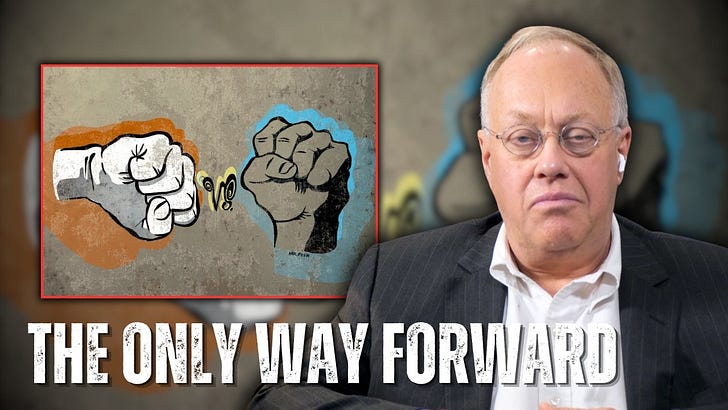
This article is read by Eunice Wong. You can find her work at www.eunicewong.actor. Text originally published June 1, 2026. The Chris Hedges Report is a reader-supported publication. To receive new posts and support my work, consider becoming a free or paid subscriber. Full Text: MEXICO CITY — There are two ways to confront global capitalism. There are mass movements, especially strikes, which disrupt commerce and government to force the ruling class to create systems of justice and equality — albeit ones where capitalists retain significant power. The National Coordinator of Education Workers in Mexico (CNTE) — a grassroots union created in 1979 by dissident teachers — is currently attempting this in Mexico. It announced that if its demands for salary increases and job security are not met it will occupy public spaces and shut down the World Cup soccer matches scheduled to take place later this month in Mexico City. When the teachers went on strike in the Mexican city of Oaxaca in 2006, following the incarceration and disappearances of union leaders, police fired on the protesters. The community rose up and drove the police out of the city. Oaxaca established an autonomous anarchist commune for several months. Although the commune was ultimately crushed by the Mexican government, the uprising spawned popular assemblies, independent media and empowered indigenous communities. The second way to destroy capitalism is through the nationalization of industries and banks and the seizure of capitalist assets, although this can give rise to an equally pernicious form of state capitalism. This radical route entails, as in the Russian or Cuban revolutions, violence. Capitalists do not part with their monopolies on wealth and power peacefully. They orchestrate severe state and vigilante violence. They install dictators and fascists who abolish civil liberties, carry out mass arrests and criminalize even the most tepid forms of dissent. Accommodating capitalists and their institutions, even with high taxation, regulation, strong labor laws and a prohibition of monopolies, means living amid a hostile force. It is a matter of time before this hostile force organizes to dismantle the social democratic state as happened in Sweden, Britain and Salvador Allende’s Chile. Liberalism, which Rosa Luxemburg called by its more appropriate name — “opportunism” — is an integral component of capitalism. Liberalism ameliorates capitalism’s excesses. But capitalism, Luxemburg argued, is an enemy that can never be appeased. Liberal reforms blunt resistance, but later, when things grow quiet, are revoked. The last century of labor struggles in the United States provides a case study of Luxemburg’s observation. Luxemburg also knew that socialism and imperialism were incompatible. Imperialism, which empowers a war machine designed to enrich arms merchants and global capitalists, is accompanied by a poisonous ideology — what social critic Dwight Macdonald in his 1946 essay...
0:01Tyranny or revolution We face a choice Written by Chris Hedges
0:08For the Chris Hedges
0:08SPEAKER_00Report chrishedges.substack.com Narrated by Eunice Wong Mexico City
0:18SPEAKER_00There are two ways to confront global capitalism.
0:21SPEAKER_00There are mass movements,
0:23SPEAKER_00especially strikes,
0:24which disrupt commerce and government to force the ruling class
0:27to create systems
0:28SPEAKER_00of justice and equality,
0:31SPEAKER_00albeit ones where capitalists retain significant power.
0:35SPEAKER_00The National Coordinator of Education Workers in Mexico,
0:39SPEAKER_00CNTE,
0:40SPEAKER_00a grassroots union created in 1979 by dissident teachers,
0:45SPEAKER_00is currently attempting this in Mexico.
0:47It announced that if its demands for salary increases and job