
The Chris Abraham Show · Chris Abraham
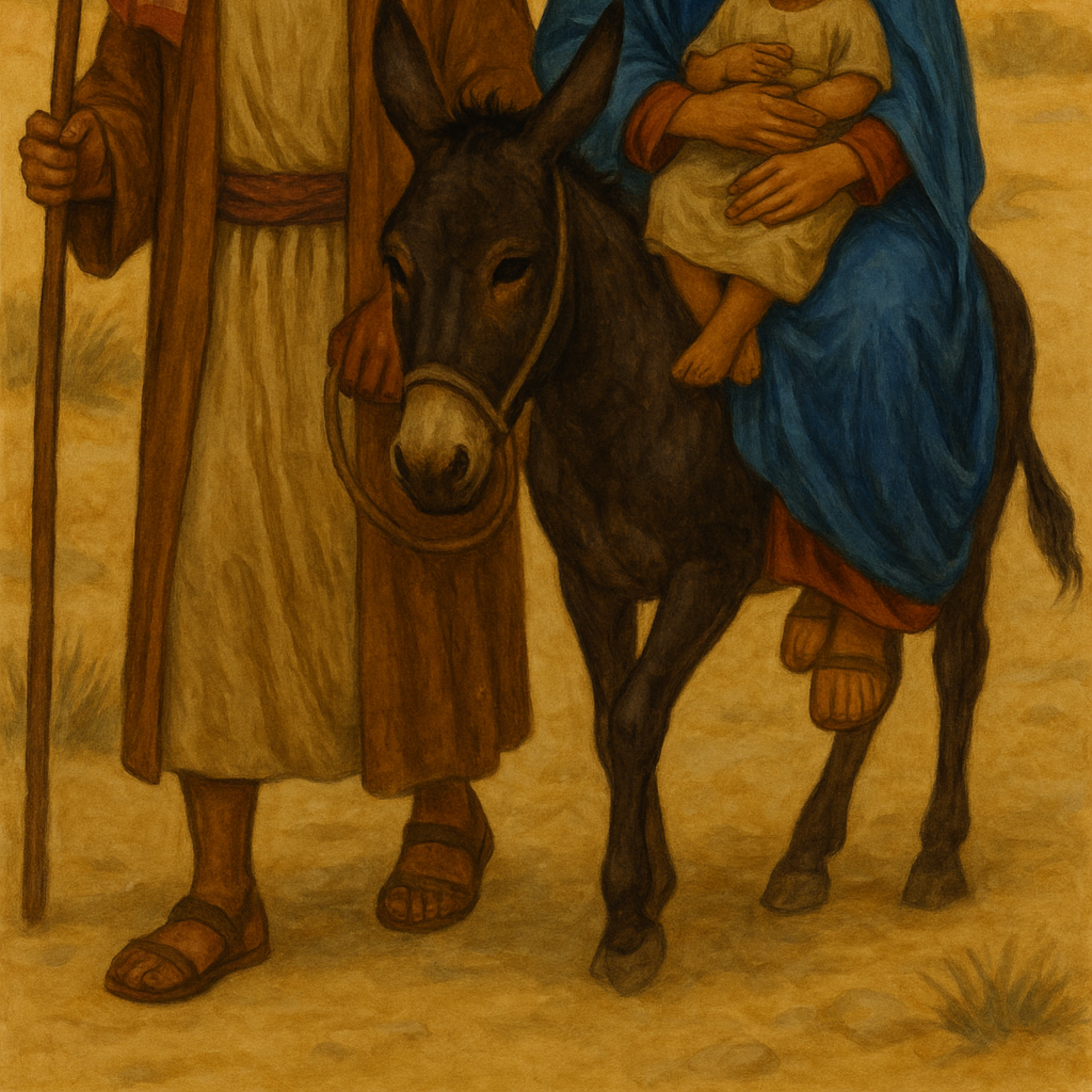
Discussions about the birth of Jesus often include the assertion that Jesus, Mary, and Joseph were refugees fleeing persecution. This framing is intended to connect the biblical story to contemporary global crises and highlight empathy for displaced people. While the intention may be understandable, the historical circumstances of the Holy Family do not align with the modern category of refugee status as defined by law, borders, and international recognition. In the first century, the Eastern Mediterranean was not divided into nation-states. It operated under one imperial authority: Rome. Judea, the birthplace of Jesus, was ruled by Herod the Great as a client king under Roman oversight. Egypt, where the Gospel of Matthew records that the family traveled, was a Roman province governed directly by imperial administration. Movement from Judea to Egypt was therefore not a departure from one country into another, nor did it require permission, documentation, or protection from a foreign sovereign power. The journey to Bethlehem, prompted by the census described in the Gospel of Luke, was not migration at all. It was internal travel for administrative purposes, a reality familiar across the empire for those subject to taxation and bureaucratic recordkeeping. The subsequent flight to Egypt described in Matthew was a response to danger, specifically the threat posed by Herod’s directive to kill infant boys in Bethlehem. This reflects urgency and real risk, but urgency alone does not make the Holy Family refugees in the modern sense. A refugee, in contemporary legal terms, is a person who crosses an internationally recognized boundary and receives acknowledgment or protection from another state. Many people flee danger without ever being recognized as refugees; they are displaced, endangered, or in flight, but not legally categorized under that term. Another key element distinguishing this narrative from typical migration or displacement is the presence of explicit spiritual and supernatural agency. Herod’s actions are portrayed as a response to prophecy. Joseph’s decision is directed by a dream in which an angel provides instruction. The narrative presents a specific threat against a specific child, rather than a generalized persecution of an entire population. The movement was personal, not collective. It was prompted by divine warning, not legal petition, social negotiation, or state-to-state appeal. Understanding these distinctions does not diminish the gravity or significance of the story. Instead, it preserves the historical and spiritual context in which it occurred. Using modern terminology to describe ancient events may blur rather than clarify the meaning of the narrative, substituting contemporary categories for ancient realities. The account of the Holy Family’s journey remains important without translation into the language of modern policy. It is a narrative of faith, danger, obedience, and protection. It illustrates vulnerability met...
0:00You've probably heard it a lot, right?
0:02The idea of the Holy Family as refugees.
0:04It's a really powerful image that connects an ancient story
0:07to our world today. But is it actually historically
0:10accurate? Well, that's what we're here to
0:12find out. Let's peel back the layers.
0:14So we're going to start with a question that you've almost
0:17certainly heard before. It's one that takes a 2000 year
0:20old story and puts it right into today's headlines.
0:24And there it is. We're Jesus, Mary and Joseph,
0:26refugees. It sounds like such a simple
0:28question, doesn't it? But you'll see the answer is,
0:31well, it's complicated. It forces us to dig into
0:33history, politics, and even what our words really mean.
0:37And you can see why the parallel is so strong.