
The Chris Abraham Show · Chris Abraham
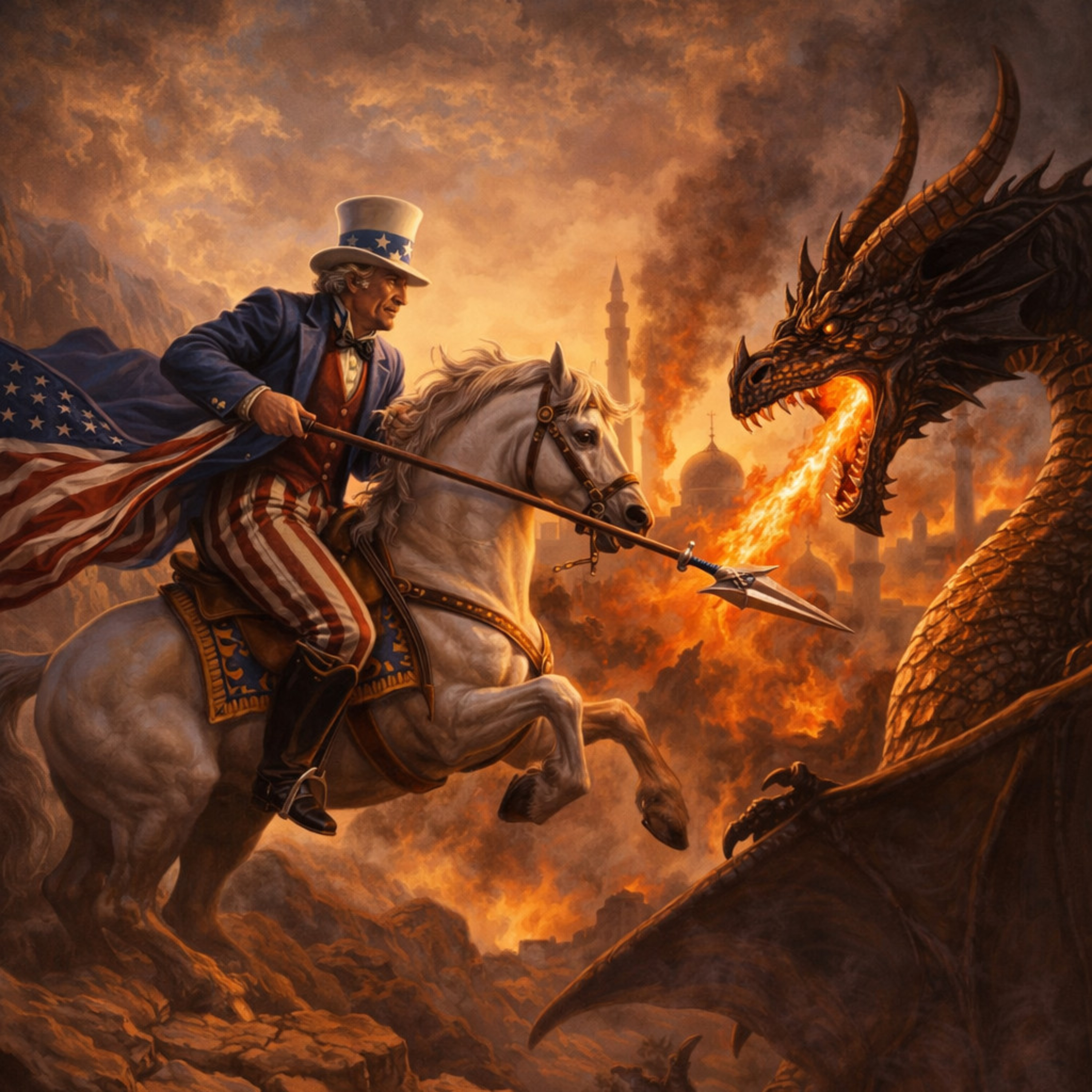
In this episode of The Chris Abraham Show, Chris revisits an argument he first made more than two decades ago—an argument about American foreign policy, intervention, and the strange persistence of what John Quincy Adams once warned against: going abroad in search of monsters to destroy. The conversation begins with the latest escalation in the Middle East. Following a massive U.S. and Israeli strike campaign against Iran that targeted military infrastructure and senior leadership, the region once again finds itself at the edge of a wider war. Markets convulse, shipping lanes tighten, and the familiar arguments begin circulating: nuclear threats, rogue regimes, regional stability, and the hope that removing a dangerous government might somehow produce a safer political order. Chris has heard this argument before. In February of 2005, in the shadow of the Iraq invasion and the still-unfolding war in Afghanistan, he wrote a piece responding to a major debate inside American foreign policy circles. On one side were thinkers arguing that spreading democracy abroad would ultimately make the world safer. On the other were critics warning that intervention itself often creates the enemies it claims to fight. That debate never really ended. It simply moved from one country to another. In this episode Chris revisits that earlier essay and asks a simple but uncomfortable question: why do so many efforts to reshape other societies collapse once the outside power leaves? To explain the pattern, he introduces a metaphor that runs through the entire discussion: the pot on the stove. As long as heat is applied—troops, money, advisors, sanctions, intelligence networks, and political pressure—political systems can appear stable. But the moment the flame is reduced, societies tend to revert to their own deeper structures. The boiling stops. The underlying equilibrium returns. Afghanistan becomes the clearest example. Over two centuries three powerful empires—the British Empire, the Soviet Union, and the United States—entered Afghanistan believing they could impose order or reshape the country’s political system. Each eventually left, and each time the country returned to the same underlying networks of tribal, regional, and factional power. The labels changed—from mujahideen to Taliban—but the structure remained. The episode also explores what Chris calls the “strongman paradox.” In several Middle Eastern and North African states, authoritarian rulers like Saddam Hussein, Muammar Gaddafi, and Bashar al-Assad held together fragile political systems through centralized control. When those regimes collapsed or were removed, the countries did not automatically transform into liberal democracies. In many cases they fractured into militias, rival governments, and competing factions. This leads to a deeper philosophical question about sovereignty and political development. Can democracy be exported the way a country exports technology or institutions? Or do stable...
0:00This is the brief on the 2026 US Iran strikes and the illusion of
0:05nation building. So right after those February
0:0828th, 2026 US and Israeli strikes killed Iran's supreme
0:13leader Ali Khamenei and totally ignited the region, a writer is
0:17revisiting their 21 year old warning about America's
0:20dangerous. Habit of endless foreign
0:22intervention. First, think of foreign
0:24intervention kind of like a boiling pot of water on a stove.
0:28You know order is only maintained as long as an outside
0:30power supplies the heat with troops and money.
0:33The second you turn off that heat, society snaps right back
0:37to its natural state. Just look at Afghanistan.
0:39They simply waited out the empires and that old Mujahideen
0:43structure just re emerged as the Taliban.
0:45Second, let's break down the whole myth of installing