
The Catalyst · Northeast Iowa Community College
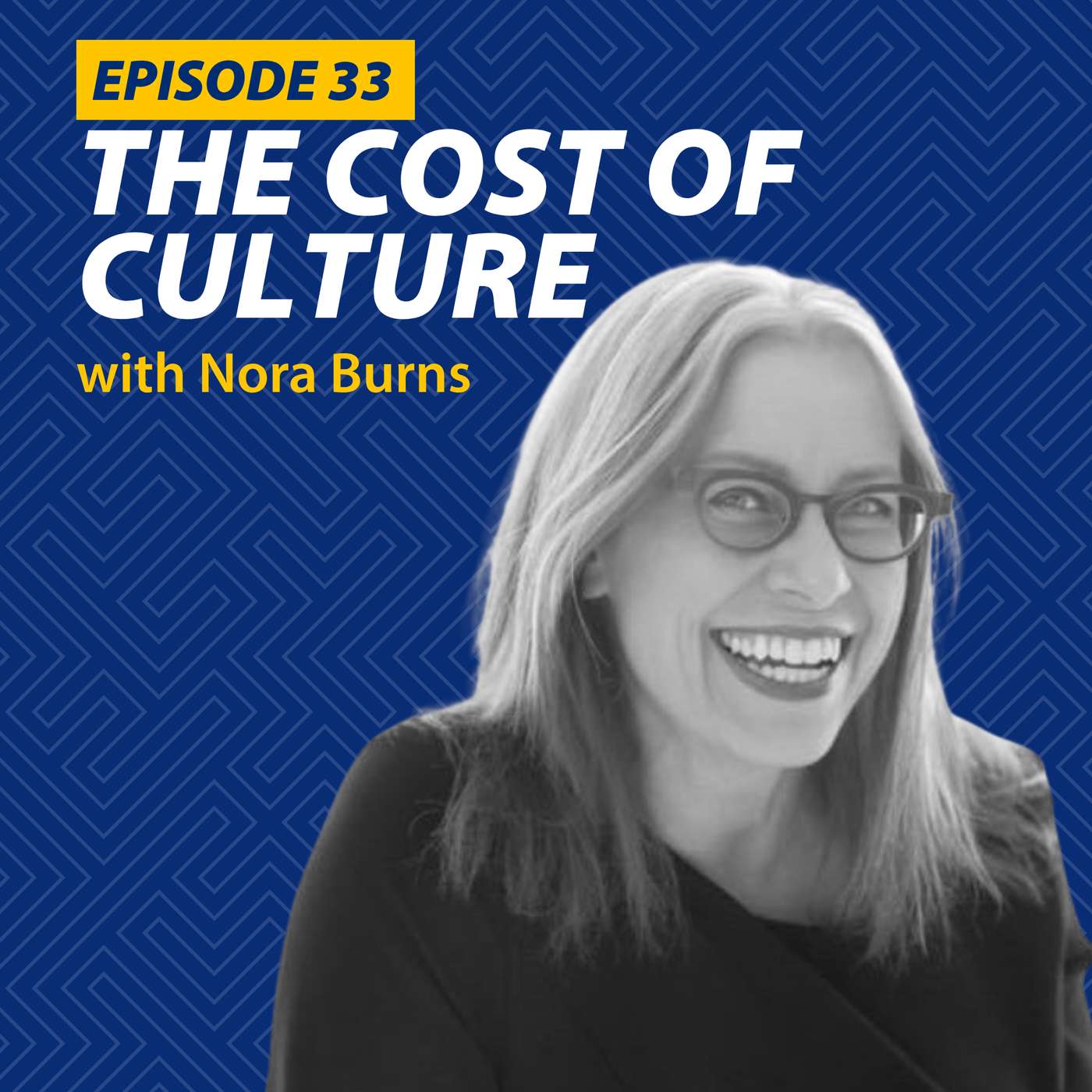
What happens when a Fortune 200 executive goes undercover as a job seeker? In this bonus episode of The Catalyst, we sit down with Nora Burns, founder of The Leadership Experts and keynote speaker for the 2026 NICC Business Summit. Nora reveals startling insights from her "Undercover Candidate" project, where she participated in over 350 job interviews to expose the disconnect between the boardroom and the breakroom. Learn what the interview process reveals about your company and the red flags to look out for as a job seeker. Register for the 2026 Business Summit to hear more from Nora on The Cost of Culture. Click here to watch a video of this episode. Follow us on social media: Facebook | Instagram | LinkedIn | YouTube Visit nicc.edu for more information and resources. Creators & Guests Amy Lasack - Host Tessa Hill - Producer Ashley Konzen - Designer Travis Hunt - Producer Nora Burns - Guest
Amy Lasack: Welcome to The Catalyst, an exciting and insightful podcast produced by Northeast Iowa Community College. I'm your host, Lasack. Together, we'll explore the people, programs, and partnerships that make Northeast Iowa Community College unique. From student success stories to behind the scenes info about athletics, innovation and industry collaboration, each episode dives deeper into your community's college. Get ready for an inside look at the impact of community driven education at NICC. Well, hello, and thank you everyone for joining us today on The Catalyst. We are excited today to bring you another great episode. Today, we're talking about an exciting upcoming event at Northeast Iowa Community College, our Business Summit twenty twenty six, The Cost of Culture, which will be held on Piazza on May 20 from nine to 11AM. This year's summit features keynote speaker Nora Burns, founder and chief curiosity officer of the leadership and former Fortune two hundred executive. Nora brings a unique perspective on leadership, workplace culture, and what really happens on the front lines of organizations. We're going to talk about why culture matters more than ever right now and what attendees can expect if they were to attend the summit on May 20. Welcome, Nora. Nora Burns: Hello. I'm thrilled to be here. I'm so excited about this business summit. Amy Lasack: We're excited to have you and can't wait to hear your message. So I just want to learn a little bit more about you first. What got you interested in culture as a topic? Nora Burns: Oh, so I grew up in HR throughout my career. So I landed in it thanks to a professor at the University of Wisconsin Platteville, just over the bridge from Duke. And I had this incredible professor who had real life experience and would say, this is what the textbook says. This is what really happens. I'm so thankful for that. And I just kept signing up for her classes because she was so interesting and informative and I learned so much. And before you knew it, I had an emphasis in human resource management for my business degree. And so I've kind of always been on this path of HR, but really digging into this aspect, like what is happening on the front lines that really kicked off with the research I was doing. The research started and the undercover candidate and the undercover employee. And that started when I was with a client and we were redesigning their hiring processes, which is something that I've done for a long time. And something just struck me in the middle of this particular conversation where I realized I had not personally been on an interview in over a decade. And I thought, like my whole life has been on focusing on the other perspective. Like, how do you look at life through a different lens? And I thought, what Nora, like what is happening? You haven't been on the candidate side of this equation for so long. You need that information to do a better job designing hiring processes. It really started on a, I was like, okay, so I'll go on six interviews. Like I decided I'd go on six interviews at a neighboring community so that it'd be less likely that an HR professional walking through the lobby would recognize me from the local SHRM Society for Human Resource Management Association. And those six interviews were quite frankly, I mean, horrific. I was like, this can't be what's happening. And then I was concerned that it was, I thought, well, maybe this is like a bubble. Like there's just somebody did really bad training or something, right? Like what is happening? And I decided I needed better data and more data and thus the Undercover Candidate Project was born. And really understanding that the culture of your organization is being designed from that very first point of contact with a job candidate and so many things going wrong in that process. And then we're working from a deficit when they come to join us in the organization because they already have all these opinions about who we are. So it's a very long answer to a very short question, Amy. Amy Lasack: No, but that is so interesting too. And what did you find on that very first interview that had changed the most in that ten years? Nora Burns: Well, I think actually the thing that surprised me was how little had changed. And that the interviews were asking questions that I've been hearing since the 1980s. So we're interviewing like it's 1983. Tell us about a time you made a mistake. Us about a Tessa Tessa Amy Lasack: Tessa Tessa Nora Burns: Hill The only reason to ask that question is if you individually are new to interviewing and you're nervous about it as the hiring manager and you need to kind of settle in to process. That's the only legitimate reason for asking that question, I think. The thing is there's not a book, a podcast, a guidance, anything on how to interview for a job that doesn't tell you to take what is a strength and rabbit in a weakness so that it sounds like, I'm just so detail oriented. I'm just really bad at work life balance. I work so much. None of those things, nobody's gonna answer that question with like, I embezzled from my last job. And you're not going to get real information in it. And for most of us, especially in frontline positions, our interviews are between thirty and forty five minutes, and we've just wasted seven minutes on something that's not going to have value add. So one of the things that surprised me was the fact that we were still interviewing. Yeah, like it's we're going to interview like it's 1999 instead of party like it's 1999. And the other is that there was just lazy interviewing happening. One, I was interviewed for a position with four other candidates. Five of us were in the room, Amy Lasack: all of us applying for the same job. That's not awkward. Nora Burns: That's not awkward. It's not awkward at all. And it wasn't for a sales position or something where there was like this competitive nature. It was for a receptionist position. And I couldn't help myself. And I said, why are we all in here together? And the owner of the facility, it was a small business, literally said, I don't have this kind of time to interview you all individually. And I thought, well, if you don't have the kind of time to interview five people for a job that you've already pre qualified, then what's my feedback process going to be like? What's my performance review going to be like? Are you going to have time for that? So, yeah. So we saw I saw a lot of lazy interviews, questions that if you make a hiring decision based on them, it would be illegal and at best and and still unethical. Right? Like, what do you do for fun? No. None of your business. Things like that. How does your spouse feel about you working a job that requires long hours? Things that we just haven't updated hiring. And it happened enough that I know it's still an issue. Wow. Yeah. And it it made me go, I need more data. Like, is this happening everywhere? Is this happening at every level of the organization? What what's going on? And thus, the undercover candidate was born. Amy Lasack: Yeah. And you did over two fifty of these interviews. That's incredible. So you've really seen some themes there. Was there anything on the positive side that stuck out, something that you saw that you're like, wow, we all should be doing that? Nora Burns: I kept now the thing is I keep and I still I still interview, actually, on one last week. I kept hoping that there would be an interview that I could not improve. Right? Like stuck the landing. Yes. Right. And I had one organization that came so close. It came so close and it was a tech startup and interviewing process was so good. And I thought, especially with not having a dedicated HR person, somebody to educate you on this, it was a really solid interview until he took me into a room with five team members so that they could meet with me. Now I love this approach. I 100% believe that other people in your organization should be involved in the hiring other than the person who is the hiring manager. And you need to invest in training those folks and what they can ask, what the aspects of hiring are that will leave an impression on the candidate. Because I went into that room with five people, very excited to meet members of the team to understand what they thought of the organization. And they asked me all of those, what do you do for fun? Are you married? Do you have kids? All the things that could put this organization in legal jeopardy, but also as a candidate make me very uncomfortable because we're not focused on my skills, we're focused on things that have nothing to do with the work. Yeah. So I've had some that have come really close. Had one, actually one in Iowa that it was solid, really solid interview. It was for medical practice. And I'm leaving thinking this was a fabulous example. I met members of the team, they asked appropriate questions. They showed me around the office. We did a deep dive into why the job was available, why they thought my skills matched. I was asked really solid questions. And as I was leaving, like my fingerprints are on the back of the door as I go to pull it open, somebody says, Oh, by the way, do you have kids? I just thought- so close. It was like almost out the door. Now, my guess is that this person meant it in really positive, right? They're looking for something to connect and bond and they're thinking, I'm moving to the area of maybe I have kids their age. And I have no doubt that there was not ill intent. Right? This wasn't a nefarious question and doesn't belong in that process. But it was really, really close. But I have seen some really great examples of showing me around the facility appropriately, of making sure I got to meet some of the other folks. Great examples of people who ensured that I knew where I was going as a Dungeon and Kennedy. I knew where to park. I knew if I had to pay for parking. I knew if it was a weird address that was hard to find and those types of things. Unfortunately, they were in the minority. Amy Lasack: Oh, yeah. Nora Burns: Those little details matter so much. They matter so much. And it's as if you had somebody over who you really value comes over to your house for dinner and you're going to make sure they know specific instructions on where to park. You're going to be ready for them fifteen minutes early. They're going to know how to dress. They're going to the information. You're going to make sure they don't have allergens to the food you're going to serve them, these types of things, because you're going to take care of them as a valued guest. When they show up at your door, you're not going to say, oh, I'm not really ready. Can you just stand out there for a little bit? And yet that's what we do to candidates time and time again. Amy Lasack: Oh, such a unique and such a true way that you really should be welcoming your interviewees. And even I always think, and I hear a lot, from folks about even after they walk out the door for an interview, that company is still bringing their their, reputation and who they are, their culture on how they follow-up with the communication. Nora Burns: Oh, 100%. I made it to a third interview at one organization and I have lots of We can talk about like, what are the parameters I set up? I made it to the third interview. I knew that there were still two other candidates or I would have exited myself from the process because I never wanted to be the last candidate standing. And I left breadcrumbs along the way in the fact that I would say, well, I'm thinking about moving to Dubuque, right? Or we're in the process of evaluating this move or I'm interviewing with three other companies right now so that they never thought that they had a lock kind of on me. And so this one, I got to third interview and they said, okay, the next step is this third interview. We're gonna take our top three candidates. I know I can't even imagine how many they started with and then ghosted. No response. Nothing back. And I was like, what happened? And so I followed up and I was watching the organization and I was following up on LinkedIn to new employees and I was able to find the person that they hired for that job. It was a higher level job. It was a director position. And I thought they just completely ghosted a candidate and that's gonna have a major echo effect on their ability to recruit later on. Now assuming I'm not a, you know, folk candidate as I happen to be, but I'm glad they found somebody, but it's not the best practice in terms of just walking away from a relationship. Amy Lasack: No, absolutely. That goes both ways. I think sometimes companies forget that. Nora Burns: Yeah, we have ghosting. We hear about ghosting on the other side all the time. I hear about business, you know, folks who are like, oh, I scheduled an interview and the person never showed up or they offered them the job and they didn't show up on the first day. And so if you hear about the ghosting on that side a lot, but there's ghosting that happens on the other side quite a bit as well. Amy Lasack: Interesting. And I know another another topic piece that you, speak about is The Us versus them kind of culture concept. Can you talk a little bit about that? Yeah. The Nora Burns: Us them happens again, this is part of what happens all the way back to the hiring process as we develop into what our organization is gonna look like, what our teams look like, how involved we are in each other. And we get into these silos of us them. And it could be us frontline employees against them corporate, right? Home office, home office says, corporate says. And part of that is a managerial courage issue to not own up to something and not to hold steady, but to kind of blame it on them, these other random people. But we even have it within divisions of our organizations. We create some us them, it's us versus the other branch, the other location, the other whatever. The one that I focus on the most is employee versus employer, right? Like frontline employee to boss, the leadership and how we separate who we are when truly we're all on the same mission. We're all trying to get to the same objective, but we all too often dehumanize the other side. Frontline does it to leadership, leadership does it to frontline. And bridging those and understanding the humanness behind each of those roles is so critical to really moving organization forward and to not ending up in random situations where people just ghost and they don't feel invested in. They don't feel humanized along the way. It's funny how it showed up in stories within the break room. And one of the coolest things about this job, about the undercover employee element of it. So after I finished, not even finished because again, I went on an interview. But when I finished the first 100 interviews as the candidate and started speaking about it, people in the audience would say, Well, did you take any of those jobs? I'd say, Well, no, no. Because I'm willing to do a lot for workplace culture research, but not a felony. And all of those jobs were applied for under fictitious names, fake names, fake backgrounds, fake resumes. So I had five characters that I developed. This is a whole another backstory because I found out six interviews in that I'm a horrible liar. And so I twice introduced myself by the name Nora in the first 10 interviews. PS, I was offered both of those jobs. That's another discussion element. Amy Lasack: Oh my gosh. Nora Burns: Yeah, that's scary. That's scary. But that's part of our being fully present from the moment we meet a candidate. True. But what I think is fascinating is that when I started talking about it and people would say, Well, did you take any of the jobs? I said, Well, no. And then I went, This is why I call myself Chief Curiosity Officer. Right? Because then I was like, I wonder what would happen if. What would happen if I interviewed under my own name? And as much as I tell hiring managers do not Google your job candidates, I know that they still do. And I don't want you to Google your job candidates because you're going to find out things like they're very active in the LGBTQ community. And then when you don't hire them, you've got this electronic trail that shows you have that information and you can't prove that you didn't make a hiring decision on it. Or you find out about their politics, right? That they disagree with what your politics are, or that they have seven kids or that they're on the Stop MS Board of Directors. So then you assume that they have MS. And so all of those types of things, just don't Google. So I did some work on kind of removing my presence online before I did that first interview under my own real name. And oh my gosh, so many things happen on this path, Amy. Just can't even feel like But we need 17 on that path, being interviewed under my own name and being offered a position and then saying, well, I guess we're gonna do this. So then I came back and designed a whole another project plan for how that was ultimately gonna work. All a sudden I'm thinking about that interview and how bad it was. And they found a big red flag and I thought, I'm not gonna be able to do this because like I've just disclosed to them that I do training on harassment prevention. It doesn't make any sense that somebody who does training out of harassment prevention is also applying for a job on the front line, making minimum wage. Yeah. It doesn't, there's a big, but they were already in love with me. They had already decided that glimmer had already happened where I was like, oh, they're going to offer me the job. And then I give them this information that should have been like, wait, what? And it didn't disqualify me. So I'm sorry. I've just got off on like seven other topics beyond your original question. Amy Lasack: No, that's okay. It's really it's really interesting because I am guessing that some of those red flags you saw in the interview as an employee later, you kind of saw some more of those things. Nora Burns: Oh, I yeah. Amy Lasack: That was a big sigh. Nora Burns: Yeah. Mean, it's so interesting. Our unconscious bias is so incredibly strong and we're just unaware of it. And we fall in love with something about a candidate and we bring them on board and then they meet the team and it's just really obvious. The team's kind of like, how did this person make it through that gauntlet? And then it kind of ripples all the way forward. Yeah, there's some big red flags. In advance of this, did for people who registered early, we offered them this special session on AI and hiring. And one of the things that came up in that had to do with how people are faking hiring processes and getting through using tools to answer the interview questions. Even in live interviews, they're using digital devices to help answer the questions to get in. And sometimes when I talk with audiences about that, they'll say, yeah, well, what's the big deal? So they now got a job they're not qualified for. And I say, yeah, how easy is it to fire people in your company? Right. Right. Yeah. Once that decision is made, that's an expensive decision to say, I'm offering you this position. Because once that decision is made, undoing it can be very difficult unless you find something in the background check. You've made the offer contingent on background check and reference check. Spoiler, lots of organizations are not doing a great job with those. I mean, I was offered jobs using fake phone numbers. So once somebody is in your organization, but the other element of that is once somebody is in the organization, they have impacted all of the rest of your team. So that has impacted their decisions about continuing to work there. And one of the things that absolutely surprised me while I was in those break rooms was that once an employee left, it didn't matter if they left voluntarily or if they were terminated. It was this weird element of like, wait, Amy Lasack: we can leave? The door has been open. Nora Burns: Door has been opened. And once that door opens, you will find that there is a path of people that will leave it. And it doesn't matter it was that bad hire who either decided they wanted to get out or we need to terminate them. People are like, wait, if they can leave, I can leave. And it was a very interesting thing to witness as it as it just occurred to people that they could leave. And once that happens, it's really hard to stop the the the revolving door if you haven't done something to put something to put an end to it. Amy Lasack: Wow. And it's it's been really interesting talking to you about this because because you can see how interrelated all of this is to the overall culture Yeah. Within a company from that very first email saying or phone call that you have an interview and where here's where to park and the actual interview, and then the conversations in the break room and all of it really, really just matters so much. Nora Burns: Oh, it's a giant Jenga puzzle, and moving each piece incorrectly can destroy the whole. Amy Lasack: That's a great visual. And so we have people listening that are in all types of positions within the company. I'm assuming that your talk at the Business Summit on the culture human resource directors and leaders with titles, right? But everybody could benefit from this. Nora Burns: Yeah. The elements that make up our culture, our workplace culture that makes up our teams that determines if people are going to stay or go goes across the entire organizational chart. And I think to the extent that has not been given its due. Like so often we send the leaders, the titled executives, the directors and above, and our HR crew to have conversations of the nature that we're gonna have there at the business summit. But the reality is that your frontline employees, your team leaders, the potential team leaders, we need to start bringing them up along the way and have the conversation about how we work together, how we communicate, how we connect, how we build together. One of my favorite events that I've done was actually SHRM Society for Human Resource Management in Guam. And yeah, there's a lot of story to that. The coolest thing is so often at SHRM conferences, when I go and talk to people, I say, Oh, so what do you do? What's your element of work? They're all like, Yeah, I work in HR. That's why I'm at the SHRM Breakroom Conference kind of a thing. And here it was the salespeople who work selling cars. Used car salespeople were in that audience. The people who run the maintenance shop for facilities were in that audience. The tool and die team were in that audience. And it's because they don't have a lot of these opportunities, right? Because it's Guam. They don't have as many opportunities to go to learning opportunities. But the coolest thing was the discussions between these folks were so rich because you were layering executive leadership and HR and operations. And how does it affect me individually? It was such a rich dialogue that took place either both during the interactive elements, but also in the hallways afterwards. And I think if we're gonna bridge that gap in those seats needs to be people from across the organization. And this is quite frankly, highly accessible for the rate that you're charging people to come to this conference. I was like, man, that room should be as packed as it can be. This is going to be a rich conversation and really worth it to bring as many of your team members as you can. I'm there for the day. So if you've got a specific question or you want to email it to me ahead of time, I'm sure that information is on the website noratheleadershipexperts, or you want to pull me aside directly after, I'm there. I'm there for the people of that community. I'm very excited about this. That's great. We are so excited to have you Amy Lasack: be a part of the offerings that we offer our business and industry here at NICC as well. And, Nora, so one of the within this podcast is like a little fact or fiction segment. So if you're game, we'd love to ask Nora Burns: you a Alright. Couple Amy Lasack: fact or fiction, job candidates are currently using AI more effectively than hiring managers are to screen them. Nora Burns: It varies by the size of the organization, but in small businesses, it's true. Amy Lasack: Yeah. You were talking about that, about people kind of utilizing it just to even answer questions in interviews. Yeah. Yeah. Crazy. Employees are more likely to trust information from a fellow uniform wearing peer than from an official company wide memo. That is true. Very true. Peer peer feedback, peer influence is real. Nora Burns: Yeah, it is very real. And showed up a lot in those break room conversations. Amy Lasack: Oh, I bet. I bet. How about workplace culture really built through grand gestures and annual retreats? I missed a word. It interrupted just a second there. So Yeah. Workplace culture is primarily built through grand gestures Nora Burns: from the No. So false. Amy Lasack: So what That cereal bar isn't gonna do it, Nora Burns: The cereal bar, the pool table, one employee appreciation day. No, it is a relationship. This is the one thing I will bridge over that you're going to hear at the Business Summit. It is an employment relationship. And we remember the employment part. That's the taxes and the forms and the benefits and all of that. And that people can get almost anywhere. It's the relationship part that builds your culture, that builds your productivity, that stops your turnover. It's the relationship part. And if you only gave your spouse flowers or a gift or said thank you to them for all the work that they do in making a relationship work once a year on your anniversary, it's going be a short lived relationship. Yes. Right. We have to build relationships in every single point of contact builds the relationship. And that is true in our personal relationships and it's true in our employment relationships. Absolutely. Amy Lasack: How about most candidates decide whether they'll stay or leave a company very early on, maybe even within the first three hours of the job? Nora Burns: That's true. That's true. We talk about that. I was surprised, just very surprised, three hours. It'll take less than three hours and people will Amy Lasack: make the decision if they're gonna stay a year. Wow, wow. That's so quick. Makes that onboarding so much more important. Nora Burns: Yes. Also, do you know what we are fundamentally bad at across The United States? First three hours. We're really bad at that. Amy Lasack: I remember I was hired for a job years and years ago and my computer wasn't ready for me. And so for like three days, I just sat at my desk reading this manual. There was nothing there and that said a lot. Nora Burns: It said a lot. And here's the other thing is you have all these resumes out in the world. And just because you've accepted a job does not stop those other organizations from reviewing your resume and discussing it. So the only thing you have to do for those three days is sit there and answer your phone when a recruiter from another organization calls and says, can do better than that. Amy Lasack: Yeah. Yeah. I'd rather do that. Rather do that. Yeah. And final one is The Us versus them silos in most companies are a natural result of organizational growth and cannot be eliminated. Nora Burns: That's false. These can be broken down. There are complications that come when you grow an organization. It is true, right? Like, yes, we used to do anniversary parties every single staff member. But as you grow an organization, you also grow the organizational chart. We don't have one person responsible for 10,000 employees. You have six employees here and 30 employees there and even 100 employees. But that's a one to 100 ratio, which is like running a small business. There's no reason it has to be siloed. There's no reason you can't show full appreciation to those team members. And I have had organizations say to me, one of the organizations where I was working as the undercover employee, they've had me down as a no call, no show for a day. And this is a whole another story. And I was like, no, no, no, no, no, no. I am not a no call, no show employee. I actually was a day that I had approved off before I even took the job, which is a whole because I was giving a keynote, quite frankly, day. And I said, wait, it was like there was a big snowstorm that day. Why didn't anybody call me to make sure I wasn't in a ditch between my house and here? And they literally made this little with their hand. They're like, Oh, we're too big for that. Too big to care. The person I reported to only had six employees reporting to them. Yeah. Wow, that spoke volumes. Spoke volumes. And then they told me how it was not a big deal to have a no call, no show on your record because it happens. And I was like, if this happens so regularly that you don't think it's a big deal, there's a problem with the relationship. I wouldn't stand up a friend, right, kind of a thing. And I was like, yeah, no, is I went to Catholic school. This is part of my permanent record That's what it is. Amy Lasack: It matters. It matters. It's been Nora Burns: my permanent record. Someday somebody's gonna see that. Right? So Amy Lasack: Oh, yeah. Well, Nora, I wanna thank you so much for joining us today and agreeing to come out to Piazza, Iowa, and share with us your journey and all your experiences and your thoughts at our upcoming business summit and having this conversation with us today. We really appreciate it. Yeah. Well, I'm thrilled. I can't wait. I am a big fan of community colleges. I have worked in their business offices previously as adjunct, and I'm just really, really thankful to be part of this community and to help bring up the organizations that are nearby. That's great. And as you all heard, Nora has some great stories that she wants to share. We just touched the tip of the iceberg today in the conversation, so we encourage you to join us at our summit on May 20 at the NICC Piazza campus from nine to 11AM. We have a QR code up here, for those of you that are watching that you can just sign up right away. And as Nora mentioned, we try to keep the cost very affordable for everybody to attend. You can also register online at nicc.edu/businesssummit. So again, Nora, thank you so much for joining us and thank you all for listening. We hope to see you at our next episode and at the Business Summit. Register. Super affordable. Thanks, Nora. Thanks for joining us on this episode of The Catalyst. If you enjoyed the conversation, make sure to follow or subscribe on your favorite podcast platform so you never miss an episode. Want to learn more about NICC and the many ways we support our students, partners, and community? Visit nicc.edu for more resources and upcoming opportunities. This podcast is produced by Northeast Iowa Community College and hosted by me, Amy Lasack, with executive producer Tessa Hill, producer Travis Hunt, and graphic designer Ashley Konzen.