
The Catalyst · Northeast Iowa Community College
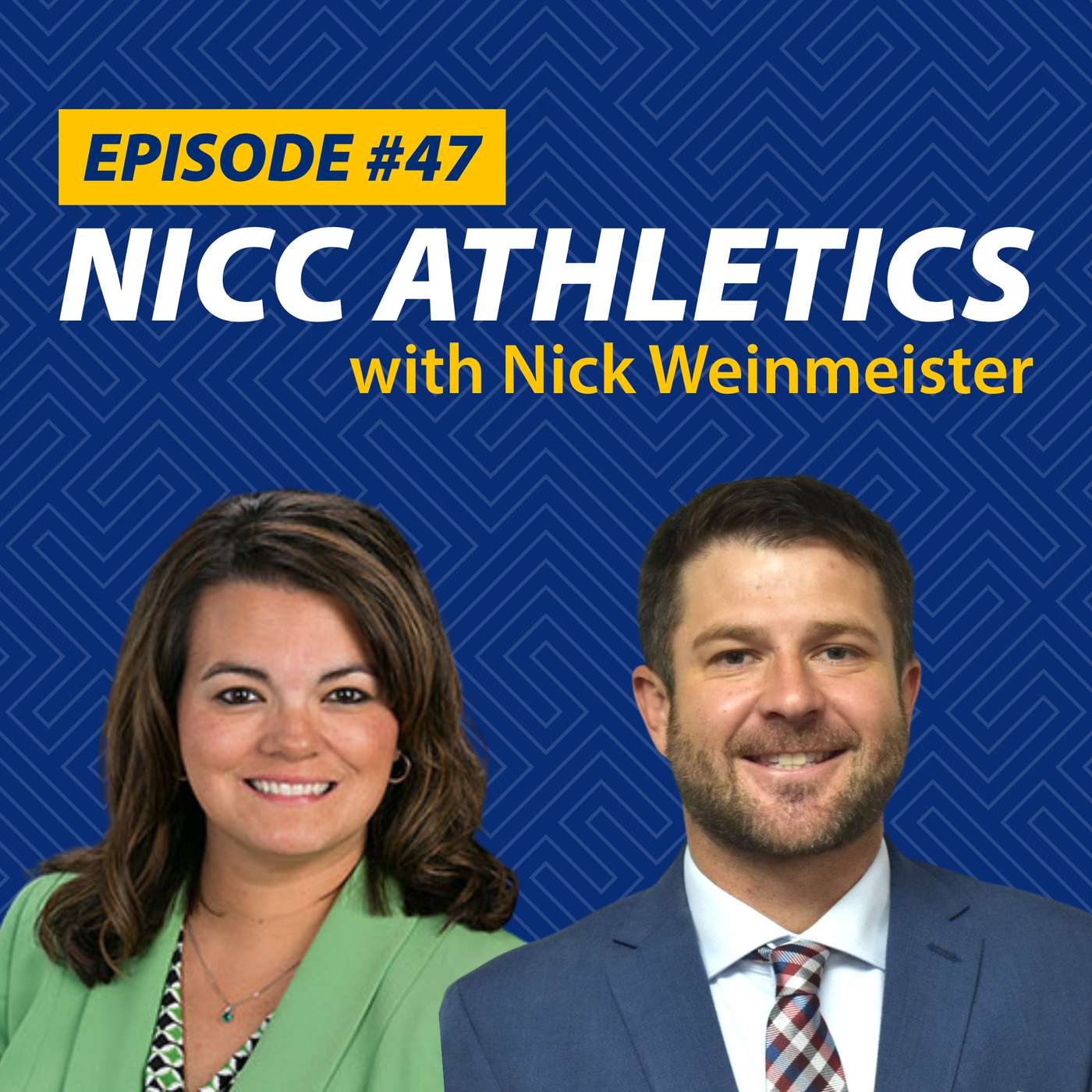
In this episode of The Catalyst, host Amy Lasack welcomes back NICC Athletic Director Nick Weinmeister for an in-depth recap of the inaugural year of the College’s expanded Cougar Athletics program. From top finishes in shooting sports to back-to-back national champions in Hearthstone esports, Nick highlights the standout moments across the department's existing and newest offerings. The conversation walks through Year 1 successes in cross country, dance, baseball and softball, while covering key leadership transitions, including new head coaching roles and dedicated athletic training support for student-athletes. Nick also shares a look at upcoming developments for NICC Athletics, including the introduction of co-ed Club Wrestling under the National Collegiate Wrestling Association and ongoing conversations around facility expansion and new sport additions. The episode wraps up with a quick "Fact or Fiction" segment, putting Nick to the test on student-athlete academic standards, study hall commitments and training room operations. Click here to watch a video of this episode. Follow us on social media: Facebook | Instagram | LinkedIn | YouTube Visit nicc.edu for more information and resources. Creators & Guests Amy Lasack - Host Travis Hunt - Producer Nick Weinmeister - Guest
Amy Lasack: Welcome to The Catalyst, an exciting and insightful podcast produced by Northeast Iowa Community College. I'm your host, Amy Lasack. Together, we'll explore the people, programs, and partnerships that make Northeast Iowa Community College unique. From student success stories to behind the scenes info about athletics, innovation and industry collaboration, each episode dives deeper into your community's college. Get ready for an inside look at the impact of community driven education at NICC. Amy Lasack: Well, welcome to The Catalyst, everyone. We have a returning guest to The Catalyst today. The last time we heard from NICC Athletic Director, Weinmeister, was about to start the first year of the expanded athletic program at NICC with the addition of baseball, softball, dance, cross country, And he is back with us today to give us an update on how that first year went and maybe a little sneak peek of what's to come as well. So welcome back, Nick. Nick Weinmeister: Thanks, Amy. Yep, glad to be back. Amy Lasack: We're excited to have you back and learn a little bit more of everything that happened this last year. And then maybe, like I said, get a little sneak peek on some things that are happening. So we're gonna do like a rapid recap of this last year because you had a lot going on. What about sports shooting? How did that go this last year? Nick Weinmeister: Yeah, went really well. We had a couple a couple competitions that were different than ones we've competed in the past. One specifically, we went up and competed against Waldorf University and I believe there was one or two other schools there as well. So it was similar to a tournament format and our team ended up going up there and taking the the first place finish up at Waldorf. And so, felt very, you know, promising about that as it pertained to leading into the conference championship. And, you know, we ended up having, a shooter that, ended up tying in a three way tie for first place, and she ended up in the shoot off, finishing second in the conference. So, some some good results. We saw all of the shooters making great progress. Obviously, for us, it's it's about the experience and making sure they enjoy every part of it. They go down to the Midwest championship in Sparta, Illinois, and and so they enjoy the travel, enjoy getting a chance to go out and shoot against other community colleges and other schools, within the Midwest. And so I think, yeah, sports shooting did a great job last year, and we hope that they, so far they're off to a good start and we'll hope that they do the same this year. Amy Lasack: Yeah. It's always it's always fun to hear about sports shooting. I feel like every year there's just some great performances that we hear about every year. The other the other area that we also hear a lot of great things in is esports. Nick Weinmeister: Yep. Esports has been... It's it's booming right now. We... We've had, back to back national champions in, the game. It's called Hearthstone. And, one of our national champions from last year was a freshman last year. So he is a returning student athlete athlete for us. We're we're hoping that we can get the the third one in a row. But, yeah, Verrick Foust, our esports coach does a great job. He has just really, you know, embraced trying to get as many students whether esports students or nonstudent athletes into the arena, really has created an inviting atmosphere. Somebody that puts a lot of time, energy, and effort into it, and I think is rewarded by the students and student athletes being in there and being appreciative of all the the time that he's putting into it. And right now, they're they're upwards of over 30 student athletes in the esports program, so we're gonna be competing in a lot more lot more games. And it's pretty much every night of the week, and so he's hired an assistant coach to to take some of that burden off of him having to be there every evening until, you know, sometimes eight or 9PM. And so, yeah, we're we're really looking forward to what they're gonna do this year, both this semester because it's a two semester sports. So they'll compete here this fall and then again in the spring. Amy Lasack: That's fantastic. And over 30 students and a national champion. Nick Weinmeister: Correct. Amy Lasack: Yeah. That's that's pretty awesome. Then we'll move on to some of our newer sports this last year, the first year for cross country. Nick Weinmeister: Yeah. Cross country, last year, we kind of a, you know, really a jump start year for them getting some athletes and and really getting our our coach kind of acclimated to, you know, junior college cross country and what the competition levels look like. They they did a lot more probably within a two hour radius of Peosta. So they competed up in Decorah at the Luther Invite and... At Loras. And so they've they've kinda been all over the place, but they also did compete in the in the championship. They were the only sport for us that was able to compete in the postseason. We weren't able to advance if we did have qualifiers out of it, but they got to compete in the postseason, which is because we were a new NJCAA member last year. And typically, when that happens, you're... You have a one year probationary period for all NJCAA sports. And so we had asked if, you know, cross country could go and run and compete and see what that was like even though if we would have won or or had somebody finished in the top the top 10, they couldn't advance to the next round. But they were, yeah, they were definitely really trying to kinda get their feet under them and and compete as hard as they could. And then this year, you know, looking at at where we're at now, we have a new coach. Luke Maiers has stepped in and and taken over the coaching responsibilities for us for cross country and has seen great success early on. We have two male runners that have really, you know, done great things, put up, I think they've PR ed every single competition that they've had so far, and then, three female runners who have done the same. One was dealing with an injury, so she didn't compete the last meet, but, yeah, they've they've really started to take strides forward and, you know, he's hitting the trail recruiting hard and trying to get, you know, as many cross country runners here as we can. Amy Lasack: That's fun. And if if you have never gone to a cross country meet as a spectator, just know you're gonna get your workout in and get to see some great athletes at the same time. Nick Weinmeister: Oh, yeah. Absolutely. I've I've talked to Luke a lot about, you know, where are the points on the course that he's trying to make sure that he's there engaging with the runners and motivating them and he... I think he might get as much of a workout in as as the runners do. Amy Lasack: Yeah, I love watching the coaches at cross country meets. So then another area has a big competition coming up in December at Iowa State, dance is a new one for us too. Nick Weinmeister: Yeah, the dance team, Kylie Kirman, our head coach has done a great job. Last year, she had eight competing at the state dance tournament. This year, I think we're up to 12, and so she's got a little bit of a bigger team. Really excited. We compete... Or well, last year and this year, competed in the pom division. And it was it was really a whole new world for me as well going to that state dance competition and and getting to see, you know, all the teams and all the athletes doing what they love, but also the amount of time, energy, and effort that gets put into those routines and really being on point. So it was, it was rewarding from an athletic directing standpoint being able to see, you know, all that hard work pay off. I know there was a lot of nervous energy, obviously, before a big performance where you're at, the Casey Center there in front of a packed house. That's definitely, different than maybe competing, you know, at local competitions or even just in front of people at the college. And so, yeah, we're we're really looking forward to, you know, kind of them taking the next step as well and and seeing that transition from year one to year two. And they had... They got a division one designation last year, and, you know, we we fully, you know, expect for that to happen again this year. And, I think she's she's really excited, Kylie, that is excited about just kind of where the trajectory of the team is going and the interest level and the... You know, she's brought in some really strong dancers. And so this year's team, I think she has pretty high hopes. Amy Lasack: That's that's a lot of fun. And, you know, as a boy mom, I haven't had a chance really to be around dance a lot. But from what I hear from my friends, it's quite the environment and really fun to go watch and see these really athletic dancers do some fantastic things. Nick Weinmeister: It's actually, yeah, it is fun to watch. It's, a great atmosphere. Think, the Iowa State Dance Association does a really good job of putting on that event and it's... I think it makes it more exciting because it's high schools and colleges. They kind of blend them together and and kinda mix up, you know, the competition times where those high schools then can watch and see what those colleges are doing. And so it was it was my first experience there, and I I had Luke Maiers with me as well. And it was both new to both of us, and I think we both... We really enjoyed it. I think it's something that we'll, you know, continue to go and support and, you know, make sure that there's a presence for NICC down in Des Moines when they go compete. And I I know the the athletes loved it, and I think, you know, for them, it's the biggest event, but I I think leaving last year, they really, you know, are wanting to get into more competitions and events like that because it it does... It takes a level of of attentiveness and and urgency to remember all of the steps and all of the timing of all the things that they're doing. And, yeah, they they did a really good job and we're excited to see them again here this December. Amy Lasack: Yeah. As somebody who has zero rhythm, I'm always amazed when I watch anybody who has that kind of talent. What about baseball? Baseball had a great year this last year as well. Nick Weinmeister: Yeah. They they definitely probably of of all the teams had the most daunting task. You know, baseball in in our conference is, very high level. We have teams ranked, you know, kinda throughout the season, probably anywhere from three to five in the in the top 25 in the country. So it... It's a challenging conference. They really challenge themselves by creating a nonconference schedule that was going to to really kinda test them and see where they were at. They obviously have their field of dreams game, which they compete in in the fall. And and I think this year, it was really a good learning experience for Connor Klosterman, our head coach, who was his first year as a head coach and trying to figure out, you know, the direction that he really wants that program to go. And so, you know, there was there was a lot of successes. There was some, you know, big walk off wins and, you know, a lot of things to be excited about. And I think, you know, that that really has kinda transitioned into this year where I think the energy and the positivity around the program has has ramped up quite a bit. I really am excited to see what they can do. They've had a... An extremely successful fall season so far. And, you know, barring the weather issues and the reschedulings of some things because of all the rain we've gotten, I think they're in a really good spot and and feeling good about what this season can can look like for them. Amy Lasack: That's great. And you have a couple of returners that received all conference recognition as well. So that's that's exciting. Nick Weinmeister: Yeah. It always helps when you have, you know, going in with as many freshmen as we did last year, it's... It can be, you know, even that much more of an uphill battle, but this year, obviously, they they returned some some key pieces that are gonna continue to make an impact for them. But I think more than anything, it's more about that team dynamic and the culture, and I think they now know, okay. This is the level we need to be at. So they're, you know, doing a really good job of kind of ushering those those freshmen in the right way and making sure that they're, you know, getting ready to go and be be ready to make an impact. Amy Lasack: Fun. And then, of course, softball had another great year as well. I've... I had a chance to come to a couple games this year. You wanna talk a little bit about their year? Nick Weinmeister: Sure. Yeah. So softball was... I mean, it was definitely a year where much like baseball kinda trying to feel out where we were at. So we, you know, in the nonconference schedule, I think the the biggest thing was just being able to find teams at at different and varying levels that kinda gave us a better gauge of of the team that we had. And I think they they definitely bought in, did everything that the coaching staff asked of them, and I think, you know, it was well well stated that they they had a really good year, you know, over 20 wins. And, you know, had we been eligible for the postseason, we would have qualified for the postseason because of our our conference finish, which, you know, was something we already knew and and was kind of in the back of our minds. Like, you know, that doesn't matter that we can't make the postseason. Let's still go out and and do what we can to, you know, try and impact the conference and the standings and kinda let everybody know and not necessarily put them on notice, but let them know that, you know, we're we're coming and we're competing right out of the gates. And so I I think last year was a really good lesson for all of the athletes, and we brought back a ton on the softball side of things that, you know, now understand what we're trying to do and what we're trying to accomplish. And I think this year, you know, kinda like baseball, it really... We should see that step forward from both sides. Amy Lasack: Yeah. And again, you return a couple of folks who received all conference recognition with Addy and Addison as well, so that certainly helps. Nick Weinmeister: Yeah. It definitely does, especially with a a pitcher catcher combination and and the things that they did last year. I mean, obviously, you know, with somebody receiving all conference recognition, the expectation is that they can go and do it again, but it's it's not not that easy. So hopefully, can go out and have an even better year than they had last year. I think it was it was great for our conference to recognize, you know, their efforts and and what they meant to the team and the program. And, obviously, without them, we we probably wouldn't have had the same season. And so now it's, you know, being able to see that transition with them as sophomores. Now can they go go lead and help some of the freshmen that are gonna have to come in and step in like they did last year and, you know, hopefully have, you know, as much success as they did. So we're we're excited about that. Amy Lasack: You know, I was talking to another coach last week or so and one of the things we had talked about is the difference between coaching at the high school level at a four year college and then at a two year because you don't have the kids just as long to develop some of that team mentality. How do you address that as a athletic director and a coach when you really want to have that cohesiveness quickly? Nick Weinmeister: Yeah, I think the biggest thing is the transparency. So letting them know right away like this is a, two years will go quick and so it's a very short time frame and and the expectation is, yeah, albeit we don't have juniors and seniors on the roster like four year programs. That that doesn't mean that, you know, it's not beneficial for them to learn how to make that adjustment from a freshman to a sophomore and then still have that leadership capability. So for us, I think the biggest thing is just making sure all of our coaches know how to handle that team dynamic, the the younger players coming in as 18, 19, 20 year olds and, you know, how to... What what it takes to build that dynamic and that culture as quickly as you can because Mhmm. To be fair, baseball and softball a little different than the rest is is a two season sport, albeit the competition season is in the spring, but in the fall, you're playing fall scrimmages and and competing just the same. And so being able to, you know, make the changes that are necessary when you need to giving everybody an opportunity to showcase what they are capable of and what they can do, And then having those conversations that, you know, explains to them that by transparency what their value is to the team and kind of that role you foresee them being in. Little different for some of our other sports because they compete right out of the gate. They get here and Yeah. Start classes, start competition probably within a week or two after. And so, it's a it's a little different for them, but, you know, I think I think it helps them a little bit more because they can just jump right into competition and having that urgency, whereas softball and baseball is a little bit more of a waiting game until that spring, and you're trying to, you know, create that cohesion in the fall to to then hopefully transition then into the spring season. Amy Lasack: Absolutely. Well, looking ahead, you've got some exciting things happening, and you mentioned one of them briefly earlier, but a change in, your coaching for softball. You've got Kaylee coming up and taking the head coaching role. Talk a little bit about Kaylee and what makes her... What does she bring to the table that will help this team be successful this next year? Nick Weinmeister: Yeah. I think the biggest thing for for me last year was, giving Kailee that experience of, you know, what it takes to be a head coach and, you know, putting her in positions to to learn and and grow in that area. And so we we decided this summer it was almost perfect timing to to kinda turn the reins over to her and the things that she brings. I mean, she she was a player for me at University of Minnesota Crookston, so I I knew from an athletic perspective what she was capable of. I knew what her mentality was. We we really closely align in in all of those areas, and so I don't think the transition is going to be that difficult for the players because their their understanding of what what she is about and how she operates. And then from my perspective, last year, was, you know, let's see if she can handle, you know, the the travel schedule, making sure that, you know, the team dynamic is strong, what it takes to make that happen. And I I couldn't be more impressed with how she's handled everything. You know, I I don't think... In my position, I'm I'm probably not making the change if I didn't feel she was prepared, and I think she's more than prepared and and albeit, you know, extremely young. She's been out of college for a year and had one year of assistant coaching experience under her belt, but it it did help knowing that she has coached at the high school level at Marshalltown in her hometown for for a couple years. And so it wasn't completely all brand new to her. Just the the landscape of junior college, and and she was a junior college athlete herself, so she understood that too. But it was, yeah, it was something that was a plan in the works, and I think, you know, I I was, you know, really excited to see the growth that she had last year and hopefully, you know, that transition to her having a strong first year as a head coach. And, you know, the team obviously coming back helps a lot too. You know, we talked about those sophomores and, you know, kind of the the impact that they have from a leadership standpoint. You know, they're an extension of the coaching staff out on the field because the coaches aren't controlling every little movement you're making out there. And so I think Mhmm. You know, that's that's gonna be a a huge plus as well as to have, you know, not a brand new team where we're trying to make them all gel together. This year, it's, you know, really just ushering in some new players as freshmen and also those those sophomores taking on more of a leadership role to help her. Amy Lasack: That's great. We look forward to seeing Kailee working with that team this next year. The other thing is you have a new athletic trainer with Maria this year joining, she does have some experience at Dubuque Physical Therapy and graduated from Loris College, so she's gonna be a nice support system for those athletes as well. Nick Weinmeister: Yeah. Maria has done a great job. She... She's everything we could have asked for in athletic trainer and and more. She definitely understands the landscape of college athletics and, you know, the the nuances to different injuries or coming with, you know, with problems or issues with, you know, needing to get rehab done and what those timelines look like. She's definitely embraced NICC as a whole and albeit, obviously, through her experience with Dubuque PT as you mentioned. You know, we don't have her here all day every day, which, you know, is is hopefully something that we can get done here in the next couple years. But I think, you know, just having her around, having her as as that support system for the athletes, whether it be, just somebody different to talk to other than coaches or may... It might just be, you know, needing to rehab an arm injury or a leg injury. And so she definitely puts the time, energy, and effort in that, you know, trainers often is, is a job that's maybe sometimes thankless because the expectation is just to, you know, get me ready to play and get me back on the field around the the playing surface. And, you know, our our athletes are very appreciative of the the work that she does, and it's it's a lot of times she's, you know, by herself from a training perspective. Sometimes she'll bring, a Loras, grad assistant or or somebody with her to help, especially on the days that she knows, you know, or maybe game days or more athletes are gonna be in the office on those days. But, yeah, she she definitely has been a welcome addition for us in the department as a whole. Amy Lasack: That's great. That's great to know and it... As a parent of an athlete, it's it's good to know that you've got that, very qualified person helping your student as well. Well, looking ahead, there's some exciting things happening. I hear something about club wrestling. What can you tell us about that? Nick Weinmeister: Yeah. Club wrestling is a is a new venture for us. This year will be the first year for us to compete in the National Club Wrestling Association. We will... We we have more than a handful of wrestlers here already on campus that are are looking to get going. They're getting ready to to ramp up practice here starting in the next two weeks. And I think for us, it's really more of a let's let's see how this can grow, from a club perspective before we end up, you know, potentially going the NJCAA route sanctioning, you know, our wrestling program and team. And I think that, you know, the the exciting thing is to see new sports grow and, you know, kind of infuse a a new energy around campus because we're, you know, trying to continue to add and and, you know, bring more vibrancy to the campus. And I think wrestlers definitely they definitely do that. Amy Lasack: That is true. Nick Weinmeister: They're definitely, you know, gonna be... They're in the weight room every single day. They're gonna be on the practice mats, you know, constantly. But, the nice thing is that we can still go out and compete just as much as as the teams that are in the NJCAA. And so being able to to give them that platform to go out and compete and show what they can do. And, then obviously too, it's it's the same as our other sports. You know, if they're interested in going on at the four year level, you know, the club wrestling scene, it's it's growing by the day. And I think that, for us, it's it's about continuing to offer those opportunities and and be able to allow them to compete in the sport that they love and then also be able to parlay that into going in and competing at the four year level if that's something they're interested into. Amy Lasack: Well, and I'll completely admit, I do not understand the scoring in wrestling at all, need to learn that, but what I do know, attended several wrestling matches in my life and the passion that wrestlers and their coaches have is fun to watch everybody get so fired up. Nick Weinmeister: It is, yeah it's fun and exciting and I think you know, it's it's gonna be something fun for, you know, the community as well to go out and support and be able to go, you know, watch our team compete on the mat. And I I think, you know, our our coach has done a great job of going out and and finding athletes that are gonna come in and and make an impact right away, you know, seems very promising from from my standpoint and my viewpoint that he's gonna be able to to do the job well and and bring in the right types of people and and also those that, you know, are an extension of the department. They're hard workers. They're gonna be coming in and and respectful and obviously trying to build that that community feel and atmosphere. And then, you know, the the grand scheme of things, my hope is that we can, you know, inevitably move into sanctioning it with the NJCAA and, you know, finding a a more permanent facility space. And and right now, this was kind of us dipping our toes into to what this could look like and kinda seeing, you know, the the response. And if if there are student athletes interested in in competing at that club level. And if they are, then that commitment will just show that, you know, we can maybe then transition this into a fully sanctioned sport and and be able to compete at an even higher level. Amy Lasack: And I know just casually knowing about the wrestling that's happening around the state and the region, wrestling for women have... Has really grown the last couple years. Would the club wrestling be open for both men and women? Nick Weinmeister: It is. Yep. So we we have both male and female athletes on the on the club team already and, continue to see that as a growth area for us as well. We... The the nice thing about club is, you know, when you sanction it, you can you can have both. Whereas when you sanction it with the NJCAA, you you have to sanction each team separately. And so I think that was also another another factor for us in making this decision was the ability to go out and and get male and female athletes and wrestlers to come in and compete and, you know, not have one or the other. And I think, as you mentioned, you know, the the women's wrestling scene, especially in the state of Iowa, quite frankly, I'm seeing it all over the country. It's growing like crazy, probably one of the most fastest growing sports that's out there right now. So for us, it would be a miss not to be able to offer that. And so, yeah, we're definitely looking forward to seeing the males and the females compete. Amy Lasack: That's cool. And probably a question for you that you hear the most often is, are we expanding athletics? What's next? Nick Weinmeister: That is the million dollar question. I hear that one every single day, Amy, you know that. Amy Lasack: I bet. I bet. Nick Weinmeister: It's it's definitely it's definitely something that we are going to continually look at and and see what, you know, the feasibility of adding more sports is. I think the the biggest, I don't know if it's necessarily a hindrance, but, the facilities and and the spacing to where those teams are gonna compete. Right now, we're, you know, utilizing a great partnership with Farley Park for baseball and softball. Our cross country team is kind of all over the place. They're sometimes up in Calmar, sometimes down here in Peosta. But, yeah, there's there's definitely things in the works. We've we've talked about what that expansion will look like. Originally, in in the proposal of adding athletics, you know, essentially, it was a five year plan, and with a a reassessment time period of maybe in that third year. And so now we're, you know, entering into that third year now where, you know, we're kinda having those conversations where club wrestling, you know, was was kind of in the mix as well. And and I think, you know, for us, the the biggest thing would be what what makes the most sense for the college, what makes the most sense from a a coaching staff standpoint, how many students can we handle, what are those operational expenses look like. And so, yeah, a lot of time, energy, effort, and thought goes into those decisions. We're not just going to keep adding sports every year because, you know, it's something that, you know, we're putting a lot of thought into about what makes the most sense for for our communities, our areas, Northeast Iowa as a whole, and and trying to do what's best to create the the best college experience that we can, as well as, you know, offering the things that we know students are are asking about us too. They're they're saying, you know, I play volleyball. Do you have a volleyball team? And and ... You know, golf is a big one that that comes up all the time. And, you know, the the best answer I can give is that, you know, every every sport that's out there is is being considered, and we're just trying to figure out from a college perspective what makes the most sense for us and allows us to continue the growth that we've already seen. And I think, you know, for for us right now, the biggest thing is not trying to add too much too quick to where it takes from the current programs that we have added. So continuing to to foster the growth in the programs that we have while also trying to to bring in more and and obviously have more offerings for students that have passions for other areas that we don't currently offer. Amy Lasack: Yeah, that makes a lot of sense. So we've hit the part of our podcast where we do a fact or fiction, I'll read you a comment or a statement and you tell me whether it's fact or fiction. Are you ready? Nick Weinmeister: Okay. Yep. Ready. Amy Lasack: Alright. So how about baseball and softball have mandated for four hours of weekly study time. Is that fact or fiction? Nick Weinmeister: That is a fact. Yep. So we have have mandated study halls for for most of our teams. I do leave it up to the individual coaching staffs of those programs to figure out exactly what what they want to do. But, yeah, typically, baseball and softball has been anywhere from from four to five hours a week of mandated study hall and and the student athletes understand that it's a great just time to set aside to get, you know, on top of their academics and prepare themselves for the travel that the the sports demand. So it it is a fact. Amy Lasack: Great. And I think if people were listening, they might know the answer to this next one, but esports has had a national champion in Hearthstone each of the last two academic years. Is that fact or fiction? Nick Weinmeister: That is also a fact. Yeah. Amy Lasack: Yeah. Very exciting. Nick Weinmeister: And and we're we're hopeful to make that three in a row. It's it's kind of become our niche, and we we almost got a little bit lucky falling into it because our our first national champion was actually competing in another game, and you are able to compete in multiple games if you'd like. And so it it was a great job by our coach to recognize that he also, you know, had a lot of talents and Hearthstone was something that he kinda talked him into, ends up winning a national championship from it. So, you know, one of those feel good stories that you're like, how how did this come to be? And, you know, it kinda... We fell into it. And then, you know, that had parlayed into, you know, obviously, Kaden Nehl, who was our national champion last year coming in and and kinda just continuing, you know, those great efforts. Amy Lasack: That's great. Three peat on its way. Nick Weinmeister: We hope so. Amy Lasack: So Maria, your new athletic trainer, she does not have services on hand. She's only there for competitions. Nick Weinmeister: That is fiction. Yep. She is she is here, three days a week right now. She is here for all of our competitions, that are at home. So all of our home events that we are hosting, she is at all of those too. But, yeah, we have we have services that she's, you know, she's really more of an everyday basis because she might get texts or calls from student athletes, on the times where she's not in the office, but she's here three days a week and really trying to work with all of our student athletes. Anybody that comes in, she's trying to to get them best prepared to be able to go out and compete at a high level. Amy Lasack: Fantastic. How about NICC athletes succeed in both their respective sport and in the classroom? Nick Weinmeister: That is a fact. Yeah. We... One of the the things that we probably hang our hat most on from from last year, especially with the expansion of all the the new programs that we offered was the fact that our department GPA as a whole with with all of our student athletes combined was over three point o. And, you know, we had some some programs. I know softball was at three five seven. Baseball was at 3.3. So, yeah, definitely, you know, you're... If you come to NICC and you wanna compete in athletics, we understand the passion for the sport, but it's student first. And so we definitely make sure that, from you an academic standpoint, they have all the resources they need to be successful, and then they have to go out and execute that as well. Amy Lasack: That's great. How about NICC athletes are active in other ways on campus such as leadership groups, parades, and more? Nick Weinmeister: That is definitely a fact. Yes. They... Being a college student athlete for for those that may not know, I mean, it's it's way more than just competing in the sport and going to practice and and lifting weights and then going to class. All of our programs are doing a ton in the community. We are at the Peosta Days Parade. We just... Our softball team just helped out at the... It was Glow Ball events at the Field Of Dreams where they were volunteering their time to to help and make that event successful. Our baseball team has done a number of different things, whether it's helping on campus with different things or different community organizations have asked for their help in in a lot of things, especially because of the the strength and numbers that they have with, you know, the 50 student athletes. But, yeah. So they're they're doing a lot, and that that doesn't just go to volunteer opportunities. That's fundraising as well. Our baseball team goes and, works the Iowa Hawkeye football games when they have home games. And so different, different ways to try to to make more money and create a better college experience, but then also, you know, the expectation is that they're involved in that stuff in the community just as much as they are in the classroom or on the field. Amy Lasack: Great. Alright. And the last one, Nick, you are the man behind the mask of Chase the mascot. Is that fact or fiction? Nick Weinmeister: Oh, we're we're getting into giving out some some very close to my heart information. That is fiction. I am not the face of the mascot. I I think the individuals that are in the mascot outfit would like for me to to take over from time to time, but I not the mascot. I I think it it would come as a surprise to some because that has been something that has been brought up a lot as a lot of athletes at times when they see Chase around think that I am the mascot, and I I am not. So I think, there will be at the end of this year not to, you know, lead anything on, but there will be a a big reveal at the end of this year of who who has been, operating as Chase in the mascot outfit. Amy Lasack: Okay. Well, that's a nice little cliffhanger, to end this episode. So, Nick, thank you so much for joining. It's been so much fun to catch up with you and all the athletic pieces that have happened this last year. So thank you. Best of luck to you, your coaches, and your athletes this next year. Nick Weinmeister: No. Thank you, Amy. We appreciate, you know, having me on the podcast and letting us talk about the the things that we're passionate about. So I I appreciate the time and and the support. Obviously, you said you were at some softball games. We hope to hope to see more events here this year and years moving forward. So thank you very much. Amy Lasack: Fantastic. And thank you all for tuning in to another episode of The Catalyst. If you wanna learn more about NICC Athletics, you can visit their webpage at niccathletics.com. You can find schedules, links to all their social media pages, rosters, and so much more. So thank you all for tuning in. We'll see you next time on another episode of The Catalyst. Amy Lasack: Thanks for joining us on this episode of The Catalyst. If you enjoyed the conversation, make sure to follow subscribe on your favorite podcast platform so you never miss an episode. Want to learn more about NICC and the many ways we support our students, partners, and community? Visit nicc.edu for more resources and upcoming opportunities. This podcast is produced by Northeast Iowa Community College and hosted by me, Amy Lasack, with executive producer, Tessa Hill, producer, Travis Hunt, and graphic designer, Ashley Konzen.