
The Catalyst · Northeast Iowa Community College
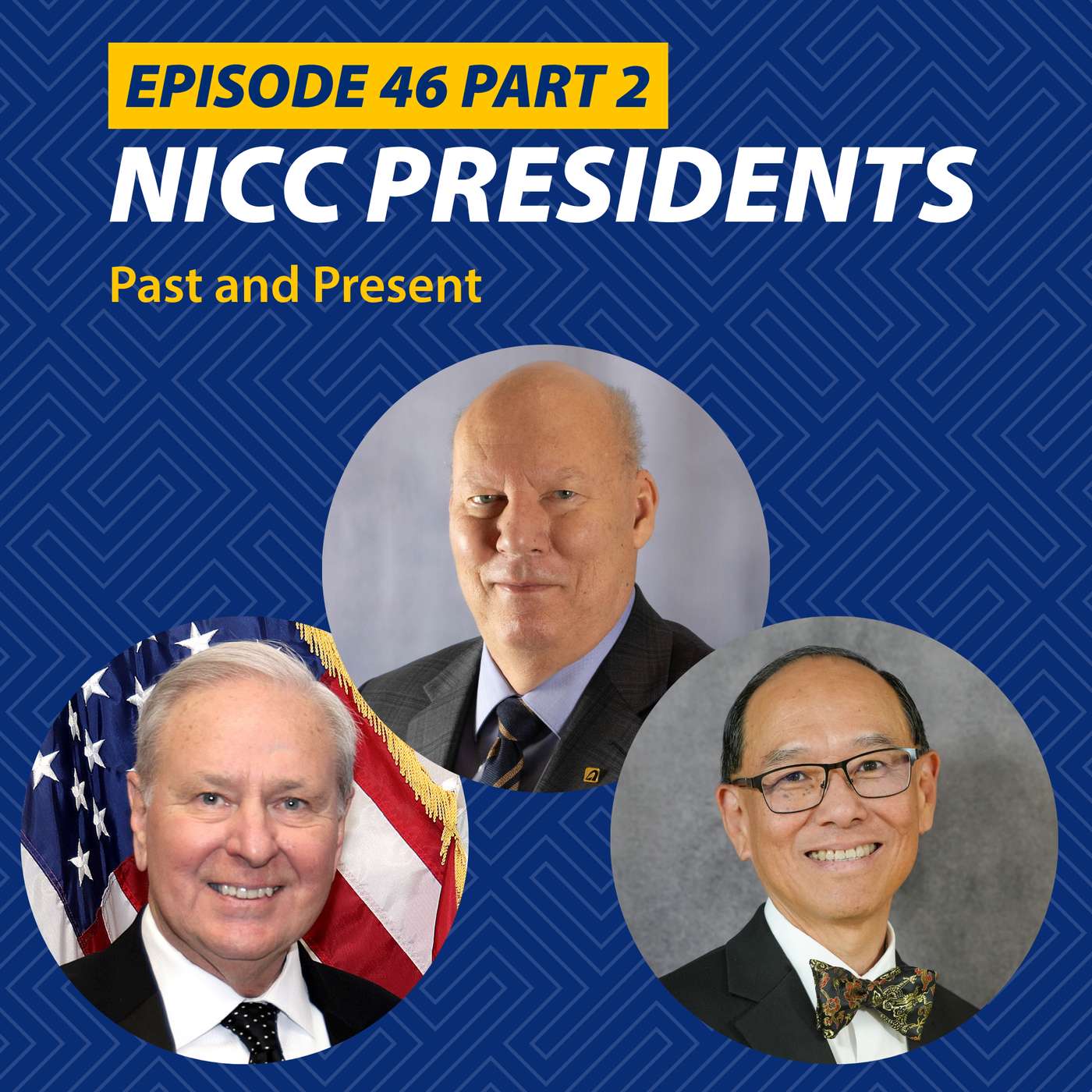
In part two of this special 60th anniversary edition of The Catalyst, host Amy Lasack continues the conversation with former presidents Rob Denson and Dr. Liang Chee Wee, alongside current president Dave Dahms. Building on the history shared in part one, the panel shifts its focus toward the evolving landscape of higher education and what lies ahead for community colleges. The leaders dive into the dramatic transformation of educational technology—from the early days of the Internet to the rapid rise of online learning and artificial intelligence. They reflect on balancing digital tools with essential human interaction and navigating workforce needs amidst rapid change. Plus, they share a fascinating look back at a major proposed project from the College’s past. Looking forward, they share a unified vision for how NICC will continue adapting to serve future generations of students, businesses and rural Iowa communities. Click here to watch a video of this episode. Follow us on social media: Facebook | Instagram | LinkedIn | YouTube Visit nicc.edu for more information and resources. Creators & Guests Amy Lasack - Host Travis Hunt - Producer Dave Dahms - Guest Robert Denson - Guest Liang Chee Wee - Guest
Amy Lasack: Welcome to The Catalyst, an exciting and insightful podcast produced by Northeast Iowa Community College. I'm your host, Lasack. Together, we'll explore the people, programs, and partnerships that make Northeast Iowa Community College unique. From student success stories to behind the scenes info about athletics, innovation and industry collaboration, each episode dives deeper into your community's college. Get ready for an inside look at the impact of community driven education at NICC. Amy Lasack: Welcome back to The Catalyst. If you're listening to this episode, this is part two of a special sixtieth anniversary conversation. And if you haven't had a chance to listen to part one, I would encourage you to go back and start there with last week's episode. We covered a remarkable history of NICC and heard incredible stories from our guests to set the stage for today's conversation. So now we're going to turn our attention back to the future of community colleges and continue our discussion with President Denson, Dr. Wee, and current NICC President, Dave Dahms. Thank you all for joining us. President Rob Denson: Thank you. Great to be back. Amy Lasack: So I want to look forward for community colleges. Lots of technology changes over the last twenty five, thirty years, online learning, AI. Doctor. Denson, during your presidency, the internet was just beginning to transform community colleges. Looking back, how do you look at that? What are your thoughts? President Rob Denson: Well, one, I am that old. But number two, that was a big demand from the businesses is to help them get up to speed. And just look at how crazy things have gone and how quickly since then. But the the Internet's just really expanded what we can do even beyond all the benefits to online learning. I did want to add one thing from last week. I mean, most people think presidents get whatever they want and never make any errors in movement. When we were at Iowa State when I was at NICC in the early two thousand, that was the beginning of all the ethanol plants going in around and I keep saying, NICC came that close to having its own ethanol plant. We'd identified some land East Of Calmar and we ran a bond issue to provide the funding for it and lost by a few points, but things usually work out for the best, but that was a big project. But again, ethanol was big and they were the new kids on the block needing skilled workers. Amy Lasack: That is really interesting to know that we could have had an ethanol plant as part of NICC. Thank you for sharing that. Dr. Wee, your presidency spans some of the most transformative periods in higher ed technology with online learning with the pandemic. As you reflect on technology during your presidency, what are your thoughts? Dr. Liang Chee Wee: Well, Amy, you mentioned, you know, artificial intelligence. It's just amazing that now in, for example, K-12, they're actually dialing back on technology access, for example, phones, to students. I still remember when they came out, we tried to provide lots of technology to the students, and now we understand that how to use the tools appropriately is so important, and we also find out that the human social interaction is so much important versus just looking at the screen and losing that emotional intelligence, that communication skill. So technology for me right now is what is most appropriate for the learners, regardless of what that is. And artificial intelligence is not going to go away, but how do we use it for the good of learning, rather than just go on and on? I still remember during the COVID days when we found out that many of our students don't have internet access at home. So we can give them a laptop and say, hey, you can learn from home, but they have no reliable internet. I still remember some of our K-12 partners actually equipped buses with internet technology and would drive it to a particular community so that those students will have access to internet. So for me, during the COVID day, it's not just about technology, but how do they have the infrastructure at home to be able to? And for some of the families, if you have mom and dad and a few kids, and they are all at home working or going to school, and they have one computer, who gets to use it? So knowing how much technology is so important, and I still remember one of the things that NICC did well was the technology that captured the lecture, and also anything that would be worked on on the SMART Board, and actually recorded that so that the students, after class, can view it again and again and again. I thought that was fantastic. And I also give credit to our colleagues who provide tutoring to the students, and many of them couldn't do it during the daytime. So they came to me and just said, You know what? Some of these parents, they aren't normally available when the kids go to bed, and usually it's after dinner. So some of them actually tried the pilot and actually have signed up for Zoom type tutoring in the e phone, and the response was overwhelming. And Dave was talking about meeting our people where they are. That's meeting the screens where they are in life. And the evening session went really well. And I think many of our parents were so appreciative that we understood their lives and when are they available to have time for themselves for study and homework, and when do they have time to actually talk to a kid. So in my mind, technology continues to be a tool for us as a college, is how to make sure that the tool is appropriate for the occasion, to understand the infrastructure that is at the home of our students, and how to marry those different variables together so that every family is served with technology in the hope of enhancing teaching and learning. So for me, it's an ongoing learning experience, but it also makes us have to be curious about knowing what our students are facing before we can say, Hey, that is the silver bullet. Amy Lasack: Yeah, thank you for sharing that. And Dave, Dr. Wee brought up AI. And I know three years ago, AI was this thing people were talking about, but it's really accelerated over the last three years. How do you see AI as part of NICC today and how we teach and prepare students and many other facets of what we do at community colleges. President Dave Dahms: I think, you know, you're right. And we take AI serious here and back to what Dr. Wee said as far as human interaction with technology. And that's really the issue with AI is that AI needs to be controlled, and it needs to have that human interaction because AI has no morals, has no ethics, and does not know right from wrong. It will do what it thinks it needs to do to achieve its task. And that's where human intervention has to take place. So when we look at AI here at NICC, it's how do we harvest AI that supports our faculty and for their classroom needs, giving them the tools and the technology and the support that they may want to interject into their classroom environment. You know, we we just hired, promoted, actually, our first AI director. And I believe that's a significant role for the college for two reasons. One, I think it provides support to our faculty as they move forward. I think it provides an opportunity for our students to understand the proper use of AI. As they enter the workforce, they need to know right or wrong of how AI can how they should use AI and how they should not. But also, you know, from what we can do with that technology to enhance our staff experience. There are things, and we've seen it already this last year, The things that we can adopt that take out the mundane task type responsibilities out of a job that AI can handle day in and day out opens so many hours for that person to really work on the things that's major in their job description that needs a human to actually do. And it enhances their experience, it enhances their job, and provides job satisfaction, and it it moves us for forward at a quicker pace than what we could previously. So I think looking at it in the right respect, embracing it, but ensuring that you've got controls over it. That's why we have an AI director that is going help us lead that. Not only here, but, you know, he's he's got great, great rapport with the other colleges in Iowa. And, you know, we're so thankful to have an individual of that talent because he will be a very important piece of our decision making going forward. President Rob Denson: Well, and right now, I think all companies are expecting our graduates to come out with some AI competencies. So, I mean, it's it's not we can't ignore it. It's gonna it's gonna happen to some degree everywhere. So, you know, we're we're giving our students the best shot at their futures by giving them the competencies they need to enter into their next stage. Amy Lasack: Absolutely. Important from our students to our staff, and I'm all for getting rid of mundane tasks. So anything we can do there. So President Denson and Dr. Wee, when people think about the legacy of a presidency, a lot of times they think about buildings or big initiatives, but I've heard both of you speak about moments of things that interactions with students or moments that you've had across campus. I'd love for you each to just share one moment that sticks out to you. President Denson, if we can start with you. President Rob Denson: I tell you, it's graduation, graduation, graduation. When I went to NICC, they held one graduation a year in the spring, but we had a number of students that graduate in December. So we started running a full graduation ceremony in December as well as in May. It's because, you know, you you walk into that graduation ceremony, you got maybe a few 100 or a thousand students, but just look at the crowds of parents, grandparents. I mean, they've all sacrificed something, and in many cases, a lot to get that student where they are. So it is it's a great way for children and parents to be proud of their kids. Of course, a lot of our students are parents, so it's just the entire family that's engaged. Without a doubt, graduation was always the most exciting time for me. And the second would be the beginning of every year when we bring all the faculty and staff together. Because I don't care what anybody says. It is nice to have a break. And so and most faculty are tired and the staff are tired by the end of May. But when August comes, they're ready to hit it again. And so just the excitement and I mean, you get into a room to give a lecture and you can't get them to be quiet so you can even start because I mean, they're friends. I mean, our world, it is about relationships. Amy Lasack: Great, thank you so much. Dr. Wee, What about you? Do you have a moment that you'd like to share? Dr. Liang Chee Wee: Yeah, I have several, but one definitely I think encapsulates what I like to say is that, and people know me when I say this, we do life better together. And this story tells that. And it's one of our alums, Amy. I got to know Amy after she was done at NICC, starting her own business, very successful, and few members of her family went to an ICC as well. And what's unique about Amy was she sat in the Calmar Campus parking lot four times, and every one of those four times she did not walk into the building. She ended up leaving. The fifth time, she did. And I asked her, I said, Why? We're not scary people. We're here for you. But Amy said, I don't think I belong there. I did not think that way. And truly, college can be a scary place to a lot of people because this is a nontraditional student, mother, wife, and her high school was long past, and this is the time where she's wanting to make a decision of continuing her education. And she sat there, and she just didn't feel she could love. I was glad that the fifth time she did. And our colleagues received her and worked with her, and she graduated, started her own business. She has since moved to another state and started another business. It really reminds us that we can say all we want about LPD people. How do we show them? And every time somebody walks through the door, we assume that maybe they're coming in for the first time, when in fact they have been sitting there multiple times and that was that one time that they had the courage to walk in. So every time that we work with somebody, that could be a moment either we establish that trust or that person will walk out thinking that, yes, I don't belong here. So we get one chance. We cannot assume that those folks are gonna come back. I have no idea how many AMIs in the world, in our community, did not walk in or walk in and did not come back. And that's why I'm so proud of our colleagues because they take one crescent at a time, one stool at a time, one lib at a time. That moment, you add it up. That's how long it lasts. And I appreciate what Rob talked about graduations. It was a great moment. We are celebrating a journey that started off most of the kind, quite scary, quite challenging. And that journey, we walked with them. That has been a blessing. Amy Lasack: Thank you. Thank you for sharing that. Dave, as you've heard the reflections on the college's past and different moments that have been experienced, what excites you the most about the future at NICC? President Dave Dahms: I think you listened to what President Wee and President Denson just said. It's how we engage with our current and future students to get them to the place of celebration. And I think the way the direction of NICC, when we look at both our credit and non credit programming, NICC is one college today. We have multiple pathways, but we do not have two divisions. There is not a noncredit division or credit division. Our our employees and our staff and faculty work together to embrace our student needs and to understand where they're at today and where they wanna go, and and we help them determine which pathway is best suited for them to build upon. And it could be a noncredit certificate, certificates that build up to a degree, could be looking at a program, but meeting them today where they're at because they need that flexibility. Their life is changing day in and day out, but the responsibilities they have, their families, parents, their multiple jobs, we need to be listening to them and be flexible and how we get them to where they need to go. I think that's where NICC can shine in the future. Amy Lasack: Great, thank you. I have a question for all three of you, because right now community colleges are navigating some significant headwinds with workforce shortages, demographic shift, funding models, which of those challenges, or if there's another one, concerns you the most for community colleges? President Denson, we'll start with you. President Rob Denson: I am most concerned about legislation coming down the pike, either from the state or federal level, that impacts our relationship with our businesses, communities, and our students. I mean, clearly, you know, we've worked hard for a year, sixty years in Iowa. We've got a good system. It works. But I'm I'm most concerned about it. Just people from the outside, everybody thinks they know more than we do, getting involved in in at the granular level, telling us what to do. I'm concerned about community colleges offering bachelor's degrees. I know we came close this year. The legislature was considering it. It didn't happen. But we've got major universities in private, both public and private, that do a great job. They're our articulation partners. They've got plenty of capacity. There's not the demand that has happened in many other states where community colleges had to go to bachelor's degrees because there wasn't space at the universities. Here, there clearly are. I'm also concerned about three year bachelor degrees that's been approved by our accreditor, and I know I've seen more and more colleges doing it. And I'm not sure we're doing it for the right reason. I mean, it's all about that competition for students as when the number of students is declining. So we've got some headwinds here, and I think we need to continue to have our business partners talk to the legislators and the feds about what we do and how well we do it. And it's not broken, so there's no fix that's needed. Amy Lasack: Thank you. Dr. Wee, what are your thoughts? Dr. Liang Chee Wee: Well, for the past couple of years, the national trend, and it's also true in Iowa, that a large number of male students of all demographics are not engaging in education and training post high school. That's a large number. Our female students are still engaging, and that's good. So my concern is why? Why are our male students not engaging? Really, if you look at the graduation rate of high school, Iowa, for example, we are probably in the top two or three annual graduation rates. Very proud of that, how K-12 is doing great. But then when you look at the percentage of male students engaging in education and training after that, that's not encouraging. So community colleges, there are 15 of us. We are spread across the 99 counties. We truly are the colleges of the communities. How do we work with our partners, private and public, to really look at this phenomenon of young males not engaging in education when trained. And that is something that we have to take a look at, because without appropriate education and training, the future does not look very good. And we do need the workforce. We do need the future generation of skilled labor. So that's one key concern. Amy Lasack: Thank you. And Dave, you're smack in the middle of it right now. What are your concerns at the moment? President Dave Dahms: When it comes to funding and stability, you know, there is a disconnect to what community colleges were established to do sixty years ago, and the framework that we've built today to serve our communities. And I think that there there's a lack of understanding or appreciation for what we do and that we are best equipped to do what we do. And there are areas or entities that wish to tear that fabric apart. And I think that's sad. I think that, you know, for us, we need to be ever vigilant in telling our stories, putting the facts forth, and proving what we do and showing student outcomes. And that's sad to say that we have to do that to the extent to when we come to the legislative decisions that have happened over the last several years. Quite frankly, I don't see any other way around it for the short term. And I think that, you know, it's not gonna get easier. Alright? When you look at the state budget and the gap every year that exists, we are in a we are in a fight right now to prove continue to prove our existence and why we should be doing what we are doing and and what would happen in the event that that went away. So, you know, it's and you see what happens to the impact of students. You know, there are three funding sources of colleges and that's state general aid, levy dollars, and tuition and fees. And we don't control a lot of those. You know, that comes down through legislation. And unfortunately the impact starts to look, starts to off be offset by increase in tuition and fees. And we have we're doing everything we can do to control that. But, unfortunately, I think there's individuals that don't understand that, and that's too bad. Amy Lasack: Thank you. Well, I I don't wanna end the podcast on hardships. So I do wanna go through a lightning round segment if you all are game. I have two questions for each of you. Just give us your quick response to each of them. Are you game? President Rob Denson: Yep. Let's do it. Amy Lasack: Fantastic. So, president Denson, what's one piece of advice you'd give a new leader? President Rob Denson: It's the same thing I would tell our students. There is a secret of success. It's hard work. The harder you work, the luckier you're gonna get. Number two, you must be present to win. You've gotta show up. And if you've gotta show up, show up early. And number three, Garth Brooks is right. Thank God for unanswered prayers. And I look back in my life, the many things that I didn't get that I wanted, but I had I gotten, I wouldn't be here today. And the most important was when I went to Iowa State in 1966, I wanted to join a fraternity. I won't mention which one, but then they stole a lot of black balls and I was blackballed from that fraternity because I was. I went to the Alpha Kappa Lambda, ran into two kids from Southwest Iowa. They were brothers, became my pledge father, pledge son, but more important, they introduced me to their cousin who was going to Nebraska Wesleyan, became my wife. And we just celebrated fifty six years, but had I gotten into this other fraternity, I probably wouldn't be as happy as I am now with two kids, five grandkids, and a great life with a great wife. Amy Lasack: Love it. I did not expect a Garth Brooks reference today. That's fantastic. Dr. Wee, what's one simple thing every leader can do to make people feel valued? Dr. Liang Chee Wee: Well, there's several things that I like to say. Is part of the leadership is do we see the people we work with? That's important. Do we say thank you to the people we work with? Do we have the courage to say I'm sorry when things didn't go well, and we have to take accountability for that? And then are curious about people so that when we talk to them, are we willing to say, Tell me more about what's happening? So those are some of the fundamental things that I try to practice and I try to make sure that people know their body and see them. Amy Lasack: Great, thank you. Dave, what's one thing you hope every employer says about NICC? President Dave Dahms: I hope they would say that we're a trusted partner, that we understand them, that we are there for them, and they will help them move on in their direction. Amy Lasack: Great. So Rob, what is the hardest part of being a community college president? President Rob Denson: Just the many demands. I mean, when you've got dozens or hundreds of faculty and staff that are out there just as dedicated as we are wanting to do better, it's helping make their dreams and aspirations possible because that in fact is going to be what benefits our students. So it's just making sure that we continue to be relevant and we're ahead of the curve. And again, Iowa Community Colleges and these two guys have all have been great at making sure that that happens. All, I mean, and I are now retired. I believe that we left this system in good shape and then Dave is doing a great job. So it's amazing. Amy Lasack: Dr. Wee, you've had the chance to be president at NICC and also as, I'm not sure what the official title was, interim at Eastern Iowa and at DMACC as well. What has been the common thread as you've overseen three very different community colleges? Dr. Liang Chee Wee: Compassionate and caring colleagues. As president or chancellor, we have to understand that we are there to support the people who are not at the top of the pyramid. In fact, the faculty and staff and the students and our communities are at the top of the pyramid. We are to provide the stability so that the pyramid can continue to be strong and that community continues to get better and lives continue to change. So that's one of the things that I see across in all three different sizes and different demographics, but one common, common element. Wonderful people who work at community colleges. They know why they are there every single day. Amy Lasack: Love it. And Dave, I saved the hardest question, but probably the one most people want to know. How many emails does a college president get every day? President Dave Dahms: I'm just going to answer that as just enough. Amy Lasack: Fantastic. Well, we have reached the end of part two. President Rob Denson: Before you leave, before you leave, two things I wanna say. Number one, at NICC, we've all three benefited from extremely qualified and dedicated board members who provide hard leadership hours and hours of their time. So our success at NICC is the same all around the state. Our board members are critical. And number two, I do not want this thing to close without letting people know that I think it's this month, Dr. Wee receives an award, outstanding award from NICC as the Outstanding Leader Retiree Award. So not only there, but at Eastern Iowa and what he did at DMACC. His hype is real. So congratulations, Wee, on another great recognition of good work. Dr. Liang Chee Wee: Thank you, Rob. President Denson is the longest serving DMACC president, and I have the honor as the shortest serving president. We are both. Amy Lasack: Well, your admiration for each other's leadership and what you all bring to the table is evident, and I wanna thank you all for being a part of this episode. As we celebrate sixty years of Iowa's community colleges, it is clear that all of you care so much about the community college system in Iowa. So I want to thank you for sharing your stories and your wisdom. It has been an absolute privilege to talk to you all for this last hour. President Rob Denson: Thank you. Thank you, Amy. Amy Lasack: And to our listeners, thank you for joining us for this special edition of The Catalyst. Here's to celebrating the first sixty years of Iowa's Community College and to the next sixty years of innovation, opportunity, and lives changed. Until next time, I'm Amy Lasack. Thanks for listening. Amy Lasack: Thanks for joining us on this episode of The Catalyst. If you enjoyed the conversation, make sure to follow or subscribe on your favorite podcast platform so you never miss an episode. Want to learn more about NICC and the many ways we support our students, partners, and community? Visit nicc.edu for more resources and upcoming opportunities. This podcast is produced by Northeast Iowa Community College and hosted by me, Amy Lasack, with executive producer Tessa Hill, producer Travis Hunt, and graphic designer Ashley Konzen.