
The Catalyst · Northeast Iowa Community College
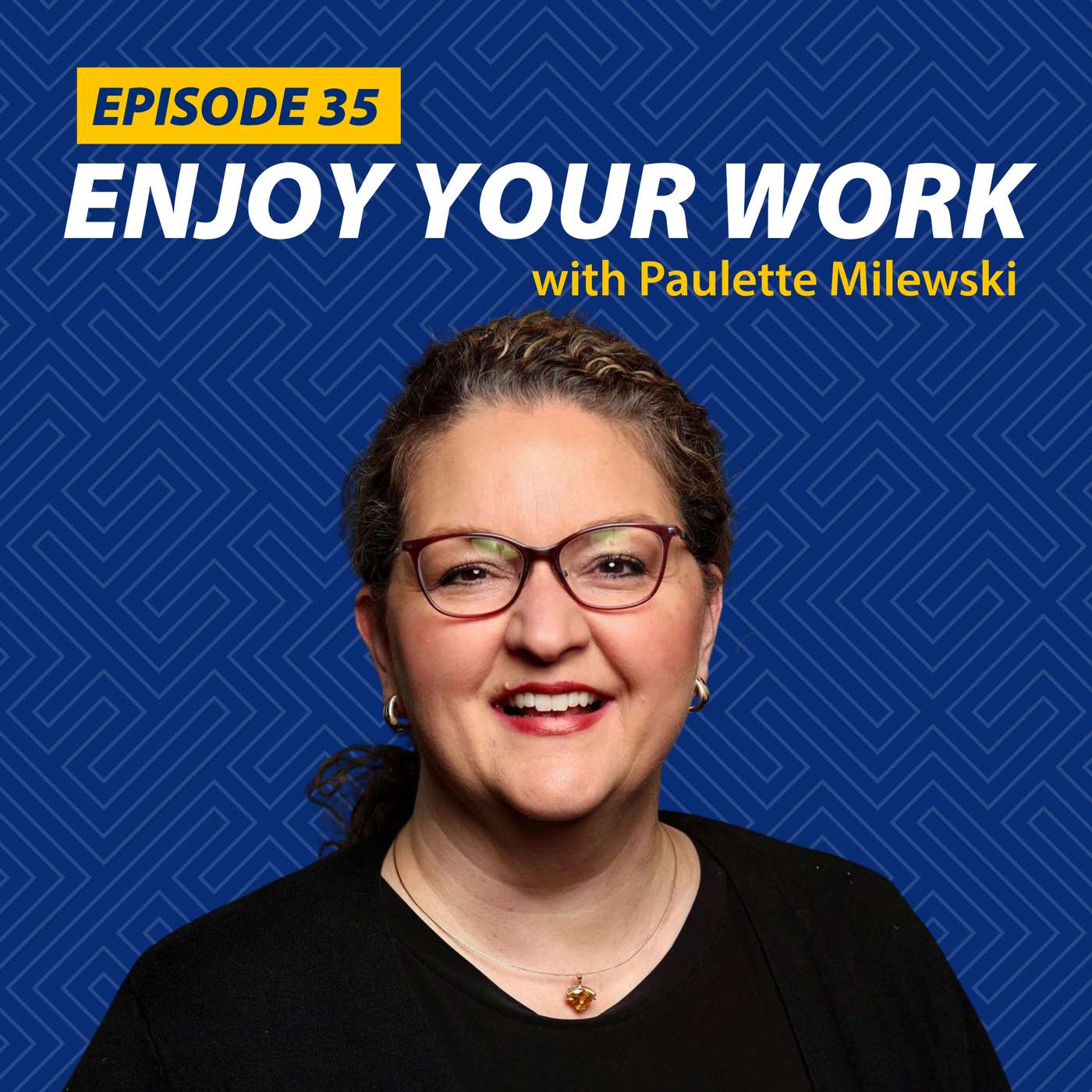
We spend a massive portion of our lives at work—so why do so many of us treat joy at the office like a luxury? In this episode of The Catalyst, host Amy Lasack sits down with dynamic corporate trainer Paulette Milewski to debunk the myth that productivity and fun don't mix. Paulette shares her philosophy on finding "micro-joys" in your daily routine, shifting your mindset on tough days and building genuine, supportive connections with your coworkers. We explore: What "enjoying work" actually looks like in the modern workplace. The science behind how a positive work culture reduces stress and drives success. How to build your "work tribe" and foster authentic connections. Simple everyday resets to avoid the afternoon slump. Whether you are working on a manufacturing floor, in a corporate office or from home, you’ll walk away with simple, actionable strategies to bring more energy and happiness to your standard shift. Click here to watch a video of this episode. Follow us on social media: Facebook | Instagram | LinkedIn | YouTube Visit nicc.edu for more information and resources. Creators & Guests Amy Lasack - Host Tessa Hill - Producer Ashley Konzen - Designer Travis Hunt - Producer Paulette Milewski - Guest
Amy Lasack: Welcome to The Catalyst, an exciting and insightful podcast produced by Northeast Iowa Community College. I'm your host, Amy Lasack. Together, we'll explore the people, programs, and partnerships that make Northeast Iowa Community College unique. From student success stories to behind the scenes info about athletics, innovation and industry collaboration, each episode dives deeper into your community's college. Get ready for an inside look at the impact of community driven education at NICC. All right, well, welcome to the Catalyst. You all are in for a treat today. Today's conversation is one that I've been excited to have here for a few weeks now with someone that I've known and worked with for many years, Paulette Milewski. We spend so much time at our at work, often a lot more hours at work than we do with our family. Why wouldn't we want it to be a fun place? Why wouldn't we want it to be a place that we enjoy going to and getting energy and and laughing? So today, we're gonna talk about what it means to enjoy our work, how workplace culture shapes that experience, and why creating moments of connection and fun can actually make teams stronger and more successful. So, like I mentioned, Paulette Milewski is here as our guest. Welcome, Paulette. Paulette Milewski: Glad to be here. Excited to talk about positivity in the workplace. Amy Lasack: Yeah. So Paulette brings energy and twenty five years of experience in leadership, sales, customer service, making training workshops interactive and enjoyable through storytelling, real life examples, and thought provoking dialogue. She earned her master's degree in organizational leadership from St. Ambrose University, but perhaps most importantly, Paulette likes having fun at work. And so that is why we brought her Paulette Milewski: in today. It's true. Thanks. Amy Lasack: All right. So Paulette, I've known you a long time. And one of the things I've always appreciated is your energy and your joy in the workplace. Can you start by sharing a little bit about your background and what led you to care so deeply about people enjoying their time at work? Paulette Milewski: Thanks. You know, I think that it's always been important to me that I align with organizations that align with my values. And so then it is kind of just a natural extension of what I care about. So it's easy for me to be authentic and have fun. And if it's a job worth doing, it's doing right. And so if I care about it because I'm aligned, it all just kind of falls into place. And twice in my career, interestingly enough, there's been some big shifts, once really early and one mid career, where the shift in leadership kind of changed the culture. And I I it wasn't as good as a fit. One was we had a leader who did the right thing, and then they retired and the next person did things right. And they were both good, but one fit better for me. So it's all about values Amy Lasack: for me. Oh, interesting. Did the right thing versus did it right. Mhmm. That's really interesting. Paulette Milewski: Mhmm. Amy Lasack: So what does enjoying work or having fun at work look like? Is it about the tasks that we do, or is it more about the environment? Paulette Milewski: I think it's a little bit both, right? Because when I'm purpose driven and I'm clear on the mission and the vision and the values, and that sounds really like corporate speak, but for me, it's just always been true because if I have that guiding light, that guidepost, and I understand my impact, then it's a little bit part task and part environment. And you mentioned a word a minute ago, authentic. We hear that a lot about being your authentic self at work. What does that mean exactly to you? Yeah. For me, it's about that psychological safety piece where you don't have to fit in. You get to just be yourself. I have some quirks, right? What? I didn't have to tuck them in. Like, I could just show up and be me and others could do. You could take risks, you could challenge the process, you could ask questions, you could fail. And we all just had each other's back. So I think sometimes that authentic piece is so intertwined with psychological safety that it's not this toxic positivity. When I do workshops on positivity in the workplace, I put this meme of this woman at an oven, and there's fire everybody around her like flames. And she's like, it'll be alright. Everything's fine. It'll be alright. I think sometimes people think that's what positive workplaces are is where people don't have genuine, authentic, difficult conversations. They just placate and, you know, that's that's not what it's about. When you and I work together, we had a really positive team that really could have very difficult conversations and hold each other accountable. Mhmm. Still be positive. Amy Lasack: You know? Yeah. And it just it builds some of that trust level up so that you can have some of those tough conversations, but then in the next breath, also have a laugh about Paulette Milewski: it. Mhmm. True. Yes. Amy Lasack: Absolutely. What are you seeing when you're out with industry in relation to this entire topic, whether it's manufacturing or health care? Are there any commonalities that you're seeing? Paulette Milewski: Yeah. I think that the places that have psychological safety and positivity, it is embedded throughout. It's understood that the leaders are paying attention to how they lead and there's that consistency. And they put up guard rails, they feel safe and they invite dialogue, especially during times of change. So when people feel as though they can speak up and speak out, I think it's a positive workplace. And I mean, joy is one thing, but then I think there's just confidence in knowing what's expected of you and who your go tos are and where your resources are. So it's all about for me, leadership and communication. And people, places are doing things really, really well. And then there's some that are just growing so fast and moving so fast that they can't catch up to themselves. And then people are getting disengaged because the communication is spotty at times. Mhmm. I see a lot there's a Amy Lasack: lot of conversation about generational differences Mhmm. And within communication. And certainly that's that's a fact. Right? That's there. But I also see people using that as a crutch sometimes. Paulette Milewski: Do you see that? Yeah, I think there's too much stereotyping and bashing and it's about open communication and trying to see the other person's perspective. Amy, one of our colleagues once said to me and I laughed so hard, he said, Paulette, it was your generation that gave out the participation awards. He goes, I didn't ask for them. Yeah, I was a kid. And I laughed so hard. And so it was fun, it was open. And I think that that's what it's about is understanding. I just read a blog the other day and it was mind blowing to me because they said, digital natives, the youngest generation in the workplace, their world is about exposure. They're protecting themselves because everybody's filming, everybody's videotaping, everybody's posting. And so their openness that maybe older generations are like, oh, they overshare is part of the world that's around them. So I thought that was really interesting. I even read that at rock concerts, people are not dancing, and the musicians are getting upset, but they don't wanna be filmed. So I think it's just understanding it more deeply and being more curious and asking like, why is it that you're so open and posting things that a different generation might seem as very personal or private? And you know, so yes. I think that that definitely plays into it. So interesting. And, you Amy Lasack: know, when it comes to having fun at the workplace, a lot of people initially just think of, you know, like pizza parties or drinks after work. And a lot of times they may look at the the manager or the supervisor to be the one that creates that. So and talk to me a little bit about your thoughts on that and then maybe an individual's mindset or energy, what they can bring to the table can impact. Paulette Milewski: Yeah. I think it's about sometimes those informal rituals and traditions that come out of nowhere. So when I worked at a music store, the very first time it snowed every year, we'd get all these little handheld little kids instruments and we would play sleigh bell or let us know. I don't remember the song, I just remember was so much fun. Love Sometimes you're not really excited about the snow, but we celebrated it. So that was honestly something I can remember fondly. When you and I worked together, I always call it reentry, that part of after you go on vacation, you have to reenter the real world. And we made reentry fun because we would decorate people's offices of, Oh, hey, you went on a tropical vacation? There's this Hawaiian theme in your office or whatever it is. And that wasn't leader led or mandated policy. It was just fun. And so I think traditions and rituals are a big part of corporate identity, corporate citizenship, and really can also contribute to a great workplace, not just the formalized, this is what we do every Christmas. We donate to a family in need and and you can contribute, that kind of thing. Yeah. Then what was the second part of your question? I don't remember. Okay. Oh, it was we bring to the table. Amy Lasack: Oh, yeah. Individuals and yeah. I Paulette Milewski: learned this technique called reframing and it's looking at things through a different lens, a different perspective. Maybe if you're in a better mood, what would you look at it differently? Reflecting on what are the lessons learned. And I tell this silly little story, but I push my mind a lot. Right? And I read a lot and I go to conferences and take webinars and things, But I don't really I'm not athletic, let's be honest. So I thought one day, this was a couple years ago, I'm gonna do a triathlon, a mini triathlon in a relay. I'm gonna be the swimmer. I grew up on a lake. I have swam, swim, swam, swam, wind wake, white caps, you name it. I can do this. Well, the day of the race, it is cold and so I have to wear a wet suit. And a wet suit is constricting, and it's hard to get a deep breath. Right? And I dive in, and I was told to practice outside. But again, I'm a fish. A fish doesn't need to practice. I practiced in the pool, and I got it down to twelve minutes, which is very respectable. For three months, I pushed myself multiple times a week. I dive in, I inhale water, and I choke. And then I panic. And so it takes me twenty minutes to finish that darn race. Amy, I was 600 out of 600 swimmers. Amy Lasack: But you finished. Paulette Milewski: Well, okay. And that's the reframing piece. Right? Because I really felt like a loser because I had a commitment to my teammates. We all paid money. We dedicated our Saturday. We've all practiced, practiced, practiced, trained, trained, and I'm a loser. So I call my cousin Eddie. This is a part of reframing that says, get somebody else's perspective. And he is an athlete and a coach at different times in his life. And he goes, Paulette, hold on. And I hear him typing. And he goes, In the entire world, only 3% of the world even bother to register for a triathlon. I'm top 3% of the world. I love that. And so reframing is about positivity, right? Nothing's changed. The circumstances hasn't changed. I'm just like, okay, what can I control? What can I? What did I learn? What's another perspective? At least I finished. So reframing is a tool that I really believe strongly in and has really helped me. And even though that's a personal story, it's a powerful one for me that meant a lot. And I think if I can do that at home, outside of work, I could certainly do it at work. Other things I think people I have a really positive inspiring friend who's going through a really hard time as her partner was going through hospice and she would just come to work positive. And I said, how do you do that? And it was visualization. Every morning when she woke up, she walked through the steps of her day. She had self affirmation statements. And so I think it's people who really self regulate their emotions and have intention. It's a big part of not being victim to your circumstance and feeling powerless and unseen and unheard is looking at what's within your control. Amy Lasack: That's that's so true. And you were reminding me of a time I I had a conversation with one of our team members, and just basically saying, hey. I know you're going through some tough times, but do you realize when you come in with this type of attitude, the impact that you have in the entire room? Mhmm. And it was something that he hadn't thought about before, and and you could immediately see that he felt bad. It wasn't something he wanted to to bring everybody down and tense up the room or anything, but reframing that so he could see it from somebody else's perspective. Paulette Milewski: Mhmm. I heard somebody once referred to that as the emotional wake. That ripple effect that we have Mhmm. And influencing others. Yeah. Mhmm. Amy Lasack: So what are some strategies you've had over the years or that you've shared with others on fostering that genuine connection with people that you work with? So how it's beyond that small talk, Paulette Milewski: but that you Amy Lasack: can have that genuine connection so that trust level does build. Paulette Milewski: Yeah. I think it's really understanding what drives people. What do they care about? What's in a note for them? What makes them get up in the morning? What makes them tick? And then if we relate to them on that about what they care about, then I think we can have deeper, more trusting relationships. The story I always tell, Amy, is when the president of the organization we worked for was about to go up and speak and we were eating spinach and egg omelets and there were hundreds of people in the room. And the president had a hunk of spinach on his front tooth. And one of our colleagues had the courage to walk up and say, hey, listen, take a swig of water before you go up. And I think that had to be hard to do, right? But he had his back. He didn't want our president to go up and embarrass himself in front of hundreds of people. So the nice thing to do would have been not to say anything. The kind thing to do was to have the courage and the respect to point out a shortcoming in their best interest. And that story we told all new hires because it had this ripple effect of we look out for one another, we don't shame, we don't blame. We will have tough talks and say, Hey, what's going on? How can I help you out? I see a little change. You don't seem right. But I think that's where the trust comes from is really understanding people and looking to your left and looking to your right and caring about them and caring about the work you do so that we all can feel good about it. Yeah. Absolutely. What about, somebody who might Amy Lasack: be listening to this and like, oh, I'm not sure how much value or fun I can bring to work. Where where can they find those pockets of fun, or what can they do today to Paulette Milewski: make their job more enjoyable? You know, I think, that's an interesting take because when I started facilitating corporate workshops, used to say for my icebreaker, your name, your title, and something fun about you. And people go, I'm not fun. So there are people that don't look at themselves and that's fine. But then I say to that, I would say, something that you could talk about forever. Your dog, your vacation, a book you just read. And then I think it becomes about appreciation. There's a lot in the in the literature around appreciation. And that if we feel appreciation, we have less absenteeism, we have less workplace accidents, we have higher productivity. And so I think if it's not fun, is it then giving someone meaningful feedback of, I really appreciated when you did specifically x, y, and z, here was its impact. Is it writing a thank you note? Is it, you know, they're running late and you're going to the coffee shop and pick up coffee for them? You know, so it's is it doing something kind? So maybe it's not fun, but it's about positivity and and fostering the kind of workplace that people look forward to coming to work. Amy Lasack: And those those are really simple, low cost or no cost type things that any of us can take and and implement right away. Paulette Milewski: Yeah. And you know, you I think you were the mastermind behind we were a sales team. And it it was one of the many teams you oversee saw, but I was part of the sales team. And as salespeople, we're always out in front and and the face of the customer. But I couldn't do my job without all of the operation support, administrative support behind me. That's not where I thrive. Repetitive details over time are not my jam. And I love those people. I love to travel with those people. Like, they're planning my trip and they're thinking ahead and, you know, like, that is it's just not where I shine. But I know that even though I'm the face or we knew, and you suggested that we start to acknowledge those that don't get the accolades out front with the visibility that salespeople have. And so we had started this acknowledgement of other people or teams and everybody who wanted to contribute would contribute. And I remember it was fun and it created for us, Amy. And I think you would agree and I'd like to hear your perspective on this. People were like, I wanna work on that team. That team seems like they really like one another, have a lot of fun, enjoy the work they do. What do you think people perceived of our little sneaky acknowledgments that we do, I don't know, once a month or something. Well, I Amy Lasack: think, yeah, I think one of the fun things about that was 90% of the time we did it anonymously. So somebody would come in and they'd have six bottles of wine on their desk or, you know, a note and they didn't know who it came from, but the rest of us were behind the scenes kind of like, Oh, we did that and we made them smile. And so that was a lot of fun. Paulette Milewski: I agree. And it was fun to be part of it, right? So that was another little thing. It was appreciation. It goes back to that appreciation. And there's the language of appreciation at work. Is it the words of affirmation? Is it time with somebody? Is it a pat on the back? So physical contact, high five, appropriate workplace contact. Yeah. So there's a whole survey out there and a whole book. I have it on my shelf here of the different ways people prefer to be appreciated. Gifts, acts of kindness, that kind of thing. Amy Lasack: Well, I know you lead a lot of really engaging interactive team building type programs through your work with NICC. Paulette Milewski: Can you talk a little bit about some of those? Yeah, I think it depends on the group. So there's the traditional real colors where we look at our work styles and how we process information and work through change and navigate conflict and get to know our own preference. And we have all colors represented in and of us, some are just more intense. But it's a fun conversation, it's lighthearted, people really enjoy the self insight and understanding how others work. But then there's the idea of whole series of interactive games. So whether it's the helium stick, and everybody thinks it's rigged. They're like, is this a magic stick? And it's just a tent pole. It's a 12 foot tent pole. And you you put it on your hands. If you so you're like, say, you're facing me. So your hands are this way. And you all you have to do is take this thing and lower it to the ground. But if your finger comes off it or if it raises, that's why it's called the helium stick, then you gotta start over. And we'll talk about team building. People are like, stop. What are you doing wrong? And they start pointing fingers. It's very lighthearted fun. But then they have to the whole object of the game is to have awareness of how other people are moving and when they're moving and at what pace they're moving. And then that's where the the continuity comes in. So that's one example of a series of games that we'll play that are not too physical. Because again, my earlier story, that's not me, athletic. So it's not like a ropes course. They're like tabletop games and some thinking games. And so I do different things along those lines for team building. Communication or games or real colors or disc is another great team building. That's a little bit more, it depends on your work group. I think if people are used to being up and moving frontline workers, then colors is appropriate. If people prefer or have desks jobs where they sit and read a little bit more, the report is like 14 pages. So, you gotta know your audience, but it's, again, a very insightful tool about how you show up at work under stress or what your preferences are. Amy Lasack: Yeah. I love all of those tools. I take as many as I can. Yeah. Just because it's it's great to know yourself and what your strengths are and how you can, be perceived or how you can interact with other people. Paulette Milewski: Yeah. Yeah. I found them insightful. It's funny. I took DISC the first time with pencil and paper. It was that long ago. It was yeah, one of my very first management responsibilities, and, we went through a whole, series of leadership training. So yeah. Amy Lasack: Great. Well, Paulette, one of the things that we like to do on this podcast is do a fact or fiction segment so we can throw some statements your way and you'll let us know if it's fact or fiction. Are you game to play? Paulette Milewski: I'm game. Let's do it. Alright. Amy Lasack: I might have some fun ones in here. Alright. So the first one, a serious office is a productive Is that fact or fiction? Paulette Milewski: It is fiction. And there are studies that show oh, that was fun. There are studies that show that if we don't get up from our desk every so often, move our bodies or just look away from the screen and give our brain a break, I mean, if you think about lifting weights all day, you would get so fatigued. Yet we think it's okay to do that. We sit and we type and we sit and we type or we have repetitive movement. And it it doesn't help with your productivity. You have to take breaks for sure and switch it up. You have to know you're on time. I probably am messing up this game. I'm probably supposed to just answer. Right? No. You're great. You're great. Amy Lasack: Keep it going. How about work life balance is a fiftyfifty split? Is that fact or fiction? Paulette Milewski: I don't know that there is such a thing as balance anymore. I think our work and our home are so integrated. I think it's more about integration of how do we integrate both so that we have fulfillment and satisfaction and not burnout and stress and drain or doing things halfway and not fully engaging. Yeah. So definitely fiction nowadays. Amy Lasack: Yeah. What about fun at work has to be organized by HR or your supervisor? Fiction. Yeah. We talked about that quite a bit today. Paulette Milewski: Yes. Amy Lasack: Alright. How about you once entered a rotting pumpkin into a pumpkin decorating contest. Is that fact or fiction? Paulette Milewski: That, my friend, is fact. Amy Lasack: We have pictures for anybody interested. I'd be happy to email you a picture of Paulette's rotting pumpkin. Paulette Milewski: And it tuned in. I thought for sure it was gonna be a winner. Oh, man. Was that funny? Over the weekend, the air conditioning shut off and things like, Amy Lasack: How about, taking breaks to relax and enjoy a moment actually increases output? Paulette Milewski: Oh, that's absolutely a fact. Yes. That goes back Amy Lasack: to what you were talking about earlier. And I've talked about it on another podcast, but the Pomodoro effect, I utilize that completely. If anybody who's listening, go ahead and Google that. It really does help you force to take breaks. Paulette Milewski: Yeah. And what's really fun too is, it's so popular on Amazon, you can get a Pomodoro timer, like an egg timer like your mom used to have at the kitchen stove, that that complements that methodology. Love that. How about you were once pulled over and didn't have your driver's license? Is that fact or fiction? Do I have to quantify how many times? At least once. Oh, that was a fact. And what was really great, if you remember that part of the story, was when the officer said, Do you have your license? I said, No, because I just went to a highly regulated government agency that required my driver's license when I check-in and I didn't have it then. And that was my appointment before getting pulled over. And so I was like, yeah, I don't have it. Amy Lasack: Yeah. So twice within an hour and you needed it. Paulette Milewski: And he let me go. Yeah. That was that was rough. Amy Lasack: How about complaining about work with coworkers as a healthy way to bond? Paulette Milewski: Definitely fiction. It's not healthy. Does it bring people together? Unfortunately, it does at times, but I don't know that you know, if you've ever read the Odds principle about accountability, it's it's natural. We're gonna go below the line. The whole point is to not stay there very long. Right? And to, like, kinda recalibrate and go, okay. I got it off my chest. I can move forward, and I'm gonna now do something about this that that's gonna help move the process or situation or relationship forward. So How about you have to Amy Lasack: be an extrovert to have fun or be the fun person in the office? Paulette Milewski: Absolutely not fiction fiction fiction Amy Lasack: sometimes the introverts are the sneaky fun ones right Paulette Milewski: Amy Lasack although I think you're an extrovert introvert you're a little of both Amy Lasack: How about you once celebrated Mr. T's birthday by making cinnamon roll waffles at a team meeting? Paulette Milewski: Yes and so did you that is absolutely fact and it was your brainchild and it was so much fun. Amy Lasack: I think we talked about celebrating Bruno Mars's birthday and just never got around to it. So we might have to plan that. Paulette Milewski: Yeah, or we could just go to the concert, that would be even better. Great. Well, as you can tell by some Amy Lasack: of the fact or fiction questions, Paulette loves to have fun at work. So I have 500,000,000 Paulette moments that I can share with anybody. But Paulette, it really was great having you on the podcast and kind of sharing why it's so important to have fun at work and how that really can bring about trust and productivity and all Paulette Milewski: of those pieces all intertwined. It absolutely is. I think it's a wonderful and important topic. So thanks for having me. Yeah, well, thanks Amy Lasack: for being on here and a big thank you to all of you for listening. And hopefully you can find some time to have some fun at work because as we talked about, it's not always about somebody else bringing it, but you can bring a little joy into work as well. So thanks for joining us. We'll see you next time. Thanks for joining us on this episode of The Catalyst. If you enjoyed the conversation, make sure to follow or subscribe on your favorite podcast platform so you never miss an episode. Want to learn more about NICC and the many ways we support our students, partners, and community? Visit nicc.edu for more resources and upcoming opportunities. This podcast is produced by Northeast Iowa Community College and hosted by me, Amy Lasack, with executive producer Tessa Hill, producer Travis Hunt, and graphic designer Ashley Konzen.