
The Catalyst · Northeast Iowa Community College
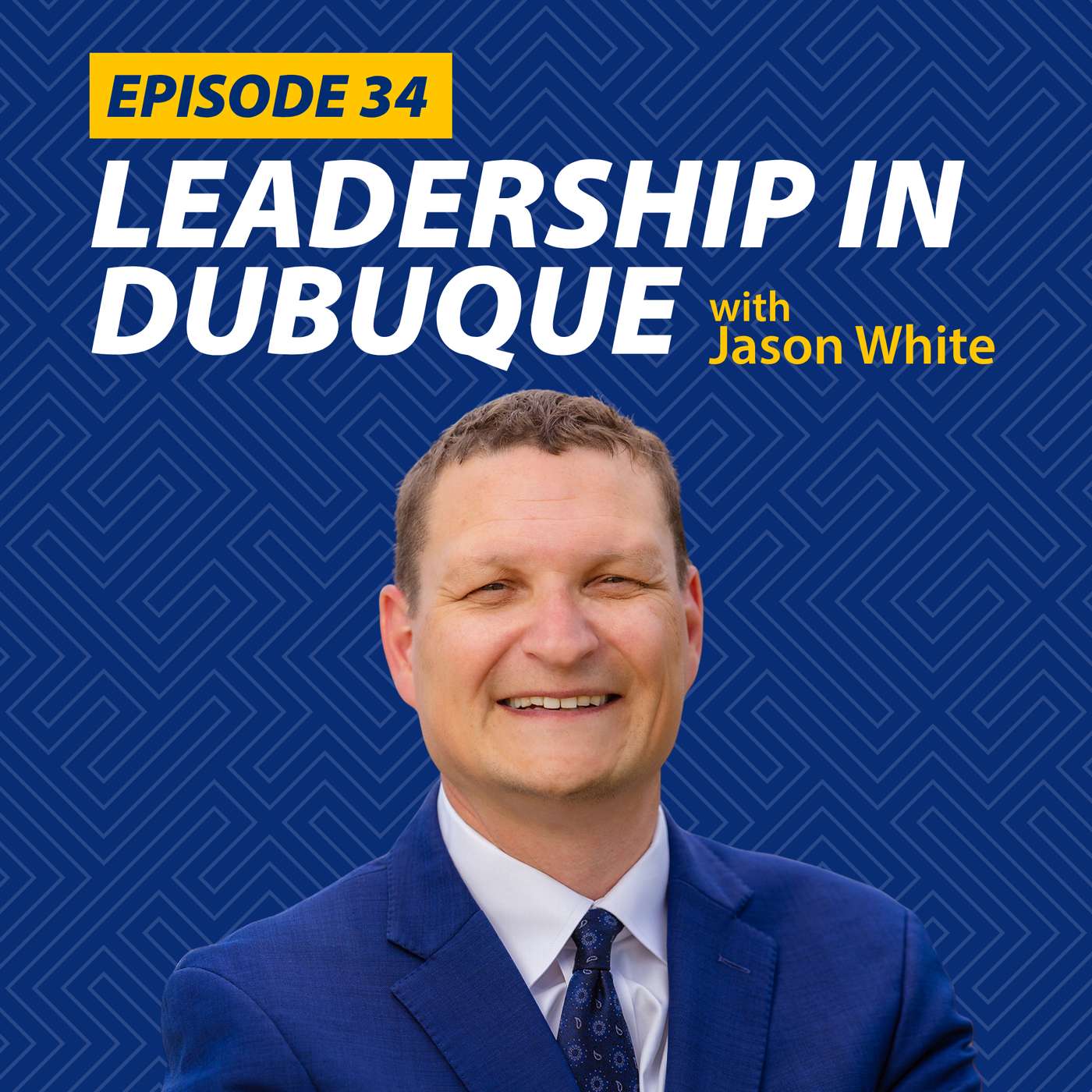
Looking for a high-paying career change in the Greater Dubuque area without spending years in school? In this episode of The Catalyst, host Amy Lasack sits down with Jason White, the new President and CEO of the Greater Dubuque Development Corporation (GDDC). Discover how a powerful local partnership is tearing down traditional barriers to education by offering fast-track career certificates, financial assistance and direct connections to top employers. Whether you are an area business owner looking to upskill your team or a job seeker ready for your next big step, learn how you can leverage these free local resources to succeed. Click here to watch a video of this episode. Follow us on social media: Facebook | Instagram | LinkedIn | YouTube Visit nicc.edu for more information and resources. Creators & Guests Amy Lasack - Host Tessa Hill - Producer Ashley Konzen - Designer Travis Hunt - Producer Jason White - Guest
Amy Lasack: Welcome to The Catalyst, an exciting and insightful podcast produced by Northeast Iowa Community College. I'm your host, Amy Lasack. Together, we'll explore the people, programs, and partnerships that make Northeast Iowa Community College unique. From student success stories to behind the scenes info about athletics, innovation and industry collaboration, each episode dives deeper into your community's college. Get ready for an inside look at the impact of community driven education at NICC. Well, hello, everyone, and welcome to another episode of The Catalyst. We're to, joined today by Jason White, the new president, CEO of Greater Dubuque Development Corporation, as we talk about economic development. And so economic development is one of the most powerful forces that are shaping the future of a region, from the employers who choose to invest here to the workforce pipeline to help businesses grow. And in the Dubuque area, that work has long been led by the Greater Dubuque Development Corporation, GDDC. And so today, I'm excited to welcome Jason White. He was newly named CEO of GDDC back in January. And while he's new to this role, he's certainly not new to the mission of GDDC and economic development as a whole. He brings more than two decades of economic development leadership and experience across Iowa and Wisconsin. He graduated from Loris and holds a master's degree from the University of Iowa in urban and regional planning. We're gonna talk to him about his view vision for the future, how economic development landscape continues to evolve, and why partnerships with entities like NICC are more important now than ever. So welcome, Jason. Jason White: Thanks, Amy. Appreciate it. Thanks for being thanks for having me today. Amy Lasack: Yeah. So first, we wanna get to know Jason the person. Tell us a little bit about about who you are, your family, and how you kind of came full circle. You went to college here in Dubuque, and now you're leading GTDC. Jason White: Yeah. No. Absolutely. Yeah. As of January 12, I assumed the role of president and CEO of the Greater Dubuque Development Corporation. After a long period of economic development service in a variety of different communities. First off, I grew up in Dubuque County, so it definitely was exciting to to come back to Dubuque County in 2021 when, you know, my family and I had the the opportunity to move from Oshkosh, Wisconsin, where I was blessed to be the the founding president and CEO of the Greater Oshkosh Economic Development Corporation from 2015 to 2021 and developed some some good contacts and networks, met met some great met some great people while I was performing that service and founding a new economic development organization there. But but yeah. And I've I've had a long journey prior to Oshkosh. I was in Central Iowa, West Central Iowa, Southern Iowa, and read my background in in education. So I think my wife and I, we both grew up in the kind of that Dyersville Worthington area there one the Highway 136 Corridor in Western Dubuque County. So never thought we'd end up back home, though, because you just never know where these journeys might take you. So the opportunity to come back here with Rick saying that, you know, he was retiring after thirty years of a strong leadership and service to this organization, and now an opportunity for for me to to step in those shoes and carry that mantle of greatness and while trying to take this organization and community to to new heights with a great team and a great board and obviously great partners as well. Amy Lasack: Great. Well, for those that are listening that maybe aren't familiar with economic development organizations as a whole, can you give a high level description on why they exist and what sort of impact they make? Jason White: Yeah. So an organization like Greater Dubuque Development operates as a public private nonprofit corporation. So, you know, there's the city a lot of times when you'll have a city, they'll have economic development staff, and certainly we do in the city of Dubuque. And local governments overall have usually have somebody that, does perform service of economic development, either the city administrator or the planning coordinator or whatnot. One of the benefits we provide in having those folks at the table, But we we also have businesses at the table, and we have nonprofits at the table, and we have education partners at the table. So, you know, for an organization like us where we have a actually, I have a 46 member board, We have a lot of different stakeholders so that when we convene business, everybody's at the table. Right? So Mhmm. That's a real value that we bring. And when it comes to working or facilitating an economic development project, there's a lot of different partners that could be in and out of the conversation from workforce to city services to incentives to land, buildings, and infrastructure. And, know, we gotta be prepared to to react. And having all those folks involved in support of our organization and our mission, performs a very strong, purpose, in the economic development ecosystem. Amy Lasack: Absolutely. And so now that you've been kind of a couple different roles and and back in Dubuque with GDDC and now leading GDDC, how would you say GDDC is a little bit different than any other economic development group? Jason White: There's a lot of different facets to our organization. So the core of our mission is and always will be to connect and take care of our business and industry. Right? So I think from that standpoint, there's a lot of groups that'll do that. I think one of the things that makes us unique in that regard is that we've had a twenty to thirty year track record of managing a very targeted discipline program called InfoAction, where we meet with 250 business executives every year and ask them questions about their market, rating community services, better understanding their workforce, how they relate to partnerships in our community, and any any strengths and weaknesses that we have that operates their ability to perform and grow in our community on a day to day basis. So I think that's unique from the standpoint of the way we do it Sure. And the detail that we perform. But we also have a very active sister part of our organization, and that's Workforce Workforce Solutions. And so right up there, Night Knife next to our our business services, taking care of existing businesses and bringing in new businesses, talents, attraction, recruitment, and retention is right up there right next to it. So we have programs that we'll get into, I'm sure, that relate to new skill development and newcomer service and, you know, making field people feel welcome and a part of our community when they get here. But then we also have some, you know, strategic initiatives that we take on too to try to be nimble and, you know, address the needs of the community on an ongoing basis, whether it's childcare or housing or broadband. And so we we tend to anything that impacts our ability to grow as a community is something that we wanna be on the forefront of. Amy Lasack: Yeah. There are so many different components to economic development. You mentioned several of them there, transportation, childcare, workforce skills. I mean, there's so many different pieces of that. And Dubuque has a really interesting history when it comes to economic development over the last thirty years or so. Why why are you excited to lead GDDC now? Jason White: Yeah. We we definitely have a strong track record of success in the greater Dubuque market and state of Iowa and the Tristate area as well. And I see think if you look at Dubuque, you know, our community really relies upon us as kind of that that convener Mhmm. That facilitator of of partners around our community and our region. And so, you know, we've brought a lot of leadership to the table in that way because we have a lot of expertise in our team. Right? So Right. As I mentioned, we have, you know, Dan McDonald, who's been our director of existing business for over twenty years. So he Thanks, sir. When he makes a phone call to a business as CEO, they take the call. They take the meeting. We have two people on our team that are focused on workforce and talent. And, you know, one on one's a former HR manager. Right? So she can sit down as a with a peer HR man manager and and have a a very enlightened conversation about issues and and and troubleshooting and and opportunities. And then we also have somebody in our team in the Cockenberry who comes from a lot of experience too and works with NICC and higher education and our our our governmental entities and better understands, you know, what tools and resources that can come to bear when it comes to recruiting talent there too. So so I think what makes us unique there is, you know, we have a lot of the talents on our team, and we have a very strong supportive board supportive board that have given us the resources and delegated the authority for us to to really be nimble and flexible and connected to our community in many different ways. Amy Lasack: Sure. So, Jason, as from your seat, why do you feel like it's vital to have a community college as a partner in workforce development work that you do? Jason White: Yeah. When it comes to working on an economic development projects, let's talk about business expansions right now. Right? So there's there's there are a handful of people that you want on your team right away. Right? You want people that can help you identify real estate. You wanna have people that can identify talent and skills that are needed. Right? And so automatically, you're gonna have the community college at the table. Right? Because NICC specifically provides a lot of different programming for a lot of different types of skills. And chances are regardless of who that employer is, you have a program to train that talent or upscale that talent, right, or customize training for that to to secure that talent. Right? So so having the community college there when we're talking about talent, real estate, local government processes, all of that. I mean, it's just a a a core part of the team. Right? But just even even the day to day work that we do. You know, as you know, we we meet every month between Greater Dubuque Development's team and NICC's team. And we present information to you about, you know, what our company's needs are or, you know, gaps that they're facing in talent recruiting or different skills that they're looking for or how that's changed, right, from year to year or project to project or ish, you know, time to time. So we bring that feedback back to NICC in kind of a constructive sense to say, hey. You know, this this company is is needing 10 welders, or we met with this medical institution and are short on nursing. Or, you know, can we can we quickly, you know, ramp up an opportunity Dubuque program to to achieve, you know, certain metrics for this type of need or what have you in the in the in the in the local market? So so I think just that ongoing relationship both with us and our employers in the community is vital to fill in that gap and also being as responsive as we can be on a regular basis as well. Amy Lasack: Yeah. I think that's one of the real benefits to us working so closely together for our employers is they can mention it to you and we know right away. We can do the follow-up as necessary and they don't have to talk to 17 different people to get what they need. And I would like to talk a little bit about opportunity to Butte because that's another program that we work very closely with GDDC on. And just as a little bit of background for our listeners, NICC works hand in hand with GDDC on this. We offer several short term career pathway certificates for in demand positions in the Dubuque area, and GDDC has been so supportive of the work that we do here by providing financial assistance for students to take these courses, but then also resources so that we can have staff that help support those students through that journey. Jason, from JDDC's perspective, why was that something you felt that would would be important to to work so closely with NICC on? Jason White: Yeah. And I really have to give my predecessor a lot of credit for that. You know, Rick Dickinson viewed it was very passionate about this and went out a number of years ago to the county, Dubuque County, board of supervisors, the city of Dubuque, and the DRA, another partner we're very fortunate to have here, to say, hey. You know, if we're going to get people fully employed, people have different circumstances in life that they face. Maybe out of high school if they're ready ready to enroll in a Mhmm. In in a program, or maybe they're not. You know, maybe they're they're they need to go out in the workforce. Maybe they need to find themselves for a couple of years. Maybe they they they're just they're just not sure what they wanna do. So there are people that, you know, high schools have have good programs to kinda help kids, you know, guide them on their way, but adults necessarily don't necessarily have that. So Opportunity Dubuque presents that that great tool in our community that, you know, goes, reaches out in our community through strong connectivity with other nonprofits and other social circles that exist in our community to say, hey. We wanna find that individual or that group of individuals that are interested in improving their lives or improving their economic position for themselves and their family through short term certificate training, through targeted training that in a very short amount of time, whether it be six weeks, whether it be a couple months, whether it be up to six months, we can get you a skill and get you fully employed with, you know, dignity and reward work Mhmm. To be fully contributing for you and your family and to feel have the confidence that you are you you you are accomplishing your own life goals to to be a strong contributor to yourself and your community. So this has been a strong partnership, one that we strongly believe in. Our board has been very supportive of, and and NICC has followed through, not just with the programming, but with success coaches that are on the front line to find such individuals and help them become gainfully employed and skilled in our community. Amy Lasack: And it's made such an impact on hundreds of lives over the years providing that training and the sustainable careers. And I know our employers really appreciate that pipeline as well, and we definitely couldn't do it without GDDC's help. Jason White: Yep. Amy Lasack: Another program that we connect we work together with is connecting newcomers to Dubuque. Can you talk a little bit about that? Jason White: Yeah. This is a set of programs I'm very excited about to talk about. So if an employer is is trying to introduce somebody to our community for the first time, right, we're very blessed to have tour guides that will take them around the community. So we encourage our employers and those even with with NICC that are joining your your team to experience our community and get a windshield tour from one of our tremendous tour guides. These these tour guides are all natives to the community. I've all kinda been through, you know, the various different points of life in our community and and experienced it in many different ways. I actually took a tour myself when I was interviewing for the job, and I learned some things about the community that I'm serving right now. So those tour guys do such a great job, and we do dozens and dozens, not hundreds, tours every year to help employers get that best first impression for the people that they're trying to hire and and attract to our community. We also have a once they do arrive in our community, we do have a program called Distinctively Dubuque for five weeks on Wednesday nights. We have 20 to 30 newcomers that arrived in the community over the last couple of years that learn about Dubuque. Right? What is it like to be a Dubuque? We also benefit from their first impressions. So the first couple nights, we get their honest feedback about what they think about our community, and that feedback is helpful. We share that with the city council. We share that with our board because it's not just us talking to them about how great our community is. We also want their feedback about how we can improve as well, things that they've experienced maybe from a community that they moved from. So this distinctively, Dubuque offers a a great opportunity to to have a a two way approach where individuals learn about what it's like to live in Dubuque. And we learn about them that from them as well, about who they are and where they came from and help them feel, you know, a sense of community. Because we believe that when people feel connected to their community, they feel like they're they belong to their community. They're more likely to wanna get involved in their community and stay here as well. Amy Lasack: Yeah. And I know as a graduate of Distinctly Dubuque a couple years ago, it is such a wonderfully put together program, and you do learn so much in just five weeks about the community. I would encourage anybody listening out there, you're newer to Dubuque, and you don't have to be brand brand new. If you're just here you've been here a couple years and you haven't had a chance, right, Jason, that you can still get a chance to know. Jason White: Yeah. Yeah. We had folks this last class from, you know, Arizona and Colorado and Arkansas. I mean, we had people from all over The United States in this class. And, you know, again, I think people are pretty energized by the end of the the five weeks, and and, that's our goal. Amy Lasack: Yeah. And you get to it's a cohort model, so you get to know the people in your class really well after the end of the five weeks. So we've talked a lot about employers and, the role they play in the workforce and economic development system. How has that role changed over the last couple of decades that you've been in economic development? Because it's there's been a bit of a shift. Jason White: I think there has been a shift. I think as employers, you know, they a lot of them will tell us that they don't always have a a people problem when it comes to number of applicants or positions that they need to fill. They say they have a a skilled gap. Right? So I know we do an annual skills gap analysis to figure out what kind of skills do we need to recruit or develop within our local labor force based and and, actually, NICC has been a big part of that skills gap analysis as well if you wanna talk about partnership. But I think over time, I mean, that's that certainly has been been something that we've heard over and over is I can oftentimes find the people, but I need the skills. Yeah. And so, you know, again, that goes back to some of the things we've talked about with opportunity to Dubuque and the value of having a community college with a lot of different programs and also evaluating the need for new programs. And so that certainly is something that that we've seen more and more. We've also seen a lot more focus on employers understanding and and taking more care of their employees. They want to compete and and take care of the people they have and especially good people that they have. And so, you know, being very attuned to employment barriers, such as transportation and brain health, childcare, some of the things that might impact their ability to not only take the job but stay in their job once upon hire. So we've seen that as well. And I think just just the continued changes with, you know, technology, artificial intelligence, robotics, automation. I mean, those are all things that have entered the picture that in a bigger way that maybe hasn't weren't as big of a part of the picture ten years ago or so. Amy Lasack: Sure. Well, I know you've been in this role for a whole three months. But as you look forward to the next five or ten years, what are you most excited about, and what sort of priorities do you think GDDC is going to have? Jason White: You know, we are a very dynamic community and county, and we're very blessed to to live and work in this part of the world because we live in a community where people care about each other. Right? And and employers care about their people. Educational institutions, you know, care about their their people and their and their students and their welfare. And I think, you know, we're blessed to be a part of a community where where neighbors care about people and take care of people. So I think just as far as the the future goes, it's a very dynamic county. We have tremendous, you know, tourism assets, I think, that bring people here to help us on the workforce side because people come here. They they experience the field of dreams. They experience the river museum, art museum, a lot of the other things that take place here, and, you know, they wanna be a part of it. So I think for us, just to continue to capitalize on the people that come here and visit here and are connected here in some way. So, you know, I I've said to the to the city council the other night during our presentation is that we have a lot of wonderful, caring people here, but we need more of them. So we wanna continue to grow our population. We are we hosted the Iowa Rural Development Council Summit last week, and a lot of people might think, well, Dubuque's not rural. Why were you hosting the Iowa Rural Development Council? Well, I think to a lot of the rest of the world, Dubuque is considered very rural. And Mhmm. While, you know, we are are are the metro region for a kind of a seven, eight, nine county area here that makes up about 250,000 population, you know, around the rest of the rest of the world would consider us to be a very rural agricultural based economy. So so I think for for us, it's it's recognizing that it's important for us to be aggressive, fight above our weight, compete to win projects, and then bring that mentality to the table. But also, you know, the spirit of collaboration that goes along with it, like I talked about earlier among public, private, nonprofit partners that we can come together. We can do business respectfully, and we can, you know, all come to to the same conclusion that a continued growth, vitality of our people, of our businesses, population, business investment is something that we all want to attain for ourselves and for those who come behind us as well. Amy Lasack: Yeah. Well and you you used the word blessed several times in that last segment. And I I would as we're wrapping up and we go into our last segment on the podcast, I would say we're very blessed to have you as a leader, because you do care about Dubuque so much, and and you do want the best for for the region. So thank you for the work that you're doing as well. So we have a fun little section of our podcast called fact or fiction where I kind of read off a a statement. You let us know if it's fact or fiction. Are you game? Jason White: Absolutely. Love it. Amy Lasack: Alright. Alright. What about, you need a four year degree to get a job in this region. Is that fact or fiction? Jason White: I would say that's fiction. And we we're we're blessed because you can get a two year degree, and you can get a four year degree, and you can be employed right out of high school. So we have options, a lot of career options for for everybody regardless of what walk of life they are. Amy Lasack: Great. What about Opportunity Dubuque only provides training for recent high school graduates? Is that fact or fiction? Jason White: That would be also be fiction. As we talked about before, there's a lot of upskilling that takes place with unemployed and underemployed individuals. To get them back on their feet. So certainly. Amy Lasack: What about economic development today is just as much about talent as it is about land and buildings? Jason White: I think that all is that's very that's true. So that's fact. You need both. If you don't have one, you can't really have the other. Amy Lasack: How about local employers are important players in developing a talent pipeline in the region? Jason White: Very true fact. Amy Lasack: Yeah. Important. The best economic development conversations sometimes happen over coffee instead of in a boardroom. Jason White: Yeah. Absolutely. That's definitely a fact. Amy Lasack: Yeah. I think one of the things I've really noticed, being in the Dubuque area is the relationships that everybody has in this area is so key to get any, partnerships done and and move forward with things. Alright. Last one. The CEO and president of GDDC has the best office in the city. Jason White: I would say we have the best partnerships in the city, and that includes greater Dubuque development. How about that for a diplomatic answer? Amy Lasack: Love it. Love it. You did a great job there. Well, Jason, thank you so much for joining us on The Catalyst and sharing your vision on the future of the Dubuque region. We really appreciate you coming on. Jason White: Thank you. It's been a lot of fun. Thank you. Amy Lasack: So as just as Jason talked about, it's much more than just growth economic development. It's about the people, about the partnerships, and creating those pathways for communities and employers to thrive together. We're proud at NICC to be a part of the work that GDV site GDDC does every day, and we're excited about what the future holds through Jason's leadership of GDDC. If you do want to learn more about GDDC, you can check out their website at www.greaterdubuque.org. And thank you to everybody for tuning in to another episode of The Catalyst. We'll catch you next time. Thanks for joining us on this episode of The Catalyst. If you enjoyed the conversation, make sure to follow or subscribe on your favorite podcast platform so you never miss an episode. Want to learn more about NICC and the many ways we support our students, partners, and community? Visit nicc.edu for more resources and upcoming opportunities. This podcast is produced by Northeast Iowa Community College and hosted by me, Amy Lasack, with executive producer Tessa Hill, producer Travis Hunt, and graphic designer Ashley Konzen.