
The Cabbage Coins Podcast · Tony Gryckiewicz
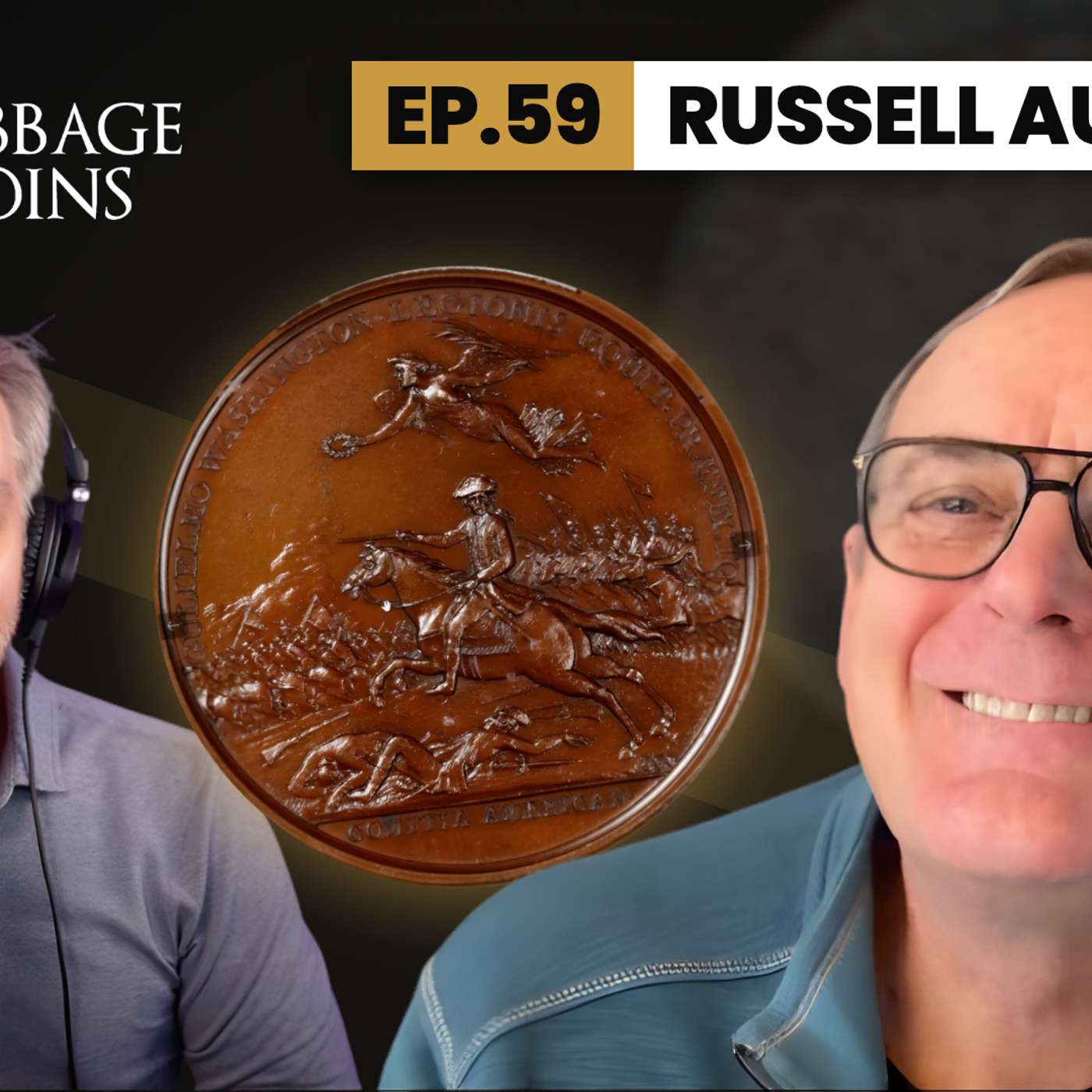
In this episode of the Cabbage Coins podcast, Tony Gryckiewicz and Russell Augustin delve into the recent auction results of the Bostonian collection at Stacks Bowers. They discuss the performance of various coins, the significance of the Yankee Blade publication, and the impact of gold prices on collectible values. The conversation also touches on market trends, the rise of colonial coins, and the implications of recent discoveries in the numismatic field. They focus on modern patterns, gold commemoratives, and investment strategies in numismatics. They discuss the performance of specific coins from the Bostonian collection, the impact of CAC on coin value, and the importance of understanding market dynamics for successful investing in coins. Chapters 00:00 Introduction to Cabbage Coins Podcast 01:26 Exploring the Yankee Blade Publication 03:48 Post-Auction Analysis of the Bostonian Collection 06:10 Significant Gains in Coin Values 10:05 The Impact of Gold Prices on Collectibles 13:06 Market Trends in Early Dollar Coins 16:30 The Value of Historical Coins 21:05 The Rise of Colonial Coins 27:42 Understanding Market Dynamics and Hoards 35:53 Future Implications of Recent Discoveries 38:36 Understanding Modern Coin Patterns 47:42 The Performance of Gold Commemoratives 51:29 Investment Strategies in Numismatics 61:48 The Role of CAC in Coin Collecting Where to find Tony and Cabbage Coins: https://cabbagecoins.com/ Email: [email protected] IG: @cabbage_coins Russell Augustin Senior Numismatist - RARCOA www.AUCM.com Email: [email protected] Upcoming Show Schedule: https://cabbagecoins.com/coinshows/
Tony Gryckiewicz: Hey, folks. Welcome back to another episode of the Cabbage Coins Podcast. My name is Tony Gryckiewicz. I am the owner operator of Cabbage Coins. I just got back from Asia, as many of you guys have seen the channel, and I posted a couple videos. I'm excited to be back. I'm excited for what we have planned for this fall season. Today, we have Russell Augustin. Russell is the senior numismatist of Raracoa. He also owns a company called AUCM, AU Capital Management, and Russell's been on the channel before. We recently did a YouTube live video directly from the ANA Bourse floor. We reviewed the Bostonian collection of these incredible bus dollars and talked a little bit about what we suspect to happen, expect to happen at the auction. Today, we're gonna do a little bit of like a post hoc analysis, kind of a post auction analysis of what actually did happen. What were the greatest gainers and kind of greatest losers or those that didn't gain as much in terms of price appreciation. We're gonna look a little bit also at this little document, this publication that Russell's been working on called the Yankee Blade, and I'm just gonna show that to folks here as we as we get started. And the Yankee Blade, I've been reading this and kinda understanding this as being some kind of original numismatic research that Russell is putting together, and eventually, this is gonna be available for people to start to peruse and to consume. Anyways, Russell, welcome back to the podcast. Maybe just get a little bit more of an intro here on the on the Yankee Blade. What exactly is this publication gonna be? And then tell us a little bit about, you know, what are we gonna look at today in analyzing the auction results. Russell Augustin: Thanks, Tony, and welcome back to Stateside. I hope you don't have too much jet lag. Yeah. So briefly, the Yankee Blade is something that is a pet project of mine. Essentially, it's a long form numismatic journal that treats coins as primary historical documents, where the money went, why it went there, and what metal this can tell us about its history as we know it. It does sound like a shipwreck that went down in 1854, and in fact, I kind of chose it for that, but it was also a newsletter that was created in Maine in the nineteenth century, and it covered human interest stories, poems, current events, things like that. So I'm borrowing the name, the Yankee Blade, which is not in existence anymore, but I'm I'm actually putting a numismatic touch to it. Tony Gryckiewicz: I like it. I like it. So this this particular edition that we have about the Stacks Powers auction, what exactly did you do here in terms of your analysis? Russell Augustin: Going back to when we were at the ANA and we were doing our first podcast on it, I thought it would be really interesting to demonstrate how well a very choice collection of coins does over a very specific period of time. And in this case, the Bostonian collection was put together within the past thirty six to forty eight months for the most part. There were 81 coins, and we couldn't cover all 81 coins as you know, but we decided to focus in on the flowing hair and draped bust dollars. Those were like the crown jewel of the collection it seemed. So that's not only did I analyze that, I walked the plank and said, I think this is what it's gonna sell for, but now we have the results. And so I think it'd be fun to share them. And also just to point out some of the winners and losers for people who are not necessarily into early dollars, but may happen to be interested in other more obscure kind of numismatic items that happen to be part of the collection. Tony Gryckiewicz: Yeah. Alright. Sounds good. So I will, I guess, kind of move over then to our other share screen, which is gonna be our the actual auction window, and we'll take a look at some of these some of these coins. So what lot number did you wanna start with for the discussion? Russell Augustin: I can give like a a quick summary of what the whole collection did Tony Gryckiewicz: and Russell Augustin: then go into the into those specific lots because I thought it was kind of interesting to say, here's here's how much was spent, here's how much what it got at auction, here's the winners, here's the losers kind of thing. So Uh-huh. In the Yankee Blade, which by the way, the publication is available upon request through Tony or myself. So the auction was in August a month ago. There were 81 coins total, and 75 of them I could actually find a prior sale for. So the exact coin in and out of an auction, the August 2026 price realized was $1,200,000 versus $867,000 spent. The gain is $355,000 or or 41%, which is very impressive. The median lot was 35%. There were 60 winners and 15 losers. So that's the sum total of it. And then in the Yankee Blade, we go into the largest gains and then the performance by category, which kinda breaks it down to where what your question was initially. Tony Gryckiewicz: Yeah. I'm excited also about looking at these 15 losers. I think you can learn a lot from the losers, so we'll get into some of those here. So the largest gains being I like to see this as 1796. This was one of my new kind of favorite dates. I recently picked up one that's probably that's probably why, but one of my favorite dates is the 1796 and this a 58 CACG, which is great to hear and see that too, just that the CAC grading coins are doing so well. This is the biggest one. Russell Augustin: Yes. Is. Incredible. Just to for interest sake, we thought that it might go for about a $100,000 before the auction. Yeah. It ended up selling for a 122,000. And that was a $77,000 increase from when it last sold in April 2015. Wow. Interestingly enough, the with the price guides, here's where I think it's also interesting. With coins like this, you find that you can move the price guide because of what it is rather than the price guide dictate what the price of the coin should be. So the CPG prior to the sale was 50,000. Today, it's 72. CAC was 60,000. Today, it's 72, and the c was unchanged at 85. So the person who bought this understood that really he's going to start he's going to dictate what the market value is moving forward. Tony Gryckiewicz: Yeah. I can only mention it's just two very motivated people that that absolutely have to have this coin and needed it and wanted to go to go to battle over it. Very impressive. Just to remind people, you know, I don't think it would be bad at all to kinda just take a quick look at at the coin. Yeah. So this coin, I remember us Russell Augustin: That's the $17.96. I thought we were doing the $17.95. I'll I'll adjust the corrections as you're talking about it. Tony Gryckiewicz: Okay. Yeah. No. It was the first one on your largest gains list, the seventeen ninety six b b sixty one. Russell Augustin: I need to take my glasses off. Tony Gryckiewicz: Okay. Okay. I mean, this one did this did gain by 77,000, so it's maybe very I think you had the numbers right, actually. Yep. Yeah. Sold for a 122,000 all in, and the previous price was $44,006.50 and the gain was $77,000 on this coin. This is even with these pictures, which in my opinion, these pictures did not they didn't do a phenomenal job on on that, but at least on the true Russell Augustin: The coin sensational. I I can still remember it's still gray and just you could just shave with the the detail on the coin. It was really, really sharp. Yeah. Incredible. One thing that Tony, the one thing I got wrong was the published prices actually went from 60 and 72 respectively to 144,000. Tony Gryckiewicz: Oh, the published prices for CPG, CAC CPG? Russell Augustin: And CAC. Tony Gryckiewicz: Okay. That went up to 140,000. Yep. Wow. Okay. Russell Augustin: So it essentially doubled. Tony Gryckiewicz: Yeah. Yeah. Alright. Very interesting. Very interesting. I'm interested in this next one here, which we didn't talk about at the previous. Kellog and Humbert Gold ingot. This thing had sold for $85,400 and previously it sold for 49. How much of this do you think is being driven by gold price in your opinion? Russell Augustin: That's a very good question. I recall there was 15 ounces, and if we multiply that by 4,500, we've got about $67,500 worth of gold. So divide that, so you've got like a spread of 25%? Tony Gryckiewicz: Yeah. So I mean, I think it has to be a little bit driven by the gold value here. I mean, this is just a faceplate. Right? This is yeah. This is not the entire bar. Russell Augustin: No. The faceplates were created by Monaco, an exceptional, well renowned dealer, Adam Crum, when he was at Monaco. And I think also the combination with Dwight Manley when they were dealing with excess Kellogg and Humbert ingots from the shipwreck SS Central America, they got really creative and they decided that they would take some of these larger bars and they would just cut the face off, which is what you see here, but the body of the gold would be melted down and used for commemorative coins. Tony Gryckiewicz: Okay. Could basically like the faceplate was all that people really cared for or cared about, and so there was no point in carrying around or or having a 200 ounce. The market for the 200 ounce ingot was less than let's say the market for 15 ounce basically, they didn't get 15 ounces. Russell Augustin: And also too, at the time that they did it, these larger bars were pretty much selling at melt value. Okay. And spot was like half of what it what it even less than half of what it is today. So this this was a good way of for them to cycle the gold into the numismatic collecting community. Tony Gryckiewicz: Yeah. And they made it a little bit more of a collector's item, I guess, with the fact that you're just looking you just have the the item that is historical, which is this kinda, you know, like, just the the front side of the of the ingot. Today today, I mean, do you see a lot of people collecting these? I mean, is this a good place to try to build a collection, or is it really driven mostly by gold values? Russell Augustin: Well, I definitely think it's driven by gold values, but I also think I've seen a fair number of these, not a lot of them, but they were both like Kellogg and Humbert and Just and Hunter that they made faceplates of, and it is a collectible for the individual who's interested in the shipwreck material. It's not a quick seller, but it's definitely it's just dripping in historical value. Yeah. So I think the 25% premium is actually a little light compared to some of the faceplates I've been offered ten and fifteen years ago. Tony Gryckiewicz: Yeah. Alright. So the the next one on the list and just stop me if you wanna go in a different direction at all with any of these things. Let let me just let me know and we can easily do that. But the next one on the list that is standing out is a huge price appreciation according to the Yankee blade. This is a $27,000 gain versus 2016 to today. And so the last time this thing sold was for $11,750 and now this coin sells for $39,000.04 0. So, yeah. What do you think? Well, what's the what's the driving force here on this one? Russell Augustin: To be quite honest with you, we selected the other $180.02 to discuss in the first podcast. So not to meant not not that this coin was any bit inferior, but I think it's indicative of the overall market and the gains that the early dollar market has enjoyed over the past decade. The collector body is very sincere and they're determined and they have money. There are easily a dozen, if not more, very astute collectors all chasing the same product, early dollars, and to buy them with either CAC or a CACG is what really going after. Tony Gryckiewicz: Yeah. I'm just trying to find where really the rubber, kind of wear on this coin is. I mean, I guess you could say it's just kind of right here on the jaw of liberty and on the forehead. This is a AE 55 plus. It's got the CAC sticker as well as the CMQ, the Stax Power sticker, you know, as well. I think we mentioned last time, you know, these auction houses do employ kind of a staff of pretty good numismatists that are able to grading, you know, on coins. So that's basically their sticker to say that they really, you know, like the coin as well. I actually love the reverse of this coin, you know, just because you have sort of like a little bit of sort of friction, but not a ton of wear that I can really really see on the reverse of this coin. I feel like the reverse is almost my opinion, it's almost mid state, but I don't know. Russell Augustin: Yeah. You're not I don't think you're too far off with that. And, know, as an AU 55 plus, you can see people, I think, extending into the AU 58 territory to buy such an example. Tony Gryckiewicz: Yeah. Plus you got color. I mean, the color certainly should factor into it. Some examples are kind of, I don't know, somewhat lifeless. So when you have stuff that has originality for sure, then something also, let's say like color, it definitely, I would say be a bit of a driver. It's got it's got a nice nice high appeal look. It's great. Russell Augustin: It really does. And you know, the interesting thing about a market that is rising, let's just use this past decade as an example, let's just say that I bought this coin twenty years ago and I've been holding onto it for ten years and then like 2015 or 2016 comes along, or even 2020 comes along and I see the market is increasing in value and I've made money on the coin, I can't predict what's going to happen in the future, but I'm pretty confident that I'm going to make a profit, so I might offer it at auction. Tony Gryckiewicz: And so one of Russell Augustin: my favorite expressions is opportunity knocks with a capital wrap. Here you have like the Bostonian collection, the gentleman is now offering it to someone else to enjoy for the next maybe ten years. And it's a pretty good chance that it's going to increase in value. I can't see these things going down very much. Maybe they might settle for a little bit because you can't race ahead, but I I think it's a good buy for whoever was able to get it. Tony Gryckiewicz: Yeah. Well, I mean, thousand seven fifty back in 06/26/2016. I mean, so 2016, I recall economy being kind of so so. I think that interest rates are still kind of on the rise a little a little bit at that time. It was not really a very strong economy. That point, I was just getting introduced to coins at all back in back in 2016. Yep. So which kind of speaks to, you know, folks that are in this game for a long period of time. The economy, it kind of goes up and down and it's like people, they're positive on on on hard assets and then they're negative on them, and you can take advantage of some of that in auctions that you show up to and a particular coin, I don't know when they, let's say they consigned back in 2016, who knows when they actually consigned the coin or whether, you know, they're they're fully cognizant of what was going on in the economy at the time, whether it was gonna be a good strong auction or or it wasn't. And And of course, the auction house just, you know, of course, they have the the past sales and things to talk to talk about. They get the consignment and then at some point, they bring it, you know, bring it out to, you know, actual auction. And then who knows what happens? And the folks whoever got this thing back in June 2016 for $11,000, I mean, that's just kind of mind blowing. They took advantage of that particular opportunity which goes to show the value of having some dry powder, having some money, having some cash put aside for whatever the auction might be where all of a sudden some incredible coins are on sale. This person made out really well, did very, very well. Russell Augustin: Yeah, I couldn't agree more. I also might add to what you just said that since I was in a market in 2016 and 2017, it was the beginning of a fairly strong bull rally because of certain market participants who came in and started buying major collections of coins or whatever coins that they could buy in top grade. You may know who I'm speaking of but Tony Gryckiewicz: Yeah, probably, but go ahead. Russell Augustin: Yeah, so you know that's lasted for quite a while, and this I think was right at the beginning of this gentleman's urge to buy a lot of quality numismatic material. And as a result, it just kicked up this the the ocean with everybody else buying and selling coins. Prices go up, people wanna sell, that they've been holding on material for a long time. I don't know who the star city is, but they may have been influenced by this. Tony Gryckiewicz: Yeah. Yeah. Most of the time, a lot of these providences, they go to some name collection that at the end of the day, in my opinion, doesn't really matter too much unless it's a very well known collection, well known collector, but Star City, I don't know. I did wanna move on to this next one, which is the first thing that we have. Well, it's probably the second here that is it's not a dollar. This isn't another coin that we looked at prior. This is a $18.00 $2.5 recently. Yeah. This is a slight slightly better date. This is a nice coin. This is a very choice original coin. This also now this was an Overton $10.06. I'm not sure if that's particularly rare. It's not even notated on the holder in any way, but this had a $27,000 increase in its value. It was previously at 19,200 where it sold in 2018 and sold at this auction for 46,360. Russell Augustin: Phenomenal. So, I just did a link to the Heritage Auction from which this coin came on 02/22/2018 and they say it was the property of a lady, you know, no name collection but definitely coming out of the woodwork I think and probably just being graded for the first time back seven, eight years ago. Tony Gryckiewicz: Mhmm. Russell Augustin: I mean, the color is phenomenal, wouldn't you, Brian? Tony Gryckiewicz: Yeah. Yeah. The TrueView definitely highlights the color of the coin for sure and just, I mean, these looks right here, the blue, the reddish color. Yeah. It's definitely very choice, very original, very nice. I mean, the coin is the coin is great. You just don't think of of of $0.5 having this level of of of push and demand. I mean, lot of people chase towards the dollars and but this obviously did very, very, very well. How rare is this coin in like a min state grade? Is this does it get exceptionally more rare? I've owned these in like, know, VF and XF. Russell Augustin: Which are great coins. I mean, VFXF coins like this, especially if it's got the same kind of color but just a little more rare, I think are fantastic buys. In mint state though, it's really in the condition census. I'm showing right now a population of PCGS of four with one finer, which is a 63. Interestingly enough, there was one that this one sold for 33.6. Then there was another one in 2021 that Legend sold for 32.9, and now you have this jumping to 40,000. Tony Gryckiewicz: Yeah, $46.3.60. Russell Augustin: Yeah, it's not the exact same coin, but the market was tepid at that point. Let's see what the published prices were doing. 2018 market value was approximately I mean, it was $40,000 back then, so it went down and then it came back up again according to Collectors Universe. CU. Tony Gryckiewicz: Do you see as many people building collections of these $0.5? Like this era, like a full set of them? Do they is there as much demand for the different dates as in comparison to the bus dollars? The bus dollars, you know, you got the various various dates and and it's not an impossible set to create and there seems to be a lot more demand for or an interest in building those sets. Do you see the same with these or is this more of a usually a type coin? Russell Augustin: Well, you mean for the drape bust or the capped bust? Tony Gryckiewicz: Drape bust specifically. Russell Augustin: Not as much as I do for the capped bust because with the drape bust you have two dates that are prohibitively rare and expensive, 1796 and 1797. So it makes it harder to complete a collection. Think buying a representative example is probably the way most people go. Tony Gryckiewicz: Yeah. So it's interesting just that this coin had this much kind of price appreciation being only sort of a little bit of a of a type example potentially if there's not a whole lot of collectors. But yeah, I don't know. All of this is kind of, like I said, post hoc analysis. We're just kind of, you know, making sense of what what we see the phenomenon that we have witnessed within the market here. So, but this is very interesting little Russell Augustin: I did, as an aside, I did speak with the Bostonian Collection former owner I don't think that he's actually happy that he let go of the coins. Tony Gryckiewicz: Why is that? Russell Augustin: He's got a little pit in his stomach now. He's like, well, what am I gonna do with the money? It's like, I'd rather have the coins back. So, you know, it's it's a funny dynamic. Tony Gryckiewicz: Yeah. Well, of course, there's there's always that question mark of of when you go to sell, what were you gonna do with the money? And I mean, that's what collectors do is they get into the next thing, whatever it is that is floating their boat, you know, and they go and pile the money into into that instead. It sure Russell Augustin: is right. But just think of the experience that he's got. He allocated, let's say, $800,000 to buy coins over a forty eight month period or so, maybe a little longer because some of these dates go back into 2016 and 2018. But for the most part, the coins are within the past four years and even within the past two years, yet to get such a great return from it, I think that he's a student of Numismatics and he's following the market and he realizes that the prices have just been going fantastically well. Why not sell into an advancing market? Tony Gryckiewicz: Yeah, absolutely. Why not? I mean, if he can see value in some other area. All of these different areas, I don't think they all pop off the same time, while at the same time everybody's excited about CAT coins and PCS plus CAC or about BUS dollars, that part of the market explodes. There could be another part of the market that is a little bit unappreciated. I actually think it's a good transition because this is a colonial. I actually don't know a whole lot about what these are. This is the most, I think the most expensive coin out of the top 10 that had the largest gains, a 134,000. This is a New England shilling. I've seen these. I know these are really rare and really expensive. Could you maybe explain a little bit about what this is for for folks out there that that aren't familiar? Russell Augustin: So this is the the first attempt of the for the colonies to create a means of currency. It was a big step back then and rather than dwell too much in the history, it really snubbed their nose at the king of England. Once you circulate your own currency, you were calling it quits, you were saying we're going off on our own. So these coins, they come in several different varieties. The Noe 3B actually is the most common variety that you can collect, the 1D I think is the most rare, but that's getting fairly technical. These coins for the longest time from a price history standpoint were almost untouchable at a $250,000, things like that, all the way up to 500,000. We have an example right now at the Rare Co op offices that is being held for a particular client, an AU58 that's valued at $1,000,000 So the value's all there. However, because of a death and the subsequent liquidation of a collection, several of them came out onto the market years ago, and it depressed the prices. And as a result, the prices have been inching their way back up again, but they really haven't got back to where they used to be. So this might have been one of those coins that was bought after the collection had been dispersed, the one that I just mentioned. And now you're seeing the market responding more favorably to the opportunity to acquire one when it comes to available. Tony Gryckiewicz: Yeah. I mean, it increased by $26,200 since its previous sale back in 2022. It sold for 108,000, and this one, sold for $1.34. It looks like you sorted your list based upon whole dollar value gain as opposed to percentage gain, but still, may they made $26,000 roughly, you know, on this coin. Yeah. I I feel like there maybe there is some value here in the in the colonials pieces. You don't hear about people collecting the colonials as much as, of course, the Bitcoins, the the Drapesh Dollars, and things of that nature. It kind of reminds me of a topic that I I wanted to ask you about, which is, okay, so people the worst thing that could happen that you think, you know, you buy a rare coin and like the worst thing that could happen is that all of a sudden they discover a whole pile of them that come out in a hoard. Yeah. Alright. And we you and I talked about this with the 50 pesos recently, which is a huge help to me. We were at the ANA show and I was offered a 50 peso, better date 50 peso, Mexican 50 peso, and and Russell helped me out by letting me know that some had recently come into market in some much, much better dates. So it was a bad time to be buying and paying a strong number for these. But you know, like, that's kind of like the the worst case, kind of the nightmare scenario for a lot of collectors is that this thing that they think is super rare, all of a sudden some additional ones come, you know, come to market. How best to insulate yourself from this? Is it looking at mintages? Is it looking at, you know, the the the best research by an expert in terms of survival percentages? How best to insulate yourself from the potential negative down the negative effects of more coming into the market? What do think? Russell Augustin: When you're asking that question, my mind, Rolodex is between US world and ancient coins. Tony Gryckiewicz: Mhmm. Russell Augustin: And so I have an answer for all three of them, But what I will say this, a hoard of these coins is not really a hoard, it's just an improbable disbursement. And they will eventually go back to where they were in terms of value if all of a sudden so many of them come out in the market and depresses prices. The dealer, God bless him, Jack Lee, I think owned maybe 50 high reliefs. And when he passed about almost ten years now, those coins came out onto the market, not necessarily through auction, but they all came out in the market at the same time and depressed the price of high reliefs. The $190.07 high relief today is not only back to where it was, but it's way farther ahead, and it's not just because of the underlying spot gold price. Another example for US, look at the great Kentucky hoard of gold coins from the civil war era that were dug up that Jeff Garrett handled not too long ago. In that hoard, yes, there were some double eagles, but more importantly, there were hundreds of gold dollars, hundreds of them. This is a coin that in its base AU to MS grade will sell for 5 or $600. These Kentucky hoard coins are now selling for upwards of $2,000 in heritage auctions, I mean, recently, and the grades aren't spectacular. It's just that it's the provenance of where they come from. So maybe a hoard actually helps the value of a coin. Now if you jump into world or ancient ancient coins, you can have somebody in a Scottish field all of a sudden dig up some sword and scepter Scottish gold coins and it'll depress the market dramatically depending upon whether or not they can keep them, of course. So hoards of ancient coins will definitely affect markets more than I think hoards of US coins, even treasure coins, shipwrecks like SS Central America, Brother Jonathan, the Yankee Blade. Yankee Blade was all eighteen fifty four S twenties. Did that affect the market? Not a whole lot. SS Central America, all a lot. Five thousand eighteen fifty seven s's, has that affected the market? No. In fact, those coins have all taken a notch upward recently, and it's not because of the underlying gold price. Tony Gryckiewicz: That just reminds me of the s s or is it like the San Jose or something? Isn't that a wreck that was recently found and there's just like tons and tons of gold on it? Yeah. Are you worried at all or or are you thinking at all about the effect of that find upon the market for shipwrecked gold? Russell Augustin: I think we might be lucky to see it come available on the market in our lifetimes because the I I know the two governments involved. Spain is absolutely adamant to get it back, and they won't release it. It's a legal battle for the ages. And from what sort of indirect information I've heard, yeah, those coins could definitely affect the market, but what'll happen is you will you'll once they're sold and probably sold in in several different auctions, they'll all establish a base value, and from there, they'll go up. That's what happened with the Central America with Sotheby's and Christie's in in 1999 and 2000. Coins first came out in the market, they established a level, and they went up from there. Tony Gryckiewicz: Yeah. I'm still and I know we're kind of digressing here a little bit, but, like, I'm still pretty interested to see what is gonna happen to the 89 cc market of Morgan dollars because we had those that desert find hoard that all came to market at once. It was all a pile of 89 cc Morgan dollars and MS. There were like MS 60 twos and MS 60 fours and there was like 34 of them and they all came to an auction together at the same time. I would imagine that would depress the prices for mid state, but I haven't you know, we're in the middle of this incredible bull run of US coins and I haven't heard or seen that market really depressing. I don't know if you have any info info on that, but I'm excited to see a little bit more about how that affects it. If it doesn't affect it at all, that just is even a further, you know, feather in the hat of of US Coins. Any thoughts? Do you know what I'm talking about? Russell Augustin: I do, and I've noticed a lot more 89 cc's available for sale on the wholesale market and in auctions. And I'm not generally excited about buying them at this moment and nor would I recommend clients to buy them because of this whore. And 89 CC just doesn't enjoy the 93 S that we talked about in the last podcast. It doesn't really enjoy the notoriety that even the 79cc enjoys. I don't know, there's something about an 89cc where you can always find them in AU to low mint state grades. Once you get into a 64 or even higher, that's a different ballpark altogether, and there are plenty of dollar collectors out there willing to pay up for those coins. But if most of these coins are AU to mint state, I see the market flat for a while. Tony Gryckiewicz: Yeah. And like I said, I think most of them were like MS. Most of them were MS 62 to 64. There were some proof like ones. I feel like there was maybe even a couple DMPLs. I I don't quote me on that one. But anyways, back to back to analysis. We're about almost about the halfway part. Do you have any losers that we can look at here? Russell Augustin: Yeah. Yes. And it seems to I'm not bashing patterns at all. I think patterns are a fabulous market, but it's a broad based market and modern patterns tend to be perhaps the most misunderstood. So the Bostonian Collection Collector in March of this year decided to buy three of the Tony Gryckiewicz: If you have a lot number, I'll pull it up. Russell Augustin: Lot number 571314, and 15, and 16. Not 15, but thirteen, fourteen, and 16. Tony Gryckiewicz: Okay. So start with 5713? Russell Augustin: Okay. So 5713 is a Martha Washington dime. Yeah. Okay. It's a rarity seven, but it was even though it's dated 1759, it was made in 1965. Okay. It's cupronickel copper graded in MS64 by NGC. These three coins that we're gonna talk about, this one starting off, came up for sale in March, and for some reason he decided to sell them now in August, but these were the biggest losers, and for some reason I can only speculate what happened here. I think that the first coin might have been not too much of a loser here, the dime that we're talking about, but then when another interested bidder or maybe more interested bidders saw that the Bostonian was trying to collect all three of the patterns, there became a bidding war. And the next two lots that he bought, 14 and then 16, from a ROI standpoint were disastrous. Tony Gryckiewicz: Okay. Do you have any data? Do have any dollar amounts on Russell Augustin: Yeah, previous let let So the one we were looking at, 70 fivethirteen the dime sold for $7,300 In March, it was $8,400 so that's not too bad. That's an increment or two behind what it was bought for in March. Okay. When you get to the $0.5, which is $57.14 the price realized was $3,782 Yeah. He paid $10,200 for it. Oh my gosh. That's a 63% loss. And then it's not as big a dollar hit, but it's a bigger percentage hit. The following lot, the 5¢ Martha Washington pattern sold for $2,440 and it did have a pretty bad spot on it, I think, if that's what I just saw on the screen. But this one he paid $9,000 for. That's a 73% So patterns are original patterns going way back into Goldberg Dollars and then in the 1850s with the Flying Eagle design, the sixties, the seventies, the eighties, they were experimenting with aluminum and all different kinds of metals. These are really cool items to buy. These coins here, these nineteen sixty five prototypes, kind of way out on a limb. Yeah. And so I'm I'm not surprised with a short term hold like this that there was a loss involved. I was just sort of surprised to see how much of a loss. Tony Gryckiewicz: Yeah. So, I mean, he's paying some serious money for these couple years ago. I'm assuming, like you said, this is just somebody maybe got wind of the fact that this large collector was trying to build a set of these and therefore needed them. And, you know, some folks went to went to auctions to try to not let them go cheap. But, man, I mean, I I just feel What was that one that he paid 10,000 for? What was that one? That was in the 5¢. That was the Russell Augustin: That was 57.14. Tony Gryckiewicz: So, $0.5. Russell Augustin: Yeah. So, I have a guess. Is there actually Tony Gryckiewicz: not bad luck. Russell Augustin: Let's say you and I are gonna be bidding on these two coins. We don't know each other, but we're bidding against each other. I bid and I win this first, the dime, the one that we talked about first, for $7,300 Okay? You're not happy about it. Okay? The next coin comes up and you're gonna be bidding strong, and I'm gonna be bidding strong. I just won the dime. I want the $0.5. So it's very easy to get caught up in these auctions unless you have some sort of like disciplined mechanism to start overpaying because there's someone else willing to pay more than you are. And so you might be a little bit pissed off that you didn't get that coin. So you're gonna make the next bidder pay for it. Then that extended into the next lot, which was the 5¢ piece. Yeah, I'm gonna make you pay for it. So it's unfortunate. It seems like these coins were steals at this level, but when these coins came up for sale again, the Bostonian was not a bidder, he was a seller. And if you were the other person interested in buying these coins and you're still interested in buying them, you see them coming up for auction, guess what? You just pay you just saved yourself like $15,000. Sure. Tony Gryckiewicz: Yeah. Mean, the person that got these this time, maybe they got a deal. These are some ugly coins. Russell Augustin: Yeah. I I kind of agree with you. Tony Gryckiewicz: I mean, the design itself is not super, like, flattering to Martha Washington, but at the same time, you have the spots, which is usually a huge no no, especially when they're on the devices of of the design. You know? And and at the end of the day, I I just don't see the point. I can't imagine showing up at a cocktail party and bragging about the fact that I got the Martha Washington set of patterns. I just I just don't see the I don't know. Russell Augustin: I don't know what the what Tony Gryckiewicz: the thought process was on chasing these coins back in the day that they went and bought these or Well, Russell Augustin: know, the whole Bostonian collection is one it's very broad based. There are metals, are colonials as we've seen, there were large scents, there were faceplates. So I really kind of see an individual who is absolutely interested in the unique and esoteric, which I think these patterns are, but I don't believe you can just buy them, expect to hold onto them for three or four months and then sell them at a profit. Tony Gryckiewicz: Yeah. The is actually not that scent is actually kind of cool if it didn't have this huge spot. The scent is scent is kinda cool. Russell Augustin: That's also CAC though too. Tony Gryckiewicz: Plus the CAC. Russell Augustin: Even with even with the even with the copper spots. Tony Gryckiewicz: Yeah. Yeah. Yeah. Which is a good question. I mean, I I had a conversation with a CAC grader and and I and I asked his opinion about whether or not a coin would sticker and it had a spot on it, then he said, well, have you seen many CAC stickers with on a coins with spots on them? No, I gotta see this one. I can point this out to them next time I see them. But, yeah, mean, they they they look at things holistically and this coin's got incredible originality and luster. I mean, the coin is pretty stellar. I mean, it really really is overall. It just has an unsightly spot here at the top rate, but Okay. So what's another loser we could dig into? Russell Augustin: Well, interestingly enough, the proof Louisiana Purchase Gold Dollar did not do that well. So the gold commemoratives run hot and cold, the mint state ones. They are always in high grade and you find that telemarketing companies will like to promote these to their buyers because they can put together a set, 11 or 13 pieces. They're gold dollars and two and a halves, and then you have these two panpack $50 slugs if they can afford them. However, they did make proofs of a variety of these different coins. And nineteen o three, both Jefferson and McKinley happened to be the most some of the most frequent proofs that you'll see. Now this one here this one here was bought for 14,400 in April 2021, and 14,400 is about right for a proof gold commemorative. However, a proof 64 might have been a little rich. Okay. Tony Gryckiewicz: You have a lot number? Russell Augustin: 2584. Tony Gryckiewicz: 2584. Okay. Russell Augustin: Plus you have a population of 12 in this category with 18 finer. Know, so there's not a whole lot of demand for these. And I would think that the people who are pursuing, the collectors who are pursuing gold commemoratives and especially proof gold commemoratives, they want the highest grade they can afford. Now this did have a CAC sticker on it. It did have the stacks endorsement, but it's Proof 64. There are 18 finer. Tony Gryckiewicz: Yeah. Okay. So not really the top top I mean, so it's a Proof 64. Russell Augustin: Yeah. I just bought the whole filler for my collection. It's not something you can say, Oh, I just got the 66 plus or the 67 grade, and that's just the top of the pop, and I can stop trying to look for another one. And also, Tony, too, this is the only commemorative gold commemorative that was in the Bostonian collection, so I'm not really quite sure. I think it goes to buying an example of each coin, the breadth of the collection. So, it wasn't as if this was part of an 11 piece proof gold set, which I'm not really quite sure you can put together, but I think you get my meaning. Tony Gryckiewicz: Okay. Mean, still sold for a strong amount. It's just that it personally isn't making money, person lost money on this one. Russell Augustin: Yes. Right. Yeah. But then, know, dollars 10,000 is what I would think that the coin is worth rather than 14. Yeah. And that I don't see that proof gold commemoratives have actually done much in the way of investment over the past twenty five years. Tony Gryckiewicz: Why is that? Okay. So that's a great topic. I mean, when you're picking these areas where you're gonna be they're gonna be good investments versus not, why not proof gold commemoratives? I mean, proof gold is usually popular. Commemoratives are usually popular. So proof gold commemoratives in the last twenty five years haven't performed well. I mean, any any theories? Russell Augustin: I think it's a supply and demand matter. With proof gold, you take a coin from 1885, there's going to be a very much smaller available universe. With a 1903 gold commemorative in proof, I think that the original mintage may have been about 100 or something like that, and they don't all exist. In fact, some of them may even exist in the original display frames with wax seal on them. Mhmm. But they still tend to sell right within a certain trading range because I just don't think demand has stripped supply. Tony Gryckiewicz: Yeah. So this is just not a high demand. I mean, look, I I don't think I've seen many, so, you know, there's something to be said about, okay, there's rarity, but then there's also, is this something that people collect when you walk around the boarst floor, How many proof commemoratives, proof gold commemoratives from this era do you find at various tables? And if you actually found some, then that probably would mean that people, you know, buy those and they trade them, dealers have them, people build these sets, they try to get kind of all of them. This is kind of rarefied error but at the same time, yeah, there's probably a good supply of them because they were, you know, was a little minutage but they were saved. At the same time, how many people really try to put together the whole set? Now, is there also is this kind of an impossible set to build because you mentioned you didn't get the pan pack or or look, what would into a proof gold commemorative set even? Russell Augustin: Well, I'm I'm not aware of I'm probably gonna be proven wrong by your viewers, and I'm happy to be corrected, but I don't believe I've seen proofs of the nineteen twenty six Sesquicentennial gold coin nor the 1915 S Panama Pacific gold coin. I have seen proofs of pretty much even the dollar 9 pan pack dollar, no. The two nineteen o three Louisiana Purchase, yes. The 1916 and 17 McKinley, more 16 than 17 McKinley. The o four and o '5 Lewis and Clark, very rare coins both in business strike and proof, but I think that there are proofs of both. And then you have the grand star and no star. It's another one of those sets we were talking about, the eighteen oh five half dollar, where there are two coins that are prohibitively rare to find. It might be two that it's so much easier to put together a business strike gold commemorative set because you can do that rather than try and tackle a proof gold commemorative set. Tony Gryckiewicz: Yeah. Yeah. I'm just as you're as you're talking, I'm I'm kind of trying to think like if somebody were to walk up to my table with this to sell, it'd be cool and if the price was really right, maybe I'd buy it, but at the same time, I'd be thinking, man, this is gonna be a tough sale. I have no idea where to go with this. I really don't know what I can sell it for. There's not a probably a whole lot of other sales of this coin. So maybe I pass, maybe I send them over to your table, maybe I send them to to somebody that I, you know, I text some people that I think might be, you know, in the in the market for these, but I don't have the same gut feel like 93 s Morgan walks up to the table and it's just obvious that, you know, I can't go wrong, I can't lose unless I paid some stupid I can't lose and I could sell to all the dealers within walking, you know, within my sight distance or to a collector or whomever because everybody wants it. That's not how I feel about this coin. It's cool, definitely cool, but who's gonna buy it? Russell Augustin: I think you've honed your instincts well because I probably would think the same thing that you just said if you had sent that coin over to my table. Okay. Where would I go with it? I might not wanna I mean, 5 let's just say it's worth $8,000 on a wholesale level and that's being a little cheap, but it's also ensuring that you don't have a downside risk to it. Yeah. How long are you gonna have to hold onto that? Tony Gryckiewicz: Would Russell Augustin: you much rather spend $7,500 on a VF 293S, which you can sell probably within a day or two, and then cycle the money? So it does become problematic. Tony Gryckiewicz: Yeah. Yeah. A 100%. Russell Augustin: Another coin like that was like, I think the like a bar a bowling copy bar sent lot thirteen eighty. Okay. Fascinating model of a colonial. Tony Gryckiewicz: Yeah. I see these a lot. Russell Augustin: But it nonetheless, in June 2025, sold for $6,600 and it realized 4,600. Tony Gryckiewicz: June 2025? Yep. Yeah. Well, that's that's way too soon to put something like this back into a an auction setting in my opinion. Russell Augustin: Well, you know what? It's the joy of an ownership and now time to recycle the money could be thing, you know, so the Bostonian collector now has, theoretically, has money to spend on other things numismatically. Tony Gryckiewicz: Yeah. You know, and it speaks to another point, which is a good point about, you know, a lot of this kind of resembles trading a little bit, you know, trading stocks, but when you make money on these types of investments, you are taking risk and you're taking risk because you don't know the future is uncertain. You're trying to make the best guess of what is going to happen. You see value in various places and some of those value plays, they they pay off and some of them do not pay off. And I think more often than not, I mean, the general strategy is that you, let's say, you shoot 10 shots and you expect eight of them to be hits, and sometimes those other two losses, you know, they're offset by the eight hits, you know, like you'd make money, I mean, Boston Collection made a ton of money on a lot of these things and, know, there was a couple of things that didn't go well and, you know, they were negative, they lost some money on, but at the time, you don't really know, you cast a wide net, you make a variety of different purchases, you take risks, a variety of different risks, and if you have a 90% hit rate on profit, it's gonna over you know, it's gonna outshine the 10% losers. Russell Augustin: Yep. It Tony Gryckiewicz: should, hopefully. And at the end of the day, I mean, you're up overall and you've made some, I think, pretty wise investments. Russell Augustin: You have a basket of coins and hopefully you don't spend too much money on the losers, but don't forget that some of the gains, actually some of the top percentage gainers, one was a William Washington Cowpens medal. It increased four times since 2021, the 1963 Grant medal tripled in three years. You know, here are some obscure like, these are medals and yet they are the top performers out of this in collection. Tony Gryckiewicz: Interesting. Interesting. Do you have the lot number on that on on either of those just just because we were kind of obscure? Okay. Russell Augustin: So lot 7000 and 8? Tony Gryckiewicz: So William and Colonel Washington battle Cowpens metal. So this sold for $976, very pretty bronze coin. Russell Augustin: Well, I know it's not a big dollar item, but it was purchased for $240 in August 2021. Okay. And it's got a great design. Yeah. Mass Historical Society actually has the original silver coins. I'm a member there and I've been there once where John Adams did a speech, and they actually brought them out and they had them all displayed. Fabulous, fabulous history behind all of these. If you really wanna get into the historical aspects of coins, metals are by far the best way to do it. And funny enough that metals a century ago used to be all the rage with collectors. Now there aren't so much anymore. I don't know why. I mean, they're enormous. They're really big. They're like the size of a coffee cup, you know, the lip of a coffee cup. And the designs are extraordinary. Yeah. We like as an aside, we are putting together an Indian peace medal set for a particular client and we've been doing all the different sizes, all the different presidents, and it's taken us seven years to nearly complete it. And he's having a ball with this and he's also a US collector, but he says, I can't believe I didn't know about this before I started. So I can see the appeal for a metal like this. Well, it's a Tony Gryckiewicz: good looking metal. That's for sure. And the copper really I mean, the wetness, the shine of this copper is incredible. It's good looking piece for sure. Yeah. You noticed you mentioned your Yankee blade just the CAC mattered a lot in terms of the percentage gains here. I think it's just worth noting and mentioning that that here in this podcast that the I'll read what you wrote here. The 46 CAC lots gained 49.2% against 23.9% for the 29 non CAC lots with medians of 41.8 sorry, one point nine and twenty four point three percent. Annualized medians slightly favor the non CAC group, 10.4% versus 8.4%. So the CAC advantage comes from longer holds and larger coins, not faster growth. So, yeah, maybe CAC is just kind of a whole lot more respected and appreciated and desirable today than it was ten years ago possibly? Russell Augustin: Where we are, I think CAC is definitely the gold standard for liquidation and I think CACG is on its way to going head to head with PCGS CAC. So the CACG holder versus the PCGS CAC holder. I think that the NGC CAC holder still holds a back seat to that only because for some unknown reason, if you look at, I guess, over a long period of time and do a massive study, NGC tends to bring a little less. That's all. Tony Gryckiewicz: Yeah. Yeah. Yeah. Whatever it is. Registry sets or folks I don't know. I don't really know what it Registry Russell Augustin: sets that drive the PCGS CAC market. Yeah. But it's also liquidity, Tony. I mean, we all know that the guys who are sitting back who can't be at a coin show who are either engineers or senators or just gardeners or landscapers, they can't be at a show but they're relying upon you and me to help them put coins together. When they have the CAC confidence, they'll write the check. Tony Gryckiewicz: Yeah. It's helped a ton with sight unseen and being able to purchase from the Internet, giving you some sense of confidence that the coin is maybe there's not gonna be maybe, you know, there's a possibility there still is being an issue or that you get the coin, you don't necessarily like what it look, you know, in hand as much what do you what it looks like, but you have the confidence from the liquidity perspective. You can put this thing back online. You can send it to Great Collections or to another auction, and the CAC sticker is gonna carry this weight with other buyers that carries considerable a good amount of, you know, assurance for buyers out there and that's why they're highly highly desirable. Yeah. Just mention real quick about the holding period because, you know, sometimes people do think about quick flips and were about I mean, there were a number of coins that were sold really quickly in this auction, but the holding period says here, 19 lots held six years or more gain a 100%, but annualized only 4% dragged down by the long held colonials and the $18.54 and 10¢. Holds of one and a half to six years, annualized 12.3%. Interesting, interesting note there. Do you have any idea of why that might be? Why this might be? The annualized percentages are fairly low for those that were held for such a longer period of time. Russell Augustin: I think in studies like this, sometimes I'm tempted to take out the highest gainer and the lowest loser actually makes the numbers come out a little bit more palatable. The problem with the coins that you have in this holding period dilemma is that some of these were they paid either way too much or the coins as a category just fell out of favor. So the general consensus is that the mainstream of these coins, I think now 35% of 60 winners versus 15 losers, those 15 losers can really drag down the overall performance and show that the holding period needs to be longer. While I agree that the holding period needs to be longer, there's no doubt about it that some of the key performers, such as these dollars with the CAC sticker on them, had done very well in a very short period of time. Tony Gryckiewicz: I think Russell Augustin: you and I both will urge consumers not to rely upon that as the way investments in coins will happen. Tony Gryckiewicz: But if Russell Augustin: you pick the right advisors and the right coins and the opportunity presents itself, you don't worry, you don't run into a tremendously big holding period because those coins will theoretically always be liquid. Tony Gryckiewicz: Yeah. Yeah, mean none of us have a crystal ball folks. I mean, I would not wanna get on here and start telling folks that I'm gonna be able to help you make great investments in numismatics and so forth. But at the same time, I think that working with professional gives you a chance to get good advice or an opinion about what should you be buying and what should you avoid and help you kind of avoid some of the major mistakes and so forth. So anyways, this is a good point, think, to wrap things up. It's been a little bit almost over an hour and ten minutes, but you're are you gonna be at the Great American Coin and Collectible Show this week here in Rosemont? Russell Augustin: Yeah. My backyard. Tony Gryckiewicz: Okay. Okay. Yeah. I imagine Rarco is gonna have a a pretty big setup there. I'll be at Table 1640, I think it is. Do you know with your table off hand? Russell Augustin: Nope. I do not. Tony Gryckiewicz: Well, if you email it to me or text me, I can have it put in the in the video on the screen here for folks to stop by. Russell Augustin: Yeah. I'll definitely do that. Tony Gryckiewicz: Yeah. Cool. Well, it's been great, man. Thanks a lot for doing this again, and for folks, out there, please email either of us. Questions you have, comments on the video are always appreciated and we will be seeing you in all the next ones. Russell Augustin: Also, please share the report. I think you have it in a PDF format and any of the details behind it would be interesting. We have that spreadsheet, so. Tony Gryckiewicz: Gotcha. Gotcha. Nice. I just thought of it. Huge shout out to that balloon back there. That balloon has been with us since May. I actually think June. Russell Augustin: Is that your birthday balloon? Tony Gryckiewicz: This is yeah, my birthday was June 13 and that balloon is still rocking, so I don't know what Russell Augustin: I have a peashooter right here, I'm just gonna No, I missed Whatever Tony Gryckiewicz: the the what do they put in those things? The the helium industry is going pretty strong, so alright. Alright, man. Russell Augustin: It's like your your MO. Tony Gryckiewicz: Yeah. At this point, I mean, it's I don't know. I'm just impressed, so alright, man. Sounds good. We'll see you at the show and thanks a lot for doing this again. See you. Russell Augustin: Okay. Nice to have you back. Tony Gryckiewicz: All right. Thanks. Bye bye. Bye.