
The Cabbage Coins Podcast · Tony Gryckiewicz
In this episode of the Cabbage Coins podcast, host Tony Gryckiewicz welcomes back Tony Littlejohn to discuss his journey in coin collecting, particularly focusing on the Everyman set and the nuances of AU58 and AU58+ coins. They explore the market trends, pricing, and the importance of eye appeal in coin grading, while also highlighting specific coins from Littlejohn's collection. The conversation also touches on the subjectivity of grading and the impact of registry sets on coin values. They explore strategies for auctioning collections, the challenges of competing with other collectors, and the significance of personal connections in the coin market. The discussion wraps up with reflections on future collecting plans and the unique experiences that come from engaging with the coin community. Chapters 00:00 Introduction to Cabbage Coins Podcast 01:01 Tony Littlejohn's Coin Collecting Journey 02:22 Understanding the Everyman Set 05:21 The Evolution of the Everyman Collection 09:06 Market Trends and Pricing of AU58 Coins 15:11 The Appeal of AU58+ Coins 21:39 Highlights from the Collection 24:25 The Importance of Eye Appeal in Coins 30:53 Coin Collection Insights 34:46 The Value of Premium Coins 38:53 Exploring Gold Coins 42:21 Understanding Grading and Plus Coins 47:54 Subjectivity in Coin Grading 50:18 The Joy of Collecting Coins 53:00 Building and Valuing Coin Sets 56:25 The Auction Dilemma: Selling as a Set vs. Individually 60:51 Future Plans and Ongoing Collections 63:39 The Importance of Coin Shows 70:41 Closing Thoughts and Future Conversations Where to find Tony and Cabbage Coins: https://cabbagecoins.com/ Email: [email protected] IG: @cabbage_coins Check out www.cabbagecoins.com for great US numismatics
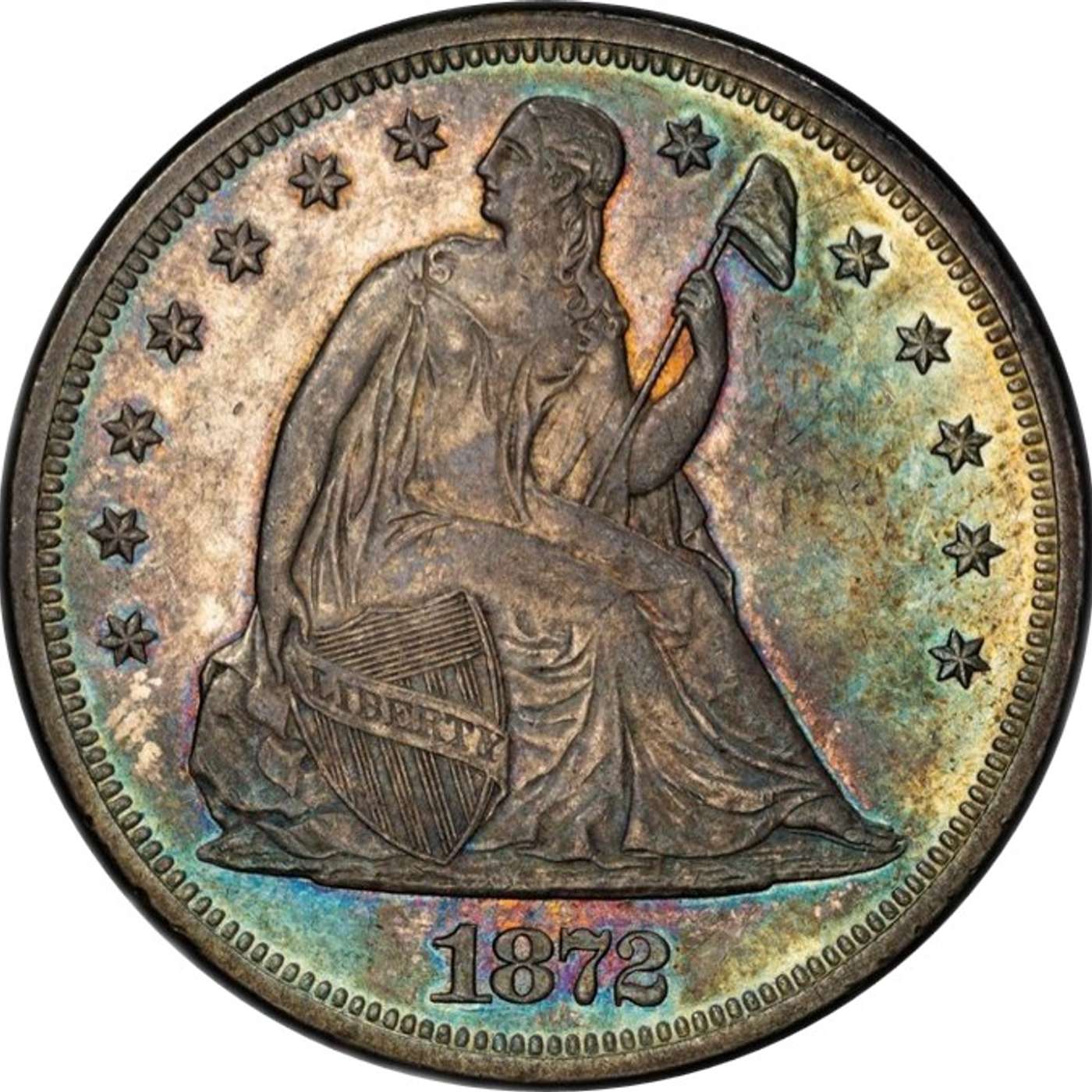
Tony Gryckiewicz: Folks. Welcome back to another episode of the Cabbage Coins Podcast. My name is Tony Grekevich. I am the owner and operator of Cabbage Coins, a little small boutique coin company. But today, what we have is we have a special treat because we have a return guest. We have Tony Littlejohn. Tony is the guest from my best podcast I've had so far to date. That is the the far and away top performing episode, Tony, was when we looked at your Staying at Liberty quarter collection. Very excited to have, you know, you back, and we've been talking about this idea for a while, which was to do an AU 58, your Everyman collection. Does your AU 58 plus collection Look at it on the PCGS website, on the registry website, and to talk about the different issues and the stories that went into finding them and how you chose to do this and so forth. Okay. So welcome back. Tell us, I mean, what have you been up to since the episode? Has the fame from the Cabbage Coins Podcast kinda gotten to you a little bit? I mean, tell me how it's going. Tony Littlejohn: I I will say since the podcast that I've had many people that I didn't know walk up to me at Coins shows and say, hey, you're the Standing Liberty Quarter guy. I said, yeah, that's me. Well, we saw you on the podcast. What was that? Cabbage. Cabbage? I said, yeah, that was me. And so I've gotten quite a bit of that over the last several months. So I guess it it gave me some more notoriety. I've also had a article PCGS that's in their magazine that's happened since then. But I've enjoyed it. I've enjoyed I had fun last time. I expect to have fun today. Tony Gryckiewicz: Mhmm. Yeah. So so so do I for sure. So before we get into it, I mean, we have your collection. We're gonna look at it on PCGS website and the registry site. You are I mean, if I can say you're you're very well known for this Standing Liberty quarter collection. I mean, having the top set, having the top set for for a while, have some amazing pieces we looked at before. So first off, what inspired you to start one of these Everyman sets? And maybe you could also explain a little bit what is an Everyman set. Tony Littlejohn: Okay. In around 2009, PCGS initiated the what they call the Everyman set. I think that was their attempt to provide a registry set that was not as competitive for the high grade mint state coins. And so the top coin in Everyman's set, they said at the time, is AU 58. It's turned out that AU 58 plus is actually the supreme coin, but it's basically at a circulated coin registry. So all the coins and and the Everyman sets are all circulated coins. And when I think about on my own about my own foray as an adult into coin collecting, it was a set similar to the Everyman set. It was in a Dansko album, and we would collect or I would collect coins, circulated coins, to fill the holes in a Dansko album. So this is similar. The registry gives it a competitive type of a feeling because you see your set, if you if you participate in the in the registry, compared to other people who are putting the same type of sets together. Let me kind of back tell you kind of progression of how I got to where I am. In about 2010, I got into the PCGS registry, and I got into it with Eisenhower dollars and Susan B. Anthony coins. And the reason I did those in the registry basically was the price. You could buy a Mint State 66 Eisenhower dollar for about $100 So you could put a complete set of Eisenhower dollars together with the exception of the 71 and 72 for just, you know, a few 100 spending a few $100 at a time. That expanded in the registry to other coins, type coins, buffalo, nickels, mercury dimes, walks. I had I was I was putting coins together, but they're all uncirculated into every set. And then I because I was buying and selling coins at shows, I would if I had a coin that I purchased at a show that wasn't in one of my sets, I would put it in a set instead of selling it. And so that was the development of the basis of what has turned today to be the Everyman type set, It's that every coin that I bought that I didn't have in a set, would put in that set. In about 2016, I started my quest for the standing liberty quarter set to put together a great set, the best set that I could. I did that, and then in the process of upgrading that set, ended up with the top registry set. In 2021, I went to a coin show. It's December 2021. I went to a coin show in Grapevine, Texas, which is between Dallas and Fort Worth. And I was I had done all my buying and selling that I was gonna do, I was getting ready to leave the show. And I stopped by one last dealer because I had been by his his dealer case early on, and he had purchased Everyman set of standing Liberty quarters, which of course I was interested in. So I looked down through, and all of them were AU58s. And I said, wow, that's a nice set. By the time I got to him, many of the coins were gone, but he had a $19.29 S that was just spectacular. So I said, man, why is that coin in a AU58 holder? That coin is extremely nice. So I decided I would buy a couple of those coins. Well, he priced them to me, and I said, my goodness, The bulk of the AU58 coins were $130 apiece. And I said, I think I'm gonna put together a standing liberty quarter set in AU58. So that's what I did. I bought 10. First, I bought six or seven coins, and I got his phone number. Then I bought the rest of the coins he had. So that was the start in the Everyman arena, was with the standing liberty quarters. My set was already complete and Well, not complete. My set was already one of the top registry sets, so I was continuing to add to that set. But in process, I began to notice, man, these AU58 coins sometimes are better coins than the mint state $6,162.63 coins. So I expanded from just the standing liberty quarters to buying every nice AU 58 that I saw as I was purchasing coins either for my collection or to resell. So that kicked off in 'twenty one, 'twenty two. And the following year, I said, Well, if I do this with Everyman set, I could do a short set of gold coins. So I started the gold, the 12 piece gold type Everyman set. Because you could find those coins on a type basis in AU58, almost for bullion prices, some of them. And so I started the gold Everyman Typeset. And then in 2023, I expanded. I said, let's just go ahead and do the complete US typeset, Everyman set. So if I look at those sets that I just mentioned, the standing liberty quarter set, I actually have a complete set. The gold typeset, I actually have a complete set. The but the Everyman Complete US typeset, I'm about 63%. But I haven't made a strong push to try to find everything. It's just that as those coins come to me, I purchase them as as they're available. So this is this is my set. Currently, I'm sitting in number eight, but I'm only 63% complete. And if you look at those first coins that you see there on the screen, the drape bust half set, the classic head 0.5¢, the braided hair 0.5¢, I didn't buy them so much as to put in an Everyman set. I was buying them they were a byproduct of coins that I was buying to resell. That's why the Drake Bus that that was a raw coin that I had that I had in my Dansko album in the eighties. I sent it in to get graded, and it came back graded AU50. In those days, was pulling coins out of dealers boxes and upgrading my typeset as I could, and this is one of the coins I picked up as an upgrade. It's a spike 10 variety. There was nothing when I purchased it special about it, but then when I got it graded, I noticed it was a spike 10. And I said, well, I don't have one of these in my Everyman set. So I stuck it in my Everyman set rather than sell it. And as you go down that list, you'll see a lot of like the Liberty Cap scent. And you'll see most of those coins don't have photos because most people that get those coins graded, the highly circulated coins, they don't pay the extra $5 to get the photo. They just send them. When I send them in, get them you can tell what I've sent in or what's a little higher dollar value, they'll have photos. But most of those I purchased in the slab, they did not have photos. The 2¢ piece, it's got a photo because it's a better piece. You can see by the grading, can see the we, which is how you grade the 2¢ piece. The we is the highest part of the coin on the In God We Trust, he's pointing out. That's the first thing that fades off. You can still have a nice 2¢ piece with no we on it, and you're down in the BF category. To get to XF, you kinda have to have the we on the In God We Trust. But as you look down through those, these are most of those are coins that I have found. Some of them that I purchased recently, like when you get down to the Liberty Head nickels and the coins down from our Buffalo Nickels, all of those, I was I was I I was I bought them because they were AU58s. So they were just good coins I found that were spectacular for the grade. That Liberty nickel, the $18.83, you can't tell it's circulated. Even when you look at it in hand, it's hard to tell that there's any circulation. But PCGS has deemed that it was circulated, so I purchased it. The 1898, you can see if you compare those photos to some of the photos of the Mint State 6162, and '63 coins, many times these coins are more pleasing to the eye, less marks, less impact marks and things like that, but but also usually less luster because they are circulated coins. And so the first coin loses when it circulates is its luster, then it starts showing wear. That buffalo nickel type two, that one there, that was was kind of a premium buy. I bought that at a low local Houston coin show, has about 15 to 20 dealers. Went by a guy's case. He said I looked through it. I said, Man, this 38D is nice. And I looked at it, it's AE 58. There was an AE 58 plus in this case. I said, Well, how much is that? $50. $50, I'll take it. Because the coin was just spectacular. And at the time I bought it, he didn't know it, I really didn't realize it. It was the only AU58 plus that had ever been graded. And I just purchased this maybe three years ago or so. But as I would look through cases, when the AU58s come up, I take a look at it and see if I think they're nice for the grade and if the price is right. Because I buy these Everyman coins pretty much the way PCGS intended the program to be, which was a lower cost way to put a collection of coins together for the registry. Over the years, it has morphed. And by that, I mean, you used to buy AU58 coins, say, for $150 and an AU58 plus coin was maybe $200 That's not the case anymore because the AU 58 plus grade has become very, very competitive to buy. There was a 1928 standing Liberty quarter this past weekend on great collections that was graded a u 58 plus. It was, I won't say it was a spectacular coin at all, and the price guide on it was, I don't know, $152,100 bucks in AU58. But the coin sold for Mint State 65 money. Tony Gryckiewicz: It Tony Littlejohn: sold for over $500. And so a lot of the AU58 plus coins now sell for way, way more than the price guide value, sometimes two, sometimes three times price guide, sometimes mint state 66 level money. Yep. Because there are so few of them. It's so hard to find a coin in a 58 plus. But, you know, as she as she proves down through here I Tony Gryckiewicz: have a question for you. I do have a question for you before we keep moving on that topic. So what about the about the money, about the market side, about the price of that coin selling for permits close to 65. How much of that do you believe is true competitiveness around this a 58 plus grade for the sake of every man says because they're elusive, because they're difficult to find, they are scarce, and how much of that demand is driven by people seeking to upgrade the coin? And if the a 58 plus, they can maybe get this coin and get this very simply regraded into a 65 holder perhaps. You know, how much of that do you think is is a a function of the potential to upgrade when there's so much demand around Tony Littlejohn: making the plus. AU 58 pluses that I have seen have all been circulated. They are not gonna go into a mint state 64, 65, or 66 holder. Tony Gryckiewicz: Okay. Tony Littlejohn: Very few, like the 29 s I was talking about, I thought this could pass for uncirculated at maybe a 64, 65 level. But I think the driver is in the case of these coins and the u 58 plus, and in the case of the high grade mint state coins, I think the registry drives those prices. You have competition. You have guys that are very competitive, and they want to have the top graded set. And you have with each type of coin, because they're not only buying for this registry of type coins, but they're buying for the registry of the whole registry, Everyman Buffalo Nichols, and Everyhand Washington Quarters, and Everyman whatever type of coin it is, the AU58 is the top coin in both of those sets. But you very seldom see a AU58 plus coin sell at auction for anything less than mint state 64 money. Almost never. And I'm not talking about what mint state 64 coins are selling for. I'm talking about mint state 64 and 65 price guides. Got it. Okay. Okay. Tony Gryckiewicz: Jamie, this is an amazing coin. I would love to own this coin. Tony Littlejohn: This this coin I bought about years ago. I was not in the Everyman register at the time. It was just such a beautiful coin, but here you have one that's a AU58 plus that is just a gorgeous coin. And when I saw it, I loved it. So I bought it. And when I put together the Everyman set, it just went it just fit into the set. But I just bought this because for AE 58, you see mint state sixties and sixties threes that are just that don't have this eye appeal that this coin Yeah. Tony Gryckiewicz: Yeah. Yeah. I mean, as you were talking before about the the the value aspect of the $80.58, I completely agree. I mean, because when you think about it, I mean, there are so many minstake coins, there's so many coins you would find. PCGS NGC, mean, no matter who it really is, they get into 63, 64, 65 grades, and you still sometimes can just be overall disappointed with the coin and not be very happy. And you're gonna pay a price that is associated with the numerical grade on this lab more often than not. Now a bad looking coin might be on the lower end of that, whatever that range is, but I mean, they can carry some cabinet friction or there can just be some kind of little bit of light rub. Here you have kind of the opposite where you have almost an entirely uncirculated coin. Oftentimes they have amazing eye appeal and there's just the ever so slightest bit of, you know, wear on the the coin that makes it a circulated example. But at the same time, it's like the value side, know, what what the the $8.58 cost is so much less. So I just was thinking I mean, obviously, it's a it's a place that I think that a lot of collectors really should give some thought to to collecting, especially in those higher AU grade. I think there's a lot more satisfaction that can come from that as opposed to always chasing higher grades. Tony Littlejohn: That the way I think about the AU58s is that when you look at the mint state grades, you have multiple levels of mint state from mint state 60 to mint state 70. And almost uncirculated coin, about uncirculated coin, a AU58, could be any of those grades of coins with just slight friction if they're graded So you can have a mint state 68 coin without the friction, but with the friction, it's still an AU58. Or you could have a mint state 60 coin with the same amount of friction that's an AU58. Those are completely different coins, even though they're both graded AU58 because they're graded that because they've circulated before. And so the 58 plus, I think that's also part of what makes those sell for more is that they are higher grade. If they were mint state, they'd be on the high end of the mint state coins, and they carry some of that value over into the AU58 plus, especially if they're plus ed and they have a CAC approval agreeing with PCGS that these are on the high end. Tony Gryckiewicz: Yeah. Yeah. So that's Tony Littlejohn: why I'm saying I bought this coin just because it was so beautiful. It just happened to be a E58 plus Yeah. Would have been beautiful as a mint state 62. It doesn't matter kind of what the grade is. But because it was AU, I paid the lesser value on the coin, and the pluses weren't as popular when I bought this one as it is now. Tony Gryckiewicz: Yeah. So what are also some highlights here that you've acquired? I mean, I see that you're you've you've got things lower than a 58 for sure. You have a VG eight of Dre plus $0.5. Are you just you were looking at my Dre plus $0.5. Yeah. Tony Littlejohn: Yeah. If I buy a type coin and I don't have it in this set and it's circulated, I put it in the set. So all these VGs and VFs, and I just haven't found a AU that I've been willing to pay the price for to fit into that slot because that's not my primary goal. Just having fun with this Everyman set, just filling in the holes just like I was when I was putting together the Dansko album. And yes, when I find a very nice coin that I'm willing to pay the price for, I put it in there. Move down to the Liberty Seated move down to Liberty Seated dollars. Let's talk about one of those. They're down a little farther. Tony Gryckiewicz: Let me see that Tony Littlejohn: right here. The 18¢ what's the motto? Yeah. That coin. That coin is magnificent. Yeah. That coin is absolutely magnificent. Yeah. So when I bought it, I had to have it. Where is There's almost no friction on this coin. There's supposed to be friction on the thigh. There's supposed to be friction on the breast, and there is a little. Just that little darkening that runs down the thigh, just that little light spot on the tip of the breast and on the hair and on the eagle on the reverse, I don't see any friction on the toes. There's supposed to be friction on the eagle's feet on a circulated coin. Yeah. And it's got color. It's just Tony Gryckiewicz: It's an awesome It's awesome. Tony Littlejohn: That's an awesome coin. I would just buy that coin. If it said mint state 62, I would be just as happy. Tony Gryckiewicz: Yeah. Tony Littlejohn: I would probably be happy with that coin that's a mint state 63. Tony Gryckiewicz: Yeah. Yeah. I mean, off the top of my head, I think an AU 58 for a common day dollar like this is going to probably run around 1,500 or so, maybe a little bit a little bit more in today's market because they've really kind of run up. But this coin this coin I could see selling for closer to 3,000. I could see that. Yeah. Tony Littlejohn: And that's close to what I paid for. Tony Gryckiewicz: Yeah. I no Tony Littlejohn: regrets of buying a coin like this one. Now as far as developing my set, I I will buy AU58 plus if it is priced correctly, I will not pay, in that state, 65 and 66 money for one. I would rather find a AU58 and an AU58 holder and get it upgraded. And so I have been able, because I look at so many coins and so many coins come across my plate, to buy a lot of coins that I think would upgrade with PCGS and have upgraded those coins. And so many of the AU58 plus that you'll see in my sets, particularly the standing liberty 0.25 set and the goal set, the goal typesets, those I have bought as 50 eights and upgraded. The first coin I talked about that got me into it, the 29 s standing liberty 0.25. If if you want to pull up a number, a PCGS number, I I can I can give you the number of that coin? Tony Gryckiewicz: Is it in your set? Can I just find it here? Tony Littlejohn: It's not in this set. Tony Gryckiewicz: Okay. Tony Littlejohn: But it's in the Standing Liberty 0.25, Everyman's set. Tony Gryckiewicz: Okay. So let me go back Tony Littlejohn: to way to do it that's that's quick and you could get back to this is just to not to go out of this, but to stay in this one if we're gonna look at those coins. But just go to PCGS and then do go to the p PCGS and then go to the coin lookup. No. No. No. Just scroll down. Scroll down. Sorry. Eight digit code right there, just look up Coin27979316 and verify. And hit on the picture, it'll pull up the photo. That's the coin I saw in that case that made me stop and buy a AU58 standing liberty 0.25. And then when I started looking at the rest of these, this quarter was graded AU58, period. So but it's a full head, but it wasn't graded full head. And so I've headed in to upgrade to a plus, and it upgraded to a plus first pass. I have not headed in to upgrade it to a full head. But those are the kind of things that you can find in an AU58 holder. Tony Gryckiewicz: I thought full head was only a mid state designation. No. Tony Littlejohn: Not for standing liberty quarters. AU58s will have a full head. Let me back out of this one. Okay. And I'll show you another. Go back. Just back one more. Scroll down and put in number 44658886, and pull that one up. Click on the coin. Okay. This coin was also graded AU58. First, I got the plus grade, Then I sent it back in just a couple of months ago and got the full head. It was obviously full head, and it was definitely a beautiful coin. Where is the wear on the leg? Tony Gryckiewicz: I can't see any. Tony Littlejohn: Scroll over to the eagle. And and Okay. There's a bit there's hair right wear on the wing or the breast? Tony Gryckiewicz: Yeah. It's gonna be So so Tony Littlejohn: not. Here. Yeah. There is wear. Yeah. But it's almost impossible to see. Yeah. Many of these coins are in '61, '62, '63 holders. I see especially '61, '62, '63, I see more AE58s than anywhere. Yeah. So that's just kind of the way it is. So if you can cherry pick the AU58s, you can really get some nice coins. I see. A give you one more, then I'm gonna move on. Yeah. Sure. Because this one is not in there either. This one is not even in my PCGS collection, but I just got it. 58783231. Just a simple 1951s Washington quarter. Wow. That's what I said Yeah. When I saw It was an AE 58 holder. It to me is an obvious '65 or '66. Tony Gryckiewicz: Yeah. Tony Littlejohn: And this one I did pay a premium for, but it's a Washington quarter, so the premium was $200 The coin is coin is Tony Gryckiewicz: color alone. Tony Littlejohn: Yeah. So the color alone. So I sent it back in, and and they plussed it. One of the things that I have learned in the process of putting this set together is that PCGS leans toward plussing color coins. Tony Gryckiewicz: Mhmm. Tony Littlejohn: Not the technical grade. When I have I have talked to them, I have sat down with them at shows and showed them some coins and asked them about the plus grade, and they couldn't tell me specifically why the coins had not plussed, but none of them were colored. But but every coin most of the coins that I have sent in, that's AU58s with no problems and clean fields with color, just about all of them have plus ed. Yeah. Even though they're in an AU58 holder. Tony Gryckiewicz: Yeah. It's incredible. Tony Littlejohn: It's it's Tony Gryckiewicz: it's And so these ones, are these going into your collection? They just haven't been loaded yet? Tony Littlejohn: Yep. That that one just hadn't been I just got that one back from PCGS. That's a plus. Oh, I see. I see. Yeah. I just bought it. What a Incredible. Just a couple of months Incredible. Going down through here, go back up to the 0.5 dimes. Okay. This one? Yeah. Gorgeous. I got called on that one. Tony Gryckiewicz: You might get called after this podcast too. Tony Littlejohn: Dealer called me and said, Tony, I got a coin for your set. I said, What is it? He said, It's a 0.5 dime. Let me send you the picture. He sent me the picture and I went and bought it. Yeah, Did I pay a premium? I certainly did. For a coin like this, yes, I will pay a premium. I would've paid a premium just for the color, and it is an AE 58 plus cat. It's gorgeous. Again, I ask, the wear is not where it's supposed to be. Yeah. There is a toning change on the thigh, and that may be what led to the wear, but it's on the arm too. The arm is not a high part. No. I'm talking about on the other arm where it turns And kind of on the two thighs and on both of her thighs, it's kind of lavender. There's supposed to be on her breast for an AU. There's supposed to be wear on the bow on the reverse for an AU. I can't find the wear. And what some dealers do when they send a coin in like this one and like the quarter that I showed you, those colored coins, that came back AU, they do not want to send it in again. And they Tony Gryckiewicz: Why is that? Tony Littlejohn: They raise the price and sell it for the premium and try to get the money some of their money back. Tony Gryckiewicz: And and do you believe that just the wearer is present and the PCS graders are able to recognize it, and so it's a waste of money to try to, you know, hope that they don't? Is that kind of the concept? Tony Littlejohn: Yeah. Because these high color coins, you know, if it goes through the same graders, oh, I saw I just saw this coin. Tony Gryckiewicz: Yeah. That's Tony Littlejohn: And you see by the numbers, that's a five seven. The quarter was a five eight. Those are all recently graded coin. They were fresh from PCGS. The dealer just got the quarterback. This dealer had just got the 0.5 dime back. Did not want to send that dime back in. It's Makes a beautiful coin. It's just magnificent. So those are the kind of coins that I am waiting on when I buy AU58 plus. And so when you see me looking at AU coins and not buying them, it's because I don't like them as much. So I have to like the coin. I have to like the coin to buy it. Tony Gryckiewicz: Makes sense. I have to I think that Tony Littlejohn: pay a premium for it. Tony Gryckiewicz: And I think you're gonna get phone calls after this if people all have AE 58 pluses or and so forth. So we gotta leave your your contact info or email or something like that, you don't mind. We'll we'll do that because I think that I know that we've had our episodes on like, PORO one CAC, PORO ones, and Tony Littlejohn: Yeah. I've had PORO ones. Of course, with my standing series, I've had all kinds of coins. I've had a POL one $19.16, but In I sold fact, I sold it to the guy that I bought the standing Liberty quarters from years later. What else do I have on here? Tony Gryckiewicz: Well, let's get into some of the gold. I know that you had a story from the last podcast about a gold AE 58 plus that I think it was Tony Littlejohn: think might be it gold AE 58 that I've been trying to get a plus on. The problem is there's no PCGS photo. It's in an old holder. Tony Gryckiewicz: Ah, okay. Tony Littlejohn: So it doesn't have a photo. But if you wanna see a a very nice gold, look at the Saint Gaudens. You have seen many Saint Gaudens before. Sure. They're always banged up. Yep. But this was an AU58 plus. It's a gorgeous coin for a Saint it's a coin that I would buy for a Saint Gaudens collection just because it's mark free. It's got some marks on it, but not far not compared to a 61, '62, or '63. In fact, yesterday, I looked at that coin and I went back through some of the higher graded coins up through '64, and and they were baggy. But this coin was just this coin was unusually nice. Tony Gryckiewicz: Yeah. Yeah. It's remarkable. And again, if we're going on the hunt for the wear on this, I don't see any color change at all on her breast or thigh or leg, which is where you'd expect to see it on the obverse. Is there possibly some wear in a hidden spot on the reverse, kind of in one of those unusual Tony Littlejohn: Not spaces I have been able to find. And so I paid AU58 plus money on this, and I bought this one as an AU58 plus. So I say when I find a nice one like this and it's graded AU58 plus, I did not, however, pay any premium because at the time I bought it, the pluses the AUs weren't pluses weren't getting a premium over AU. They're basically bullion coins because of the price of gold. So this was a steal. Tony Gryckiewicz: Yep. Yeah. I think so. I think so as well. Yeah. I just feel like one day, some of this something like this is gonna live in in a in a mid state. I mean, this this could certainly pass for a 66 Yep. I think. Tony Littlejohn: I I looked through the grades. I started at 66 photos and scrolled down through every coin they had on their website, and I said, man, this this sits in the 56 Arena. Tony Gryckiewicz: It's it's pretty cool. Tony Littlejohn: I'll look at the What else are the coins I have? Tony Gryckiewicz: Yeah. This one right here, the Nomado 52. Tony Littlejohn: That one, I think, didn't like the surface as much as I like the color. Tony Gryckiewicz: Yeah. Okay. Tony Littlejohn: And this is an example of one that I bought in a eight holder that I sent in, and it upgraded to a eight plus. Because I was trying to prove to myself that PCGS has given the nod of the plus on the AU coins to color. Tony Gryckiewicz: Well, I gotta look at your 2.5 Indian. Again? Yeah. I would say this coin yeah. The color is great. The color is great. This is a coin that I'd probably grade somewhere around $60.63. I mean, the key focal area right here, the reverse of the of the eagle is very Tony Littlejohn: And and people don't know it about these, what they call it, inverted Tony Gryckiewicz: Yep. Tony Littlejohn: Minted coins, that the high points are not the Indian and the eagle. The high points are the fields because Tony Gryckiewicz: Are the fields. Yep. Tony Littlejohn: The impression is lower than the fields is because of the way it's made. That's that's why that's why you're saying you're looking out at the field above the Indian. You don't see the friction that's supposed to be there on a circulated coin. Tony Gryckiewicz: Yeah. Well, specifically above the reverse of the eagle, this is it's an oddball coin to grade from what I know is I always look at the how lustrous these fields are, and if the fields have luster in them, then they're going to be mid state. If the fields are weak or dull or they have a bit of wear on them, then they're probably going to be a circulated grade. And then secondly, the key focal area is not in the obverse of the coins on the reverse, which is right behind the back of the eagle's head here on the reverse. So this is a tough one. I mean, for them to throw this into 858 plus, again, I'm kind of I would love to know the answer here Tony Littlejohn: about this point. When I send these in for that's why I don't crack them out and send them back in because I don't want them to come back at 62 or 63. Yeah. Got it. Got it. I'd rather come back a plus, so I send it in plus only. I send it in in a holder, recon plus only. Tony Gryckiewicz: Got it. Got it. That makes a lot of sense. I mean, you are you are shooting for, you know, hitting a bullseye, a particular grade so that you can have this this set. Tony Littlejohn: That's correct. So I can put it in a set. So I buy the top end that I can find, an AU 58, and I only on on the goal, I've only bought coins that I thought were plus. If they didn't have a plus already, I bought coins I thought were plus. Tony Gryckiewicz: Yeah. Tony Littlejohn: And some of the pluses I don't agree with. Like the Tony Gryckiewicz: Go ahead. Sorry. Tony Littlejohn: Pull up the $10 Indian. Tony Gryckiewicz: The $10 Indian is going to be this Tony Littlejohn: one I right don't agree that that's a well, that coin I bought to fill the hole, it will never pluss. It's got that big gash on the cheek. Tony Gryckiewicz: Yeah. Tony Littlejohn: That is that's death. I'm never headed in for it was just a placeholder. I just bought one when I first started as a placeholder. But the one then that's the coin. I have another one that I don't have in here that I'm trying to get the plus grade on. That is magnificent. I Tony Gryckiewicz: see. You don't have that serial number that we can look It up to Tony Littlejohn: doesn't have a photo. That's right. That's why Tony Gryckiewicz: Oh, okay. Tony Littlejohn: Don't have it here. It. Let let let me show you what the thing that I really think drives the plus grades. Okay. And now go to that one, twenty now look at the AU58s for the type one gold diet. Look at the population. There's 5,000 AU58s. Look at the and only 22 AU58s. That's what drives that price. The guys doing the registry set that are trying to build a typeset that need this coin, they've only got 22 coins to get a plus on. Yep. Yep. And when PCGS rolled out the plus grades, they said that that was the top 10 to 20%. That's this is point o 5% of the AU58s are plussed. And that's what I sat down and talked to PCGS about. I said, you're saying that it's the top 10%. Now they're saying, well, that's not what we think on these. I said, okay. But that's what you have in print when you release the plus grades, because they weren't doing plus grades to begin with. You scroll down to the type two, I'm just using this gold dollars because the numbers are right there and easy. That's the type two in your parenthesis, 58 Yep. 1415, 58 plus 20. Tony Gryckiewicz: Mhmm. Tony Littlejohn: Scroll down to the type three. Tony Gryckiewicz: Fifty eight Tony Littlejohn: and thirty nine. Plus 58, 3,000, 13 pluses. Tony Gryckiewicz: Yep. Yep. Tony Littlejohn: So with my 1 coin at each of those, I've got roughly 10% of all the pluses that they've ever graded, AU58 pluses. The top two guys that are above me, it was three, but now it's just two, they all have the pluses. So people are vying for one or two coins. Tony Gryckiewicz: Question for you. Do you think there's any point in trying to do the same sort of a chase, but at a lower grade? Like, see here 45 has got one plus. There are people who I mean, I've certainly seen coins for sale where somebody will say this is the only x f 40 5 plus that that is being being graded, and they kind of put that scarcity scarcity idea behind it. Do you feel like there's any real point in in chasing that? Is it a fruitless endeavor? I mean, are there simply not enough of them? I mean, Tony Littlejohn: this I whole thing is think just one that the registry drives the desire, and there's no registry for XF. Tony Gryckiewicz: Yeah. I Tony Littlejohn: think the Mint State 64 registry, I don't know how many people are doing it. Everyman said the mint State 64. Okay. I have no interest in all in it because the AU58 plus are more valuable than a mint State 64. Tony Gryckiewicz: Yeah. I see. Tony Littlejohn: And if I look at if you go to the to the Mint State 60 to 70 on this Yeah. Population 60 at the totals, they're more representative. Tony Gryckiewicz: Mhmm. Tony Littlejohn: It's closer to five to 10% or plus. Yep. Yeah. 64 plus is 64 Tony Gryckiewicz: plus Tony Littlejohn: 65 plus is 8%. 66 plus is 20%. 67 is 20%. 68 is 10%. But you don't have that in the You've got AU coins with $5.50 eight's and no pluses. Mhmm. It's difficult to me to concede that there's not a nicer coin than the rest out of a group of 500 coins. Tony Gryckiewicz: Sure. Yeah. And these grades is also where you get into a little bit of subjectivity grading. There are coins that on one day could be a 63 and another day could be a 64. That's correct. Or maybe on a really, really, really good day, they're a 64 plus or possibly a 65. And this subjectivity that goes along with grading, It's really about the application of a grading standard to a real life physical item is going to not be a perfect test case for where it's going to fall into a particular grade, exact numerical grade. That's the reason why we do so many submissions again and again, to try to maximize what the coin could possibly, you know, grade out at. But this is where there's a lot more that subjectivity for sure, and I that makes a lot more sense that there's, you know, you got two graders are saying 64, one grader saying 65 or vice versa, two graders saying 65, one saying it's really a 64, you know, you put it into a 64 plus. Tony Littlejohn: Yeah. And the other thing you happen on the minstates is that the gap between a full between a regular grade and a plus grade is huge. And so people are more are willing to try for the plus. But on a $19.30 standing Liberty 0.25, which is a $130 coin, you get a 58. You don't wanna spend another $30.30 dollars to try to get a plus unless you're doing the registry. Yeah. So if you find one that's already plussed, then you don't have to do the multiple submissions trying to get a plus out of a coin. Tony Gryckiewicz: Mhmm. Tony Littlejohn: So it's just for me, it is a fun way to collect. The the the challenge let's go back to to where my set was. Just think you can back back back to to my set brain. Go to the top. T. H. Barrow. Yeah. He is the master of the AU58 plus. So he has Collector. He has retired. He just recently retired, he said. I just talked to him at the last show I was at. You can't see it Go on to explore. Tony Gryckiewicz: I'm sorry. So where? Tony Littlejohn: Right side on the top. Oh, explore. Okay. And go to Everyman Collections. Okay. And go to Complete and Typesist, first one. Very first one. And then go to US coin set, the top one. Complete US coin set. And there you see Tennessee two steps. That's that's T. H. Byrro hit his set. His set is number three behind Deloitte Hanson and Eliasburg for completion. This is a very, very difficult set to complete, period. And he's probably got, I'm gonna guess, 30% for and it may be higher than that AU58 plus. Tony Gryckiewicz: Yeah. Wow. Tony Littlejohn: He is the owner the of many, many, many of those AU58 plus Coins. The set is just it's just phenomenal. If you go to individual sets before he retired everything, standing liberty quarters, one of the top sets, Barbara Halfs, top set. Barbara Dimes, top set. Washington Quarters, top set. Because he's got all the AE 58 pluses. He's just remarkable. And he's worked with a with a dealer to help build those sets for him. Tony Gryckiewicz: So I have another question that came to mind. So when it comes to building these these sets and eventually putting them back into the marketplace, perhaps taking them to auction. Mhmm. Is it true that there's a greater value with the hold and the sum of the parts in the sense of like, if you you put together your AE 58 plus set, this is the Mhmm. You know, John Q. Little set, Everyman collection type set, they're mostly AE 58 pluses and cacks and so forth, and you bring that all to auction at one time, do you feel that that is going to actually drive the prices to have higher prices realized that the fact that you're bringing it all together once this is the set that you've collected, you know, will you realize a greater return on that investment by selling it together as a set as opposed to individually That's selling them Tony Littlejohn: that's a very good question for any registry set. And the way I've seen some people do it, it's not done very often, is that they'll auction it two ways at the same auction. They'll auction it as individual coins, and then they'll auction it as a set. And if it sells as a set for higher than the individual coin sales, then it sells as a set. But if not, the individual buyers of the individual coins get the coins. Tony Gryckiewicz: Mhmm. Mhmm. Tony Littlejohn: So that's an alternative way that's not used very often, but I've seen it used before. I've seen it used on the, for example, the Walking Liberty half set several years ago. The owner and the owner ended up not selling it at all. He offered it two different ways. He didn't get he didn't sell it. Tony Gryckiewicz: Didn't get what he wanted. Yeah. Makes sense. Makes sense. Tony Littlejohn: But selling it as a set, you you you limit yourself to buy to the buyers that have the money to buy the whole set. Tony Gryckiewicz: Yeah. And I was more so thinking about, like, the presentation of it as a set. I mean, you're you're gonna you're gonna have auctions where you're gonna be the individual listings and you know, your 21 s is gonna sell and your nineteen thirty is gonna sell and your 23 s is gonna sell inside that same auction. But I kind of what I mean is like, okay, put you put it to a named, you know, it's a it's a named collection, it comes together to an auction at one time, and you know, there's promotion and so forth, and do you feel like that is smarter, like each of these coins are gonna sell for more because they're part of this kind of acclaimed set that they've been constructed, as opposed to finding different marketplaces and Tony Littlejohn: Right. Tony Gryckiewicz: Selling a couple of them privately and a couple of them kinda to collectors who need one for their set and taking taking some of auction. Do see what I'm seeing? Do see what I'm asking? Tony Littlejohn: Yeah. The the answer to your question is is I don't know. One of the things my wife asked me when I was putting together my coin collection is, are are you trying to compete with the billionaire to build that set? Yeah. I said, no. He's trying to compete with me to build a set because he's buying sets and I'm buying individual coins. So I can focus when an individual coin comes up where his focus is broader and he's missing these. He can outbid me on every single coin that I bid on, but because of the way he's buying them, he he can't do it in the same time frame. We started our Stanley Liberty quarter set the same year, the '16. And I was trying to build that quarter set, and then his name came out a note. I thought I was competing with someone else, and then this name pops up. And I'm like, who is this? And then I as I go to shows, I start realizing who he is. I said, oh, this is gonna be tougher than I thought to compete at Tony Gryckiewicz: the top. Yeah. Tony Littlejohn: But then I would go to shows, and I would go to individual dealers, and I've never bought except for Heritage Auction or one of the auction houses, I'll say it that way. I've never bought more than one coin at a time to go into my set. And that's just a different way of collecting than buying. But if someone had taken the whole set, and that happened on the Susan B. Anthony dollars, the first guy put together the top set. The next guy to own the top set bought his whole set and put it in his name. The third guy bought that whole set and put it in his name. So the top three Susan B. Anthony sets are identical because they're all the same set. And then I labored at number five, tied for number four or five for years until coins became available, but I had put together all the other coins. And so three coins out of that set the next collector broke the set up, sold them individually. So three coins came up, and that catapulted me into first place because everybody slept through it at the auction. So I can't someone bought my whole set, that gives them a head start, and maintains the integrity of the set. They could say the set has a pedigree of blah blah blah blah blah blah. Tony Gryckiewicz: Yeah. Yeah. Alright. Well, that was kind of what I was curious about, so I appreciate you, you know, entertaining the the the the hypothetical. I mean, ultimately, in Tony Littlejohn: end is that yeah. My guess is that if the price doesn't go high enough when you sell your whole set, a dealer will buy it and break it up. Correct. Because he thinks he can get more money off the individual coins. So that's why if I did it at an auction, I would have two options. One is to whichever was to hire, the individual coins collectively or the set as a whole. And that would be known to all the bidders before the auction starts that, hey. This special case, they wanna keep they want you have the opportunity of buying this whole collection, but you'll have to outbid the individual dealers of the individual coins. Tony Gryckiewicz: Sure. Yeah. Yeah. Well, mean, it's, know, I I forgot exactly what they what they call it, but you know, when you're thinking through one of these hypotheticals, I mean, you ultimately make a choice. You make a choice, let's say, bring it all to auction. You don't know what those coins would have sold for if you broke the whole thing up and you went individually and so forth, and vice versa. So, I was just curious about your gut feel on that one, but yeah. So, no, very good, very good, man. I think that kind of wraps things up from a time perspective. Tony Littlejohn: Okay. Tony Gryckiewicz: So what's, I mean, what's on the horizon for you? I I feel like, I mean, you got a huge You still got a lot of work to do. You're at 60 some odd percent for your for your set. So there's a lot of coins, and there's a lot of upgrades and so forth. Are you gonna keep working on this? Are you thinking about building another set? What else is on the horizon for you? Tony Littlejohn: No. I I will continue to work on this set. I will continue to work on the gold set. Those plus the standing liberty quarters are the only sets that I'm actively collecting for. But in no hurry. For the typeset, I probably will not complete that set. Mhmm. Some of those early large cents and deems and those coins are very, very elusive even in in circulated grades. They're they're very expensive. And so, you know, there's there's there's a limit to to what I will do to where I will dedicate my money. For example, this year, I kinda dedicated the money for the year on three coins, and they were all standing liberty quarters, but one of them was the pattern. Mhmm. And, you know, that coin only comes up. It's only been sold publicly twice. When it was discovered in 2018, it sold. Yeah. And then when that got passed, it sold this spring. And so I was dedicated to being really kind of the first owner of all three patterns of the standing every quarter, so now I have all three. And so that was where I dedicated my resources, and the other with two other Bitcoins. But all all of it is fun. It's just you never know when an opportunity is gonna present itself. Mhmm. If I find a beautiful coin, I buy it. It if it If it's better than the one in my collection, I may display it. If it's equal to the one in my collection, I may split it in the in the because I have multiple collect collections, I'll split it into the two collections. Tony Gryckiewicz: Question for you. How important and then we'll kinda maybe end on this because we got a couple pretty we got a big very big coin show coming up. By the time this airs, it possible it's already passed, but the World's Fair Money is coming up at the end of the month of August in Pittsburgh, Pennsylvania. How essential from your perspective is going to these shows in order to find the coins that you want? Because I think a lot of folks don't, frankly. I mean, there are a lot of collectors I interact with, they they they do not attend large coin shows. Tony Littlejohn: I could I could never have put together any of the sets I have without going to coin shows. Probably 90% of the coins in my in all of my collections, standing lips, everything, come come from coin shows. Yes. You can buy some at auction, but at coin shows, you get to see everything, and get to learn what is rare and what you better jump on when you can. The last coin to go into my Everyman Standing Liberty Corner collection. I just completed the collection like I wanted just this year. It was an unexpected coin, a $19.27 D. I said, $19.27 d's are everywhere. I have not seen but one AU and a PCGS AU58 and a PCGS holder in five years. I've only seen one. Tony Gryckiewicz: Mhmm. Tony Littlejohn: And I thought it would be easy. It went for more than I wanted to pay for it in an auction, and so I didn't buy it. I have never seen another one until I got this one crossed from an NGC holder and a PCGS holder, an AU58. Never. Not one. Collector's Corner, Great Collections, Heritage Auctions. Never I've never seen one. I've never tried to buy one. I've never even seen one. So it's a show you get that kind of perspective so that you know when what what an opportunity is and what it's not. Tony Gryckiewicz: Yeah. Tony Littlejohn: And it's it's it can be done on a computer with computer searches and and trying to keep abreast of everything, but there's lots of dealers that are not on the computer. There's lots of coins that don't get to Collector's Corner. I mean, it's gonna be less than half the coins that are available. There's lots of mom and pop shops that have this stuff. Tony Gryckiewicz: This is true. This is one of the reasons I get on the road. Yep. When I was Tony Littlejohn: on what show did I just go to? Oh, I went to Dalton this past weekend. Tony Gryckiewicz: I drove. Exactly. Tony Littlejohn: I drove instead of flying. Tony Gryckiewicz: And Yeah. Tony Littlejohn: I drove a circuitous route to hit coin shops that I have never been to before in Jackson, Mississippi and Beaumont, Texas, and you find Tony Gryckiewicz: a Wow. Wow. And that's a drive. I mean, from Houston, Texas. Tony Littlejohn: It's a twelve hour drive, And I just woke it up into two days and took the various routes because I wanted to see what's at these coin shops. Are these coin dealers? Am I seeing the same thing there that I see at the shows? Because a lot of hard stuff is, a lot of the rarer stuff is not showing up at shows like it used to. Tony Gryckiewicz: Yeah. You know? And and I should have more coin shop owners on this program to talk a little bit about, you know, the the day to day business and so forth because I mean, just a little bit of secret out there. I mean, a lot of your coin dealers that attend major national shows and so forth, a lot of them do exactly what Tony's describing is what what I've done. I mean, you get on the road and you pound the pavement and you go walk in the coin shops and you just never know really what you're gonna see sitting there. They may have been sitting there for weeks or months possibly, no one bad in an eye. Tony Littlejohn: Because the con the coin shops are the interface with the public, not the coin shows. And yes, you have some public selling coins at coin shows, but they're basically coming to kick the tires and buy stuff and see what's there and blah, blah, blah. But coin shops, when people come in there, they're either someone has passed or someone has given them a set or someone has done this or that, and they're bringing coins in that are not on the market. And you won't see them if you don't go by those shops, especially if those guys don't go to coin shops. And there's a lot of coin dealers. The dealers I I went by a shop at Beaumont, and I shop. I'd never been there before, and Beaumont's only ninety minutes from here. And and I asked him about coin shows. He says, oh, no. I never go to coin shows. Tony Gryckiewicz: Yeah. Yep. Yep. Putting on the miles in the old Tundra. That's because because of this. So Tony Littlejohn: But me, I I I love coin shows because of the variety of stuff that the dealers get. And yes, I can't beat the dealers to the good deals on dealer day. But if they come up with a good coin, I still have opportunity to buy the coin if they're selling it at the show. Tony Gryckiewicz: Yeah. And I think there is sometimes it's a little bit overblown about these great deals as if you're just gonna walk in on deal a day, and there's this whole case full of, you know, fantastic, gorgeous cat coins below bid and, you know, the it's really not like that in my experience. But Tony Littlejohn: what but I'm but what I'm saying, there are coins that are available there for dealers that don't display those coins at the show. Tony Gryckiewicz: Yeah. Yeah. Sure. Sure. And Tony Littlejohn: so Yeah. Tony Gryckiewicz: They're for shopping sort Tony Littlejohn: a lot of coins on the I go to dealer day, and I sell a lot of coins on dealer day. But a lot of the dealers, the some of the bigger guys, they're doing it. They don't go to the dealer tables. They do it in the hotel rooms. Tony Gryckiewicz: That too. Yeah. There's a lot of And Tony Littlejohn: the bring them the coins because they know that they're buyers. And so Yep. Tony Gryckiewicz: Yeah. There's a lot of deals that definitely take place in the hotel rooms before, days before you'll you'll see dealers posting on Instagram that are already here in Yep. You name it, you know, Orlando for for the fun, and this is days before the show starts, and they've got kind of prearranged times to look through inventories and so forth. Yeah. But I will say also, during the course of the show, I actually do a lot of my buying now, like across the table. My business is growing and the reputation is is growing, and folks are coming to the shows with boxes of coins to sell, which is fantastic. Give me an opportunity to make an offer on their coins. And so oftentimes, I usually process them overnight and they very well might be in the showcase the next day. This is fresh stuff. This is fresh, you know, things to the market. Tony Littlejohn: While I don't get behind the table at the shows, I'm on the other side. I don't mind paying the extra if I have somewhere to go with a coin. I do, though, sell a lot of coins at shows. In fact, at the fun show, I basically sold out. Sold everything. Yeah. Tony Gryckiewicz: Mhmm. Tony Littlejohn: And I did not expect that to happen. So when I went to the Dalton show this past weekend, I didn't offer anything for sale because I didn't have anything for sale. I was just Tony Gryckiewicz: You're buying? Tony Littlejohn: Buying. Tony Gryckiewicz: Yeah. Yeah. Tony Littlejohn: Didn't buy anything from my sets, but I had a bunch of fun because I love the pie. Tony Gryckiewicz: Yeah. Yeah. Alright, man. Well, I know, it's been a little over an hour at this point, so I'm gonna I'm gonna let you go, but, thanks again for doing this for a second It's always interesting to talk to you, and we're gonna, you know, hopefully, at some point down the road, do a do a third episode or and some some odd topic. I really gotta get some collectors together to have a conversation, like a four panel conversation about their various collecting strategies and shows, and this kind of kind of what goes on behind the scenes from a collector's perspective. So we'll have to have you on that one. So Tony Littlejohn: Yeah. Because collectors are different in the way they build their collections. And I've I've talked to those guys. I've rubbed shoulders with those guys, and they're it's it it it would be worth it would be worth hearing Tony Gryckiewicz: Yeah. Tony Littlejohn: How these collectors have have done it because it's it's an interesting process. Tony Gryckiewicz: Yeah. Well, my idea was I only need one more Tony. I gotta find one more Tony, because there's also Tony Keating who did the poor one. He's a collector. Tony Littlejohn: Mhmm. Tony Gryckiewicz: And so then there's me, and then if I get a fourth Tony, we could do the Tony, Tony, Tony. Tony Littlejohn: Who else is is Tony? Tony Gryckiewicz: Tony episode. That'd be great. Tony Littlejohn: When would be All looking for Tony Gryckiewicz: right, man. Sounds good. Thank you very much, we'll see you at the next show. See you. Tony Littlejohn: Take care, and thank you.