
The Cabbage Coins Podcast · Tony Gryckiewicz
In this episode of the Cabbage Coins Podcast, host Tony Gryckiewicz welcomes Doug Winter, a renowned expert in pre-33 gold coins. They discuss Doug's journey in numismatics, the excitement of discovering fresh coins, and the unique characteristics of early branch mint coins. The conversation also delves into market trends, the joys of collecting Charlotte and Dahlonega mint examples, and the significance of plate coins. Doug shares insights on specific coin examples, highlighting their rarity and investment potential, while emphasizing the importance of tracking population data in the numismatic market. 00:00 Introduction to Cabbage Coins and Guest Doug Winter 01:44 Doug Winter's Journey in Numismatics 05:51 Approaching Early Branch Mint Coins 09:56 Market Trends and Investment Insights 17:36 Examining Specific Coin Examples 22:05 Understanding Plate Coins and Their Significance 30:18 High-Grade Charlotte Coins and Their Rarity 34:13 Exploring Dahlonega Gold Coins 37:31 The Duke's Creek Collection 40:27 Understanding Charlotte Coins 43:32 The Significance of Original Surfaces 46:55 The Unique 1861 Dahlonega Coin 49:42 The Rarity of the 1856 Dahlonega Coin 51:31 The Historical Context of 1861 Coins 56:23 The Legacy of Eamon Carter 58:45 The Influence of John J. Pittman 62:55 Final Thoughts on Collecting Coins Where to find Tony and Cabbage Coins: https://cabbagecoins.com/ Email: [email protected] IG: @cabbage_coins Where to find Doug and DWN: https://raregoldcoins.com/ Email: [email protected] Upcoming Shows: https://cabbagecoins.com/coinshows/
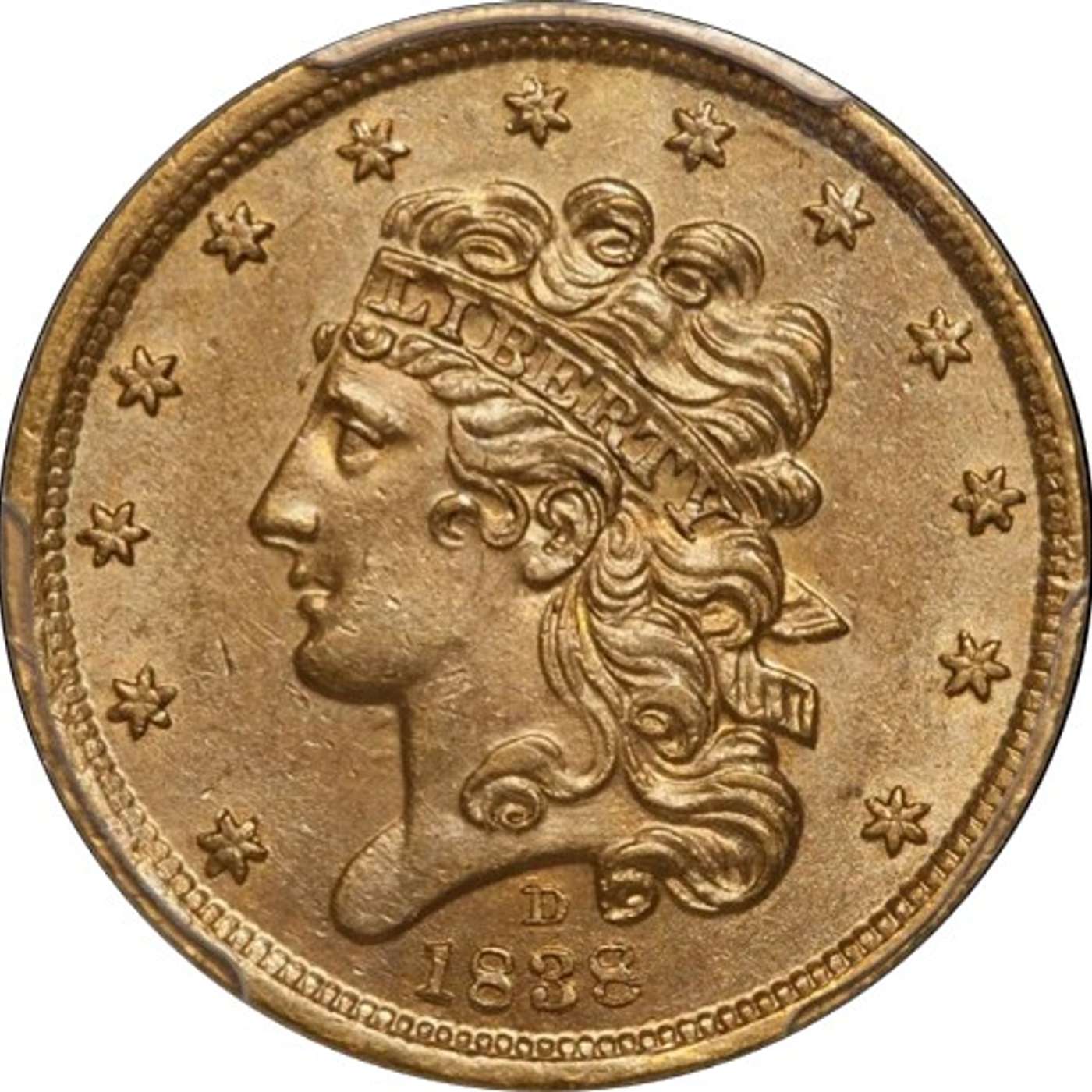
Tony Gryckiewicz: Hey, folks. Welcome back to The Cabbage Coins Podcast. My name is Tony Grokevich. I'm the owner operator of a little company called Cabbage Coins, and I got started in this hobby back in about 2015, 2016, and one of the things I learned was you're always supposed to buy the book before the coin, and one of the very first books that I purchased in order to start collecting and getting into pre 33 gold specifically was I got two of them actually. I got the gold coins of the Dahlonega Mint, and I got the gold coins of the New Orleans Mint. There's also a gold coins of the Charlotte Mint. Both of these volumes are written by today's guests. Very excited to have Doug Winter on the program. Doug is how to say it? I mean, I would say you are the expert on pre 33 gold. I've been part of your newsletter for many years, and the great thing about your newsletter is it's so educational. I'll get them, and even now today as I'm as I'm dealing coins, I get a lot of my education about pre 33 gold from reading your write ups. Doug has also been a P and G member, professional numismatist guild member since 1988, and he was the American Numismatic Association numismatist of the year in 2024. Highly regarded as the expert in pre 33 gold, especially Charlotte, Dahlonega, New Orleans, as well as Pioneer. I know you kind of dabbled in in all of it. Welcome to the program. It's a huge lead in, but thank you so much for joining us. The question that I ask most people, I'm sure people love to know is, A, how did you get into the hobby? B, how long you've been dealing? And C, like what's the thing that keeps you going each day. What do you like most about this profession? Doug Winter: I'm a lifer. I started doing this when I was my grandfather had some coins that he gave me when I was six or seven, and I got hooked immediately. And I grew up in Manhattan, and New York was a great coin town in the seventies. It was there were probably 40 or 50 full time dealers. And by the time I was about 10 or 11, I would I had figured out that I could buy coins downtown, there was a coin district downtown and take them to Midtown. So I would take the subway, go downtown, spend $20, and take the coins out of the guy's flips, put them in my flips, and then take them to coin dealers in the West Forties where there was another coin district and sell them for a pretty good profit. And it was like, this is too easy. So I just there were also a ton of coin shows in New York. There were coin shows. There was a major coin show almost every month, and then there were Sunday coin shows at these two sleazy hotels. I think one of them was called the Royal Manhattan, and one of them was I don't think they've long been since torn down, but there were 50 to 100 dealers there, and they were really good shows. And I met various dealers there, and I became a specialist in colonial coins because colonial coins to me offered a lot of history for you could buy a good colonial coin for $20. And I memorized the die varieties for $17.87 Connecticut cents. There's about 200 different die varieties. And the way that I learned how to do this was I learned what the focal points were on the really rare coins, the R7s and R8s. And that's where you made your money, was buying a really rare coin as a common coin. And guys quickly figured out that this kid was like I know you had Bryce on. Tony Gryckiewicz: Yeah. Doug Winter: And I was kind of like the Bryce of that era, except he's Tony Gryckiewicz: probably But Doug Winter: I was doing that pretty regularly and got my first full time job out of college working for a large wholesale and auction company. Spent three years there and then started my own company in 'eighty five. And I've been DWN, Douglas Winter Numbismatics, DWN since 1985. So I've been in this professionally for forty one years. Tony Gryckiewicz: Wow. And so today, you know, you're doing this for forty one years. A lot of experience. You kind of probably have seen everything. You've gone and done a lot ton of shows. What today is still the kind of, like, the thing that excites you the most about, you know, waking up each day and being a coin dealer? Doug Winter: Being offered fresh coins. Just I get offered every year or two some a collection or an individual coin that's just a really cool coin that's totally unknown, and it just kinda rewrites the record books or the condition census. And it's it's that's it's waiting for the right email or the right phone call. Know? Yeah. The email where there's an attachment of a coin, there's a not very good picture of something that looks really good will get me on an airplane. That's I'm fortunate. I love what I do, and there's not a lot of people that can wake up every morning excited to go to work. I still am excited to go to work. Mhmm. Tony Gryckiewicz: Yeah. I agree with you with that. That is the exciting part of doing this. We're gonna be talking today about this early branch mint US gold stuff, Charlotte coins, the Llanaga coins. Before we get into the examples, could you give a little bit of a maybe a lead in about what we're gonna be looking at today, and how in general do you approach collecting these kind of early mid branch mint coins? Doug Winter: The way to approach them is you can do them a couple of different ways. You can do them as type coins. You can do them as date sets, or you can just buy whatever is interesting to you. What you have to learn is that every Dahlonega coin is different. It's not like Morgan dollars where most Morgan dollars look the same. Every year that Dahlonega and Charlotte made coins, the coins were a different color, had a different texture, the surfaces were different. So you had to learn what a good coin looks like. You're not likely to learn how to grade, but you're likely to learn the difference between a good coin and a not good coin. And that's where I try and come in. In the books that I've written, it will tell you what the right color is on an eighteen forty eight c quarter eagle. It'll tell you what the strike of a 49 quarter eagle is supposed to be. So if your if your coin matches my description, that's good. Unfortunately, a significant percentage of the Charlotte and Delonga coins that have been straight graded by PCGS and NGC have been messed around with, some severely, some lightly. But finding really nice original coins is extremely challenging, and it's I actually wrote an article re recently. It's on my website. And I think the title is something like, is it even possible to consider doing a date set in today's market? And ten years ago, I could almost guarantee somebody that I could assemble a complete set of Dahlonega coins, for Charlotte coins for them in two or three years. Now I I don't know if I could do it in twenty years. Just the coins just aren't there. And there's there's been a real surge in popularity with C and D and stuff in the past few years since COVID, and prices have gone up a lot. Ironically, it's it's kind of a reverse bell curve for prices. The stuff that's VF and XF has actually probably doubled or tripled, whereas the really super high end coins haven't gone up that much because they don't appear. So a lot of lot of coins that I handle, I'll look up prior sales, and there's been, you know, two sales records for the date and the grade since 1995. So it's hard to value stuff in the current market. But getting started, I think, is typically, somebody starts with an inexpensive coin like a 49D or a 51C gold dollar and then works their way up. And usually, people collect one denomination at a time right now. But back in the day, people complete sets were affordable and realistically completable. Now they're not as affordable, and they're really, really hard to to complete, especially if you care what the coins look like. Tony Gryckiewicz: Yeah. Yeah. Yeah. Just something you mentioned, wanted to reiterate or touch on that real quick because I just made a video about whether rare coins are good investments. And and talking to a number of collectors or investors, people who invest in rare rare coins, I I think there's a lot of emphasis on highest grade that they can particularly find. But on a percentage basis, seems that, especially the c and d meant gold, typically, it's like we've seen a lot of price appreciation more on the on the lower end, really, the the VFs up to the XFs for quality coins in those ranges. There's a lot of people looking for those, and so we've seen a lot of demand for those, and prices have done really well on those. Doug Winter: Some people some people hate circulated coins. They just they like uncirculated coins. The problem with C and D men is even coins that are 62, 63, and sometimes 64 are never gonna look as nice as Philadelphia coins of struck during comparable periods of time. And you have to temper your expectations, but there are we'll go over some images in a few minutes. And there's there are some amazing high grade C and D min coins that exist. I have a coin that I recently sold, a 55D gold dollar, and PCGS 61. It's the fifth time that I've sold a coin in thirty years. And a great coin, and it just it goes up a little bit every time it sells. Yeah. Yeah. Yeah. Tony Gryckiewicz: Alright. Well, I forget. We have about, I think, 12 or 14 examples. This is an 1838 Charlotte, and this is fairly high grade, $5 MS 63. Doug Winter: Yeah. This is an amazing coin. It's probably the single best Charlotte coin in in existence. It's a coin that I got the pedigree wrong on this coin in my Charlotte book, and it's it came out of a stack sale in 1978, and it's got the most amazing color you can imagine. The color is just smoking orange gold, and the strike is great. It's a it's a it's a very popular and significant coin. It's a first year of issue, and it's it's a one year type coin. And it's it's a 63 plus. It's phenomenal. I bought the coin in partnership with another dealer around 2022. I think it was still during COVID. And we tried to sell the coin for a month on my website, and I just couldn't get anything anybody to bite because it was it was I think I was asking about $3,350 to 375,000. And we finally sold it to a very wealthy, very smart guy who knew he was taking advantage of us. And we I made about 2 and a half percent on this coin, which is ironic because today, if I had put this coin if I could put this coin on my website today, I would get multiple offers within thirty minutes. Tony Gryckiewicz: Why is that what what what has changed about the market from then to now on this stuff? Doug Winter: The market's just changed so much since 2022. It's just there's a lot of really wealthy people in The United States, and Coins are recognized as a better asset class now than they've been in the past. I think CAC has helped. It's tightened the safety net for people. And I think it's had a very significant positive impact on people feeling safe enough to drop 100 to 200,000 or plus on a coin. If you think about it, it's a pretty big leap of faith paying $250 for a little yellow disc that you at least now I can back up a lot of what I say with statistical evidence with PCGS populations, NGC populations, and CAC populations. So instead of just saying, well, trust me. There's 10 there's 10 or 15 of these known. I can say there's three PCGSs, one NGC, and three CACs. So there's seven coins that I know of, and there's probably a few more hiding around. But I think people just feel more comfortable now spending money. And the 1% who were wealthy in 2020 are wealthier in 2026. And I'm selling coins to a very diverse group of people, a lot of new people that are starting out with very big aspirations. They're not starting out buying $2,500 coins. They're starting out buying $25,000 coins. Tony Gryckiewicz: Yep. Doug Winter: Yep. I know I'm not the only retail dealer experiencing this, but business has been really, really good for the last couple of years. Tony Gryckiewicz: Yeah. Yeah. I mean, I always talk about how price is always a function of supply and demand. And when it comes to supply of these, I I don't I don't think we've seen a decline in supply where prices are gonna rise. Probably the the supply has been fairly static. Maybe there's been a couple more coming out of woodwork in some of the collections that have come to market in the last few years, but it seems like what is the factor of demand really has been all of this new money, really, that's come into Numismatics, like you mentioned, as another asset class. I think there was a lot of money made post COVID in real estate and in other stock market and other kind of areas, And people have wealth and they're and they're looking to get into, you know, diverse asset classes, and Numismatics is one of them, and and those folks are going in head first. It does Doug Winter: stuff I like think they they like the transparency. There's you know, if you buy if you go to a gallery and buy a painting for $500, you probably when you leave the room, probably depreciates 40% to 60%. When you buy a coin for $350, as long as you buy it intelligently by using doing due diligence and maybe having an expert consult for you for a fee, you should leave that transaction with a coin that's probably very liquid at $3.25 to $3.30 immediately. And in six months to a year, you can wipe out most of your friction from the transaction, from the buying and selling. So I think coins are also coins are expensive, but they're also kind of cheap when you compare them to like, Sotheby's and Christie's sell paintings routinely for 30 to $150,000,000. A painting now sells for $100,000,000, and it's not even a headline in the New York Times anymore. It's just kind of a footnote. So there's there was recently a sale that oh, it was Cy Newhouse's. He's the publisher of Vanity Fair, I think, magazine or news magazine. And he had an amazing art collection, and he sold at least two or three paintings for a $100,000,000. And that, you know, that would have been enormous news as recently as five or six years ago. And the prices were were spectacular, but they still didn't generate the type of mass hysteria that I would expect a coin selling for 20 or 30,000,000 would. Tony Gryckiewicz: Yeah. Yep. Well, I I I definitely could chat with you about the investment side for longer, but I wanna I wanna keep moving for the sake of time in terms of the coin examples and and learning stuff so that we have a a 38 Telanigan now, $5 MS62 CAC. Doug Winter: Yeah. This is the sister coin of the 38 c. It's it's not as nice, but they're they're linked together because they're both first year of issue, one year type coins. This is a classic head design with a mint mark on the obverse. It's with the 38 c five, there's probably only three or four real uncirculated coins in existence. The 38 d is a lot more common uncirculated. There's as many as 10 to 12 known. And this is one of the better 60 twos. It's got nice color. It's kind of a light greenish gold. It's probably been lightly dipped at one point, but Mhmm. The surfaces are fairly clean. It's got a couple light hits on the cheek and in the in the field, the leftovers field, But it's a a solid coin, and it's this is probably about a 100 to 125,000 right now. Tony Gryckiewicz: That's the reverse. Doug Winter: Yeah. And you can see this is actually a fairly well struck coin. The detail on identicals on the upper reverse are a little flat, but there's considering that this is an all new crew using old equipment, and they've never done anything before, I think they did a pretty good job on the 38D Half Eagles. The 38C Half Eagle is not a very well struck coin, but the 38D is well struck. This, you can see, there's a lot of the stars are flat, and this is an unusual coin. It doesn't have a huge die break on it, but probably 50% to 60% of the 38C5s have a massive bisecting die break on the reverse that literally you wonder how they could have made any more coins. Tony Gryckiewicz: Gotcha. Yeah. The strike end, this is is pretty is pretty incredible. I think there's gonna be a question out there from the audience. They're learning about this stuff in these, and they just heard you mention that this coin probably had been lightly dipped at one point in the past. I mean, looking at the coin, it's doesn't have any real kind of dirt and grime necessarily on it, so it looks a little bit per conserved, but they see the CAC sticker. And I I know that the, you know, the the criteria and the kind of game is a little bit different on something as early as this as it is something that's much later. But can you maybe lay it out, unpack that for the viewer who just trying to understand why, you know, you see a CAC sticker, but at the same time, this is a minstake coin that's been, you know, lightly dipped? Doug Winter: Is that I think you make certain you make certain allowances as a grader, and CAC is smart enough to know that this coin is for a 38 d and 62 is is above average. It's not as dark as I'd like, but the coin is it probably was soap and water as opposed to being put in a corrosive, like, jewel luster. Mhmm. Or it might have had a little ammonia put on it. But it's the coin is it's more commercial than the 38 c. The 38 c is a coin that a connoisseur will love, but a newbie won't won't appreciate it. This is a little bit more of a newbie coin. It's it's not it hasn't been baking soda where it's it's it has simulated luster. It's got real luster, it's just it's just and you can see there's sec there's second generation toning coming in around the lettering on the on the obverse on the reverse. Tony Gryckiewicz: So what does that mean? I've never heard that before. Second I'm assuming that means this this kind of coloring through these letters. What does that mean? It's a Doug Winter: coloring that forms that it's the new color that forms on the surfaces after it's been lightened. Tony Gryckiewicz: I see. After, let's say, there was some soap of water or whatever you mentioned, then after that, there is additional toning. Interesting. Didn't Right. Know Doug Winter: Secondary toning is hard to happen now because coins are put in slabs after they've been dipped. But if you back in the old days when you kept coins in Manila envelopes or or sulfur impregnated paper flips, they it was easy for coins to tone. Like, you could get a coin like this could retone in a couple of years. Tony Gryckiewicz: Interesting. Yeah. Very pretty. Okay. So moving on, we have a Winter Plate Coin. For those who don't know, please explain what a Plate Coin is, if you don't mind. We got 39 C. Doug Winter: It's the 30 it's the coin that I use to illustrate a 39 c quarter eagle. My actually, the two books that you have are not the most recent ones that I've done, but that was the play coin in the in the version of the book that you have. Tony Gryckiewicz: And I Doug Winter: it's I don't know if anybody is gonna pay extra money because it's the Winter play coin. But series like large cents and 0.5¢ that have people who are avid provenance collectors, if you have a plate coin of the Chapman book on large cents or or the Crosby book on $17.93 copper, that's that is something that people will pay a significant premium for because it it shows that it's got a good pedigree, and it was probably the best coin available when those books were written in the eighteen seventies, eighteen eighties. Tony Gryckiewicz: Yeah. Yeah. Yeah. That makes a lot of sense, the pedigree aspect. Then, I mean, yeah, just seeing the coin that's like in the book that is used to describe it. I've mentioned it, I think, before, I've owned the coin that was on the PCGS website is like the one that comes up when you pull up coin facts or something. You know? And it's like, this is the plate coin. And, yeah, it makes a Doug Winter: lot of Tony Gryckiewicz: sense. The first thing that jumps out at me is I feel like these surfaces are the the fields are kind of proof like on this coin. Doug Winter: Yeah. And they're they to me, the most interesting thing about this coin is look at this cheek. Tony Gryckiewicz: There's Mhmm. Doug Winter: There's a huge flaw on the cheek. So Yeah. That was a a foreign object that was on the die at the time the coins were being struck. Could have been a piece of wood, or it could have been a piece of cloth, or a little piece of metal. And given the shape and and thickness of it, I'm thinking it's it was a a small piece of wood. And there are probably 60% to 70% of the 39 C quarter eagles. Probably all of them, they were probably made all at once or two or three times during the year. And they didn't discover the fact that there was a piece of wood sticking out of the adverse dye until And they were they couldn't melt them and start again because they weren't allowed to do that. So they just released them with this mint flaw. And one reason it's important to learn the series is because if you pass on this coin because of the flaw, you're making a mistake because you can't find one without this flaw of this of this variety. There's actually three dye varieties of the 39. There's an overdate and a repunch date. Tony Gryckiewicz: Interesting. Good to know. Yeah. Yeah. I I could see that. I mean, a newbie, somebody not familiar is gonna look at this thing, and I think there's a problem with the coin, but this is really a strike through on on the on the die, and this is the way that these ones are these ones are made. Gorgeous, though, overall. I mean, again, the proof like kind of character of the field, I think, is really what stands out to to me the most. Doug Winter: It it's probably the only one I've ever seen that's vaguely proof like. There's there's typically frosty, and it's a fairly common coin in circulated grades, but it's really rare and uncirculated. It's actually rarer than the 38 c 0.25 eagle, which is the first year of which sells for more. But there's I don't think there's more than two or three thirty nine c quarter eagles in existence that are legitimately uncirculated that I would consider to be uncirculated coins. Tony Gryckiewicz: So you just reminded me of a question. I'm just really curious about your method. So you've been doing you'd obviously been doing this for a number of years. And at what point did you start to track these populations and be able to come up with survival estimates and to because a lot of your book, the value of your book when I read it is this comparison of, you know, issue and being able to know the rarity within specific grades. When did you start, I guess, analyzing that, and what was your methodology for collecting the the data that you did? Doug Winter: I stole all my data from a guy named Bernie Rome, who was he's he's a kind of a footnote in the in the coin industry, but he was a he was the guy who started off track betting in New York, in New York City. And I was a I was a degenerate horse racing gambler as a teenager, and I used to spend money all the time at OTB, but that's another story. But he had a thing called Rome's auction prices realized, And he also invented selling coins by computer. He formed a company called Teletrade, which is no longer here, but it was a really revolutionary way to sell coins. And he foresaw the selling of coins by what would become the Internet twenty years, thirty years before it happened. And I would take the information every year he would publish this book, and it was like $100. But it and it's just it was just literally pages and pages of statistics, of coins, what were they graded, who sold them, and what they sold for. And I had probably 500 plus pages of stuff that I would print out after every auction. And I would list the finest known, and I would have the serial number. And I would back then, coins traveled between grading services regularly. A coin could have been a PCGS 61 in 1988, an NGC 62 in 1989, a PC 62 63 in 2000, and 63 plus in 2025. So it was important for me back then to keep records, and it helped me learn which coins were really rare and high grade and which coins had changed holders. And I have a pretty good memory, so I can remember almost any coin that I ever see that I care about. And I could could see that this coin, when it was in a 1988 auction, it had green color. And now in 1991, it doesn't have green color. So clearly, somebody messed around with it between the two auction dates. There's probably of the 50 best coin dealers, there's probably 40 of them. If they if they weren't good at coins, they'd probably be living under a bridge. There there's there's a number of skill sets that are unique to good coin dealers. Almost all of us have ADD. About 80% of the guys are left handed, which is unusual. And there's just you either have the mind for remembering coins or you don't. Guys who are really good can remember coins that they sold. I have coins that I sold forty years ago that I could still describe to you that I remember. I don't necessarily remember who I sold them to or how much I sold them for, but I can remember the coins really well. And I think that's that's the key to becoming a really good dealer, is is you can't train yourself. You either have that ability to do that or not. Tony Gryckiewicz: Makes sense. Okay. Moving on to 46 Charlotte, 64 CAC. Oh, that's a pretty high grade. Doug Winter: Yeah. This is a great coin. This coin belonged to a dealer named Ed Milos, and I think it's also ex Eliasberg. That coin look. If if you didn't turn it over, you would swear that's a Philadelphia coin. Yeah. Except the except the color is is sort of a silvery gold because of or kind of a green gold because there's high silver content in southern gold. The coin is it's a scarce state in amazing condition. It's easily the finest known, and it's I sold that coin for about $80,000 maybe fifteen years ago. I've gotta think it's worth $1.50 to 200 today. Tony Gryckiewicz: And Mhmm. Doug Winter: I think it's actually a great deal at that price. It's it's a I think there's probably five or six uncirculated coins known for the date. This is by far the finest, and it's one of the probably the best four or five individual Charlotte half eagles I've ever seen. Tony Gryckiewicz: Yeah. I was just gonna ask where this is in the kind of condition census for all Charlotte half eagles. I mean, 64 CAC has got to be pretty high up there. Doug Winter: Yeah. There's the the finest known Charlotte half eagle, there's an, I think, a 59 c and 66 that belonged to Ed Milas that I haven't seen that coin in years. And then there's a couple of gems. There's maybe four to six gem coins. And then there's probably fifty, sixty threes. So you're talking about for both Charlotte and The Lana Gut combined, you're talking about not more than a 100 coins in existence that are MS 63 or better. And that that number actually sounds kind of high. I think about it. It's probably more like 50 to 60 different coins. Tony Gryckiewicz: Yeah. This is gorgeous. And like you said, I would look at this coin, and I would think this is a Philadelphia mint corner. I think this is just kind of a a really nice, more modern date. I mean, I I would think this is kind of a, you know, a late nineteenth century date or early twentieth century date because of Doug Winter: how You well it's could cover that coin, and I could tell you it was from 1900, and you probably wouldn't disagree. Yeah. The thing that's interesting about the Charlotte and DeLonaga Mints is that their quality of strike differs from year to year. There's like, DeLonaga was able to make really good quality quarter eagles in the mid-1840s, but the 1856 quarter eagle, which we'll have a picture of soon, is the worst made US coin ever. And it's my theory has always been, I don't know if this is true or not, but that the the mint jobs were patronage jobs. And when one party lost if the Republicans lost to the Democrats or the Whigs lost to the Republicans, that people who were competent got pushed out and were replaced with friends of the party, and the quality suffered as a result. Matt, let's just it's purely speculative. Tony Gryckiewicz: Yeah. Well, that is interesting. I will keep moving. Keep moving. So we have the 1849 half eagle PCGS 63 plus CAC A Montgomery collection or something, I guess. Doug Winter: Yeah. Was a customer who lived well, a collector who lived in Georgia, Atlanta. He was a big I think he was the president of Coca Cola, and he was a big collector. And he sold his stuff, I think, in 1984, in auction eighty four. This coin is very PL. It's more PL. It should remind you a little bit of the thirty nine c, but this coin Mhmm. Is is really about as proof like as a branch mint coin comes. And it's it's a little it's got some light lines on the obverse. The reverse is sensational. I grade the reverse on this coin gem. And it's a plus because it's just got really good eye appeal. This is a hard coin to take an image of, but it's a really nice coin, extremely well struck, and it's a Mhmm. Challenging date to locate in high grades. There's probably seven or eight uncirculated coins of which this is either the first or second best. Tony Gryckiewicz: Yeah. I I think it's excellent. I love the the strike on this coin on the on the reverse. It seems a little bit Doug Winter: Yeah. There's a little bit of weakness in the on the hair across below IBE and Liberty, And that's that comes on every I've never seen a 49 d five that didn't have that. Tony Gryckiewicz: Oh, yeah. You definitely got that proof like character on on both sides. So the 49 d, that's gonna be a pretty tough tough one. I have not seen a whole lot of 49 d's to be honest with you. So what's a good date for Dahlonega? If somebody let they say they're, you know, we're we're recording this on the just getting ready to go down to the BRNA show down in Dalton, Georgia tomorrow, actually. This is gonna release after that show, but if somebody wanted to get into the Dahlonega Gold, they're trying to get their first example. What date of course, budget is a factor, but what date would you steer them towards? Doug Winter: The gateway drug coin for Dahlonega gold has traditionally been the 49D gold dollar. That's a coin that is kind of like the 81 s Morgan dollar of Dahlonega coins, but there's maybe six to 800 known total. And that used to be able up until a couple years ago, you could buy a nice one for under $2. You could buy like a wholesome XF40 coin for $17.50. They've gone up they're now you probably have to spend 4 to 5,000 to get a decent one, but they come very nice. They're well made. And if you can get around the fact that the coin's very small, it's a good starter coin. With half eagles, I would say there's a couple of dates of the 1840s, the 43D, the 44D, the 45D. Those are all fairly common. The 52, 53, and 54D are the three most common dates, and they come with a variety of looks. The 54D comes with a beveled rim or a non beveled rim, and I like the coins that don't have the beveled rims better. And you can there's enough of there's probably 400 of those known, so you can afford to be patient. But I would tell if you want to start with Dahlonega or Charlotte coins, just don't hold yourself to you'll only buy a 49D gold dollar and an XF40, that could take two years to find. And Yeah. You could wind up passing on or missing out on some really great coins. It would be starter coins for your collection. So I would say just just buy something that appeals to you. Tony Gryckiewicz: Got it. Yeah. That makes sense. Makes sense. So we have this 1851 Dahlonega $2.5 now, Duke's Creek. Doug Winter: Yeah. Duke's Creek is the finest collection ever assembled of Dahlonega coins. It was assembled by a company in Atlanta called Hancock and Harwell. And the these coins were amazing. The collection was put together over about a ten to fifteen year period, and it was done during a period of time where there were some really great collections like Pitman and Bass and a few other really good sets came on the market. This coin was originally in a PC 64 holder. The whole set got sent to NGC and upgraded pretty significantly, but I don't have a problem with the grades by today's standards. This is one of the two or three single best Dulanaga quarter eagles in existence. It's it's got great color. It's well struck, and it's a pretty rare date also. Tony Gryckiewicz: Mhmm. Yeah. Wow. It is excellent. I like it quite a bit like you mentioned. I mean, the color of this is Doug Winter: It's got that, like, what I call sunset gold, which is I I think the reverse of that coin is very really pretty. Tony Gryckiewicz: When did Duke's Creek sell their collection? Doug Winter: They sold the gold dollars and the quarter eagles. Heritage did their sale in oh gosh. Somewhere around 2005 to 2007, 2008. And you can can look it up online. Claude will tell you. And then the half eagles were purchased unblocked by a well known collector, and he still has them. And that was the meat of the collection, the half eagles. The half eagles are sensational. And there's I think there's a part of my book that I list all the grades of the the Deuce Creek coins. Unfortunately, a lot of them also the the populations were not removed from the PCGS database. So a coin like this 51D, there's it's on the PCGS database as a 64, and the NGC database is a 65, but it's the same coin. So it's it's important, I think, to know that. Tony Gryckiewicz: Yeah. For sure. Yes. So moving on to the 54 Charlotte. This is on a 2.5 MS 63 with a CAC sticker. So the 54 Charlotte. Doug Winter: That's a coin that kinda just came out of the woodwork, and I bought it a few years ago. I think I paid around 40 or so for it. It's the finest known. It's a fairly low mintage date, and it's very scarce and uncirculated. And this is just a nice, honest, uncirculated coin. It's it's not better than a three, but it's not a two that got pushed out. It's it's got some there's an interesting under the wings, you'll you'll see there's some frost there. That's a characteristic of a lot of Charlotte coins. There's the way the dyes were finished, there was frost that stuck in the in the crotch of the eagle's feathers there, and in the other up a little bit. You see, it's like a halo of frost. That shows you that this coin has not been messed around with. Because if this were a mincedate coin that didn't have that corona of frost around the the the reverse device, it would be almost certainly dipped or cleaned. Tony Gryckiewicz: Yeah. It is it is gorgeous. You can just see this kind of original surface is all through these through these parts. Doug Winter: And then it's weakly struck at the center. The center's the shield looks a little bit sunken, but that's if somebody passed on this coin because they they didn't have a full shield, you'd have to you'd have to slap them. That would just be Tony Gryckiewicz: Nice. Nice. Interesting. Yeah. That's that's definitely definitely good to know. I I think that there's yeah. Oftentimes, think we look at the slabs, we look at numbers, and we look at stickers, and we consider them a little bit like commodities, but you're taking a much closer look at these minute details that are telling you this coin has never been futz with and hasn't been messed with in any way. There's there's a lot of originality in this coin, and therefore, this coin commands a premium in your book, both, you know, both if if you're gonna buy this coin on a boresore from a collector, you're gonna probably pay a stronger number because of this the the look of these surfaces. And Doug Winter: Yeah. You you had mentioned something about commodities. I hate the commodification of coins. It's something that's bothered me for a long time. And one of the reasons why I deal in areas like this in early gold is because these aren't commodities. They're unique one of a kind items. And there's this 54C in 'sixty three is probably totally different than another one in 'sixty two. It's it's the same date and the same mint mark, but it's a vastly different coin. And that's you don't get today with, you know, with American Silver Eagles modern coins or even common date generic Morgan dollars or generic gold, you're selling it as a commodity, and the coin doesn't matter. And to me, the coin matters a lot. The holder doesn't matter as much as the coin. Tony Gryckiewicz: Yeah. Yeah. It makes a lot of sense. All right. So this is our first $3 gold. This is a 54 Dahlonega AE 58 CAC. Doug Winter: Yeah. It's the only Dahlonega $3 gold piece. It's the first year of issue. Charlotte did not make any, and New Orleans made oodles of $3 gold pieces, and you can buy one as cheap as maybe 4 or 5,000. This is around an 80 to 85 to $95,000 coin. It's a it's a very nice coin. It's got what looks like secondary toning in the lettering. There's a couple of things that are diagnostic to this issue. In the in the there's a clash mark in the throat that's on every coin. You can see it right there. Tony Gryckiewicz: Right here? Doug Winter: Yeah. A clash mark from the from the reverse. And then 95% of all eighteen fifty four D3 dollar gold pieces are weak on the the reading from around 12:00 to 07:00. This one has full reading, and it's pretty rare. I don't think I've seen more than seven or eight of them that have full reading. The coin's got really nice surfaces. It's got a decent amount of luster, and it's a solid coin. I find these to be a little bit overvalued, but they're coins that have what I refer to as multiple levels of demand. There it's a coin that I can sell the a coin like this to somebody who who will never buy another $3 gold piece, but he he'll buy this coin because it's the only the Llanaga coin. It's it's a good box of 20 coin. Tony Gryckiewicz: Makes sense. Yeah. It makes sense. Appeals, of course, to $3 collectors. It appeals to Dahlonega collectors, and it appeals to basically a type type investor. Doug Winter: And box of 20 guys too. Yeah. Tony Gryckiewicz: Yeah. Yeah. Yeah. Yeah. The box of 20 concept for those who don't know out there is just this idea of one, keeping your collection small, limiting it to one box of 20 coins because the, you know, PCGS boxes fit 20 coins basically. So you got your one box that you basically put coins into, and before we put another one in, let's say you take one out, so you can keep it only to Doug Winter: 20 or you start up second. Or you start your second box at 20. Tony Gryckiewicz: Okay. So it becomes the box of 40 collection, I guess, but, you know, same same same concept. But that's the idea. It's pretty it's pretty cool. I I definitely have always said, you know, quality over quantity. I think that's definitely the way to go with collecting. Doug Winter: I agree. Cool. So yeah. Go ahead. I'm sorry. This is this is another one year type. It's a type 2 gold dollar made in Dahlonega, and type 2 gold dollars were a disaster. They were made to improve the strike, but type one gold dollars are much sharper than type 2 gold dollars. The highest part of the obverse was opposite the highest part of the reverse. So you need a lot of pressure to strike these coins properly. And you'll see there's clash marks all over this coin where there's that area there is the wreath in cues from the reverse. Tony Gryckiewicz: Mhmm. Doug Winter: This coin is very unusual. It's got a full date, which is it's almost always weak on the eightfive in the date. And this is probably one of the two or three best struck ones I've ever seen. There's four of these known and uncirculated. There's two 64s, a 62, and a 61. And I've sold this coin now five times in the last 30 And it's it's a 6 figure coin, and it's it's neat, and it's also another coin with multiple levels of of demand. Tony Gryckiewicz: Yeah. Yeah. Do you remember who Green Pond is or what that collection is? Doug Winter: That was a collection. That was a guy he was a guy from Westchester County. His name was Barry Enholm, and he was a serial collector. He was an early adapter to the PCGS set registry, and he would race this back when it was much easier to find coins. He would put together like a set of Indian scents and business striking proof. He'd put them in auction. He'd name them after his kids. So it was like Ali and Joseph. So it was the Ali collection and the Joseph collection or something like that. And once they sold, he would take his proceeds and start another set. And he decided to do Dahlonega. He did a complete set with me, and we sold his coins in, I think, the Heritage two thousand and four fund sale, which he it took me about two years to put the set together for him, and then literally the day he was I got him the last coin, he called Heritage and put him in their in their auction. Tony Gryckiewicz: I see. Doug Winter: Was all about it was all about the chase for him. Tony Gryckiewicz: Yeah. As is for a lot of us. I mean, to be honest with you, I I I think certainly what drives me a lot of the time. So but yeah. So this is a good tidbit for folks out there watching about $18.55 dollars. If you are looking at them, you find one in a show possibly looking at this date, you know, obviously something that is more well struck or it has the full more complete date is gonna be a good cherry pick opportunity for you. So that's that's good good piece of wisdom on on that. So we have one of my favorite coins in your in your set because Harry W Bass, it's pretty famous collector. I I recall this is a '56 Dahlonega, a '50 five CAC. So we definitely want to talk about the pedigree, but I'll let you go ahead and get into the coin. Doug Winter: I had mentioned this issue before. These look like buttons. The quality of strike on these is just terrible. And what's ironic is in 1853 and 1854, the strikes were pretty decent, but they lost all semblance of quality control in 1856. It's got the lowest mintage of any Dahlonega coin. It's under a thousand. I think it's $8.70, And I it's the rarest Dulanugo coin in terms of total numbers known. There's probably about 45 to 55 known. These were pretty reasonably priced until recently. And about five years ago, there was an auction record of around $100 for a decent AU, which was triple what they had brought before that. So, unfortunately, this has become a date that you're going to have to commit probably $50,000 to buy a presentable one, and it won't be as nice as this. And in terms of I think I know how to grade the long ago as well or better than just about anybody, and I I have no idea what this coin grades. I mean, you can coin this probably has no wear on it or very little wear, but I think this coin looks XF from or extremely fine. And the I think the obverse is miserable looking. But it's that's kind of the charm of this is that it's it's like the Lanna Gug coins are sort of the folk art of American numismatics. They're they're different. They're handmade, and you get some years that look great, and you get some years that look terrible. On this one, it's 08/1974 is the minus figure. And Yeah. It's it's a it's a really good coin. Tony Gryckiewicz: Yeah. I totally could see what you which mean. I mean, I could see this in grading in the $40.40 range just because of the look at the general look of of the coin. Doug Winter: I think if you put that in front of fifty fifty budding numismatists and to grade this coin, I think you would get coins numbers. They they would be a a broader range than almost any coin you could put in front of them. Tony Gryckiewicz: Yeah. Yeah. Interesting. Alright. Cool. So moving on here to the 61 Charlotte. This is MS $61.05 dollar, and this is 1861. We've got a couple eighteen sixty ones coming up. Doug Winter: Yeah. So 1861 is a historic year for American coinage. It's obviously the year the civil war broke out in April 1861, and the Confederate forces seized all three of the mints. And there were about 5,500 to 6,061 half eagles made. This is the only denomination that was struck in 1861, and it's impossible to tell which coins were made by the Confederacy and which were made by federal troops. There's kind of a numismatic myth that on the reverse, there's a die break over the AMER in America, and it's thought that the Confederate coins were the ones that had the die break, and the federal coins were the coins that didn't have it's a it's a thin wispy die break that joins the tops of the letters. Yeah. Yeah. Yeah. It's a it's a coin that has traditionally been very undervalued, but it's it's actually much rarer and uncirculated than the 61 d. And one of them just sold the there's only one known that I think is legitimately uncirculated. It's a it's a p c 63 with a CAC sticker. It's a great coin. And I sold that coin to its the consignor about four years ago for, I think, $1.50. And it brought over 400,000 in this in this sale, which is a lot of money. I bought the 61D5 in the same grade or 63 plus that was in the sale for $3.45. And traditionally, the 61C sold for half as much as the 61 d. So this this coin is it's a p c 61. It's debatable about whether this coin's really new or not. I I can there's a a case can be made for calling this coin 58, but it's it's still I think most people would would not sell it as an AU58. They would try it to 61. It's got a couple of marks that are detracting on the on the face. It's got some rub in the fields, and it's a little a couple of light hairlines here and there, but it's still a decent looking coin. Yeah. Tony Gryckiewicz: Yeah. Totally agree. Totally agree. Well, for the sake of time, we'll keep moving here. We've got three last three more examples. This is the Amon G. Doug Winter: Aamon Carter. So Aamon Carter was his father was the he founded American Airlines and the Fort Worth Star Telegram. So he the the Carter family is is a huge family in Fort Worth. They built a lot of TCU university, and he was both Aman Carter Sr. And Aman Carter Jr. Were very serious coin collectors. Stack sold their collection in the something like in the eighties or nineties. And they weren't famous for collecting gold dollars, but this is a coin that is it's the only you it's the only gold coin that you can prove with a 100% certainty was made by the Confederacy. And they only made around a thousand or so. And it's it's a coin that has a huge level of demand because it's it's popular with civil war collectors, confederate collectors, Dahlonega collectors, gold dollar collectors, and box of 20 or trophy coin buyers. And it's a this is it's a decent coin. It's got good luster on it. If you go back to the obverse, there's a this this is characteristic of this that The U in United is is malformed because the they couldn't get enough striking pressure there. So that's the exact same obverse as the $18.60 d gold dollar because it has a weak u also. But that's that's a coin that if you say, I'm only gonna buy one with a sharp u, you'll never buy one. And that's about a 100 plus thousand dollar coin right now. Tony Gryckiewicz: Yeah. I mean, I love that concept of multiple kind of areas of collectors. You know, they're gonna be looking for this coin. Obviously, I mean, anybody that's been numismatics for a little while, either a collector, especially dealers. I mean, you know the 1861 to sixty five years are pretty highly sought after from from collectors, you know, because of the the the civil war that occurred during that time. So you're having the only confirmed Dahlonega coin that was struck by the Confederacy. Right? That that's that's this particular issue was the only one. Doug Winter: Yeah. That's I think it's kind of a grail coin for those collectors. Tony Gryckiewicz: Yeah. Doug Winter: And the fact that it's from the Amy Carter's collection, I think that's a pedigree that actually does add some value. Tony Gryckiewicz: Yeah. Makes sense. Alright. So to talk about another pedigree, I think that adds some value. Pittman remind me who Pittman was. Pittman's first name. Doug Winter: His name was John he was John j Pittman, and he was he had an interesting story. He he worked for Eastman Kodak and lived in Rochester, New York. And he was a middle class guy. He he never made that much money, but he put together an amazing collection that I think Dave Acres sold in 1995 through 1997 in three different auction sessions, two US and one foreign. And the whole collection brought 30 actually, probably forty to fifty million dollars. And he was famous for a couple things. He more he went to the Faruk sale in 1954. King Faruk of Egypt had been deposed, and his collection of coins was being sold by an English company, Sotheby's, who didn't really know what they were doing. And he went there with he had he mortgaged his house and took literally every penny he had to buy there because he knew that it was gonna be a great opportunity to buy coins. Wow. And he I don't know. He spent maybe $50,000 at the sale, and that probably was worth 20 to 30,000,000 when he sold it. He that was incredibly ballsy of him to take his entire net worth and go to Egypt and bid on King Faruk's coins. This was out of my personal collection. I sold it a few years ago, but this this is a coin that has a good pedigree, is rare, and is nice. And it's also CAC, an old green holder, so it kinda takes a lot of checks a lot of boxes. Tony Gryckiewicz: Yeah. Now you gave me an idea. We need to have you back on to go through your box of 20. I think that'd be that'd be awesome. So your whatever your personal collection is. I mean, because every dealer out there, I feel like everybody's got a personal collection of some kind. I I really have, like, one or two coins that I just kind of I buy sometimes some things I really like, and it takes about a month, two months for me to kind of decide I'm gonna finally sell the thing, and I'm gonna keep putting the money back into my business. But Doug Winter: I think it's I think it's a great idea for dealers to put coins away because you're unlike stocks where you're you're playing it's not a level playing field. For for peep for coin dealers, it's it's what you do for a living. So you should know very well what the right coins to put away are. If it's something it's easier once you get a little more established and don't have cash flow issues. But I the last ten years, I've been much more active buying coins for myself than I was when I was in my thirties and forties just because I there's a lot of times when I'll have a coin that's in a deal, and I'll look at it and say, well, I'd rather have the $2,500 profit on this coin, or or would I rather have the coin? And nine out of 10 times now, I just say I want the coin. Tony Gryckiewicz: Yeah. Yeah. No. It's fair. Recently, I acquired a 93 s and v f 20 or 25 CAC. I just like the coin a lot. And, I mean, 93 s Morgans with CAC stickers. I just have Doug Winter: That's like that's like a Krugerrand. I mean, you'll you you can't lose money on that coin. Yeah. So Tony Gryckiewicz: Yeah. So I put it away. Yeah. Sorry. For all you out there that emailed me about that coin, I'm sorry. I put it away. Doug Winter: So Well, the secret is to not put it on your website. It's just hide it in your box. Yeah. Well, it's Tony Gryckiewicz: not on my website. It's not on my website, so it's not on there. But, anyways alright. So, anyways, this is our final coin, I think. This is the 61 Lama Doug Winter: Gena. Don't I know it. It's another 61 d 5. That's I think that's a 1 coin that if anyway, if you could own one Dahlonega good one good Dahlonega gold coin, I think it would be a 61 d 5. I sold I had something kind of amazing happen this year. I sold two MS 63 pluses within forty five minutes of each other, which is pretty good. Was Odd. It's Yeah. Yeah. It's something I I never had two uncirculated coins of the state in stock, and they were probably the second and third finest known. So it was a pretty cool transaction or set of transactions for me. Tony Gryckiewicz: Yeah. So, I mean, so I guess this is kind of another good grail piece for somebody out there. This is a good date. The sixty one Dulanica is gonna be better than some of those more common dates we mentioned. I think you mentioned it was the '43, '44, '45, and Doug Winter: then Yeah. I mean, for somebody with a $7,500 budget, you you this is not a coin that makes sense, but there's there's if you have a 100 to $150,000 budget, a 61 d 5 is a coin that I think has real upside in the future. And this coin, my theory on these coins is that the Confederacy struck some and the federal troops struck some. Some of them are if you notice, this coin struck a little bit off center, like on the upper left rim, and the quality of the stars is very uneven, it would make sense that guys who had never struck coins and just went into the mint to strike some half eagles would make that mistake, and that the guys that were there before the Confederate troops seized the Mint made better quality 61 d fives. Because there's there's two definite looks to the coin or to the date. Tony Gryckiewicz: Mhmm. Mhmm. Interesting. Cool. Cool. Very cool. This has been exciting. This has been really good, Doug. What final pieces of advice would you give to folks out there? This this podcast is watched by a lot of folks, and there are different stages of their collecting kind of career. You got beginners for sure. You got people that have all sorts of different budgets. But just kind of what are some general rules or general pieces of advice would you give to folks that are watching right now? Doug Winter: Buy what you like. Buy the best that you can not the best you can afford, the best that makes sense to you. There's just a lot of people who are worth a lot of money. It makes no sense to them to pay $125,000 for a gold dollar that's the size of your thumbnail. It just doesn't work for them. So if I haven't convinced you that gold dollars are cool during this podcast, don't force it. Just buy half eagles or quarter eagles. Work with a good dealer, whether it's me or other people, and don't buy your coins at auction site on scene. Have somebody at the auction company or a representative bid for you and look at the coins. Because almost every collection that I see that's assembled site unseen or through pictures on the Internet has oodles and oodles of funky coins. And that's not what you you don't wanna put together a you want a collection that's put together in the old fashioned way, which is buying coins one at a time and having ability to look at them in proper light and not feel pressured to say yes or no. Tony Gryckiewicz: Yeah. That makes sense. So I'm assuming you're gonna be at the ANA. Do you know your table number off the top of your head? Doug Winter: I think it's 1214 or 1412. Tony Gryckiewicz: Okay. Nice. I'm at seventeen o seven, and I'll I'm gonna put those up on the screen so folks can come by and say hi to you. Good to great. Yeah, and just if somebody's watching and I'm able to make the show, what's the best way to get ahold of you to ask you a question or inquire? Doug Winter: Well, they can go on my website where there's a lot of information. My website is raregoldcoins.com. And if they want to contact me, they can text me, or they can call me, or they can email me. And my text is dwn excuse me. My email is dwnont dot com. And you can call me or text me at (214) 675-9897. Tony Gryckiewicz: Nice. Appreciate that. Awesome. Thanks a lot for doing this, Doug, for sure. And, yeah, I'll see you at the show and definitely come by and say hi. Yeah, all the all the best. And this is this is gonna release right before the ANA show. So if you're in the Pittsburgh area, that is the bit largest show of the entire year is happening. Doug Winter: If you go to one show a year, ANA and ANA is probably the ones you go to. It's a it's a it's a it's a haul for me to get there, but for me to get on a plane from Portland, Oregon to Pittsburgh in this day and age, I wouldn't do it for any show other than fun or ANA. Tony Gryckiewicz: Yeah. Yeah. Cool. All right. Take care. Thank you so much. Doug Winter: See you.