
The Book Faire | Middle Grade and Children’s Literature for Librarians, Educators and Young Readers · The Book Faire | Children's and YA Literature
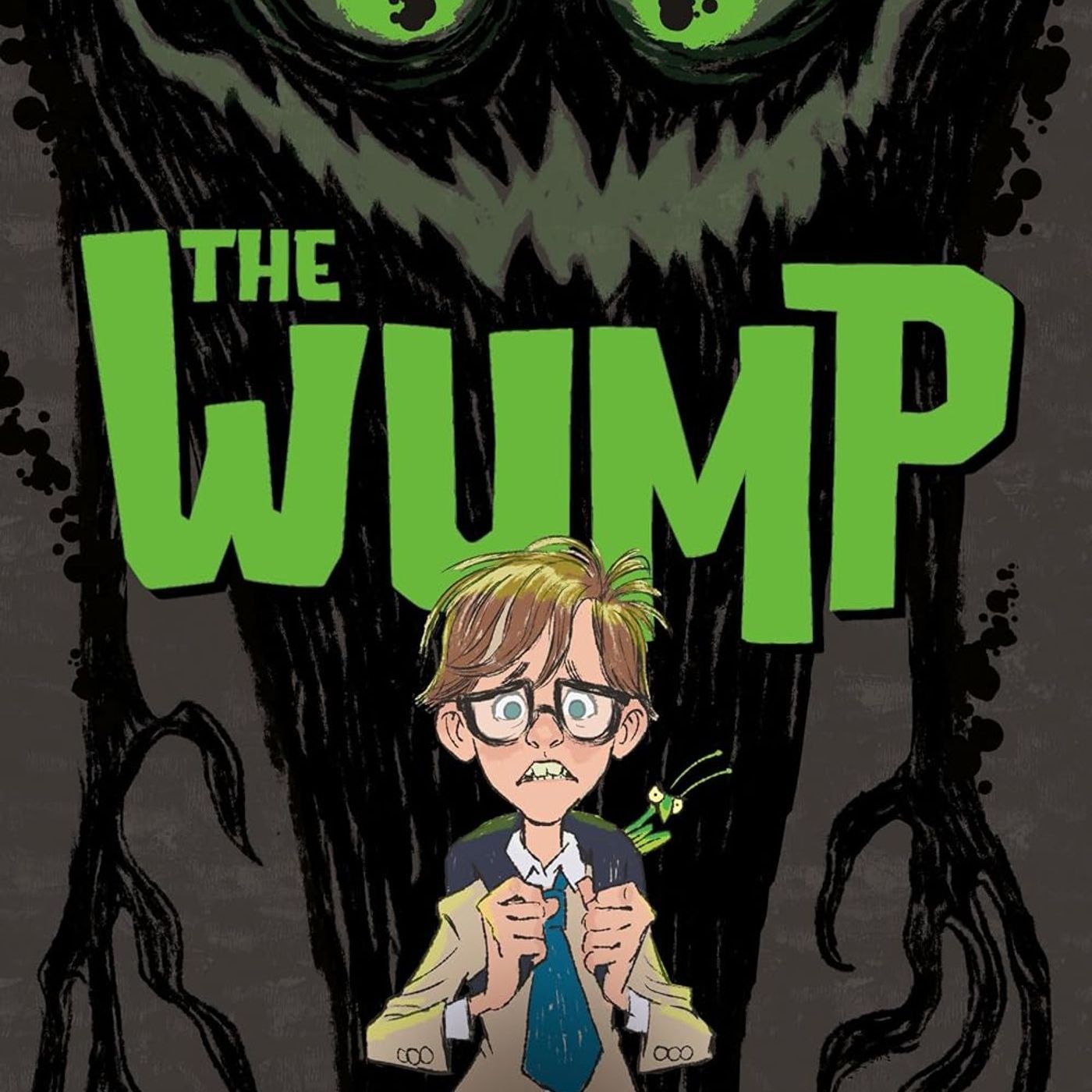
https://diterlizzi.com/ In this episode of The Book Faire Podcast, host Anthony sits down with Caldecott Honor-winning author and illustrator Tony DiTerlizzi (The Spiderwick Chronicles, The Search for WondLa) to discuss his illustrated middle-grade novel, The Wump. Tony reflects on the 20-year journey to write what he calls the most honest story of his career, drawing directly from his own middle school experiences with bullying, feelings of powerlessness, and a fascination with insects. Tony breaks down how the story's main character, Tim, sees his internal anger and suppression manifest as a physical shadow monster—a "wump"—that starts as a revenge fantasy before raising the stakes. He explains how he consulted with a child psychologist to explore Jungian shadow-self theory, using alter-ego tropes like Dr. Jekyll & Mr. Hyde and The Incredible Hulk to give a young protagonist the agency needed to stand up for himself. The conversation also dives into the craft and business of middle-grade publishing. Tony explains how he collaborated with Dial and Penguin to print the heavily illustrated book on heavy graphic novel paper, intentionally creating a visual bridge to help reluctant readers transition from comics to prose. Teachers, school librarians, and parents will find this episode invaluable for understanding middle-grade social-emotional learning (SEL), visual literacy in the classroom, and how empathy-building literature helps young readers navigate grief, anger, and self-acceptance. Welcome to the Book Faire Podcast, my name is Anthony and this show is all about children’s literature and the freedom to read. This week we have an interview with Tony DiTerlizzi, author of the Wump. Takeaways Exploration of bullying themes Importance of self-identity in literature Chapters 00:00 Introduction to The Wump 03:02 Character Development and Personal Reflection 06:34 Tim's Relationship with His Mother 08:10 Creating Larger-than-Life Characters 11:42 Navigating Middle School Challenges 15:36 The Evolution of The Womp 18:08 Illustration and Visual Storytelling 23:27 Publishing Insights and Community Support 25:36 Final Thoughts on Storytelling
speaker-1: Welcome to the Book Fair Podcast. My name is Anthony, and this show is all about children's literature and the freedom to read. This week we have an interview with Tony Di Trelizi, author of The Womp. Next week, we will have another episode covering new book releases, as well as another interview on Friday. Make sure to follow the podcast wherever you are currently listening to stay up to date on the latest news in children's literature. Now let's begin with this week's interview. Good morning, Tony. How are you doing today? speaker-0: I'm doing good, Anthony. How are you doing? speaker-1: I'm doing great. Thank you so much for being speaker-0: I love your hat. I love that Kirby hat. speaker-1: Thank you. And thank you so much for being here today. can you start us off just by introducing yourself for the audience and the book that we'll be discussing today? speaker-0: Well, my name is Tony Di Trelezzy. I'm an author and an illustrator. I've been making books for young readers now for, my gosh, over twenty-five years. And I'm super excited about my new illustrated middle grade novel called The Womp. Dun dun dun. speaker-1: Can you dive into the story of the wom us, kind of give us an idea of what readers can expect when they when they pick this one up? speaker-0: You know, this one is an interesting story, Anthony. And and yeah, I think every book has its own kind of story behind the story. And I had had had come up with this idea of of of what happens to the shadow self of of a a boy who's been bullied a lot, which was very honest and truthful to my own childhood. And I was I had come up with the idea almost 20 years ago, but I didn't feel like I had the technical skills to write it. And I just felt After years of of writing other books, I felt like I could finally tackle this. And I wanted it to be the most honest story I'd ever told. And it and it focuses on a boy named Tim, who he's trying to be a good kid. He's trying to to be an obedient kid. but in doing so, there are people in his life that are kind of punching him down. And and they're they they're in teachers, they're in and other students at school. There's a horrible girl that rides the bus with him, and his own mom actually is is kind of a big personality and so the shadow part of his conscious starts to manifest into a physical monster that other people can see and it begins to take control of him and it starts out like a great revenge fantasy until it's not. And then the stakes get a little higher and higher as the story goes until Ultimately the antagonist Timothy has to face is is actually himself. speaker-1: And Tony, you said that the it starts out as a a revenge fantasy, which is sort of like playing with this idea of a power fantasy where in books for young readers, characters are often given very little agency or choice in the matter. And Tony I mean Tony and Tim at the beginning of his story feels very powerless. Can you talk a little bit about giving him the strength in the woman and sort of like where this character came from and what purpose it served in in appearing to him? speaker-0: I I think it's it's it's no mistake that you flubbed and called him Tony and Tim because they the lines are so blurred, Anthony, when I wrote this. I they really were I had my middle school yearbook open next to me at the computer every day when I'd write. I'd look at that poor pitiful kid and a and I could get started and work on it. I think you know, I there there are shadow selves in literature that go back Centuries. I mean, Dr. Jekyll and Mr. Hyde is a is a pretty big one that many people know. There's more modern takes like The Incredible Hulk for comic books, or even The Mask, which was made into the movie with Jim Carrey, these kind of alter ego. Even some monster stories like the werewolf story, I would argue, also kind of are like playing with the darker side of our human nature. Carl Jung, the psychologist. explored this and and his Jungian theory. And I'm not gonna even try to pretend I'm a psychologist by any means, but I did consult with a friend of mine who is a child psychologist while I worked on the story because what I found was this shadow self, this darker part of our humanity isn't just all the bad stuff that we think about or or ruminate on. It's also, if as I understood it, the the part of us that also forces up forces us to speak up, to stand up for ourselves. And that to me was fascinating that by Tim acknowledging and embracing this darker part of who he was that had kind of you know, metastasized into a lot of anger, was also the character that was going to give him the agency that you're asking about. And for me, that didn't happen in middle school. That would take years for me to be able to become comfortable enough to be able to kind of speak on my own behalf or stand up for myself. but this isn't an autobiography. It's a it's a it's a story and these are characters. And so I compressed it all down to happen over the course of a a horrible week. speaker-1: And you see, you mentioned that Tim has all of these characters in his life. You have the low you have the bully Logan, his cohorts, you have he even his own best friend who kind of spurs him at a moment. And it wasn't until just now that I realized that at the beginning of the book, when we first see the wump, it is in response to a conversation Tim has with his own mother. And I know that you said you spoke with a child psychologist, kind of putting a lot of theory and a lot of a lot of like sort of cerebral craft behind concepts that everyone is so familiar with. But could you talk about writing Tim and this dynamic relationship that he has with his mother? speaker-0: that's a great question. I okay, so as I'm writing, I think as any author may tell you, you're constantly listening for stories. you're constantly listening to dialogue and and and characters that you meet. As my daughter was growing up, and the parents would kind of stand around in a clutch and w inevitably they would talk about some bad trait. That some other parent did. can you believe they let their kid do this? I can't believe, well, you know, my sister does this or my brother does that. And so I started collecting all those aspects of parenting that were we view as negative and started putting them in a folder. This this folder would become Crystal Quibble, Tim's mother. And I wanted to write a kind of but from tim's perspective a flawed parent. And I mean you could argue she's an well, she's definitely a narcissist, whether she's a clinical narcissist, again, I'm not a psychologist. I won't I won't completely analyze her, but my intent was that she was more into her appearance, she was more into herself. And because Tim is wired so differently than she is, it it i they're like oil and water. There's just no common ground for them to connect. And and I think that that friction creates tension, which is very exciting for me as a storyteller. speaker-1: And not just Tim's mother, but all of the characters. They're very exaggerated in a lot of their own aspects. Tim himself isn't just a nerdy kid with the bizarre hobby. He appears to be the most nerdy kid with the most bizarre hobby. Can you talk a little bit about your own personal process with writing these larger than life characters? speaker-0: Anthony, again, he's just it's just me. I just compressed the w the nerdiest, cheesiest parts of my middle school self. I live I grew up in South Florida. I was the kid who loved catching lizards and snakes and fishing, and I was absolutely fascinated with insects. I had a massive insect collection. I would I just there was something about the the creepiness and the beauty and the transformation that insects go through. That it just meant some it it was almost like I saw myself. And the same thing, even when I began in the 80s, when Dungeons and Dragons became incredibly popular, I was obsessed with that game. But I related more to the monsters than I did the heroes. And it's not much different than looking at an ugly, despicable insect and thinking, that's how I'm viewed, that's how I feel about myself. So though it may feel larger than life with Tim's Insect Zoo, that is definitely a kind of a giant metaphor of how he feels about himself. So there you you the book opens with this giant insect zoo that Tim has created in his garage. It's all these tanks filled with all different types of insects, and he kind of vows to protect them and keep them safe forever and ever. That's him trying to protect himself, right? That's why at the end, when he lets him go, it's it's it's showing the transformation that he's gone through, or the metamorphosis, if we want to stay on on on metaphor. and so I think it's it's it it took a while for me to figure out. And I played with different things that Tim, different hobbies that Tim might have been into, you know, rack collecting. There w that one point he was into spores and fungus and you know, just stuff that's kind of nerdy and really kind of neat. And and but the insects I could write all day about because that was me. It was it was more I could write about it more truthfully and honestly because I experienced it. speaker-1: That's beautiful. speaker-0: thank you. speaker-1: Beginning of the book, your dedication that you put in here says, I wrote the story I wish I had when I was young. Now it is yours. And you mentioned that so much of Tim comes from your own, your own personality growing up and your own negative experiences throughout middle school that you mentioned earlier before we even began recording. A lot of young readers can can relate to these kinds of struggles. Middle school is a very difficult time for a lot of people. It was difficult for me. Can you talk a little bit about your own methods that you use to help navigate a difficult time and what you would like either through this book or just as a person to a younger generation to say to young people that are struggling in in their own school, in their own t in their own personal lives right now? speaker-0: that's a great that's a great request, Anthony. I you know, some ways for me, when I think back on all the books I've worked on, in many ways they were therapy for me. It was it was me as an author and and at different stages of my life trying to figure out something, processing something, mulling over something. And this is certainly I felt like bullying still exists. My daughter experienced it as well in middle school. it manifests in different forms. I think it's a little more psychological now than necessarily just the physical, I'm gonna kick your butt, which was what I grew up with in the 70s and the 80s. and so I tried to reflect that in the in the story. I think you know, as a middle schooler, at least the books I read. You know, it was, you know, choose your own adventures were super popular at that time. And I as I said, I played Dungeons and Dragons, and fantasy books then began to offer offer me a safety hatch for escapism. So I could read about Conan the Barbarian killing all kinds of monsters, and that felt satisfying to me. but I I wanted a story where it was there was fantasy. But the kid that there was still a mash of reality and and humor, which is something that was so important to me in middle school. and so I it's a s this is in some ways I think the wump is a pretty typical shadow type story, but in other ways I'd like to think that it's original in its kind of setup that it's like that's middle school kids and it but it escalates to a much darker place. And you know, f again, I think back on middle school and the books that I loved. By the time I was in eighth grade, which was the end of my middle school, I was reading Stephen King at that point. I had started, I had trans I had kind of, you know, kind of traveled from these fantasy books and and the choose your own adventure books to a darker, more psychological type of storytelling that I absolutely loved. And and this is actually also the same time I started to phase out of reading typical comic books. It wouldn't, you know, super classic superhero Marvel stuff, which I absolutely loved as a kid. And it wouldn't be until a few years later when comic books start to in the later 80s, mid to late 80s, when comics really start to evolve. probably ushered in by Frank Miller's The Dark Knight, where it becomes more psychological, more darker, and and that Then I would return back to comic books because I was craving that kind of a a story. So I I think when I and I d to be honest with you, I struggled with who to dedicate the book to. and it was it was Angela, my wife, who said, You have said constantly throughout the process of writing this that this was a book you wish you had as a kid. I think you should say that. And I felt a little like, I'm gonna dedicate a book to myself. That seems a little like this book is only I but it but I think I by saying this is a book I made that I wish I had when I was eleven or twelve, I feel like it it that is, that's from the heart. That's exactly you know, w what I was thinking of as I wrote it. Very different place, Anthony, than than Wandla or the Spiderwick books that I did with Holly. It's coming from a very different place. And I'm a little nervous about that because it's so honest, but I'm also really excited about that. That gets me This old dude really excited about this new book. speaker-1: New book that you earlier said that you've been working on for about 20 years, at least when the idea first kind of permeated, with as you said, over twenty-five years of writing, and a story that you've been tossing around in your brain for the last twenty years, where it is today, how much has it transformed since the idea first was kind of sparked in your imagination? speaker-0: well definitely it was it was a weird kid. He was and i you know, it it the way these things hit me sometimes, Anthony, is I'll be sketching, usually working on something completely unrelated, and it's like a little dripping faucet will start of ideas like, huh, what about this? What about a kid who has it's kind of a weird kid and he's got a shadow, and the shadow's like his friend, but the shadow scares everybody. And then if I decide to indulge, that drip becomes a stream of just ideas coming down. And then it's like you can see it in my sketchbooks from the time. You'll see little drawings and then all of a sudden you'll turn the page and it's just solid writing. Just writing, writing, writing and sketching. This is often how it happens for me. And so the initial ideas were all there that Tim was kind of a weird kid. He was kind of a wimpy kid and he had this shadow monster and it was all about revenge that that it was a revenge plot. story. I think the biggest changes were, you know, he was more of a of a Pugsley type Adams family kid initially. And I wanted to retain his uniqueness and kind of quote weirdness, but I wanted him to be a little more relatable. because I felt like that would make the story stronger. The reader would feel more i empathy towards towards him and what he was about to go through. And you know, you build that up through the s you know, the opening scenes and then obviously his friendship with Alberto and and the way like, well, he's a lot like us. You know, they're joking and yucking it up and having a good time. Okay, I can I can see I I get the I get who this kid is. And you you that's so important for me as a storyteller. I I have to care about the protagonist. And I need to care about them by really honestly for me by chapter one. And if I don't, I'm out. Like I got I've got to be in. If you want me to keep turning the page and read about what happens next, I need to care about that main character. So it's a really a lot of heavy lifting happens in those first couple of chapters for me. speaker-1: Now you said that you start off by sketching and then you let the ideas kind of permeate that get you into jotting down ideas and actually writing. And of course, you are also the illustrator for this book, and there's a lot of the the the illustrations are all monochromatic with green accents. And you talked about the comic books you used to read, such as The Incredible Hulk, who does get a very specific name drop as well as at the dedication at the front. Can you talk a little bit about using the Incredible Hulk as an inspiration for the Wamp? speaker-0: Yeah, I think as as as I had mentioned earlier, you know, these types of stories have existed for many years before this one. And I felt like the Incredible Hulk was more relatable to our audience, to my audience that I'm trying to write this book for than the strange case or the curious case of Dr. Jekyll and Mr. Hyde. Otherwise I would have quoted quoted that. but I I think, you know, it also ties into Tim's best friend Alberto. Who's obsessed with comic books. So it felt more appropriate to to have the Stan Lee quote in the in the front of the book. I think that you know, again, for me, comic books had such a special point s of of it's just different now. I I as I'm thinking about this and kind of processing this answer for you, because I think in the 70s and the 80s, there was no such thing as a graphic novel, right? I couldn't do a book report. or or any kind of report on a comic book. It just wasn't going to happen. You had to read you know, the books that were on the required reading list. And to kind of get to your your comment about the illustrations, you know, at a certain point, books for younger readers have a lot of illustrations. And then as they start to pivot and get older and older, there's less and less artwork and illustrations in them. And that's was for me a cutoff point because I'm such a visual learner. I'm so stimulated by visuals that as the books that we had to read were less illustrated, I did start slipping in this would be like fourth, fifth grade, into sixth grade, I started reading more comic books because I needed those visuals to help me comprehend what I was reading. and it was actually an amazing teacher, my fifth grade teacher Ray Strasberger recognized that I was struggling And he had me do this book report where I had to do my own illustrations from the book that we were reading. And that like unlocked a hidden room in my brain and really opened reading up for me moving forward. But I think about that struggle I had and I think about how visually overstimulated kids are. And I knew that a book like this needed to be very heavily illustrated, which I'm so so totally excited about. A, because I get to draw all these characters that I love and adore, but also because it this we're in a weird place right now with reading, right? Like reading literacy is way down. I think middle grade books, and I'm I'm definitely guilty of this, can tend to get a little too long. and so I wanted this to be the my the the thing I was hoping for, my my goal was can we keep it pretty short and ha you know, almost half the book is art, you know, so that it can f not feel too daunting to a a ten or an eleven year old who might want to read it. and and I actually altered the art style that I originally was gonna do to make it feel a little more like a graphic novel in the illustration style. So it's It's pen lines or pencil lines with kind of a flat tone and then that added punch of kind of acid green throughout, which just I feel like just makes it special in all kinds of ways. And and the f the folks at the publisher really the team at at Penguin, they like totally understood this because they were like, let's actually print it on the same weight paper. as a graphic novel. So the finished book is on that that beautiful shiny paper that graphic novels are printed on. So it feels a little graphic novel adjacent in its presentation. That's not accidental. That's totally intentional. We're trying to create a book that could help bridge a reader who loves graphic novels into more standard prose stories. speaker-1: And I always find it very interesting to get into a little bit of the business side because there are so many young people who aspire to be a writer someday and getting to hear a little bit of this insight is incredibly useful for them. And so bringing up the the publisher embracing that inspiration and printing them the printing the book on that heavier weighted paper, were there any other aspects of the editorial or publishing process where you were kind of surprised from the the publisher's reaction? speaker-0: I think surprised is wouldn't be the word I use. Delighted is probably more of the word. I think you as a person who's who's made a lot of books and worked with a variety of publishers, you you know when you know, which I know is kind of vague, but the team at at Dial and Penguin were so excited. you know, my editor Kate. everyone in the art department, everyone involved in the marketing and everything and and and publicity and so on, schools and libraries, they were so excited about it, which meant this is where this story belongs. This is where this book needs to be. They understand it, they get it. And and that's really key in you know, releasing a book in this market where there's just, you know, hundreds of books, if not thousands, released a week. you you know, you it takes a village. I maybe just my name on the front, but there is an entire crew of people that are involved every step of the way to help bring these books to life and get them out there and get them into bookstores or libraries. It it's a lot, which is why it's it's so crushing sometimes when you know when a book comes out and just doesn't doesn't do what it was what you everyone hoped it would do. And why it's so rewarding when it when it really when people embrace it and they love it and it becomes a bestseller and and on and on because you feel that joy, not just for yourself, but for all the people who are involved in helping g tell you tell your story. speaker-1: And that's that's absolutely telling the story is the important thing and that ties in perfectly to the final question that I would like to ask. It's the same question I ask every guest on the podcast. It's a little more open ended. Yes, this is this is what it takes a serious left turn. I'm sorry. Okay. It's open ended and you can use this to also get your your final words in. And that question is, Tony, how do you see yourself and the work that you do as a writer? speaker-0: Anthony, I was the kid who sat in the back of the classroom. And while the teacher was on in the front of the classroom, like Charlie Brown's teacher, kind of walk, walk, walk, walk, walk, speaker-1: Yes, yes, that's it. speaker-0: walk, walk. I was the kid in the back who was drawing and making sound effects. I was either drawing on a straight up sheet of paper and not listening at all, or it was notebook paper and I was drawing in the margins and I was listening, but I was also drawing at the same time. And often when I drew. I never drew like pictures. I always drew these stories that were kind of spooling out through my imagination. And I was drawing a scene or a character. I've been doing it since elementary school, to be honest with you. After 50 something years, I just got better at it and now I get paid for it. I mean, that's how I see myself. I still see myself as that kid who just has a crazy imagination and loves drawing monsters. and and and and telling stories that have fantasy and imagination as as the kind of the key denominators throughout all of them, I just never stop doing it. And that's how I see it. I just I'm an older dude that does the same thing. And and I feel very fortunate that I get to to do that as my job. speaker-1: Thank you. That was an engine That was an interview with Tony Detrilitzi. His newest book, The Wump, is available now. You can learn more about Tony and his work at Detrilitzi.com. If you appreciate the work being done on this show, there are a number of ways to show your support. First you can like first, you can like, comment, or follow wherever you are currently listening to help push the show to new listeners. Second, you can follow us on Instagram, TikTok, and Blue Sky at BookFair Pod. Lastly, you can follow the show on Patreon at patreon.com/slash the BookFair. Following is free and there are no posts hidden behind a paywall. Of course, the best way to help the BookFair Podcast grow is simply to share it with a friend, an educator, or a young reader in your life. Thank you so very much for listening, and as always, I'll talk at you next time.