
The Book Faire | Middle Grade and Children’s Literature for Librarians, Educators and Young Readers · The Book Faire | Children's and YA Literature
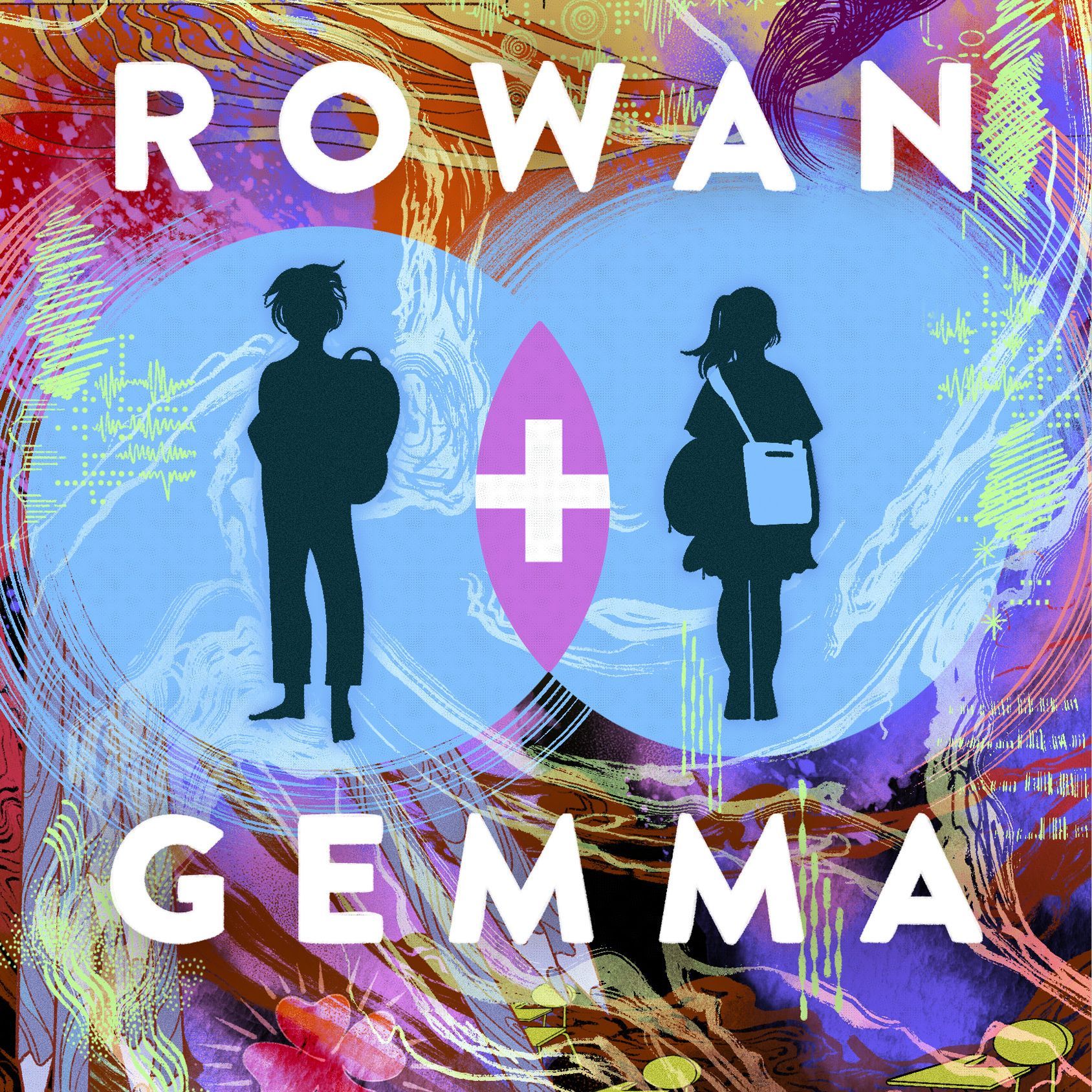
https://sallyjpla.com/ https://www.anovelmind.com/ In this episode of The Book Faire Podcast, host Anthony sits down with award-winning children’s author Sally J. Pla (The Someday Birds, The Fire, the Water, and Maudie McGinn) to discuss her middle-grade novel, Rowan and Gemma. Diagnosed with autism later in life, Sally shares her mission to populate children's literature with naturally neurodivergent characters—addressing the reality that only around 3% of youth books feature disability representation. Sally breaks down the inspiration behind Rowan and Gemma, a clean, cerebral romance with playful nods to Romeo and Juliet. She introduces Rowan, a small-town teen with a stutter who is constantly underestimated as a "slow learner," and Gemma, a sharp, poetic, non-speaking autistic newcomer who communicates using an Augmentative and Alternative Communication (AAC) tablet and a letterboard tattooed on her mother’s arm. Sally discusses working with non-speaking autistic sensitivity readers to authentically capture the nuances of AAC communication, voice selection, and the weight of words amid a bitter local political feud. The conversation also explores Sally’s editorial process under HarperCollins' Quill Tree imprint and highlights A Novel Mind, the free, searchable database and blog she co-founded with librarians to help educators and parents find quality fiction centered on neurodiversity, disability, and mental health. Teachers, school librarians, and parents will find this episode invaluable for discovering authentic neurodivergent middle-grade fiction, understanding assistive communication (AAC) in the classroom, and utilizing free collection-development resources for young readers. Takeaways Importance of neurodiversity in literature Role of stories in addressing mental health Chapters 00:00 Introduction 03:35 Exploring Rowan and Gemma's Characters 10:04 Writing Gemma: A Non-Speaking Character 14:25 The Writing Process of Rowan and Gemma 18:41 A Novel Mind: Promoting Diverse Stories 22:01 Expanding Inclusivity in Children's Literature 23:19 Final Thoughts and Future Directions
Anthony: Welcome to the Book Fair Podcast. My name is Anthony, and this show is all about children's literature and the freedom to read. This week we have an interview with Sally J. Plaw, author of the young adult novel Rowan and Gemma. Next week, we will have another episode covering new book releases as well as another interview on Friday. Make sure to follow the podcast wherever you are currently listening to stay up to date on the latest news in children's literature. And now let's begin with this week's interview. Hello Sally, how are you doing today? Sally J. Pla: Hey Anthony, I'm doing great. I'm so glad to be with you. Anthony: I'm doing great as well. Thank you so much for being here and being generous with your time. Can you start us off by introducing yourself for the audience and the book that we'll be discussing today? Sally J. Pla: Yeah, absolutely. my name is Sally J. Pla. I am an award-winning children's author that lives here in North County, San Diego. I've just completed my well, my fifth novel for young people will be coming out in October, on October twentieth. And all of my novels, in fact, I pr I am autistic. I have a diagnosis of autism, late diagnose that happened to me only about eleven years ago now. It's really changed my life and it's galvanized in me a mission to write books for children and young people and really for families for everyone. I I like to say I write G rated novels that are meant for everyone but are read primarily by young people. but my mission is to populate fiction with as many naturally neurodivergent characters as I can. I'm also the mom of three neurodivergent sons and we didn't couldn't find books when they were growing up. They're now fully grown, but when they were growing up there weren't books about kids like them in the library. And even today the the C B B C does comes out with their their statistics every year and it's only about three percent, three point something percent of books that represent disability. And Of those you can imagine that neurodivergence, autism, ADHD, anxiety, OCD, these sorts of things is a smaller percentage still. And yet every time I speak to classrooms of kids and I ask how many of you guys know someone with ADHD or autism or something like that, you know, you or a friend or family, whatever, every single hand goes up. So I feel there's really a need for these books and that's kind of my mission to me. Anthony: And let's dig into your upcoming book, which will be out by the time this releases, Rowan and Gemma. The title definitely sparks its inspiration of two main characters being Romeo and Juliet. Can you go into sort of the background of this of this book and its inspiration? Sally J. Pla: Yes. it didn't start out that way. I wanted to write a book about romance that wasn't typical romance. I wanted it to be just clean, almost a cerebral romance between two young people that just bond. They just really fall in love with each other's minds. And I thought that would be kind of a cool way to approach it. R this is just a really sweet, very clean romance between two young people who see right to the heart of each other. And I didn't originally think of Romeo and Juliet, but then I thought, how fun would that be to work in all kinds of little Easter eggs and hints and if you are familiar with Romeo and Juliet, you're going to understand when Rowan bikes over to Gemma's deck and calls up to her that it's the balcony scene, or you're gonna realize, you know, if you maybe you think about his f you know, his best friend's name is Mark Cuccio, and you say that to yourself enough and you realize, wait a minute. Is that Mercuccio? there's all those like silly little things in there that you may find are maybe not so silly. They're just meant to give pleasure and to evoke a similarity, but it's a story that stands all on its own. You don't have to know Romeo and Juliet to completely understand and and enjoy Rowan and Gemma. Anthony: And let's dig into the titular characters, starting with Rowan. Sally J. Pla: Rowan is about to start ninth grade. He lives in a really small town called Friendship Prairie in the northern Midwest. It's a fictional town. I'm just calling it the Northern Midwest, an area where I have lived for much of my life and I love dearly. in this beautiful little town where everybody's very friendly and they know each other. His parents run a local pub, Monahan's pub. He works there as a busboy, he has forever. He's a little bit what his dad calls jokingly slow on the uptake. he's beloved by his family and friends, but they underestimate him greatly. He's yeah, he's just he's a slow learner. He has a stutter. and so people just don't think he's ever gonna amount to much. And as the book starts, he kind of realizes that the reason for the pub is they're thinking that he can probably just work there as a waiter and a bus boy his whole life. And that's all they expect of him. But he expects a little more of himself and he starts to feel a bit dissatisfied. Anthony: And with Rowan, does he have a formal diagnosis or is this someone who simply just struggles? Sally J. Pla: he struggles. I didn't wanna get in too much to, the IEP situation or what the the narrative of what his past diagnoses may have been. So I have kept it pretty general with Rowan. just that he is in at school he is in some like content mastery classes. He's you know, he's in one special classroom for that for a few hours a day. As a lot of kids are. Anthony: Let's talk a little bit about Gemma, the the other half of the title characters. Sally J. Pla: Gemma is smart as a whip, grew up in the city with in a family with a powerhouse attorney of a mother, three triplet brothers who are just like golden boys, good at everything, sports, you know, just incredible like magnetic personalities. but Gemma herself is autistic. She is non-speaking. that means that her she has what's called like an apraxia. she's non speaking because her brain to vocal cords connection just doesn't quite work, which is the case with many non-speaking autistic people, many of which are my friends and and inspired me to want to create a character like like Gemma. So you could see her on the page. it's been kind of interesting these days, with the ad advances in tech that a what's called AAC. Or I always get this wrong. It's augmentative and assistive technology or augmentative and assistive communication. I might have gotten the acronym wrong, but you understand what it is is AAC. It's she carries around an iPad that helps her. She can do text to speech. She can choose the voice that she wants to use when she does speak. It takes her longer to type out certain things. She has pre-recorded messages, of course. That she does use. She uses a letterboard sometimes if her mom is around. Her mom actually is such a supporter and is really helpful to her. And her mom had a a letterboard, just the alphabet, tattooed onto her arm so that Gemma would never be without communication method wherever she went. And she's been supported her low her whole life, so she feels good about it. And the city, it's been no problem. But now she's moving to this tiny town called Friendship Prairie. She has no idea what it is. It's not gonna be like the big city with all of its supports and people of all different kinds. And she's really worried she's gonna be the only kid starting school for the first time. She's always been homeschooled in a school where maybe she's the only kid using assistive tech. And what are people gonna make out of her? What what are they gonna think about her? So she's kind of freaking out. Anthony: And I wanted to ask about her mother's letterboard tattoo because it is something that is it's a very sweet gesture and it's a very practical tattoo because Gemma was able to use it to communicate before she was able to carry her own or had the AAC tablet. Is that inspired by someone in your real life or was that something that you kind of crafted for the story? Sally J. Pla: I crafted it for the story. It's n yeah, I just was thinking how could I show Gemma's mom's commitment to helping her daughter communicate, show, what kind of mom she was or how far she would go to make sure her daughter was able to have all the tools at her disposal that she might need to communicate and that just seemed like a really lovely gesture to do that her mom would do. Anthony: And starting freshman year of high school, having been homeschooled her entire life, Gemma is incredibly anxious. And as a person who is as as a as a person who does not require assistive technology, sometimes people who see someone using assistive devices will make assumptions about that person. And we see Gemma through her narration kind of intaking those assumptions and how she responds to them. Can you speak a little bit about what it's like writing this character and what it truly is le if what it truly is like for the people that live this reality that are non speaking? Sally J. Pla: I learned so much from writing Gemma. I wanted to write her because when I was a kid, I was selectively mute, which is a different thing. I can speak. I don't have a praxia. I have the ability in my vocal cords, but I was so anxious and so sensory overloaded as a kid. I would and even through adol all through adolescence, I'd go for patches of time where I just wouldn't speak. And so I've always been really interested and compassionate about that and wanting to learn more. And I started to write the character of Gemma. I realized I needed help. So I found three wonderful non-speaking autistic friends that were able to read the manuscript for me and give me just the most eye-opening feedback about what that is really like. And I wanted it really mattered a lot to me to try to portray that naturally on the page. This isn't a story about Gemma and her her problem speaking or challenges or whatever, but you learn about it along the way as the story progresses in other ways. And interesting things like you get interrupted all the time because it takes you so long to type out the one thing that the conversation moves on to something else. Or what Gemma finds is that she likes to change the voice that she selects on her device a lot. And her mom keeps saying to her, my granddaughter is banging on the door. Say, hi. but Gemma learns also that her mother doesn't like it when she what people don't like it when she changes the voice because they're like, just choose something that sounds like you. And she's but Gemma just asks, Well, what does sound like me? What sounds like me? I don't know. I change a lot. I change my tone of voice depending on who I'm talking to, how I feel, what the situation is. Wouldn't you? Speaking people do that too. Speaking people will also change their tone of voice depending who they're talking to. it just brought up a lot of interesting things I've never really had thought about before in terms of how we communicate and how we speak. And Gemma may not be able to say the words out loud, but she's this incredible poet too. She has this incredible way with words and she starts writing little poems to row in and Stuff like that. So we see all it it gets at the different ways we communicate. And a lot of the story is about that. And not even Rowan and Gemma's different ways they communicate. Rowan with his stutter and Gemma with her AAC. We see how communications in the town itself, the town of Friendship Prairie, break down completely over the course of the story as their Rowan and Gemma's mothers launch this horribly bitter, terrible. mudslinging political campaign against each other. And Rowan and Gemar are meant to are start to ask, you know, what are the meaning of words? How much do we value our words? What damage can words do? And how can they twist and confuse us? And of all people, if you struggle with words, you know the value of them, of how hard it is to get them right. And maybe this is a writer thing too, how important it is to get our words right. And when we get our words wrong, the damage that can be done. So those are some of the questions I wanted to explore. Anthony: Really quickly, just an aside, the people who read the manuscript and gave you assistance with writing a non speaking character, would you consider those beta readers or sensitivity readers? What what what is the term that you would prefer? Yeah. Sally J. Pla: sensitivity read well well both basically bec but sensitivity readers because they really were specifically trying to make sure I was accurate, and respectful and accurate as possible in my portrayal of Jamma. Anthony: And so, Sally, something you brought up there was the importance to get words right. And one thing that I like to look at, because there's a lot of young as aspiring writers out there who don't really have the insight for what it's like to be a writer. There's not exactly a career day where an author can come to the school, other than author visits, which are published authors and not necessarily people who are still working to be published. When it comes to The use of sensitivity readers, the editorial changes, finding the places to put in Romeo and Juliet references. Can you talk about what the writing process for Rowan and Gemma has been, how long it took to write, and the changes that it went through as you started to find these moments to put in? Sally J. Pla: Yes, I think Rowan and Gemma evolved more dramatically and radically. It changed more radically than many of my other novels. But basically I mean, write I have since my first book. Rowan and Gemma's my fifth n middle grade novel, and I've written always with the team at HarperCollins. I write under the quiltry imprint, which helps to raise up voices that are not as often raised up. I I love them. They're wonderful. the process is I'll, you know, write a first draft. My editor will take her time, look through it, and give me a long editorial letter of feedback. I'll go through that letter and I'll I'll make all of the changes that I see fit and, you know, really rework it over. That's really where the rubber hits the road kind of is that second draft. I just will work so hard on that and I'll r just dive in. I d I eat, drink, sleep, drink just everything that second draft to really finally mold this thing into a form where I can call it a book. and then it goes back to my editor and you know, we may do a second round and suggest some other things. Late at night she may pop me a few texts saying, Hey, I was just thinking about this, and I'm like, that's such a good idea. Or no, I have to explain this to you because clearly I haven't written that clearly enough. I need to go back and fix. We do all these little tweaks, then it hits line edits and it hits copy edits and it hits then we start talking about what the cover might look like and what the interior design of the book might look like. All in all, it will take at least, it'll take about nine months for me to come up with a first draft and then at least a year between when I send the first draft to my editor to when the book comes out. To this long process. Anthony: And over the over the years that you've spent as a writer, with this being your fifth middle grade book, have you found that the editorial process gets easier? Have you learned to adapt to it? And when you were first being published, did you did were you were you apprehensive approaching editorial notes? Sally J. Pla: I think I was very eager for my editorial notes and maybe a little too eager to just make every single change because I'm a people pleaser. And I think over time I've developed more of confidence, I think a little bit, and knowing, you know, if if questions are raised, maybe I don't have to immediately change it to what somebody else thinks it should be, but maybe I can talk to them and find out what specifically what was the problem point. And maybe the answer isn't what they think, but the answer is something else. But they have helped me find a problem point. But it's it's a matter of I think gaining confidence over the drafts. It has gotten a bit easier, the whole editorial process, just because of knowing what to expect as well. I think as an autistic person, that is really big for me. I always love knowing what to expect in advance. I research things a lot in advance, from going to a new grocery store or restaurant, I will research it. I will Google map things step by step so I know how to get places. it's always my way. So now I think I in terms of my writing process I know more what to expect. Anthony: And now, Sally, going back to something that we talked about very briefly at the beginning of the interview, you said that in publishing today, roughly 3% of books represent characters with disability. And that's something that has changed greatly in the last couple of decades. And it's really amazing to see the publishing industry as a whole become more inclusive, especially working in middle-grade books like yourself, interviewing middle-grade authors like I do. seeing all of the wonderful representation that is out there for people with disabilities or just different kinds of experiences. And I think that this is a great opportunity to talk about a novelmind.com. Can you talk about this resource that you've built? Sally J. Pla: Thank you so much. And yes, you're right. It's gotten so much better. It's just really so encouraging and so amazing. A novel mind.com came came to fruition when I was talking with a friend, Miriam Saunders, about ten years ago, probably now. A long time ago. We were both frustrated at the lack of that the there there were becoming starting to be more and more really good books with really cool representation. Of kids with ADHD or autism or or issues that were not pathologizing or so negative. They were good new representation. But nobody seemed to know about them enough. And we wanted to create this database so we could lift that up a little bit. So we started an air table like a spreadsheet and we just started creating them. And we got enough of a really good list and it's searchable if you're looking for a book on eating disorders for a 10-year-old or 13-year-old, or you're looking for a book on ADHD for a five year old, you can enter in parameters and find, a list of books that might be of interest to to to you on that for your kid to read. It's all fiction. It's all stories. Stories being a way in to talking to kids in a non-threatening way. It's so much easier to instead of just saying, you know, about your problems or your feelings, such a gentler way in to say, let's take a look at this character. What is he dealing with? Wow, what do you think about that? And that's the power of stories for especially for kids and dealing with the mental health issues that kids are dealing with today and all of the different challenges that we deal with. I just wanted to raise up all the books. So that's what a novelmind.com does. I have two librarians helping me now. they w they are professors of librarianship actually, and their students are on the team as well, helping to. vamp up and maintain the database that I mentioned. We also have a weekly or it's something a little bit peripatetic these days, blog, but we have guest authors come and write about from the most prominent guest authors in Children's Slit and they come and write guest blogs for us about their own struggles personally and the books that are coming out. And we have pages of resource pages for educators and librarians with just enormous amount of information. so it's it can be really helpful. Just a free resource, just a g just a labor of love. Anthony: And you said that you when it had started off ten years ago, you were mostly dealing with the frustration of a lack of representation, specifically for characters with ADHD and autism. When a novel mind started to grow and you started getting submissions of suggestions from other people, were there were there any topics that you were surprised that you were blind to that you've kind of welcomed into the space and are now championing not necessarily specific titles, but more so Topics of different types of inclusiv inclusivity. Inclusiv Yeah. Inclusiveness. Sally J. Pla: Yeah. actually, yeah, 'cause we did start just with autism and ADHD. We now have like one of our recent guests posts was this wonderful book. now I'm gonna get the name wrong, in color. It's a book by Diane Dubrovner and Stacey Servenka, who is blind. they wrote it together. It's just this lovely book. so blindness, deafness, you know, Lynn differences. cerebral palsy, just all kinds of disability. we've just been able to welcome that in and increase our parameters, mental health issues, seeing after during COVID how mental health issues in kids were just skyrocketing. And we wanted to talk about that. So we have just widened the parameters of what we're embracing. And we're open all the time to whatever we've been missing or what what we would what we need to draw more attention to. If you have any ideas for her stories, just check out a novel mine. There's a link there. You can email us anytime. Anthony: And as we're reaching the end of our interview, I have one final question that I ask all guests on the podcast. It's a little more open ended, so also take this as your time to say your final thoughts. And that question is, Sally, how do you see yourself and the work that you do as a writer? Sally J. Pla: I think it's changing a little bit more now. I've always said that my mission has been to populate children's literature with as many naturally neurodivergent characters. I've been saying that for ten years. I think now we're starting to do a good job of it. And I'm starting to ask myself, how is my how is my mission changing? What am I going to be writing in the future? And how is that going to be helpful to kids and families? Because I'm all about kids and families. Maybe there'll be some changes. We'll see. Anthony: Thank you. That was an interview with Sally J Pla. Her latest book, Rowan and Gemma, is available now. You can learn more about Sally and her work at Sally J Plaw dot com. If you appreciate the work being done on this show, there are a number of ways to show your support. First, you can like, comment, or follow wherever you are currently listening to help push the show out to new listeners. Second, you can follow us on Instagram, TikTok, and Bluesky at BookFair Pod. Lastly, you can follow the show on Patreon at patreon.com slash the Bookfair. Following is free and there are no posts hidden behind a paywall. Of course, the best way to help the Book Fair podcast grow is simply to share it with a friend, an educator, or a young reader in your life. Thank you so very much for listening, and as always, I'll talk at you next time.