
The Book Faire | Middle Grade and Children’s Literature for Librarians, Educators and Young Readers · The Book Faire | Children's and YA Literature
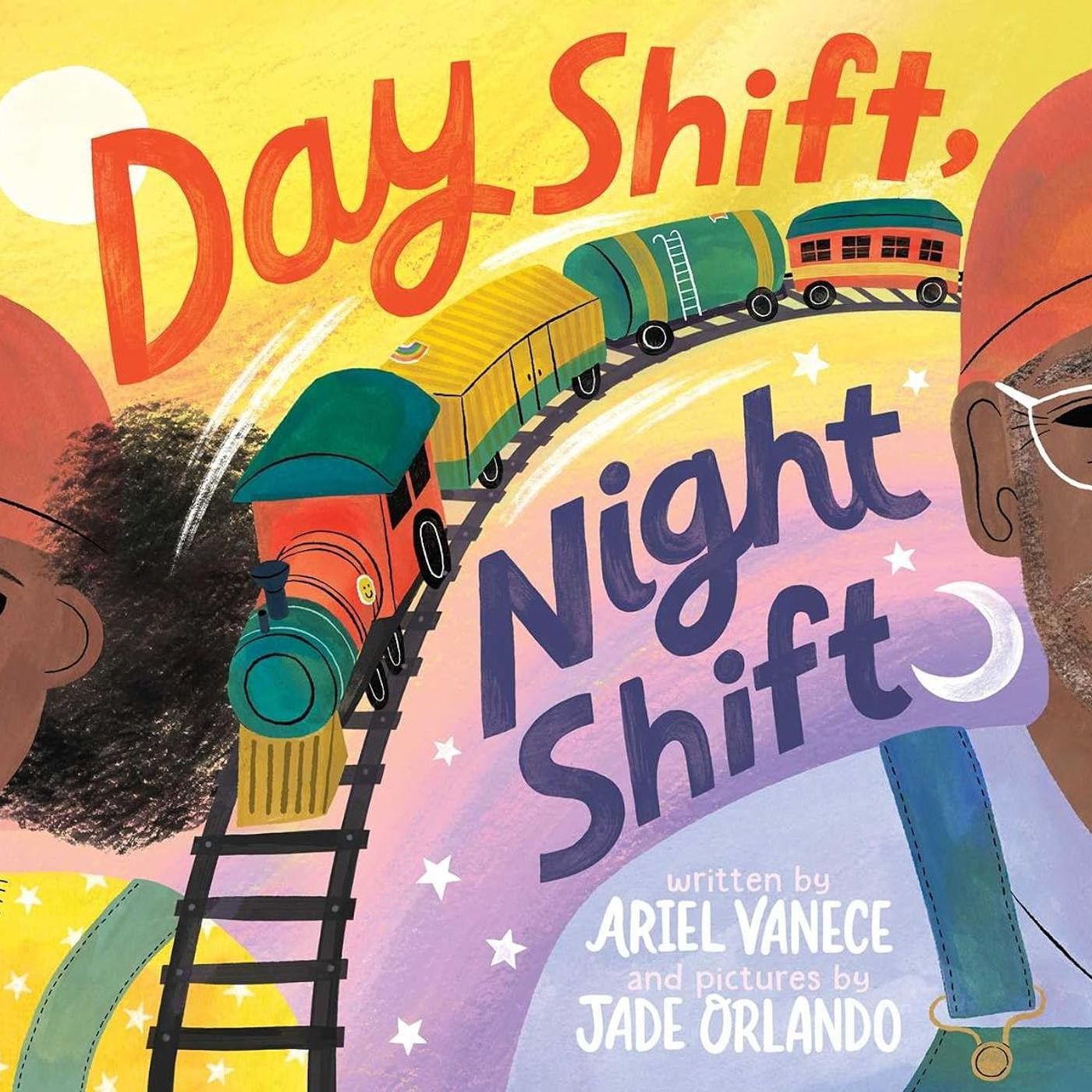
In this episode of The Book Faire Podcast, host Anthony sits down with author Ariel Vanece to discuss her picture book, Day Shift, Night Shift (illustrated by Jade Orlando). Ariel shares the personal inspiration behind the story—drawing from her own childhood village of grandparents to celebrate non-traditional family structures, intergenerational love, and the special bond between a young girl and her train-mechanic grandfather. Ariel discusses the story's main character, Atticus, who mirrors her Pop Pop’s night-shift routine by tackling her own daytime "shifts" fixing a toy train set. She breaks down the writing craft behind creating realistic stakes for young readersand explains how she navigated a 600+ word manuscript format. The conversation also explores the collaborative process between author and illustrator. Ariel details her work with Jade Orlando, sharing how unscripted visual details—like a matching handmade "Pop Pop" keychain—brought deeply personal childhood memories to life on the page. Furthermore, Ariel opens up about her commitment to intersectional representation, body positivity, and authentic Black family portrayals in children's literature. Teachers, school librarians, and parents will find this episode invaluable for exploring picture book craft, intergenerational family representation, and inclusive social-emotional learning (SEL) resources for young readers. Takeaways Importance of diverse representation Creative collaboration in children's books Chapters 00:00 Exploring Family Dynamics 05:04 The Creative Process of Writing 07:00 Collaboration with Illustrators 16:56 Representation in Children's Literature 20:15 Ariel's Vision as a Writer
Anthony: Welcome to the Bookfair Podcast. My name is Anthony, and this show is all about children's literature and the freedom to read. This week we have an interview with Ariel Venice, author of Day Shift, Night Shift. Next week, we'll have another episode covering new book releases as well as another interview next Friday. Make sure to follow the podcast wherever you are currently listening to stay up to date on the latest news in book bands and children's literature. Now let's begin with this week's interview. Hello Ariel, how are you doing today? Ariel Vanece: Good, how are you? Anthony: I'm doing very well. Thank you so much for being here today. Can you start off by introducing yourself for the audience and the book that we'll be discussing today? Ariel Vanece: Sure, for sure. My name is Ariel Venez. I am from Sacramento, California, but currently live in Boston, Massachusetts. And the book we're talking about today is called Dayship Nightship, written by me, Ariel Venez, and illustrated by Jay Orlando, coming out of Demene Milner Books with Simon and Schuster. and the book is about a young girl who every morning meets her grandpa at the door at six AM, when he is finishing his day his night shift and coming to, you know. wind down his day, she's just starting up hers. He's a train mechanic, the local railroad, and she too is a train mechanic in her own right. And so while all day he sleeps, she works, and all night when she sleeps, he works. and it's a really great conversation about critical thinking, but also problem solving. And she goes through a little bit of bumps in the road when it comes to how her train is moving during that day shift. Anthony: And the first thing that sticks out to me, Ariel, is you said that she wakes up early in the morning to greet her grandpa at the door. And the first thing to to kind of jump into there is sort of talking about how this represents different family structures. Can you talk a little bit about our main character, Atticus, and her relationship with Pop Pop? Ariel Vanece: Yeah, for sure. So Atticus is a young girl who lived with her grandparents, pop pop, and then of course her grandmother. and you know, it it it kind of reminisces the conversations like how different family structures and non-traditional families of guardianship, it just kind of sheds space and light for those stories to exist without specifically it being only about them. I was raised by a single mom and my entire big village was just a bunch of grandparents and great grandparents. And so it's reminiscent on my village and experiences that I would have with my village as well as with my mom. Anthony: And you mentioned that Atticus is a trained mechanic in her own right. Can you go into what she is doing during during the day while Pop Pop sleeps? Ariel Vanece: Of course, yeah. So basically, once they do their exchange in the morning and Atticus puts on her grandpa's train mechanic hard hat, she is sitting at the table working on her own toy train. that is specifically like setting up the different tracks that she has, making sure everything's running, putting the pieces together to try and get it to go through its full cycle for that day. and so all day it's it's it's Atticus and her many struggles and and and and I think climbs of trying to figure out how to make sure that her train is going where it needs to go, but also is making it over any hurdles that are currently in its path. Anthony: And can you talk a little bit just about this idea of how Atticus emulating the adults in her life through playing with the toy train? Ariel Vanece: Yeah, for sure. I think it's the specific thing that Atticus and Pop Pop share is just their love of trains, right? Atticus got that wonder and interest in exploring at in exploring trains from knowing about and seeing her grandpa go to work every single day. And so it provided her with a little bit of like excitement, but also it intrigue and how she herself can take on that role of train mechanic too, right? And maybe in the future she too be a train mechanic full time and get paid for it. but for now she is doing it, no paychecks are coming for her. But she, does the same kind of ways that her grandpa gets ready for work. So, you know, when he comes in, he takes off his hat, she puts his on, right? He they unpack his lunch cooler and she makes her own little plate of snacks. and they get things kind of together and emulate his day-to-day things that would happen in the evening time, but like really for her to start her own day. And it's a way for her to like. mirror obviously the people that surround her, but also it's a way for her to express herself in in in how she sees and how she wants to structure her day. even if it is like a mirrored or opposite version of her grandpa. Anthony: You mentioned that she has her own little problems that she has to work on the trains. Can you talk about, maybe a little more so on the writing side, what it was like tackling a conflict for a picture book with a character like Atticus? Ariel Vanece: Yeah, I think for the writing side, it was a little bit of a struggle at first. when I was trying to figure out what's the problem here, I was like, Okay, well, now there has to be some sort of conflict. There has to be an issue that either she works out on her own or works in tandem with her grandpa at in that like small pocket of time that they have together before she goes to sleep and he goes to work. And so, you know, thinking about the different ways in which, like, I don't know, like the the the trials of of what comes with being a kid and trying to work on a specific toy and and making it seem as if it's just as real as if it was a real train. I did try a few different versions, but mostly it was always building up the anticipation of like what's something that would constantly go wrong when it comes to like toy train sets, right? And that's like something like an obstacle or a hill or, something being in the way and the train doesn't make it all the way around. And so how do you then create sort of the the overall like stakes of that, right? Which is that, okay, she only has a specific amount of time before her grandpa wakes up to go to work. She's supposed to make sure all her work is done in her eight hours. And so like there's a ticking time clock that you're not necessarily seeing, but you're feeling with her. And the frustration that Jade is able to like paint on the pic in the pictures is you're feeling those students. There's a picture where one of the dogs, the dogs that she has is like running away with a train, a track, and she's like running after it. There's another where it's just like her full face of frustration and she just doesn't know how to do it. And those are kind of things that I wanted to show within the writing, but that really shine through, I think, within the the images themselves. and so from the writing standpoint it was very much like What are some stakes that are so detrimental and crazy for a child that make it just as real as your own everyday like day at work? Anthony: And Ariel, you mentioned the illustrations by Jade Orlando. Can you talk a little bit about the collaboration process? Specifically, I was gonna ask about the character that you mentioned, which was the dog that doesn't even get mentioned in the text. Can you talk a little bit about how much input, what kind of the back and forth was? were there any ideas shared between you? Were there any was there anything that Jade brought forward that you didn't even think of putting in the text initially? Ariel Vanece: so I think that's the that's the really cool thing about picture books is that this is actually the second book that I'm doing with Jade Orlando. So my first debuted picture book, she illustrated that one, and which we had, I think, more moments of like sharing feedback in in that time where I would send it to my editor and then of course editor to art director, art director to Jade. and then now when it came to this book, I think because we had had that experience. previously and we had already talked about some of the things that I am very vocal about, which is body representation and positivity, and making sure there are diverse bodies, especially looking at like ability and making sure there's space for that. But also just like, you know, me being a black American, Jade also being black, it was like very important that you see that like the the d diverse kind of shades and and and spectrum of blackness within an everyday like black American family. And so those kinds of things I think helped already was just having that extra than before where we already had these conversations. and so there wasn't really any back and forth. And I didn't actually see the final illustrations until the the galley was done. and I saw nothing, which was a completely different experience than my first book. and so I was just like sitting there not patiently but patiently waiting to know what was gonna come out and like what Jade was going to come up with. And a really cool story that I even like I sent a video message actually to Jade after I got the galley because I told her she was witch, right? Seeing as I had no I had no actual like give when it came to the illustrations other than saying like this is a black American family and like Papa is big pop is big, right? He's just like he's he's he takes over some space. and that was something that I found to be important. I didn't actually share except for a few photos of my grandpa in his little railroad mechanic outfits that I that we had had for my grandmother. and other than that I was like, go wild. Like, you know, it whatever's gonna happen will happen. in the book, and it was I during my second read is when I found it, is that you can see on grandpa's like Papa's keys when he puts his keys in, it's a little keychain that says pop pop that obviously was made by atticus that has little like you know like friendship bracelet character things and then also later on in the book you see her standing with her hands on her hips and she has a little bracelet too that says Atticus on it that obviously she made and so they're like a matching set. So when my when I was a kid and my grandpa who actually I use one of them that I used to inspire this story, I had made him a little friendship keychain with his name on it and some little cute pieces and he had had it in his bedroom hanging on his little wall my entire childhood since I had made it and so when he had died and I'd gotten that keychain back, it was so bizarre to me that this is a story I had never shared with anybody other than my own family members. And then I look in this book that is loosely inspired by my relationship with the specific grandpa. And there's the piece of my history that I had not even Old the illustrator that she and herself inserted and was able to create, which I thought was really, really cool. And I think that's the really cool thing about illustrators, especially, is that they are able to bring so much nuanced character and like overall life into a picture book that I don't even sometimes put into the words. And I think that that's something that's so special about the marriage between an illustrator and an author is that I'm not gonna say everything because I still need her to be able to shine and share and express the story in the way that she sees it. And you see that within the animals that I don't mention, but there's always I feel like there's always an animal inside of Jade's illustration. She loves cats. and so there was a cat and a dog in this one. There's, you know, the little details in the house and there's little details in those things. And I think that that's that's the fun and interesting part is to see what an illustrator can create from your words and like also the little moments of connection that you never know will exist, but that find their way in there without even saying it. Anthony: Now, Ariel, one thing that you did say is that this is your second picture book with Jade. And in this one, there was so little communication between the two of you, and you didn't see any of it until the actual galley was done. And can you talk a little bit about previous work you've done, maybe upcoming work you've done, and how the collaboration process may have been different, and maybe what the editorial process was like. And if that's kind of been an impact, you know, did you notice that there were any notes that you were given, any kind of feedback from maybe not just illustrators, but from publishers, editors, what sort of like the kind of like the the inside part, the inside of the inside job part of it is like. Ariel Vanece: Yeah. I think that for searching for Mr. Johnson's song, which is my first book, there was I think one note that I made about when I saw the sketches. Obviously all the sketches are in black and white, and so we don't necessarily know what the final edit will look like, but you're you're basically inferring. and I think I saw a specific illustration where the the daycare lady, Miss Anya, was standing in front of her thick hair and Teus, the main character, was standing across from her. And it I couldn't quite tell because again it's in black and white, but her hair was straight and her features kind of mirrored like I wasn't sure if like what it was going to look like or who it was, but I had made specific notes just saying like, just like as a note, like all of my characters are black. and so like Miss Anya specifically, though her name is you know sounds Eastern European, she is like Afro Latina, right, for example. and that was a note that was then taken and shared with my from my editor to Jade in the art direction. And when the next set of sketches came and they were still in black and white, now her hair was curlier and had more volume. She was more curvier and I specifically talked about body diversity in also in that note. but a different way is like my third book, which comes out in February of next year, which is called Museum Day with Grandpa. There is a specific Page that the grandpa is on a really cool little device that I won't spoil. but the note that I got from my editor was this is the illustration that Tatiana Gardell has put. And it's a really great illustration, but the words themselves do not match. It kind of looks like he's like fly. And obviously we can't say that he's flying because then that confuses children and all these other things. So should we have Tatiana put the this device on the ground, or is there a way that we can change the words to kind of mirror this so that it's like like he's doing this? And I said, the picture is gorgeous. I refuse to make her change anything. and so I changed the words on that page where I think it said Papa s Papa sores. I changed it to say like Papa like goes so fast it's like he's flying. That way there is that imagination piece of His wheels are on the ground because it's like he's flying and it looks really cool and it still plays into that imagination, but it allows for art to be able to stand on its own and be a part of the tech. Anthony: And so, Ariel, with that specific story, I know a lot of times picture books are very restrictive with the word count. And so a lot of times authors will talk about the struggles that they have with condensing ideas to fitting within the format. When it came to finding something that needed to change, were you were you having difficulties with With adapting to that illustration, or was it something that came easily because of how good the illustration was? Ariel Vanece: Mm, I think it came easier because of how good the illustration was. I was so in awe of the the work on the page that I was like, I would make these the words themselves were what sparked her illustration. And now that we have the illustration and it's gorgeous and it's so cool and like integrated, like I want to make sure that I'm able to now support this illustration because it's the same story. We're just telling it in two different ways. And so like I that was why it was easier for me to play around and try and figure out like Yeah, I can say like he's flying. And that specific book is it was less words than a traditional five hundred picture book manuscript. So it was a little bit easier to be able to add just a few words. Day Shift, night shift is a little bit longer. and so when we had submitted it, I was I was quite nervous because it was it's it was like six hundred and fifteen and it's supposed to be like five hundred. It was a little nerve wracking because I was like, nobody's gonna buy this too, it's too long. and also like there's that restriction of if it's if it's this many words and it has to be longer than a thirty, you know, than a forty two place picture book. And so there's that restriction of like, will the the editor want to cut something? And in a way, we weren't necessarily needing to cut things, but rather play around with the what's it called? The the book design and putting the words in different spots on pages to make sure that it still fit into that like traditional picture book format. But that my six hundred and fifty words was still fine, which was very scary and I don't recommend doing that because it was a gamble, but it worked out in this one time. Anthony: And one thing I want to circle back to, Ariel, is we've talked a bit about representation, of course, different family structures, body diversity. And you said yourself that all of your characters are black. Can you talk about the importance of representation when it comes to writing books for young readers, especially picture books, and how important it is specifically to you, but also for the readers themselves? Ariel Vanece: Mm-hmm. I'm a fat, black, neurodivergent, like human. I am queer. I am like gender queer. I am, you know, on the LGBTQ plus sexual, like I am all blue different intersectionalities and different identities. I hold so many that it's so important to me that the stories that I'm creating and engaging with and even like platforming in some way, continue to leave space for the communities that I occupy. And so when I say things like, body diversity is really important to me and please, there was a a a line I said once which was really like I was trying to figure out the most professional way to say make this person fatter. but like in nice speak, because I'm speaking to professionals, and I was just like, can we put some like meat on his bones? Was like the the best way that I could think about it because it was like, okay, this is like I'll this is this is like I'm being funny, but also I'm being serious. And it's not me just saying, please make him fatter. and I also just like found that when I as a kid was like reading these different things and looking at different books, I didn't always I didn't read picture books as much as a kid and like I found a love for picture books in my adulthood that like will transcend like time itself and I am a huge collector of picture books and I love the way that children and also adults and like even high schoolers can see themselves within these pages and be able to immerse themselves in a story in like two different ways of both the words and the pictures and be able to understand and recognize that they are allowed to just like exist within these different spaces. And my stories sometimes are a bit quieter. My stories sometimes are a bit chaotic. They're a little loud. And sometimes they take on really important and like crazy topics such as multiple sclerosis or dementia and Alzheimer's or, you know, mental health. And so those things are a part of everyday life and they should be able to exist within the quietness of the everyday world. And I want that to be reflected within my work, but also to make sure that the the things that surround the quietness of the story reflect the everyday world, which includes bodies, disability, or just like any sort of representation, because I wasn't always able to see myself within the things that I was consuming. And I think it's so important, especially now, to be able to provide a space and a platform for others to be able to see themselves in the work that I'm produ creating and producing or co creating in any way. Anthony: And I I know that we covered quite a bit of your own personal philosophy. And I'm excited for this final question because it's the same question I ask every guest. It's more introspective, open ended. And please, Ariel, use this to also give your final words if you'd like. And that question is, Ariel, how do you see yourself and the work that you do as a writer? Ariel Vanece: see myself as one brick in the really large Lego piece. Right. I am just one to two of those like mini size bricks that are just adding to this bigger, beautiful picture or beautiful creation that is children's literature. I am nobody, but I'm also everybody, right? And that is hopefully what I'm able to give within my time as a storyteller for however long I'm able to tell and as many stories as I'm able to tell. I hope to be able to continue to just provide those small moments that resonate with someone. It doesn't have to be everyone. I'm not trying to reach everyone because not everybody needs the stories. Only some people do. And that's okay. and I I'm not here to tell everybody's story. I'm here to tell the stories that I need to tell, that I think deserve to be told, and that I think people will be able to grab onto in any sort of way. I there's a specific When I went to college, my grandpa, my great grandpa specifically, gave me a little red notebook. and inside was a bunch of two dollar bills and like dollar coins that were like taped to the back as an investment in my future, as well as a bunch of like large, like just a bunch of people and quotes that specifically meant something to him that he got from someone in his life at some point. and my favorite line was the one that started the whole thing, which is we want you to know as you venture out, you represent us and all the families that you're attached to. And so that to me has been the fuel, it's been the seed, it's been whatever it needs to be. And I hold on to that book and I hold on to that quote in every aspect of how I present and come into the space and into creating stories because I am just one piece of a huge community and a huge neighborhood that I hope to just be able to bridge any sort of space, time, access, whatever's needed in the moment. and to be able to just give that back in some way as it was given to me. Anthony: Thank you. That was an interview with Ariel Venice. Her newest book, Day Shift Night Shift, is out now. You can learn more about Ariel and their work at Ariel Venice dot com. If you appreciate the work being done on this show, there are a number of ways to show your support. First, you can like, comment, or follow wherever you are currently listening to help push the show out to new listeners. Second, you can follow us on Instagram, TikTok, and Blue Sky at BookFairPod. Lastly, you can follow the show on Patreon at patreon.com slash the BookFair. Following is free and there are no posts hidden behind a paywall. Of course, the best way to help the Book Fair podcast grow is simply to share it with a friend, an educator, or a young reader in your life. Thank you so very much for listening, and as always, I'll talk at you next time.