
The Book Faire | Middle Grade and Children’s Literature for Librarians, Educators and Young Readers · The Book Faire | Children's and YA Literature
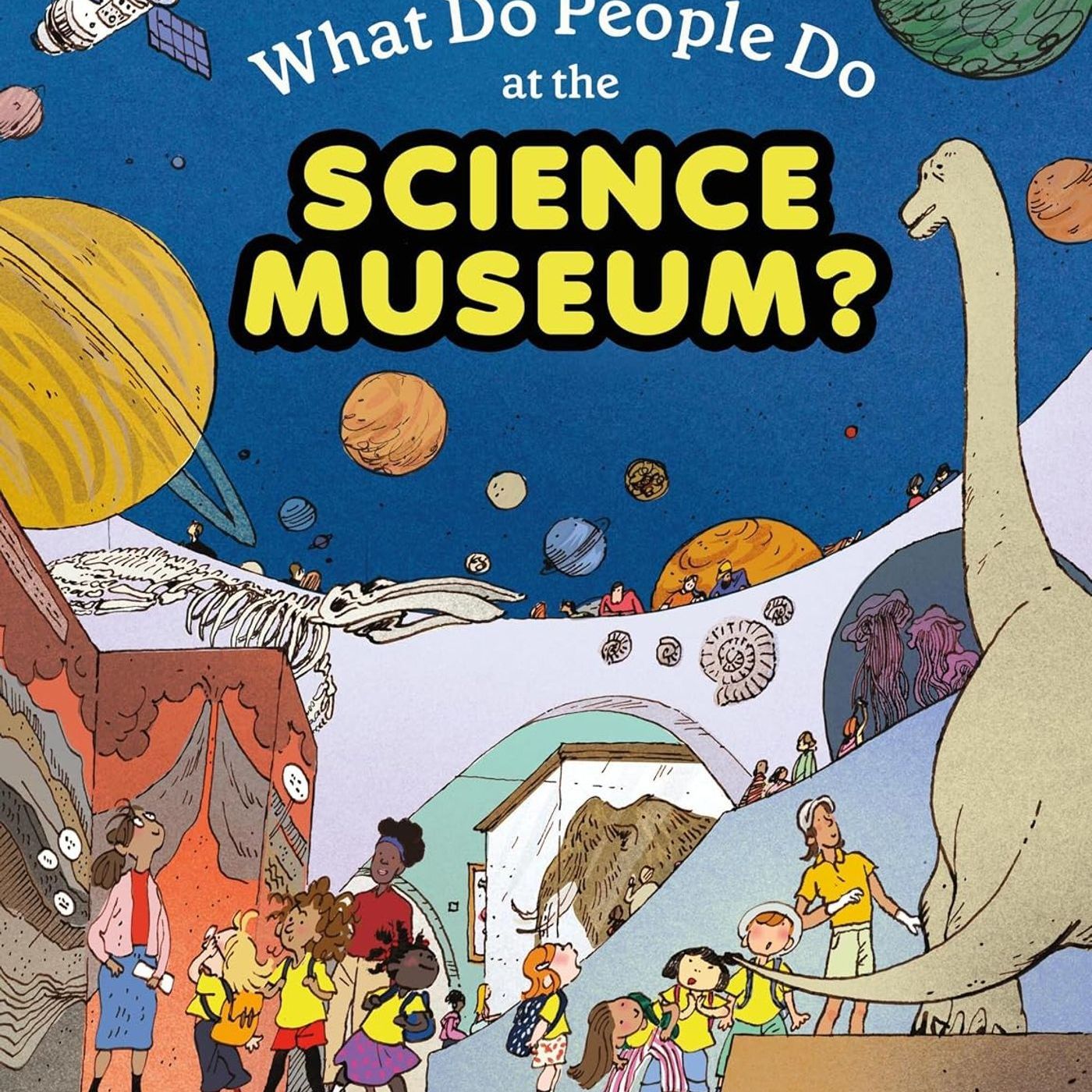
https://prettyokmaggie.com/ In this episode of The Book Faire Podcast, host Anthony sits down with Maggie Tokuda-Hall—children’s and YA author and co-founder of Authors Against Book Bans—to explore her new non-fiction picture book, What Do People Do at the Science Museum? (illustrated by Chin Leng). Maggie shares the fascinating nine-year journey from an initial California Academy of Sciences tour to the book's long-awaited release, explaining how the text serves as a behind-the-scenes celebration of the scientists, taxidermists, and science communicators who make STEM accessible to young readers. Maggie details her social research process interviewing marine biologists and planetarium experts, while breaking down a deliberate vocabulary update made during production: transitioning from "citizen scientist" to "community scientist" to ensure public participation in science remains un-gatekept and welcoming to all. Shifting into literary defense, Maggie offers a sharp, urgent analysis of modern censorship tactics. She breaks down why book challenges target public institutions and marginalized voices, why public libraries remain essential centers for voluntary inquiry, and how four proposed federal book banning bills threaten millions of dollars in state public school funding. Teachers, school librarians, and literacy advocates will gain valuable insights into science communication in the classroom, curriculum-aligned non-fiction, and practical ways to support local library staff while defending the freedom to read. Plus, Maggie previews her newly released haiku picture book, Bathtime for Snow Monkeys, and her upcoming companion title, What Do People Do at the Library? Takeaways Importance of community science Impact of book bans Chapters 00:00 Introduction to Children's Literature and Book Bans 05:52 The Research Process Behind the Book 10:58 Community Science and Engagement 16:49 The Role of Libraries and Book Bans 24:00 Final Thoughts on Writing and Impact
Anthony: Welcome to the Bookfair Podcast. My name is Anthony, and this show is all about children's literature and the freedom to read. This week we have an interview with Maggie Tokuda-Hall co-founder of Authors Against Book Bands and author of the newly released titles What Do People Do in a Science Museum, as well as Bath Time for Snow Monkeys. This interview will be focusing on What Do People Do at the Science Museum? Next week, we will have another episode covering new releases. As well as another interview on Friday. Make sure to follow the podcast wherever you are currently listening to stay up to date on the latest news in children's literature. Now let's begin with this week's interview. Hello, Maggie, how are you doing today? Maggie Tokuda-Hall: Donorite, thank you for having me here today. Anthony: Thank you so much for being here, for being generous with your time. Can you start us off just briefly by telling the audience about yourself and the work that we'll be discussing today? Maggie Tokuda-Hall: Yeah, my name is Maggie Takudhall. I'm a children's and young adult book author, and today we're talking about the new book I have coming out with the illustrator Chin Leng, which is What Do People Do at the Science Museum? Anthony: And when it comes to your work as a an author, can you talk a little bit about what do people do at the Science Museum and how that may differ from other work that you do? Maggie Tokuda-Hall: Well, you know, every single book I've written has always been wildly different than every other book I've ever written. and so this book is part of that tradition of having nothing to do with any of my previous books. in this case, I wrote this script for this book in like twenty seventeen. This is the longest I have ever waited from the period of time I wrote a book to when a book came out. but it started as an Instagram post because I had visited the California Academy of Sciences in San Francisco and had taken a behind the scenes tour with a friend who worked there and was remarking on just how many people work inside science museums and how much expertise it requires to make those go. And Melissa Manlove, who is an editor from Chronicle was then an editor from Chronicle Books, reached out and said you should write a book about that. And I was like, Well, yes. That sounds fantastic. And it was just an excuse to talk to a ton of people in science communication and from museums all across the country about things that I like and wanted to put in the book. Anthony: So from 2017 to 2026, that nine-year gap can sound like a lot to some people, but there are people that have definitely had stories of where the process of writing a book and querying a book, even a a picture book, has been surprisingly long. Can you talk a little bit about what that process was like? How long after that initial tour to that initial idea did you how long did it take for you to actually begin? The process of putting words to paper. Maggie Tokuda-Hall: I mean, was almost immediate because I had received an offer from an editor to write a book. So I was like, well, sure. I mean, that doesn't happen every day, especially at that point in my career. I was like a very early my own I only had one book out at that point. So I hupped to right away and had a contract almost right away too. it was just one of those situations where it just kept getting pushed and kept, you know, there were other things going on in Melissa's list. And so it just took a very, very long time for it to to come to fruition. And so I finished working on it probably in 2019, 2018. and then I just didn't hear anything about it for a really long time. until the illustrator started working on it. when Chin Ling pecked picked it up, I was like, and it was like getting Facebook message from someone you went to high school with, like, I remember these words. I remember these things. I just hadn't thought about it in so long. but it is definitely, you know, I I guess I've been very lucky in my career that I've never had something take, like I've never had a book that's been bandied about and not seen publication for years and years and years on end. So this was my first one where it was like, wow, this is sometimes it just takes a long time. Anthony: And even then, when it came to your work as a writer for the years that spent it spent just kind of behind the scenes with being pushed and pushed and pushed, was that something that you were considering when you were writing other work? Maggie Tokuda-Hall: No, I I have to be totally honest. I was kind of like, well, you know, that book will happen when it happens. and I'll just continue doing all the other writing that I'm interested in as that's happening. And so I wasn't ever like, Well, I can't write about this because that's in the science museum, or you know, like I there was nothing like that. But I think that it has probably more to do with the fact that every time I write a book, it's completely different. And so It wasn't taking up space that another book was trying to fill because every book I write has like a very different space in my mind. And so this was you know, very singular in that way. Anthony: And that idea of it'll it'll happen when it happens. I was just talking with somebody earlier today, in fact, about that idea of when you create something, you have to push it out there. It's no longer yours. Did that help with just kind of making it through this struggle of waiting and waiting and waiting for what do people do at the science museum? Maggie Tokuda-Hall: Yeah. No. you know, there's always a part of you like when you write a book, it's really important to you and you're excited about it. And like, you know, I did a ton of research and I was so excited. I'm still so excited to share it with kids, like all the stuff that I learned when I was writing it and all the little details and factoids and fun things that I was able to squeeze in there. so I was like eager for it to come out at any given moment and You know, the books that I wrote in the meantime while I was waiting for that one were like the sequel to a fantasy novel, an entire two entire graphic novels for teenagers about completely different things, picture books about you know, that are complete fiction and have nothing to do with the real world, and a book that's written entirely in haiku. And so I you know, I think part of the fun of being an author, especially for children. Is getting to go wherever your curiosity and passion and most deeply felt feelings take you. And this was a book that was really led by my own curiosity. And I have never been like chill about the things I'm curious about. Like I'm always excited to talk about them and to do all of that. Anthony: What are your thoughts of returning to this book after so long? Have there been editorial passes? Have you been making any any updates since the illustrations were coming along, and especially now with marketing? What's it been like returning to this book? Maggie Tokuda-Hall: It's been such a pleasure. I mean, I love science museums and I love natural sciences and an excuse to look into them. And it has been because my memory is so bad, a fun excuse to relearn a bunch of stuff that I had already learned but feels new because I can't remember anything anymore. and in terms of like changes that have been made because it was such a long time, I think there's only like one notable one, but was really important for all of us who worked on this book to catch, which was when I wrote this book, the term that we used for people who collect data and give it to scientists for research was citizen scientists. And we have changed that to community scientists for obvious reasons now that citizenship is such a like weaponized term and idea. And the whole idea of the people who do this is that anyone in the community can do it and having that be gate kept by an idea of citizenship is not something that has aged well into this p time period. Anthony: That's that's fascinating. That's a phrase that I have not been familiar with. Is that something is that term that term community scientist, previously citizen scientist, that is something that exists within like the museum? Maggie Tokuda-Hall: Yeah. So it's like one of the things that science communicators really encourage children and regular people to participate in. There's all kinds of community science projects that exist around the country. You can do things like help count pigeons or, you know, whatever it is, like, and and give that information to scientists and they use that data. I was really excited to participate in a community science effort. In Oakland, around river otters, because I saw a river otter outside of a coffee shop and I was thrilled. And so I got to report that to them and that was helpful data for them. And I got to give myself a pat on the back and feel excited that somebody else was just as excited as me about this river otter. So there's a lot of different ways to participate. A lot of them have to do with spotting animals and just sharing that information, where and when you saw them, what they were doing, that kind of thing. But it's really helpful for people. Anthony: And when it comes to that role of a community scientist, can you talk a little bit about the research that went into not just the community scientist role, but also, as you said, the different people behind the scenes at a science museum that sort of make it a an experience and something that people within the community, within schools, are able to go to and just be a part of? Maggie Tokuda-Hall: Yeah, I mean, a lot of that was just talking to people from science museums that I really liked. Like, just before having written this book, I'd visited the Denver Natural History Museum for the first time. And they had some of the best taxidermy I'd ever seen. So I asked them questions about that. And they were really, you know, generous with their information and they helped me talk about they connected me to somebody who worked in planetariums as well to talk about managing all of that. I talked to people from the Academy of Science. I talked to people from the American Natural History Museum. I talked to scientists who work in different steel fields of study around animals. it was really just an excuse to chat with, in some cases, just people who I had known from the internet as science communication professionals and asking them who I should talk to and having them connect me or just asking them straight out. And it was just like a really fun way. To be curious, because sometimes for somebody like me, I did a lot of just like going to the library and researching, which was, you know, is a joy. but getting to chat about it is my absolute favorite way to do research because I'm a chatty person and I like that way. And I do find I tend to learn better from being able to directly ask questions than I do sometimes from just reading. Reading, I feel like helps me preface everything. And then if I'm able to follow it up with an interview, it'll actually like hit home and I will fully understand what's going on. And so, in some ways, this is the most social book I've ever gotten to write because usually you're by yourself in a room in your pajamas making stuff up. And in this case, I was alone in a room in my pajamas emailing people questions and taking phone calls. And that was a delight as well. Anthony: When comes to this being a social book, you mentioned working with science communicators. Were there any notable science communicators on social media that you reached out to and collaborated with that that readers may be able to look up and be able to to to learn from themselves? Maggie Tokuda-Hall: Sarah McNulty is a squid biologist and the executive director of Skype a scientist. and she is extremely present on social media. I would say of the people that I talk to, she's probably the most findable on social media. and you can get free class visits from her on her Skype a scientist program. And you can also donate to Skype a scientist if you think that children having access to science communication professionals is important. You can make a donation to Skype the Scientist. and that's a program that Sarah started and she is so smart and so fascinating and walked me through all of the invertebrate marine biology and also distinctions between different types of marine biology that I needed. Anthony: That is an amazing resource, Skype a scientist. I'm definitely going to be checking that out because that is that is so cool. Because I love this book. it just is a celebration of science, na nature, STEM in general. And it's all about engaging young people and fostering an interest in the natural world that I just absolutely love. And I know that you in the note in the a at the end of the book said that you yourself are not a scientist. You do not work in STIM. Yeah. can you talk a little bit about some of the different aspects of the science museum that you were able to research and some of the some of the information you were able to gain. Maybe what specific what specific exhibit was one of your favorites to learn about when writing this book? Maggie Tokuda-Hall: Well, you know, to be honest, I did not actually reference any real exhibits that exist because there are curators and artists and writers who make all of those things. And to me that felt a little bit like plagiarism. and so I didn't actually base like this is not one single inst science institution. No single exhibit they look at is one that's exactly real or based on something. From real life. Instead, I took research that I'm did about just different things that I was curious about and made up exhibits that would include those things, or things that I had known about for a long time because I have been such an dilettante and enthusiast of particularly zoology. It was pretty easy for me to pull on things that I had already done research about and You know, in some cases couldn't fit into another book or just wanted an excuse to talk about like the great white sharks that jump out of the water in South Africa hunting fur seals. Like that has been ready to be put in a book by me since I was in fourth grade and obsessed with great white sharks. You know, like that's when I was doing lots of research and I was doing world travel, like I wanted to go to Cape Town so that I could go see that specifically and like I Have done that research in the last few years of like, where do you go? How do you see this? What is it, what is it like experientially? And I was able to put that into the book because, you know, I don't think I would have been curious about sharks if I hadn't also visited the Steinhardt Aquarium or the Monterey Bay Aquarium. These things for a lot of us, these curiosities, these little passions of interest, especially when you're a kid, often start. in science institutions where it is made accessible for you for the first time and really exciting. Anthony: And Maggie, you talked up earlier about how every book you've written has been so disconnected from the previous. And with this book finally releasing, what are some other books that you are working on? Some things that may be coming out soon that you'd like to share? Maggie Tokuda-Hall: I'm actually working on a sequel, What Do People Do at the Library? right now. So that's really exciting and has given me an excuse to talk to all of my favorite librarians and favorite institutions about what they do. And it is so broad that the hardest part is trying to decide what can actually fit in the book. so that has been wildly fulfilling. It also comes at the end of I took about two years off of writing to get an organization called Authors Against Book Bands up and off the ground. And so for the last two years, my work has been in defense of public libraries. And it is such a wonderful way to kind of conclude that period of time where that's my only job with writing a love letter to them. So I'm having a really great time doing that. And then I also have a book out this fall. in October called Bath Time for Snow Monkeys, which is illustrated by Yaz Imamura, who I've worked with previously on a book called Love in the Library. she is so wildly talented. and it is about the snow monkeys that live in Jigokudani monkey park in Japan and hang out in the hot springs that they have there, which seems like a pretty great way to live. And that book's written entirely in haiku and illustrated Really gorgeously by us. Anthony: And now, Maggie, I wanted to just kind of talk about you said that you have the sequel for this book coming out, what do people do at the library? And that ties directly into something that you're very passionate about with authors against book bands. And on the podcast, aside from the interviews, I cover news weekly about book bands. And it is surprising just how much it's happening on the local level. And I'd love to have you back, if possible, to talk about that during band Books Week. but for now, can you talk a little bit about sort of what the impact is of book bans on local communities and what people can do to stand up for them? Maggie Tokuda-Hall: I think the most important thing for people to understand about book bands is it's not about books. A lot of the times the people who are getting these book bands have never read any of these books and they don't care. The ultimate goal of book bands are two-pronged. One is to silence certain groups of people, and that is specifically queer and BIPOC people, anyone with anti-capitalist under views of the world, there are certain viewpoints that are considered threatening, those get banned. And the other is to defund our public institutions of learning. And so whether or not you like a particular book, and I would just like to throw out there that I defend books regularly for existing in public libraries and in public schools, even though I cannot stand those books. And the reason that I do is that not every book is written for every person. And we never know which books are going to be important. And even books that I find philosophically problematic or troubling to me personally and my worldview. I still believe belong particularly in places like public libraries, which are places of voluntary inquiry. It is not for me to decide with my particular set of values what you are allowed to inquire about. And I also believe that in the United States, it is not for the government to tell us what we are allowed to read, which is really what this is coming down to. And so when book bans happen, when there are book challenges being made, it Causes a huge amount of institutional sway in the public schools and public libraries where they happen. And that is by design. It is on purpose that they are wasting the time and money and destroying the morale of the people who work in these institutions because there are a lot of people who don't believe these institutions should exist. And I make the argument that we would not have the current book banning conversation if there were not still people who disagreed with desegregation. I think that a lot of it comes down to that. And when they realized that funding the public good meant funding people who didn't look like them, they stopped believing in the public good. If you're a person who does believe in the public good, easy ways that you can help include thanking your public librarians for the work that they do so that they know that they're not alone, having a library card and using it regularly. If you're a parent knowing the school librarian and letting them know that if they face censorship, arguments and challenges within the community that you have their back. That's hugely important. What happens a lot of the times is these people think that they're alone. And when they're alone, they're afraid to fight. But if they know that they have community support for the like essential work that they do, they are more likely to be brave. And the other thing that you can do right now is call your congressmen and your senators from your state. And demand that they vote no on the now four national book banning bills that exist across Congress and the Senate. I can rattle off all the numbers, I but I think the easiest thing to know is just that there are four book banning bills and they all have names like the Stop Sexualizing Children Act, the Protect Children Act, and these are lies. That's not what these bills do. What they do is remove what could be billions of dollars of state funding for every public school in your state. I think in Florida, hold on, I can actually pull up a number really quickly. Let's just look at Alabama because it's at the top. Alabama could lose six million two hundred and five thousand eight hundred and three dollars annually if these bills pass, by just losing all school funding if they carry books about trans or non-binary people. I live in California. California could lose up to twenty-seven billion dollars. I'm sorry, twenty-seven million dollars. Let me say that again. California could lose up to twenty-seven million dollars. And it's just unconscionable. If you are a person who believes in the freedom to read, if you're a person who believes in the public good, then please call your congressman and state senator or excuse me and your senators about this. Anthony: Yes, those those national bills are very important, but it's also the state elected officials, the local officials, city council, school boards, library boards, every level of government. And that is absolutely beautifully said. Maggie Tokuda-Hall: It is worth knowing, while it has absolutely been historically true that what you just said, that like it's at every level of government that is true. If these national bills pass, even having good people at every other level won't matter anymore. And I think that's the kind of like that's the reason so many of us are so focused on these national bills, is you know, like we think in California, we think in Washington, we think in Massachusetts, because they just passed a freedom to read law. that we're protected and the answer is no, the federal government trumps the state level government. That's part of the problem. And these are four bills that we've really never seen anything like them before. Anthony: Yes, the the California California has a freedom to read bill. It that the personal objection to to content of books being used to restrict access to them is not permitted within the state, but there is in public libraries. yes, in public libraries. But there is at least one county in California that comes up on my radar constantly. Yep, Huntington. Yeah. That it c it comes up on my radar constantly. As as they are always pushing up against that law. Maggie Tokuda-Hall: Pennington Beach is a really great example of what happens when people don't believe in the public good because every single one of those city council members has been who have been pushing to audit the entire children's book section and remove everything from everybody poops to you know genderqueer or whatever. we're trying to sell the city on paying for a privatized service that would vet these books for them in lieu of librarians. So in lieu of the thing that they're already paying for, they want a private corporation that are ideologically aligned with them to make those kinds of choices. Anthony: And I could go on and on forever about about this topic with you, Maggie, but we I do want to be able to wrap this up. And I I end this I end each interview the same way with asking the same question to each guest. It's open ended, and a little more introspective. And I'd like for you to use it to also get your final words in if you'd like. And that question is, Maggie, how do you see yourself and the work that you do as a writer? Maggie Tokuda-Hall: my god, what is this therapy? well, I see myself as a lady who's trying her best, and I see my work as my best effort at making children feel less alone in the world and feel like there's at least one grown up who's gonna tell them the truth. Anthony: Thank you. That was an interview with Maggie Takuda Hall. Her newest book, What Do People Do in a Science Museum, as well as Bath Time for Snow Monkeys, are available now. You can learn more about Maggie and her work at prettyokmaggie.com. If you appreciate the work being done on this show, there are a number of ways to show your support. First, you can like, comment, or follow wherever you are currently listening to help providing. Push the show out to new listeners. Second, you can follow us on Instagram, TikTok, and Blue Sky at BookFairPod. Lastly, you can follow the show on Patreon at patreon.com/slash the Bookfair. Following is free and there are no posts hidden behind a paywall. Of course, the best way to help the BookFair podcast grow is simply to share it with a friend, an educator, or a young reader in your life. Thank you so very much for listening. And as always, I'll talk at you next time.