
The Book Faire | Middle Grade and Children’s Literature for Librarians, Educators and Young Readers · The Book Faire | Children's and YA Literature
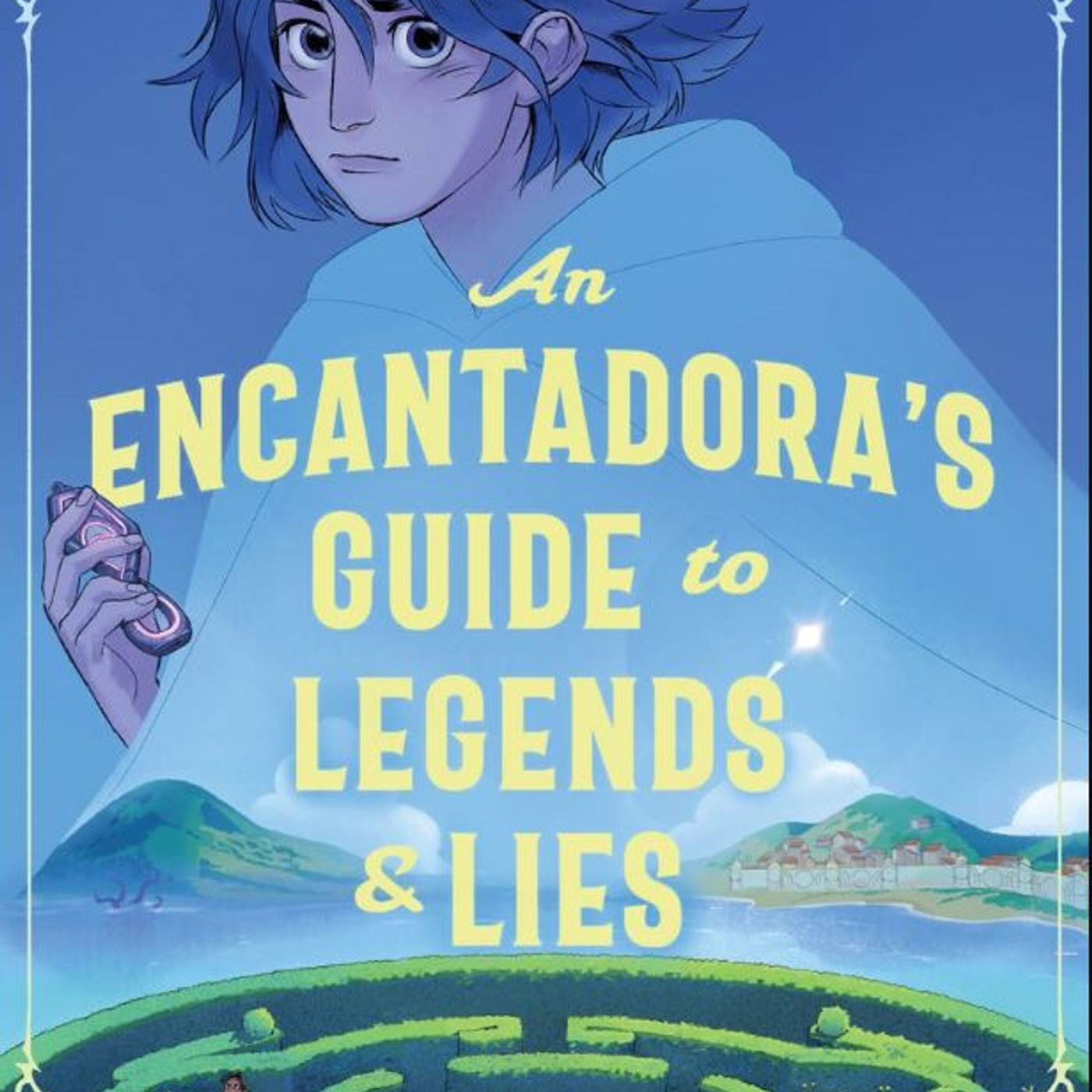
https://sarahjmendonca.com/ The conversation covers the introduction to the Bookfair Podcast, the author's book 'An Encontadora's Guide to Monstruos and Magic,' the exploration of social and economic themes, fighting against oppression, characters' agency, inclusion of personal cultural background, the second book 'An Encantadora's Guide to Legends and Lies,' the editorial process and collaboration, and the author's vision and aspirations as a writer. Takeaways Importance of agency in young characters Inclusion of personal cultural background in writing Chapters 00:00 Introduction 03:52 Exploring the Social and Economic Ladder in the Story 06:06 Fighting Against the System of Oppression 10:37 Inclusion of Personal Cultural Background 12:57 The Second Book: 'An Encantadora's Guide to Legends and Lies' 17:58 Editorial Process and Collaboration 23:24 Author's Vision and Aspirations
Anthony: Welcome to the Bookfair Podcast. My name is Anthony, and this show is all about children's literature and the freedom to read. This week we have an interview with Sarah J. Mendonza, author of the new book, an Incontadora's Guide to Legends and Lies. Next week, we will have another episode covering new book releases as well as another interview on Friday. Make sure to follow the podcast wherever you are currently listening to stay up to date with the latest news in children's literature. Now let's begin with this week's interview. Hello Sarah, how are you doing today? Sarah J Mendonca: I am doing amazing. How are you doing? Anthony: I'm doing great. Thank you so much for being here today, for being generous with your time. Can you start us off just by introducing yourself for the audience and the the books that we'll be discussing today? Sarah J Mendonca: Definitely. I am Sarah J. Mendonza and the book I'm talking about today is an Encontadora's Guide to Monstruos and Magic from Harper College. Anthony: And what exactly is the Incontadora's guide to Monstros and Magic? Sarah J Mendonca: It is a story about a twelve year old monstro trapper who is trying to break out of poverty and save her family from debt by becoming a magical lockpick and stealing from the Ministry of Monstros, which is the organization kind of like the government of that city. Anthony: And you talk a little bit about some of the characters that we'll be meeting in the Encontador's guide to Monsters and Magic? Sarah J Mendonca: Definitely. So there are so many characters in the story. I love side characters so much so that I have a billion of them. So we have the main character, we have Rosa, and she is a monstro trapper, and her father was a mag an illegal magical lockpick. And then we have Tiago, her best friend, who is a pickpocket. And then because it's a heist, you have to have a bunch. of different ragtag band of misfits. So we've got the muscle who's emerald. we've got the brains of the Operation Ward and we've got the Forger character, the Cinto. So we just got a a great group of kids to, you know, rob the ministry. Anthony: And let's take a look at first our our main character that we spend the most time with is Rosa. And you mentioned that the story is about breaking out of poverty. Can you talk a little bit about Rosa and her situation? Sarah J Mendonca: Definitely. So I like to think that poverty is kind of a system that traps us. So Rosa starts in this situation where her father and uncle have disappeared on a job, and then her grandma and her were forced into becoming monstro trappers, which is kind of the lowest bottom, you know, of society. So they are just trying to survive and trying to do anything that they can to keep on going. But Rosa knows that one day that monstro trapping is not going to end well. And she wants to follow follow in her father's footsteps and dreams of a life where she can become a magical lockpick. the problem is that there's this licensing and you have to pay a lot of money for the different types of licenses. So She can only do it on the sly and she's not sure she'll ever be able to afford to become that kind of apprentice. Anthony: Now, a lot of middle grade fantasy and fantasy books in general will explore different aspects of magical systems and how how they work within society. Typically you'll see like the different the different kinds of roles that magic users will play in society. And I think it's interesting that the people that trap monsters are seen as the lowest in society. Can you talk a little bit about how you used kind of the social ladder to the social and economic ladder? To s establish these roles and these rules in the world that you've built. Sarah J Mendonca: So how I thought of it is there's two types of magic users. You have the incontadora who are the craftspeople. So they're people who do physical charms. And then you have the ministers who are the ones who do like light-based magic, kind of mental magic. And I think in society. We tend to respect people who have thinking jobs and we kind of tend to disrespect people who have craftsman handy types of jobs, you know, plumbers, mechanics. We don't respect them in the same level as a doctor. And I just thought that that it was really important to highlight how hard and important people who work with their hands are. And I think that you know it's really unfair that in this story, the ministers, the people who have the brain focused magic system, they keep knowledge to themselves and they keep it up in their tower, in their mountain tower, and they only allow people to access knowledge for a fee. Anthony: Accessing knowledge for a fee, that's definitely a powerful sentiment to be including in a magical story. And with the story of breaking out of poverty, that kind of gives us a gateway into an inciting incident where Rosa and her Avo are desperate for money. And so when it comes to when it comes to the work that Rosa finds herself in with the secret society that's called the Tea Leaves, can you talk a little bit about this idea of Fighting against this system of oppression that you know, this system of poverty that that these characters find themselves in and just the overall importance of establishing this idea that that sometimes sorry, just kind of went off on a wild thing there. Can you talk a little bit about this idea just in general of fighting against this system of oppression, sort of this dynamic that Rosa and the the tea leaves have with the ministers? Sarah J Mendonca: I I think in the tea leaves' heads, they're not necessarily going against the government. They're not necessarily going against the big system. in their head, they are trying to make money, they're trying to steal a magical item. But once they get inside of the ministry and they are by the vault, they realize there is a lot of corruption inside to to the point that they don't even think people would believe them if they told. anybody. And there's this one moment where a Tiago goes, you know, this might not be the thing that tips the scales. This might not be the thing that brings the ministry down, but it will be the thing that could start the avalanche. It could be the first stone that starts a great amount of change. And I think that sometimes when we have these enormous systems that seem insurmountable, we don't know where to start. And sometimes starting anywhere and trying a little bit can make a huge difference over time. Anthony: That's amazing. And one thing that I talk about frequently on this podcast, and especially especially when you're dealing with books for young readers, is giving characters agency within a story. Can you talk a little bit about these characters, Rosa and Tiago and the other members who joined the Tea Leaves for their heist, how they are, you know, twelve, thirteen years old, and the agency that they find themselves and the ability that they find to enact change in their lives and in the society as a whole. Sarah J Mendonca: something I really struggled with with writing a heist for middle grade. middle grade heist like how do you make it so that the first off that you are sympathetic to the characters because inherently they are thieves so how do you root for thieves in a positive way and I think it was important for me that each person had their own motivation and In the first story, they're kind of all motivated by money, but the money will be used to change their lives in enormous positive ways. so they are all all financially motivated in the first story, but I think that it, you know, help bring the group together. and we see them as in a positive way. We see them as positive thieves. Anthony: And I think that a line early on in the book is that it is so difficult to be poor. This is an a sentiment expressed by Rosa. And I think that the the thing that make helps to make them sympathetic is having these characters that are motivated by money, but not motivated by greed. Is that a distinction that you that you foresaw when you were writing this? Is that something that you were intentionally working on? Or was it something that just kind of came about naturally in making these characters sympathetic? Sarah J Mendonca: think it came across naturally. It it I mean, Jacinto is not necessarily the nicest character and is and is a character who, you know, not the nicest character and wants lots of money. it was challenging to make them a a sympathetic group, but I think that inherently their situet their situation that they're all in is one that we can have a lot of sympathy and empathy for. but yeah, it is it is challenging to to make thieves sympathetic. Anthony: And another thing that I wanna bring up about the first book is the inclusion of of Portuguese language a as a means of the inclusion of Portuguese as a language in in in dialogue and then this idea of having different languages and then also having what the characters refer to as plainspeak. Can you talk about including some of that personal some of your personal cultural and some of your personal cultural background into into the writing? Sarah J Mendonca: So my father is a Portuguese immigrant and he came to Canada first. All my family is in Canada, and then he came on to move to America. And connecting with my heritage was really important to me when I was working on this story. I had just moved to a new city and I was missing my family terribly. And I was starting to look work on a new book. And I thought, what better way than kind of including my Portuguese heritage as this way to connect me with my family, even though they're so far away and I can't see them very much. And having the Portuguese language in there, I wanted it to be as accessible as possible. And the way that I went about that was being very careful with what sorts of words that I was selecting to be in Portuguese. For me, it's familial terms. So families, you know, your grandma and the dad. And then it's streets and locations. I also in the story, we have different nations because everyone, all the nations are coming together to the city in order to, you know, buy things at the auction. That's kind of what is the big thing that is gonna happen where they have to rob the auction. And I kind of wanted to allude to there being this you know, plain speaking empire. So kind of a British empire that the, you know, Portuguese themed city is kind of trying to sell things to and make a lot of money. So we have this sort of British Empire in the story, and they visit it in book two for a brief scene. But I just wanted to allude to there being a lot of different cultures within the world. Anthony: And mentioning the second book segues perfectly, I did want to ask. You have a a second entry in this in this series coming out just this week, that is the Encantadora's Guide to Legends and Lies. Can you talk very briefly about the second book and maybe what some readers can expect going forward? Sarah J Mendonca: So Rosa and the crew are headed east. at the end of the first book, there is a big cliffhanger where they find more money than they are expecting to be paid because they were doing this job. They were hired to do this job by somebody. So they head east to solve some mysteries. They go to the city of Thieves and they end up in this enormous thief competition. Where they have to go into this monster-filled island with monsters and puzzles, and they're trying to get to the center where they will unlock this library that was locked away 300 years ago, full of forbidden knowledge. So this was kind of a quest that her father sets up. So it's very much a story about the first one is kind of a book about achieving your dreams, and the second story. is a book of what now? Like what do I do? Is this the dream that I wanted or is or is this dream given to me by my parents? And what is the dream that I actually want? Anthony: And you mentioned that the first book ends on a cliffhanger. when it comes to the writing, editing, publishing side of things, was the second book already guaranteed or was there sort of a unknown future before the second book was was put into before the second book was announced to be released? Sarah J Mendonca: Was very fortunate that this series was bought as a duology. So I knew that I was always going to have a second book. when I originally wrote the story, the first book ends with them literally eating cake and celebrating that they won. So I changed it up a little bit and had the cliffhanger, where they're kind of you know sent east and the city goes on to a lockdown because they discover what. you know, that they've stolen something. But then the rest of the the book two kind of starts, you know, three several months later after the city's been on lockdown and then the city opens up again so they can leave. Anthony: And you mentioned that you you had a a different ending before it was sold as a duology and changing it to a cliffhanger. Were you pitching the first book as a standalone with an idea of where it would go afterwards, or were you originally going in with this being the only one? I Sarah J Mendonca: Think I know a lot of my author friends, we always dream that we're gonna write a series. So I went in, you know, standalone with series potential. So standalone story, but with the hopes that I would be able to write more. I was very fortunate. This was a very odd situation where they bought the second book without an idea. They just purchased a duology, they had no idea what book two was. Fortunately, I had in my head what book two would be. So that helped me a ton. And I'm really, I'm really happy with how it turned out. My editor pushed me a lot for book two and I am so pleased how it turned out. Anthony: Is in Count Todora's Guide to Legends and Lies your first sequel? Sarah J Mendonca: Yes, it is my first sequel. Anthony: it's interesting to hear because I've talked with a lot of authors that have had an entire range of stories when it comes to to publishing. Some people sold one book at a time and it was uncertain. I've I've talked to somebody who had an entire 12 book series lined out and a ti an entire twelve book series outlined and then they got a deal for, okay, let's do three. And then she kept as she was going through, she's like, I can't do it in three, it's gotta be at least five. Can't do it in five, it's gotta be seven. And then she finally, finally got them just pushing one at a time until she got to twelve. do you see yourself expanding beyond the second book? Sarah J Mendonca: I love book two so much. I would say that if I were to get to write in this world again, what I've decided is that these two books would be the prequel series, and then we would get a four book quartet with all of the other tea leaves point of views. So we would get a Tiago book, a Jacinto book, and what happens at the in book two of this series would basically kick off what would happen in the quartet. So I dream of it. I I hope that it happens, but I don't know if it will. Anthony: And you mentioned that the second book was bought before they even had an idea of what it was gonna be about and that your editor was kind of pushing you along to get that second book done. When you started turning in, you know, pages for the second book, what was the editorial process like when they started reviewing and and giving notes for a book that they had zero idea of going into? Sarah J Mendonca: Say that it was so ever like all my friends have told me that the second book that you write on deadline will be the hardest book you ever write. Because the first book on Contadora, that was April 2020 through April 2025. I worked on that. That through many, many iterations. And then I only worked on book two for about 18 months. So just so much faster. I wrote the first draft in five months. And in Contador One, I wrote the first draft in 18 months. So such a different process. when I turned in book two, my editor was I had turned in a synopsis, so she knew kind of what to expect. she really loved it, but I think I definitely fell for the muddy middle. We had a lot of Muddy middle issues. And then she kept pushing me further and further until I finally removed kind of the threads that weren't going anywhere. And then unfortunately, in book two, Emerald and Rosa fight a little bit. And I think she helped me get to a great place where it felt really realistic and we and really satisfying where. We understand why they're fighting and it's they're fighting because they care about each other. Anthony: Something that I find so fascinating. I've talked to television writers and people that have worked outside of traditional publishing, writing for other media, and they they find themselves butting heads with producers and get who butting heads with producers who give editorial notes. However, it seems that in traditional publishing, every author that I've spoken to has had such great working relationships with editors who are very clearly invested in the material and are also heavily heavily involved in the publishing industry. is that is that something that you you can say that you've seen as well, that you've had experienced editors who really helped, you know, shape a book for you? Sarah J Mendonca: Yes. So for in Contador one and two, I work with Jen Ung at HarperCollins. And it has been a wonderful experience. for book two, I had like the big climactic battle. I was being a little stubborn and I really wanted to keep this one random thing in. And she kept going, It doesn't work. It doesn't work. And I go, I think it works. She goes, No, it doesn't work. So then It really pushed me to be more creative with how the battle kind of turns out. I I just needed someone to drop something and it fixed everything and it cleared everything up. So it she just pushed me to make the best possible version of the story. And then now I'm working with a editor at Scholastic and it is an amazing relationship. It's very collaborative. So I've I've been loving both my experiences. Anthony: I think that I I think that I really like to go down that path because a lot of people have such strong emotional attachments to their work and have a hard time taking notes the first time. And so I think it's really good for aspiring writers to hear that editors aren't trying to take away credit or trying to change something for no good reason, that it's it's it's a collaborative work that benefits the storytelling and also ultimately they're they do a lot of work with within industries so they know what what will sell and that's an unfortunate side effect of of publishing is having to to market. Sarah J Mendonca: Yes. I always like, you know, to say to people, you know, Encontadora One was my seventh book and Encontadora two was my eleventh and the Dragonir is my twelfth. So I think over that time of all that failure and rejection, I just learned that, you know, you it's, you know, that expression of like kill your darlings, which is just letting go. You know, sometimes I have the most perfect sentence and then it doesn't fit in the book. It is the best sentence ever, is the best idea and paragraph, but it might not work in the plot as it develops. So it's being able to let go of things and know that, you know, you're all on the same ship and you're all going in the same direction. People want what's best for you. You might just disagree on the method. Anthony: really quickly for some clarification, Sarah, you said that in Contadora one was your seventh book and the second was one was your twelfth. Is this fully published or are you counting books that are written but not yet not yet published? Sarah J Mendonca: I am definitely counting all of my trunk books that are hiding underneath the trunk in my bed. they shall never see the light of day. They are not published and they will never be published. But you know, everyone needs to gain experience. And I think being able to let go of those stories allowed me to write even better ones later on. Anthony: And as we're getting to the end of this interview, I have a closing question that I like to ask all authors. It's a little more open ended, so you can use this as well to get your final words in. Sarah, how do you see yourself and the work that you do as a writer? Sarah J Mendonca: I see myself as a writer? Wow. I see myself as the kind of writer I I would love to be someone who ends up writing 20, 30, 40, 50 books. I want to be that writer that has a breadth of worlds, a lot known for their world building. I love Garth Nicks. I love His you know, zombie books. I love his Seventh Tower books. I love Tamara Pierce and she has these beautiful worlds that have withstood the test of time. She has all these special editions coming out now. So I guess I want to just be around. I want to be here for, you know, 30 plus years. I want to just keep on writing. I want to be that author you go, my gosh. There's just so many books I didn't even know they published. You you lose track of me for five years. You come back, you go, okay. Well I've got five books I can catch up on. Like I just I wanna be here. I wanna be around having fun writing these, you know, fantastic worlds. Anthony: Thank you. That was an interview with Sarah J. Mendonza. Her newest book, an Encantadora's Guide to Legends and Lies, is available now. You can learn more about Sarah and her work at Sarah J Mendonza dot com. If you appreciate the work being done on this show, there are a number of ways to show your support. First, you can like, comment, or follow wherever you are currently listening to help push the show out to new listeners. Second, you can follow us on Instagram, TikTok, and Blue Sky at BookFair Pod. Lastly, you can follow the show on Patreon at patreon.com slash the BookFair. Following is free and there are no posts hidden behind a paywall. Of course, the best way to help the Book Fair podcast grow is simply to share it with a friend, an educator, or a young reader in your life. Thank you so much for listening, and as always, I'll talk at you next time.