
The Book Faire | Middle Grade and Children’s Literature for Librarians, Educators and Young Readers · The Book Faire | Children's and YA Literature
Megan McDonald discusses her new series, the Fairy Door Diaries, and the importance of imagination in children's literature. She shares her inspiration, challenges, and the magical world she has created for young readers. Takeaways Imagination and creative play are essential for young people The Fairy Door Diaries series is a result of Megan McDonald's childhood experiences and her love for storytelling Chapters 00:00 Introducing the Fairy Door Diaries 03:23 The Power of Imagination 11:41 Challenges in Publishing 15:51 Evolution of the Series 21:04 The Magic of Storytelling
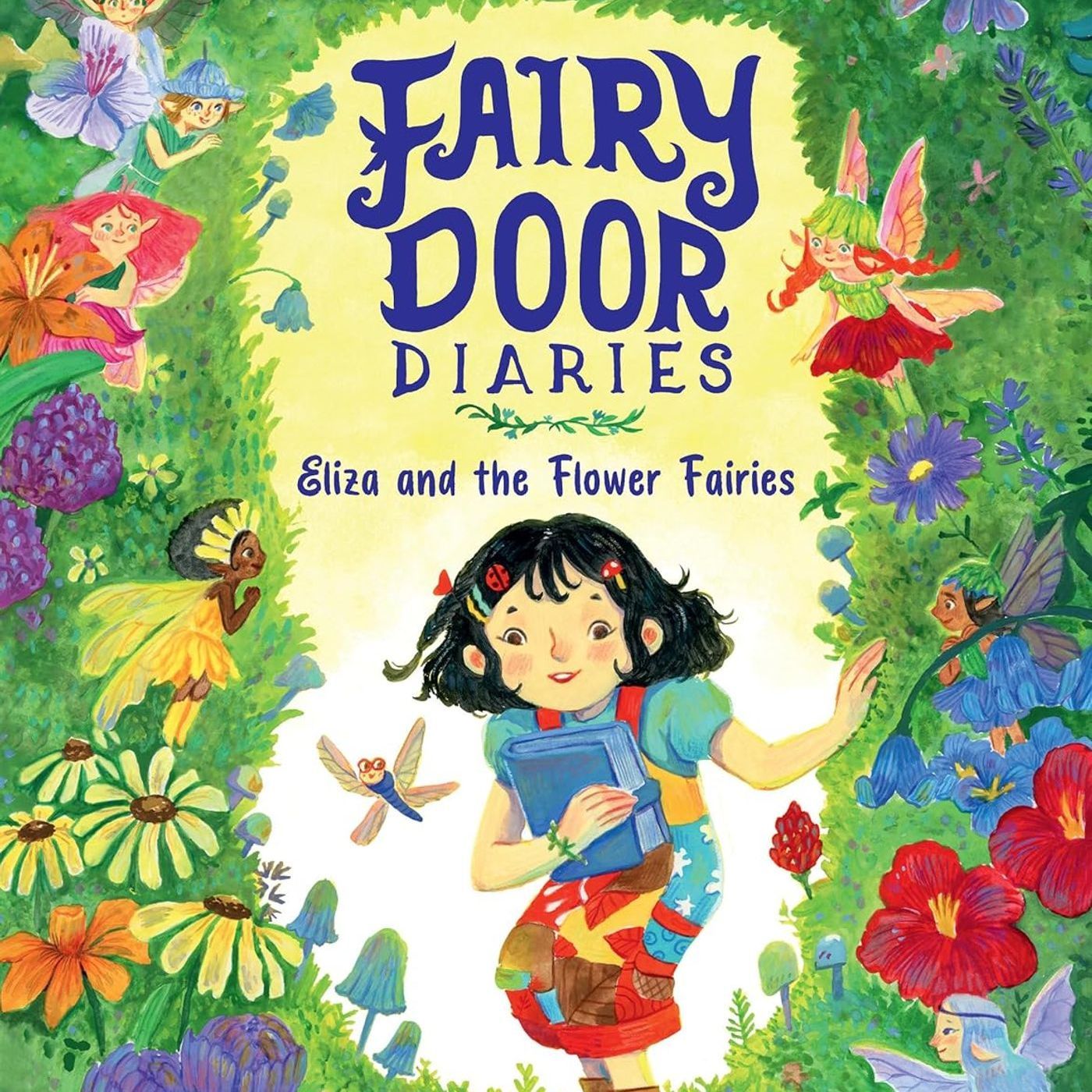
Anthony: Welcome to the Bookfair Podcast. My name is Anthony, and this show is all about children's literature and the freedom to read. This week we have an interview with Megan McDonald, author of the Fairy Door Diaries series. Next week, we will have another episode covering new book releases as well as another interview on Friday. Make sure to follow the podcast wherever you are currently listening to stay up to date on the latest in children's literature. Now let's begin with this week's interview. Hello, Megan McDonald, how are you doing today? Megan McDonald: You're Anthony: I'm doing really well. Thank you so much for being here today. Can you start us off by introducing yourself for the audience and the books that we'll be discussing today? Megan McDonald: Sure. I'm Megan McDonald. I'm a children's book writer. Most people know me for my Judy Moody books probably, but today we're gonna be talking about a new series of books I'm doing called the Fairy Door Diaries. Anthony: Can you talk a little bit about the series and our main character, Eliza? Megan McDonald: Sure. Well, this series gosh, it's probably been about ten years in the making altogether and had a a lot of different starts, but it all began with I was visiting family in Minnesota in Minneapolis where there are a lot of lakes, right? And we were taking a walk around the lake and I saw a tiny little ferry door in the in one of the big trees there. And I just got kind of fascinated with it kind of caught my imagination. And I started thinking about what kind of fairies must be behind the door and who lives in the tree. And then also, if you write a note to these fairies, they write back to you. So this kind of whole thing about the fairy door caught my imagination. And I I dreamed up this idea where a young girl would go through. a teeny tiny fairy door, but each time she goes through the door, she goes into a different magical world. And the magical world ha is peopled by a different type of magical being, a t different type of fairy or sprayed or pixie each time. So so the first book featured flower fairies, whereas the second is hobgoblins. And On from there. So each time I incorporate more mythology about that type of fairy into the book. Anthony: Now, Megan, one of the things that you mentioned there that I think is incredibly powerful was that this all spurred from just your imagination. You saw the little fairy door, and that takes us perfectly to the the thing that sticks out to me the most in these books is right when you open it, one of the first things that you're greeted with is the illustration, the splash page of the door, and it says, Imagine a door. A teeny tiny fairy door. Now imagine it is magic. open the door. And Eliza, being such a young girl, is just a f a character who is full of wonder and imagination. Can you talk about the importance of imaginative imagination and creative play for young people and the way that you kind of brought that about with the character in this book? Megan McDonald: Sure. I think well, it's interesting for me, this has really stretched me as a writer because for so many years, you know, twenty-five years I was writing about Judy Moody and her family and her school and her everyday antics. So that that series of books is grounded in reality and it's much more brings in stories from my own life. But these books, because they're fantasy and it's all about magic, it's using a whole different side of my creativity to imagine a world for each of these types of fairies. And Eliza of she calls her she goes by Eliza of the Elves. And in book three, we actually get to learn the origin of that name for her. But so Even just her name, Eliza of the Elves, tells you right off the bat that she is the kind of kid who is pretty dreamy, believes in magic. and if she saw a fairy door, found a fairy door, she would be like me. She would want to know what is on the other side. And I think that would spark her imagination as well. So she's very much a kid who likes to think about how magic works and magic in our and believing in magic in our lives. And she lives in a little cottage with her mom and her little sister on Cape Cod. And she lives down the row of cottages from an old man who's an artist and he has a connection to the magic for her. So he is someone who Gives her a diary to write in, a book about fairies. He he knows something of this magical world, so she'll often visit him and learn things about the fairies through him. Anthony: So much of these books take place in this magical world that is either imagination or truly magical, but a lot of Eliza's motivations are brought about by the people in her real life. Can you talk a little bit about some of the other characters, such as you said, the artist that lives nearby, the her sister, or Eliza's mother that she lives with? Megan McDonald: Sure. Well, the artist is actually based on a famous children's book artist, Ashley Bryan. He passed away a few years ago, but he was just an amazing artist and lived on a very remote little island off the coast of Maine. And if you ever saw his house, it's like a kid's paradise because it's full of books and it's full of puppets and it's full of paint. And paintings and artwork and stained glass. So I kind of loosely based it on him and it's a similar kind of house so that when Eliza goes over to his cottage, she also is, even though that's in the real world on this side of the door, she's entering a magical world in a way too, because just because of all the colors and all the paintings and all the nat the things from the natural world that he collects that she likes to collect as well. Whereas her mom is more you know, the mom is she's a single mom, she has two kids, and she's gotta be a little more practical. So so that is more the house that has rules and things like that. But when Eliza goes upstairs to her room, there's a small door in her bedroom cut into the wall. And when she goes through that door, which is like a kid-sized door, she enters into a crawl space under the stairs that she names the land of understairs and she has her journal and her stuffed animals there and books and lots of things that feed her imagination so that's where she goes if little sister bee is Bugging her or crying about something or pestering her, she can go into that land of underscare to escape it. And often in the books, she'll be just coming home from school and getting off the bus, and she sheds her school uniform and puts on play clothes. And that's always a signal as well that she's leaving reality behind and entering into the land of underscare and then hoping that. She will have some adventure or connection with the fairies from there. Anthony: Now, you as a writer who as you said, for years you were working on Judy Moody, which was grounded in reality, moving into something that's based more on fantasy being more of a challenge. But with Eliza having this this sort of transition from getting off of the school bus and then going to go and play and being able to be more imaginative, was this something that was based upon your own experiences growing up? Were you the kind of creative child who would who would have sort of imaginary worlds that you would go into? Megan McDonald: absolutely. I mean, my growing up you know, I grew up I grew up in Pittsburgh, Pennsylvania, but in a suburb of the city, and we had a house that was at the end of a lane with huge, huge oak trees all around and tree wells that were like the trees were bricked in, but you could climb down into the tree well and we were always, and then there was a lot of there was a creek that we would sail, leaf boats, and a tree stump where we would always find things hidden there that we thought might be from a magical being. so I think part of it is that growing up surrounded by all this nature and natural world for me, connected so much with that. creative spirit and that soul that wants to believe that not only the animals that are part of nature, but you know, that that that there could be some kind of magical being living in the old oak tree or in the tree well or something like that. Anthony: So while Judy Moody is very grounded and based on a lot of personal experiences, it sounds like ironically some of Eliza's own imagination is also grounded and based on your own childhood experiences. Is that right? Megan McDonald: That's very true, yes. I think the more that I am in touch with my own childhood, the more that I can connect with that part of me that you know still still wants to believe in something bigger than just this earthly planet. Anthony: And now, Megan, one of the things you brought up earlier that I'm a little curious about digging into, you said that the Ferry Door Diaries was 10 years in the making. And a lot of people who may be listening to this could be aspiring writers, people that are young people that like to write and would like to hear some of the some of the more technical sides of things. Were there any specific roadblocks in publishing the Ferry Door Diaries? Did you face any challenges? Was there any moments where it was something that you were uncertain about even continuing at one point? Megan McDonald: Yeah, this I mean, I think for any writer, when you first start out with an idea, you're searching for what is exactly the right format, so to speak, you know, the right the right shoes, the right clothing that's gonna fit that story. And when I first started out, I had done all this reading about fairies and y it's so fascinating with each type of fairy, the different kinds Kinds of qualities of the fairies, but also like some are more mischievous, some are very helpful. sometimes there are fairies that have gone over to the dark side. And then certain fairies, like in the flower fairy book, one of the things I read was if you want to see a flower fairy, so when Eliza first goes through the door, she sees flowers, but she doesn't see any of the fairies. And then she's given a bracelet made of time, the herb, you know, with the little green leaves. And when she puts the bracelet on, she's able to see the fairies. So I just became so captivated with the mythology around all these fairies. And I tend to overwrite anyway, like because there's so much I want to say and so much I want to put in a book. So the first book that I wrote was not about flower fairies, and it was Probably, gosh, it was, you know, 150, 200 pages long or something. But when my editor and I, I I work with Candewick Press and Mary Lee Donovan, my editor, when we discussed it, she said we were we talked about how, you know, there's an age of magical thinking for kids and kids who really love fairies and elves and gnomes and magical beings. tend to be of a younger age. So I took that really long book and shortened it, but then somewhere along the way it just wasn't working out. And so I ended up realizing I had all of this fascinating stuff about the flower fairies and I decided to go with that first. So really the first book in the series is actually the third book that I wrote. The others aren't published, but to just to get to the right format that I wanted, you know, the right length. the the to to still be able to tell of a really compelling story, but not but it doesn't go on and on and on. It's more concise. So that was kind of a a roadblock and a challenge for me, just to get to exactly what the book would be. And then Lenny Wen's illustrations just take it over the top. I mean, she people have really warmed to these illustrations because she still hand paints everything. She she's not working digitally and they're just so colorful and fun. And she talk about imagination. She really brings I mean I use some description of the fairies, but she really has to every single character she really has to bring to life visually. So I have just so so enjoyed seeing what she comes up with in each in each book. And the the book Coming Up, I think is her best it's my favorite book so far of the series, but I think it's her best one as well. Anthony: I think that it definitely shows reading these books about seeing it come to life. And with the newer book coming out, Eliza and the Fairy Double, as you said, it does feel like this is where it's really hitting its stride. Can you talk a little bit about some of that experience that you gained from the first few drafts to the first book being published at writing for this younger audience? Megan McDonald: Sure. Well, y you know, the first the first book was about flower fairies, which is I didn't even realize at the time, but is just so universally appealing to kids. And the idea, I mean, flowers are so much fun and so bright and so colorful. And then the idea that there could be some f some fairies who used to be flower fairies but have gone over to the dark side, so they're a more evil force. And they've now put a curse on all of the flower fairies. So the flowers are all wilting and dying. And Eliza, her challenge is often something that only a human can accomplish by entering the fairy world. So she becomes part of this world and has to figure out how she's gonna save all of the flower fairies. And obviously, there's always you know, a conflict or an obstacle in the way. And I also love to play around with well, when I grew up, we had an old black and white TV show called Bewitched. And in and Bewitched, the main character was a good witch, but she had an aunt. Her name was Aunt Clara. And Aunt Clara was always my favorite character because they called her in to do spells, but she was very old and sort of bumbling and she could never get the spell right. So funny things would happen. So I made that happen in the flower fairy book where she goes to visit Witch Hazel and the spells get all mixed up and the flowers turn into giraffes and things like that. So I had a lot of fun playing with that. Then in the second book, which was about hobgoblins, hobgoblins are a completely different kind of fairy and they tend to be very mischievous. And I thought, well, I'll turn this upside down a bit where after Eliza enters their world. This time as she goes back through the door, they follow her and they get into her world and they start wreaking all kinds of havoc. And she's afraid that her mother is gonna discover them and she doesn't know how she'll explain that. She can't really control them. And so she tries to c appease them by she knows they like sweet cakes, so she brings them cupcakes, and she knows that they like shiny objects, so she finds a golden thimble and she she tries to get them to focus on that. So anyway, so the second one they kind of came into her world. And then the book that's coming up, Eliza and the Fairy Double, this book is probably the most imaginative because on the first two I was able to draw a lot from mythology, but on the fairy double In all these fairy books that I read, I only came upon one little mention of a fairy double. And it said that for every human being, so I like the idea of twins anyway, but for every human being, there's a counterpart in the fairy world, and it's your twin and they look just like you. So I became captivated with that idea that Eliza could have. a twin and a lookalike, but her double is a fairy in the fairy world. So at the very beginning of the book, she lives on Cape Cod right by the water. And she's talking to the old artist Mr. McQuestion and he says, Have you seen any hats floating in the air lately? And she says, No. And then he goes, Well, have you seen a pig or any funny animals in your house? No. And then he says, okay, well then go home and look in all the mirrors and see if you can see a fairy, because these are some of the signs that a fairy will be at your house. So she goes and looks in all the mirrors she can find, doesn't see a fairy, but then she picks up a mussel shell from the beach that she has collected and it's very shiny and pearly inside. And when she looks into the muscle shell, she sees herself. And it looks exactly like her except the The person ha or the fairy has pointy ears and a funny outfit. And so she quickly realizes this is her fairy double. But when she goes through the fairy door, she has to find the fairy double. And it turns out that there's again playing with good and bad, there there's a evil force who impersonates her double. So Eliza thinks she's meeting her fairy double, whose name is Zelia, by the way, and those are the same letters in the name Eliza. But when she meets Zelia, it's not the real Zelia, it's an imposter, and she doesn't know this right away. And eventually she's gonna have to find a a way to figure out who is the real Azea who's the real Zelia and who is the imposter. Anthony: And Megan, probably my favorite thing in these books is at the very end, once Eliza has either solved the problem or escaped the danger, she returns to her room and then she goes to her sister and tells her a story. And every book has ended with the same thing with Eliza's little sister asking, Is that true? Megan McDonald: That's exactly right. So so each time that Eliza is off on an adventure, it's a different amount of time, but it's the same in her world. So she comes back through the door and as she comes back, each time her the journal that Mr. McQuestion gave her is blank at the beginning of each adventure. But when she gets back, it has recorded everything that happened. So she has A story. She has a record of her adventure in her journal. And she takes that book to her little sister. And the little sister says, Will you read to me? Will you read to me? So she reads to her the story of what actually happened to her in the magical world. And at the end of every book, just like the opening of every book is the same, the part that you read, at the end of every book, B says, Eliza. Is that a true story? And I love I love that it ends on that note because it's what we're all thinking. Could this really be true? Could could this kind of magic really be at work? So I love for young readers that they get to decide for themselves if they think that's true or not. Anthony: That's wonderful. And that's kind of the thing that I love about it is that it is ambiguous. There is no clear answer. And so it does open the door to readers kind of engaging in that imagination in the in the same way. It's beautiful. Megan McDonald: Exactly. thank you. Anthony: And as we're reaching the end of our time, I do want to end things on the same question that I ask all guests. It's a an open ended question, and it's also your opportunity to get your final thoughts out. And that question is, Megan, how do you see yourself and the work that you do as a writer? Megan McDonald: Wow. Okay. well, I guess, you know, we've been talking so much about imagination and the importance of imagination. And I think I think just growing up as a reader and being a reader today has so much to do with imagination. So I guess I see myself kind of as a kid at heart still. And, you know, there's still that eight-year-old in me that wants to go through the fairy door and find out what is behind it. And you know, when I was writing Judy Moody books, people would always say to me, How do you remember all this stuff that happened to you when you were eight years old? And I love to give I love to quote Mark Twain who said, I remember everything, whether it happened or not. So Even when with memory in there, there's always imagination mixed into it. And I feel as a writer, I'm just so fortunate that my job, my life is storytelling, and that you know, I get to live every day in my imagination, and basically I get to make stuff up until it's true. Anthony: Thank you. That was an interview with Megan McDonald. Her newest book, Fairy Door Diaries, Eliza and the Fairy Double, is available now. If you appreciate the work being done on this show, there are a number of ways to show your support. First, you can like, comment, or follow wherever you are currently listening to help push the show out to new listeners. Second, you can follow us on Instagram, TikTok, and Blue Sky at At BookFairPod. Lastly, you can follow the show on Patreon at patreon.com/slash the BookFair. Following is free and there are no posts hidden behind a paywall. Of course, the best way to help the BookFair Podcast grow is simply to share it with a friend, an educator, or a young reader in your life. Thank you so very much for listening, and as always, I'll talk at you next time.