
The Book Faire | Middle Grade and Children’s Literature for Librarians, Educators and Young Readers · The Book Faire | Children's and YA Literature
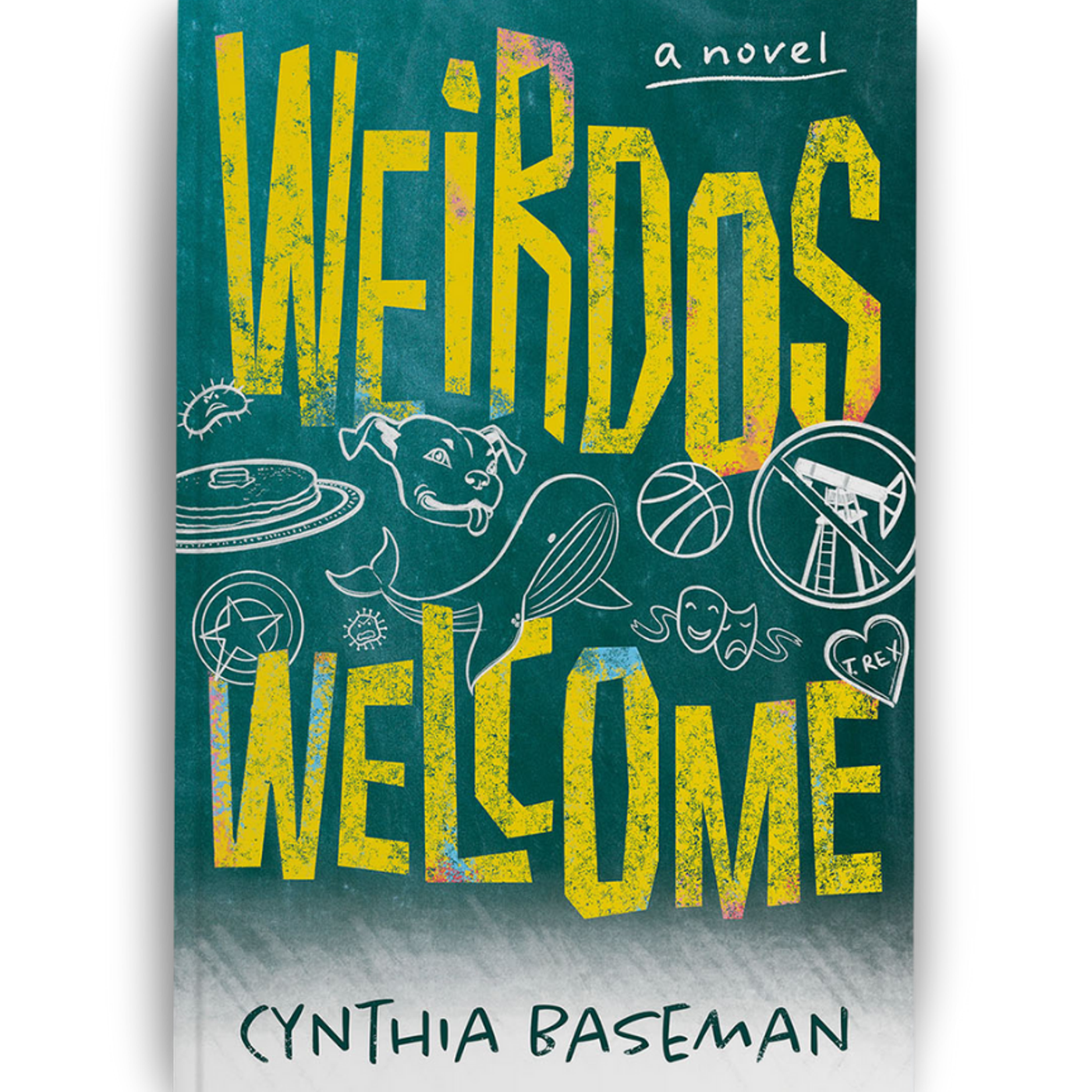
https://cynthiabaseman.com/ In this episode of The Book Faire Podcast, host Anthony sits down with author Cynthia Baseman to discuss her neurodivergent YA novel, Weirdos Welcome. Cynthia opens up about her seven-year research and writing process, explaining how her dedication to capturing authentic neurodivergent voices led her to craft an empathetic, dual-perspective story about self-acceptance, boundaries, and belonging. Cynthia breaks down the alternating POVs of her main characters, Ray and Braden. She details how Ray, an autistic teenage girl, navigates the exhausting pressure of social masking, while Braden—a high-achieving student athlete secretly battling severe OCD and anxiety—struggles to keep his vulnerabilities hidden. The conversation explores the story's central turning point in the high school life skills classroom, inspired by Cynthia’s own son’s experience as a student aide. She discusses how moving past initial discomfort and dismantling social barriers allows both characters to build genuine connections, embrace their true selves, and discover an unexpected love story across high school social hierarchies. Teachers, school counselors, librarians, and parents will find this episode essential for examining neurodiversity in young adult literature, supporting student mental health and SEL in schools, and finding inclusive stories that foster empathy and kindness on library shelves. Takeaways Emphasizing neurodiversity in literature Importance of understanding diverse stories Chapters 00:00 Introduction 04:28 Exploring Neurodivergence in 'Weirdos Welcome' 08:50 Character Development: Ray and Braden 11:11 Braden's Journey Through Life Skills Class 15:37 Integration and Understanding Neurodiversity 19:41 The Evolution of Ray and Braden's Relationship 23:01 Cynthia's Perspective on Writing and Impact
speaker-1: Welcome to the Bookfair Podcast. My name is Anthony, and this show is all about children's literature and the freedom to read. This week we have an interview with Cynthia Baseman, author of Weirdos Welcome. Next week, we will have another episode covering new book releases, as well as another interview on Friday. Make sure to follow the podcast wherever you are currently listening to stay up to date on the latest news in children's literature and book bands. Now let's begin with this week's interview. Hello, Cynthia, how are you doing today? speaker-0: Hi Anthony. I'm great. Thank you. speaker-1: Thank you so much for being here and I appreciate you being generous with your time to sit down with me today. Can you start off by introducing yourself for the audience and the work that we'll be discussing this afternoon? speaker-0: I would be happy to do that. First off, thank you again for having me. I really appreciate being on your show in particular. I think you have a great feel for books and things that matter to young people and their families. So I feel very much at home and I appreciate you having me here. I'm Cynthia Baseman. I'm an author. I have a debut novel that came out a few months ago called Weirdos Welcome. And it is a neurodivergent love story. It didn't start out as a love story, but that's another topic we can reach later. But I've written across genres. I've written memoirs, I've written long fiction, I've been a hired gun, I've written some very personal stuff and I'm someone that really likes to when I get into something, I get into it big time. If I have something that's of interest to me, I will research it and research it and dig down and meet people in that field or that venue or that city or that mindset and spend a lot of time with them. And I'm slow, Anthony. I'm I'm slow. This book took me seven years to write. And of course, like everyone else, you know, life goes on. I have a family, I have Two sons, I have dogs and birds and day job and husband and family, lots of stuff competing for for time in in the best of ways. But as far as writing goes, it sure slows down the process. And I look at some other people, you know, Stephen King, who's like, you know, this guy. I I think he writes while he's sleeping. I'm I'm convinced of it. He just can he just can produce so much work. And there's other authors like that. Jodie Picon, who is coming out with her thirtieth novel in a few days. These are authors that blow my mind because it just takes me a long time to get into it. But I really wouldn't feel comfortable putting out a story where I wasn't quite sure that I was getting the voice right and I was getting the experience right. I needed to be, I needed to understand the subject matter. We're talking about neurodivergent characters. And I'm neurotypical. I really wanted to find out who these people were, why they were the way they were, what sort of conflicts they had, what were the obstacles, because every great story starts with conflict and When I began to understand the level of conflict, especially a girl in high school who was on the spectrum, that fascinated me. It also, at points horrified me how how harsh people can be sometimes when they don't understand just how deep an injury they might be causing to another person. And I felt it was my responsibility. as an artist and an author, to try to break down the walls between people. speaker-1: And now, Cynthia, you said that every good story starts with conflict, and you are examining the conflict of a neurodivergent girl in a high school setting. And I think that that's a great opportunity for us to dig into the character of Ray and some of her some of her what what some people may call quirks, but is of course her neurodivergence and the way that she masks and sort of how you present her as an alternating POV character in Weirdo's Welcome. speaker-0: Ray was a very interesting character for me to develop. And I met a lot of young ladies and spoke to them, young ladies on the spectrum. And there's certain there's certain common themes that you see. and one of them is a desire to know themselves, to understand themselves, to find their people. So they can find other people who who get them. I think that's true of all human nature though, Anthony. Everyone wants to find someone who gets them. But when you're not the default and you are the outsider and you are the one that gets called names because you don't respond in an expected way to everything around you, from having sensory issues to seeing the world completely differently. This is this is the stuff that I was grappling with and wanted to get my hands into. I well you're someone who's worked in theater. So you know how to have a good character, there's there's layers. You know, there's there's there's how someone is with one person versus how they are with someone else. How someone behaves when they're with their mother or their bestie or the boy that they like or the teacher that they hate or the bully at school. And I think that what I really grabbed onto was this need for self-understanding and the need to define one's boundaries. Because masking is a blurry boundary. And it's something that a lot of girls on the spectrum do because it it can make life easier if you smile at the right time and you nod at the right time and respond at the right time, and you just have these social responses that our society has grown to expect. And that may not be how that person is feeling. Maybe they have a whole inner dialogue going on and That inner dialogue is something that you see with Ray. We see it in her chapters because this book is told through alternating chapters between Ray and Braden. And Braden, of course, is somebody that masks all the time. He's not on the spectrum, but he is neurodiverse. And he's somebody that feels like his survival depends on it. But he is, you know, crumbling inside from the weight of it and the stress of it. Ray is experimenting with being herself and masking and trying to figure out where her her boundary is, what she can live with, what makes sense, and who she really is. And that is this genre, young adult. That is what makes it so exciting to, I think, readers, is that the emotions are like ginormous, you know. And we've all we've all been there. We were, you know, Anthony, you and I were very young once. And I think we have memories of what those big emotions were at at the time. They're not the same as you get older. But I think that we all look back on that time and we're, you know, we're kind of like smitten with it. speaker-1: And of course you said that there's alternating chapters between Ray and Braden. Can you go a little bit more into detail about Braden and the struggles that he's dealing with at the start of this book? speaker-0: Like Ray, Braden is the guy who everybody thinks is the nicest guy in school, and he's a good student, and he's a he's a decent athlete, and he's a sports fanatic, and he's got you know lots of friends who are guys and lots of friends who are girls, and on the outside he looks like he's just having the most wonderful time, and on the inside he is second guessing. everything and he is expecting the worst things to happen and he cannot stop his mind from having unwanted thoughts, everything from thinking that he's getting a disease to he's gonna be found out as a a freak that he will be he's just he's waiting for the proverbial shoe to drop at all times and it's just part of his his his trouble. He's got OCD. He's got severe anxiety. And again, that's not being cool in his eyes. That's being the opposite of cool. And that is his struggle throughout. And it's a very, very common thing now. I mean mental health awareness is is is finally catching up to all these things that have been Strangling kids that have just been making their lives so awful and and just, you know, sucking the joy out of their existence. So I wanted to shine a light on that. And Brayden is also a very funky character. He's he he despite his insecurities, I think what's so lovable about him is that he He always finds a way to push through it somehow. And I think that's what you know, his vulnerabilities are what make him so lovable. And ultimately it's his vulnerabilities which he's willing to show Ray. And that is the unexpected thing for him is he can draw strength from that. speaker-1: Now, Cynthia, you said that Brayden is a sports fanatic. And in the first chapter, we learn that Braden plays on the school basketball team, but very shortly into the book, he decides to drop out as he is dealing with grief. And he goes to a guidance counselor, a wonderful resource in schools for students that need assistance or need a change of change of scenery. And the the place that the guidance counselor puts him instead of in the in in the classes associated with Basketball is he is placed in a life skills class to to act as sort of an assistant. Can you go into his role in this life skills class and sort of the things that this opens him up to? speaker-0: Absolutely. This is really this was a really fun thing for me. I I learned a lot about the life skills classroom in a high school and what that was like. And I think that most parents, most families are not really aware of the life skills room unless you have a child in there. For privacy reasons, it's kept quiet. It's not really out there. And Braden Is not familiar with it. He thinks he's going in there to to do some tutoring. He's a good student. He thinks it's gonna be very chill. And when he goes in there, it's cacophony of sounds and smells and little little chaotic when he first gets in there. And that's just his like first impression. When he gets in there, he can't wait to get back out. He's a guy that doesn't like things that he can't control or predict. And there's a lot of kids in there with different issues. And he's at the moment he sees it, he's completely out of his death. That setup is based on something, which is that I had a son who was placed as a was offered a place in the life skills room as an eight. And he didn't really know what it was going to be all about. And it was shocking to him and initially kind of unpleasant. And he felt very, very uncomfortable and he felt that he didn't have much to offer there. And he was going to leave. And when he told me about it, I was quite interested to hear what it was like. And all I suggested was, Why don't you give it another week? I don't I don't think yet exactly what's going on, just from a couple days. Just spend another week there and see what happens. And sure enough, once the initial whoa, this isn't what I expected moment passed, he was able to acclimate it to it. And I'm gonna say his heart opened up and suddenly I think he became more curious and more open. And that wall that I was talking about that people unconsciously put between them and other people, that wall came down. And pretty soon this was his favorite class. And pretty soon it was, these are my friends. And he became a role model. And he really, really looked forward to seeing these people in the class. And it was a very moving thing. And very like most things in life. You you couldn't have seen this comic. speaker-1: And one thing, Cynthia, that you said there that I want to examine is that you said that your son felt uncomfortable the first few days in the life skills class. And being around people that are either neurodivergent on the spectrum or some people who are living with severe special needs or disabilities, a lot of times neurotypical people can feel a little uncomfortable due to that separation that happens, especially in schools. There's a separation between the life skills class and the general school population. Can you talk a little bit about, not just from your personal experience with your son, but more so with Braden, the sort of integration process and getting to learn about these people and being able to grow more comfortable and accepting being around them as people? speaker-0: Well, I think for him, somebody who was very closed and someone who had social ang who a character that has social anxiety and is so desperate to control things because he's so fearful that something is gonna go wrong and it's gonna ruin his life or he's going to die. And these are real things that people experience. It is not he's not an exceptional exceptional or unusual character, which is why I hope that readers will recognize themselves in it or recognize someone they know in it, or even look twice at somebody that they may have thought one thing about and realize, wait, maybe there's more going on here than meets the eye. And for for the the kids who are in these classrooms, they're they're so different. I mean, Different not because of their diagnosis, but just their personalities. Just like who, who you drop into a a room or an auditorium or anywhere else, each person has their own characteristics that that may have very little to do with the diagnosis and this and the how people exhibit that diagnosis. So if there's someone there that Braden runs into and they're stimming or they're making noises or they're or they're not speaking at all. these are these are things that for him made him really uncomfortable because he hadn't been exposed to it. And his first reaction is like, whoa, you know I I I I you know I I I'm uncomfortable. I don't understand this. Something's wrong. Something is wrong here. Okay. Then with time, he, and not that even that much time, but with time, he comes to understand the other part of it, which I started with, which is everyone has their own personality and their unique character. So when you meet someone who's on the spectrum and you have some preconceived notion of what that means. they're like this, so that means they do that. Or they're like this, so they have this special skill. then that's you know, whatever they get. That's from movies or TV shows or or whatever, wherever they got these impressions from. And I think once you at least for my story, once Braden gets to know them, I think to know them is to love them. I think to know them is to respect them. And I think it flips the entire script. of his life being around them because his whole narrative has been stay cool, be cool, you know, be funny, be charming, don't be weird, don't be a freak. Okay, and then he's around all these people that are supposedly, you know, the freaks and weird and different and don't fit in. And there there's a like a raw honesty there that is so healthy. And he it flips it flips the narrative for him. It makes him re examine his reexamine his entire existence. Very fun to write. speaker-1: And I think that this is a wonderful opportunity to go into what you talked about earlier, because it is in this class that Braden meets Ray for the first time. He has a little bit of I guess what you could call a microaggression, where he he says that these people have these people are on the spectrum and they're kind of he he has an offhand comment about it before realizing that Ray herself is neurodivergent. And earlier you had said that. This book was about seven years in the making and that it initially didn't start off as a neurodivergent romance. Can you go in a little bit into Ray and Braden's relationship and sort of the way that through writing the story has evolved, especially since it did take seven years from the initial idea to finally coming out, which is, of course, not a very uncommon thing in publishing. speaker-0: well, I I think essentially the time that it took to write this had everything to do with sort of a curiosity that I had. I I have a niece who is on the spectrum. She was late diagnosed. She wrote a wonderful, wonderful book. It's called Always Bring Your Sunglasses, which is a reference to sensory challenges and bright lights. And I think when I saw her trajectory from being misdiagnosed, undiagnosed to finding the correct diagnosis and how she took hold of her life, that really began this this process for me to want to learn more about it. And that is where it you know, they the the time came in because it was reading lots of books. about this, reading lots of research about it, and then t finding people who were okay, telling me their their their inner truths with all the, the the the painful moments and awkward moments and mistakes made and and eventually triumph. Eventually self-acceptance, self-forgiveness happened. and a sense of belonging that they had not previously felt and s seemed like the most intangible thing, could never get their hands on it. When I saw these kids find that thing, I knew I wanted to write about it and write about all the s the steps and missteps in between. And there's just so much to it, Anthony. I mean everything from, you know, their Diets and environments, friends, special interests, meltdowns, shutdowns, fears, struggles, fatigue, burnout, self hatred, tears, you know, just all of that. Just to to try and organize it and develop characters that were true. That's what took time. So you s you asked me about the love story aspect. I d I don't know. at a certain point I'm just like I'm a pen. at a certain point you get a hold of who those characters are and then you start rocking and rolling with it. And they told me as I was writing it, they told me this is a love story. These are two people from opposite sides of the social hierarchy of high school and they are actually meant to be together. speaker-1: And as we're reaching the end of our time, I have one final question that I like to ask all guests on the podcast. It's a little more introspective and open ended, so you can use this as well to get your final thoughts out. And that question is, Cynthia, how do you see yourself and the work that you do as a writer? speaker-0: I see myself as as a hard worker. I see myself as somebody that is okay taking the time and and doing th doing it right. I'm not I'm not interested in finding shortcuts and you know, borrowing things. I I I wanna I wanna discover stuff for myself. I wanna be open to new experiences. I want to be, maintain this sense of curiosity and awe. I mean, that I see myself as somebody who's like very energetic because I I I'm I'm in awe of a lot of things. There's a lot of people I meet who are just so spectacular. They're just such good human beings and they're making they're making positive differences in the world, as as my father would say, leave more pluses in the world than minuses. And I I know a lot of people who are out there leaving pluses right, left and right again. And and I want to be around them. I want to be part of that. I want to do that too. I I want my stories to resonate with my readers and leave them with a feeling of hope. And Positivity and ultimately kindness. You know, I think that's what it it all boils down to is you want to remind people that they have this inherent goodness in them and to tap into that because it's it can change their lives and it can change somebody else's life too. speaker-1: Thank you. That was an interview with Cynthia Baseman. Her debut young adult novel, Weirdos Welcome, is available now. You can learn more about Cynthia and her work at CynthiaBaseman.com. If you appreciate the work being done on this show, there are a number of ways to show your support. First, you can like, comment, or follow wherever you are currently listening to help push the show out to new listeners. Second, you can follow us on Instagram, TikTok, and Blue Sky at Bookfair Pod. Lastly, you can follow the show on Patreon at patreon.com slash the BookFair. Following is free and there are no posts hidden behind a paywall. Of course, the best way to help the Book Fair Podcast grow is simply to share it with a friend, an educator, or a young reader in your life. Thank you so very much for listening, and as always, I'll talk at you next time.