
The Book Faire | Middle Grade and Children’s Literature for Librarians, Educators and Young Readers · The Book Faire | Children's and YA Literature
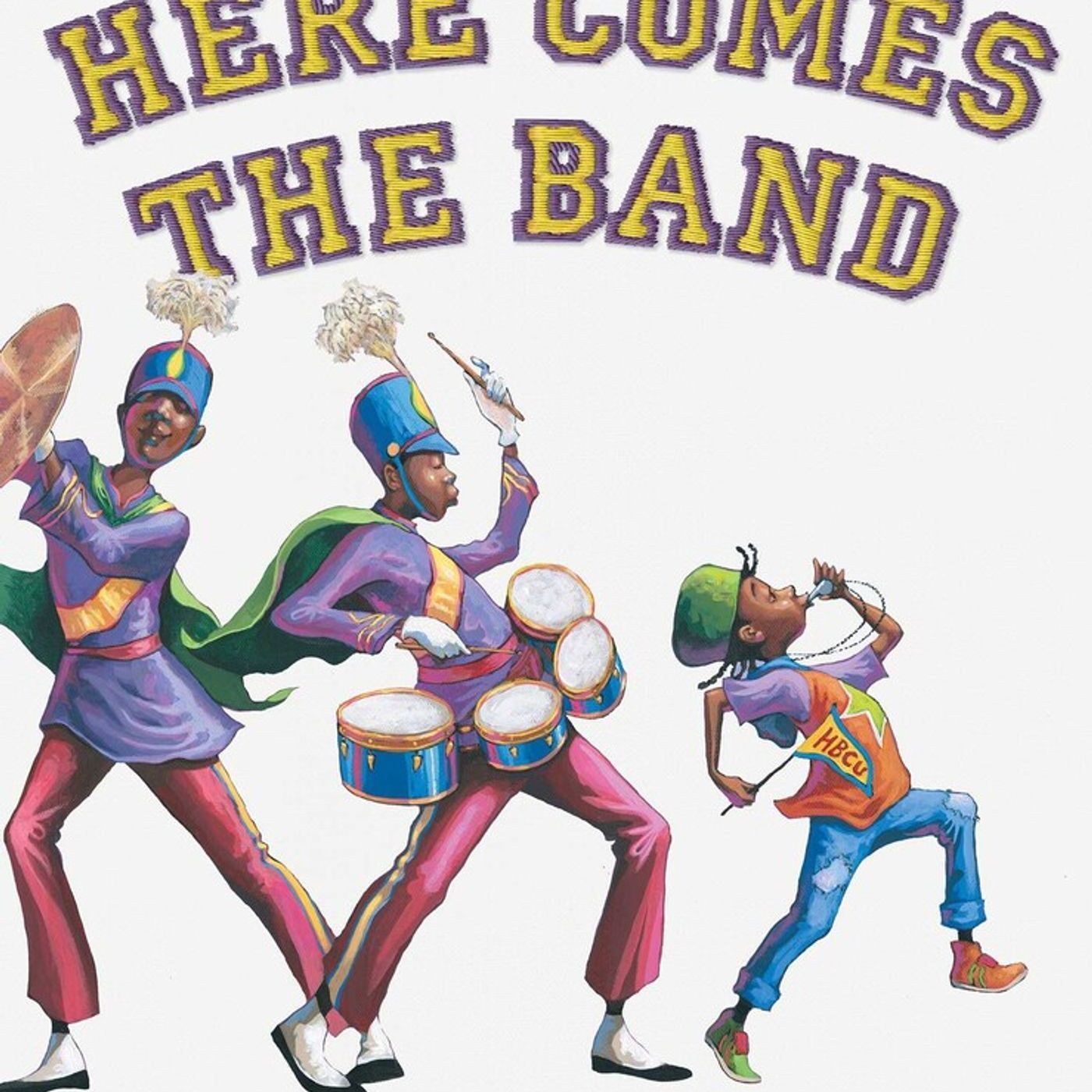
https://www.jumpin.shadrastrickland.com/ The conversation features an interview with Shadra Strickland, an author and illustrator of children's literature, discussing her journey in publishing, her latest book 'Here Comes the Band', and the cultural significance of HBCUs in the context of marching bands. Strickland shares her personal experiences, the creative process behind her work, and her aspirations to inspire young readers through joyful storytelling. Takeaways Inspiration from personal experiences Cultural significance of HBCUs Chapters 00:00 Introduction to Shadra Strickland 03:36 Transitioning to Author-Only Projects 05:07 Celebrating Marching Bands 08:41 The Role of HBCUs in Community 12:54 Inspiring Young Readers 15:08 Reflecting on Formative Moments 19:43 Shadra's Vision as an Author
speaker-0: Welcome to the BookFair Podcast. My name is Anthony, and this show is all about children's literature and the freedom to read. This week we have an interview with Chadra Strickland, author of the new picture book Here Comes the Band. Next week we will have another episode covering new releases as well as another interview on Friday. Make sure to follow the podcast wherever you are currently listening to stay up to date on the latest news in children's literature. Now, let's begin with this week's interview. Good morning, Shadra. How are you doing today? speaker-1: Great, Anthony. How are you? speaker-0: I'm doing very well. Thank you so much for being here and for being generous with your time. Can you start us off just by introducing yourself for the audience and the book that we'll be discussing today? speaker-1: Sure. My name is Shadra Strickland. I am an author, illustrator of children's books. I also teach illustration at Maryland Institute College of Art, and we will be talking about my second authored book, Here Comes the Band, illustrated by John Holyfield. speaker-0: This is your second book that you have authored, but you work you have worked before as an illustrator as well as teaching illustration. Can you talk a little bit about your start with publishing? Did you start off primarily as an illustrator? Did you want to be a writer? What was your journey like? speaker-1: Sure. I published my first book in two thousand and nine, which was Zeta Elliott's authored story called titled Bird. Before that, I set out to be an illustrator. actually I set out to be both. I wanted to be an author illustrator, and none of my work got picked up. Like I just got rejection after rejection on the stories that I had written. and so I just focused on illustration and ended up working with Zeta and Bird, that first book. w was a high profile project for me. It won a lot of awards and that kind of launched my career as an illustrator. But it was many, many, many, many years after that, to where I finally sold my first author project. speaker-0: And when it came to pursuing being both an author and an illustrator, when you started to see the rejection letters, what was kind of your headspace in that? Cause I know a lot of people that listen may be aspiring authors or aspiring illustrators. And a lot of times authors have plenty and plenty of stories about rejection and taking a long time to get published. Can you kind of share your side of your journey? speaker-1: Yeah, I was in graduate school at the School of Visual Arts and I was really close with a lot of illustrator friends who all got book deals kind of out of grad school. And so I was the last man standing and was so depressed. So at the time I was working as an assistant for Christopher Myers, another prolific illustrator and author. And I was designing at Bloomsbury Publishing. I was working as a paperback reprint designer and I just was in a dark place, you know, my friends were amazing and encouraging, but it was hard, you know, working on the portfolio and sending the work out and keep getting all these no's. eventually I got an agent and even then I still faced a lot of rejection until I was finally, I guess, ready and you know, all of the stars aligned in that first project that was really perfect for me came my way. speaker-0: And now that it comes to your latest release, here comes the band. Can you talk a little bit about what your side of things is going from working as an illustrator, doing both, into this project where you are only the author and we have another illustrator? speaker-1: Sure. Yeah. So my first author Illustrated project came out in twenty twenty three and Jump In, which is a book about a community of play through Double Dutch. And I have contracts kind of lined up after that. I've always since my career started in picture books, I've had about, you know, like three or four contracts kind of in the queue at the time. And when I wrote Here Comes the Band on a whim, I was hanging out with my agent and we were watching a a football game and the halftime show was on. We were actually at ALA. And I said, you know, I was one of those girls who danced in the band. I don't think I've seen a book about that. And I was like, you know what? We just looked at each other. I was like, all right, I'm gonna go home and write this book. And so that's how it happened. And I wanted Here Comes the Band to come out relatively quickly because of the energy behind Jump In. And that is why we chose to pitch it with me as author only. and it worked out, unfortunately, because I've been in the business and I'm a fan of the business. I've been watching John Holyfield's work for many years. and thought he would be a phenomenal illustrator and he just happened to be free to take this on. speaker-0: There isn't much of a story going on with Here Comes the Band, but there is a very lively event taking place. Can you talk a little bit about the band itself? speaker-1: Sure. So here comes the band takes place during a halftime show, which is my favorite part of the band when I was growing up. And I wanted to spotlight, I wanted this book to be a celebration of music first and foremost and musicality and showmanship. And so I start spotlighted all of the components of the marching band. it happens to be an HVCU marching band. And so we get to see the drum majors, we get to hear all of the sounds that the instruments make. and each instrument is pretty much spotlighted thanks to John and his decisions and just showing all of the musicians playing when we are talking about one instrument. And then we get these generous gate bowls and, you know, just big beautiful spreads of the whole band coming together to make that one sound that we associate marching bands with. speaker-0: And that sound is such a visceral and tactile experience. And I think you capture that very well with the use of automopoeia, as well as descriptions like feeling the the the tubas reverberating in the chest. That's something that I think a lot of people can connect with. Do you have any experience with music yourself? I speaker-1: I grew up playing instruments. I never learned how to read music properly, so I don't always memorize sheet music to be able to play, but I played the piano a little bit, the violin, I played the flute for a little bit, but I never played an instrument in the marching band. I decided to join the auxiliary team and so I was one of the dancers. So part of the band, you know, off to the side, not playing an instrument, but definitely a part of the show. speaker-0: And I think that that role definitely highlights how when it comes to marching bands, not just for HBCUs, but broadly in high school or in colleges, there is a role for everybody, regardless of what they like. And that kind of speaks to the unnamed narrator of Here Comes the Band, who is just really feeling the moment and the music. Can you talk a little bit about your own personal experience growing up and how that may have influenced? The way that you wrote this character. speaker-1: Sure. You know, the character's me. It's me. And when I wrote it, I was just taken back to my own experiences as a kid. My mother was a high school English teacher and then became a school counselor. And she was the sponsor of the cheerleading squad in her high school, and I was their little mascot. So I got to go to the games and I always waited with for the halftime show and would point it out. There go the drum majors, here comes this, here comes that. And so when I wrote it, I just wrote it from my, you know, nine year old point of view. And it came out. And I just yeah, that sound, the tubas and the cheeks blowing, all those things were really visceral for me as a as a child. And even now, like I still get really excited when I see marching bands and the showmanship of it. And that sound will just make your whole body vibrate. It's the best thing ever. speaker-0: And there is one other aspect of Here Comes the Band, just in general that I wanted to touch on, and that is the prominence of HBCUs, and this being an HBCU, a historically black college and university. Can you talk a little bit about HBCUs as an institution, as a tradition, kind of the role within the community, just as as an author, as a person of color, just in general. to someone who may who people who may not have grown up hearing the phrase HBC. speaker-1: Yeah, absolutely. You know, HBCUs were embedded in my culture. I grew up in Atlanta with and went to historically black well not even HBCU, but predominantly black high school, elementary school, and my community was very much a reflection of me. And the marching band culture was everywhere. We had the Clark Atlanta University, battle with the bands were shown. High school, there were always like just there was just always this big community through showmanship. And so when I wrote this, I initially thought of my high school experience, but in putting all the pieces together, it made a lot of sense that we would celebrate HBCUs in this way. And I have family members that went to Florida AM and Howard University. So I was always embedded in the culture. And I think that HBCUs culturally are such cornerstones of the community because they were meant to you know, encourage education and sort of a a welcoming space for black people when segregation barred us from so many other institutions and learning, right? And so that tradition has continued. And so even now we're I mean young people who grow up in predominantly white culture are looking for that experience. HBCUs are absolutely welcoming and there for that. So I don't know, I think For me, it's not any H V C Us aren't anything outside of my normal experience in thinking about school and education. so yeah, is there can I can I add anything to that or is that clear enough? speaker-0: go go right ahead. I do not mind rambling just yeah, please go ahead. speaker-1: Well no, I just didn't know that answered the the question. I think in terms of HBCU bands specifically, because they are so connected to pop culture and you know just black music in general, the history of military marching bands and black menstrual shows, for example, and New Orleans, New Orleans bass bands, that's basebands, what they call? New Orleans brass bands. All of that kind of mixes in and you get this really unique experience and sound on a on an HBCU halftime field. speaker-0: And Shadra, yourself as an educator now at Maryland Institute of College and Art, can you talk about what you kind of brought into this as going from the young person experiencing the band to now yourself being an educator and seeing these people that are college age? Mm-hmm. Can you talk a little bit about what your experience as an educator brings to Here Comes the Band? Sure. speaker-1: I think that so before teaching college, I was an elementary school teacher for about three years. And when writing this story, initially there was a it was more of a scaled back view of the show. But as an educator, I went back in and researched and kind of really pinpointed well, what is the sound call that a a symbol makes? Like what is what are the tricks called? So really going in and like thinking about those details and adding those to the story. really made it sing for me. Micah is a is an art institution, so we don't have a band. We don't have a pool. It's bunch of artists, right? So they're not super into sports or anything like that. so the educator in me for this story was pretty much the one that taught, you know, K through K through five and thinking about what would be useful for young people and get them excited about instruments, but also the specificity that would help them maybe decide to play for themselves later on. speaker-0: And you said getting them excited about music and instruments. And I think that that's something that comes through really well in Here Comes the Band, where at the end, after the game, after the halftime show, the the narrator character, the young child, is kind of reflecting on their experience and is parading around, dancing and excited and ex and expressing an interest in someday growing up to play in the marching band themselves. Can you talk a little bit about? This this kind of idea of these formative moments inspiring young people and kind of setting them on a trajectory and and kind of the role that the arts, that colleges, community, music all play in young people's lives. speaker-1: Sure. I think that, you know, the other aspect of this is this kid says that his mom and dad remembers when. And so thinking about HBCU culture, there's also a sense of legacy where in some cases, you know, your parents would have gone and they would have participated in the band and they would have been in the sororities and all the things. And, you know, they have rivalries with their siblings who may have also gone to these institutions. So that, you know, can sometimes be the formative aspect. But I think for kids who didn't have that, just I don't I don't know how to describe it. I think when you are engaged with live music, there's nothing like it. You know, I think that again, it just lights up your your body. You get to actually see, you know, these instruments and how people have mastered a craft. and for me, like watching parades, watching young people march in parades and play instruments, that stuck with me. I mean clearly it stuck with me 'cause I'm writing this book of And I always wanted to be a part of the team, a part of the band. I'm an only child. And so I wanted to be a part of something. so I think I don't know. I think that these experiences are becoming rarer for us, which is unfortunate. But there's something to be said about mastering a craft, and I think young people are always eager, eager to learn and pick up tools and toys and you know, play to see what they can do. So I'm hoping that this book will be a a part of that inspiration and help them continue to to be inspired in that way. speaker-0: And that idea of inspiring, mastering a craft and giving you something to be a part of, is this something that you're able to look back and reflect on your journey as an illustrator and now as an author? What were some of those formative moments early on in your life and in your career that kind of set you on the path to where you are today? speaker-1: Sure. I'll I'll say that it started with my mom as a teacher. And the one thing that she could do to get me to leave her alone was give me pencil and paper. And I would go and draw for hours or I'd go and write stories. So it really started there and she nurtured that for me. And I think, you know, my career markers were definitely getting that first book, that first project. Well, my very first book was an emergent reader with Lee and Lowe Books. And many years later I got the first big book with Leon Lowe and that kind of set me on this path. I think the writing, I've always written alongside the illustration, but illustration has kept me so very busy. It takes about eight months to a year for me to finish a book, depending on everything else that's going on around me. And so writing was always the sort of productive procrastination that I would do on the side for play. You know, it's just like I'm gonna write in response to something. And it I took the pressure off of it. But before that, there was nothing but pressure. It was like, I gotta write this story that's gonna get published, that's gonna launch my career. And once I, you know, moved away from that and remembered to play, which I think a lot of my stories have that in it, that's when things open up for me in terms of becoming an an author. speaker-0: And when it comes to taking a step back and remembering to play, have you found that there are any stories that sort of emerge naturally, maybe something that you're currently working on or may currently be in the process that could be coming up later? speaker-1: everything that I've done in terms of writing has been through this sense of play. Like jump in was in response to an Xbox commercial that I saw where a neighborhood was doing double dash. And I like, that'd be an interesting story. And I just, you know, sat down and and wrote it and hid it from my agent. And she found it later and was like, Where where have you been hiding this? Here comes the man was the same. It was definitely a stroke of inspiration. I have three other Books under contract now, one that where I'm author only, and then two others that I've written and illustrated, that I'm writing and illustrating. And those three didn't come as easily, but they still came from this is my childhood and memories and things that kind of happened with me and my mom. but I try to tap into that play. If it feels too much like work, it's gonna die on the page for me. I mean, even with illustration, if it becomes too hard and too laborious. I just know it's not gonna be a successful piece. So I have to always remember to tap into joy and playfulness and relax a little bit because I'm I'm just trying to impress eight year olds. speaker-0: And Chadra, you said that you were always riding along with the illustrations, you know, even when you were younger. But now that you are contracted under this but now that you have these books that are contracted that you are both author and illustrator for, how are you approaching those? Are those coming about differently? I know that they may not be fully worked through or edited yet, but just sort of just in the early stages, how has your approach to author illustratorship changed as opposed to your previous work as solely illustrator or solely author. speaker-1: Yeah, Emily, it's it's harder for me as an author illustrator. And I think that, you know, I still I still write the story first. I'm not an author who or an illustrator who writes and illustrates at the same time. Like I I take it through the process as I would get a manuscript from an author and then start the illustration. But when I'm thinking about the illustration from my books, I don't know. I just there's so much more pressure. You know, like I really am always wondering. what I can bring. I'm thinking about my voice as a writer and my voice as an illustrator and how those two kind of merge and how one will support the other. It's easier when you're working on someone else's text because that is a completely different person, a completely different writing voice. and you are illustrating in response to, but I think as an author illustrator, I'm illustrating along with and it just it's a lot more pressure, I think for me. speaker-0: Sort of on that vein that kind of leads perfectly to the final question that I like to ask every guest on the podcast. It's a little more introspective and open-ended. So please take as much time as you need to answer and feel however you feel is appropriate, as well as this is your opportunity to get any final words in. And that question is, Shadra, how do you see yourself and the work that you do as an author and as an illustrator? speaker-1: think that when I'm making books, I always want my readers to have fun, first and foremost. especially my authored projects. I think that as a person of color, I really want to put books in the world about black children specifically that are not about the struggle and they're not about trauma and that are not about a fight all the time. Like I really just enjoy sharing these stories about joy and beauty, and playfulness, you know, and also mastery. I think, you know, here comes the band, jump in. It's all about getting outside and moving your body and showing what you can do. Right. And so for these two books specifically, it's definitely about that. I think even for my my next three opit projects, there is a a deep sense of empowerment and joy and pride in that work. And so I don't know. I think, you know, my my goal was always just to finish the books. Finish. Finish. I understand that once they're out in the world, then they become something else based on what the reader brings to that experience also. speaker-0: Thank you. That was an interview with Shadra Strickland. Her newest book, Here Comes the Band, is available now. You can learn more about Shadra and her work at jumpin.shadrastrickland.com. If you appreciate the work being done on this show, there are a number of ways to show your support. First, you can like, comment, or follow wherever you are currently listening to help push the show out to new listeners. Second, you can follow us on Instagram, TikTok, and Blue Sky at BookFairPod. Lastly, you can follow the show on Patreon at patreon.com slash the Bookfair. Following is free and there are no posts hidden behind a paywall. Of course, the best way to help the Bookfair Podcast grow is simply to share it with a friend, an educator, or a young reader in your life. Thank you so very much for listening, and as always, I'll talk at you next time.