
The Book Faire | Middle Grade and Children’s Literature for Librarians, Educators and Young Readers · The Book Faire | Children's and YA Literature
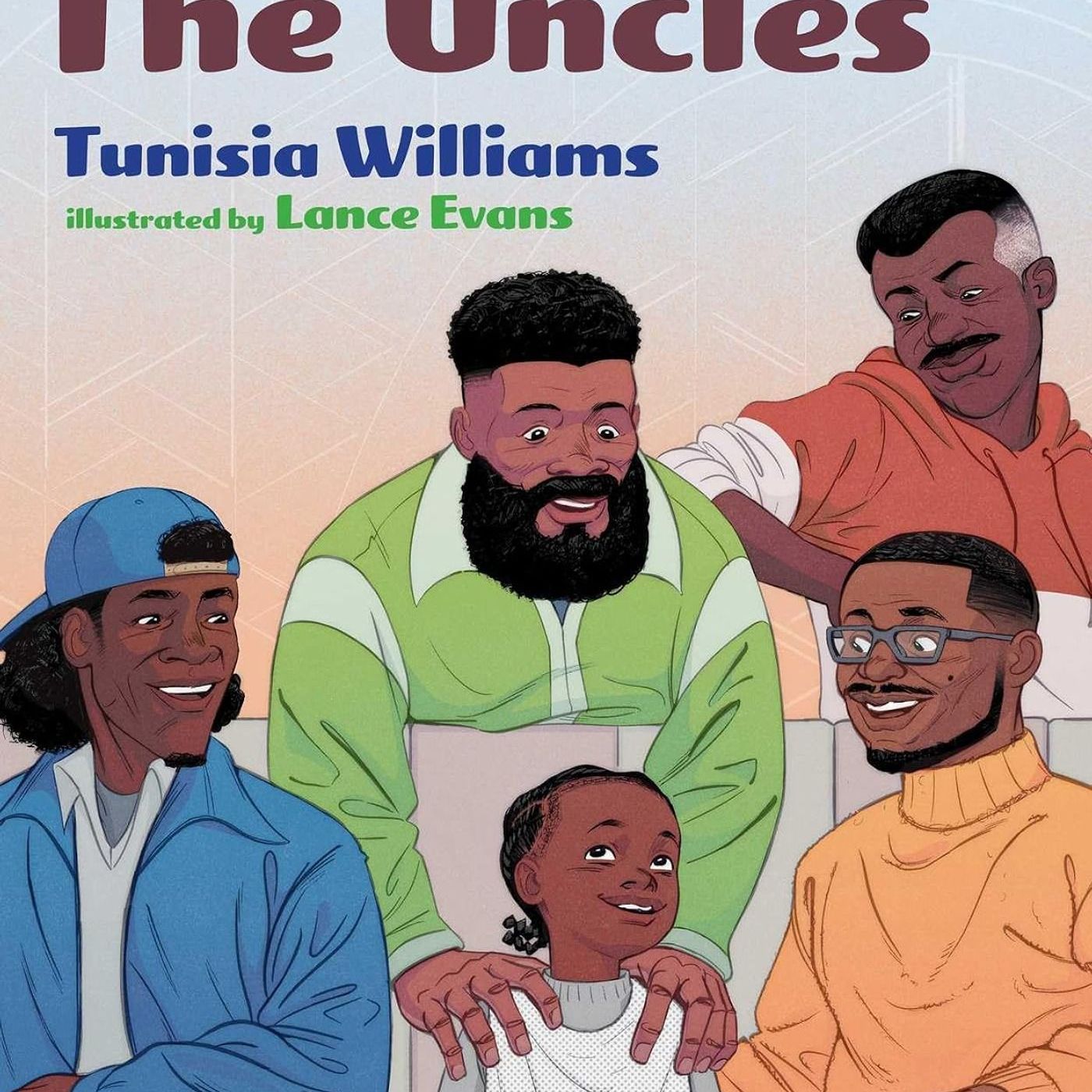
https://www.tunisiawilliams.com/ In this episode of The Book Faire Podcast, host Anthony sits down with middle school counselor and debut author Tunisia Williams to discuss her heart-centered children's book, The Uncles (illustrated by Blance Evans). Tunisia shares the deeply personal inspiration behind the story—modeled after a young boy who lost his mother and was surrounded by a strong, supportive village of community men. Tunisia discusses how the book follows young Kevin as he navigates the loss of his father by calling on a group of close family friends who step in to offer love, mentorship, and guidance. She opens up about the importance of authentic representation in children's literature, intentionally weaving in cultural nuances—like streetlights coming on as the universal sign to come home—while actively combating harmful stereotypes about Black fathers and family structures. Drawing from her professional background in education, Tunisia also offers profound insights into how adults can support grieving children, emphasizing why it is vital to talk about lost loved ones, celebrate their memories, and listen actively to young people. Teachers, school counselors, librarians, and parents will find this episode invaluable for exploring social-emotional learning (SEL) tools, navigating conversations around loss and resilience with children, and championing inclusive, joyful representation on library shelves. Takeaways Importance of found family Representation matters in literature Chapters 00:00 Introduction 02:50 The Concept of Found Family 05:05 Representation in Children's Literature 13:30 The Impact of Grief and Memory 18:30 Being Present in Children's Lives 22:05 The Role of Representation in Writing
Anthony: Welcome to the Bookfair Podcast. My name is Anthony, and this show is all about children's literature and the freedom to read. This week we have an interview with Tunisha Williams, author of The Uncles. Next week, we will have another episode covering new book releases as well as another interview on Friday. Make sure to follow wherever you are currently listening to stay up to date on the latest news in children's literature and book bans Now let's begin with this week's interview. Hello Tanusia, how are you doing today? Tunisia Williams: I'm fine, how are you? Anthony: I'm doing well. Can you start us off just by introducing yourself and the book that we'll be discussing today? Tunisia Williams: My name is Tanisha Williams. I am a middle school counselor here in Georgia. And the book that I wrote is called The Uncles and is illustrated by Blance Evans. Anthony: Can you talk a little bit about the uncles? give us an idea of who the main character is and who the titular uncles are for the for the book. Tunisia Williams: So the book the book stars little Kevin and he is our main character. He's a young man who is one of five children. He has four younger siblings and he has recently lost his father. So he's kind of feeling that the grief and the loss of having that strong male figure in his life. And so he calls on his uncles. and his uncles are not his late father's biological brothers. They're just a group of men who have been have who grew up with his father and they're kinda really close, close friends. And he kinda Kevin just refu recalls ref well, he refers to them as his uncles. So he calls on them and they kinda take him out to show him that love and support that he needs. and also that little missing piece that he has of missing his his father. Anthony: And Tanisia, you said that they're not his biological uncles. Can you talk a little bit about this idea of more of a found family and sort of the community that we build and what that can mean for people like young Kevin? Tunisia Williams: So one of the things that one of the kind of the real reasons why I wrote this book is because of it's based off of a young man who I could refer to as my godnephew. And he lost his mom to she was battling breast cancer and so she lost her battle to breast cancer. However, she left him basically with a strong village. And so there's an African proverb verb that says, it takes a village to raise a child. And so she created a strong village for him. And that village included his biological brothers, to me, I'm sorry, his biological uncles and some other men in in our local church who have been very supportive for him and his and his grandmother. And so these men have been rallying around him. since the death of his mom, as well as, as well as myself and some other ladies and female family members. But just one of the the other thing is I wanted to also showcase the fact that the stereotype of black men abandoning their children is is not true. And the fact that even if there is that loss of a father, whether it be, you know, just you in the just by by death, there are always black men who are going to s who are going to step in and be that support system for our children. Anthony: And Tunisia, you mentioned that that proverb of it takes a village. And I wasn't aware that it was an African proverb. And I think that that ties in really well with the idea of combating the stereotype of of of black men abandoning family. Can you talk a little bit about your personal connection as a black woman and what this story kind of means as far as like combating those stereotypes and And negative expectations and tying into the culture and the African proverb, what that means to you. Tunisia Williams: No, what it means to me is the fact that our our kids need us. Anytime I can find a time or find a way to step in, especially as a counselor middle school counselor, I have several kids, one in particular right now, who who I've kind of stepped into her life and serve and I served as a as a mentor for her. She calls me her mom. I'm not really her mom, but she calls me her mom. I just kind of go with the flow. but just the fact that I am able to provide just an ad that additional support for you know, just for kids. Just, you know, and the other thing is when it comes to representation of black children and books, and also any time that I'm able to to write, my stories are highly geared towards African American, like they feature African American children, because that's what I know and that's where I grew up as grew up as an African American girl. And and so, and so it's just just being able just to kind of showcase my like a little bit of of my culture and a little bit of how I grew up. I'm I'm not very young I'm not young at all really. So but I remember long ago and far away, growing up as as, you know, Just just little the little things. And that's one of the things that I did within the book is I tried to make sure that I slid in those little nuances, the little those little hints of black culture. just like when you know, little Kev is it starts getting late. He's playing basketball and it starts getting late and the street lights come on. That was that was the universal sign in every black household or if for every black child. I don't know if maybe maybe it's just something for all kids during that time period. in the in the eighties, it's time to come home. And so you better be home. And so he his his uncles kinda hinted at. It was like, he's like, can we stay out later? And his uncle's like, nah, we're going home. You know, because they, they they're like, they know better. And so, so it's just kind of like just those little those little pieces of black culture and things that I grew up, I kind of make sure that I wanted to highlight and to it within the context of the story. Anthony: And now Tanisha, you said that you wanted to bring representation and looking at what you remember growing up. Can you talk a little bit about the uncles themselves? Are any of them based on any male figures that you had in your life growing up or maybe people that are in your life now? Tunisia Williams: Yes, definitely. the Uncle Uncle Dex, he's the the the dapper dresser. He's a representative of the young man who I wrote based the store off of Zion. he that's his his uncle. His uncle is very is very dapper. Very he dresses he has like the the top he's like one of the best dressed people that I know that I know. Very hip very stylish. and then you have a couple of the I think yeah, Uncle Keith is is is kinda like my uncle. Everybody kinda has that one rich uncle in their family. Or or that one that one family member that's very well to do. And so I have a I I like to call him my rich uncle. So I so I so he's kind of representative the my the my rich uncle. and then there are a coup there's one of the one of the uncles is slightly slightly representative of my husband, just slightly, 'cause he's He likes sports and he plays he plays sports. He's a football referee. He does athletic stuff. And and it's just, you know, it I it's kinda almost every uncle is like a culmination. Well, the uncles altogether are culminations of of the men who have either had a positive impact on my life, and kind of helped raise me in some way, shape or f fam for form or fashion. And or they are representative of men that are currently inactive in Zion's life. Anthony: And with all these people that that you were able to pull inspiration from, throughout the process of writing the uncles, were any of them made aware of the character that you were building around them? Tunisia Williams: So they don't know exactly. I think I told I I did tell I did tell the the the the gentleman who is representative of Uncle of Uncle Dex. I did tell him. I was like, I said you kind of make an appearance in the in my story. And then my hunk my my husband, my husband, he kinda like he kind of like points at him is like, I think that's who I am, I think that's guy's me or whatever. but everyone else know. They kinda know now, they know what the book is about and they know that they and I've kind of posted a couple pictures. with Zion and all the men who are active in his life. and so they c and I've put it next to the the book so they kinda know. but they haven't read this read read the full story of it yet. So I think I'm hoping they'll be pleased. We'll see. We'll see. So Anthony: Tanisha, I want to tie it back to something that you had mentioned earlier. you said that whenever you write, you like to include representation of of black children because that's how you grew up. And of course, The Uncles is your debut book. However, talking with so many authors, I know that a lot of times the first story they get published is not typically the first story that they have written. Can you talk a little bit about your journey as a writer? And some of the other projects that you have, either some that are maybe, maybe out querying right now or that you haven't been able to finish, or maybe some that you hold personally that haven't exactly been picked up yet. Tunisia Williams: So my actually my first the first story that I wrote, it was a picture book. I I I more or less hybrid published it. So it's not, it wasn't traditionally published. And and it it really I I was just I it was like that was a story that I wrote one day when I was at work. So so the the the context of it is kind of, I mean, it's it's it's not my best work, it's not my finest work. And the fact that it is no longer in print, it I am definitely okay with it. But it was that one thing that I did that showed and proved to me that I could be a writer, that I could do it and that I did have it in me to go the long haul. And it was also at the after at the completion of that project, that was when I made up my mind that I wanted to be traditionally published. I it was again, I mean it was twenty twenty. And I think at that point everyone in the world was like, I'm going to follow my passion. And so that's what they did. because we had nothing but time. It's like the world has stopped. So we had nothing but time but to follow our passions and to be, you know, either you're gonna be bored or you're gonna do something creative. And I decided to do something creative and to put my heart into into that which I had already kind of which I've always kind of wanted to do. And so I I just decided and made it up in my mind. I was like, I'm gonna go for it. And and I did. I have I have s I have another pro I have a couple of more projects that are in the works that I can't really talk about right now. but they'll you know, some announcements will be made soon, about them. And it my my writing overall is it's me and I try to make sure that I put me into everything that I write 'cause I want to make sure that I just think I think that you when you write you always wind up putting a little bit of yourself into your writing. Anthony: As someone who doesn't write but reads a lot, I always say that every time I read a book, I learn more about myself. Because books do give a a, you know, the the it's the sliding glass door effect of letting you into another person's world, being able to see how other people act. But it's also a good chance to reflect on your own life and the even if the story isn't about someone like you, you're able to take messages away from the books. And with a story like The Uncles that connects so deeply to your work as a middle school counselor, what sort of reaction do you do you expect, do you hope for from young readers once this book is in their hands? Tunisia Williams: So, the one thing about the uncles is that it's not it's a book that has grief in it, but it's not a grief book. It's not a book about grief. It's a book about remembering. It's a book about honoring our loved ones who have gone on and celebrating that memory of them. Because I think we I think we get so tied to especially when the child experiences a significant loss, I think we get to the whole, you know, almost wanting to baby the child. I've had kids who've come to me and s you who have lost a a parent or loved one and I'll ask them, I like, okay, so well, what do you remember about them? And so they'll kinda give me one or two things. And I'm like, well, do you does do your parents talk about, you know, the person who passed away? And I'll be like, well, no, they don't say anything about And and it always gets me when I hear that, because I'm like, well, why not? Like, why are you not I mean, cause children are resilient. And because they are, they need to and they also want to feel heard and they want to want to they don't want to feel left out. of that process of even the grief and process, but they also want something t they also kind of need something tangible or something to hold on to, so that that loved one is although they're gone from their presence, they're not gone from, you know, from, you know, from from their physical presence, but not they're still there. They're still able to hold on to something. And so by you know, cause one of the things that located that they do is they kinda they're taking they take pictures throughout the book or and then there's that at the end, there's there's that one, there's that picture, there's a special picture, a special moment. it's, you know, that they that the uncles kind of curate for for for Kevin. They go to it to his to his dad's favorite restaurant. Like, so as a parent who, you know, if you're you can honor the memory, you can take your child to like, okay, if they lost a father or a parent, all right, what did a parent like to do? So did they they enjoyed going to museums? Take your child to the museums, share those special moments. that was their favorite painting whenever we went to this moment, wherever we came to this museum, we always stopped and we stared at this paint that this painting. Allow them to create those moments, allow them to create, you know, little you know, I don't I don't I guess keepsakes, you know, photos or paint, you know, pictures, something so that that person, although they're physically gone, they still can hold on to that presence and they can still have those fond memories of when that person was there. Anthony: And one phrase that you used that I think is incredibly impactful is that it's not a book about grief, but a book that has grief in it. Because as I was reading through it, the moments where little Kevin is reflecting on his dad and at one point even cries over or cries over missing his dad, they are they are present in the book, but the book itself Is a celebration of the dad and a celebration of the relationship that little Kevin has with the uncles, even though that they may not be his direct family. And I think that that just ties really beautifully in with what you were saying about how it's about sharing those special moments with a young person that is going through grief. I remember towards the end of Towards the beginning or end of 2020, it was 2021, I think, that I lost my grandfather. And I have a nephew who was about nine or ten at the time. And the funeral was just the immediate family. And he was he was there. And everyone felt very somber as funerals tend to be. But he was the youngest person present. And I could tell during a moment of, you know, like after everyone had talked, there was just some time for everybody to reflect. He was fighting back tears. He didn't want to be the only one crying. And I'm a very emotional person and I cry a lot. So what I did was I stood up, I went over to my nephew, I sat beside him, and I showed him that I was crying. I put an arm around him and then we both just bald together so that he didn't feel alone. And I think that that's an important thing is, as you mentioned before, stepping up and being present. For people who aren't directly related to young people, who may have friends with children, who may have nephews, what are some ways that they can take the lesson of the uncles from the adult side where they can, what are some ways that they can Step up and be present in a young person's life, even if it isn't in a process of grief. Tunisia Williams: Just being pr just being there and talking. a lot of one of the things that as as a counselor, we are especially when it comes to working with kids, one of the ways that we've learned that'll get a child talking is if you start playing a game, find that per find that perfect game or fine. Just ask them okay, what game do you like playing? And as soon as they start getting involved in the game, then you can kind of start having those conversations. You can just, you know, because their mind is they've they've become more relaxed and they feel as if you relate to them and you can you you're on their level more or less. And so anytime you have a moment to to play a game with a child, let them, play that game. And then even sometimes if a child just comes up, your niece or nephew or whoever, or even or your own child comes up to you and just starts talking about random stuff. I think we have this tendency to when like if we're busy and a child starts coming up to and just saying, talking about something that we really could care less about, we don't care about, then we have a tendency to kind of block that out and be like, Yeah, okay. so what you know, but that is actually the perfect time to really listen, and then to ask questions and to, you know, just to kind of delve more because you'll you'll never you'll be surprised at which but about what will come out next. so really just kinda just being being that ear and listening, being open. being just playing playing those games, taking that moment just to play that game. No, yes, you are tired. No, you do not want to play Monopoly or Uno. You are tired of playing Uno. You've played Uno for twenty-five twenty-five times within the past fifteen minutes. Play Uno again. Make up a different version of Uno. play checkers, do something. do something to kind of get that child talking. because kids just want to be heard. and then when you're when they're talking, don't be so quick to judge or even to give your input or your insight. Allow them the opportunity to make the decision. Allow if they come to you with a problem, I'll listen to what they're saying and then you ask a question and allow them to their little brains to process. because I also think that we have a tendency to give answers and give advice too quickly. and we don't allow kids to kind of make a you know, even if even if it's the wrong decision. Just okay, well, all right, so you're saying this, so let's work out the process. Let's work this out. Cause this is what I do when I'm working with kids. I'm like, okay, so what is the decision? What are you gonna do? So you're gonna do this? Okay, well, let's let's see what could happen. All right, so you do A and B. So what do you think the C is gonna be? And they'll be like this. I said, now ask them, okay, now is that a good is like a do you think that's gonna be a good consequence or a positive outcome? And they'll be like, Well, like I might get in trouble. Okay, well maybe you might put it. I said, What's your other options? And so But it's really about allowing kids because we are raising the future generation and we, and and and we have a lot of AI tools and things that kids can ask for advice and get these responses to, but nothing beats just having taken that opportunity for them to process in their own personal brains and figuring out what the outcome is going to be. Because, you know, AI can only do but so much. Anthony: And Tunisia, as we're approaching the end of our time today, I do have one question that I ask every guest. It's sort of an open ended question, a little more ref a little more introspective. And it's also your opportunity to get your final thoughts in. And that question is, Tunisia, how do you see yourself and the work that you do as a writer? Tunisia Williams: one of the things that I I just want there I just it's about representation it's a lot about representation. but it's also about it's about seeing seeing my seeing for black children to see themselves in books. That is that is true. That is one of the main reasons why I'm out right. but it's also about trying to get it in the lessons of life and so to help tell to help kids develop clarity into who they are into who they are and to make those decisions and to kind of open up the door for conversations, for for parents to have tough conversations, or not so tough conversations. It's about my books that are right. It's about black joy. It's about black children just being black children and having the same opportunities, the same joy, the same everything without although this one is a this one is kind of sad, but also trying to get away from that from the whole trauma perspective of every black book has to be about trauma. my writing is it's it's who I am as a person. I I write I write a lot and a lot a lot of my writing is is reflective. so I I'm a writer because I enjoy writing. And I know that kind of sounds crazy, but but I enjoy writing because that's how I process my thoughts. that's how I figure out what I want to do, what my next move is. in the books that I write for children is is is kind of like an unfolding of who I was and also who I'm becoming. I don't and That's the best thing that I can I guess that's the best way I can kinda say it. Like I you know, I am who I am because I write. I don't know. But Anthony: Thank you. That was an interview with Tunisia Williams. Her newest book, The Uncles, is available now. You can learn more about Tunisia and her work at TunisiaWilliams.com. If you appreciate the work being done on this show, there are a number of ways to show your support. First, you can like, comment, or follow wherever you are currently listening to help push the show out to new listeners. Second, you can follow us on Instagram, TikTok, and Blue Sky at BookFairPod. Lastly, you can follow the show on Patreon at patreon.com slash the BookFair. Following on Patreon is free and there are no posts hidden behind a paywall. Of course, the best way to help the Book Fair podcast grow is simply to share it with a friend, an educator, or a young reader in your life. Thank you so very much for listening, and as always, I'll talk at you next time.